

Blog
AI Document Chat Transforms Financial Report Analysis
Analyze large financial reports (Goldman Sachs, JPMorgan) without fragmentation. Unlock meaningful data relationships for better insights.

Blog
Analyze large financial reports (Goldman Sachs, JPMorgan) without fragmentation. Unlock meaningful data relationships for better insights.
Every quarter, Goldman Sachs releases an annual report exceeding 400 pages. JPMorgan Chase's latest 10-K filing spans 512 pages. Berkshire Hathaway's shareholder letter, including all appendices and financial statements, reaches nearly 300 pages. For financial analysts, portfolio managers, and investment researchers, these documents represent treasure troves of critical information but accessing that treasure has traditionally required navigating a labyrinthine process of manual document fragmentation that destroys the very relationships that make financial data meaningful.
The fundamental challenge facing modern financial analysis is not the complexity of financial concepts themselves, but rather the technological limitations that force analysts to artificially segment comprehensive financial documents into digestible pieces. When a portfolio manager needs to understand the relationship between a bank's loan loss provisions in Section 15 and its regulatory capital calculations in Section 47 of a 450-page annual report, traditional document analysis tools fail catastrophically. The artificial boundaries created by file size limitations don't respect the natural flow of financial logic, creating analytical blind spots that can cost investors millions in missed opportunities or unidentified risks.
This technological constraint has created a peculiar paradox in modern finance: we live in an age of unprecedented computational power and artificial intelligence, yet financial professionals still analyze comprehensive reports using methods that would be familiar to analysts from the 1990s. The emergence of document chat systems capable of processing files up to 500 megabytes doesn't merely represent an incremental improvement in file handling capacity it represents the elimination of artificial analytical boundaries that have constrained financial analysis for decades.
Consider the real-world scenario faced by equity research analysts evaluating a multinational banking institution during earnings season. The institution's quarterly report contains 280 pages of financial statements, risk disclosures, regulatory capital calculations, geographic segment performance data, and management commentary. Traditional analysis platforms require this document to be split into approximately fifteen separate files for processing, each containing different aspects of the bank's operations without the contextual relationships that give individual metrics their meaning.
When analyzing the bank's credit risk exposure, an analyst using fragmented documents might examine loan portfolio data in one file, credit loss provisions in another, and regulatory risk-weighted asset calculations in a third. However, the true assessment of credit risk requires understanding how these three components interact with geographic lending concentrations discussed in the segment reporting section, economic assumptions underlying stress testing scenarios detailed in the risk management section, and forward-looking statements about credit policy changes mentioned in the management discussion section. The fragmentation process severs these connections, forcing analysts to manually reconstruct relationships that should be immediately apparent through comprehensive document analysis.
The consequences of this fragmentation extend beyond inefficiency to create genuine analytical risks. In 2019, several prominent investment firms initially missed the significance of certain banks' exposure to commercial real estate lending because the relevant information was scattered across multiple sections of quarterly reports loan portfolio composition in one section, geographic concentration risks in another, and management commentary about market conditions in a third. Analysts using fragmented analysis approaches struggled to synthesize these dispersed elements into a coherent assessment of emerging risks, while firms with more comprehensive analytical capabilities identified these connections earlier and adjusted their investment positions accordingly.
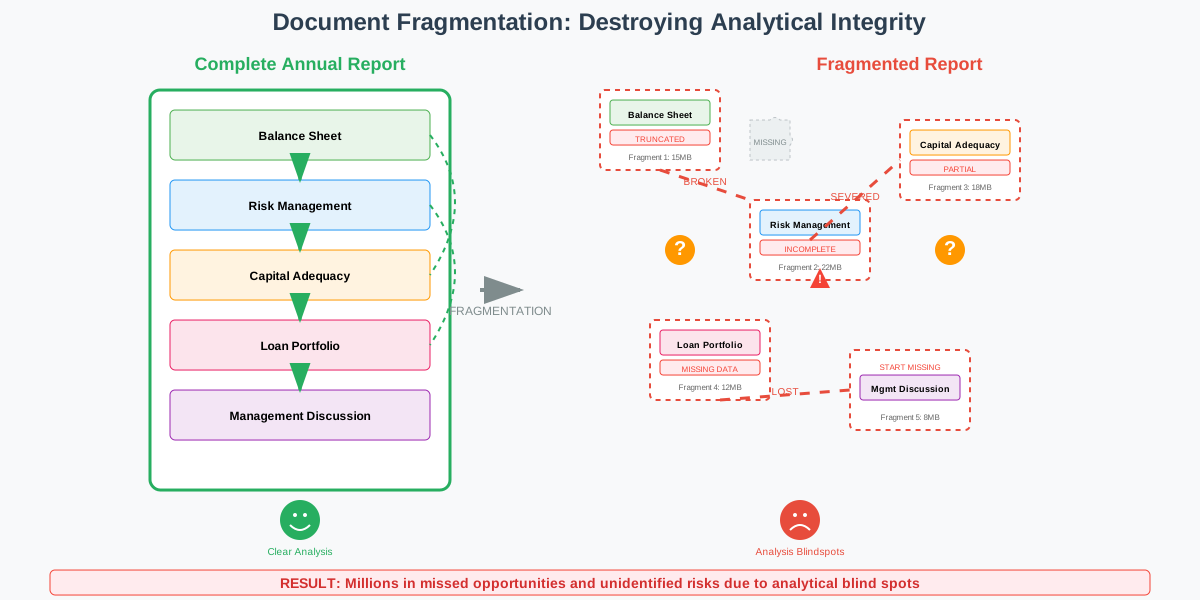
The mathematical precision required in financial analysis makes these fragmentation problems particularly acute. Financial reports are built on intricate webs of cross-references where individual line items derive their significance from their relationships to numerous other metrics throughout the document. When analyzing a technology company's revenue recognition practices, for example, understanding the full picture requires correlating revenue figures with contract liability balances, deferred revenue calculations, performance obligation disclosures, and management commentary about customer concentration information that spans dozens of pages and multiple sections of comprehensive annual reports.
The transformative potential of large-scale document processing becomes most apparent when examining the analysis requirements for complex financial institutions, where comprehensive understanding requires simultaneous consideration of multiple interconnected risk factors, regulatory requirements, and operational metrics. Modern banks operate under sophisticated regulatory frameworks that require extensive disclosure of capital adequacy ratios, stress testing results, risk-weighted asset calculations, and operational risk metrics all of which must be understood in relation to each other and in the context of the institution's overall business strategy and market environment.
A practical example illustrates the power of comprehensive document analysis. When evaluating a major regional bank's quarterly earnings report, traditional fragmented analysis might require an analyst to separately examine net interest margin trends, loan portfolio composition, credit loss provisions, regulatory capital ratios, and management guidance across multiple disconnected file segments. Using a 500-megabyte capable document chat system, the analyst can instead ask sophisticated questions that require synthesis across the entire document: "How do the bank's commercial real estate concentration levels correlate with their stress testing assumptions and current credit loss provisioning methodology, and what does management commentary suggest about their outlook for this portfolio given current market conditions?"
This type of comprehensive query requires the analytical system to understand relationships between quantitative data presented in financial statements, qualitative risk assessments detailed in risk management sections, regulatory capital calculations shown in supplementary schedules, and forward-looking statements contained in management discussion sections. The system must maintain awareness of how different components of the bank's operations interact while providing responses that consider the full context of the institution's financial position and strategic direction.
The ability to maintain context across hundreds of pages becomes even more critical when analyzing complex financial products or business models. Investment banks, for example, operate sophisticated trading operations where understanding risk exposure requires correlating market risk metrics with counterparty exposure data, regulatory capital requirements, and operational risk controls information that is typically scattered across multiple sections of comprehensive quarterly reports. Traditional fragmented analysis approaches struggle to maintain awareness of these complex relationships, while comprehensive document processing enables analysts to ask questions that span the full scope of the institution's risk profile and operational complexity.
The integration of comprehensive financial document analysis with broader market research capabilities represents another revolutionary advancement that enables investment professionals to conduct more sophisticated analysis of market opportunities and competitive positioning. Traditional approaches to market research typically require analysts to manually correlate company-specific financial data with industry research reports, competitive analysis documents, and macroeconomic forecasts a process that is both time-intensive and prone to oversight of subtle but significant relationships that could affect investment outcomes.
Large-scale document processing capabilities enable analysts to upload comprehensive market research reports alongside company financial documents, creating integrated analytical environments where company performance can be immediately contextualized within broader industry trends and competitive dynamics. When analyzing a semiconductor company's quarterly results, for example, analysts can simultaneously process the company's financial statements alongside comprehensive industry research reports that detail market demand forecasts, competitive landscape analysis, and technology trend assessments.
This integrated approach enables sophisticated questions that would be impossible using traditional fragmented analysis: "How does this company's research and development spending compare to industry benchmarks, and how do their product development timelines align with the market demand forecasts for their primary product categories?" Such queries require the analytical system to correlate specific financial metrics from company reports with industry data from research documents while maintaining understanding of how these relationships affect the company's competitive position and future prospects.
The contextual understanding capabilities of advanced document analysis systems enable comprehensive market research integration that considers the relationships between company-specific factors and broader market dynamics. Rather than requiring analysts to manually extract relevant information from multiple documents and then attempt to identify relationships, these systems can analyze entire collections of related documents simultaneously, providing insights that consider the full scope of available information while highlighting connections that might not be immediately apparent through manual review.
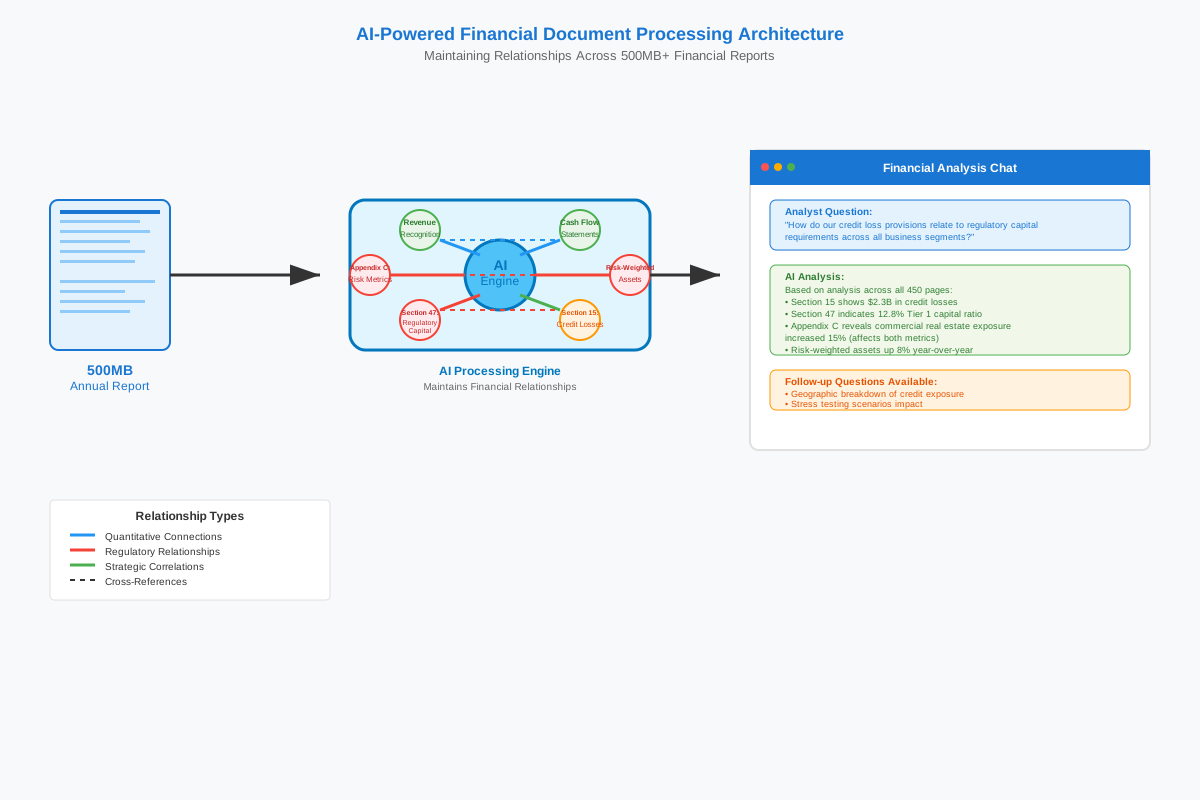
The increasingly complex regulatory environment facing financial institutions creates significant challenges for analysts tasked with understanding compliance requirements and assessing regulatory risks across multiple jurisdictions and regulatory frameworks. Financial institutions must comply with extensive regulatory requirements that often involve hundreds of pages of guidance documents, regulatory interpretations, and compliance disclosures that must be understood in relation to the institution's specific business model and risk profile.
Document chat systems capable of processing large regulatory document collections offer transformative potential for regulatory analysis and risk assessment. Rather than manually reviewing extensive regulatory filings to identify compliance risks or understand regulatory capital requirements, analysts can upload complete regulatory disclosure documents and ask specific questions about the institution's compliance status and risk exposure. This approach enables more comprehensive regulatory analysis while significantly reducing the time and expertise required to maintain current understanding of complex regulatory requirements.
The cross-referential capabilities of advanced document analysis systems are particularly valuable in regulatory analysis contexts, where compliance obligations often depend on the interaction between multiple regulatory provisions, institutional risk metrics, and operational characteristics that are discussed in different sections of comprehensive regulatory filings. A bank's compliance with liquidity coverage ratio requirements, for example, depends on complex interactions between asset composition, funding stability, operational cash flow requirements, and regulatory calculation methodologies that are typically explained across multiple sections of quarterly regulatory reports.
The ability to ask follow-up questions through conversational interfaces enables analysts to conduct thorough regulatory analysis that adapts to evolving understanding of complex compliance requirements. As analysts develop better understanding of specific regulatory obligations through initial questioning, they can ask increasingly sophisticated follow-up questions that explore edge cases, identify potential compliance risks, or analyze the implications of regulatory changes for specific business activities. This iterative approach to regulatory analysis ensures more comprehensive risk assessment while reducing the likelihood of overlooking critical compliance considerations.
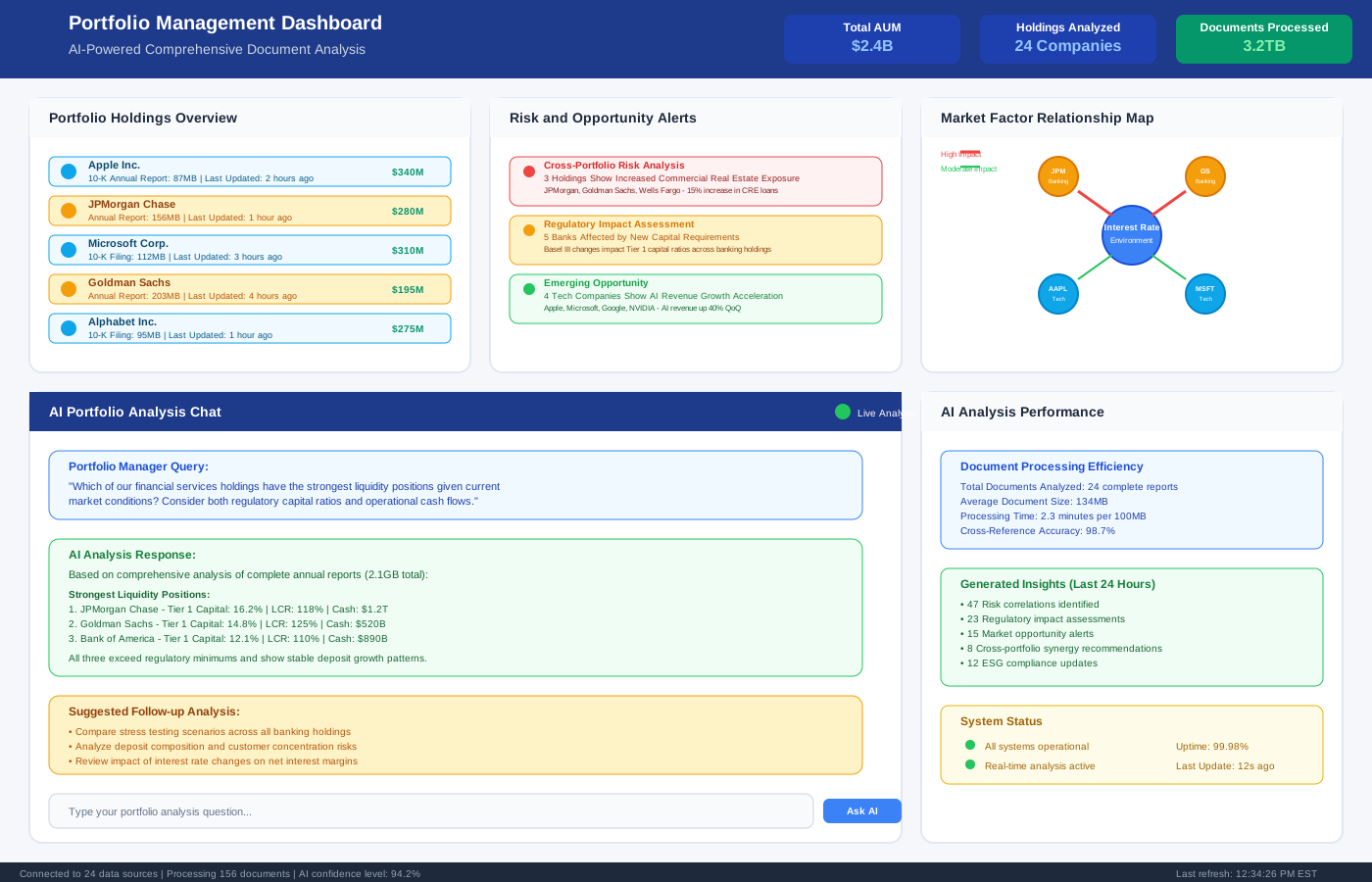
The application of large-scale document processing to portfolio management represents one of the most promising use cases for this technology, as modern portfolio management requires sophisticated analysis of multiple investments across different asset classes, geographic markets, and industry sectors. Portfolio managers must maintain current understanding of financial performance, risk factors, and strategic developments across dozens or hundreds of portfolio companies, each of which produces comprehensive quarterly and annual reports that require detailed analysis to identify emerging opportunities and risks.
Traditional approaches to portfolio management analysis typically rely on simplified summaries or key metrics extracted from comprehensive financial reports, approaches that necessarily sacrifice analytical depth for operational efficiency. Portfolio managers working with traditional tools often must choose between conducting detailed analysis of a few key holdings or maintaining broad awareness of developments across their entire portfolio a constraint that can result in missed opportunities or unidentified risks that could significantly affect portfolio performance.
Large-scale document processing capabilities enable portfolio managers to conduct comprehensive analysis across their entire portfolio without sacrificing analytical depth or timeliness. Rather than relying on simplified summaries, portfolio managers can upload complete financial reports for all portfolio companies and ask sophisticated questions that identify emerging trends, competitive threats, or investment opportunities across multiple holdings simultaneously. This approach enables portfolio-level analysis that would be impossible using traditional document review methods while maintaining the analytical rigor required for sophisticated investment decision-making.
The conversational interface capabilities of advanced document analysis systems enable portfolio managers to conduct iterative analysis that adapts to evolving market conditions and investment themes. As market conditions change or new investment opportunities emerge, portfolio managers can ask follow-up questions that explore how these developments affect different aspects of their portfolio holdings, identifying companies that are well-positioned to benefit from emerging trends or those that face increased risks from changing market dynamics.
The due diligence process for mergers and acquisitions transactions represents perhaps the most demanding application of financial document analysis, as transaction teams must conduct comprehensive evaluation of target companies that often involves review of multiple years of financial statements, regulatory filings, operational reports, and strategic planning documents. Traditional due diligence processes require teams of analysts to manually review hundreds or thousands of pages of documentation while maintaining awareness of relationships between different aspects of the target company's operations a process that is both resource-intensive and prone to oversight of critical issues that could affect transaction outcomes.
The complexity of modern M&A due diligence stems from the need to understand not only the target company's historical financial performance but also the strategic rationale for the transaction, potential synergies, integration risks, and regulatory considerations that could affect deal success. This comprehensive evaluation requires analysis of financial data alongside operational metrics, market research, competitive assessments, and regulatory filings that collectively might represent thousands of pages of documentation across multiple related companies and market sectors.
Large-scale document processing capabilities enable due diligence teams to conduct more comprehensive and efficient analysis by processing entire due diligence packages as integrated units rather than requiring manual correlation of information across multiple disconnected documents. Transaction teams can upload complete financial statements, management presentations, market research reports, and regulatory filings for both acquiring and target companies, creating integrated analytical environments where potential synergies, risks, and strategic opportunities can be identified through sophisticated questioning rather than manual document review.
The ability to maintain context across comprehensive due diligence packages enables transaction teams to ask sophisticated questions that would require days or weeks of manual analysis using traditional approaches. Questions such as "How do the target company's customer concentration risks interact with the acquirer's existing market exposure, and what does the combined entity's geographic revenue distribution suggest about potential regulatory approval challenges?" require synthesis of information from multiple companies' financial reports, market analysis documents, and regulatory guidance materials analysis that becomes feasible through large-scale document processing capabilities.
The successful implementation of large-scale document processing in financial analysis environments requires careful consideration of integration requirements with existing financial analysis platforms, data management systems, and workflow processes. Financial institutions and investment management firms typically operate sophisticated technology infrastructures that coordinate portfolio management, risk monitoring, regulatory reporting, and client communication functions, and effective document analysis implementations must complement and enhance these existing systems rather than requiring wholesale replacement of established workflows.
Integration capabilities enable document analysis systems to leverage information stored in existing financial databases and analytical platforms to provide more contextually relevant analysis. When analyzing documents related to specific portfolio companies, for example, the system can incorporate historical performance data, analyst estimates, market data, and peer comparison metrics stored in existing systems to provide more comprehensive and relevant insights. This integration ensures that document analysis takes place within the broader context of the firm's accumulated knowledge and analytical frameworks.
The seamless flow of insights from document analysis into existing portfolio management and risk monitoring workflows ensures that valuable information extracted from comprehensive document review can be immediately incorporated into investment decisions, risk assessments, and client communications. Rather than requiring analysts to manually transfer insights from document analysis sessions into separate systems, integrated platforms can automatically update portfolio monitoring systems, generate alert notifications for significant developments, or flag potential issues for further investigation. 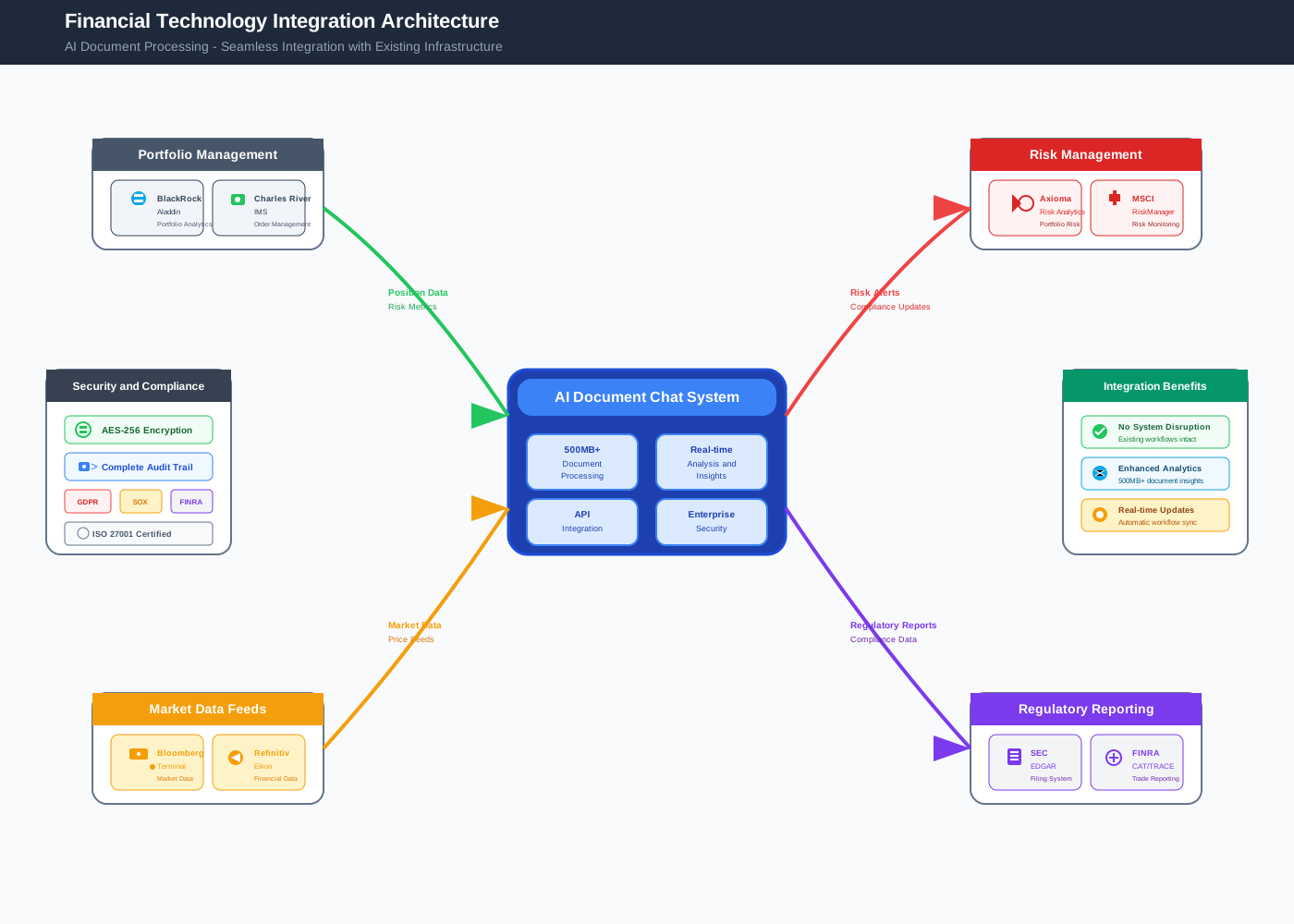
The economic implications of implementing large-scale document processing systems in financial analysis environments extend beyond simple efficiency improvements to encompass fundamental enhancements in analytical quality, risk identification capabilities, and competitive positioning. Traditional financial document analysis represents one of the most significant operational costs for investment management firms and financial institutions, requiring extensive investments in analyst time that directly affects both operational efficiency and analytical coverage capabilities.
The efficiency gains achievable through comprehensive document analysis systems can reduce the time required for thorough financial analysis by significant margins while simultaneously improving the depth and accuracy of the analytical process. Rather than spending extensive time on mechanical document review and information extraction processes, analysts can focus on higher-value activities that require human judgment, market insight, and strategic thinking. This shift in focus not only improves job satisfaction for financial professionals but also enhances the analytical capabilities that firms can offer to their clients and stakeholders.
The improved accuracy and comprehensiveness of AI-powered document analysis can also enhance investment performance through better identification of investment opportunities and more thorough assessment of investment risks. When analysts have access to analytical tools that can identify patterns, relationships, and potential concerns across large document collections, they are better positioned to make investment recommendations that consider all relevant factors and identify opportunities that might be missed through less comprehensive analysis approaches.
The competitive advantages achievable through superior analytical capabilities become particularly important in increasingly efficient financial markets where information advantages provide diminishing returns. Firms that can conduct more comprehensive and timely analysis of financial documentation may be better positioned to identify emerging investment themes, assess regulatory risks, or evaluate strategic developments that could affect market valuations before these factors become widely recognized by market participants.
The rapid evolution of artificial intelligence and natural language processing technologies suggests that current document processing capabilities represent only the beginning of a transformation that will continue to reshape financial analysis in fundamental ways. Emerging developments in machine learning algorithms, financial language models, and predictive analytics promise to deliver even more sophisticated analytical capabilities that will further enhance the effectiveness of financial document analysis while expanding the range of applications for these technologies.
The integration of predictive analytics capabilities with comprehensive document analysis systems represents one particularly promising area of development that could revolutionize investment strategy development and risk assessment. By analyzing patterns across large collections of financial reports, market research documents, and regulatory filings, these systems may eventually be able to predict likely market developments, identify optimal investment strategies, or recommend risk management approaches based on comprehensive analysis of historical patterns and current market conditions.
The development of specialized financial language models trained on extensive collections of financial documents promises to deliver even more sophisticated understanding of financial concepts, terminology, and analytical frameworks. These specialized models will be better equipped to understand the nuances of financial language, identify subtle relationships between different financial metrics, and provide analysis that reflects the sophisticated reasoning patterns that characterize effective financial analysis.
The emergence of AI-powered document chat systems capable of processing comprehensive financial document collections represents a watershed moment in the evolution of financial analysis that fundamentally alters how investment professionals, financial analysts, and portfolio managers interact with the vast corpus of financial information that drives modern investment decisions. The ability to analyze complete annual reports, comprehensive market research documents, and extensive regulatory filings as integrated units while maintaining sophisticated understanding of cross-references and data relationships addresses fundamental limitations that have constrained financial document analysis for decades.
The transformative potential of these technologies extends beyond simple efficiency improvements to encompass fundamental enhancements in the quality, comprehensiveness, and accuracy of financial analysis. By eliminating the fragmentation that has traditionally compromised the integrity of large document analysis while providing intuitive conversational interfaces that democratize access to sophisticated analytical capabilities, document chat systems enable financial professionals to conduct more thorough and effective document review while focusing their expertise on the strategic and creative aspects of financial analysis that require human judgment and market insight.
As financial markets continue to evolve in complexity and the volume of available financial information continues to expand, the adoption of advanced document analysis technologies will become essential for maintaining analytical effectiveness and competitive positioning. Investment firms and financial institutions that embrace these capabilities will be better positioned to provide comprehensive, accurate, and timely financial analysis while managing the operational challenges that characterize modern financial markets.
The future of financial document analysis lies in the integration of sophisticated analytical tools with human expertise, creativity, and market insight to create more effective and comprehensive investment analysis. Document chat technology represents a powerful tool that amplifies human analytical capabilities while addressing the practical limitations that have long constrained financial document analysis, enabling the financial services industry to better serve clients and stakeholders while advancing the fundamental goals of accurate valuation, effective risk management, and superior investment performance that define successful financial practice.

Head IT Operations - Co Founder of Artificio
See it in your SAP environment
Bring us a document, a process, or a bottleneck. We'll show how Artificio captures, validates, and posts into SAP — then scale from there.
Security & compliance
ISO 27001:2013 certified, SOC 2 Type 2 compliant, GDPR and HIPAA ready. Every agent action is logged, auditable, and runs in isolated environments.