

Blog
Zero-Touch Document Processing: Automation & Cost Savings
Stop wasting time and money on manual data entry. Discover zero-touch document processing with AI that instantly extracts data without training or setup.

Blog
Stop wasting time and money on manual data entry. Discover zero-touch document processing with AI that instantly extracts data without training or setup.
Every business knows the frustration. Stacks of invoices, employee forms, contracts, and compliance documents arrive daily, but getting that information into your systems feels like pushing a boulder uphill. Traditional paper-to-system (PPS) processes are notorious bottlenecks that can paralyze operations. Teams spend countless hours manually typing data from physical documents into digital systems, often introducing errors along the way. When businesses try to automate this process, they run into another wall: most document processing solutions require weeks or months of setup, custom model training, and tedious template configuration before they can handle your specific document types.
Consider the typical scenario: your finance team wants to automate invoice processing. You research AI solutions, select a vendor, and then discover you need to provide hundreds of sample invoices for training. Next comes the annotation phase, where someone manually labels every field on every training document. After weeks of back-and-forth with the vendor's technical team, you finally get a working model, but it only handles invoices from your top three suppliers. When a new supplier format appears, you're back to square one with more training cycles and more delays.
This traditional approach to document automation has created a paradox where the solution to manual work requires significant manual work to implement. Companies like Hitachi have demonstrated that AI agents can cut onboarding delays from days to hours, and the same principles apply to document processing. The emergence of no-code automation platforms across the SaaS landscape shows that businesses are demanding immediate value without technical complexity. What if document processing could work the same way? What if you could upload a document and immediately extract structured data without any training, labeling, or technical setup? 
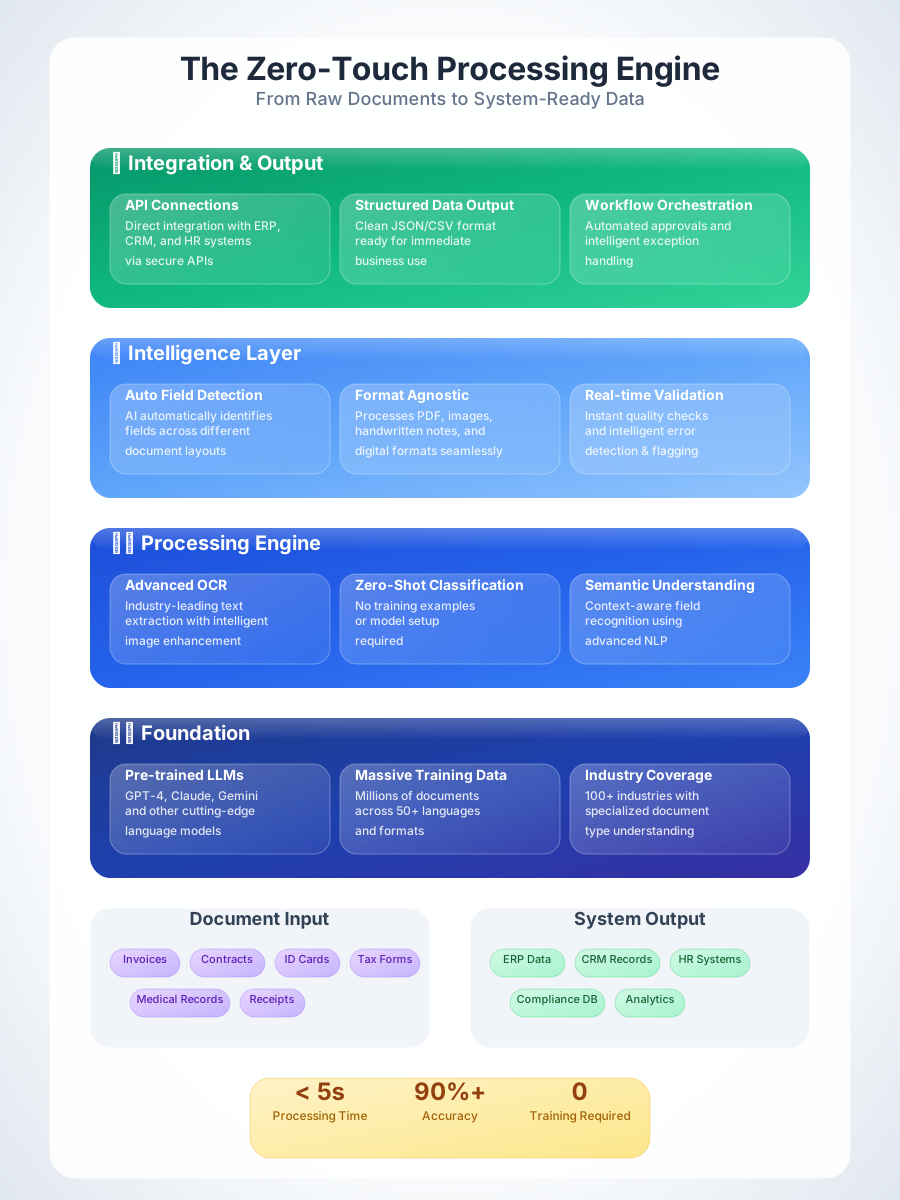
Zero-touch onboarding represents a fundamental shift in how document processing systems work. Instead of requiring custom training for every document type and format, these systems leverage large pre-trained models that can understand and extract information from documents they've never seen before. This approach, often called zero-shot deployment, means you can upload a completely new document format and immediately start extracting structured data from it. The AI doesn't need examples or training samples because it understands documents at a semantic level, recognizing patterns and relationships that remain consistent across different layouts and formats.
The magic happens through sophisticated natural language processing models that have been trained on millions of documents across countless industries and formats. These models don't just recognize text; they understand context, relationships, and document structures. When you upload a German tax form or a handwritten medical record, the system can identify key fields not because it has seen that exact format before, but because it understands what tax information looks like and how medical records are typically structured.
But zero-touch onboarding goes beyond just extraction. True zero-touch systems integrate directly with your existing business applications through APIs, automatically feeding structured outputs into ERPs, CRMs, HR systems, or KYC workflows. Companies like Mindee have demonstrated this capability with their docTI platform, which can process documents in any language without model training, immediately pushing clean data into downstream systems. This integration layer eliminates the secondary bottleneck of manually moving extracted data from one system to another.
The orchestration component ties everything together into true end-to-end automation. Instead of stopping at data extraction, zero-touch systems can automatically route documents through approval workflows, flag exceptions for human review, trigger follow-up actions, and maintain audit trails. This means a single document upload can trigger a complete business process without human intervention, from initial capture through final system integration.
The foundation of zero-touch document processing rests on several breakthrough technologies working in concert. Large language models (LLMs) provide the semantic understanding that allows systems to identify and extract information from documents they've never encountered. These models have been trained on vast amounts of text data, giving them an intuitive understanding of how information is typically structured and presented across different document types. When processing a new invoice format, the model doesn't need to be taught what "invoice number" means; it already understands this concept and can recognize it regardless of whether it's labeled as "Invoice #," "Bill No.," or "Factura Número."
The zero-shot classification capabilities of modern AI models enable them to infer field types and relationships using semantic context rather than pattern matching. Traditional systems might look for text in the upper-right corner of a document to find an invoice number, but zero-touch systems understand that invoice numbers are typically short alphanumeric codes that appear near other billing information. This semantic approach makes the systems incredibly robust when encountering new document layouts or formats.
Advanced OCR technology works hand-in-hand with intelligent extraction algorithms to handle the full spectrum of document quality and types. Modern systems can process everything from crisp digital PDFs to crumpled paper photos taken with smartphones. The AI automatically assesses document quality, applies appropriate preprocessing, and selects the optimal extraction model for each specific document. Companies like Vue.ai have developed sophisticated "model picker" systems that analyze document characteristics and automatically route them to the most appropriate processing pipeline.
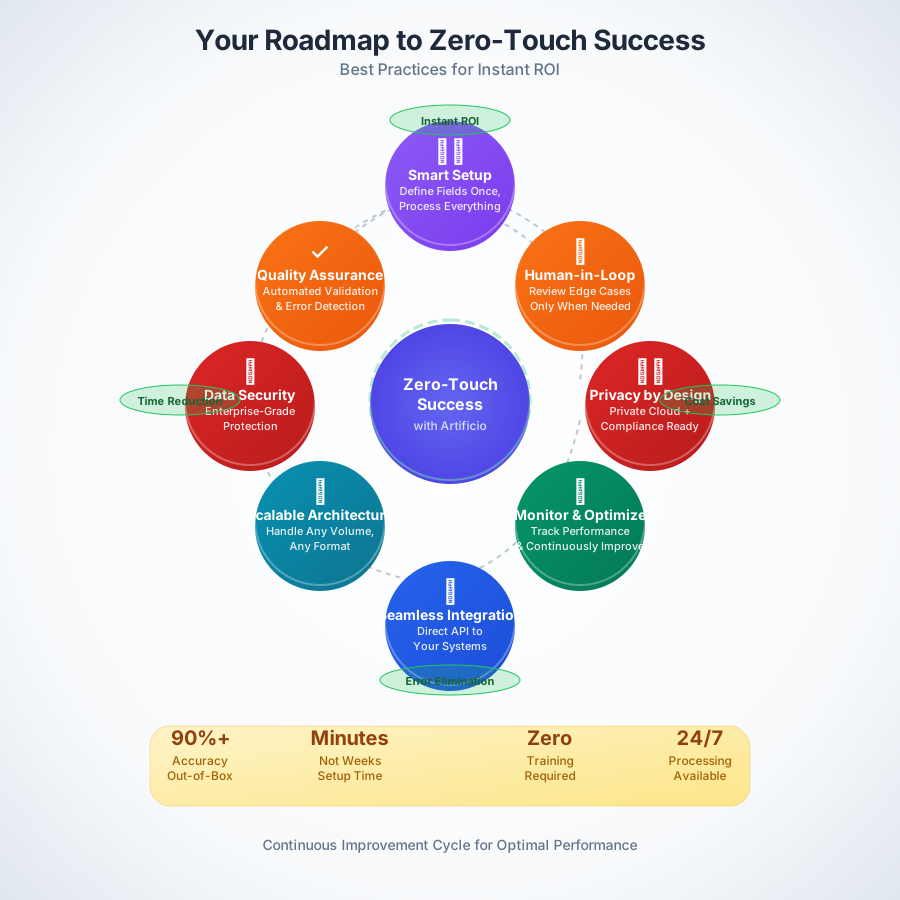
The setup process for users has been streamlined to the absolute minimum. Instead of complex configuration processes, users simply define the fields they need extracted (such as Name, Date of Birth, Invoice Number, or Contract Value), upload a few sample documents to verify the system understands their requirements, and immediately start receiving clean, structured data in JSON or CSV format. The system learns from these samples not through traditional machine learning training, but by understanding the user's data requirements and mapping them to its existing knowledge base.
Business rule validation layers add another crucial component by automatically applying consistency checks and format validation to extracted data. These systems can detect when a date field contains impossible values, when addresses don't match geographic databases, or when financial amounts don't align with related fields. This validation happens in real-time, flagging potential issues immediately rather than letting errors propagate through downstream systems.
The most immediate benefit of zero-touch onboarding is the dramatic reduction in time-to-value. Traditional document processing implementations can take weeks or months before they're handling real business documents. Zero-touch systems flip this timeline entirely, enabling organizations to start processing documents productively within minutes or hours of initial setup. Mindee's docTI platform exemplifies this capability, allowing users to set up document processing workflows in minutes without waiting for model training or technical configuration.
Cost savings extend far beyond the initial implementation. Traditional systems require significant ongoing investment in annotation cycles, model maintenance, and technical support. Every new document format means another round of training data collection, labeling, and model updates. Zero-touch systems eliminate these recurring costs by handling new document types automatically. The scalability benefits compound over time as organizations process increasing document volumes without proportional increases in maintenance overhead.
Accuracy improvements often surprise organizations making the switch to zero-touch systems. Many modern platforms achieve over 90% accuracy out-of-the-box, matching or exceeding the performance of custom-trained models. This high accuracy stems from the massive scale of training data used to develop the underlying models and the sophisticated validation layers that catch common extraction errors. Unlike traditional systems that might perform well on training data but struggle with real-world variations, zero-touch systems have been tested against the full spectrum of document types and formats from the beginning.
The breadth of document type coverage represents another significant advantage. Traditional systems typically handle one or a few specific document types after extensive training and configuration. Zero-touch systems can process ID cards, tax forms, contracts, KYC documents, medical records, and countless other document types without requiring separate models or training cycles. This versatility means organizations can consolidate their document processing needs into a single platform rather than managing multiple specialized systems.
Operational flexibility improves dramatically when document processing systems can adapt to new requirements instantly. Business processes evolve, new suppliers emerge, regulatory requirements change, and document formats shift over time. Zero-touch systems accommodate these changes seamlessly, while traditional systems require costly retraining or reconfiguration. This adaptability becomes especially valuable for organizations operating in dynamic industries or expanding into new markets with different document standards.
Even the most advanced zero-touch systems require thoughtful implementation to achieve optimal results. Human-in-the-loop workflows remain essential for handling edge cases and maintaining quality standards. The most effective implementations include review queues where flagged documents can be quickly verified by human operators. These systems learn from human corrections, though not through traditional training methods, but by updating validation rules and exception handling logic.
The key is designing these human review processes to be efficient and targeted. Rather than reviewing every document, sophisticated zero-touch systems flag only those that fall below confidence thresholds or contain potential anomalies. This approach keeps human involvement minimal while maintaining high accuracy standards. Organizations typically find that human review requirements decrease over time as the system's validation rules become more sophisticated and edge cases are addressed.
Data privacy and compliance considerations become even more critical when processing documents automatically at scale. Zero-touch systems must be designed with privacy-by-design principles, ensuring that sensitive information is protected throughout the processing pipeline. Many organizations choose to deploy these systems in private cloud environments where they maintain complete control over data residency and access controls. Audit trails and processing logs must meet regulatory standards for industries like healthcare, finance, and government services.
Customization needs vary significantly across organizations and use cases. While zero-touch systems excel at handling standard document types, some organizations have highly specialized requirements that may require additional configuration or fine-tuning. The best zero-touch platforms provide fallback options for these scenarios, allowing organizations to add custom templates or rules for edge cases while maintaining the zero-touch experience for the majority of their documents.
Monitoring and optimization remain important even with zero-touch systems. Organizations should track accuracy metrics, processing times, exception rates, and user satisfaction to identify opportunities for improvement. This monitoring helps identify new document types that might benefit from additional configuration and ensures that system performance meets business requirements over time.
Human resources departments have embraced zero-touch document processing for employee onboarding, where the traditional manual process of collecting and entering information from ID cards, tax forms, and employment contracts can take days or weeks. Zero-touch systems can automatically extract information from driver's licenses, passports, Social Security cards, and I-9 forms, immediately populating HR systems and triggering downstream processes like background checks and benefits enrollment. This automation reduces onboarding time from days to hours while eliminating data entry errors that can cause payroll and compliance issues.
The financial services industry has found zero-touch processing particularly valuable for Know Your Customer (KYC) and loan processing workflows. Banks and credit unions can now process passports, utility bills, bank statements, and income documentation without manual intervention. The system automatically validates document authenticity, extracts required information, and checks it against compliance databases. This automation dramatically reduces processing times for loan applications and account openings while improving accuracy and reducing compliance risks.
Insurance companies have revolutionized claims processing using zero-touch systems that can handle everything from police reports and medical records to repair estimates and receipts. The system automatically categorizes claim types, extracts relevant information, calculates coverage amounts, and routes claims for appropriate review or approval. This automation reduces claims processing time from weeks to days while freeing adjusters to focus on complex cases that require human judgment.
Procurement and accounts payable departments use zero-touch processing to handle the constant flow of invoices, purchase orders, and receipts. The system automatically matches invoices to purchase orders, validates pricing and terms, and routes approvals based on business rules. This automation eliminates the manual three-way matching process that traditionally consumes significant time and resources while reducing payment delays and improving vendor relationships.
Healthcare organizations have implemented zero-touch systems for patient intake, insurance verification, and medical record processing. The system can extract information from insurance cards, referral forms, and medical histories, automatically updating patient records and verifying coverage. This automation reduces wait times, improves patient satisfaction, and allows healthcare staff to focus on patient care rather than administrative tasks.
Artificio has a unique opportunity to establish itself as the definitive leader in zero-touch document processing by focusing on what truly matters to business users: immediate value without technical complexity. While competitors get bogged down in technical case studies and implementation details, Artificio can champion the fundamental promise that document processing should work instantly, scale effortlessly, and require minimal ongoing maintenance.
The company's technical leadership position stems from its proprietary approach to field-defining LLM pipelines and intelligent auto-mapping capabilities. Rather than relying on generic models, Artificio has developed specialized systems that understand business documents at a deeper level, recognizing not just what information appears in documents but how that information relates to business processes and systems. This deeper understanding enables more accurate extraction and more intelligent routing of information to downstream systems.
Artificio's no-code configurator represents another significant differentiator, allowing business users to set up and modify document processing workflows without technical expertise. This approach democratizes document automation, making it accessible to departments and organizations that previously couldn't justify the technical complexity of traditional solutions. The configurator's intuitive interface guides users through setup processes while maintaining the sophisticated AI capabilities that ensure high accuracy and reliability.
The customer promise of "Start extracting in minutes, not weeks" resonates powerfully in a market where businesses are increasingly impatient with lengthy implementation cycles. This positioning directly addresses the primary pain point that prevents organizations from adopting document automation: the perception that it requires significant time and technical investment before delivering value. By consistently delivering on this promise, Artificio can build a strong reputation for reliability and efficiency that will drive word-of-mouth referrals and customer loyalty.
Artificio's focus on true end-to-end automation sets it apart from point solutions that only handle document extraction. By integrating seamlessly with existing business systems and orchestrating complete workflows, Artificio can position itself as a comprehensive platform rather than just another tool in the technology stack. This platform approach creates stronger customer relationships and higher switching costs while providing more opportunities for expansion within existing accounts.
The zero-touch approach aligns perfectly with broader technology trends toward democratization and ease of use. Just as no-code platforms have made application development accessible to business users, zero-touch document processing makes AI-powered automation accessible to organizations of all sizes. Artificio can ride this wave by consistently emphasizing simplicity, reliability, and immediate value in all its messaging and product development efforts.
The evolution toward zero-touch document processing represents more than just a technological advancement; it's a fundamental shift in how organizations think about automation and digital transformation. As AI capabilities continue to advance and businesses demand faster, more flexible solutions, the traditional approach of custom training and complex configuration will become increasingly obsolete.
Organizations that embrace zero-touch processing now will have significant competitive advantages in efficiency, accuracy, and agility. They'll be able to adapt quickly to changing business requirements, scale their operations without proportional increases in administrative overhead, and redeploy human resources to higher-value activities that require creativity and judgment rather than routine data entry.
For Artificio, the opportunity to lead this transformation is both significant and time-sensitive. The market is ready for a solution that delivers on the promise of instant, accurate, and scalable document processing. By focusing relentlessly on the zero-touch experience and backing it up with sophisticated AI technology, Artificio can establish itself as the definitive platform for modern document automation.
The future of paper-to-system processing is here, and it requires no training, no waiting, and no compromise on accuracy or capability. It's time for businesses to stop accepting the limitations of traditional document processing and embrace the zero-touch revolution that makes document automation as simple as uploading a file and receiving structured data in return.

Head IT Operations - Co Founder of Artificio
See it in your SAP environment
Bring us a document, a process, or a bottleneck. We'll show how Artificio captures, validates, and posts into SAP — then scale from there.
Security & compliance
ISO 27001:2013 certified, SOC 2 Type 2 compliant, GDPR and HIPAA ready. Every agent action is logged, auditable, and runs in isolated environments.