

Blog
AI-Powered Advanced Identity Verification Systems
Combat deepfake and injection attacks with advanced AI-powered identity verification. Learn how AI systems defend against evolving biometric security threats.

Blog
Combat deepfake and injection attacks with advanced AI-powered identity verification. Learn how AI systems defend against evolving biometric security threats.
The identity verification landscape has reached a critical turning point. What started as a simple arms race between fraudsters presenting fake documents to cameras has evolved into something far more sophisticated and dangerous. Today's attackers aren't just showing fake IDs to biometric security systems. They're hijacking the entire data stream, injecting synthetic media directly into the identity verification pipeline with surgical precision. This shift from traditional presentation attacks to advanced injection attacks represents the most significant threat evolution in digital identity verification since the technology's inception.
The numbers tell a stark story about this identity fraud prevention challenge. Injection attacks are now five times more common than traditional presentation attacks, and when combined with AI-generated deepfakes, they've become nearly impossible to detect using conventional methods. The Hong Kong company that lost $25 million to a deepfake video injection attack wasn't the victim of a sophisticated Hollywood-style heist. They fell prey to a new class of fraud that's becoming disturbingly commonplace in our AI-driven world, where KYC compliance and document verification systems are under constant assault.
What makes this evolution particularly troubling is how it's caught the entire identity verification industry off guard. Most biometric security providers have spent years perfecting their ability to detect fake documents, synthetic faces, and presentation attacks through facial recognition security and liveness detection systems. But injection attacks operate at a completely different level of the technology stack. They bypass the camera entirely, feeding pre-recorded or AI-generated content directly into the verification system as if it were captured live. It's like having someone break into your house not by picking the lock, but by convincing your security system that they're already inside.
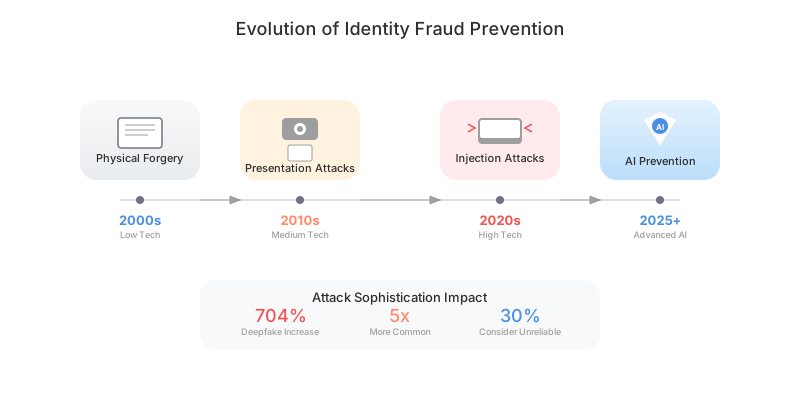
The transition from presentation to injection attacks didn't happen overnight. Traditional presentation attacks, where fraudsters show fake documents, printed photos, or even sophisticated masks to facial recognition security cameras, still account for a significant portion of identity fraud attempts. These attacks are relatively straightforward to understand and detect. A fraudster prints a high-quality photo, holds it up to their camera during a verification session, and hopes the biometric security system accepts it as a live selfie. Modern presentation attack detection (PAD) systems and liveness detection have become quite effective at spotting these attempts through various techniques like analyzing micro-movements, checking for natural reflections, and detecting the telltale signs of printed media.
Injection attacks represent a fundamental paradigm shift. Instead of trying to fool the camera sensor, attackers target the data stream itself. They use virtual cameras, sophisticated emulators, and custom software to intercept the verification system's request for live camera input and respond with carefully crafted synthetic media. The verification platform receives what appears to be a genuine camera feed, complete with proper metadata and formatting, but the content has been entirely manufactured.
The sophistication of these attacks varies dramatically. At the lower end, fraudsters might simply loop a pre-recorded video or inject a static high-quality photo. Advanced attackers are now using real-time deepfake generation, creating synthetic video feeds that respond dynamically to verification challenges. They can make their synthetic personas blink on command, turn their heads, smile, or perform any other liveness check that traditional PAD systems might require. The most sophisticated operations have moved beyond individual fraud attempts to industrial-scale identity theft rings, complete with automated systems that can generate hundreds of synthetic identities per hour.
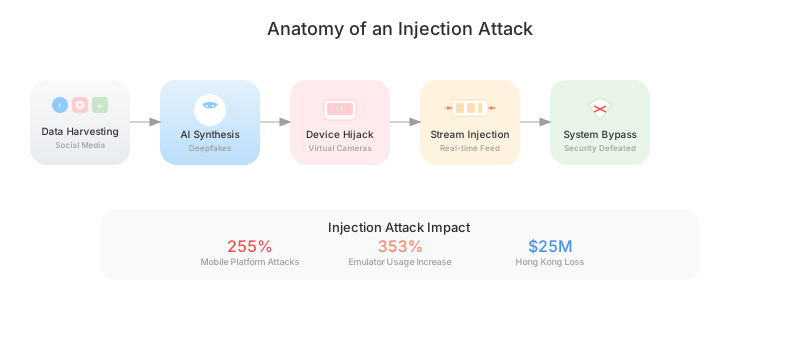
The statistics paint a concerning picture of this evolution. Deepfake face swap attacks on identity verification systems increased by 704% in 2023 alone. Injection attacks targeting mobile identity verification platforms surged by 255%, with the use of emulators in these attacks rising by 353% between the first and second halves of 2023. These aren't just incremental increases but massive leaps that suggest we're dealing with an entirely new category of threat.
Perhaps most alarming is the democratization of these attack methods. What once required significant technical expertise and expensive equipment can now be accomplished with freely available software and consumer-grade hardware. Free and freemium face swap apps that were originally designed for entertainment have become powerful tools for deception. Applications like SwapFace, DeepFaceLive, and Swapstream, which can be easily downloaded on smartphones or computers, are now the most common tools used in attacks against remote identity verification systems.
The economic incentives driving this evolution are substantial. Traditional identity theft might net a fraudster access to a single bank account or credit card. Synthetic identity fraud, enabled by injection attacks, allows criminals to create entirely new identities that can be used across multiple platforms and services simultaneously. These synthetic identities often have clean credit histories and can pass basic background checks, making them incredibly valuable for everything from financial fraud to employment scams.
The geographic scope of these attacks has also expanded dramatically. We're seeing organized fraud networks operating across international boundaries, with operations in one country creating synthetic identities that are then used to defraud businesses and consumers in completely different jurisdictions. The decentralized nature of these operations makes them extremely difficult to investigate and prosecute using traditional law enforcement methods.
What's particularly insidious about the current threat landscape is how it's targeting areas beyond traditional financial services. We're seeing injection attacks used in employment fraud, where criminals use fake identities to get hired for remote positions. There have been documented cases of North Korean operatives infiltrating U.S. companies by posing as IT freelancers, even conducting video interviews with manipulated images. Some scammers use stand-ins or deepfake video for job interviews, then send a different individual on the first day of work. The implications for national security, corporate espionage, and economic stability are staggering.
To truly grasp the threat that injection attacks pose, we need to understand exactly how they work at a technical level. The attack chain begins long before the actual verification attempt. Modern injection attacks typically involve several stages of preparation, execution, and evasion that demonstrate a level of sophistication that would have been unimaginable just a few years ago.
The preparation phase often starts with data harvesting. Attackers scour social media platforms, data breaches, and public records to collect information about their targets. They're not just looking for basic demographic information but also for high-quality photos and videos that can be used as source material for deepfake generation. A single high-resolution photo from a LinkedIn profile or Instagram post can provide enough facial data to create a convincing synthetic video. The attacker might also gather information about the target's voice patterns from publicly available video content, phone calls, or voicemails to create matching audio deepfakes.
Once they have sufficient source material, attackers move into the synthesis phase. This involves using AI tools to create the fraudulent media that will be injected into the verification system. Modern deepfake generation tools have become remarkably sophisticated and user-friendly. What once required powerful graphics cards and weeks of training time can now be accomplished in hours using cloud-based services or consumer-grade equipment. The attackers don't just create static images but generate dynamic content that can respond to various verification challenges.
The technical execution of the injection attack involves several layers of deception. First, the attacker needs to gain control over the camera input mechanism on their device. This might involve using rooted Android devices, jailbroken iPhones, or desktop systems where they have elevated privileges. They install software that can intercept camera API calls and redirect them to their synthetic media source instead of the actual camera. Virtual camera software like OBS, ManyCam, or specialized tools designed specifically for fraud can make this process relatively straightforward.
The sophistication doesn't stop there. Advanced attackers understand that modern verification systems often check for signs of virtual cameras or software manipulation. They've developed techniques to mask these indicators, making their injected content appear as if it's coming from a legitimate hardware camera. This might involve spoofing device metadata, simulating camera-specific artifacts, or even using hardware-based injection methods that operate at the USB or driver level.
During the actual verification attempt, the injected content needs to respond appropriately to any liveness challenges the system might present. Simple injection attacks might fail if the system asks the user to blink, turn their head, or smile. Sophisticated attacks use real-time deepfake generation that can modify the synthetic content on the fly to meet these challenges. The attacker might have a live operator controlling the synthetic persona, or they might use AI systems that can automatically generate appropriate responses to common liveness tests.
The evasion phase involves techniques designed to avoid detection even after a successful injection. This might include using different synthetic identities for different attempts, rotating through various technical approaches to avoid pattern detection, or using legitimate-seeming backstories and supporting documentation to make the synthetic identity appear more credible. Advanced operations often include multiple fallback plans and alternative approaches in case their primary injection method is detected or blocked.
The cybersecurity industry has traditionally approached threats through a detect-and-respond methodology. This approach worked reasonably well when attacks were relatively simple and could be identified through signature-based detection or behavioral analysis. But injection attacks, particularly those using real-time deepfake generation, have fundamentally broken this model. By the time an injection attack is detected, the damage has often already been done. The fraudulent account has been opened, the loan has been approved, or the sensitive system has been accessed.
This reality has forced a fundamental rethink of how we approach identity verification security. The new paradigm focuses on prevention rather than detection. Instead of trying to identify fake content after it's been injected into the system, the goal is to ensure that only genuine, live-captured content can enter the verification pipeline in the first place. This represents a significant architectural shift that requires rebuilding identity verification systems from the ground up with injection attack prevention as a core design principle.
The prevention-first approach starts with controlling the signal source. If you can guarantee that the media entering your verification system is coming directly from a legitimate camera sensor rather than being injected through software manipulation, you've eliminated the primary attack vector for injection attacks. This is easier said than done, particularly in web-based verification systems where browsers provide limited control over the underlying hardware interfaces.
Native mobile applications offer significantly better opportunities for signal source control than web-based systems. Mobile operating systems provide APIs that can help verify that camera input is coming from legitimate hardware sensors rather than virtual cameras or injected content. But even these protections aren't foolproof, particularly on rooted or jailbroken devices where attackers have elevated privileges that allow them to bypass normal security restrictions.
The challenge becomes even more complex when you consider the user experience implications of a prevention-first approach. Many of the most effective injection attack prevention techniques involve additional verification steps, hardware requirements, or restrictions on user behavior that can create friction in the verification process. There's a delicate balance between security and usability that must be carefully managed to avoid creating verification systems that are secure but so cumbersome that legitimate users abandon the process.
Advanced prevention strategies often involve multiple layers of verification that work together to create a comprehensive defense against injection attacks. This might include cryptographic attestation of the device's integrity, real-time analysis of video stream characteristics that are difficult to spoof, behavioral biometrics that analyze how users interact with their devices, and environmental checks that verify the physical context of the verification attempt.
The prevention-first approach also requires a fundamental shift in how we think about trust in identity verification systems. Traditional systems operated on the assumption that users would generally be honest and that fraudsters would be relatively unsophisticated. The new threat landscape requires what cybersecurity professionals call a "zero trust" approach, where nothing is assumed to be legitimate until it has been verified through multiple independent mechanisms.
This shift has profound implications for the entire identity verification ecosystem. It requires new standards for device security, new protocols for secure media capture, and new approaches to system architecture that prioritize prevention over detection. It also requires much closer collaboration between identity verification providers, device manufacturers, and operating system developers to create comprehensive security solutions.
At Artificio, we've been tracking the evolution of injection attacks since their earliest manifestations and have developed a comprehensive framework for preventing these attacks rather than simply trying to detect them after they've occurred. Our approach recognizes that injection attack prevention must be built into every layer of the identity verification workflow, from initial media capture through final verification decision-making.
Our injection-resistant framework starts with signal source integrity verification. Unlike traditional approaches that focus on analyzing the content of images and videos, our system first verifies that the media is actually coming from legitimate hardware sensors rather than being injected through software manipulation. This involves a combination of device attestation, metadata analysis, and real-time stream characteristic verification that creates multiple independent checks on the authenticity of the media source.
The device attestation component of our framework uses cryptographic techniques to verify that the device capturing the media hasn't been compromised or manipulated. This includes checks for rooting or jailbreaking, verification of the integrity of the camera drivers and APIs, and detection of virtual camera software or other tools commonly used in injection attacks. Our system maintains an extensive database of known attack tools and techniques, allowing us to identify and block attempts to use these tools even when they're disguised or obfuscated.
Our metadata analysis goes far beyond the basic EXIF data that most verification systems examine. We analyze dozens of different metadata fields and stream characteristics that are difficult or impossible to spoof in injection attacks. This includes timing patterns in frame delivery, compression artifacts that are specific to particular camera sensors, and subtle variations in color reproduction that are characteristic of genuine hardware capture. These checks happen in real-time during the verification process, allowing us to detect and block injection attempts as they occur rather than after the fact.
The real-time stream characteristic verification component of our framework uses machine learning models trained specifically to identify the subtle differences between genuine camera streams and injected content. These models analyze patterns that are invisible to the human eye but represent telltale signatures of synthetic or manipulated media. Unlike detection-based approaches that try to identify specific types of deepfakes or synthetic content, our models focus on verifying the characteristics of genuine capture processes.
Our approach to liveness verification has been completely redesigned to address the injection attack threat. Traditional liveness checks that ask users to blink, turn their heads, or perform other simple actions can be easily defeated by real-time deepfake generation systems. Our new approach uses dynamic, unpredictable challenges that are generated in real-time and are extremely difficult to anticipate or prepare for. These challenges often involve complex sequences of actions or responses to visual or audio cues that would be nearly impossible to pre-generate synthetic responses for.
The behavioral analytics component of our framework analyzes how users interact with their devices during the verification process. Genuine users exhibit certain characteristic patterns in how they hold their devices, how they respond to instructions, and how they move through the verification workflow. Attackers using injection attacks often exhibit different behavioral patterns because they're focused on managing their technical attack rather than naturally interacting with the verification system. Our machine learning models can identify these subtle behavioral differences and flag them as potential indicators of an injection attack.
Environmental verification represents another important layer of our injection-resistant framework. Genuine verification attempts occur in real physical environments with consistent lighting, acoustics, and other environmental factors. Injection attacks often exhibit inconsistencies in these environmental factors because the injected content was captured in a different context than the actual verification attempt. Our system analyzes environmental cues and cross-references them with the claimed location and context of the verification attempt.
Our document verification capabilities have been specifically enhanced to work seamlessly with our injection attack prevention measures. Traditional document verification systems focus on detecting fake or altered documents. Our enhanced system also verifies that document images are being captured in real-time rather than being injected from pre-captured or synthetic sources. This creates an additional layer of protection against attackers who might combine genuine documents with synthetic biometric content.
The integration aspects of our framework are designed to work with existing enterprise systems while providing comprehensive protection against injection attacks. Our APIs allow organizations to implement injection-resistant verification without requiring massive changes to their existing workflows or user interfaces. The system can be configured to provide different levels of security based on the risk profile of particular transactions or user populations.
Our continuous learning and adaptation capabilities ensure that our injection attack prevention measures evolve along with the threat landscape. The system automatically updates its detection models based on new attack techniques and incorporates threat intelligence from across our customer base to identify emerging attack patterns. This collective defense approach means that an attack detected at one customer can immediately improve protections for all other customers.
Organizations looking to implement comprehensive protection against injection attacks need a structured approach that addresses both immediate vulnerabilities and long-term security evolution. The complexity of the threat landscape means that a piecemeal approach is likely to leave critical gaps that sophisticated attackers can exploit. Instead, organizations need a comprehensive roadmap that addresses technical, operational, and strategic considerations.
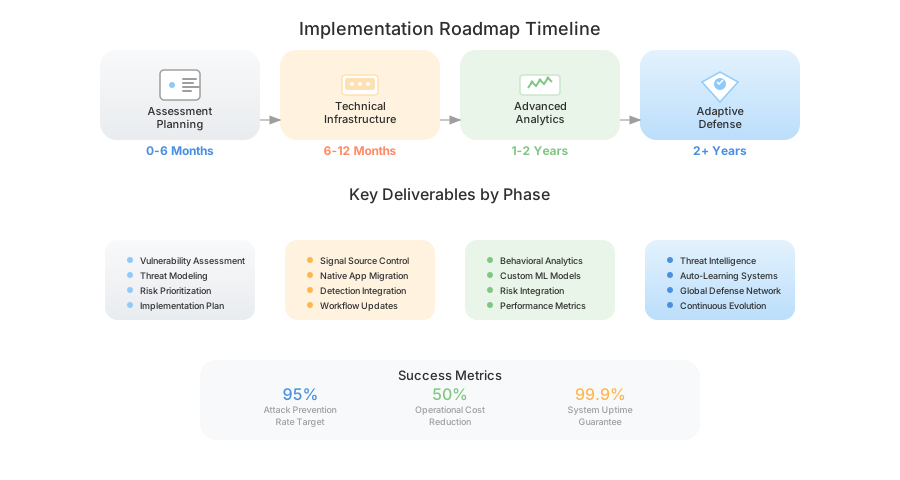
The immediate priority for most organizations should be conducting a comprehensive assessment of their current vulnerability to injection attacks. This involves evaluating existing identity verification systems to understand how they handle media capture, what controls they have over signal sources, and how they would respond to various types of injection attacks. Many organizations discover that their current systems have significant blind spots when it comes to injection attack detection and prevention.
The assessment phase should include both technical evaluation and threat modeling. The technical evaluation involves testing current systems against known injection attack techniques to identify specific vulnerabilities. This might involve penetration testing with virtual cameras, emulated devices, and synthetic media to understand how the current system would respond to these attacks. The threat modeling component involves understanding the specific risks that injection attacks pose to the organization's business model and operations.
Based on the assessment results, organizations can prioritize their upgrade efforts to address the most critical vulnerabilities first. For many organizations, this means moving away from web-based verification systems that offer limited control over media capture toward native mobile applications that provide better signal source control. This transition needs to be carefully managed to avoid disrupting existing user workflows or creating friction that might reduce conversion rates.
The technical implementation phase typically involves several parallel streams of work. The first stream focuses on upgrading the media capture infrastructure to implement signal source verification and injection attack detection. This might involve implementing new APIs, integrating with device attestation services, and deploying machine learning models trained to identify injection attacks. The second stream focuses on enhancing the verification workflow to include new types of liveness checks and behavioral analytics that are more resistant to injection attacks.
Organizations also need to consider the operational implications of implementing injection-resistant verification. This includes training customer service staff to handle new types of verification failures, updating fraud investigation procedures to account for injection attacks, and developing new metrics and monitoring capabilities to track the effectiveness of injection attack prevention measures. The customer communication strategy is particularly important because legitimate users may encounter new verification requirements or occasional false positives that need to be handled sensitively.
The medium-term implementation phase involves building more sophisticated prevention capabilities and integrating them with broader fraud prevention and risk management systems. This might include implementing advanced behavioral analytics, developing custom machine learning models trained on the organization's specific user population and threat profile, and integrating injection attack prevention with other security measures like device fingerprinting and transaction monitoring.
Long-term strategic considerations include staying ahead of the evolving threat landscape and building adaptive systems that can respond to new attack techniques as they emerge. This requires ongoing investment in research and development, participation in industry threat sharing initiatives, and continuous monitoring of the threat landscape. Organizations need to build internal capabilities for evaluating new threats and updating their defenses accordingly.
The implementation roadmap should also address compliance and regulatory considerations. Many industries are beginning to develop specific requirements for protecting against AI-generated fraud and synthetic identity attacks. Organizations need to ensure that their injection attack prevention measures meet these requirements and can be documented and audited as needed for compliance purposes.
The threat landscape around injection attacks and synthetic identity fraud is evolving at an unprecedented pace. What represents a cutting-edge attack technique today may become commonplace in six months, and what seems impossible today may become trivial for attackers to execute within a year or two. This rapid evolution means that organizations can't simply implement a static set of defenses and consider themselves protected. Instead, they need to build adaptive systems that can evolve along with the threat landscape.
The driving forces behind this rapid evolution are primarily technological. Advances in AI and machine learning are making it easier and cheaper for attackers to generate high-quality synthetic content. Graphics processing units (GPUs) are becoming more powerful and affordable, reducing the computational barriers to real-time deepfake generation. Cloud computing services are making advanced AI capabilities accessible to attackers who don't have the technical expertise or resources to build their own systems.
The democratization of these attack capabilities means that we can expect to see injection attacks become more common and more sophisticated over time. What currently requires significant technical expertise and specialized tools will likely become accessible to less skilled attackers through automated platforms and "fraud-as-a-service" offerings. We're already seeing the emergence of such services in the criminal underground, where sophisticated injection attack capabilities are being packaged and sold to less technical fraudsters.
The response to this evolving threat landscape requires a fundamental shift in how we think about security architecture. Instead of building systems designed to defend against specific known attacks, we need to build systems that can adapt to new attack techniques as they emerge. This requires incorporating machine learning and AI not just in the attack detection components but in the overall system architecture and decision-making processes.
Adaptive defense systems use machine learning to continuously analyze attack patterns and automatically update their defensive measures. When a new type of injection attack is detected, the system doesn't just block that specific attack but learns from it to improve its ability to detect similar attacks in the future. This creates a feedback loop where each attack attempt makes the system stronger and more resilient.
The development of these adaptive systems requires close collaboration between security researchers, data scientists, and operational teams. Security researchers identify new attack techniques and develop countermeasures. Data scientists build machine learning models that can generalize from specific attacks to broader attack patterns. Operational teams ensure that the adaptive measures don't interfere with legitimate user workflows or create unacceptable levels of friction.
One of the key challenges in building adaptive defense systems is maintaining the balance between security and usability as threats evolve. As attackers develop more sophisticated techniques, defensive measures often need to become more stringent, which can create additional friction for legitimate users. The challenge is developing adaptive systems that can increase security in response to emerging threats while minimizing the impact on user experience.
The future threat landscape is likely to include several specific developments that organizations need to prepare for. Real-time deepfake generation is becoming more sophisticated and will likely reach the point where synthetic content is indistinguishable from genuine content even to trained human reviewers. Voice cloning technology is advancing rapidly and will likely be integrated with video deepfakes to create fully synthetic personas that can pass both visual and audio verification challenges.
The integration of injection attacks with other fraud techniques represents another significant concern for the future. We're already seeing attackers combine injection attacks with social engineering, synthetic identity fraud, and account takeover techniques to create comprehensive fraud campaigns that are extremely difficult to detect and prevent. These multi-vector attacks require defensive approaches that go beyond traditional identity verification to include broader fraud prevention and risk management capabilities.
The regulatory landscape around AI-generated fraud and synthetic identity attacks is also evolving rapidly. Governments and industry organizations are beginning to develop specific requirements for protecting against these threats, and organizations need to ensure that their defensive measures can meet these evolving requirements. This includes not just technical capabilities but also documentation, auditing, and reporting requirements that demonstrate compliance with relevant standards.
International cooperation and threat sharing are becoming increasingly important as injection attacks and synthetic identity fraud become global phenomena. Attackers often operate across international boundaries, using infrastructure and resources in multiple countries to conduct their attacks. Effective defense requires collaboration between organizations, governments, and law enforcement agencies across different jurisdictions.
The long-term success of adaptive defense systems will depend on building robust threat intelligence capabilities that can identify emerging attack techniques before they become widespread. This requires monitoring the criminal underground, analyzing attack patterns across multiple organizations, and conducting proactive research into potential future attack vectors. Organizations that invest in these capabilities will be better positioned to stay ahead of the evolving threat landscape.
Building resilient identity verification ecosystems also requires considering the broader technological context in which these systems operate. The Internet of Things (IoT), 5G networks, edge computing, and other emerging technologies create new opportunities for both attackers and defenders. Organizations need to consider how these technologies might be used in future injection attacks and how they can be leveraged to improve defensive capabilities.
The education and awareness component of future-proofing can't be overlooked. As injection attacks become more sophisticated and more common, organizations need to ensure that their employees, customers, and partners understand the threat and know how to respond appropriately. This includes not just technical training but also general awareness of social engineering techniques and other tactics that attackers use to make their injection attacks more effective.
The evolution from presentation attacks to injection attacks represents more than just a new technique in the fraudster's toolkit. It represents a fundamental shift in the nature of digital identity fraud that requires equally fundamental changes in how we approach identity verification security. The traditional approach of detecting and responding to specific attack techniques is no longer sufficient when attackers can bypass the detection mechanisms entirely by controlling the data stream itself.
The industry's response to this challenge will determine whether digital identity verification remains a viable foundation for online commerce, remote work, and digital government services. Organizations that continue to rely on outdated detection-based approaches will find themselves increasingly vulnerable to sophisticated injection attacks. Those that invest in prevention-first architectures and adaptive defense systems will be better positioned to maintain trust and security in an increasingly dangerous threat landscape.
The transition to injection-resistant identity verification systems represents a significant investment for most organizations, but the cost of not making this transition is likely to be far higher. The direct financial losses from successful injection attacks are just the beginning. The erosion of trust in digital identity systems could fundamentally undermine the digital economy's growth and development.
At Artificio, we believe that the path forward requires a combination of advanced technology, comprehensive threat intelligence, and deep collaboration across the industry. No single organization can solve the injection attack problem in isolation. It requires coordinated efforts between technology providers, businesses, regulators, and law enforcement agencies to create comprehensive defenses against this evolving threat.
The ultimate goal isn't just to stop the current generation of injection attacks but to build identity verification systems that can adapt and evolve along with the threat landscape. This requires thinking beyond specific attack techniques to understand the fundamental principles of secure identity verification in an AI-driven world. It requires building systems that can maintain security and trust even as the tools available to attackers become more powerful and more accessible.
The organizations that succeed in this new landscape will be those that recognize injection attacks not as a temporary technical challenge but as a fundamental shift that requires rethinking their entire approach to identity verification. They will invest in adaptive systems, prevention-first architectures, and comprehensive threat intelligence capabilities. Most importantly, they will view this challenge as an opportunity to build stronger, more resilient identity verification systems that can serve as a foundation for the digital economy's continued growth and evolution.
The stakes couldn't be higher. The decisions organizations make today about how to respond to the injection attack threat will determine whether digital identity verification remains a trusted foundation for the digital economy or becomes an unreliable system that undermines trust and enables fraud. The technology exists to build secure, injection-resistant identity verification systems. The question is whether organizations will make the necessary investments and changes to implement these solutions before the threat landscape evolves beyond their ability to respond effectively.
As Gartner predicts that 30% of enterprises will consider identity verification solutions unreliable by 2026 due to AI-generated deepfakes, the window for proactive action is rapidly closing. Organizations that act now to implement comprehensive injection attack prevention measures will be among the survivors in this new landscape. Those that wait for the threat to become even more severe may find that they've waited too long to implement effective defenses.
The future of digital identity verification depends on the actions we take today. By building injection-resistant systems, investing in adaptive defenses, and collaborating across the industry to share threat intelligence and best practices, we can create an identity verification ecosystem that remains secure and trustworthy even as the threat landscape continues to evolve. The challenge is significant, but so is the opportunity to build something better and more resilient than what existed before.

Head IT Operations - Co Founder of Artificio
See it in your SAP environment
Bring us a document, a process, or a bottleneck. We'll show how Artificio captures, validates, and posts into SAP — then scale from there.
Security & compliance
ISO 27001:2013 certified, SOC 2 Type 2 compliant, GDPR and HIPAA ready. Every agent action is logged, auditable, and runs in isolated environments.