

Blog
Autonomous Agents for Document Verification - Transforming Business Operations
Explore AI-driven autonomous agents for document verification. Learn about multi-agent systems, KYC, and fraud detection.

Blog
Explore AI-driven autonomous agents for document verification. Learn about multi-agent systems, KYC, and fraud detection.
In today's digital business landscape, the ability to efficiently process, verify, and extract information from documents represents a critical competitive advantage. Organizations across industries from financial services and healthcare to legal and government sectors handle enormous volumes of documents daily. These documents contain valuable information that needs to be accurately extracted, verified, and processed to support decision-making, ensure compliance, and enable seamless customer experiences. However, traditional document verification processes are often manual, time-consuming, error-prone, and resource-intensive.
Enter autonomous agents for document verification an innovative approach that leverages artificial intelligence (AI), machine learning (ML), and natural language processing (NLP) to transform how organizations handle document verification. This technological framework, as illustrated in Figure 1, represents a paradigm shift from conventional document processing to intelligent, automated verification systems that can work collaboratively to ensure accuracy, detect fraud, verify identity, and support decision-making processes.

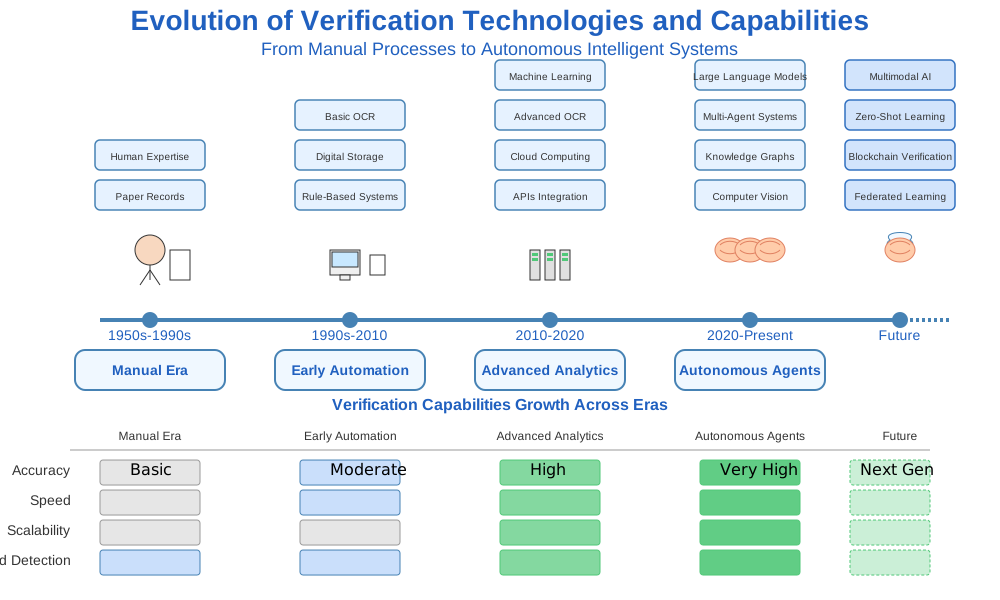
Document verification has undergone significant evolution over the decades. Understanding this trajectory helps contextualize the revolutionary nature of autonomous agent systems:
For decades, document verification relied entirely on human expertise. Staff members would manually review documents, cross-reference information, and make verification decisions based on their training and experience. This approach, while thorough, was extremely slow, inconsistent, and scaled poorly as document volumes increased. Organizations required large teams of specialists, and verification backlogs were common challenges.
The introduction of digital document management systems brought the first wave of automation to verification processes. Organizations began using optical character recognition (OCR) technology to digitize text from physical documents, enabling basic keyword searches and automated routing. However, these early systems had limited intelligence they could capture text but lacked the ability to understand context, identify discrepancies, or make nuanced verification decisions.
The next evolution brought more sophisticated analytics capabilities to document verification. Machine learning algorithms began to assist with document classification, pattern recognition, and anomaly detection. These systems could identify potential issues for human review, improving efficiency by allowing staff to focus on exceptions rather than routine verifications. However, these systems still operated as tools rather than autonomous agents, requiring significant human oversight and intervention.
Today, we are witnessing the emergence of truly autonomous agent systems for document verification. These systems leverage recent breakthroughs in artificial intelligence, particularly large language models (LLMs), to understand document context, extract information with high accuracy, detect sophisticated forgeries, perform complex identity verification, and even support decision-making processes. Unlike previous generations of technology, these autonomous agents can work collaboratively in multi-agent systems, each specializing in specific aspects of the verification process.
The power of modern document verification systems lies in their multi-agent architecture a sophisticated framework where specialized AI agents collaborate to perform comprehensive document verification. As shown in Figure 1, this architecture typically consists of several key components working in concert:
The process begins when users submit applications requiring document verification. The system ingests these documents through various channels web portals, mobile applications, email attachments, or API integrations. This initial stage prepares documents for processing, performing preliminary quality checks and ensuring they meet basic requirements for verification.
Once documents are in the system, OCR technology extracts textual and structured information. Modern OCR systems have evolved far beyond simple text recognition—they can now identify document structures, tables, forms, and even handwritten content with remarkable accuracy. This extracted information serves as the foundation for all subsequent verification processes.
At the heart of the system lies the orchestration layer, which coordinates the activities of specialized verification agents. This orchestration engine determines which agents need to be involved based on document types, verification requirements, and organizational policies. It manages the sequencing of verification tasks, ensuring that information flows properly between agents and that verification results are consistently documented and tracked.
The orchestration layer typically leverages a combination of:
This multi-agent approach represents a fundamental shift from monolithic verification systems to more flexible, specialized frameworks where each agent excels at specific verification tasks.
The true power of autonomous document verification systems emerges from the specialized agents that perform distinct verification functions. Each agent brings unique capabilities to the verification ecosystem, focusing on specific aspects of document authenticity, identity verification, and decision support. Let's explore each of these specialized agents in detail.
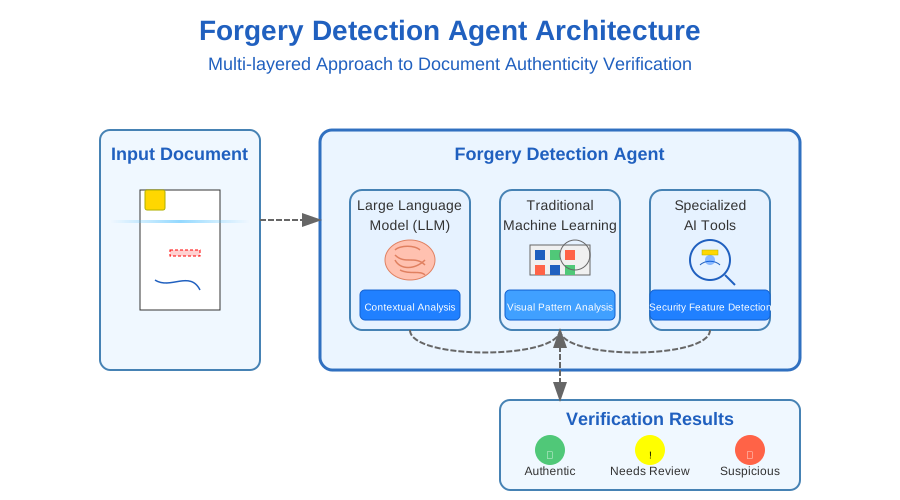
Document forgery has evolved significantly in the digital age, with sophisticated techniques that can challenge even experienced human reviewers. The Forgery Detection Agent serves as the frontline defense against fraudulent documents, employing a multi-layered approach to authenticity verification.
This specialized agent leverages a powerful combination of technologies:
Large Language Models (LLMs): These advanced AI models analyze document content for linguistic inconsistencies, unusual phrasing, or contextual anomalies that might indicate manipulation. They can detect subtle patterns in text that might escape human notice, such as inconsistent terminology, stylistic shifts, or content that contradicts known facts or standards.
Traditional Machine Learning: While LLMs excel at understanding content, traditional ML algorithms focus on detecting visual anomalies. These algorithms are trained on large datasets of authentic and forged documents, learning to recognize telltale signs of tampering such as inconsistent fonts, digital artifacts, irregular spacing, or unusual pixel patterns.
AI Tools: Specialized AI tools complement these capabilities with focused analysis techniques. These include:
The Forgery Detection Agent integrates these technologies through a sophisticated workflow, as illustrated in Figure 2. When a document enters the verification pipeline, this agent first analyzes the document's visual and structural elements, looking for signs of tampering or inconsistency. Simultaneously, it reviews the document's content for logical coherence and compliance with expected formats and requirements.
The business impact of effective forgery detection is substantial. Organizations that deploy advanced forgery detection agents report:
Know Your Customer (KYC) processes represent a critical function for organizations in regulated industries such as banking, insurance, healthcare, and legal services. The KYC Agent automates and enhances these processes, verifying individual identities and ensuring compliance with regulatory requirements.
Unlike the Forgery Detection Agent, which focuses primarily on document authenticity, the KYC Agent concentrates on validating the identity claims represented in those documents and cross-referencing information against external databases and requirements. This agent typically integrates:
Large Language Models (LLMs): These models extract and interpret identity information from submitted documents, understanding complex relationships between different identity elements and recognizing patterns that indicate potential identity fraud or misrepresentation.
APIs: The KYC Agent connects to numerous external systems through application programming interfaces, including:
These API connections enable real-time validation of identity claims against authoritative sources, dramatically increasing verification accuracy while reducing processing time. For example, when verifying a passport, the KYC Agent can instantly check government databases to confirm the document's validity and current status.
The KYC Agent also performs sophisticated risk assessment, evaluating verification results against regulatory requirements and organizational policies. It can flag high-risk cases for enhanced due diligence while fast-tracking low-risk verifications, creating an efficient risk-based approach to identity verification.
The business value of the KYC Agent extends beyond basic compliance:
While forgery detection and KYC verification provide critical inputs, organizations ultimately need to make decisions based on verification results. The Decision Support Agent serves this vital function, transforming verification data into actionable intelligence that guides business processes and decisions.
This agent employs several key technologies:
Large Language Models (LLMs): These models synthesize verification data, interpreting results in business context and generating summaries and recommendations based on organizational policies and requirements.
Rules Engines: Sophisticated rules processing systems apply organizational policies, regulatory requirements, and business logic to verification results. These engines ensure consistent decision-making across similar cases while allowing for necessary flexibility based on verification outcomes.
Predictive Machine Learning: Going beyond simple rule application, predictive ML models analyze verification patterns and outcomes to identify potential risks or opportunities that might not be apparent through rules alone. These models continuously learn from verification histories, improving their accuracy and effectiveness over time.
The Decision Support Agent typically performs several critical functions:
The business impact of effective decision support is profound:
While each specialized agent brings powerful capabilities to the document verification process, their true potential emerges when they function as an integrated ecosystem. This section explores how these agents work together, the orchestration mechanisms that enable their collaboration, and the transformative business outcomes that result from well-implemented multi-agent verification systems.
The orchestration layer serves as the central nervous system of the multi-agent verification system, coordinating agent activities and managing information flow throughout the verification lifecycle. As depicted in Figure 3, this orchestration mechanism creates a seamless verification pipeline that transforms raw document inputs into verified, actionable information.
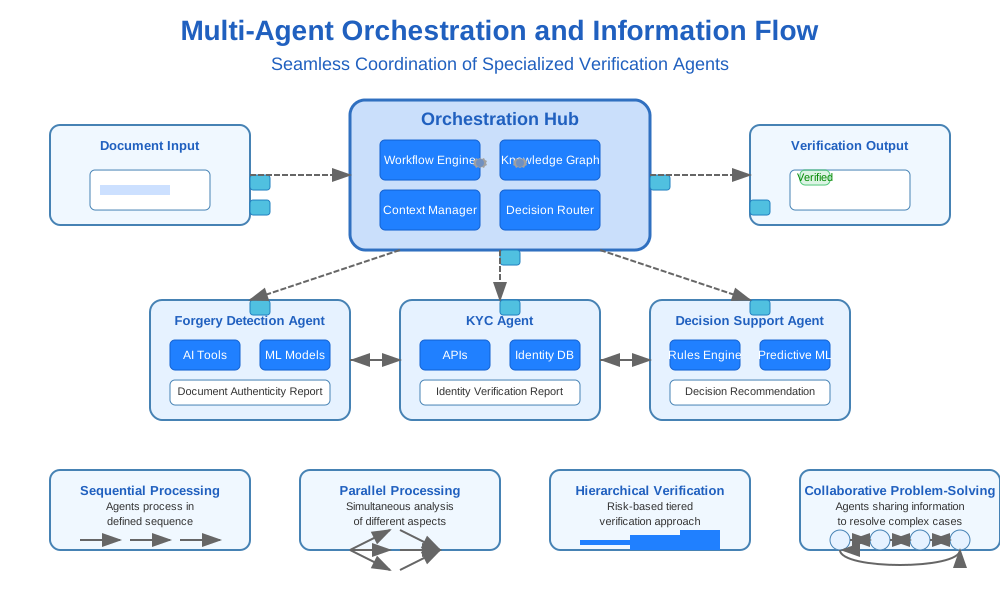
Effective orchestration systems typically incorporate several key elements:
Workflow Management: At its core, orchestration defines and manages verification workflows, determining which agents should be engaged for each document type and verification scenario. These workflows adapt dynamically based on initial verification findings, regulatory requirements, and risk assessments. For example, a standard loan application might trigger basic KYC verification, while a high-value transaction might activate enhanced due diligence workflows with deeper forgery analysis and more extensive identity verification.
Contextual Intelligence: The orchestration layer maintains contextual awareness throughout the verification process, ensuring that each agent has access to relevant information from previous verification stages. This contextual intelligence allows agents to build upon each other's findings rather than operating in isolation. For instance, when the Forgery Detection Agent identifies potential manipulation in a document section, this information guides the KYC Agent's approach to identity verification, focusing additional scrutiny on potentially compromised information.
Real-Time Adaptation: Modern orchestration systems can adapt verification processes in real-time based on emerging findings. If initial verification steps reveal potential concerns, the system can automatically intensify scrutiny, engage additional verification agents, or route cases to specialized human reviewers. This adaptive capability ensures appropriate resource allocation, with simpler verifications proceeding efficiently while complex cases receive the necessary attention.
Continuous Learning: The most sophisticated orchestration systems incorporate feedback loops that enable continuous learning and improvement. By tracking verification outcomes and decision accuracy, these systems refine their workflows, agent selection, and risk assessments over time. This learning capability transforms the verification system from a static process into an evolving intelligence that becomes increasingly effective with each verification performed.
Within the orchestrated ecosystem, verification agents collaborate through several common patterns:
Sequential Processing: In this pattern, documents progress through verification stages in a defined sequence, with each agent building upon the work of previous agents. For example, the OCR agent first extracts document information, which the Forgery Detection Agent then analyzes for authenticity, followed by the KYC Agent verifying identity claims, and finally the Decision Support Agent determining appropriate actions. This sequential approach ensures methodical verification but may increase total processing time.
Parallel Processing: More advanced systems employ parallel processing, where multiple agents simultaneously analyze different aspects of the same document. This approach significantly reduces verification time while maintaining thoroughness. For instance, while the Forgery Detection Agent examines document authenticity, the KYC Agent can simultaneously verify identity information against external databases, with both feeding their results to the Decision Support Agent for final assessment.
Hierarchical Verification: This pattern implements tiered verification approaches, where initial basic verification is performed for all documents, with progressively more sophisticated verification applied based on risk assessment or initial findings. This risk-based approach optimizes resource allocation, focusing intensive verification efforts on higher-risk documents while processing routine verifications efficiently.
Collaborative Problem-Solving: In complex verification scenarios, agents may engage in collaborative problem-solving, sharing information and insights to resolve challenging verification questions. This collaboration might involve multiple passes of analysis, with agents refining their assessments based on information discovered by other agents. For example, if the KYC Agent encounters identity discrepancies, it might request targeted authenticity analysis from the Forgery Detection Agent, focusing on specific document elements that could explain the discrepancies.
Organizations implementing multi-agent verification systems face several important considerations and challenges:
Integration with Existing Systems: Most organizations have established document processing systems that cannot be replaced overnight. Successful implementations typically begin with focused integration points where autonomous agents can deliver immediate value while complementing existing processes. Over time, as confidence in the autonomous system grows, organizations can expand its role and gradually transform their verification infrastructure.
Data Privacy and Security: Document verification inherently involves sensitive personal and business information. Implementing robust security measures including encryption, access controls, data minimization, and secure API connections is essential for protecting this information throughout the verification process. Organizations must also ensure compliance with relevant data protection regulations, such as GDPR, CCPA, or industry-specific requirements.
Explainability and Transparency: As verification decisions increasingly rely on AI-powered agents, ensuring explainability becomes crucial. Organizations need verification systems that not only make accurate decisions but can also clearly explain their reasoning. This transparency is particularly important in regulated industries where verification decisions must withstand regulatory scrutiny and potential challenges.
Human-AI Collaboration: Even the most advanced autonomous verification systems benefit from thoughtful human-AI collaboration. Designing effective collaboration models where AI agents handle routine verifications while escalating complex cases to human experts maximizes both efficiency and accuracy. This collaboration also facilitates knowledge transfer, with human experts training AI systems through feedback and AI systems supporting human decision-making with data-driven insights.
Continuous Improvement Mechanisms: The document verification landscape constantly evolves, with new document types, fraud techniques, and regulatory requirements emerging regularly. Successful verification systems incorporate robust mechanisms for continuous learning and adaptation, ensuring they remain effective in this dynamic environment.
A leading multinational bank implemented an autonomous agent-based verification system to transform its customer onboarding and loan processing operations. Prior to implementation, the bank's document verification processes required an average of 7-10 business days, involving multiple manual reviews and frequent customer follow-ups for additional documentation.
The bank's multi-agent verification system incorporated:
The implementation followed a phased approach:
The results were transformative:
Perhaps most significantly, the system's continuous learning capabilities have enabled ongoing improvement, with verification accuracy increasing quarterly and the system adapting quickly to new document types and fraud techniques.
As autonomous agent systems for document verification mature, several emerging trends are shaping their evolution and expanding their capabilities. Organizations planning to implement or enhance these systems should consider these developments as they formulate their document verification strategies. This final section explores these emerging trends, examines the evolving regulatory landscape, and provides strategic guidance for implementation.
The technological foundations of autonomous document verification continue to evolve rapidly, with several key innovations poised to transform verification capabilities:
Multimodal AI Models: The next generation of AI models incorporates multimodal understanding the ability to process and correlate information across text, images, audio, and even video. These models enable more comprehensive document analysis, understanding not just textual content but also design elements, logos, signatures, and security features in a unified framework. For document verification, this multimodal capability enables more sophisticated authenticity assessment, particularly for complex documents with multiple security features and information types.
Zero-Shot and Few-Shot Learning: Traditional document verification models required extensive training on specific document types, limiting their flexibility when encountering new or uncommon documents. Emerging models with zero-shot and few-shot learning capabilities can effectively verify unfamiliar document types with minimal or no prior training, dramatically improving system adaptability. This capability is particularly valuable for organizations that process diverse international documents or industry-specific certifications that may appear infrequently.
Blockchain-Based Verification: Blockchain technology is enabling new verification approaches that combine traditional document analysis with cryptographic verification. In these systems, document issuers can register cryptographic signatures on blockchain networks, allowing verification agents to confirm both document authenticity and provenance. This approach creates a chain of trust from document issuance through verification, significantly enhancing security while reducing verification complexity for properly registered documents.
Synthetic Data Generation: Developing effective verification models has traditionally been constrained by the availability of training data, particularly for fraud detection where examples of sophisticated forgeries may be limited. Advanced synthetic data generation techniques are addressing this limitation, creating realistic document variations including potential fraud patterns that enable more robust model training without privacy concerns.
Federated Learning: Privacy considerations often limit the sharing of sensitive verification data across organizational boundaries, constraining model development. Federated learning approaches enable collaborative model improvement without direct data sharing, allowing organizations to benefit from collective intelligence while maintaining data privacy. These approaches are particularly valuable in regulated industries where data sharing restrictions are stringent.
The convergence of these technologies will create verification systems capable of unprecedented accuracy, adaptability, and efficiency, as illustrated in Figure 4. These systems will increasingly transition from reactive verification to proactive trust assurance, fundamentally changing how organizations approach document-based processes.
As autonomous verification systems become more prevalent, regulatory frameworks are evolving to address both their potential benefits and risks:
Regulatory Acceptance: Financial regulators in several jurisdictions have begun formally acknowledging AI-based verification systems as acceptable or even preferred approaches for certain compliance requirements. For example, the Financial Action Task Force (FATF) has issued guidance supporting risk-based approaches that leverage technology for more effective customer due diligence. This regulatory acceptance is accelerating adoption, particularly in highly regulated industries.
Explainability Requirements: While embracing technological innovation, regulators are increasingly emphasizing explainability in automated decision systems. New regulations require that verification systems not only make accurate decisions but also provide understandable explanations for those decisions. Organizations implementing autonomous verification must ensure their systems generate clear audit trails and decision rationales that satisfy regulatory expectations.
Cross-Border Considerations: For multinational organizations, navigating diverse regulatory requirements presents significant challenges. Verification systems must accommodate varying standards for identity verification, document requirements, data privacy, and record-keeping across jurisdictions. Flexible, configurable architectures that can adapt to these diverse requirements are becoming essential for global operations.
Bias and Fairness: As with all AI systems, ensuring fairness and preventing bias in verification processes is becoming a regulatory focus. Organizations must implement robust testing and monitoring to ensure their verification systems treat all individuals equitably, regardless of demographic characteristics or document origins. This includes careful analysis of verification outcomes across different population segments and ongoing monitoring for potential bias emergence.
Organizations seeking to implement autonomous verification systems can benefit from several strategic approaches:
Staged Implementation: Rather than attempting comprehensive transformation immediately, successful implementations typically follow staged approaches that build capabilities progressively. A common progression includes:
This incremental approach delivers value at each stage while building organizational experience and confidence before tackling more complex implementation challenges.
Hybrid Human-AI Systems: The most effective verification systems combine autonomous agent capabilities with human expertise. Rather than viewing automation as replacing human verification, leading organizations design hybrid systems where:
These hybrid approaches maximize efficiency while maintaining verification quality and supporting continuous system improvement.
Comprehensive Governance Frameworks: Successful implementations establish robust governance frameworks that address:
These governance structures ensure verification systems remain effective, compliant, and aligned with organizational objectives as they evolve.
Ecosystem Integration: Rather than operating as isolated systems, the most valuable verification implementations integrate seamlessly with broader business ecosystems. This integration enables straight-through processing where verification outcomes automatically trigger appropriate business actions account opening, loan approval, contract execution, or enhanced due diligence creating end-to-end digital processes that maximize efficiency and customer experience.
Organizations implementing autonomous verification systems should establish comprehensive metrics to assess their impact and guide ongoing improvement. Key performance indicators typically include:
Efficiency Metrics:
Quality Metrics:
Customer Experience Metrics:
Business Impact Metrics:
These metrics should be monitored continuously, with regular review cycles that drive system enhancements and process refinements.
Autonomous agent systems for document verification represent a transformative approach to a critical business function. By replacing manual, fragmented verification processes with intelligent, collaborative agent systems, organizations can achieve unprecedented levels of efficiency, accuracy, and security in their document-based operations.
The multi-agent architecture combining specialized verification capabilities through sophisticated orchestration enables both depth and breadth in verification processes. Organizations can implement thorough, multi-dimensional verification while maintaining the speed and efficiency necessary for positive customer experiences and operational excellence.
As these systems continue to evolve, incorporating emerging technologies and adapting to changing regulatory landscapes, their capabilities will expand beyond simple verification to comprehensive trust assurance providing organizations with confidence not just in document authenticity but in the integrity of their entire information ecosystem.
For business leaders, the message is clear: autonomous document verification is not merely an operational improvement but a strategic capability that can deliver competitive advantage through enhanced customer experiences, stronger risk management, and more efficient operations. Organizations that successfully implement these systems will be well-positioned to thrive in an increasingly digital business environment where information quality and trust are foundational to success.

Head IT Operations - Co Founder of Artificio
See it in your SAP environment
Bring us a document, a process, or a bottleneck. We'll show how Artificio captures, validates, and posts into SAP — then scale from there.
Security & compliance
ISO 27001:2013 certified, SOC 2 Type 2 compliant, GDPR and HIPAA ready. Every agent action is logged, auditable, and runs in isolated environments.