

Blog
Combating AI-Generated Fake IDs: Protect Your Business in 2025
Protect your business from AI-generated fake IDs. Learn how advanced multi-layer verification safeguards against evolving identity fraud in 2025.

Blog
Protect your business from AI-generated fake IDs. Learn how advanced multi-layer verification safeguards against evolving identity fraud in 2025.
The digital identity landscape has entered uncharted territory. What once required sophisticated criminal networks and expensive equipment can now be accomplished with a few clicks and a modest budget. AI-generated fake identification documents are flooding the market, creating unprecedented challenges for businesses that rely on identity verification. The emergence of services like OnlyFake, which claims to generate hundreds of fake IDs daily using artificial intelligence and neural networks, represents a fundamental shift in how identity fraud operates. This isn't just another incremental advancement in document forgery – it's a complete transformation of the threat landscape that demands an equally revolutionary response.
The stakes couldn't be higher. Financial institutions processing loan applications, cryptocurrency exchanges onboarding new users, rental companies verifying drivers, and countless other businesses now face sophisticated AI-generated documents that can slip past traditional verification methods. The question isn't whether your business will encounter these synthetic documents, but when. The organizations that survive and thrive will be those that adapt their verification strategies to match the sophistication of modern fraud techniques.
Understanding this new reality requires looking beyond the surface-level concern about fake documents. The real challenge lies in the democratization of fraud technology. Where creating convincing fake IDs once required specialized knowledge, expensive equipment, and significant time investment, AI has made high-quality document forgery accessible to virtually anyone with internet access. This shift demands a corresponding evolution in how businesses approach identity verification, moving from reactive detection methods to proactive, multi-layered defense strategies.
The transformation of document forgery through artificial intelligence represents one of the most significant security challenges of our time. Traditional fake documents were often detectable through careful examination – inconsistent fonts, poor image quality, obvious template errors, or missing security features gave away their fraudulent nature. AI-generated documents operate on an entirely different level, creating sophisticated forgeries that can fool both human reviewers and basic verification systems.
The scale of this problem extends far beyond individual cases of fraud. Services like OnlyFake reportedly generate up to 20,000 fake documents daily, processing bulk requests through Excel spreadsheets and serving a global customer base. Underground marketplaces on platforms like Telegram facilitate the exchange of these synthetic documents, creating entire ecosystems built around AI-generated identity fraud. These services offer documents for every US state and Canadian province, complete with realistic-looking security features, proper formatting, and convincing personal information. 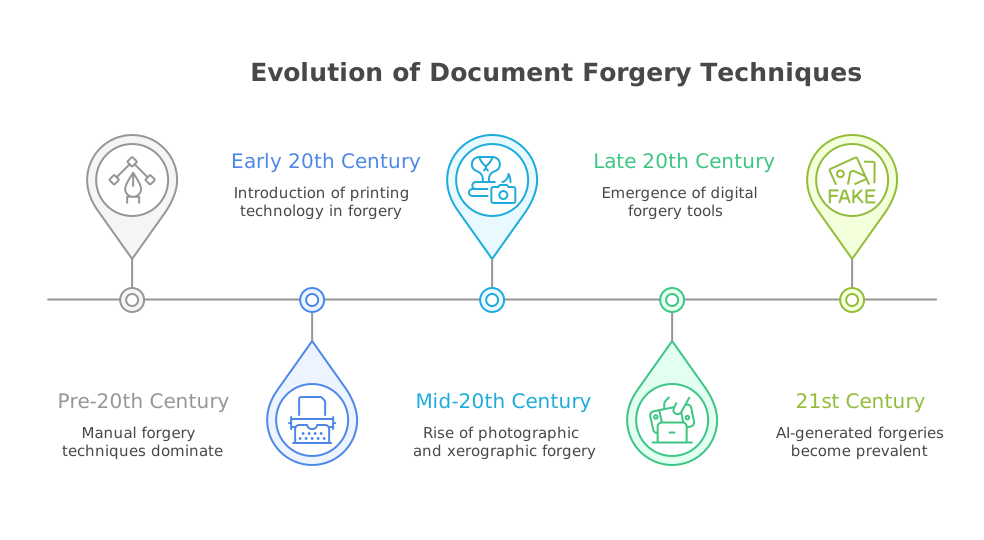
The sophistication of these AI systems extends beyond simple template filling. Modern fake ID generators analyze thousands of legitimate documents to understand subtle design patterns, color variations, font specifications, and layout principles that make documents appear authentic. They can generate realistic-looking photos, create believable personal information, and even simulate the wear patterns that genuine documents develop over time. Some systems incorporate machine learning algorithms that improve their output based on feedback about which documents successfully pass verification checks.
The geographical scope of AI-generated document fraud creates additional complications for businesses operating across multiple jurisdictions. Unlike traditional forgery operations that typically focused on local document types, AI systems can generate convincing replicas of identity documents from virtually any country or region. This global reach means that businesses must be prepared to detect fraudulent documents from jurisdictions they may have limited experience with, adding layers of complexity to their verification processes.
The economic implications of this trend are staggering. Conservative estimates suggest that identity fraud costs businesses billions of dollars annually, and the proliferation of AI-generated documents threatens to dramatically increase these losses. The true cost extends beyond direct financial theft to include regulatory penalties, reputation damage, operational disruptions, and the resources required to implement more sophisticated verification systems. Organizations that fail to adapt their identity verification processes face mounting exposure to these escalating risks.
Recent incidents have demonstrated the real-world impact of AI-generated fake documents across multiple industries. Cryptocurrency exchanges have reported successful account openings using synthetic documents, leading to money laundering concerns and regulatory scrutiny. Financial institutions have discovered loan applications supported by AI-generated IDs, creating potential for significant losses and compliance violations. Even age-verification systems for alcohol and tobacco sales have been compromised, raising public safety concerns and liability issues for retailers.
The fundamental problem with traditional identity verification lies in its reactive nature and reliance on static checkpoints. Most conventional systems were designed to detect known patterns of fraud, using rule-based algorithms and template matching to identify obvious forgeries. These approaches work well against amateur attempts at document manipulation but fall short when confronted with the sophisticated output of AI generation systems.
Traditional optical character recognition (OCR) systems, while effective for data extraction, often focus primarily on reading text rather than assessing document authenticity. They can successfully extract names, dates, and identification numbers from AI-generated documents without recognizing that the underlying document is fraudulent. This creates a false sense of security, where systems appear to be functioning correctly while actually processing entirely synthetic information.
Human review processes, long considered the gold standard for document verification, face their own limitations when dealing with AI-generated fakes. The human eye, while excellent at detecting obvious inconsistencies, struggles with the subtle imperfections that might distinguish a high-quality fake from a genuine document. Training verification staff to recognize AI-generated documents requires constantly updated knowledge about evolving fraud techniques, creating ongoing educational challenges for organizations.
The static nature of traditional security features presents another vulnerability. Many verification systems rely on specific elements like watermarks, holograms, or particular font choices to authenticate documents. AI systems can analyze these features and incorporate them into generated documents, creating fakes that pass these specific checks while remaining fundamentally fraudulent. This cat-and-mouse dynamic means that static verification criteria become less effective over time as fraudsters adapt their techniques.
Database verification, where document information is checked against government records, offers some protection but faces practical limitations. Not all jurisdictions provide real-time access to their databases, creating gaps in verification coverage. Processing delays can make real-time verification impractical for customer-facing applications. Privacy regulations may limit the type of information that can be accessed or verified, creating additional constraints on verification processes.
The speed and convenience demands of modern digital commerce create additional pressure on verification systems. Customers expect rapid onboarding processes, often abandoning applications that require extensive verification delays. This creates tension between security requirements and user experience expectations, leading some organizations to implement verification processes that prioritize speed over thoroughness. AI-generated documents exploit this weakness by appearing legitimate enough to pass quick checks while avoiding more thorough analysis.
Legacy verification systems often operate in isolation, checking individual documents without considering broader patterns of fraudulent activity. This narrow focus prevents them from detecting sophisticated fraud operations that might use multiple AI-generated documents with consistent but fabricated personal information. Modern fraud often involves coordinated attacks using multiple synthetic identities, requiring verification systems that can analyze patterns across multiple applications and identify suspicious correlations.
The challenge of AI-generated fake documents demands a fundamentally different approach to identity verification, one that matches the sophistication of modern fraud techniques with equally advanced detection capabilities. Artificio's multi-layer defense strategy recognizes that no single verification method can provide complete protection against sophisticated AI-generated documents. Instead, our approach combines multiple complementary technologies and analysis techniques to create overlapping layers of security that dramatically increase the difficulty of successful fraud.
Document authenticity verification forms the foundation of our multi-layer approach, but extends far beyond simple template matching or static feature detection. Our AI-powered analysis examines hundreds of subtle characteristics that distinguish genuine documents from synthetic ones, including micro-level inconsistencies in font rendering, color gradients, image compression artifacts, and printing patterns that are difficult for AI systems to replicate perfectly. These analysis techniques don't rely on obvious security features that can be copied, but instead focus on the subtle imperfections and characteristics that emerge from legitimate document production processes.
Our optical character recognition technology incorporates advanced anomaly detection specifically designed to identify AI-generated content. While traditional OCR focuses on accurately reading text, our enhanced OCR analyzes the characteristics of the text itself, looking for patterns that suggest artificial generation. This includes analysis of font consistency, character spacing, alignment patterns, and other typographic elements that can reveal synthetic origin. The system continuously learns from new examples of both genuine and fraudulent documents, improving its detection capabilities as fraud techniques evolve. 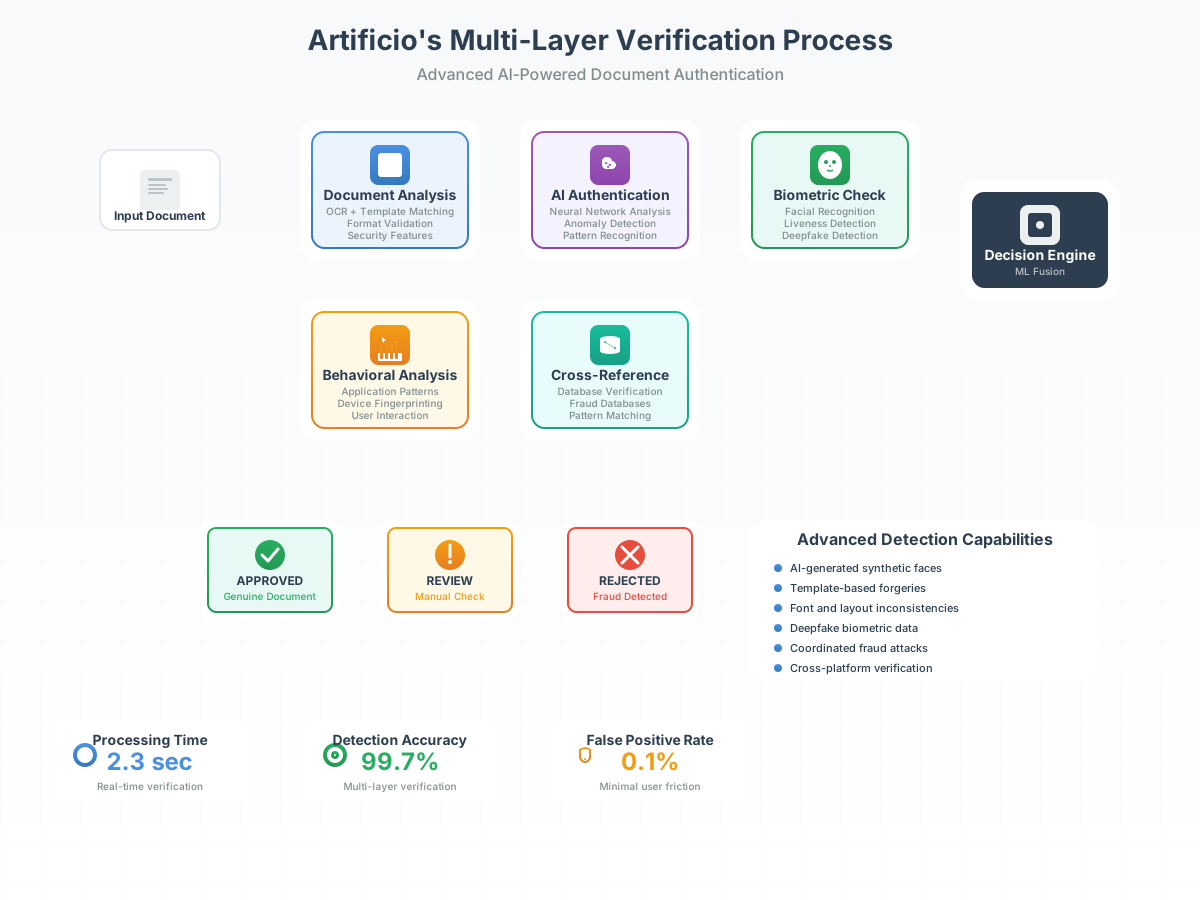
Biometric verification adds a crucial human element to the verification process, ensuring that synthetic documents can't be used without corresponding synthetic biometric data. Our facial recognition technology doesn't simply match photos to documents, but analyzes the biometric data for signs of artificial generation or manipulation. This includes detection of deepfake faces, analysis of facial feature consistency, and verification that biometric data corresponds to a real person rather than an AI-generated synthetic identity.
Behavioral analysis represents one of our most innovative approaches to fraud detection, recognizing that fraudulent applications often exhibit patterns that differ from legitimate ones. This analysis examines application timing, device characteristics, network patterns, and user interaction behaviors to identify suspicious activities. AI-generated documents are often used in automated or semi-automated fraud schemes that create detectable patterns in how applications are submitted and processed. Our behavioral analysis can identify these patterns even when individual documents appear convincing.
Real-time cross-referencing capabilities allow our system to verify document information against multiple databases and information sources simultaneously. This includes government databases where available, but extends to proprietary fraud databases, pattern analysis across our customer base, and correlation with other identity verification services. This comprehensive approach helps identify documents that might pass individual checks but fail when subjected to broader verification processes.
Machine learning integration ensures that our verification capabilities evolve continuously as new fraud techniques emerge. Our AI models are trained on vast datasets of both genuine and fraudulent documents, including the latest examples of AI-generated fakes. This training allows our system to recognize subtle patterns and characteristics that distinguish synthetic documents from genuine ones, even as fraud techniques become more sophisticated. The system updates its detection capabilities in real-time as new fraud patterns are identified.
Customizable verification workflows allow organizations to implement verification processes that match their specific risk profiles and operational requirements. High-risk applications can trigger more extensive verification processes, while routine transactions can be processed through streamlined workflows. This flexibility ensures that security measures are proportionate to risk levels while maintaining operational efficiency.
Integration capabilities ensure that our verification technology can be seamlessly incorporated into existing business processes and systems. Our API-based approach allows organizations to implement advanced verification without disrupting established workflows or requiring extensive system modifications. This integration extends to compliance reporting, audit trails, and regulatory documentation requirements.
The practical effectiveness of advanced verification technology becomes clear when examining real-world encounters with AI-generated fake documents. Our experience processing millions of identity documents has provided extensive insight into the characteristics and patterns that distinguish synthetic documents from genuine ones, even when those documents appear convincing to traditional verification methods.
A recent case involving a financial services client illustrated the sophisticated nature of modern AI-generated fraud attempts. The client received loan applications supported by driver's licenses that appeared completely legitimate at first glance. The documents featured appropriate state-specific design elements, realistic-looking photos, and properly formatted information. Traditional verification processes successfully extracted the required data and found no obvious red flags in the document appearance or information formatting.
Artificio's multi-layer analysis revealed multiple subtle indicators that these documents were artificially generated. The facial photos, while realistic, exhibited micro-level inconsistencies in lighting patterns and skin texture that suggested AI generation. Font rendering showed slight variations in character spacing that differed from authentic state-issued documents. Most significantly, the personal information associated with the documents, while internally consistent, failed to correlate with expected patterns in our broader verification databases.
The behavioral analysis component identified additional suspicious patterns. Multiple applications were submitted from similar device configurations within short time periods, suggesting automated or semi-automated submission processes. Network analysis revealed that applications originated from IP addresses associated with known fraud activities. Application timing patterns differed from typical legitimate applications, with submissions occurring at unusual hours and in rapid sequences that suggested non-human interaction.
Another case involved an e-commerce platform implementing age verification for alcohol sales. The platform received ID submissions that successfully passed basic OCR extraction and appeared to meet legal requirements for age verification. The documents featured appropriate state designs, valid-looking license numbers, and birth dates indicating legal drinking age. Traditional verification approaches would have approved these transactions without detecting any problems.
Our enhanced verification processes identified multiple indicators of AI generation. Image analysis revealed compression artifacts consistent with AI rendering rather than genuine photography. Barcode analysis showed discrepancies between encoded information and visible text that suggested synthetic generation. Cross-referencing with fraud databases revealed that similar document patterns had been used in other fraudulent applications across different platforms. 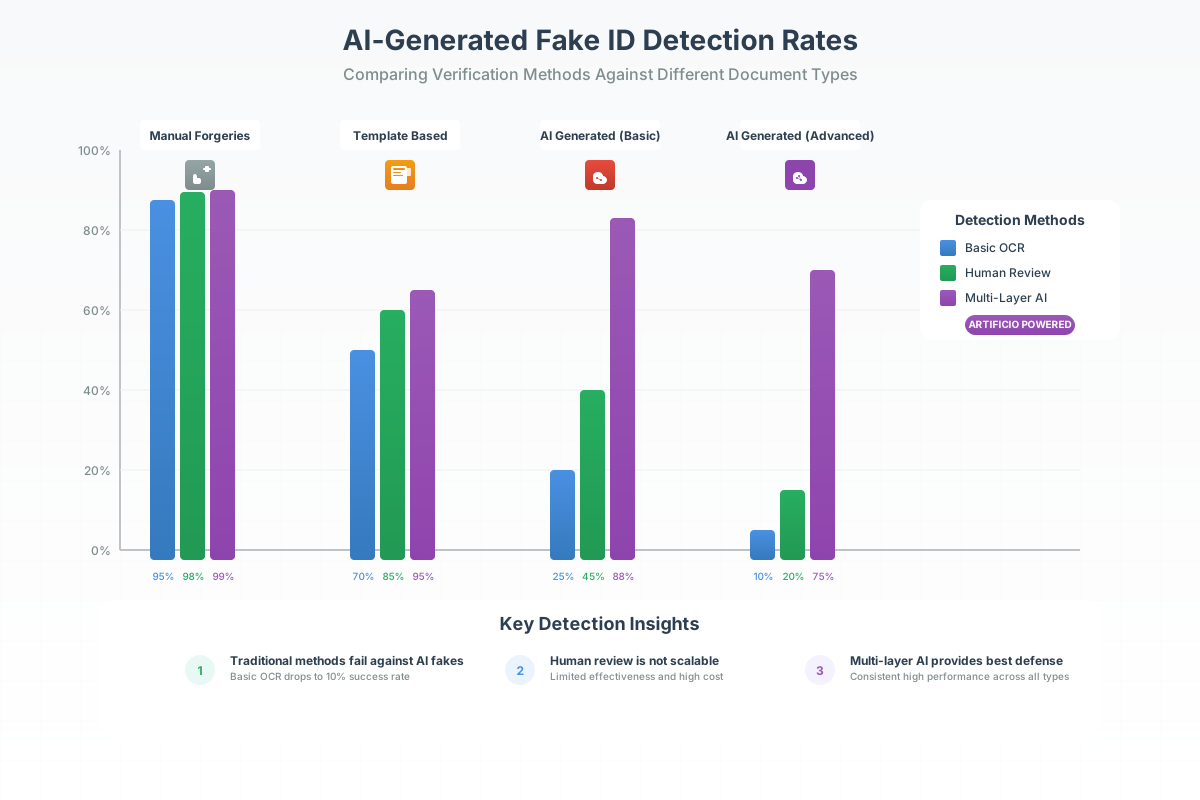
A cryptocurrency exchange case demonstrated the challenges of global document verification in the face of AI-generated fraud. The exchange received identity verification documents from multiple countries, including passports, national ID cards, and driver's licenses. The international scope created additional verification challenges, as the platform needed to authenticate documents from jurisdictions with varying security features and design standards.
AI-generated documents in this case were particularly sophisticated, incorporating security features specific to different countries and regions. The fraudsters had clearly invested significant effort in understanding the design specifications and security elements of documents from multiple jurisdictions. Traditional verification methods struggled with the international scope, lacking comprehensive databases and familiarity with all document types.
Our verification system's machine learning capabilities proved crucial in this scenario. The system had been trained on authentic documents from numerous countries, allowing it to recognize subtle design and security feature inconsistencies across different document types. Pattern analysis identified suspicious correlations between applications from different countries that shared similar characteristics, suggesting coordinated fraud attempts using AI-generated documents.
The detection process revealed that fraudsters were using AI systems to generate documents with personal information that appeared legitimate but didn't correspond to real individuals. Cross-referencing capabilities identified these inconsistencies even when individual documents appeared convincing. The comprehensive approach prevented significant potential losses and helped the exchange maintain compliance with international anti-money laundering requirements.
These cases highlight the importance of comprehensive verification approaches that combine multiple detection methods. No single verification technique would have identified all the fraud attempts, but the combination of document analysis, biometric verification, behavioral analysis, and cross-referencing created multiple opportunities to detect synthetic documents. The layered approach ensures that even if fraudsters overcome individual verification components, other elements of the system can still identify suspicious activities.
The evolution of fraud techniques observed across these cases demonstrates the need for continuously updated verification capabilities. AI-generated documents are becoming more sophisticated over time, requiring verification systems that can adapt and learn from new fraud patterns. Static verification approaches that rely on fixed criteria become less effective as fraudsters adapt their techniques to avoid detection.
Implementing effective protection against AI-generated fake documents requires organizations to adopt comprehensive verification strategies that address multiple aspects of the fraud landscape. The most successful approaches combine advanced technology with thoughtful process design and ongoing monitoring to create verification systems that can adapt to evolving threats while maintaining operational efficiency.
Risk-based verification represents a fundamental principle for effective fraud prevention. Not all identity verification scenarios carry the same level of risk, and verification processes should be scaled appropriately to match potential exposure. High-value transactions, new customer onboarding, and applications from high-risk jurisdictions warrant more extensive verification processes, while routine transactions may be processed through streamlined workflows. This risk-based approach allows organizations to focus their most sophisticated verification tools on situations where they're most needed while maintaining efficient processing for lower-risk scenarios.
Multi-modal verification ensures that fraudsters can't succeed by defeating a single verification method. Effective verification combines document analysis, biometric verification, knowledge-based authentication, and behavioral analysis to create multiple barriers to fraud. AI-generated documents might fool document analysis, but struggle when combined with biometric verification requirements. Sophisticated biometric fakes might pass facial recognition but fail when subjected to liveness detection and behavioral analysis. The combination of multiple verification modes dramatically increases the difficulty and cost of successful fraud attempts.
Real-time processing capabilities are essential for maintaining both security and user experience in modern digital applications. Customers expect rapid verification decisions, and delays in the verification process can lead to application abandonment and lost business opportunities. Advanced verification systems must be able to process complex analysis quickly while maintaining accuracy. This requires careful optimization of verification algorithms and infrastructure design to ensure that comprehensive security doesn't come at the cost of operational efficiency.
Continuous learning and adaptation ensure that verification systems remain effective as fraud techniques evolve. AI-generated fake documents are constantly improving, requiring verification systems that can learn from new examples and adapt their detection capabilities accordingly. Organizations should implement verification systems that incorporate machine learning capabilities and can be updated with new fraud patterns and detection techniques. Regular review and updating of verification criteria helps ensure that systems remain effective against emerging threats.
Staff training and human oversight remain important components of comprehensive verification strategies. While automated systems can handle the majority of verification tasks, human expertise is still valuable for reviewing complex cases and identifying new fraud patterns. Staff should be trained to recognize signs of AI-generated documents and understand the capabilities and limitations of automated verification systems. Clear escalation procedures ensure that suspicious cases receive appropriate review and analysis.
Documentation and audit trails are crucial for compliance requirements and fraud investigation. Comprehensive verification systems should maintain detailed records of verification decisions, including the specific criteria and analysis methods used to reach conclusions. This documentation supports regulatory compliance, provides evidence for fraud investigations, and helps organizations understand the effectiveness of their verification processes. Regular audit and review of verification decisions helps identify areas for improvement and ensures that systems are operating as intended.
Integration with broader fraud prevention systems creates opportunities for enhanced detection capabilities. Identity verification shouldn't operate in isolation but should be integrated with transaction monitoring, device fingerprinting, and other fraud prevention tools. This integrated approach allows organizations to identify patterns and correlations that might not be apparent when analyzing individual verification events. Cross-system analysis can reveal sophisticated fraud schemes that use multiple attack vectors simultaneously.
Privacy and data protection considerations must be balanced with security requirements. Effective verification systems need access to sufficient information to make accurate decisions, but must also comply with privacy regulations and protect customer data. Organizations should implement verification processes that collect and analyze only the information necessary for verification purposes and ensure that sensitive data is properly protected throughout the verification process.
Regular testing and validation help ensure that verification systems are operating effectively and can detect new fraud techniques. Organizations should regularly test their verification systems against known fraud examples and evaluate their performance against emerging threats. This testing should include both automated testing of system capabilities and manual review of verification decisions to ensure that systems are performing as expected.
Vendor selection and management are critical for organizations that rely on third-party verification services. Organizations should carefully evaluate verification vendors based on their detection capabilities, technology sophistication, compliance capabilities, and track record of success against evolving fraud techniques. Regular review of vendor performance and capabilities ensures that verification services continue to meet organizational needs as threats evolve.
The rapid pace of advancement in artificial intelligence and machine learning technologies means that fraud techniques will continue to evolve at an unprecedented rate. Organizations that want to maintain effective protection against identity fraud must adopt verification strategies that can adapt to emerging threats and incorporate new detection technologies as they become available. Future-proofing requires both technological flexibility and strategic planning to ensure that verification systems remain effective in an increasingly complex threat landscape.
Artificial intelligence arms race dynamics are creating a continuous cycle of advancement and counter-advancement between fraud techniques and detection technologies. As verification systems become more sophisticated at detecting AI-generated documents, fraudsters respond by developing more advanced generation techniques. This dynamic requires verification systems that can evolve rapidly and incorporate new detection capabilities as threats emerge. Organizations should prioritize verification solutions that demonstrate strong research and development capabilities and have track records of adapting to new fraud techniques.
Emerging fraud techniques extend beyond simple document generation to include sophisticated synthetic identity schemes that combine AI-generated documents with other fraudulent elements. Future fraud attempts may incorporate AI-generated biometric data, synthetic voice samples, and coordinated social media profiles to create comprehensive fake identities that can withstand multiple verification checks. Effective future verification systems will need to analyze these comprehensive fraud schemes rather than focusing solely on individual documents.
Technology integration opportunities are expanding as new verification technologies become available. Blockchain-based identity verification, advanced biometric analysis, and real-time database connectivity offer new possibilities for fraud detection and prevention. Organizations should monitor emerging verification technologies and evaluate their potential for integration into existing verification workflows. Early adoption of effective new technologies can provide competitive advantages and improved fraud protection.
Regulatory evolution is likely to impact identity verification requirements as governments and regulatory bodies respond to the growing threat of AI-generated fraud. New regulations may require more sophisticated verification processes, impose additional documentation requirements, or mandate specific verification technologies. Organizations should monitor regulatory developments and ensure that their verification systems can adapt to new compliance requirements without major system overhauls.
International cooperation and information sharing are becoming increasingly important as fraud operations become more global in scope. AI-generated document fraud often involves international criminal networks operating across multiple jurisdictions. Effective fraud prevention requires verification systems that can access international fraud databases, share information about emerging threats, and coordinate responses with verification systems in other countries. Organizations should prioritize verification solutions that participate in international fraud prevention networks.
Privacy-preserving verification technologies are likely to become more important as privacy regulations become more stringent and customer privacy expectations increase. Future verification systems will need to balance comprehensive fraud detection with privacy protection, potentially incorporating technologies like zero-knowledge proofs and privacy-preserving machine learning. Organizations should consider how privacy requirements might impact their verification strategies and plan for technologies that can provide strong fraud protection while meeting privacy obligations.
Quantum computing developments may eventually impact both fraud generation and fraud detection capabilities. Quantum computers could potentially break current encryption methods used in document security features, while also providing new opportunities for fraud detection through advanced pattern analysis. While quantum computing applications remain largely theoretical, organizations should monitor developments in this area and consider how quantum technologies might impact their long-term verification strategies.
Machine learning advancement continues to accelerate, offering new opportunities for both fraud generation and fraud detection. Future verification systems will likely incorporate more sophisticated machine learning capabilities, including advanced neural networks, real-time learning capabilities, and enhanced pattern recognition. Organizations should ensure that their verification systems can incorporate new machine learning capabilities as they become available.
The verification technology landscape will likely see continued consolidation and specialization as the market matures. Some vendors will focus on specific verification technologies or industry verticals, while others will develop comprehensive platforms that integrate multiple verification capabilities. Organizations should consider how market evolution might impact their vendor relationships and verification strategies.
Preparing for an uncertain future requires verification strategies that emphasize flexibility, adaptability, and continuous improvement. Organizations should implement verification systems that can be updated and modified as new threats emerge, rather than static solutions that may become obsolete. Regular review and updating of verification strategies help ensure that organizations remain protected against evolving fraud techniques while maintaining operational efficiency and customer satisfaction.
The emergence of AI-generated fake identification documents represents more than just another fraud technique to defend against. It signals a fundamental transformation in the identity verification landscape that demands immediate and comprehensive response from organizations across all industries. The businesses that recognize this shift and adapt their verification strategies accordingly will maintain competitive advantages and avoid the significant costs associated with fraud losses, regulatory penalties, and reputation damage.
The threat is both immediate and escalating. AI-generated fake documents are already being used successfully against organizations with traditional verification systems, causing real financial losses and compliance violations. The sophistication of these fraud techniques continues to improve rapidly, while the costs and barriers to fraud continue to decrease. Organizations that delay implementing comprehensive verification improvements face mounting exposure to these evolving threats.
Success requires moving beyond piecemeal approaches to fraud prevention toward comprehensive verification strategies that address the full spectrum of AI-generated fraud techniques. Single-point solutions and traditional verification methods are insufficient against sophisticated AI-generated documents. Effective protection requires multi-layer verification approaches that combine advanced document analysis, biometric verification, behavioral analysis, and real-time cross-referencing capabilities.
The investment in advanced verification technology pays dividends beyond fraud prevention. Comprehensive verification systems improve operational efficiency by automating complex analysis tasks, enhance customer experience through faster processing times, and provide valuable data insights that can inform business strategy. Organizations that implement sophisticated verification systems often find that the benefits extend far beyond fraud prevention to include improved customer onboarding, enhanced compliance capabilities, and reduced operational costs.
Artificio's multi-layer verification approach provides organizations with the sophisticated fraud detection capabilities needed to address AI-generated document fraud while maintaining the operational efficiency required for modern business operations. Our comprehensive platform combines cutting-edge AI technology with practical implementation approaches that can be adapted to diverse industry requirements and risk profiles.
The time for action is now. AI-generated fraud techniques are advancing rapidly, and organizations that wait for these threats to become more widespread before implementing comprehensive verification improvements will find themselves at significant disadvantage. Early adoption of advanced verification technologies provides competitive advantages while helping organizations avoid the costs and disruptions associated with fraud incidents.
Organizations should begin by assessing their current verification capabilities against the sophisticated threats posed by AI-generated fake documents. This assessment should examine not only technical capabilities but also process design, staff training, and integration with broader fraud prevention systems. Based on this assessment, organizations can develop implementation plans that address their most significant vulnerabilities while building toward comprehensive verification capabilities.
The future of identity verification lies in adaptive, intelligent systems that can evolve with emerging threats while maintaining the user experience expectations of modern digital commerce. Organizations that invest in these capabilities now will be prepared for the continuing evolution of fraud techniques and positioned to take advantage of new verification technologies as they become available.
Contact Artificio today to learn how our advanced verification technology can protect your organization against AI-generated fake documents while enhancing your operational efficiency and customer experience. Our team of experts can help you assess your current verification capabilities and develop an implementation strategy that addresses your specific risk profile and business requirements. Don't wait for AI-generated fraud to impact your business – take action now to implement the comprehensive verification protection your organization needs.

Head IT Operations - Co Founder of Artificio
See it in your SAP environment
Bring us a document, a process, or a bottleneck. We'll show how Artificio captures, validates, and posts into SAP — then scale from there.
Security & compliance
ISO 27001:2013 certified, SOC 2 Type 2 compliant, GDPR and HIPAA ready. Every agent action is logged, auditable, and runs in isolated environments.