

Blog
Proactively Prevent Insurance Claims Fraud with AI
Stop insurance fraud before it starts. Learn how AI document intelligence analyzes claims documents in real-time to detect and prevent fraud.

Blog
Stop insurance fraud before it starts. Learn how AI document intelligence analyzes claims documents in real-time to detect and prevent fraud.
The insurance industry faces a staggering reality: fraudulent claims cost the sector more than $40 billion annually in the United States alone. This massive financial hemorrhage represents far more than mere numbers on a balance sheet it translates to higher premiums for honest policyholders, reduced profitability for insurers, and a constant erosion of trust within the entire insurance ecosystem. Yet despite decades of investment in fraud detection technologies, the vast majority of insurance companies continue to operate under a fundamentally flawed paradigm: they wait until after claims have been approved and processed before attempting to identify fraudulent activity.
This reactive approach to fraud detection has created a costly game of catch-up that insurers can never truly win. By the time traditional fraud detection systems identify suspicious patterns in approved claims, the financial damage has already been inflicted, resources have been misallocated, and fraudsters have refined their techniques based on successful schemes. The time has come for a fundamental shift in strategy from reactive detection to predictive prevention through intelligent document analysis during the initial claims intake process.
Understanding this transformation requires examining how artificial intelligence and machine learning technologies can analyze the very documents that form the foundation of every insurance claim. When we consider that virtually every insurance claim begins with documentation whether medical records, repair estimates, police reports, or photographs we begin to understand the untapped potential for preventing fraud before it infiltrates the claims processing pipeline.
Traditional fraud detection methodologies operate on a premise that seems logical but proves ultimately inadequate: analyze patterns in processed claims to identify anomalies that suggest fraudulent activity. This approach typically involves statistical analysis of claim amounts, frequency patterns, provider relationships, and demographic correlations. While these methods can identify certain types of fraud, they suffer from several critical limitations that make them insufficient for modern fraud prevention needs.
The most significant limitation of traditional fraud detection lies in its timing. When fraud detection systems analyze patterns in approved claims, they are essentially conducting an autopsy on financial losses that have already occurred. Consider the implications of this approach: fraudulent claims have already consumed investigative resources, processing time, and administrative costs before being identified as suspicious. More problematically, the fraudulent payments have often already been disbursed, creating a recovery challenge that may prove impossible to resolve fully.
Furthermore, traditional pattern-based fraud detection systems rely heavily on historical data to establish baseline behaviors and identify deviations. This creates a fundamental weakness when confronting evolving fraud schemes. Sophisticated fraudsters understand how these systems operate and deliberately craft their schemes to fall within normal statistical parameters until they can execute large-scale operations. They may submit smaller, seemingly legitimate claims over extended periods to establish credibility before attempting major fraudulent schemes that capitalize on their established legitimacy.
The reactive nature of traditional fraud detection also creates a resource allocation problem that compounds over time. Claims that are later identified as fraudulent have already consumed significant human resources during the initial processing phase. Adjusters have spent time reviewing documentation, investigators have conducted initial assessments, and administrative staff have processed paperwork for claims that should never have progressed through the system. This misallocation of resources not only creates direct costs but also reduces the capacity for processing legitimate claims efficiently.
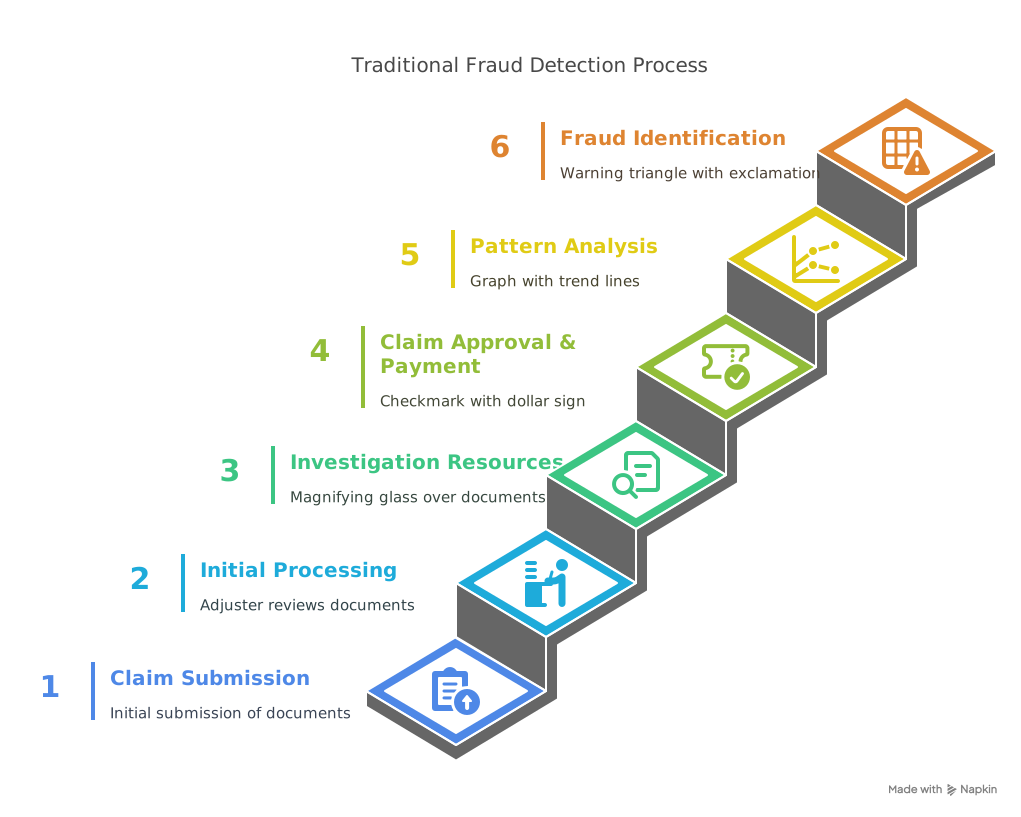
Another critical weakness in traditional fraud detection systems involves their limited ability to identify sophisticated document manipulation. While these systems excel at identifying numerical anomalies and pattern deviations, they typically lack the capability to detect subtle alterations in supporting documentation. Modern fraudsters understand this limitation and focus their efforts on creating convincing documentation that supports their false claims rather than relying on obviously suspicious claim patterns.
The human element in traditional fraud detection creates additional complications. Claims adjusters and investigators, regardless of their experience and training, can process only a limited number of claims with thorough attention to detail. As claim volumes increase and pressure mounts to process claims quickly, the likelihood of overlooking subtle fraud indicators increases correspondingly. Human reviewers may also develop unconscious biases based on their experience, potentially missing new fraud patterns that fall outside their established expectations.
Document intelligence represents a paradigm shift in how artificial intelligence systems interact with and analyze unstructured information. Unlike traditional data processing systems that work with structured databases and numerical inputs, document intelligence technologies can examine text, images, formatting patterns, and metadata within documents to extract meaningful insights about authenticity, consistency, and legitimacy.
The foundation of document intelligence lies in advanced machine learning algorithms that have been trained on massive datasets of legitimate and fraudulent documents. These systems learn to recognize subtle patterns that indicate document manipulation, inconsistencies between related documents, and anomalies that suggest fabrication or alteration. Unlike human reviewers, these AI systems can simultaneously analyze hundreds of different document characteristics while maintaining consistent attention to detail regardless of processing volume or time pressure.
One of the most powerful aspects of document intelligence involves its ability to perform cross-reference analysis across multiple documents within a single claim. Traditional human review processes typically examine documents sequentially, making it difficult to identify subtle inconsistencies between related documents. Document intelligence systems can simultaneously analyze medical records, bills, correspondence, and supporting documentation to identify discrepancies that might indicate coordinated fraud attempts.
The technology excels particularly in detecting altered or fabricated documentation through advanced image analysis and text recognition capabilities. Modern document intelligence systems can identify pixel-level alterations in digital documents, recognize font inconsistencies that suggest text manipulation, and detect formatting anomalies that indicate document templates have been improperly modified. These capabilities extend far beyond what human reviewers can accomplish, even with significant time and attention devoted to each document.
Document intelligence also incorporates natural language processing capabilities that allow it to understand context and meaning within textual content. This means the system can identify not just obvious contradictions between documents, but also subtle inconsistencies in narrative descriptions, timeline discrepancies, and contextual information that doesn't align properly across related documents. For example, the system might identify that a medical report describes injuries that are inconsistent with the accident description provided in a police report, even when both documents appear legitimate when examined individually.
The real-time processing capabilities of document intelligence systems represent another significant advantage over traditional approaches. While human reviewers require substantial time to thoroughly examine complex documentation, AI systems can process and analyze multiple documents simultaneously within seconds of submission. This speed enables immediate identification of suspicious documentation before claims enter the processing pipeline, preventing the resource waste associated with processing fraudulent claims.
The transformation from reactive fraud detection to predictive prevention fundamentally changes when and how fraud identification occurs within the claims processing workflow. Instead of waiting until after claims have been approved and patterns emerge in aggregate data, document intelligence systems analyze every piece of supporting documentation at the moment of submission, creating an immediate barrier against fraudulent claims entering the processing system.
This real-time prevention approach begins the moment a claimant submits documentation to support their claim. As documents are uploaded or received through various submission channels, document intelligence systems immediately begin their analysis, examining everything from image metadata and formatting consistency to textual content and cross-document correlations. This immediate analysis creates the first line of defense against fraudulent claims, identifying suspicious documentation before human resources are allocated to processing activities.
The prevention-focused approach proves particularly effective because it interrupts the fraud attempt at its most vulnerable stage. Fraudsters typically invest significant effort in creating convincing documentation, but they often lack the sophisticated understanding of document analysis that would be required to defeat advanced AI detection systems. When document intelligence systems identify suspicious patterns immediately upon submission, they not only prevent the specific fraudulent claim but also discourage future attempts by demonstrating the enhanced detection capabilities of the system.
Real-time prevention also enables more effective resource allocation throughout the claims processing organization. Claims that pass initial document intelligence screening can be processed with greater confidence and efficiency, while claims flagged for suspicious documentation can be immediately routed to specialized fraud investigation teams. This targeted approach ensures that investigative resources are focused on genuinely suspicious claims rather than being distributed across all claims indiscriminately.
The immediate feedback capabilities of real-time prevention systems create additional deterrent effects that traditional fraud detection cannot achieve. When fraudulent documentation is identified immediately upon submission, the system can provide immediate notification to claimants that additional documentation or clarification is required. This immediate response often causes fraudsters to abandon their attempts rather than risk further scrutiny, while legitimate claimants can quickly provide additional information to resolve any concerns.
The integration of real-time prevention with existing claims management systems requires careful consideration of workflow optimization and user experience design. Claims processing staff need clear guidance on how to respond to document intelligence alerts, while maintaining processing efficiency for legitimate claims. Successful implementation typically involves creating tiered response protocols that automatically handle clearly legitimate claims, flag obviously suspicious claims for immediate investigation, and route borderline cases to human reviewers for final determination. 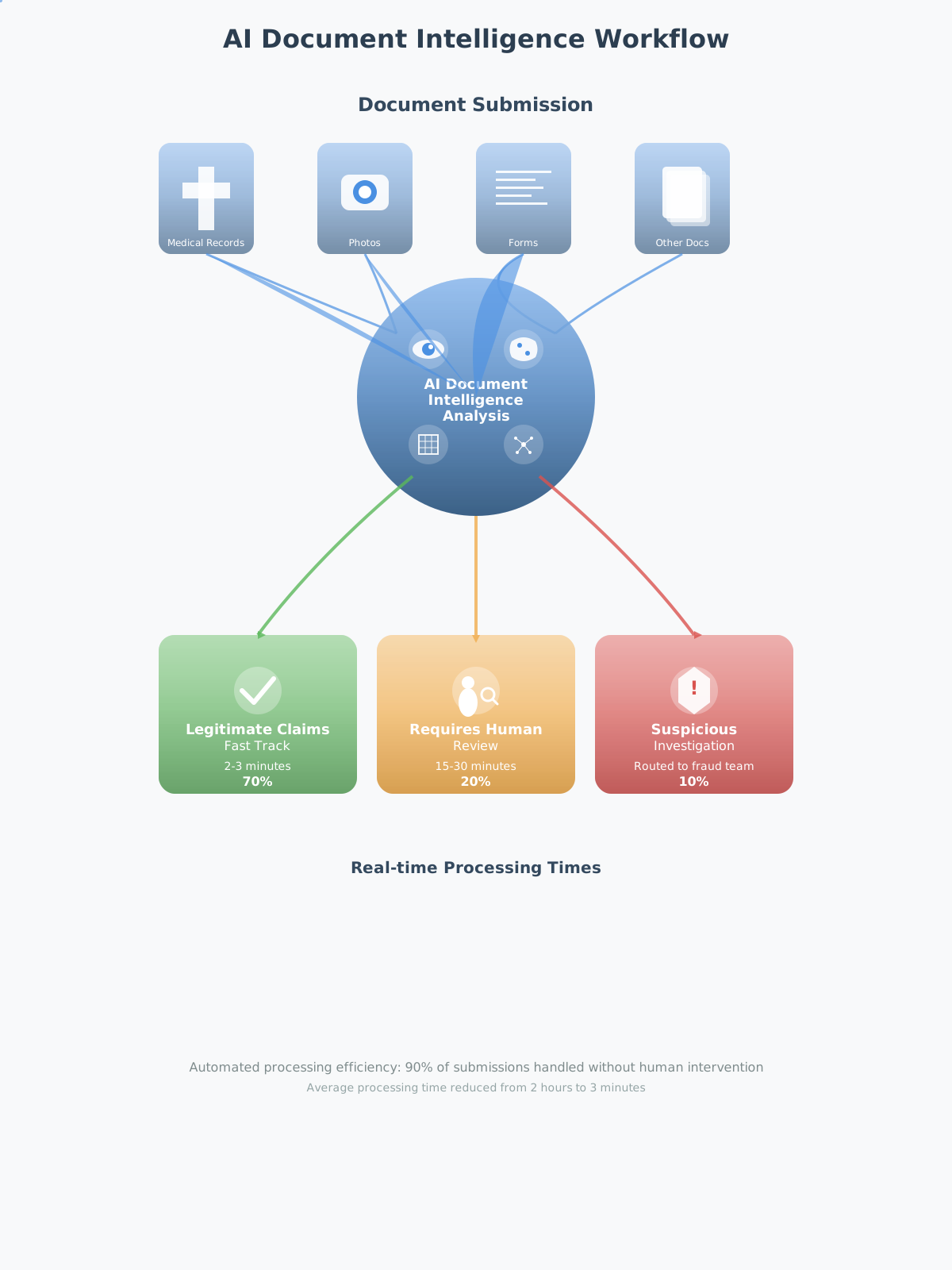
The technological infrastructure supporting real-time prevention must be designed to handle high-volume processing without creating bottlenecks in the claims submission process. Document intelligence systems need sufficient computing resources to analyze multiple complex documents simultaneously while maintaining response times that don't negatively impact customer experience. This often requires cloud-based processing capabilities that can scale dynamically based on submission volumes and document complexity.
The sophistication of modern document intelligence systems extends far beyond basic text recognition and image analysis. These systems employ advanced pattern recognition algorithms that can identify subtle indicators of document manipulation, fabrication, and coordinated fraud schemes that would be virtually impossible for human reviewers to detect consistently.
One of the most powerful pattern recognition capabilities involves the analysis of document creation and modification histories through metadata examination. Every digital document contains hidden information about when it was created, what software was used, what modifications were made, and even what devices were involved in its creation. Document intelligence systems can analyze this metadata to identify anomalies that suggest fraudulent activity, such as documents that were supposedly created months apart but show identical creation timestamps, or medical records that show modification dates after the claimed injury occurred.
The systems also excel at identifying template-based fraud schemes through formatting and structural analysis. Many insurance fraud operations rely on document templates that are modified slightly for each fraudulent claim to create the appearance of legitimate documentation. Document intelligence systems can identify these templates by analyzing formatting patterns, text positioning, font usage, and structural elements across multiple claims. When the same document template appears across multiple claims from different sources, it provides strong evidence of organized fraud activity.
Advanced pattern recognition extends to handwriting analysis and signature verification, areas where traditional fraud detection systems typically struggle. Modern AI systems can analyze handwriting patterns, pressure variations, and signature characteristics to identify forged or altered signatures on critical documents. These systems can also detect when signatures have been digitally copied from one document to another, a common technique in document fraud schemes.
The analysis of photographic evidence represents another area where document intelligence systems demonstrate superior capabilities compared to traditional approaches. These systems can analyze photographs for signs of digital manipulation, staging, or alteration that might not be apparent to human reviewers. For example, the system might identify that damage photographs show inconsistent lighting patterns suggesting composite images, or that the damage depicted is inconsistent with the described accident circumstances.
Cross-claim pattern recognition capabilities allow document intelligence systems to identify relationships between seemingly unrelated claims that might indicate organized fraud operations. The system can analyze thousands of claims simultaneously to identify common elements such as recurring phone numbers, addresses, medical providers, or repair facilities that appear across multiple suspicious claims. This capability enables identification of fraud rings and coordinated schemes that traditional claim-by-claim analysis would likely miss.
The natural language processing components of document intelligence systems can identify suspicious patterns in textual content that suggest fabricated or exaggerated claims. These systems can detect unusually detailed descriptions that seem rehearsed, inconsistent timeline references, or narrative elements that don't align with typical authentic claim descriptions. The systems can also identify when multiple claims contain suspiciously similar language or descriptions, suggesting shared coaching or coordination between claimants.
The implementation of document intelligence for insurance fraud prevention requires a sophisticated technology stack that can handle the diverse challenges of real-time document analysis while integrating seamlessly with existing claims management systems. Understanding the architectural requirements and technology components is essential for insurance organizations considering this transition from reactive to predictive fraud prevention.
The foundation of any document intelligence system lies in its machine learning infrastructure, which must be capable of processing multiple types of unstructured data simultaneously. This typically involves a combination of computer vision algorithms for image analysis, natural language processing engines for text analysis, and pattern recognition systems for cross-document correlation. These components must work together seamlessly to provide comprehensive document analysis within the time constraints of real-time processing requirements.
Cloud-based infrastructure proves essential for most document intelligence implementations due to the computational requirements of advanced AI analysis and the need for scalable processing capacity. The system architecture must accommodate varying document volumes throughout different periods while maintaining consistent processing performance. This often requires auto-scaling capabilities that can dynamically allocate additional processing resources during peak submission periods while optimizing costs during lower-volume periods.
The integration layer between document intelligence systems and existing claims management platforms requires careful design to ensure seamless data flow without disrupting established workflows. This integration must handle various document formats, submission channels, and processing requirements while providing clear feedback to claims processing staff about document analysis results. The system must also maintain comprehensive audit trails that document all analysis activities for regulatory compliance and quality assurance purposes.
Data security and privacy protection represent critical architectural considerations given the sensitive nature of insurance documentation and the strict regulatory requirements governing personal information handling. The document intelligence system must incorporate encryption for data in transit and at rest, access controls that limit system access to authorized personnel, and data retention policies that comply with applicable privacy regulations. The architecture must also ensure that sensitive information is not inadvertently exposed through system logs or analysis outputs.
The training and updating mechanisms for machine learning models require ongoing attention to maintain system effectiveness as fraud techniques evolve. The architecture must support continuous learning capabilities that allow the system to adapt to new fraud patterns while avoiding false positive rates that would undermine system utility. This typically involves feedback loops that incorporate human reviewer decisions back into the training process and regular model updates that incorporate new fraud detection techniques.
Performance monitoring and system optimization capabilities are essential for maintaining processing efficiency and identifying potential improvements in detection accuracy. The architecture must include comprehensive monitoring tools that track processing times, accuracy rates, false positive rates, and system resource utilization. This monitoring data enables ongoing optimization of system performance and provides valuable insights for system administrators and fraud prevention teams.
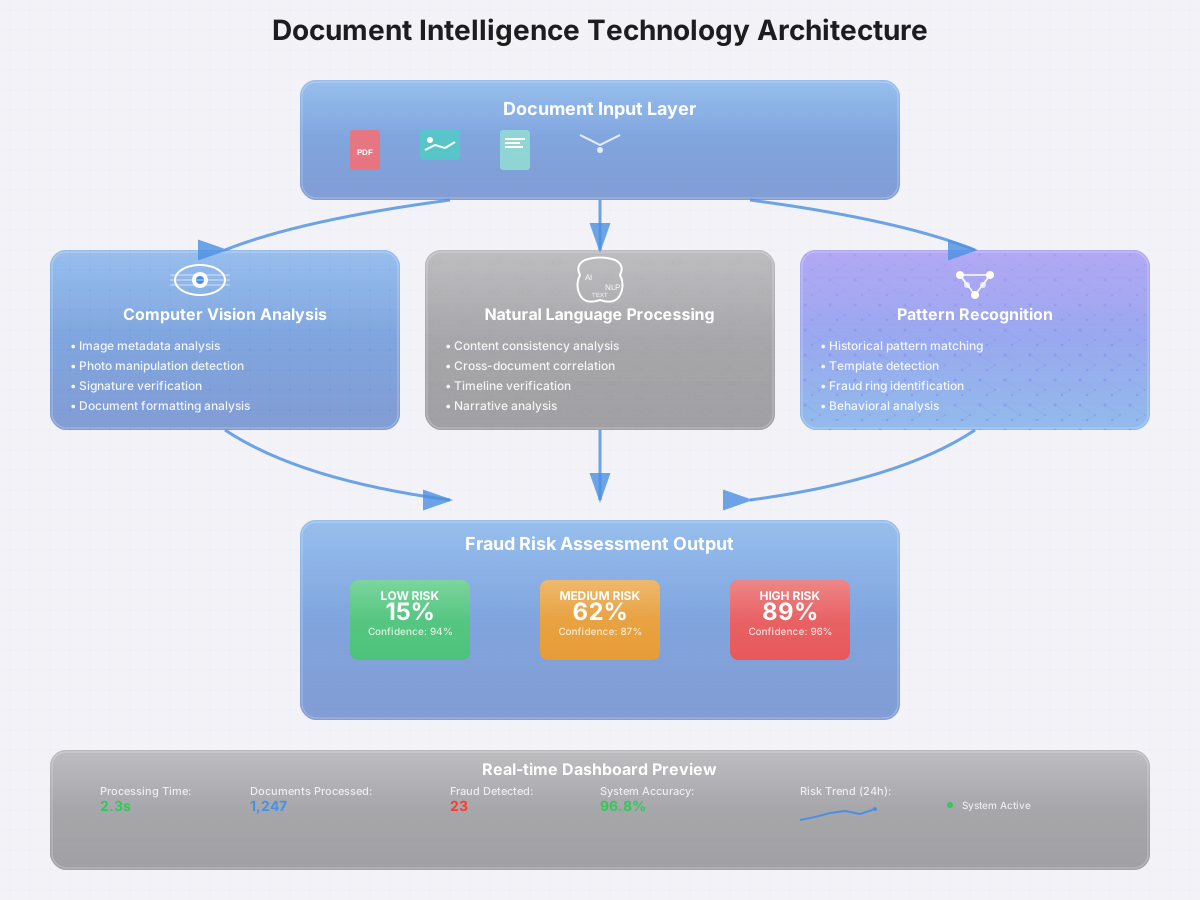
The user interface design for document intelligence systems requires careful consideration of how fraud prevention staff will interact with system outputs and recommendations. The interface must present complex analysis results in easily understandable formats while providing sufficient detail for investigators to understand the reasoning behind fraud alerts. This often involves dashboard designs that prioritize the most critical information while providing drill-down capabilities for detailed analysis when needed.
The transition from reactive fraud detection to predictive prevention through document intelligence creates new opportunities for measuring success and calculating return on investment. Unlike traditional fraud detection systems that primarily measure success through the dollar value of fraud identified after the fact, document intelligence systems can demonstrate value through prevented losses, improved processing efficiency, and enhanced resource allocation.
The most direct measure of document intelligence success involves calculating the financial value of fraudulent claims prevented from entering the processing pipeline. This calculation requires establishing baseline fraud rates from historical data and then measuring the reduction in fraudulent claims that progress through to approval and payment. The prevented fraud amount represents direct cost savings that can be attributed to the document intelligence system, providing a clear foundation for ROI calculations.
Processing efficiency improvements represent another significant source of measurable value from document intelligence implementation. When suspicious claims are identified immediately upon submission rather than after extensive processing, the organization saves substantial human resources and administrative costs. These savings can be quantified by measuring the reduction in processing time for claims that are ultimately determined to be fraudulent, multiplied by the fully-loaded cost of staff time involved in claims processing activities.
The improvement in legitimate claim processing speed represents an additional benefit that contributes to overall system ROI. When document intelligence systems can quickly verify the authenticity of legitimate claims documentation, these claims can move through the processing pipeline more efficiently. This improved efficiency translates to better customer satisfaction, reduced administrative costs, and improved cash flow management for the insurance organization.
False positive rate management becomes a critical success metric for document intelligence systems, as excessive false positives can undermine system value by creating unnecessary investigations and processing delays. Successful implementations typically achieve false positive rates below five percent while maintaining fraud detection rates above ninety percent. Monitoring and optimizing this balance requires ongoing attention and system refinement to ensure maximum value delivery.
The deterrent effect of document intelligence systems creates additional value that can be challenging to quantify but represents significant long-term benefits. When potential fraudsters understand that claims documentation will be subjected to sophisticated AI analysis, many abandon fraud attempts entirely rather than risk detection. This deterrent effect reduces the overall fraud attempt rate, creating benefits that extend beyond the direct detection capabilities of the system.
Staff productivity and job satisfaction improvements often result from document intelligence implementation as fraud prevention staff can focus their expertise on genuinely suspicious cases rather than spending time on routine reviews that are better handled by AI systems. This improved resource allocation not only increases the effectiveness of fraud prevention efforts but also contributes to better staff retention and job satisfaction within fraud prevention teams.
The long-term strategic value of document intelligence systems includes the continuous improvement in fraud detection capabilities as the AI systems learn from new fraud patterns and techniques. This ongoing learning creates compound benefits over time, as the system becomes increasingly effective at identifying new and evolving fraud schemes. The strategic value also includes the competitive advantage gained from more efficient claims processing and lower fraud losses compared to competitors using traditional detection methods.
The transition to document intelligence-based fraud prevention presents several implementation challenges that insurance organizations must address to achieve successful deployment. Understanding these challenges and their solutions is essential for developing realistic implementation timelines and ensuring long-term system success.
One of the most significant challenges involves integrating document intelligence systems with existing claims management infrastructure without disrupting current operations. Most insurance organizations have established claims processing workflows that have been optimized over years of operation, and introducing new technology requires careful change management to avoid operational disruptions. The solution typically involves phased implementation approaches that gradually introduce document intelligence capabilities while maintaining parallel processing capabilities during the transition period.
Staff training and change management represent another critical challenge, as claims processing personnel must understand how to work effectively with AI-generated fraud alerts and recommendations. This requires comprehensive training programs that help staff understand the capabilities and limitations of document intelligence systems while developing skills for interpreting and acting on system outputs. Successful implementations typically include ongoing training programs that evolve as staff gain experience with the new technology.
Data quality and historical data integration challenges arise when implementing document intelligence systems that require extensive training data to achieve optimal performance. Many insurance organizations have document archives that span decades and include various formats and quality levels. Preparing this historical data for use in training AI systems requires substantial data cleansing and standardization efforts. The solution often involves prioritizing the most recent and highest-quality data for initial training while gradually incorporating older data as resources permit.
Regulatory compliance considerations create additional complexity for document intelligence implementations, particularly regarding data privacy, audit trail requirements, and decision-making transparency. Insurance regulations typically require that organizations be able to explain the reasoning behind claim decisions, which can be challenging when AI systems make complex pattern recognition decisions. Solutions include implementing explainable AI techniques that provide clear reasoning for system recommendations and maintaining comprehensive documentation of all system decisions.
The technical challenges of achieving real-time processing performance while maintaining accuracy require careful system architecture and resource allocation planning. Document intelligence systems must process complex analyses within seconds to avoid creating bottlenecks in the claims submission process, while maintaining the analytical depth necessary for effective fraud detection. This typically requires cloud-based processing capabilities with auto-scaling features and careful optimization of AI algorithms for processing efficiency.
Vendor selection and technology integration decisions create strategic challenges that can significantly impact long-term system success. The document intelligence market includes various providers with different capabilities, integration approaches, and pricing models. Organizations must carefully evaluate potential vendors based on their specific needs, existing technology infrastructure, and long-term strategic objectives. This evaluation process should include proof-of-concept implementations and detailed technical assessments to ensure compatibility and performance.
The ongoing maintenance and improvement requirements for document intelligence systems create operational challenges that extend well beyond initial implementation. AI systems require continuous monitoring, model updates, and performance optimization to maintain effectiveness as fraud techniques evolve. Organizations must develop internal capabilities or vendor relationships that can support these ongoing requirements while ensuring system performance remains optimal over time.
The evolution of document intelligence technology continues to accelerate, with emerging capabilities that promise even greater fraud prevention effectiveness and operational efficiency improvements. Understanding these future developments is essential for insurance organizations developing long-term fraud prevention strategies and technology investment plans.
Advanced behavioral analysis capabilities represent one of the most promising areas of development, where AI systems will increasingly be able to identify subtle behavioral patterns in how fraudulent claims are submitted and documented. These systems will analyze not just document content but also submission patterns, timing, communication styles, and other behavioral indicators that suggest fraudulent intent. This behavioral analysis will create additional layers of fraud detection that complement document-based analysis.
The integration of external data sources will significantly enhance the fraud detection capabilities of document intelligence systems. Future implementations will incorporate real-time access to medical databases, repair cost databases, weather data, traffic incident reports, and other external information sources that can verify or contradict claim documentation. This external data integration will enable more comprehensive verification of claim circumstances and supporting documentation.
Blockchain technology integration offers potential solutions for document authenticity verification that could eliminate many forms of document fraud entirely. When critical documents such as medical records, police reports, and repair estimates are recorded on blockchain systems, their authenticity and modification history become verifiable through cryptographic means. This development could fundamentally change the document fraud landscape by making document manipulation much more difficult to accomplish successfully.
The development of industry-wide fraud intelligence sharing platforms will enable document intelligence systems to benefit from collective learning across multiple insurance organizations. These platforms will allow AI systems to identify fraud patterns that span multiple insurers while maintaining data privacy through advanced cryptographic techniques. This collective intelligence approach will significantly enhance the ability to identify organized fraud operations and emerging fraud techniques.
Real-time integration with Internet of Things devices and sensors will provide additional verification capabilities for many types of insurance claims. Vehicle telematics data, smart home sensors, wearable devices, and other IoT sources will provide objective verification of claim circumstances that can be compared against submitted documentation. This objective data will make many types of fraud much more difficult to execute successfully.
The strategic implications of these technological developments extend beyond fraud prevention to encompass fundamental changes in insurance business models and customer relationships. As fraud prevention becomes more effective and automated, insurance organizations will be able to offer more competitive pricing to honest customers while maintaining profitability. The improved efficiency of claims processing will enable better customer service and faster claim resolution for legitimate claims.
The competitive landscape within the insurance industry will increasingly favor organizations that successfully implement advanced document intelligence capabilities. Companies that continue to rely on traditional fraud detection methods will face higher fraud losses, less efficient operations, and reduced competitiveness compared to organizations that embrace predictive fraud prevention technologies.
The transformation from reactive fraud detection to predictive prevention through document intelligence represents more than a technological upgrade it constitutes a fundamental shift in how insurance organizations approach risk management and operational efficiency. The $40 billion annual cost of insurance fraud can no longer be addressed effectively through traditional detection methods that operate after the financial damage has occurred.
Document intelligence technology offers insurance organizations the opportunity to prevent fraudulent claims from consuming resources and inflicting financial losses by identifying suspicious documentation at the moment of submission. This real-time prevention approach not only reduces direct fraud losses but also improves operational efficiency, enhances customer service for legitimate claimants, and creates sustainable competitive advantages.
The successful implementation of document intelligence requires careful attention to technology architecture, staff training, regulatory compliance, and ongoing system optimization. Organizations that approach this transformation strategically, with realistic timelines and comprehensive change management programs, will be positioned to achieve significant returns on their technology investments while fundamentally improving their fraud prevention capabilities.
The future evolution of document intelligence technology promises even greater capabilities through behavioral analysis, external data integration, blockchain verification, and collective intelligence sharing. Insurance organizations that begin their transformation to predictive fraud prevention now will be best positioned to leverage these emerging capabilities as they become available.
The choice facing insurance organizations is no longer whether to implement document intelligence for fraud prevention, but rather how quickly they can execute this transformation while maintaining operational excellence. The organizations that move decisively to implement predictive fraud prevention will establish lasting competitive advantages while those that delay will find themselves increasingly disadvantaged in both fraud prevention effectiveness and operational efficiency.
The time for reactive fraud detection has passed. The future belongs to organizations that embrace the predictive prevention capabilities of document intelligence to protect their financial performance, serve their customers more effectively, and build sustainable competitive advantages in an increasingly challenging insurance marketplace.

Head IT Operations - Co Founder of Artificio
See it in your SAP environment
Bring us a document, a process, or a bottleneck. We'll show how Artificio captures, validates, and posts into SAP — then scale from there.
Security & compliance
ISO 27001:2013 certified, SOC 2 Type 2 compliant, GDPR and HIPAA ready. Every agent action is logged, auditable, and runs in isolated environments.