

Blog
How AI-Powered Document Chat Transforms Policy Work and Public Service
Discover how AI-powered document chat transforms government work by making large files easy to analyze and understand.

Blog
Discover how AI-powered document chat transforms government work by making large files easy to analyze and understand.
Government work has always been document-heavy. From thick policy frameworks that span hundreds of pages to legislative histories that track decades of amendments, changes, and revisions, public servants spend countless hours buried in paperwork. Whether you're a policy analyst trying to understand how a new regulation connects to existing laws, a legislative aide researching the background of a bill, or a public records officer helping citizens find specific information, the sheer volume of documents can be overwhelming. Traditional methods of searching through these massive files often mean spending hours scrolling through PDFs, using basic search functions that only find exact word matches, or printing out sections to compare side by side. This outdated approach not only wastes valuable time but also increases the risk of missing critical information that could impact important decisions.
The introduction of AI-powered document chat technology specifically designed for large files up to 500MB represents a fundamental shift in how government operations can be conducted. Unlike conventional document management systems that treat each file as a separate entity, this revolutionary approach allows government workers to have natural conversations with their documents, asking questions in plain English and receiving comprehensive answers that take into account the full context of even the largest policy documents. Imagine being able to upload a complete legislative package with all its appendices, amendments, and supporting documentation, then simply asking "What are the main changes from the previous version?" or "How does this new policy affect existing regulations on environmental protection?" The system understands the relationships between different sections, can trace references across hundreds of pages, and provides answers that consider the entire document's context rather than just isolated passages
Government documents are uniquely complex compared to typical business files. A single policy framework might include the main policy text, implementation guidelines, regulatory impact assessments, public consultation summaries, legal opinions, budget implications, and cross-references to dozens of other existing policies and laws. These documents often grow to enormous sizes because they must be comprehensive, covering every possible scenario and exception to ensure fair and consistent implementation across different jurisdictions and circumstances. For example, a comprehensive healthcare policy might reference everything from federal regulations to state-specific implementation requirements, international treaties, budget allocations across multiple fiscal years, and detailed technical specifications for healthcare providers.
The traditional approach to working with these documents involves multiple people spending weeks reading through different sections, creating summaries, cross-referencing information manually, and trying to piece together a complete understanding of how all the parts fit together. This process is not only time-consuming but also prone to human error. Important connections between sections might be missed, conflicting requirements might not be identified until implementation begins, and the overall intent of the policy might get lost in the technical details. When questions arise during implementation, staff often have to go back to the original documents and repeat this manual analysis process, leading to delays and inconsistent interpretations.
The problem becomes even more challenging when dealing with legislative histories. Understanding how a current law came to be often requires reviewing not just the final legislation but also committee reports, hearing transcripts, amendment proposals, voting records, and public comment periods that might span several years. Each of these components might be stored in different systems, formats, or locations, making it nearly impossible for any single person to have a complete picture of the legislative intent and evolution. This fragmented approach to document analysis creates inefficiencies throughout the government process, from policy development and implementation to public service delivery and accountability.
AI-powered document chat technology transforms this entire paradigm by allowing government workers to interact with their documents as if they were having a conversation with an expert who has read and understood every single page. Instead of spending hours searching through a 300-page policy document for information about implementation timelines, a policy analyst can simply ask "When does this policy take effect and what are the key implementation milestones?" The system doesn't just search for keywords but actually understands the context, relationships, and implications of the information throughout the entire document.
This conversational approach is particularly powerful for government work because policy documents are often written in complex legal language that can be difficult to interpret. The AI system can help translate these complex provisions into plain English explanations while maintaining accuracy and legal precision. For instance, when a citizen services representative needs to explain a new benefit program to a caller, they can ask the system "Can you explain the eligibility requirements for this program in simple terms?" and receive a clear, accessible explanation that covers all the relevant details without the legal jargon that might confuse citizens.
The technology also excels at identifying connections and relationships that might not be immediately obvious to human readers. Government policies rarely exist in isolation but instead interact with existing laws, regulations, and programs in complex ways. The AI system can trace these connections across multiple documents, identifying potential conflicts, redundancies, or gaps that need to be addressed. This capability is invaluable during the policy development process, where understanding the full impact of proposed changes requires considering how they will interact with the existing regulatory framework.
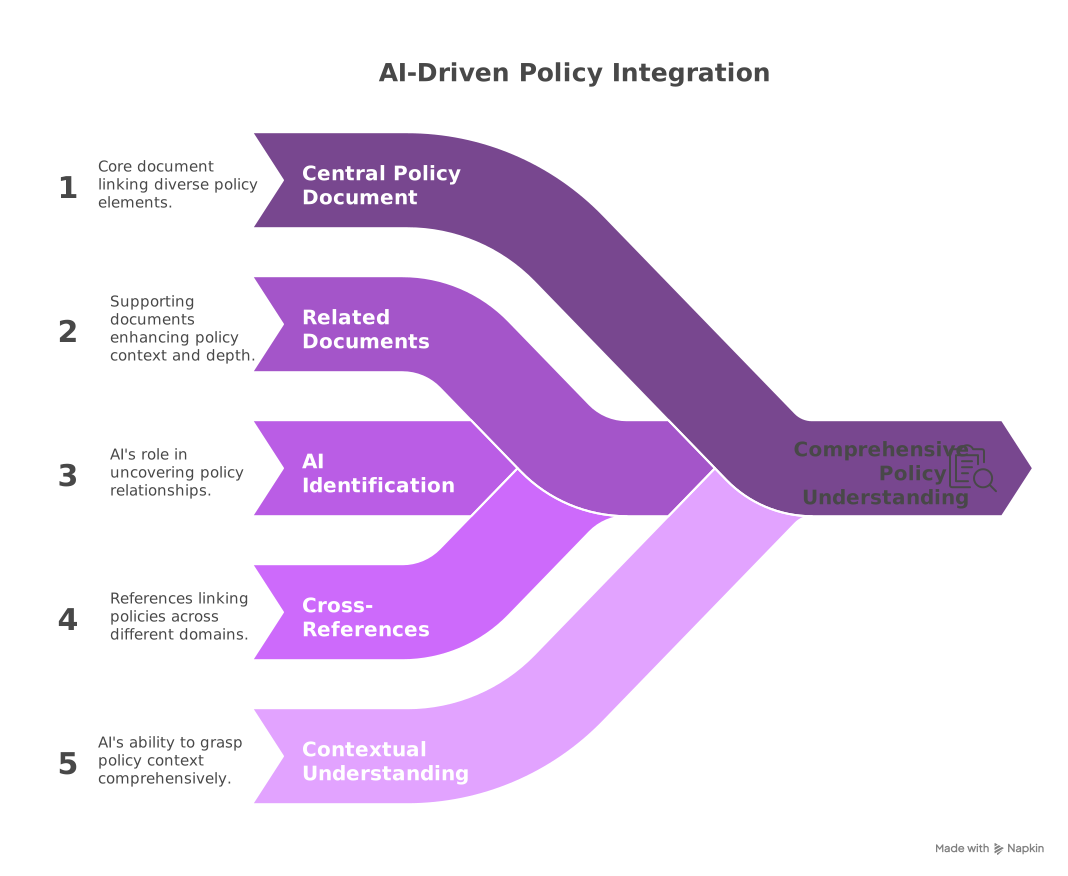
The policy development process typically involves extensive research into existing laws, regulations, and programs to understand the current landscape before proposing changes. This research phase can take weeks or months as analysts manually review relevant documents, create summaries, and identify areas where new policies might conflict with or complement existing ones. With AI-powered document chat, this entire process can be dramatically accelerated and made more thorough.
Policy developers can upload all relevant background documents into the system and then ask comprehensive questions about the current state of regulations in their area of focus. Questions like "What are all the existing programs that provide support for small businesses, and how do their eligibility requirements differ?" can be answered instantly with a complete analysis that might have taken a team of analysts weeks to compile manually. The system can identify overlaps, gaps, and inconsistencies across multiple programs and policies, providing a comprehensive foundation for developing new initiatives.
During the policy drafting process, the AI system can help ensure consistency and completeness by checking proposed language against existing regulations and identifying potential conflicts or unintended consequences. For example, if a new environmental regulation is being developed, the system can analyze how the proposed requirements interact with existing industrial regulations, tax policies, and international agreements, highlighting areas where coordination or adjustment might be needed. This comprehensive analysis helps prevent the common problem of policies being developed in silos without full consideration of their broader impact.
The system is equally valuable during the policy review and revision process. When policies need to be updated or amended, understanding the full scope of changes and their implications requires analyzing not just the policy itself but also its implementation history, stakeholder feedback, and related regulatory developments. The AI can quickly summarize implementation challenges, identify patterns in stakeholder concerns, and suggest areas where clarification or modification might be needed based on the complete document history.
Legislative research is one of the most document-intensive aspects of government work, requiring staff to analyze proposed bills, research their legislative history, understand their relationship to existing laws, and assess their potential impact. Traditional legislative research involves manually reviewing committee reports, hearing transcripts, floor debates, and amendment histories, a process that can take days or weeks for complex legislation. AI-powered document chat technology can transform this process by allowing legislative staff to upload all relevant materials and then ask specific questions about the legislation's development, intent, and implications.
For example, when analyzing a proposed healthcare reform bill, legislative staff can ask questions like "What were the main concerns raised during committee hearings about this provision?" or "How does this bill's approach to cost control compare to similar legislation introduced in other states?" The system can analyze hundreds of pages of hearing transcripts, committee reports, and comparative legislation to provide comprehensive answers that would have required extensive manual research to compile.
The technology is particularly valuable for understanding legislative intent, which is crucial for proper implementation and interpretation of laws. By analyzing the complete legislative record, including committee discussions, sponsor statements, and floor debates, the AI system can provide insights into what lawmakers were trying to achieve with specific provisions and how they intended the law to be implemented. This understanding is essential for agencies responsible for implementing the legislation and for courts that may need to interpret its meaning.
Legislative staff can also use the system to track the evolution of specific issues across multiple legislative sessions. By uploading bills, amendments, and related documents from several years, they can ask questions like "How has the approach to addressing this issue changed over the past five years?" or "What arguments have been most effective in building support for similar legislation?" This historical analysis can inform strategy and help identify the most promising approaches for advancing policy goals.
Public records management presents unique challenges because government agencies must maintain vast archives of documents while also providing timely access to citizens, researchers, and other stakeholders who request specific information. Traditional public records systems often require requesters to know exactly what they're looking for and where it might be located, making it difficult for citizens to find relevant information about government activities that affect them.
AI-powered document chat technology can revolutionize public records access by allowing citizens to ask natural language questions about government activities and receive comprehensive answers drawn from across multiple document collections. Instead of filing separate records requests for different types of documents that might contain relevant information, citizens could ask questions like "What has the city council discussed about the proposed park development over the past year?" and receive a complete summary drawn from meeting minutes, staff reports, public comments, and related correspondence.
This improved accessibility serves the dual purpose of enhancing government transparency while reducing the administrative burden on public records staff. Rather than spending hours searching through different filing systems to locate responsive documents, staff can use the AI system to quickly identify and compile relevant information. The system can also help ensure that records requests are fulfilled more completely by identifying related documents that might not have been immediately obvious to human reviewers.
For government agencies, the technology provides powerful tools for managing their own document collections and ensuring compliance with records retention requirements. Agencies can ask questions about their document holdings to identify records that may be nearing their retention deadlines, locate documents that need to be transferred to archives, or find materials that may be responsive to litigation holds. This proactive approach to records management helps agencies maintain better control over their information while reducing the risk of compliance violations. 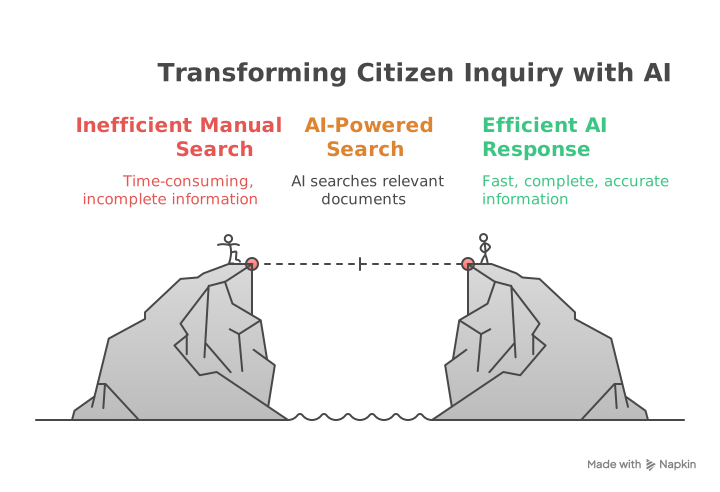
Security and compliance are paramount concerns for any technology used in government operations, and AI-powered document chat systems must meet the highest standards for protecting sensitive information. Government documents often contain confidential information, personal data subject to privacy regulations, classified materials, or commercially sensitive information that must be protected from unauthorized access or disclosure. The AI system must be designed with robust security measures that ensure documents are processed in isolated, encrypted environments where they cannot be accessed by unauthorized users or systems.
The architecture of secure government document chat systems typically involves processing documents in dedicated, encrypted environments that are completely isolated from other users and systems. Documents are never permanently stored on the servers, and all processing occurs in temporary, secure containers that are automatically destroyed after the session ends. This approach ensures that sensitive government information never persists in the system beyond the immediate analysis session, reducing the risk of data breaches or unauthorized access.
Compliance with government data protection regulations requires careful attention to how personal information is handled during document processing. Government documents often contain personal information about citizens, employees, or contractors that is subject to privacy regulations like GDPR or HIPAA. The AI system must be capable of identifying and appropriately handling this sensitive information, ensuring that privacy rights are protected even during automated analysis. This might involve automatically redacting personal information from responses or flagging documents that contain sensitive data for special handling procedures.
Audit trails and accountability are also crucial features for government applications. The system must maintain detailed logs of who accessed which documents, what questions were asked, and what information was provided in response. These audit capabilities allow government agencies to demonstrate compliance with transparency requirements, investigate potential security incidents, and ensure that document access is properly authorized and documented. The ability to track and report on system usage is essential for maintaining public trust and meeting oversight requirements.
Successfully implementing AI-powered document chat technology in government requires careful planning and a phased approach that considers both technical requirements and organizational change management. Government agencies should begin by identifying high-impact use cases where the technology can provide immediate value while building organizational confidence and expertise with the new capabilities. Policy analysis units, legislative research offices, and public records departments are often ideal starting points because they handle large volumes of complex documents and can readily demonstrate the value of improved document processing capabilities.
The initial implementation phase should focus on training key staff members who can become champions for the technology within their organizations. These early adopters should be provided with comprehensive training on how to effectively interact with the AI system, including how to ask questions that will yield the most useful results and how to interpret and validate the responses they receive. Government workers who are accustomed to traditional document research methods may need time to adjust to the conversational approach and learn how to leverage the system's capabilities most effectively.
Integration with existing government systems and workflows is another critical consideration for successful implementation. The document chat technology should complement rather than replace existing document management systems, allowing staff to continue using familiar tools while gaining access to enhanced analysis capabilities. This might involve developing interfaces that allow the AI system to access documents stored in existing repositories or creating workflows that seamlessly incorporate AI-powered analysis into current business processes.
Change management and staff acceptance are often the most challenging aspects of implementing new technology in government organizations. Staff members may be concerned about job security or skeptical about the accuracy and reliability of AI-generated analysis. Addressing these concerns requires clear communication about how the technology will enhance rather than replace human expertise, comprehensive training programs that build confidence in using the new tools, and demonstration of tangible benefits that make staff members' jobs easier and more effective. 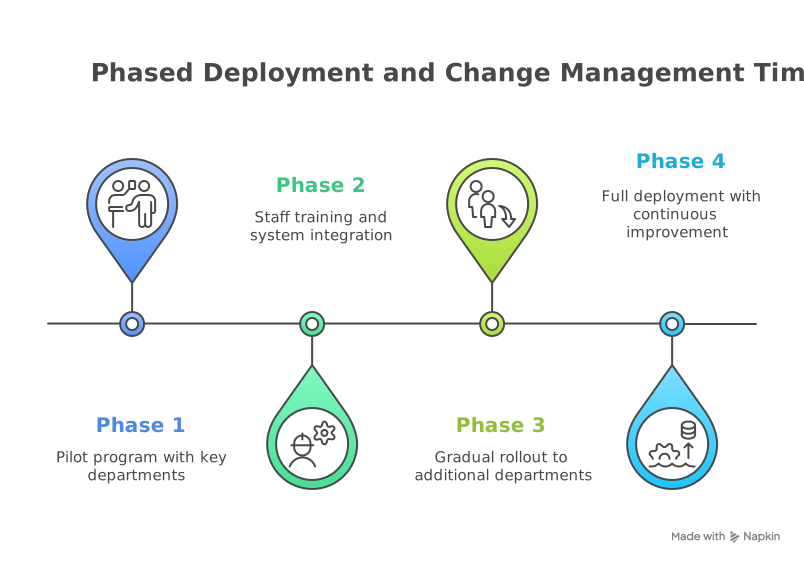
Implementing AI-powered document chat technology in government requires establishing clear metrics for success and continuous improvement processes that ensure the technology continues to meet evolving needs. Success metrics should include both quantitative measures like time savings and efficiency improvements, as well as qualitative measures like user satisfaction and the quality of analysis results. Government agencies should track how the technology impacts their ability to respond to public records requests, complete policy analysis projects, and support legislative research activities.
Time savings is often the most immediately visible benefit of the technology, and agencies should measure how AI-powered document analysis reduces the time required for common tasks like policy research, legislative analysis, and records review. However, it's important to recognize that the technology's value extends beyond simple time savings to include improvements in the comprehensiveness and accuracy of analysis. The AI system's ability to identify connections and relationships that might be missed by human reviewers can lead to better policy decisions and more thorough legislative research.
User adoption and satisfaction metrics are equally important for assessing the technology's success. Government agencies should regularly survey staff members who use the system to understand their experiences, identify areas for improvement, and ensure that the technology is meeting their needs effectively. This feedback can inform training programs, system enhancements, and best practice development that helps maximize the technology's value across the organization.
Quality assurance processes are essential for maintaining confidence in AI-generated analysis results. Government agencies should establish procedures for validating the accuracy of AI responses, particularly for high-stakes decisions or sensitive policy areas. This might involve having human experts review AI-generated summaries, cross-checking key findings against original source documents, or establishing approval workflows for certain types of analysis results before they are used in official decision-making processes.
Continuous improvement efforts should focus on expanding the technology's capabilities and applications as staff members become more comfortable with the system and identify new opportunities for enhanced document processing. This might involve training the AI system on additional types of government documents, developing specialized analysis capabilities for specific policy areas, or integrating the technology with additional government systems and databases.
The adoption of AI-powered document chat technology represents just the beginning of a broader transformation in how government organizations manage and analyze information. As the technology continues to evolve and improve, government agencies will be able to leverage increasingly sophisticated capabilities for policy development, implementation, and evaluation. Future developments might include enhanced multi-language processing capabilities that allow seamless analysis of documents in different languages, advanced pattern recognition that can identify emerging trends and issues across large document collections, and predictive analytics that can help anticipate the potential impacts of proposed policies.
The integration of document chat technology with other government systems and data sources will create new opportunities for comprehensive analysis and decision-making support. Imagine being able to ask questions that draw not only from policy documents but also from implementation data, budget information, performance metrics, and stakeholder feedback to provide complete pictures of program effectiveness and policy impacts. This integrated approach to information analysis could revolutionize how government agencies evaluate their programs and make decisions about resource allocation and policy adjustments.
The technology also has the potential to enhance civic engagement by making government information more accessible to citizens and stakeholders. As public records systems incorporate AI-powered analysis capabilities, citizens will be able to more easily find and understand information about government activities that affect them. This improved accessibility could lead to more informed public participation in policy discussions and better accountability for government actions.
The transformation of government document processing through AI technology represents a significant opportunity to improve the efficiency, accuracy, and transparency of government operations. By embracing these new capabilities while maintaining appropriate security and oversight measures, government agencies can better serve their citizens while making more informed decisions based on comprehensive analysis of the vast amounts of information they manage. The key to success will be thoughtful implementation that considers both the technical capabilities of the technology and the human factors that determine whether new tools are effectively adopted and used to their full potential.
As government agencies continue to grapple with increasing demands for transparency, efficiency, and responsiveness, AI-powered document chat technology offers a path forward that can help them meet these challenges while maintaining the high standards of accuracy and accountability that public service requires. The future of government operations will increasingly depend on the ability to quickly and accurately analyze large amounts of information, and organizations that successfully implement these new capabilities will be better positioned to serve their citizens and fulfill their public missions effectively.

Head IT Operations - Co Founder of Artificio
See it in your SAP environment
Bring us a document, a process, or a bottleneck. We'll show how Artificio captures, validates, and posts into SAP — then scale from there.
Security & compliance
ISO 27001:2013 certified, SOC 2 Type 2 compliant, GDPR and HIPAA ready. Every agent action is logged, auditable, and runs in isolated environments.