
Blog
Document Chat: Revolutionizing Healthcare Data
Process large medical docs (up to 500MB) with simple questions. Get instant answers, maintain privacy & compliance.

Blog
Process large medical docs (up to 500MB) with simple questions. Get instant answers, maintain privacy & compliance.
Healthcare workers spend too much time buried in paperwork. Doctors review patient files, researchers analyze clinical trial data, and administrators process regulatory documents. The problem? These files are massive. A single patient's medical history can span hundreds of pages. Clinical trial reports often contain thousands of pages of data. Traditional tools can't handle these large files properly, forcing healthcare professionals to break them into smaller pieces or spend hours manually searching for information.
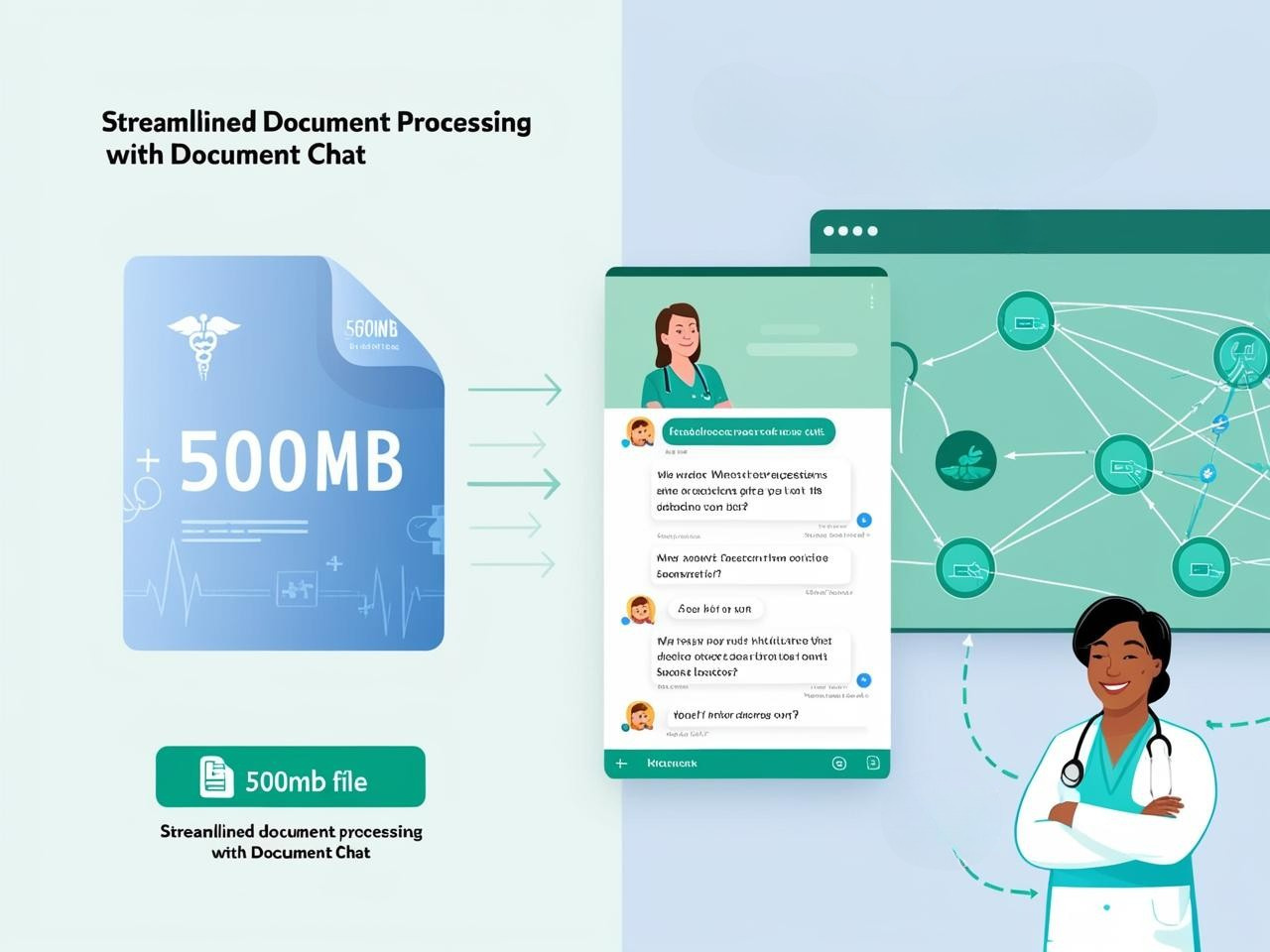
Artificio's Document Chat solves this problem by letting healthcare organizations process medical documents up to 500MB through simple conversations. Instead of scrolling through endless pages, users can ask questions and get instant answers while keeping patient privacy and regulatory compliance intact. This changes everything about how healthcare handles documentation.
Walk into any hospital or research facility, and you'll see the same thing: healthcare professionals drowning in documents. Electronic health records have grown enormous. What used to be a simple patient chart is now a complex digital file containing lab results, imaging reports, medication histories, specialist consultations, and treatment plans. A typical hospital stay generates dozens of pages of documentation. Chronic patients accumulate hundreds of pages over years of care.
Clinical researchers face even bigger challenges. Phase III clinical trials produce massive datasets with detailed patient information, adverse event reports, statistical analyses, and regulatory submissions. These documents are interconnected - understanding one section often requires referencing multiple other sections. When research teams need to analyze this data, they spend weeks just organizing and reviewing the paperwork before they can even start their real work.
The current approach is broken. Healthcare workers print out sections, take notes on paper, and try to keep track of important details across multiple documents. Important information gets missed. Critical connections between different parts of a patient's care go unnoticed. Research insights that could save lives remain buried in dense documentation that nobody has time to thoroughly review. 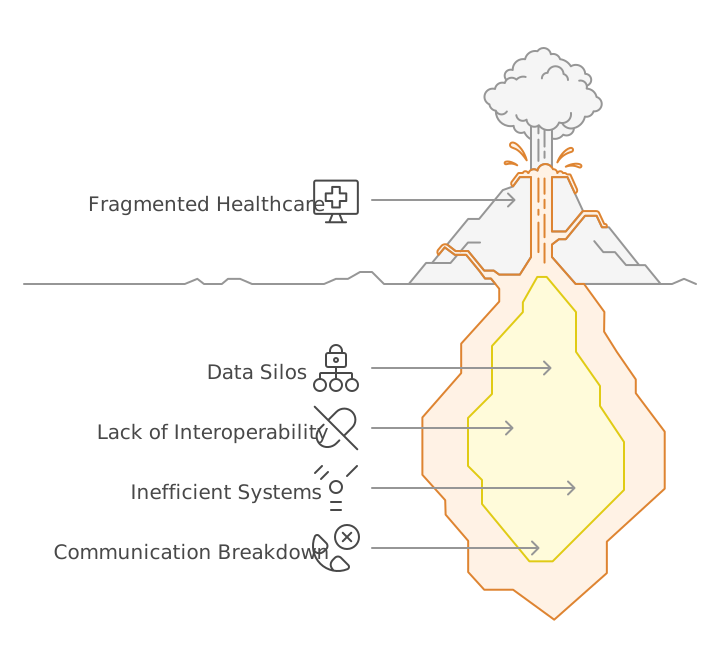
Most document processing tools make the problem worse. They can only handle small files, so users must break large medical documents into pieces. This destroys the context that makes medical information meaningful. When a clinical trial report gets split into dozens of smaller files, researchers lose the ability to understand how different data points relate to each other. Patient care suffers when doctors can't see the full picture of a patient's medical history because their tools can only show fragments at a time.
Document Chat handles entire medical documents as single units, preserving all the connections and context that make healthcare information valuable. When a cardiologist uploads a 300-page patient file, they can ask questions about the entire medical history without losing important relationships between different treatments, test results, and outcomes.
The system understands medical terminology and clinical concepts. Users can ask complex questions using everyday language and get accurate answers based on the complete document. A researcher analyzing a clinical trial can ask "What were the most common side effects in patients over 65 who received the higher dose?" and get a comprehensive answer that considers all relevant data points throughout the entire study documentation.
This approach maintains the integrity of medical information. Cross-references between different sections remain intact. When lab results reference previous tests, or when treatment decisions build on earlier assessments, Document Chat preserves these connections. Healthcare professionals get complete, contextually accurate information instead of fragmented pieces that might lead to incomplete understanding.
The conversation interface makes complex medical documents accessible to different types of users. Experienced physicians can ask detailed clinical questions, while administrators can request summary information for reports. Research coordinators can extract specific data points for analysis, and compliance officers can verify regulatory requirements across entire document sets.
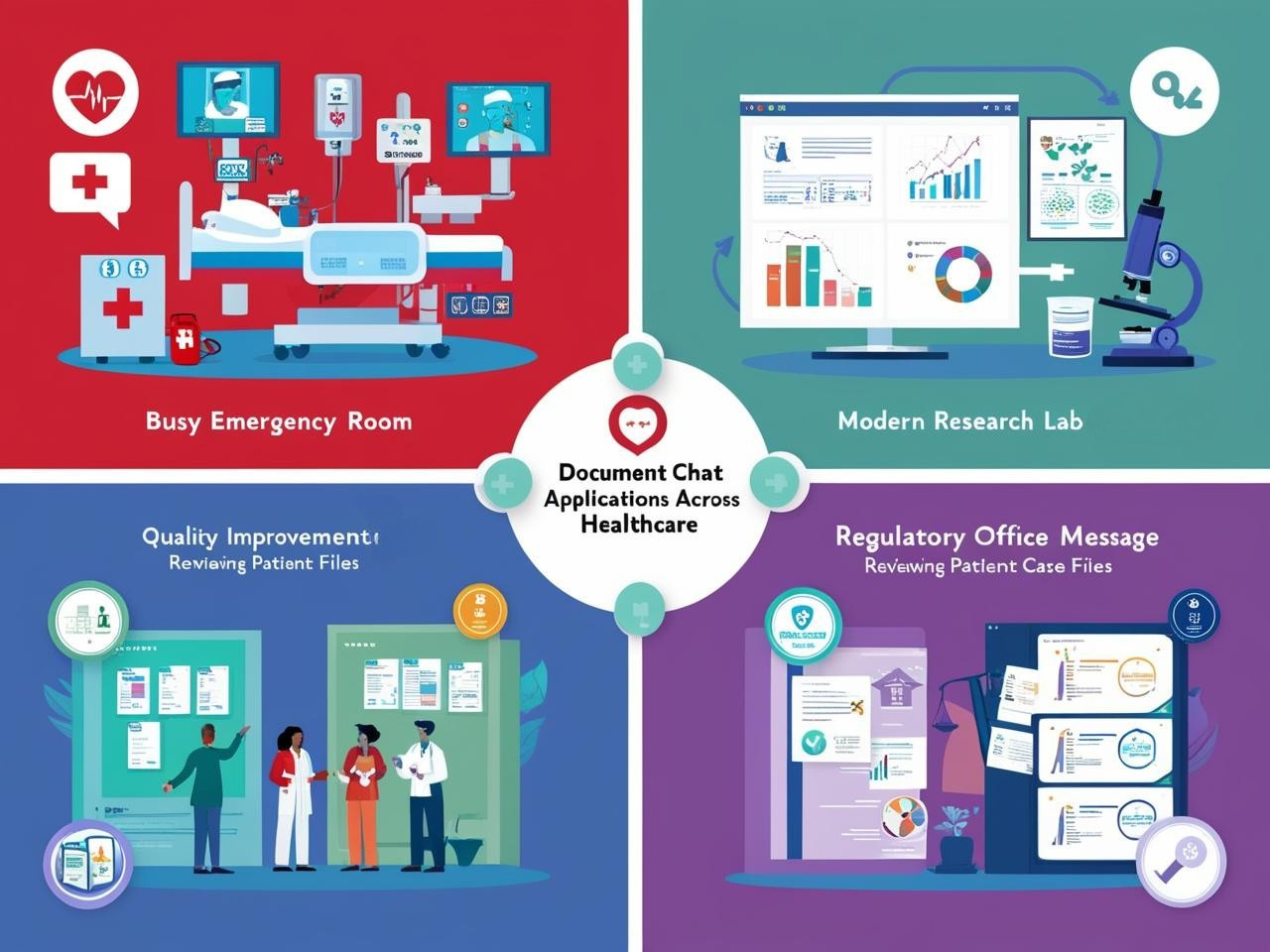
Emergency departments represent one of the most challenging environments for document review. When patients arrive unconscious or unable to communicate, medical teams need quick access to complete medical histories. Traditional systems require staff to search through multiple databases and piece together information from various sources. Document Chat lets emergency physicians upload comprehensive patient files and immediately ask critical questions like "What medications is this patient currently taking?" or "Are there any known allergies or previous adverse reactions?" The system provides instant, complete answers based on the entire medical record.
Clinical research coordinators deal with massive protocol documents that detail every aspect of study procedures, inclusion criteria, and data collection requirements. These protocols often exceed 200 pages and reference multiple appendices, forms, and supplementary documents. Research teams need to quickly find specific information about patient eligibility, dose modifications, or adverse event reporting procedures. Document Chat enables coordinators to ask natural language questions about complex protocol requirements and receive accurate answers that consider the full context of the study design.
Hospital quality improvement teams regularly review extensive case documentation to identify patterns and opportunities for better patient care. These reviews involve analyzing complete patient records, including nursing notes, physician orders, medication administration records, and discharge summaries. Traditional approaches require teams to manually read through hundreds of pages for each case. Document Chat accelerates this process by allowing quality teams to ask targeted questions about specific aspects of care delivery and receive comprehensive answers based on complete case documentation.
Regulatory affairs professionals must prepare submissions that demonstrate compliance with complex healthcare regulations. These submissions often compile information from multiple clinical studies, manufacturing records, and safety databases into comprehensive documents that can exceed 1000 pages. Regulatory teams need to verify that all required information is included and properly cross-referenced throughout the submission. Document Chat enables regulatory professionals to quickly verify completeness, identify missing information, and ensure consistency across different sections of large regulatory documents.
Healthcare organizations cannot compromise on patient privacy. Every document processing solution must meet strict regulatory requirements while providing the functionality that healthcare professionals need. Document Chat implements multiple layers of security designed specifically for healthcare environments.
Data encryption protects patient information throughout the document processing workflow. Medical documents remain encrypted during upload, processing, and storage. Access controls ensure that only authorized users can interact with specific documents based on their roles and responsibilities within the healthcare organization. Comprehensive audit logging tracks every interaction with patient data, creating the detailed records that healthcare regulations require.
The system processes documents without storing unnecessary copies of patient information. This data minimization approach reduces privacy risks while maintaining the functionality that healthcare users need. When healthcare professionals complete their document analysis, the system can securely delete processed information according to organizational data retention policies.
Role-based access controls match the complex permission structures found in healthcare organizations. Attending physicians have different access needs than residents, nurses, or administrative staff. Document Chat accommodates these varying permission levels while maintaining security and ensuring that users can access the information they need to do their jobs effectively.
Integration with existing healthcare IT systems ensures that Document Chat works within established security frameworks. The system can connect with electronic health record systems, clinical trial management platforms, and hospital information systems while maintaining the security standards that healthcare organizations already have in place.
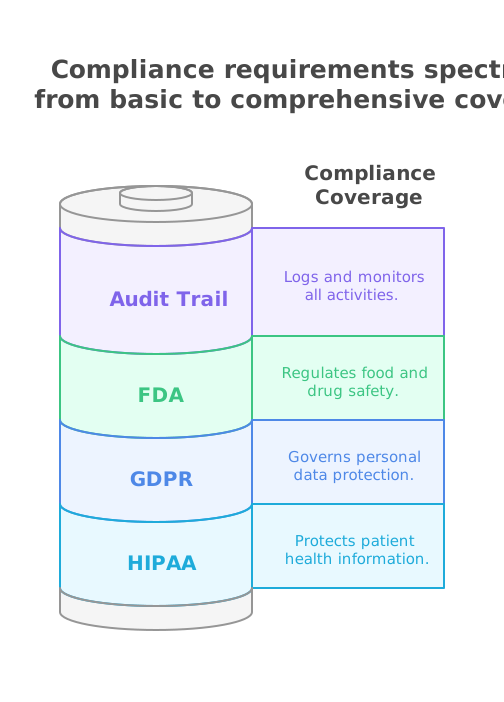
Healthcare compliance extends far beyond basic privacy protections. Clinical trial regulations require detailed documentation of every aspect of research conduct. Pharmaceutical manufacturing standards mandate comprehensive records of product development, testing, and quality control. Medical device regulations require extensive documentation of device performance, safety testing, and clinical outcomes.
Document Chat helps healthcare organizations maintain compliance by providing consistent, auditable access to large regulatory documents. When inspectors request information about specific aspects of clinical trials or manufacturing processes, organizations can quickly locate and extract relevant information from comprehensive documentation packages. The conversation interface creates detailed logs of information requests and responses, supporting the documentation requirements that regulatory compliance demands.
Clinical trial monitoring becomes more efficient when monitors can quickly review complete study documentation through natural language queries. Instead of manually searching through thousands of pages of case report forms, monitors can ask specific questions about patient enrollment, protocol deviations, or adverse event reporting. The system provides complete answers based on all available study documentation, helping monitors identify potential compliance issues more quickly and thoroughly.
Quality assurance teams can more effectively review manufacturing documentation when they can ask comprehensive questions about production processes, testing procedures, and quality control measures. Document Chat enables quality teams to quickly verify that manufacturing activities meet regulatory requirements and identify any documentation gaps that might compromise compliance.
Healthcare organizations face constant pressure to reduce costs while improving patient care quality. Document Chat addresses both challenges by dramatically reducing the time healthcare professionals spend on documentation review and analysis. When physicians can quickly extract relevant information from complete patient records, they spend more time on direct patient care. When researchers can efficiently analyze large clinical datasets, they can complete studies faster and move promising treatments to patients sooner.
The efficiency gains compound across healthcare organizations. Emergency department physicians make faster, better-informed decisions when they have immediate access to complete patient histories. Research teams complete clinical studies more quickly when they can efficiently analyze large datasets. Regulatory teams submit applications faster when they can quickly verify compliance across extensive documentation packages.
These improvements translate to measurable business outcomes. Reduced documentation processing time lowers administrative costs. Faster clinical research completion accelerates product development timelines. More efficient regulatory submissions reduce approval delays. Better access to patient information improves care quality and reduces medical errors.
Healthcare organizations also benefit from improved staff satisfaction when professionals can focus on meaningful work instead of tedious document review. Physicians report higher job satisfaction when they spend more time with patients and less time searching through paperwork. Researchers are more productive when they can quickly access the information they need to advance their studies.
Healthcare organizations considering Document Chat should start with specific use cases that demonstrate clear value. Emergency departments might begin by processing comprehensive patient transfer documents that contain complete medical histories from referring facilities. Research organizations could start with clinical trial protocols that require frequent reference during study conduct.
The implementation process involves working with healthcare IT teams to ensure proper integration with existing systems and security frameworks. Document Chat can connect with electronic health record systems, clinical trial management platforms, and document management systems while maintaining the security standards that healthcare regulations require.
Training healthcare professionals to use Document Chat effectively involves demonstrating how natural language queries can extract information from large medical documents. Most healthcare workers quickly understand the value when they see how conversational interfaces can provide instant access to information that previously required hours of manual searching.
Success metrics should focus on time savings, improved information access, and enhanced compliance capabilities. Organizations typically measure reduced time spent on document review, increased accuracy of information extraction, and improved compliance with regulatory documentation requirements.
Document Chat represents the beginning of a fundamental transformation in how healthcare organizations handle documentation. As medical records continue to grow in size and complexity, traditional document processing approaches become increasingly inadequate. Conversational AI interfaces that can handle massive medical documents while maintaining privacy and compliance standards will become essential tools for healthcare organizations.
The technology will continue evolving to better understand medical terminology, clinical relationships, and healthcare-specific information needs. Future developments will likely include deeper integration with clinical decision support systems, automated compliance checking, and enhanced analytics capabilities that help healthcare organizations identify patterns and insights across large document collections.
Healthcare organizations that adopt advanced document processing capabilities now will be better positioned to handle the increasing complexity of medical documentation while continuing to provide high-quality patient care. The ability to efficiently process and analyze large medical documents will become a competitive advantage for healthcare organizations seeking to improve outcomes while controlling costs.
The transformation of healthcare documentation is not just about technology - it's about giving healthcare professionals the tools they need to focus on what matters most: providing excellent patient care, advancing medical knowledge, and improving health outcomes for communities around the world. Document Chat makes this possible by handling the documentation complexity so healthcare professionals can focus on their most important work.

Head IT Operations - Co Founder of Artificio
See it in your SAP environment
Bring us a document, a process, or a bottleneck. We'll show how Artificio captures, validates, and posts into SAP — then scale from there.
Security & compliance
ISO 27001:2013 certified, SOC 2 Type 2 compliant, GDPR and HIPAA ready. Every agent action is logged, auditable, and runs in isolated environments.