

Blog
How AI-Powered Document Chat Transforms Legal Practice
AI-powered document chat revolutionizes legal analysis. Process entire case files, contracts, regulations for comprehensive insights.

Blog
AI-powered document chat revolutionizes legal analysis. Process entire case files, contracts, regulations for comprehensive insights.
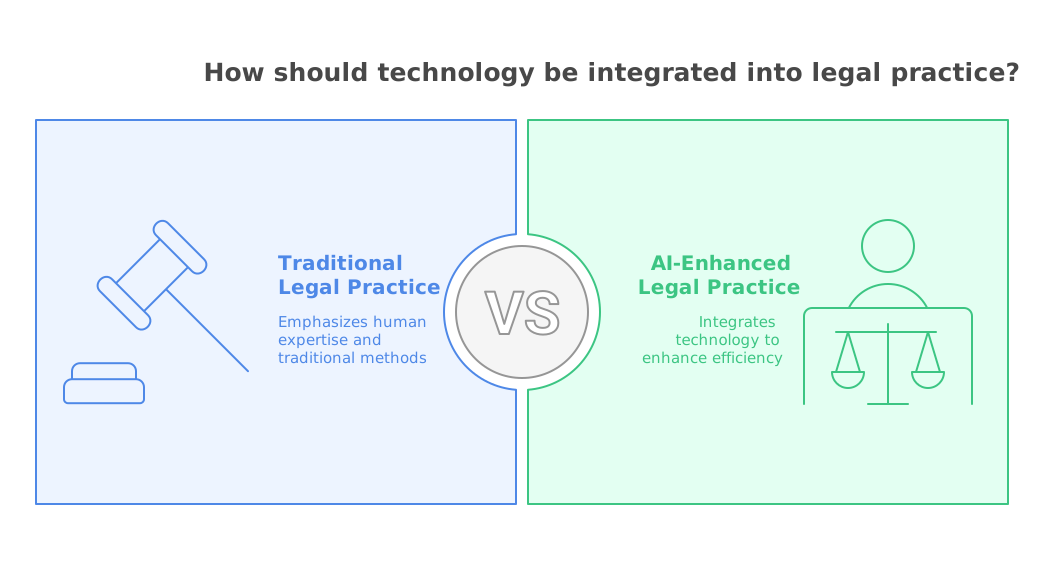
The legal profession stands at the precipice of a technological revolution that promises to fundamentally alter how attorneys, paralegals, and legal researchers interact with the vast corpus of documentation that forms the backbone of modern jurisprudence. Traditional legal practice has long been characterized by the painstaking manual review of extensive case files, contract collections, regulatory frameworks, and precedential materials a process that consumes countless hours and represents one of the most significant operational costs for law firms across all practice areas. The emergence of artificial intelligence-powered document chat systems represents not merely an incremental improvement in legal technology, but rather a paradigmatic shift that addresses the core inefficiencies that have plagued legal document analysis for generations.
The complexity inherent in legal documentation stems from multiple interconnected factors that distinguish legal texts from other forms of professional documentation. Legal documents are characterized by their extensive cross-referencing systems, where clauses, provisions, and sections must be understood in relation to numerous other components within the same document or across multiple related documents. A single contract might reference dozens of other agreements, regulatory provisions, or statutory requirements, creating a web of interdependencies that traditional document processing systems struggle to maintain coherently. When legal professionals are forced to fragment large documents into smaller, manageable pieces for analysis as required by conventional chat platforms with restrictive file size limitations these crucial relationships are severed, leading to incomplete analysis and potential oversights that can have serious professional and financial consequences.
The traditional approach to legal document analysis has remained largely unchanged despite the digital revolution that has transformed other aspects of legal practice. Attorneys and their support staff typically engage in a labor-intensive process that begins with the physical or digital receipt of extensive documentation, followed by systematic manual review that requires careful notation of key provisions, cross-references, and potential areas of concern. This process becomes exponentially more complex when dealing with large case files that might contain hundreds or thousands of pages across multiple document types, including pleadings, discovery materials, expert reports, depositions, and exhibits. The cognitive load required to maintain awareness of relationships between disparate sections of large document collections while simultaneously extracting specific information creates significant opportunities for human error and oversight.
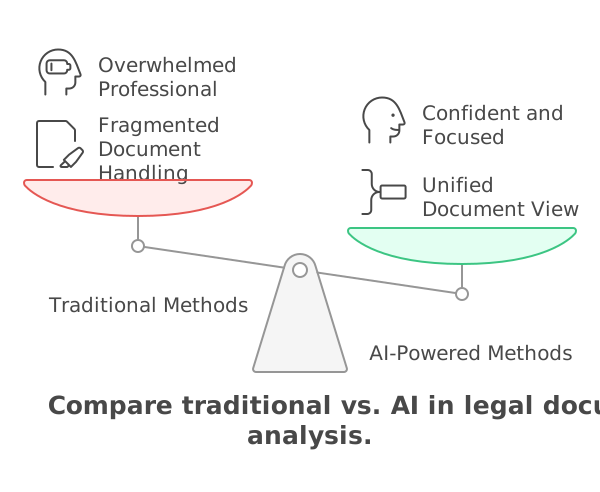
The legal technology landscape has evolved considerably over the past two decades, with the introduction of various tools designed to enhance document review efficiency and accuracy. However, most existing solutions suffer from fundamental limitations that restrict their effectiveness when dealing with the types of comprehensive documentation that characterize complex legal matters. Document management systems, while useful for organization and retrieval, typically lack the analytical capabilities necessary to understand content relationships and extract meaningful insights from large document collections. Similarly, traditional optical character recognition systems, though effective at converting scanned documents into searchable text, fail to preserve the semantic relationships that are crucial for comprehensive legal analysis.
The file size limitations imposed by conventional document chat platforms represent perhaps the most significant barrier to effective legal document analysis in the digital age. Most platforms restrict uploads to between 10 and 25 megabytes, a constraint that forces legal professionals to fragment large documents into smaller segments for processing. This fragmentation process destroys the contextual integrity that is essential for accurate legal analysis, as provisions in one section of a document often derive their meaning from related clauses that may be located hundreds of pages away. When a comprehensive merger agreement, complex litigation file, or regulatory compliance manual must be divided into multiple smaller files for analysis, the resulting loss of cross-referential context can lead to incomplete or inaccurate conclusions.
The consequences of fragmented document analysis extend beyond mere inconvenience to create genuine risks for legal practitioners. Consider the analysis of a complex commercial real estate transaction that involves multiple interconnected agreements, each containing provisions that modify or reference terms in the other documents. When these agreements must be analyzed separately due to file size constraints, an attorney might miss critical relationships between specific clauses that could affect the interpretation of key terms or the enforceability of particular provisions. Such oversights can result in inadequate legal advice, failed due diligence processes, or exposure to unanticipated legal risks that could have been identified through comprehensive analysis of the complete document collection.
The emergence of document chat systems capable of processing files up to 500 megabytes represents a quantum leap in legal technology that addresses the fundamental limitations that have constrained traditional approaches to document analysis. This capability enables legal professionals to upload and analyze complete case files, comprehensive contract collections, and extensive regulatory documentation as single, coherent units, preserving the critical cross-references and contextual relationships that are essential for accurate legal analysis. The significance of this advancement cannot be overstated, as it eliminates the need for document fragmentation while maintaining the sophisticated analytical capabilities that modern legal practice demands.
The technical architecture underlying large-scale document processing systems incorporates advanced artificial intelligence algorithms specifically designed to understand and maintain semantic relationships across extensive textual content. Unlike simple keyword-based search systems that identify isolated terms without considering context, these sophisticated platforms analyze the meaning and relationships between different sections of legal documents, enabling them to provide comprehensive answers that consider the full scope of the documentation under review. This contextual understanding is particularly crucial in legal analysis, where the meaning of specific provisions often depends on their relationship to other clauses, defined terms, or referenced materials that may be located in different sections of the same document or in entirely separate files.
The preservation of document integrity through large-scale processing capabilities enables legal professionals to engage in truly comprehensive analysis that would be impossible using fragmented approaches. When analyzing a complex litigation matter, for example, an attorney can upload the complete case file including all pleadings, discovery materials, expert reports, and exhibits as a single processing unit. This approach allows the attorney to ask sophisticated questions that require analysis across multiple document types and hundreds of pages, such as identifying inconsistencies between witness testimony and documentary evidence, or tracing the evolution of specific legal arguments throughout the litigation process. The system's ability to maintain awareness of relationships between disparate components of the case file enables it to provide comprehensive answers that consider the full context of the legal matter.
The integration of natural language processing capabilities into legal document analysis represents another revolutionary advancement that democratizes access to sophisticated analytical tools previously available only to those with extensive technical expertise. Traditional legal research and document analysis often require specialized knowledge of complex search syntaxes, Boolean operators, and database-specific query languages that can present significant barriers to efficient utilization. The ability to interact with comprehensive legal documentation through conversational interfaces eliminates these technical barriers, enabling legal professionals to focus on substantive legal analysis rather than mastering complex search methodologies.
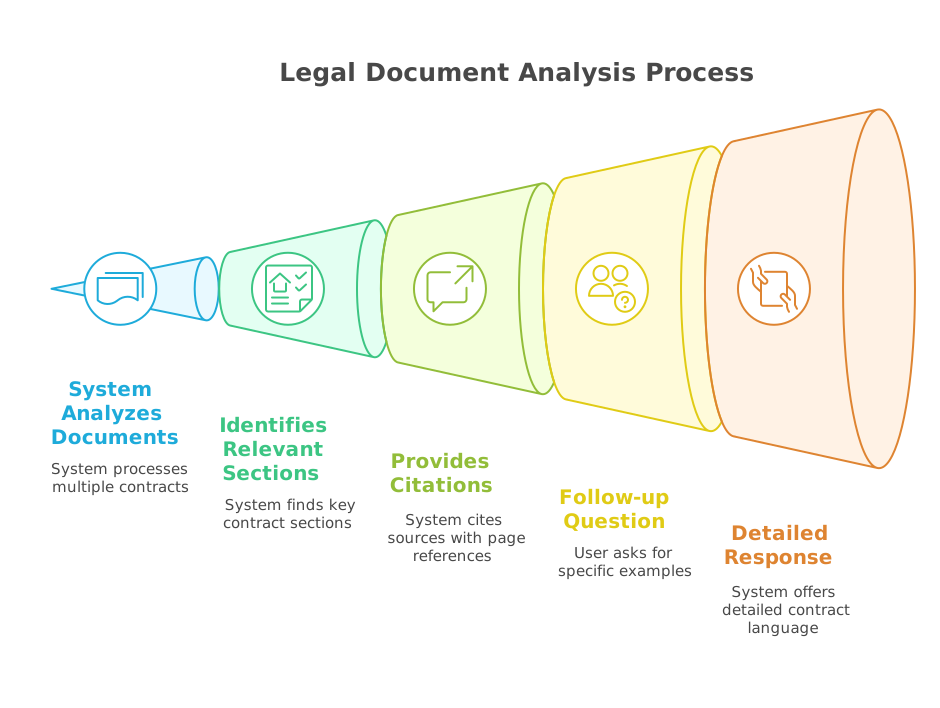
The conversational approach to legal document analysis facilitates a more intuitive and efficient exploration of complex legal materials. Rather than constructing elaborate search queries or manually reviewing hundreds of pages to locate specific information, legal professionals can simply ask questions in natural language and receive detailed, contextually appropriate responses. This capability is particularly valuable when dealing with unfamiliar areas of law or complex regulatory frameworks where the precise terminology or organizational structure may not be immediately apparent. An attorney working on a matter involving novel regulatory requirements can ask broad questions about compliance obligations and receive comprehensive answers that identify relevant provisions across multiple regulatory documents, along with explanations of how these requirements interact with existing legal frameworks.
The follow-up questioning capability inherent in conversational document analysis systems enables legal professionals to conduct thorough investigations that might not be possible using traditional search-based approaches. After receiving an initial answer to a broad question, attorneys can ask increasingly specific follow-up questions to drill down into particular aspects of the analysis, request additional examples, or explore related issues that might not have been initially apparent. This iterative approach to document analysis mirrors the natural thought process of experienced legal professionals while providing access to analytical capabilities that far exceed what would be possible through manual review.
The transformative potential of advanced document chat systems becomes most apparent when examining specific applications across different areas of legal practice. In corporate law, where transactions often involve dozens of interconnected agreements, due diligence materials, and regulatory filings, the ability to analyze complete document collections as integrated units enables attorneys to identify potential issues and opportunities that might be overlooked using fragmented analysis approaches. Consider a complex merger and acquisition transaction where the target company has operations across multiple jurisdictions and industries. The due diligence process typically involves the review of hundreds of contracts, regulatory filings, financial statements, and operational documents that must be understood both individually and in relation to each other.
Using traditional document analysis approaches, due diligence teams must organize these materials into manageable segments, often losing sight of important relationships between different aspects of the target company's operations. With advanced document chat capabilities, the entire due diligence package can be processed as a comprehensive unit, enabling attorneys to ask sophisticated questions about regulatory compliance across all jurisdictions, identify potential conflicts between different contractual obligations, or analyze the financial implications of operational changes across the entire enterprise. This comprehensive approach not only improves the thoroughness of due diligence analysis but also significantly reduces the time required to complete the review process.
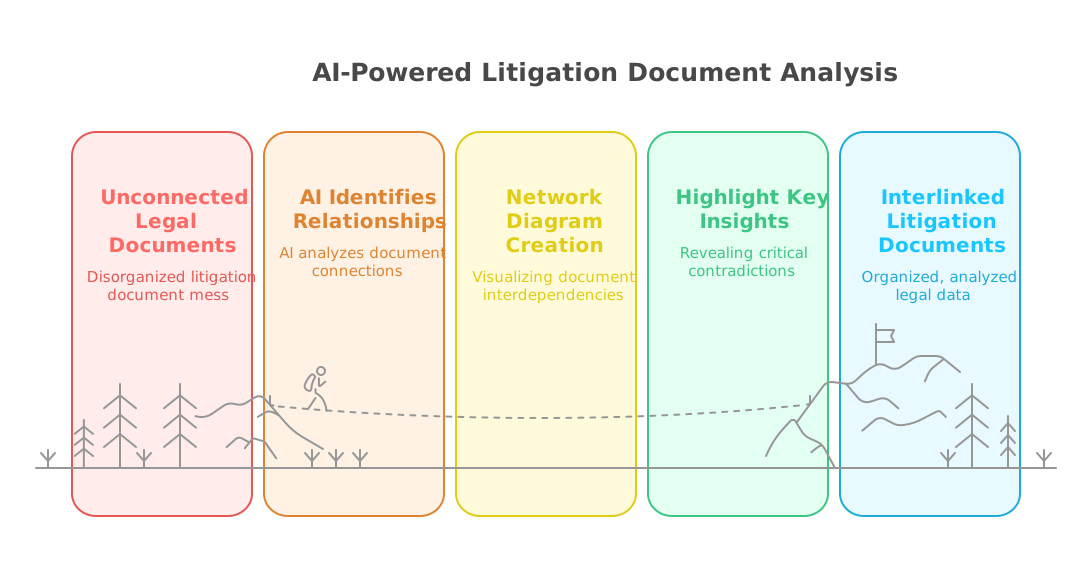
Litigation practice presents another compelling application for large-scale document analysis capabilities, particularly in complex commercial disputes involving extensive discovery materials. Modern litigation often produces thousands of pages of documents, including contracts, correspondence, financial records, expert reports, and deposition transcripts, all of which must be analyzed to develop effective legal strategies and identify key evidence. Traditional approaches to litigation document review require teams of attorneys and paralegals to manually examine these materials, a process that is both time-consuming and prone to oversight of critical relationships between different pieces of evidence.
The application of document chat technology to litigation materials enables legal teams to conduct comprehensive analysis that identifies patterns, inconsistencies, and relationships that might not be apparent through manual review. For example, attorneys can ask questions that require analysis across multiple deposition transcripts and documentary exhibits to identify inconsistencies in witness testimony, or trace the development of specific business decisions through contemporaneous correspondence and meeting minutes. This capability is particularly valuable in complex fraud investigations or breach of contract disputes where understanding the chronological development of events and the relationships between different actors is crucial for building persuasive legal arguments.
The increasingly complex regulatory environment facing modern businesses creates significant challenges for legal professionals tasked with ensuring compliance across multiple jurisdictions and regulatory frameworks. Financial institutions, healthcare organizations, manufacturing companies, and technology firms must navigate overlapping regulatory requirements that often involve thousands of pages of guidance documents, regulations, and interpretive materials. Traditional approaches to regulatory analysis typically involve manual review of these materials by specialized compliance professionals, a process that is both resource-intensive and subject to human error and oversight.
Document chat systems capable of processing large regulatory document collections offer transformative potential for compliance analysis and risk management. Rather than manually reviewing extensive regulatory guidance documents to identify applicable requirements, compliance professionals can upload complete regulatory frameworks and ask specific questions about obligations related to their organization's particular circumstances. This approach enables more comprehensive compliance analysis while significantly reducing the time and resources required to maintain current awareness of regulatory developments.
The cross-referential capabilities of advanced document analysis systems are particularly valuable in regulatory compliance contexts, where obligations often depend on the interaction between multiple regulatory provisions, industry guidance documents, and interpretive materials. A financial institution seeking to understand its obligations under new banking regulations might need to analyze not only the primary regulatory text but also related guidance documents, industry interpretations, and existing supervisory guidance that modifies or clarifies the application of the new requirements. Document chat systems can analyze these materials as integrated collections, providing comprehensive answers that consider the full regulatory framework rather than isolated provisions.
The real-time questioning capability inherent in conversational document analysis enables compliance professionals to conduct thorough regulatory analysis that adapts to evolving understanding of complex requirements. As compliance professionals develop better understanding of specific regulatory obligations through initial questioning, they can ask increasingly sophisticated follow-up questions that explore edge cases, identify potential conflicts between different regulatory requirements, or analyze the implications of regulatory changes for specific business activities. This iterative approach to regulatory analysis ensures more comprehensive compliance coverage while reducing the risk of overlooking critical requirements.
Contract management represents one of the most promising applications for advanced document chat technology, as modern business relationships often involve complex webs of interconnected agreements that must be understood both individually and in relation to each other. Large corporations routinely maintain thousands of active contracts covering everything from vendor relationships and customer agreements to employment arrangements and intellectual property licenses. Traditional contract management approaches typically rely on contract management databases that, while useful for organizing and tracking contract obligations, lack the analytical capabilities necessary to understand the substantive relationships between different contractual provisions.
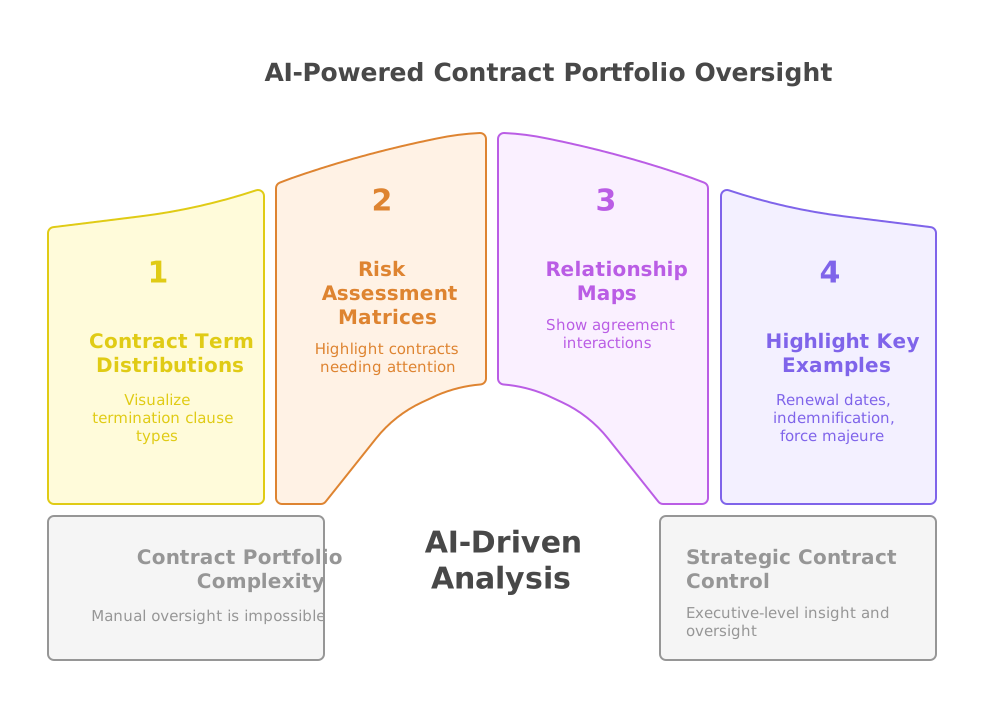
The application of document chat technology to contract collections enables legal professionals to conduct sophisticated analysis that identifies potential conflicts, redundancies, and opportunities for optimization across entire contract portfolios. Rather than manually reviewing individual contracts to understand specific obligations or identify potential issues, attorneys can ask questions that require analysis across multiple agreements to identify patterns, inconsistencies, or areas of concern. For example, a procurement attorney might ask questions about termination provisions across all vendor agreements to identify contracts that lack adequate protection against vendor default, or analyze pricing escalation clauses across multiple supplier relationships to identify opportunities for renegotiation.
The contextual understanding capabilities of advanced document analysis systems enable comprehensive contract analysis that considers the relationships between different contractual provisions and their implications for business operations. When analyzing a complex licensing agreement, for example, the system can understand how specific licensing terms interact with other provisions in the same agreement, such as termination clauses, indemnification provisions, or dispute resolution mechanisms. This comprehensive understanding enables more accurate analysis of contractual risks and opportunities than would be possible through isolated review of individual provisions.
The effectiveness of document chat technology in legal practice environments depends significantly on its ability to integrate seamlessly with existing legal practice management systems and workflows. Modern law firms utilize sophisticated practice management platforms that coordinate matter management, time tracking, billing, document storage, and client communication functions. The most effective document chat implementations are those that complement and enhance these existing systems rather than requiring wholesale replacement of established workflows.
Integration capabilities enable document chat systems to draw upon information stored in existing practice management systems to provide more contextually relevant analysis. For example, when analyzing documents related to a specific client matter, the system can incorporate information about the client's industry, previous legal issues, and ongoing business relationships to provide more targeted and relevant insights. This integration ensures that document analysis takes place within the broader context of the attorney-client relationship and the firm's accumulated knowledge about the client's business and legal needs.
The seamless flow of insights from document analysis into existing practice management workflows ensures that valuable information extracted from comprehensive document review can be immediately incorporated into legal strategies, client communications, and matter management processes. Rather than requiring attorneys to manually transfer insights from document analysis sessions into separate systems, integrated platforms can automatically update matter files, generate summary reports, or flag potential issues for further investigation. This integration reduces the administrative burden associated with comprehensive document analysis while ensuring that valuable insights are preserved and accessible to all members of the legal team.
The implementation of artificial intelligence-powered document analysis systems in legal practice environments raises important considerations related to client confidentiality, data security, and professional responsibility obligations that must be carefully addressed to ensure compliance with applicable ethical and regulatory requirements. Legal professionals are subject to strict confidentiality obligations that require the protection of client information and communications, and the use of cloud-based document analysis systems must be implemented in ways that maintain these protections while providing the analytical capabilities that modern legal practice requires.
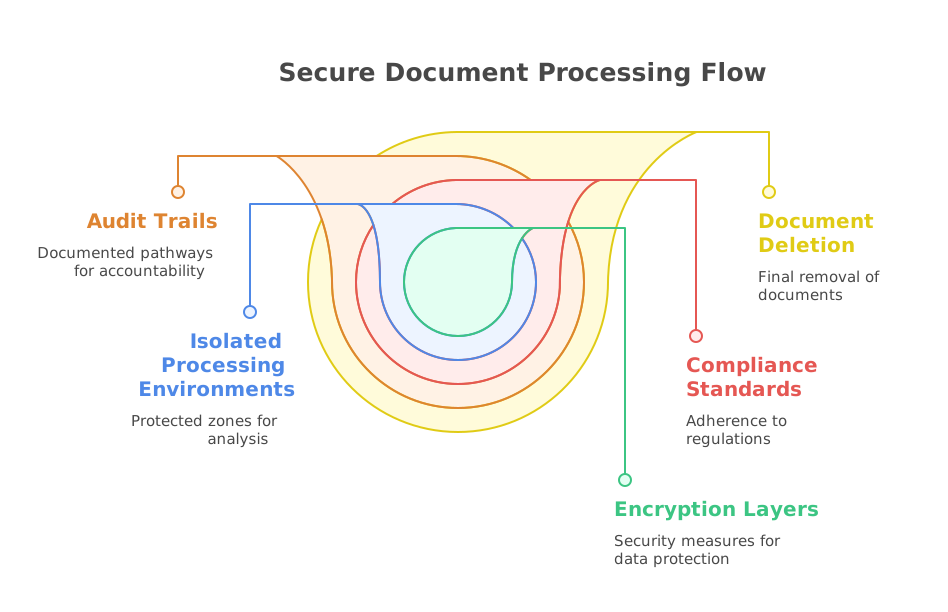
Enterprise-grade document chat systems address these concerns through sophisticated security architectures that process client documents in isolated, encrypted environments with strict access controls and audit trails. Documents are processed using advanced encryption protocols that ensure client information remains protected throughout the analysis process, and automatic deletion protocols ensure that sensitive materials are not retained on system servers after analysis is complete. These security measures are designed to meet or exceed the professional responsibility standards that govern legal practice while providing the analytical capabilities that enable more effective client representation.
The compliance framework surrounding legal document analysis systems must also address regulatory requirements that vary across different practice areas and jurisdictions. Healthcare law practices must ensure compliance with HIPAA privacy requirements when analyzing medical records or healthcare-related documentation, while financial services practices must consider regulatory restrictions on the handling of sensitive financial information. The most effective document chat implementations provide configurable security and compliance controls that can be tailored to meet the specific requirements of different practice areas and client circumstances.
The economic implications of implementing advanced document chat systems in legal practice extend far beyond simple cost savings to encompass fundamental improvements in service delivery, client satisfaction, and competitive positioning. Traditional legal document analysis represents one of the most significant cost centers for law firms, requiring extensive investments in attorney and paralegal time that is often passed through to clients as billable hours. The efficiency gains achievable through comprehensive document analysis systems can reduce the time required for document review by orders of magnitude while simultaneously improving the thoroughness and accuracy of the analysis.
The reduction in time required for document analysis creates opportunities for legal professionals to focus on higher-value activities that require human judgment, creativity, and strategic thinking. Rather than spending extensive time on mechanical document review processes, attorneys can dedicate more attention to legal strategy development, client counseling, negotiation, and other activities that directly benefit from human expertise and experience. This shift in focus not only improves job satisfaction for legal professionals but also enhances the value proposition that law firms can offer to their clients.
The improved accuracy and comprehensiveness of AI-powered document analysis can also reduce the risk of professional liability exposure that results from overlooked provisions or incomplete analysis. When attorneys have access to analytical tools that can identify potential issues, inconsistencies, or areas of concern across large document collections, they are better positioned to provide comprehensive legal advice that addresses all relevant considerations. This improved thoroughness can reduce the likelihood of malpractice claims while enhancing client satisfaction through more comprehensive legal representation.
The rapid evolution of artificial intelligence and natural language processing technologies suggests that current document chat capabilities represent only the beginning of a transformation that will continue to reshape legal practice in fundamental ways. Emerging developments in machine learning algorithms, computational linguistics, and legal informatics promise to deliver even more sophisticated analytical capabilities that will further enhance the effectiveness of legal document analysis while expanding the range of applications for these technologies.
The integration of predictive analytics capabilities with comprehensive document analysis systems represents one particularly promising area of development that could revolutionize legal strategy development and risk assessment. By analyzing patterns across large collections of legal documents, contracts, and case materials, these systems may eventually be able to predict likely outcomes of legal disputes, identify optimal negotiation strategies, or recommend risk mitigation approaches based on comprehensive analysis of historical precedents and current circumstances.
The development of specialized legal language models trained on extensive collections of legal materials promises to deliver even more sophisticated understanding of legal concepts, terminology, and reasoning patterns. These specialized models will be better equipped to understand the nuances of legal language, identify subtle relationships between different legal concepts, and provide analysis that reflects the sophisticated reasoning patterns that characterize effective legal practice.
The successful implementation of document chat technology in legal practice environments requires careful planning and consideration of organizational, technical, and professional factors that influence adoption and effectiveness. Law firms and legal departments must develop comprehensive implementation strategies that address staff training, workflow integration, security protocols, and performance measurement to ensure that these powerful tools deliver their full potential benefits.
Staff training represents a critical component of successful implementation, as legal professionals must develop famiciency with conversational analysis techniques while maintaining their understanding of traditional legal research and analysis methodologies. The most effective training programs combine hands-on experience with comprehensive document analysis scenarios that demonstrate the capabilities and limitations of AI-powered systems while building confidence in their appropriate application to different types of legal matters.
The measurement of performance improvements and return on investment requires the development of appropriate metrics that capture both quantitative efficiency gains and qualitative improvements in analysis thoroughness and accuracy. Law firms should establish baseline measurements of time requirements, error rates, and client satisfaction levels before implementing document chat systems, enabling them to demonstrate the tangible benefits of these technologies while identifying areas for further optimization and improvement.
The emergence of AI-powered document chat systems capable of processing comprehensive legal document collections represents a watershed moment in the evolution of legal practice that will fundamentally alter how attorneys, paralegals, and legal researchers interact with the vast corpus of documentation that forms the foundation of modern jurisprudence. The ability to analyze complete case files, contract collections, and regulatory frameworks as integrated units while maintaining sophisticated understanding of cross-references and contextual relationships addresses fundamental limitations that have constrained legal document analysis for generations.
The transformative potential of these technologies extends beyond simple efficiency improvements to encompass fundamental enhancements in the quality, comprehensiveness, and accuracy of legal analysis. By eliminating the fragmentation that has traditionally compromised the integrity of large document analysis while providing intuitive conversational interfaces that democratize access to sophisticated analytical capabilities, document chat systems enable legal professionals to conduct more thorough and effective document review while focusing their expertise on the strategic and creative aspects of legal practice that require human judgment and experience.
As the legal profession continues to grapple with increasing complexity in regulatory environments, business relationships, and client expectations, the adoption of advanced document analysis technologies will become not merely advantageous but essential for maintaining competitive effectiveness and professional standards. Law firms and legal departments that embrace these capabilities will be better positioned to provide comprehensive, accurate, and efficient legal services while managing the operational challenges that characterize modern legal practice.
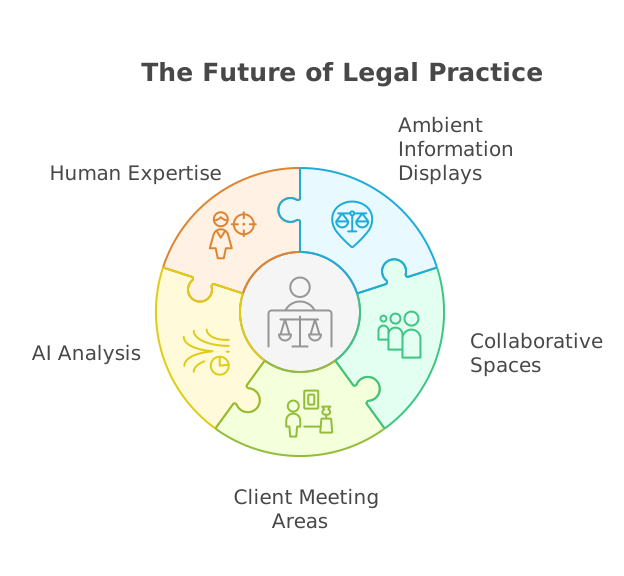
The future of legal document analysis lies not in the replacement of human expertise with artificial intelligence, but rather in the integration of sophisticated analytical tools with human judgment, creativity, and strategic thinking to create more effective and comprehensive legal representation. Document chat technology represents a powerful tool that amplifies human capabilities while addressing the practical limitations that have long constrained legal document analysis, enabling the legal profession to better serve clients while advancing the fundamental goals of justice, accuracy, and professional excellence that define effective legal practice.

Head IT Operations - Co Founder of Artificio
See it in your SAP environment
Bring us a document, a process, or a bottleneck. We'll show how Artificio captures, validates, and posts into SAP — then scale from there.
Security & compliance
ISO 27001:2013 certified, SOC 2 Type 2 compliant, GDPR and HIPAA ready. Every agent action is logged, auditable, and runs in isolated environments.