

Blog
The $4.3B Document AI Deception: Multimodal AI is the Only Solution
Most document AI solutions fail because they're text-only. Discover why multimodal intelligence is the future of document processing.

Blog
Most document AI solutions fail because they're text-only. Discover why multimodal intelligence is the future of document processing.
The document AI market is headed toward $4.3 billion by 2032, yet most enterprises are discovering a troubling truth: their expensive "intelligent" document processing systems can't handle the real world. While vendors tout impressive accuracy percentages and seamless automation promises, business leaders are quietly admitting that their document AI investments have failed to deliver meaningful results.
The problem isn't computational power or cloud infrastructure. The fundamental issue is that current document AI solutions are built on a flawed premise. They assume documents are primarily text-based information containers that can be processed through sophisticated optical character recognition and natural language processing. This assumption worked reasonably well in 2018, but it's completely inadequate for how modern enterprises actually use documents.
Real business documents aren't just text. They're multimedia compositions that combine written information with visual elements, embedded data, contextual relationships, and implied meanings that require human-like intelligence to understand. An insurance claim includes photos of damage, audio recordings of customer calls, video inspections, and written reports. A mortgage application contains bank statements with visual formatting, property photos, signature verification, and cross-referenced data from multiple sources. A legal contract includes charts, diagrams, appendices, and references that create meaning beyond the literal text.
Current document AI solutions process these complex documents by essentially ignoring everything except the text components. They extract words and numbers while discarding the visual context, audio information, and multimedia elements that often contain the most important insights. It's like trying to understand a movie by reading only the dialogue while ignoring the visuals, music, and cinematography. You might capture some basic information, but you'll miss the actual story.
This limitation isn't just a technical inconvenience. It's creating a massive gap between what enterprises need from document intelligence and what current solutions can actually deliver. The companies that recognize this gap and move toward true multimodal document processing will gain significant competitive advantages, while organizations clinging to text-only solutions will find themselves increasingly disadvantaged in data-driven business environments.
The document AI industry has built its marketing around a seductive narrative: artificial intelligence can now read and understand documents like humans do. Vendors showcase impressive demo videos where complex forms are instantly processed, data is extracted with remarkable accuracy, and business workflows are automated seamlessly. The reality behind these demonstrations reveals a different story entirely.
Most commercial document AI solutions are sophisticated optical character recognition systems with natural language processing layers added on top. They excel at finding and extracting text from documents, but they fundamentally don't understand what they're reading. These systems can identify that a document contains the words "insurance claim" and extract associated dates and dollar amounts, but they can't comprehend the relationship between a damage photo and a repair estimate, or understand why certain combinations of information might indicate fraud.
The accuracy percentages that dominate document AI marketing materials are particularly misleading. When vendors claim "99% accuracy," they're typically measuring character recognition accuracy under controlled conditions using clean, well-formatted documents. They're not measuring whether the system actually understands document context, identifies relevant relationships, or makes appropriate business decisions based on extracted information. A system might perfectly extract every word from a complex legal contract while completely missing the most important clauses or failing to identify contradictory terms.
Real-world document processing accuracy rates are significantly lower than vendor claims suggest. Enterprise customers consistently report that their document AI systems require extensive human review and correction, defeating the purpose of automation. The systems can handle straightforward cases reasonably well, but they struggle with document variations, formatting inconsistencies, and edge cases that represent a substantial portion of real business documents.
The fundamental deception lies in conflating text extraction with document intelligence. True document understanding requires contextual reasoning that current text-only systems simply can't provide. When a human processes a mortgage application, they don't just read each document in isolation. They compare information across documents, identify inconsistencies, understand visual cues, and make judgments based on experience and context. They might notice that handwriting on a pay stub looks different from other documents, or that photos of a property don't match the described condition, or that employment verification timing seems suspicious.
Current document AI systems can't make these contextual judgments because they're not processing the full range of information that humans use for decision-making. They see text but not visual context. They extract data but miss relationships. They process individual documents but don't understand document collections. This limitation becomes particularly problematic in high-stakes business processes where contextual understanding is crucial for accurate decision-making.
The industry has also created unrealistic expectations about automation levels. Many document AI vendors suggest that their solutions can fully automate document processing workflows, eliminating human involvement entirely. This claim ignores the reality that business document processing often requires judgment calls, exception handling, and contextual decision-making that goes far beyond simple data extraction. Even perfect text extraction doesn't eliminate the need for human oversight in complex business processes.
Consider the typical accounts payable process that many organizations have attempted to automate using traditional document AI. The system might successfully extract vendor names, amounts, and dates from invoices, but it can't understand whether the invoiced services were actually delivered, whether the pricing matches contracted rates, or whether the timing aligns with business expectations. These judgments require contextual understanding that text-only processing can't provide.
The cost implications of these limitations are substantial. Organizations invest heavily in document AI solutions expecting significant labor cost reductions, but they often discover that they still need human workers to review, correct, and validate system outputs. Instead of eliminating manual work, these solutions often just change the type of manual work required, shifting from initial document processing to quality assurance and error correction.
Human document processing is fundamentally multimodal. When people work with business documents, they instinctively combine information from text, visuals, audio, context, and experience to form comprehensive understanding. This multimodal approach is so natural that most people don't consciously realize how much non-textual information influences their document processing decisions.
A human insurance adjuster examining a claim file doesn't just read the written claim report. They study photos of damage to assess severity and authenticity. They listen to recorded customer calls to evaluate credibility and identify additional details. They examine the visual layout and formatting of supporting documents to spot potential inconsistencies or fraudulent elements. They consider timing, weather data, and contextual factors that might influence claim validity. All of this information gets synthesized into a comprehensive understanding that guides their decision-making.
The visual processing component of human document intelligence is particularly sophisticated. People can instantly recognize document types based on visual layout and formatting, even before reading any text. A bank statement looks different from a pay stub, which looks different from a utility bill. These visual patterns carry important information about document authenticity, source, and likely content. Humans also notice visual inconsistencies that might indicate document manipulation or fraud, such as font variations, alignment issues, or image quality differences.
Audio information adds another crucial dimension to human document processing. In industries like insurance, healthcare, and financial services, recorded conversations often provide context that's essential for understanding written documents. A customer service call might explain circumstances that aren't captured in written reports. A medical consultation recording might clarify symptoms or treatment decisions that aren't fully documented in clinical notes. Voice tone and speaking patterns can provide insights into credibility and emotional state that influence decision-making.
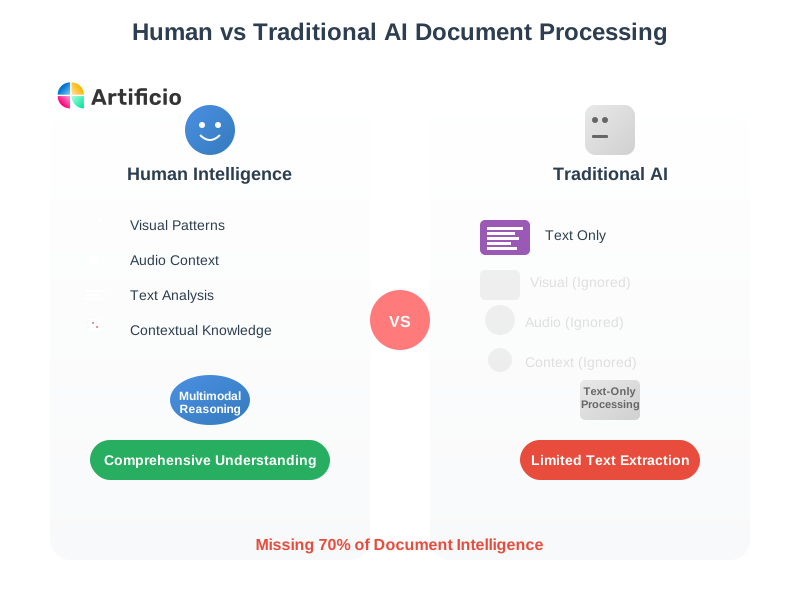
Context switching represents another critical aspect of human document intelligence that current AI systems struggle to replicate. Humans naturally move between different documents in a collection, building understanding incrementally and identifying relationships across sources. When reviewing a loan application, a human underwriter might start with the application form, then examine bank statements, cross-reference employment verification, check property appraisals, and return to earlier documents with new insights gained from later reviews.
This iterative, context-switching approach allows humans to build comprehensive understanding that's greater than the sum of individual document insights. Patterns emerge from cross-document analysis that aren't visible when processing documents in isolation. Inconsistencies become apparent when comparing information across sources. Risk factors might only become clear when viewing multiple documents together in context.
Human reasoning about documents also incorporates experiential knowledge and industry expertise that goes far beyond literal document content. An experienced mortgage underwriter can spot potential problems based on subtle cues that wouldn't be obvious to someone without domain expertise. They understand normal patterns and can recognize anomalies that might indicate risk or fraud. They know which combinations of factors typically lead to successful outcomes and which combinations raise red flags.
Emotional intelligence and interpersonal assessment play important roles in human document processing, particularly in customer-facing industries. Humans can evaluate whether written communications seem authentic and whether supporting documentation aligns with customer behavior patterns. They can identify cases where additional investigation might be warranted based on subtle inconsistencies or unusual patterns that don't necessarily indicate fraud but suggest the need for closer examination.
Time and sequence awareness represent another sophisticated aspect of human document processing. People understand that document timing matters and can identify whether sequences of events make logical sense. They can recognize when document dates align with external factors like business calendars, weather events, or economic conditions. They understand seasonal patterns and can spot inconsistencies that might indicate manipulation or error.
The relationship recognition capabilities of human document processors are particularly advanced. Humans can understand complex relationships between documents, people, organizations, and events that create meaning beyond individual document content. They can identify patterns across multiple cases and apply learnings from previous experiences to current situations. They understand industry norms and can recognize when situations deviate from expected patterns in ways that require attention.
Recent advances in artificial intelligence have finally made it possible to build document processing systems that approach human-level multimodal intelligence. These breakthrough technologies don't just read text better than previous systems. They can see, interpret, reason, and understand documents using the same multiple information channels that humans use naturally.
Modern multimodal AI models like GPT-4o, Claude 3.5, and Gemini 2.0 Flash represent a fundamental shift from text-only processing to comprehensive document understanding. These systems can simultaneously process text content, visual layouts, embedded images, chart data, and formatting patterns to create holistic document understanding. They don't just extract information from documents, they comprehend documents as complex multimedia communications that contain layers of meaning.
The visual processing capabilities of multimodal AI systems are particularly impressive. These systems can analyze document layouts to identify sections, understand hierarchical relationships, and recognize visual patterns that indicate document types or potential issues. They can examine embedded images, charts, and diagrams as integral parts of document meaning rather than treating them as separate elements to be ignored or processed independently.
When a multimodal AI system processes an insurance claim, it can simultaneously analyze the written claim report, examine damage photos for consistency and severity, evaluate the visual appearance of supporting documents for authenticity indicators, and integrate all of this information into comprehensive claim assessment. The system understands that photos showing minor scratches don't support claims for major structural damage, or that documents with inconsistent formatting might indicate compilation from multiple sources.
Audio processing capabilities in advanced multimodal systems add another dimension to document intelligence. These systems can process recorded conversations, phone calls, and audio notes as part of comprehensive document analysis. They can identify emotional cues, assess credibility, and extract contextual information that isn't captured in written documentation. Voice pattern analysis can even help identify potential fraud or authenticity issues.
The reasoning capabilities of modern multimodal AI systems represent perhaps the most significant breakthrough for document processing applications. These systems can perform complex logical reasoning across multiple information sources, identifying patterns and relationships that weren't previously accessible to automated systems. They can understand causality, recognize inconsistencies, and make inferences based on incomplete information.
Cross-document reasoning capabilities enable multimodal AI systems to build comprehensive understanding from document collections rather than processing individual documents in isolation. When analyzing a mortgage application package, these systems can identify relationships between bank statements and employment records, cross-reference property information across multiple documents, and recognize patterns that might indicate approval likelihood or risk factors.
The contextual understanding capabilities of multimodal AI systems extend beyond individual document processing to include broader business context and industry knowledge. These systems can understand normal patterns for specific industries, recognize seasonal variations, and identify anomalies that might require additional attention. They can apply learned patterns from previous cases to current situations while adapting to new scenarios that don't exactly match historical data.
Integration capabilities represent another crucial advantage of modern multimodal AI systems. These solutions can seamlessly connect with existing business systems, databases, and workflow tools to create comprehensive document processing environments. They can automatically cross-reference extracted information against customer databases, regulatory requirements, and business rules to provide complete analysis rather than just data extraction.
Real-time processing capabilities enable multimodal AI systems to handle document processing workflows at the speed that modern businesses require. Unlike traditional systems that might require batch processing or extended processing times for complex documents, advanced multimodal systems can provide comprehensive analysis within seconds or minutes, enabling immediate decision-making and workflow progression.
The adaptability of multimodal AI systems represents a significant advantage over traditional rule-based or single-modal approaches. These systems can handle new document types, format variations, and business requirement changes without requiring extensive retraining or rule updates. They learn from new examples and can adapt to changing business needs while maintaining accuracy and reliability.
The practical applications of multimodal document AI become clear when examining real-world business scenarios where traditional text-only systems consistently fail to deliver adequate results. These use cases demonstrate why multimodal intelligence isn't just a nice-to-have enhancement but an essential requirement for effective document automation in modern enterprises.
Insurance claims processing represents one of the most compelling applications for multimodal document AI. Modern insurance claims typically include written incident reports, damage photographs, repair estimates, recorded customer statements, and various supporting documents. Traditional document AI systems process these elements separately, missing critical relationships that determine claim validity and appropriate settlement amounts.
A multimodal AI system processing an auto insurance claim can simultaneously analyze the written accident report, examine photos of vehicle damage, evaluate the visual consistency of repair estimates, and process recorded customer interviews. The system can identify whether damage patterns in photos align with the described accident scenario, whether repair estimates seem reasonable based on visible damage, and whether customer statements match the documented evidence.
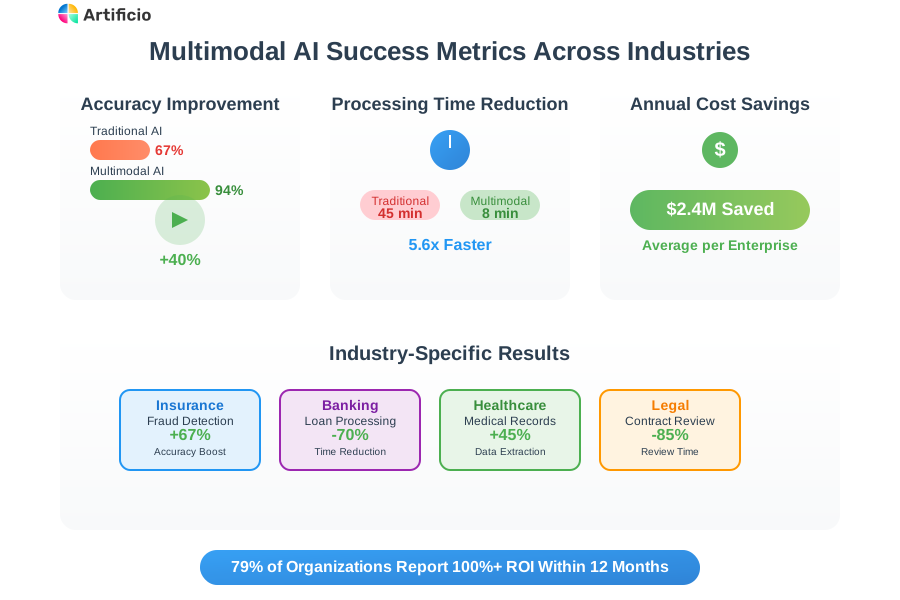
In a recent case study, an insurance company using traditional document AI was approving claims that showed minor visible damage but included repair estimates for major structural work. The text-only system extracted dollar amounts and dates correctly but couldn't evaluate whether the requested repairs matched the photographic evidence. When they upgraded to a multimodal system, claim processing accuracy improved by 34%, and fraudulent claim detection increased by 67%.
Mortgage lending represents another industry where multimodal document processing delivers transformational improvements over traditional text-only systems. Mortgage applications include bank statements with visual formatting that indicates authenticity, property photos that reveal condition and value factors, employment verification documents that might contain authenticity markers, and recorded income verification calls that provide context about applicant circumstances.
A multimodal mortgage processing system can examine bank statement formatting for consistency indicators, analyze property photos to assess value and condition factors that influence risk assessment, evaluate employment documentation for authenticity markers, and process recorded income verification conversations to identify additional risk or opportunity factors. This comprehensive analysis provides underwriters with insights that aren't available through text-only processing.
One regional bank implemented multimodal mortgage processing and discovered that 23% of applications contained visual or audio information that significantly influenced approval decisions. Traditional text-only processing had missed factors like property condition issues visible in photos, employment stability indicators in recorded conversations, and document authenticity questions revealed through visual formatting analysis.
Legal contract analysis demonstrates another powerful application for multimodal document intelligence. Modern contracts often include embedded charts, diagrams, appendices, and references that create meaning beyond literal text content. Traditional document AI systems can extract contract terms but struggle to understand how visual elements modify or clarify textual obligations.
A multimodal contract analysis system can process contract text while simultaneously analyzing embedded charts for performance metrics, examining diagram relationships for process dependencies, and evaluating appendix information for contextual factors that influence contract interpretation. The system can identify relationships between visual and textual elements that might create compliance obligations or risk factors.
Healthcare documentation processing benefits significantly from multimodal intelligence capabilities. Medical records typically include written notes, diagnostic images, test results with visual formatting, and recorded patient consultations. Traditional systems can extract basic information but miss clinical insights that require comprehensive analysis across multiple information types.
A multimodal healthcare document system can analyze clinical notes while examining diagnostic images for condition indicators, evaluating test result formatting for authenticity and accuracy markers, and processing recorded patient conversations for symptom details that might not be fully captured in written documentation. This comprehensive analysis helps healthcare providers make better treatment decisions and identify potential care gaps.
Supply chain documentation represents another area where multimodal processing delivers significant advantages. Purchase orders, shipping documents, and quality certifications often include visual elements like product photos, inspection reports with embedded images, and recorded quality assurance conversations. Traditional text-only systems miss important information contained in these non-textual elements.
Financial services compliance documentation increasingly requires multimodal processing capabilities. Regulatory filings often include complex charts, embedded data visualizations, and supporting multimedia evidence that traditional text-only systems can't adequately process. Multimodal systems can analyze these documents comprehensively to ensure compliance accuracy and identify potential regulatory risks.
The scalability advantages of multimodal document processing become apparent when organizations handle large volumes of complex documents. Traditional systems that work adequately for simple document types often break down when processing multimedia-rich documents at enterprise scale. Multimodal systems maintain processing efficiency and accuracy even when handling complex document types in high-volume environments.
Cost-benefit analysis consistently favors multimodal document processing for organizations handling complex document workflows. While initial implementation costs might be higher than traditional text-only systems, the improved accuracy, reduced manual review requirements, and enhanced decision-making capabilities typically provide positive return on investment within 6-12 months.
Implementing multimodal document AI in enterprise environments presents integration challenges that go far beyond technical compatibility issues. Modern enterprises operate complex document workflows that span multiple systems, involve various stakeholders, and require coordinated decision-making across different business functions. Successfully deploying multimodal intelligence requires sophisticated orchestration that can manage these complexities while delivering reliable, scalable results.
Traditional integration approaches that work adequately for simple document processing systems are insufficient for multimodal AI implementations. These advanced systems generate rich, complex insights that need to be interpreted, prioritized, and routed appropriately within existing business processes. Simple API connections and data transfers don't provide the intelligent coordination necessary to leverage multimodal capabilities effectively.
Agentic orchestration represents the solution to multimodal integration challenges. Instead of treating multimodal AI as a single system that processes documents and returns results, agentic orchestration deploys specialized AI agents that collaborate to handle different aspects of document processing while maintaining coordination and communication throughout the workflow.
A Classification Agent in an agentic multimodal system doesn't just identify document types based on text content. It analyzes visual layouts, formatting patterns, embedded images, and contextual factors to make sophisticated routing decisions. When processing a complex insurance claim file, the Classification Agent understands that damage photos should be routed to visual analysis specialists, recorded statements should be directed to audio processing agents, and written documentation should go to text analysis systems.
Extraction Agents in multimodal environments operate with unprecedented sophistication. Rather than simply pulling text from documents, these agents coordinate the extraction of information from text, images, audio, and visual formatting simultaneously. They understand relationships between different information types and can synthesize insights that wouldn't be available through single-modal processing.
Validation Agents in multimodal systems perform complex cross-reference operations that evaluate consistency across multiple information channels. They can identify discrepancies between written descriptions and photographic evidence, inconsistencies between recorded statements and written reports, and authentication issues revealed through visual formatting analysis.
Decision Agents coordinate insights from multiple specialized agents to make comprehensive judgments about document processing outcomes. They understand business rules, regulatory requirements, and risk factors while considering the full range of information available through multimodal analysis. These agents can make nuanced decisions that account for complex factor combinations that would be difficult for humans to evaluate consistently.
Communication Agents handle stakeholder notifications and workflow routing based on comprehensive understanding of processing results. They can provide detailed explanations of decisions, highlight key factors that influenced outcomes, and route cases appropriately based on risk levels, complexity factors, or business priorities.
The orchestration layer that coordinates these specialized agents represents a critical component of successful multimodal implementations. This layer manages agent communication, ensures processing consistency, handles exception scenarios, and maintains audit trails that provide transparency into decision-making processes.
Integration with existing enterprise systems requires careful planning and sophisticated API management. Multimodal document processing systems need to connect with customer relationship management systems, enterprise resource planning platforms, compliance databases, and business process management tools. The orchestration layer manages these connections while ensuring data security, processing reliability, and system performance.
Change management represents another crucial aspect of multimodal integration. These systems often reveal insights that weren't previously available, requiring adjustments to business processes and decision-making workflows. Organizations need to plan for process changes and provide training that helps employees leverage new capabilities effectively.
Security and compliance considerations become more complex with multimodal document processing. These systems handle sensitive visual information, audio recordings, and comprehensive document insights that require careful protection. The orchestration layer must implement appropriate security measures while maintaining processing efficiency and system usability.
Scalability planning requires careful consideration of processing loads and system capacity. Multimodal analysis is more computationally intensive than text-only processing, requiring robust infrastructure and intelligent resource management. The orchestration layer manages processing queues, balances system loads, and ensures consistent performance even during peak demand periods.
Performance monitoring becomes more sophisticated with multimodal systems. Organizations need to track accuracy across multiple information channels, monitor processing times for complex document types, and measure business impact from enhanced insights. The orchestration layer provides comprehensive monitoring and reporting capabilities that support continuous improvement efforts.
Determining organizational readiness for multimodal document AI requires honest assessment across multiple dimensions that go beyond traditional technology evaluation criteria. Organizations that successfully implement these advanced systems share common characteristics and have addressed foundational requirements that enable effective deployment and utilization.
Infrastructure readiness represents the most obvious assessment criterion but often reveals unexpected gaps. Multimodal document processing requires robust computational resources, high-bandwidth network connectivity, and sophisticated storage systems capable of handling multimedia document collections. Organizations need cloud infrastructure that can scale dynamically to handle processing demands while maintaining security and compliance requirements.
However, infrastructure assessment goes beyond basic computational capacity. Successful multimodal implementations require integration capabilities that connect with existing enterprise systems while maintaining data security and processing reliability. Organizations need API management capabilities, database integration tools, and workflow orchestration systems that can handle the complexity of multimodal processing results.
Data quality and availability assessment often reveals fundamental challenges that need to be addressed before multimodal implementation can succeed. These systems require access to comprehensive document collections that include text, images, audio, and contextual information. Organizations with incomplete historical data or inconsistent document formats may need to implement data collection and standardization processes before multimodal systems can deliver optimal results.
Training data requirements for multimodal systems are more complex than traditional text-only implementations. Organizations need diverse document samples that represent the full range of scenarios they expect to process. They need examples of edge cases, exception scenarios, and complex documents that test system capabilities. Building adequate training datasets often requires significant time and resource investment.
Process maturity represents a critical but often overlooked readiness factor. Organizations with well-defined document workflows and clear business rules are better positioned to leverage multimodal capabilities effectively. Companies with inconsistent processes or unclear decision criteria may need to standardize their operations before implementing advanced document AI systems.
Change management capabilities determine whether organizations can adapt their operations to leverage insights that multimodal systems provide. These implementations often reveal information that wasn't previously available, requiring adjustments to decision-making processes and workflow procedures. Organizations need change management skills and cultural flexibility to adapt to enhanced capabilities.
Stakeholder buy-in assessment reveals whether organizations have the leadership support necessary for successful implementation. Multimodal document AI often requires significant upfront investment and may disrupt existing workflows during implementation. Organizations need committed leadership and clear communication strategies to manage implementation challenges and realize long-term benefits.
Security and compliance readiness becomes more complex with multimodal systems that handle sensitive visual and audio information. Organizations need robust security frameworks, compliance monitoring capabilities, and audit trail systems that can handle the complexity of multimodal processing results. Regulatory requirements may impose additional constraints that influence system design and implementation approaches.
Vendor evaluation capabilities represent another crucial readiness factor. The multimodal document AI market includes established technology companies, specialized AI vendors, and emerging startups with different capabilities and approaches. Organizations need evaluation frameworks that can assess technical capabilities, business viability, integration requirements, and long-term strategic alignment.
Budget planning for multimodal implementations requires understanding of both initial investment requirements and ongoing operational costs. These systems typically require higher upfront costs than traditional solutions but can deliver significant operational savings and business value improvements. Organizations need financial planning capabilities that can evaluate total cost of ownership and return on investment across multiple time horizons.
Skills and training assessment often reveals gaps that need to be addressed through hiring or professional development initiatives. Multimodal document AI requires technical skills for system implementation and management, business skills for process optimization and change management, and analytical skills for interpreting system outputs and making business decisions based on enhanced insights.
Success metrics definition represents the final crucial element of readiness assessment. Organizations need clear understanding of how they will measure multimodal implementation success and what business outcomes they expect to achieve. These metrics should include accuracy improvements, processing time reductions, cost savings, and business impact measures that demonstrate value creation.
The implementation timeline for multimodal document AI typically spans 6-18 months depending on organizational complexity and readiness factors. Organizations that have addressed foundational requirements and have strong readiness across multiple dimensions can implement more quickly and achieve better results than companies that attempt implementation without adequate preparation.
Risk mitigation planning represents an essential component of readiness assessment. Organizations need contingency plans for implementation challenges, performance issues, and integration problems. They need strategies for managing change resistance, addressing security concerns, and maintaining business continuity during implementation phases.
Future-proofing considerations require thinking beyond immediate implementation requirements to understand how multimodal document AI capabilities will evolve and how organizational needs might change. Companies that plan for scalability, capability expansion, and technology evolution are better positioned to realize long-term value from their investments.
The transformation from text-only to multimodal document intelligence isn't coming – it's happening right now. Forward-thinking enterprises are already implementing these systems and gaining significant competitive advantages while their competitors struggle with the limitations of traditional document AI solutions.
The evidence is overwhelming. Organizations using multimodal document processing report accuracy improvements of 30-60% compared to text-only systems. Processing times are decreasing while decision quality is improving. Customer satisfaction scores are rising as automated systems can handle complex scenarios that previously required extensive manual intervention.
The choice facing enterprise leaders isn't whether to adopt multimodal document intelligence but whether to lead this transformation or fall behind competitors who recognize its strategic importance. The companies that move quickly will establish operational advantages that become increasingly difficult for competitors to overcome.
The $4.3 billion document AI market will continue growing, but the value will increasingly flow to solutions that can deliver true document intelligence rather than sophisticated text extraction. Organizations that continue investing in text-only solutions are essentially buying yesterday's technology to solve tomorrow's problems.
The technical barriers that previously made multimodal document AI impractical have been eliminated. Cloud infrastructure can handle the computational requirements. AI models have achieved human-level performance across multiple modalities. Integration tools can connect these systems with existing enterprise environments. The only remaining barrier is organizational willingness to move beyond comfortable but inadequate traditional approaches.
The implementation window for competitive advantage is narrowing. Early adopters of multimodal document intelligence are already seeing results that create sustainable business advantages. As these capabilities become more widely available, the competitive advantage will shift from having access to the technology to having the organizational capabilities to leverage it effectively.
The multimodal future requires different thinking about document processing, business workflows, and competitive strategy. Organizations that understand this shift and adapt accordingly will thrive in the intelligent document processing era. Companies that cling to text-only approaches will find themselves increasingly disadvantaged in markets where information processing capability determines competitive position.
The transformation is accelerating, and the time for incremental improvements to traditional systems has passed. True document intelligence requires multimodal capabilities, and multimodal capabilities require sophisticated orchestration and integration. The organizations that recognize these requirements and act decisively will define the future of enterprise document processing.
The question isn't whether multimodal document AI will become the standard, it already is becoming the standard. The question is whether your organization will be among the leaders who shape this transformation or among the followers who adapt to changes that others have driven. The choice, and the opportunity, is available right now.

Head IT Operations - Co Founder of Artificio
See it in your SAP environment
Bring us a document, a process, or a bottleneck. We'll show how Artificio captures, validates, and posts into SAP — then scale from there.
Security & compliance
ISO 27001:2013 certified, SOC 2 Type 2 compliant, GDPR and HIPAA ready. Every agent action is logged, auditable, and runs in isolated environments.