

Blog
AI-Powered Adaptive Document Processing for Smart Workflows
Revolutionize document processing with AI. Dynamic workflows and intelligent branching for efficiency and accuracy.

Blog
Revolutionize document processing with AI. Dynamic workflows and intelligent branching for efficiency and accuracy.
The traditional approach to document processing treats every file like it's marching through the same assembly line. Invoice or contract, simple form or complex legal document they all get the same treatment, the same sequence of steps, the same allocation of resources. This one-size-fits-all mentality creates bottlenecks, wastes computational power on straightforward documents, and fails to give complex files the attention they deserve.
What if your document processing system could think on its feet? What if it could analyze each incoming document, understand its complexity and risk level, then dynamically choose the most appropriate processing path in real-time? This isn't science fiction anymore. With AI agents and intelligent workflow branching, we're moving beyond rigid, linear processing toward truly adaptive systems that can make smart decisions about how to handle each unique document.
Adaptive document processing represents a fundamental shift in how organizations approach document automation. Instead of forcing every document through identical workflows, these systems create personalized processing journeys based on the content, context, and characteristics of each individual file. The result is faster processing for routine documents, more thorough review for complex cases, and significantly better resource allocation across your entire operation.
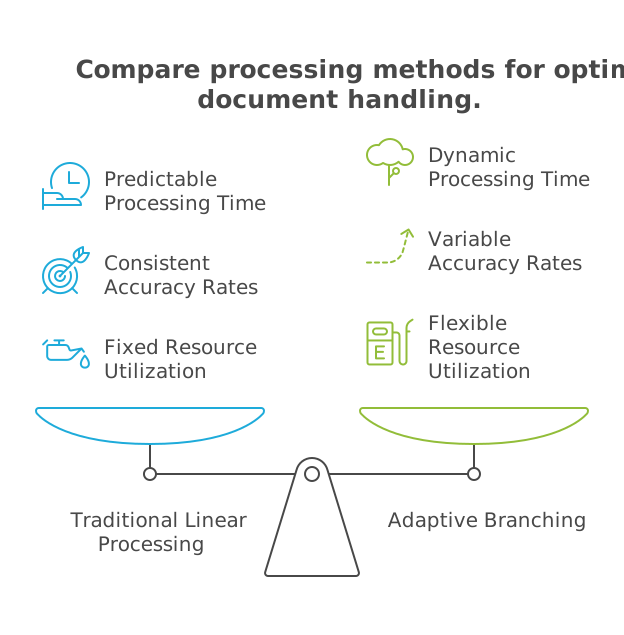
Traditional document processing workflows operate like highway traffic everyone follows the same route regardless of their destination or urgency. A simple invoice renewal gets the same treatment as a complex multi-party contract with unusual clauses. This approach guarantees that you're either over-processing simple documents or under-processing complex ones, sometimes both.
Adaptive branching changes this dynamic entirely. Think of it as an intelligent traffic management system that doesn't just direct flow but actually analyzes each vehicle (document) and creates optimal routes based on specific characteristics. When a document enters your system, AI agents immediately begin analyzing its content, structure, metadata, and potential risk factors. Based on this analysis, the system dynamically determines which processing path will be most effective.
The magic happens in those first few seconds of document ingestion. Your Document Intelligence Agent scans the incoming file, extracting key indicators like document type, completeness scores, presence of manual annotations, signature authenticity, data consistency metrics, and potential red flags. This isn't just optical character recognition or basic classification it's comprehensive document understanding that considers context, relationships between data points, and patterns that might indicate complexity or risk.
Once this initial analysis is complete, the system faces a decision tree with multiple branches. A standard purchase order with clear, consistent data might flow directly to automatic approval and integration with your accounting system. Meanwhile, a contract with amended clauses, unusual terms, or missing signatures gets routed to a specialized legal review workflow that includes human oversight and compliance checking.
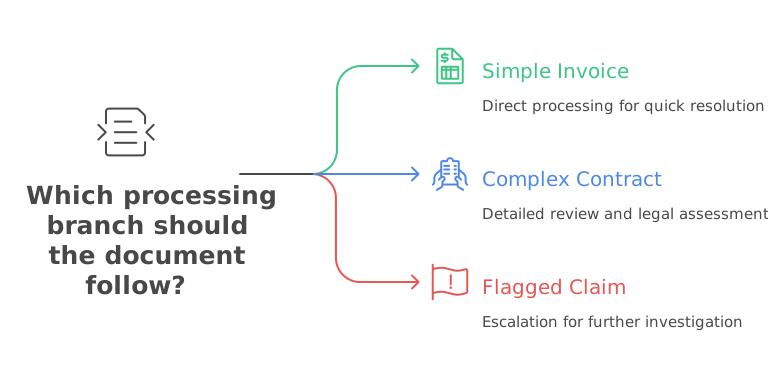
The branching logic isn't static either. These systems learn and evolve based on outcomes and feedback. If certain types of documents consistently require manual intervention despite being routed to automatic processing, the system adjusts its branching criteria. If a particular branch proves unnecessarily complex for certain document types, workflows can be streamlined. This continuous optimization ensures that your processing efficiency improves over time rather than stagnating.
Consider the difference this makes in practice. Your healthcare claims processing system receives thousands of submissions daily. Simple, standard claims for routine procedures zip through automatic validation and approval in minutes. Claims with unusual billing codes, discrepancies between provider information and treatment details, or amounts significantly above average for specific procedures get flagged for detailed review by specialized agents trained in fraud detection and compliance verification. High-value claims or those involving experimental treatments might follow a third path that includes additional documentation requirements and multi-level approval processes.
Artificio's platform transforms adaptive branching from a theoretical concept into practical reality through its sophisticated AI agent ecosystem. The platform doesn't just process documents it orchestrates intelligent conversations between specialized agents, each designed to handle specific aspects of document analysis and workflow decision-making.
The Document Intelligence Agent serves as the primary gateway for all incoming documents. This agent goes far beyond basic text extraction or format recognition. It performs deep content analysis, examining not just what the document says but how it says it, what's missing, and what patterns might indicate complexity or risk. The agent analyzes document structure, evaluates data consistency across fields, checks for completeness, and generates confidence scores for various extracted elements.
When a document arrives, this intelligence agent creates what we might call a "document fingerprint" a comprehensive profile that includes content classification, risk assessment, complexity scoring, and processing recommendations. This fingerprint becomes the basis for all subsequent routing decisions. If the agent detects high confidence scores across all fields, consistent formatting, and standard content patterns, it might recommend the express processing route. Conversely, documents with low confidence scores, unusual formatting, missing critical information, or potential red flags get marked for specialized handling.
The beauty of Artificio's approach lies in how these agents collaborate. The Document Intelligence Agent doesn't make routing decisions in isolation. It communicates with specialized agents that understand the nuances of different document types and processing requirements. A Contract Analysis Agent might weigh in on legal documents, identifying unusual clauses or non-standard terms that require human review. A Financial Validation Agent could flag invoices with discrepancies between line items and totals or detect pricing that falls outside expected ranges for specific vendors.
This collaborative intelligence creates remarkably sophisticated branching logic. A contract might pass initial document intelligence screening but trigger alerts from the Contract Analysis Agent due to unusual termination clauses. The system doesn't just route the entire document to manual review it creates a targeted workflow that focuses human attention specifically on the problematic sections while allowing automated processing of standard elements.
The Complex Review Agent represents another crucial component of Artificio's adaptive processing ecosystem. This agent specializes in handling documents that require nuanced analysis, multiple validation steps, or integration with external data sources. When simpler documents follow streamlined paths, complex cases receive the thorough attention they deserve without creating bottlenecks for routine processing.
Parallel processing capabilities add another layer of sophistication to Artificio's adaptive workflows. A single document might simultaneously follow multiple processing branches data extraction happening alongside compliance checking, with format conversion running in parallel. The system coordinates these parallel operations, ensuring that all necessary processing completes before final routing decisions are made.
The platform's learning capabilities ensure that branching logic continuously improves. Agents track outcomes across different processing paths, identifying patterns that indicate when documents are being over-processed or under-processed. If manually reviewed documents consistently pass without requiring changes, the system might adjust its sensitivity thresholds. If certain automated approvals frequently require later corrections, stricter validation criteria can be implemented.
Organizations implementing adaptive document processing with Artificio typically see immediate improvements in multiple areas, but the benefits extend far beyond simple efficiency gains. The most obvious advantage is optimized resource allocation your most powerful processing capabilities get focused on documents that actually need them, while routine documents flow through streamlined paths without unnecessary delays.
Processing speed improvements can be dramatic. When simple invoices don't have to wait behind complex contracts in a single-file queue, throughput increases significantly. Organizations often report 300-400% improvements in processing speed for routine documents, while complex documents receive more thorough analysis than was previously possible with manual systems. This isn't just about doing the same work faster it's about doing better work more intelligently.
Accuracy improvements represent another major benefit. When documents receive processing appropriate to their complexity level, error rates drop substantially. Simple documents get validated quickly without over-analysis that might introduce errors. Complex documents receive the detailed attention they require, catching issues that might be missed in rushed processing. The system's ability to route edge cases to specialized handling means that unusual situations get proper treatment rather than being forced through inappropriate workflows.
Cost optimization occurs naturally when processing resources align with document requirements. Instead of applying expensive, comprehensive analysis to every document regardless of complexity, organizations can allocate premium processing power where it adds the most value. Simple documents might cost pennies to process, while complex cases justify higher processing costs through improved accuracy and reduced risk.
Risk management improves significantly with adaptive workflows. High-risk documents get identified early and routed through appropriate security and compliance checks. Documents with potential fraud indicators receive specialized attention from agents trained in anomaly detection. Contracts with unusual terms get reviewed by legal specialists rather than slipping through automated approval processes that weren't designed to catch edge cases.
The flexibility of adaptive systems proves invaluable as business requirements evolve. Traditional workflows require extensive reconfiguration when new document types emerge or processing requirements change. Adaptive systems learn and adjust organically. New document patterns get recognized and incorporated into branching logic. Changing risk profiles or compliance requirements can be reflected in routing decisions without rebuilding entire workflows.
Perhaps most importantly, adaptive processing scales naturally with business growth. Adding new document types, increasing volume, or expanding into new markets doesn't require proportional increases in processing infrastructure. The system automatically optimizes resource allocation based on the actual characteristics of incoming documents rather than worst-case scenarios.
Staff satisfaction often improves dramatically when adaptive processing is implemented. Human reviewers stop spending time on routine documents that don't require their expertise, allowing them to focus on complex cases where their skills add real value. This shift from mundane data entry to strategic analysis and problem-solving leads to higher job satisfaction and better retention of skilled personnel.
Healthcare claims processing provides one of the most compelling examples of adaptive branching in action. Insurance companies process millions of claims annually, with the vast majority being routine submissions for standard procedures. Under traditional processing, every claim follows similar validation steps regardless of complexity or risk factors. This approach creates delays for simple claims while potentially missing important details in complex cases.
With adaptive processing, routine claims for preventive care, standard procedures, or follow-up visits zip through automated validation and approval in minutes. The system recognizes standard procedure codes, validates provider credentials against databases, confirms coverage details, and processes payment without human intervention. These straightforward cases might represent 70-80% of total volume but consume only a fraction of processing resources.
Claims that trigger anomaly detection follow a different path entirely. Unusual billing codes, procedures inconsistent with patient age or medical history, amounts significantly above average for specific treatments, or multiple claims from the same provider in suspicious patterns get routed to fraud detection workflows. These specialized paths include cross-reference checking with medical databases, provider history analysis, and pattern recognition algorithms designed to identify potentially fraudulent activity.
High-value claims or those involving experimental treatments take yet another route that includes additional documentation requirements, specialist review, and multi-level approval processes. The system recognizes that these cases justify additional processing costs due to their potential financial impact and ensures they receive appropriate scrutiny without delaying routine claims processing.
Legal contract management represents another area where adaptive branching creates substantial value. Law firms and corporate legal departments deal with everything from simple vendor agreements to complex multi-party contracts with unique terms and conditions. Traditional document management systems treat all contracts similarly, creating inefficiencies and potential risks.
Standard contracts for routine services office supplies, maintenance agreements, or software licenses can follow streamlined approval processes when they contain recognized terms and fall within established parameters. The system validates key fields like dates, amounts, and party information, checks against approved vendor lists, and routes for signature without manual review when all criteria are met.
Contracts with amended standard terms, unusual clauses, or significant deviations from templates get flagged for legal review. The system doesn't just route the entire document for manual processing it highlights specific sections that triggered the routing decision, allowing legal reviewers to focus their attention efficiently. This targeted approach reduces review time while ensuring that important details receive proper consideration.
Banking and financial services benefit enormously from adaptive KYC (Know Your Customer) processing. Customer onboarding documents range from straightforward account applications with complete, consistent information to complex cases involving international transfers, high-value accounts, or customers from high-risk regions.
Simple applications from existing customers with good standing, complete documentation, and standard account requirements can flow through automated validation and approval processes. The system verifies identity documents, checks against watchlists, validates address information, and opens accounts without manual intervention when all criteria are satisfied.
Applications that trigger risk flags incomplete documentation, mismatched information, customers from sanctioned regions, or unusual transaction patterns get routed to specialized compliance workflows. These paths include enhanced due diligence procedures, manual document verification, additional background checks, and multi-level approval requirements that ensure regulatory compliance while avoiding unnecessary delays for low-risk applications.
Manufacturing and supply chain management also benefit from adaptive document processing, particularly in handling purchase orders, invoices, and shipping documentation. Standard orders from established suppliers with consistent pricing and terms can flow through automated validation and approval processes. Orders with unusual quantities, pricing outside established ranges, or new suppliers trigger additional validation steps and manual review processes.
Successful implementation of adaptive document processing requires careful planning and a structured approach that balances ambition with practicality. Organizations often make the mistake of trying to transform their entire document processing ecosystem overnight, leading to disruption and resistance. A more effective strategy involves identifying high-impact use cases, implementing adaptive processing in focused areas, and gradually expanding the system based on proven results.
The first step involves comprehensive analysis of your current document processing workflows. This means mapping out existing processes, identifying bottlenecks and inefficiencies, understanding the types and volumes of documents you process, and recognizing patterns in how different document types require different levels of attention. Don't just look at the happy path examine edge cases, exceptions, and situations where current workflows break down or require manual intervention.
Document classification and risk assessment represent critical foundation elements for adaptive processing. You need to understand not just what types of documents you process but what characteristics make some documents more complex or risky than others. A purchase order might seem straightforward, but purchase orders from new vendors, orders for unusual quantities, or orders with pricing outside established ranges require different handling than routine replenishment orders from established suppliers.
Defining branching criteria requires balancing specificity with flexibility. Overly rigid criteria can create as many problems as they solve, forcing edge cases into inappropriate processing paths. Overly broad criteria might fail to capture important distinctions between document types. The key is identifying characteristics that genuinely correlate with processing requirements rather than superficial attributes that don't affect how documents should be handled.
Agent specialization design should reflect actual processing needs rather than theoretical organizational charts. Your Complex Review Agent should be trained on the types of complexity that actually occur in your documents, not generic complexity patterns. If your industry has specific compliance requirements, regulatory constraints, or technical standards, your agents need training that reflects these real-world requirements.
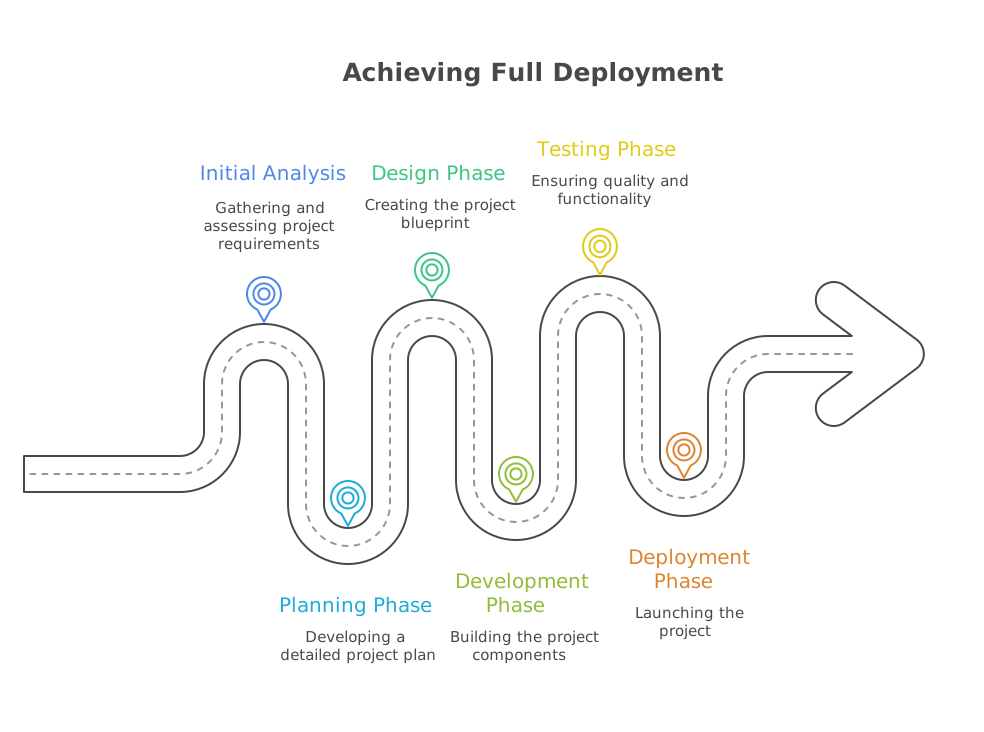
Pilot implementation should focus on high-volume, well-understood document types where the benefits of adaptive processing will be most apparent. Invoice processing often makes an excellent pilot use case because the volume is high, the documents are relatively standardized, and the business impact of improvements is easily measurable. Avoid starting with the most complex or unusual document types save those for later phases when you've proven the basic concept and refined your approach.
Integration planning needs to consider both technical and organizational factors. Adaptive processing systems need to connect with existing enterprise systems, databases, and workflow tools. But they also need to fit into existing organizational processes and work patterns. Staff who currently handle document review need training on the new system, and their roles may shift from routine processing to exception handling and system optimization.
Monitoring and optimization capabilities should be built into the system from day one rather than added later. You need real-time visibility into how documents are being routed, which processing paths are most efficient, where bottlenecks occur, and how accuracy rates vary across different branches. This monitoring data becomes the foundation for continuous improvement and system refinement.
Change management deserves special attention during adaptive processing implementation. Staff members who currently handle document processing may worry about job security or feel threatened by automation. Clear communication about how adaptive processing enhances rather than replaces human capabilities helps address these concerns. Emphasize that the system handles routine work so humans can focus on complex, interesting cases that require judgment and expertise.
Training programs should cover both technical aspects of the new system and strategic understanding of how adaptive processing improves overall operations. Users need to understand not just how to operate the system but why certain documents get routed to different processing paths and how their feedback helps improve system performance over time.
Effective monitoring of adaptive document processing systems requires metrics that go beyond traditional throughput and error rate measurements. While these basic metrics remain important, adaptive systems need monitoring approaches that reflect their dynamic, decision-making nature. You need visibility into routing decisions, branch performance, resource utilization patterns, and the quality of automated decision-making processes.
Processing path analytics provide crucial insights into how well your branching logic performs. Track which types of documents consistently get routed to which processing paths and whether these routing decisions prove appropriate. Documents that frequently require manual corrections after automated processing might indicate that branching criteria need adjustment. Conversely, documents that consistently pass manual review without changes might be candidates for more automated processing paths.
Decision accuracy metrics help validate that your adaptive system is making good choices about document routing. This involves tracking outcomes across different processing branches and identifying patterns that suggest optimal routing strategies. If documents routed to express processing frequently require later corrections, your criteria for express routing might be too lenient. If complex review processes consistently validate documents without finding issues, those criteria might be too strict.
Resource utilization monitoring ensures that adaptive processing delivers the efficiency gains you expect. Track how processing power, storage, and human attention get allocated across different document types and processing paths. The goal is ensuring that expensive resources get focused where they add the most value while routine processing uses minimal resources.
Exception analysis provides insights into edge cases and situations where current branching logic breaks down. Every adaptive system encounters documents that don't fit neatly into predefined categories or processing paths. Monitoring these exceptions helps identify opportunities for new processing branches or refinements to existing routing criteria.
Performance optimization in adaptive systems involves continuous refinement of branching logic, agent training, and processing workflows. Unlike traditional systems where optimization happens through periodic major updates, adaptive systems can incorporate improvements incrementally based on ongoing monitoring data. This means your system gets smarter and more efficient over time rather than requiring expensive overhauls.
Machine learning integration allows adaptive processing systems to evolve based on experience. Agents can learn from successful and unsuccessful routing decisions, gradually improving their ability to identify document characteristics that predict processing requirements. This learning happens automatically in the background, requiring minimal manual intervention while delivering continuous improvements in system performance.
Feedback loops between different system components ensure that insights gained in one area benefit the entire operation. When manual reviewers identify patterns in documents that require special handling, this information can be fed back to improve initial routing decisions. When certain processing paths consistently prove inefficient, workflows can be refined based on actual experience rather than theoretical assumptions.
Regular system audits help maintain optimal performance and identify opportunities for expansion or refinement. These audits should examine both technical performance metrics and business impact measurements. Are processing costs decreasing as expected? Are accuracy rates improving? Are staff members able to focus on higher-value activities? Are customer satisfaction scores improving due to faster, more accurate processing?
The evolution toward adaptive document processing represents just the beginning of a larger transformation in how organizations handle information. As AI agents become more sophisticated and integration capabilities expand, we can expect even more dramatic improvements in processing efficiency, accuracy, and intelligence.
Advanced pattern recognition will enable systems to identify subtle document characteristics that predict processing requirements with greater accuracy. Instead of relying on obvious indicators like document type or simple field validation, future systems will recognize complex patterns in content, context, and relationships that humans might miss. This deeper understanding will support more nuanced branching decisions and more precise resource allocation.
Predictive processing capabilities will allow systems to anticipate document characteristics and processing requirements before complete analysis is finished. By recognizing early indicators in document structure, content patterns, or metadata, systems can begin preparing appropriate processing resources and workflows while initial analysis continues. This proactive approach will reduce processing latency and improve overall system responsiveness.
Cross-document intelligence will enable processing decisions based not just on individual document characteristics but on patterns across multiple related documents. A contract amendment might be processed differently if it's part of a series of related changes versus a standalone modification. Invoice processing might adapt based on historical patterns from specific vendors or unusual activity patterns that span multiple documents.
Integration with external data sources will provide additional context for processing decisions. Real-time access to vendor databases, regulatory updates, market conditions, or industry-specific information will help systems make more informed routing decisions and provide more accurate validation of document contents.
The convergence of adaptive processing with other emerging technologies promises even greater capabilities. Blockchain integration could provide immutable audit trails for sensitive documents. IoT sensors could provide real-time context for processing decisions. Advanced natural language processing could enable more sophisticated understanding of document intent and implications.
As these capabilities develop, the line between document processing and intelligent business process automation will continue to blur. Adaptive systems won't just process documents they'll orchestrate complex business workflows that span multiple systems, departments, and organizations. The result will be business operations that are not only more efficient but fundamentally more intelligent and responsive to changing conditions.
Organizations that embrace adaptive document processing today position themselves at the forefront of this transformation. Rather than waiting for perfect solutions, they gain experience with intelligent automation that will prove invaluable as capabilities continue to evolve. The learning and optimization capabilities built into adaptive systems mean that early implementations become foundations for increasingly sophisticated automation rather than investments that become obsolete.
The future belongs to organizations that can process information as intelligently as they use it. Adaptive document processing with AI agents represents a crucial step toward that future, transforming routine document handling from a necessary overhead into a competitive advantage that scales with business growth and adapts to changing requirements.
In this rapidly evolving landscape, the question isn't whether adaptive processing will become standard it's whether your organization will be among the leaders who shape this transformation or among the followers who struggle to catch up. The technology exists today to begin this journey. The only question is when you'll take the first step.

Head IT Operations - Co Founder of Artificio
See it in your SAP environment
Bring us a document, a process, or a bottleneck. We'll show how Artificio captures, validates, and posts into SAP — then scale from there.
Security & compliance
ISO 27001:2013 certified, SOC 2 Type 2 compliant, GDPR and HIPAA ready. Every agent action is logged, auditable, and runs in isolated environments.