

Blog
Intelligent Document Capture for Customer Onboarding
Revolutionize customer onboarding in financial services with intelligent document capture. Automate processes, reduce costs, and enhance customer experience.

Blog
Revolutionize customer onboarding in financial services with intelligent document capture. Automate processes, reduce costs, and enhance customer experience.
The financial services industry stands at a critical juncture where customer expectations for seamless digital experiences collide with increasingly complex regulatory requirements. Traditional customer onboarding processes, characterized by manual document handling, extended processing times, and error-prone data entry, can no longer meet the demands of today's digital-first consumers. In this environment, intelligent document capture technology has emerged as a transformative solution that addresses both operational efficiency and customer satisfaction while maintaining the strict compliance standards that define the financial sector.
Customer onboarding in financial services has historically been a cumbersome process that often takes weeks to complete, involves multiple touchpoints, and requires customers to submit numerous documents repeatedly. This friction-heavy approach not only frustrates customers but also creates significant operational costs for financial institutions. The manual processing of identity documents, income statements, bank records, and compliance paperwork consumes substantial human resources while introducing opportunities for human error that can compromise both customer experience and regulatory compliance.
Intelligent document capture represents a paradigm shift in how financial institutions approach customer onboarding. By leveraging artificial intelligence, machine learning, and optical character recognition technologies, this approach automates the extraction, validation, and processing of customer documents with unprecedented accuracy and speed. The technology goes beyond simple document scanning to understand context, validate information against multiple data sources, and integrate seamlessly with existing customer relationship management and core banking systems.
The traditional customer onboarding process in financial services reflects an industry built on paper-based workflows and manual verification procedures that have evolved incrementally over decades. Most financial institutions still rely heavily on human intervention for document processing, data entry, and compliance verification, creating bottlenecks that extend onboarding timelines and increase operational costs. A typical onboarding journey might require customers to visit physical branches multiple times, submit photocopies of documents, wait for manual verification processes, and endure extended approval periods that can stretch from days to weeks.
This traditional approach presents significant challenges for both customers and financial institutions. From the customer perspective, lengthy onboarding processes create friction that can lead to abandonment, particularly in competitive markets where alternative financial service providers offer faster solutions. Research indicates that customer abandonment rates during financial services onboarding can exceed 70% when processes take longer than 15 minutes to complete online or require multiple in-person visits. The complexity of document requirements, unclear submission processes, and lack of real-time status updates contribute to customer frustration and negatively impact initial impressions of the financial institution. 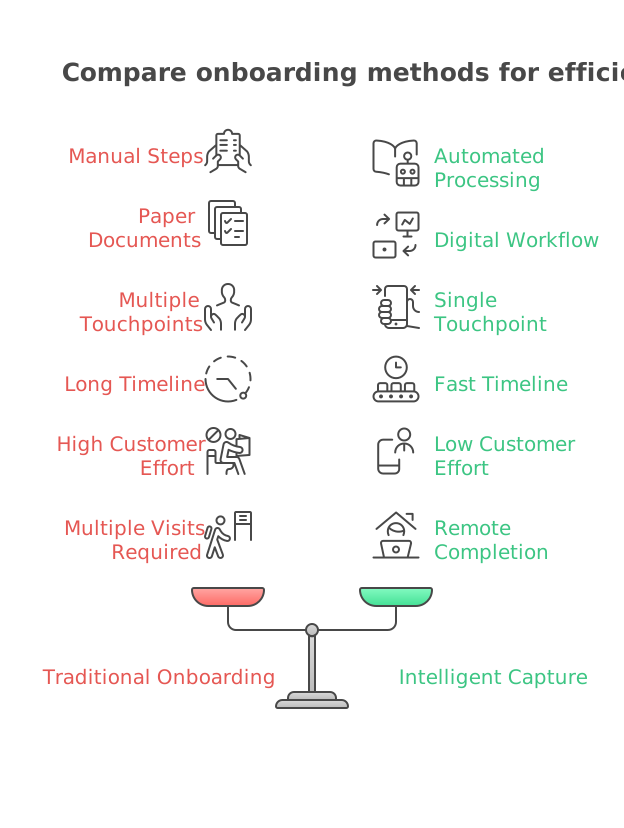
For financial institutions, manual document processing creates substantial operational overhead and compliance risks. Staff members must physically handle documents, manually enter data into multiple systems, cross-reference information across various databases, and maintain detailed audit trails for regulatory purposes. This process is not only time-consuming but also prone to human error, which can result in compliance violations, customer disputes, and reputational damage. The costs associated with manual processing extend beyond direct labor expenses to include physical storage requirements, document management systems, and the infrastructure needed to support paper-based workflows.
The compliance burden in financial services adds another layer of complexity to traditional onboarding processes. Financial institutions must verify customer identities, assess risk profiles, screen against sanctions lists, and maintain detailed records of all onboarding activities to satisfy regulatory requirements such as Know Your Customer (KYC), Anti-Money Laundering (AML), and Customer Due Diligence (CDD) regulations. Manual compliance processes require significant time and expertise, as staff must understand complex regulatory requirements and ensure that all documentation meets specific standards for completeness, authenticity, and accuracy.
Document authenticity verification presents particular challenges in traditional onboarding processes. Financial institutions must assess whether submitted documents are genuine, unaltered, and current while detecting sophisticated forgeries and fraudulent submissions. Manual verification processes rely heavily on staff expertise and visual inspection, creating opportunities for fraudulent documents to pass through the system undetected. The consequences of accepting fraudulent documentation can be severe, including regulatory fines, legal liability, and reputational damage that extends far beyond the immediate financial impact.
Intelligent document capture represents a sophisticated technological approach that combines artificial intelligence, machine learning, computer vision, and natural language processing to automate the extraction, validation, and processing of information from various document types. Unlike traditional document scanning solutions that simply convert paper documents to digital images, intelligent document capture systems understand document structure, extract relevant data points, validate information accuracy, and integrate processed data directly into downstream business applications.
The foundation of intelligent document capture lies in advanced optical character recognition (OCR) technology that has evolved far beyond simple text recognition. Modern OCR systems can accurately process documents with varying quality levels, different layouts, multiple languages, and even handwritten text. These systems use machine learning algorithms trained on vast datasets of document types to recognize patterns, understand context, and extract information with high accuracy rates that often exceed human performance levels.
Machine learning capabilities enable intelligent document capture systems to continuously improve their accuracy and efficiency through experience. As these systems process more documents, they learn to recognize new document types, adapt to varying formats, and identify patterns that indicate potential fraud or errors. This self-improving capability means that intelligent document capture systems become more valuable over time, requiring less human intervention and achieving higher accuracy rates as they gain experience with specific document types and use cases.
Computer vision technology allows intelligent document capture systems to analyze document layout, structure, and visual elements to understand context and extract relevant information. These systems can identify document types automatically, locate specific data fields, and even detect signs of document tampering or forgery. Computer vision capabilities extend to analyzing photographs, signatures, seals, and other visual elements that are critical for document authenticity verification in financial services applications.
Natural language processing capabilities enable intelligent document capture systems to understand text context, extract meaning from unstructured content, and identify relationships between different pieces of information within documents. This capability is particularly valuable for processing complex financial documents such as loan applications, insurance claims, and regulatory filings that contain narrative sections requiring contextual understanding rather than simple data extraction.
The integration capabilities of intelligent document capture systems allow seamless connection with existing financial services infrastructure, including core banking systems, customer relationship management platforms, compliance databases, and regulatory reporting systems. This integration eliminates the need for manual data entry between systems, reduces processing time, and ensures data consistency across the entire customer onboarding workflow.
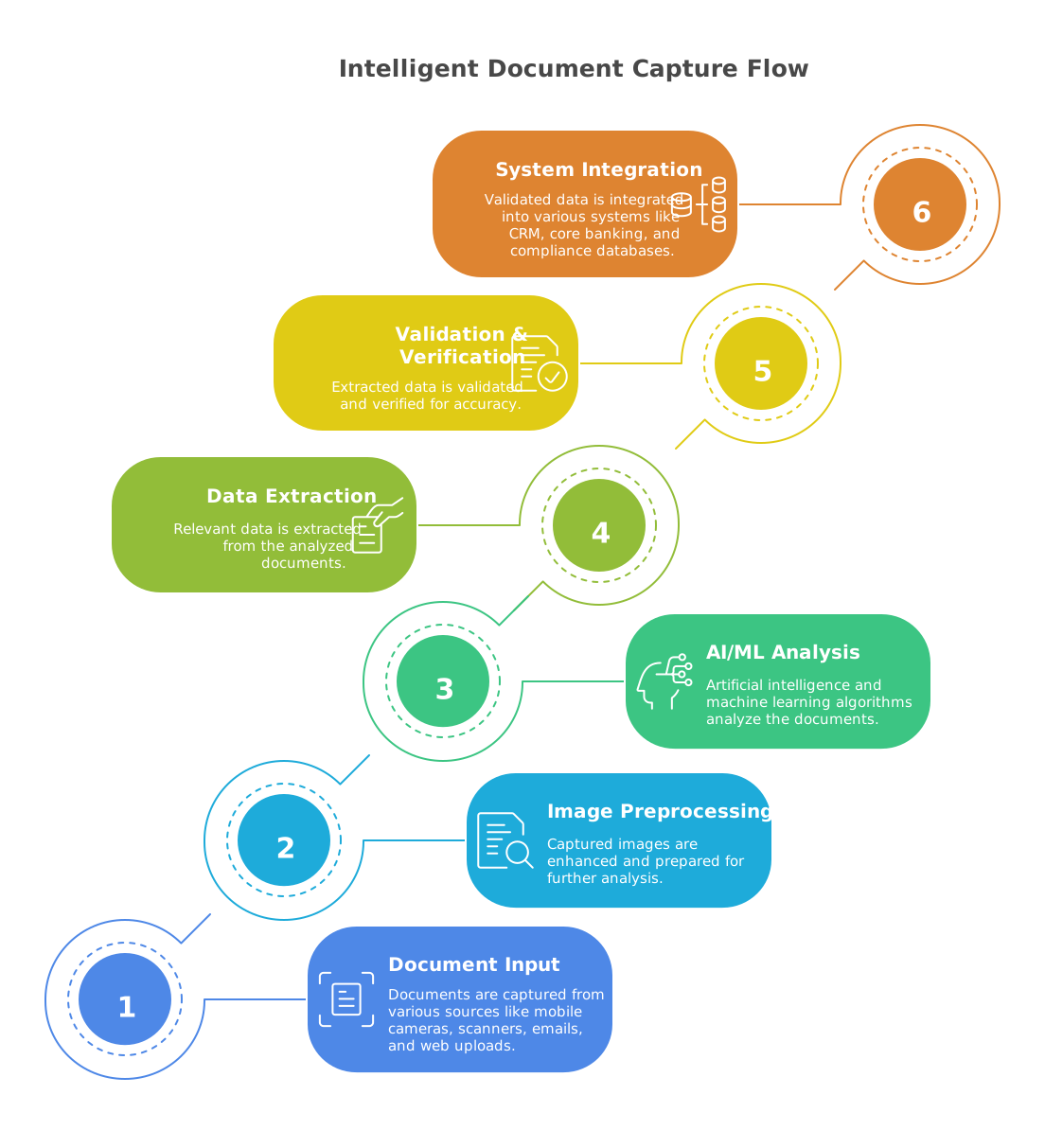
The architecture of intelligent document capture systems encompasses several interconnected components that work together to automate document processing workflows. Document ingestion capabilities allow these systems to accept documents from multiple sources, including mobile device cameras, desktop scanners, email attachments, and web-based upload portals. This flexibility ensures that customers can submit documents through their preferred channels while maintaining consistent processing standards regardless of the input method.
Image preprocessing capabilities enhance document quality before analysis begins, addressing common issues such as poor lighting, skewed alignment, background noise, and resolution variations that can impact accuracy. These preprocessing algorithms automatically rotate, crop, enhance, and optimize document images to ensure optimal conditions for subsequent analysis steps. Advanced preprocessing capabilities can even reconstruct partially damaged or obscured documents, making it possible to process documents that would be unusable in traditional manual workflows.
Data extraction engines represent the core intelligence of document capture systems, using trained machine learning models to identify and extract specific data points from processed documents. These engines can simultaneously extract multiple data types, including structured information such as names, addresses, and account numbers, as well as unstructured content such as employment descriptions and financial narratives. The extraction process maintains confidence scores for each data point, allowing downstream systems to apply appropriate validation rules based on extraction certainty levels.
Validation and verification capabilities ensure that extracted information meets quality and accuracy standards before integration with business systems. These capabilities include format validation, range checking, cross-reference verification, and logical consistency analysis that can identify potential errors or inconsistencies in extracted data. Advanced validation engines can cross-reference extracted information against external databases, credit bureaus, and government records to verify accuracy and detect potential fraud indicators.
Document classification capabilities automatically identify document types and route them to appropriate processing workflows, eliminating the need for manual sorting and ensuring that each document receives the correct processing treatment. Classification engines can distinguish between dozens of different document types, including various forms of identification, income verification, bank statements, and regulatory filings, even when documents have similar visual characteristics or overlapping content.
Exception handling capabilities manage documents that cannot be processed automatically, routing them to human reviewers with appropriate context and guidance for resolution. These capabilities include sophisticated workflow management that ensures exceptions are handled promptly and consistently while maintaining detailed audit trails for compliance purposes. Exception handling systems can also provide feedback to machine learning models, enabling continuous improvement in automatic processing capabilities.
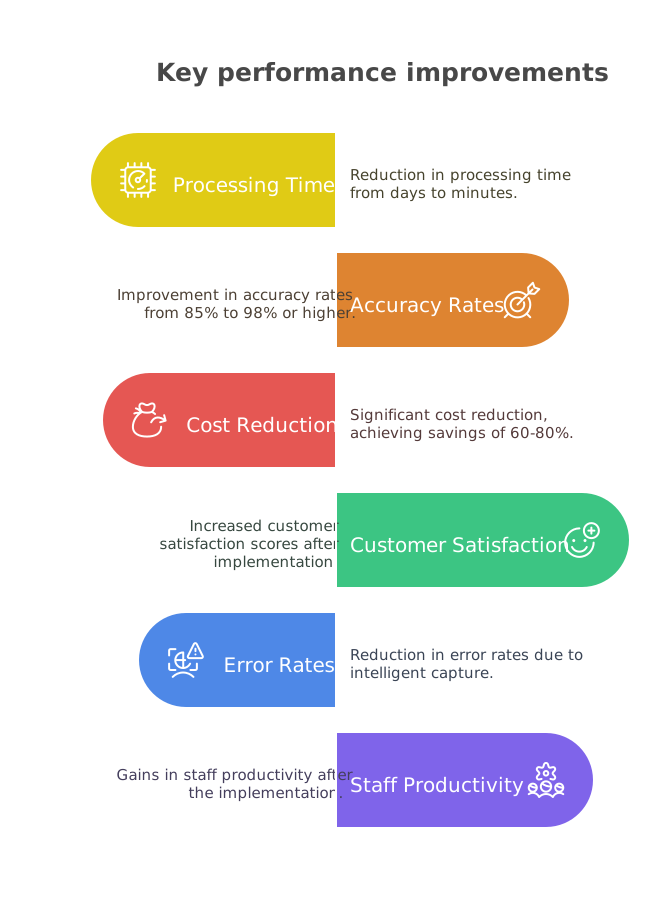
The implementation of intelligent document capture technology delivers substantial benefits across multiple dimensions of customer onboarding operations. Processing speed improvements represent one of the most immediately visible benefits, with intelligent systems capable of processing complex document sets in minutes rather than the hours or days required for manual processing. This speed improvement directly translates to faster customer onboarding, reduced abandonment rates, and improved customer satisfaction scores that can have measurable impacts on customer acquisition and retention metrics.
Accuracy improvements achieved through intelligent document capture significantly reduce errors associated with manual data entry and processing. While human operators typically achieve accuracy rates between 85% and 95% for data entry tasks, intelligent document capture systems consistently achieve accuracy rates exceeding 98% for most document types. This improvement in accuracy reduces the need for error correction, minimizes compliance risks, and eliminates costly mistakes that can impact customer relationships and regulatory standing.
Cost reduction benefits extend across multiple operational areas, including direct labor costs, processing infrastructure, and error remediation expenses. Financial institutions implementing intelligent document capture typically report cost reductions of 60% to 80% for document processing operations, with additional savings from reduced error rates, faster processing times, and improved operational efficiency. These cost savings can be reinvested in customer experience improvements, technology enhancements, or competitive pricing strategies.
Scalability advantages enable financial institutions to handle varying document volumes without proportional increases in processing costs or staffing requirements. Intelligent document capture systems can process peak volumes during promotional periods or seasonal fluctuations without degradation in processing quality or customer experience. This scalability is particularly valuable for growing financial institutions or those entering new markets where document volumes may be unpredictable.
Enhanced customer experience represents a critical competitive advantage delivered by intelligent document capture implementation. Customers can submit documents through convenient digital channels, receive immediate feedback on document quality and completeness, and track their onboarding progress in real-time. The reduced friction and transparency provided by intelligent systems create positive first impressions that can influence long-term customer relationships and loyalty.
Improved compliance capabilities help financial institutions meet increasingly complex regulatory requirements while reducing compliance-related costs and risks. Intelligent document capture systems maintain detailed audit trails, ensure consistent application of compliance rules, and can automatically flag potential compliance issues for human review. These capabilities are particularly valuable in regulated environments where compliance failures can result in significant financial penalties and reputational damage.
Manual data entry represents one of the most significant challenges in traditional customer onboarding processes, consuming substantial staff time while introducing opportunities for human error. Intelligent document capture eliminates the need for manual data entry by automatically extracting information from submitted documents and integrating it directly into relevant business systems. This automation not only reduces processing time but also eliminates transcription errors that can cause downstream problems in customer accounts and regulatory reporting.
Document storage and retrieval challenges that plague traditional paper-based systems are addressed through intelligent document capture's digital-first approach. Processed documents are automatically indexed, categorized, and stored in searchable digital formats that enable rapid retrieval for customer service, compliance audits, or regulatory inquiries. Digital storage eliminates the physical space requirements and environmental risks associated with paper document storage while providing enhanced security and access control capabilities.
Compliance verification challenges are significantly reduced through intelligent document capture's ability to automatically apply compliance rules and validation criteria during the processing workflow. Systems can verify that required documents are present, complete, and authentic while automatically screening customers against sanctions lists and other regulatory databases. This automated compliance verification ensures consistent application of regulatory requirements while reducing the expertise burden on front-line staff.
Customer communication inefficiencies that characterize traditional onboarding processes are addressed through intelligent document capture's real-time processing and status reporting capabilities. Customers can receive immediate feedback on document submissions, automated notifications about processing progress, and proactive alerts about any additional requirements or issues that need resolution. This improved communication reduces customer anxiety and support inquiries while demonstrating the financial institution's commitment to transparency and customer service.
Quality control challenges inherent in manual processing are mitigated through intelligent document capture's consistent application of processing rules and validation criteria. Unlike human operators who may have varying levels of expertise or attention to detail, intelligent systems apply the same quality standards to every document processed, ensuring consistent results and reducing the variability that can impact customer experience and compliance outcomes.
Identity verification represents one of the most critical applications of intelligent document capture in financial services customer onboarding. Modern systems can process various forms of government-issued identification, including passports, driver's licenses, and national identity cards, extracting relevant information while simultaneously verifying document authenticity through security feature analysis. These systems can detect sophisticated forgeries by analyzing security elements such as holograms, watermarks, and special inks that are difficult to replicate, providing financial institutions with confidence in the identity verification process.
Income verification applications demonstrate the versatility of intelligent document capture in processing complex financial documents. Systems can analyze pay stubs, tax returns, bank statements, and employment letters to extract relevant income information while verifying document consistency and authenticity. This capability is particularly valuable for loan applications and credit assessments where accurate income verification is critical for regulatory compliance and risk management purposes.
Bank statement processing represents a sophisticated application that requires understanding of various statement formats, transaction categorization, and financial analysis capabilities. Intelligent document capture systems can process statements from hundreds of different financial institutions, extracting transaction details, calculating account balances, and identifying patterns that may be relevant for credit decisions or fraud detection. This processing capability enables faster loan approvals and more accurate risk assessments while reducing the manual effort required for financial analysis.
Address verification applications utilize intelligent document capture to process utility bills, lease agreements, and other address verification documents that are required for compliance purposes. These systems can extract address information, verify consistency across multiple documents, and flag potential discrepancies that may indicate fraud or errors in customer-provided information. Address verification capabilities are particularly important for financial institutions operating in multiple jurisdictions with varying address verification requirements.
Business documentation processing for commercial customers represents a complex application that requires understanding of corporate structures, financial statements, and regulatory filings. Intelligent document capture systems can process articles of incorporation, financial statements, tax filings, and other business documents to extract relevant information for commercial account opening and credit decisions. This capability is essential for financial institutions serving business customers where documentation requirements are typically more complex than individual customer onboarding.
Insurance claim processing applications demonstrate the adaptability of intelligent document capture technology across different financial services sectors. Insurance companies use these systems to process claim forms, medical records, police reports, and other supporting documentation, extracting relevant information while identifying potential fraud indicators. The ability to process diverse document types quickly and accurately enables faster claim resolution and improved customer satisfaction in insurance applications.
Successful implementation of intelligent document capture requires careful planning and consideration of organizational capabilities, technical infrastructure, and change management requirements. Financial institutions should begin with a comprehensive assessment of current document processing workflows, identifying high-volume, standardized processes that offer the greatest potential for automation benefits. This assessment should include analysis of document types, processing volumes, accuracy requirements, and integration needs to establish realistic expectations and success criteria for the implementation project.
Technology selection represents a critical decision that should consider factors such as document type support, accuracy requirements, integration capabilities, scalability needs, and vendor stability. Financial institutions should evaluate multiple vendors, conduct proof-of-concept testing with representative document samples, and assess ongoing support and development capabilities. The selected technology should align with existing infrastructure and strategic technology direction while providing flexibility for future expansion and enhancement.
Pilot implementation approaches allow organizations to validate technology capabilities, refine processes, and build internal expertise before full-scale deployment. Successful pilot implementations typically focus on a single document type or business process, enabling thorough testing and optimization before expanding to additional use cases. Pilot projects should include defined success metrics, regular progress reviews, and mechanisms for capturing lessons learned that can inform broader implementation efforts.
Change management considerations are critical for successful intelligent document capture implementation, as the technology often requires significant changes to established workflows and staff responsibilities. Organizations should invest in comprehensive training programs, clear communication about technology benefits and impacts, and support systems that help staff adapt to new processes. Change management efforts should address both technical training needs and cultural adaptation requirements to ensure successful technology adoption.
Integration planning must address both technical and operational aspects of connecting intelligent document capture systems with existing business applications and workflows. Technical integration requirements include data format compatibility, security protocols, system performance considerations, and backup and recovery procedures. Operational integration involves redesigning business processes to take advantage of automation capabilities while maintaining appropriate human oversight and exception handling procedures.
Quality assurance processes should be established to monitor system performance, validate processing accuracy, and identify opportunities for continuous improvement. These processes should include regular accuracy assessments, performance benchmarking, exception analysis, and feedback mechanisms that enable ongoing system optimization. Quality assurance activities should also address compliance requirements and audit trail maintenance to ensure regulatory obligations are met consistently.
Return on investment calculations for intelligent document capture implementations should consider both direct cost savings and indirect benefits that may be more difficult to quantify. Direct cost savings include reduced labor costs for document processing, decreased error correction expenses, and elimination of paper handling and storage costs. These savings can typically be calculated with reasonable precision based on current processing volumes and labor costs, providing clear financial justification for technology investments.
Processing time improvements represent measurable benefits that directly impact customer experience and operational efficiency. Financial institutions should track metrics such as average processing time per document, end-to-end onboarding duration, and customer abandonment rates to assess the impact of intelligent document capture implementation. These metrics provide concrete evidence of operational improvements and can be used to demonstrate value to stakeholders and customers.
Accuracy improvements should be measured through regular assessment of error rates, correction requirements, and downstream impacts of processing mistakes. Intelligent document capture systems typically achieve significant improvements in accuracy compared to manual processes, reducing costs associated with error correction and customer service issues. Accuracy metrics should be tracked over time to demonstrate continuous improvement and identify opportunities for further optimization.
Customer satisfaction metrics provide important indicators of the customer experience impact of intelligent document capture implementation. Financial institutions should track metrics such as Net Promoter Score, customer effort score, and satisfaction ratings specifically related to the onboarding process. Improvements in these metrics can indicate successful technology implementation and may correlate with improved customer retention and acquisition outcomes.
Compliance metrics should assess the impact of intelligent document capture on regulatory compliance performance, including audit findings, regulatory violations, and compliance processing costs. Improved compliance outcomes can provide significant value through reduced regulatory risk and associated costs, though these benefits may be realized over longer time periods than direct operational improvements.
Scalability benefits become apparent as processing volumes increase or fluctuate over time. Organizations should monitor their ability to handle peak processing periods, accommodate growth in customer onboarding volumes, and adapt to new document types or regulatory requirements. Scalability benefits may not be immediately apparent but can provide substantial value as organizations grow and evolve.
Artificial intelligence and machine learning capabilities continue to evolve rapidly, promising further improvements in intelligent document capture accuracy and functionality. Advanced AI techniques such as deep learning and neural networks are enabling more sophisticated document understanding, including the ability to process handwritten text, analyze document context, and detect subtle fraud indicators. These advancing capabilities will likely reduce the human intervention required for document processing while improving accuracy and expanding the range of documents that can be processed automatically.
Blockchain technology integration represents an emerging trend that could enhance document authenticity verification and audit trail capabilities. Blockchain-based systems could provide immutable records of document processing activities, enabling enhanced compliance reporting and fraud detection capabilities. While still in early development stages, blockchain integration could address some of the trust and verification challenges that are particularly important in financial services applications.
Mobile-first processing capabilities are becoming increasingly important as customer preferences shift toward mobile-centric interactions. Advanced mobile processing capabilities include real-time document quality assessment, guided document capture workflows, and immediate processing feedback that can be delivered through mobile applications. These capabilities enable truly digital-first onboarding experiences that meet customer expectations for convenience and speed.
Advanced analytics and reporting capabilities are expanding to provide deeper insights into document processing performance, customer behavior patterns, and operational optimization opportunities. These analytics capabilities can identify trends in document quality, processing bottlenecks, and customer preferences that can inform process improvements and technology enhancements. Predictive analytics may eventually enable proactive identification of potential processing issues or fraud indicators before they impact customer experience.
Integration with emerging technologies such as robotic process automation, chatbots, and voice recognition systems is creating opportunities for more comprehensive automation of customer onboarding workflows. These integrated approaches can handle complex customer interactions that span multiple channels and touchpoints while maintaining consistent processing standards and customer experience quality.
Regulatory technology (RegTech) integration is becoming increasingly sophisticated, with intelligent document capture systems incorporating real-time regulatory updates, automated compliance monitoring, and enhanced reporting capabilities. These integrations help financial institutions adapt quickly to changing regulatory requirements while maintaining compliance standards and reducing regulatory risk.
Intelligent document capture technology represents a fundamental transformation in how financial institutions approach customer onboarding, offering substantial benefits in processing speed, accuracy, cost reduction, and customer experience. The technology addresses longstanding challenges in traditional onboarding processes while enabling financial institutions to meet evolving customer expectations and regulatory requirements more effectively.
The business case for intelligent document capture implementation is compelling, with measurable returns on investment typically realized within the first year of deployment. Financial institutions that embrace this technology gain competitive advantages through faster onboarding processes, improved customer satisfaction, and reduced operational costs that can be reinvested in customer experience improvements and business growth initiatives.
Success with intelligent document capture requires careful planning, appropriate technology selection, and comprehensive change management to ensure that organizations can fully realize the benefits of automation while maintaining the human oversight and expertise that remain important in financial services operations. The technology should be viewed as an enhancement to human capabilities rather than a replacement, enabling staff to focus on higher-value activities such as customer relationship management and complex problem resolution.
Looking forward, intelligent document capture technology will continue to evolve with advancing artificial intelligence capabilities, expanded integration possibilities, and enhanced mobile and digital channel support. Financial institutions that establish intelligent document capture capabilities now will be well-positioned to take advantage of these advancing capabilities while building the foundation for more comprehensive digital transformation initiatives.
The revolution in customer onboarding enabled by intelligent document capture is not merely a technological upgrade but a fundamental reimagining of how financial institutions can serve customers more effectively while maintaining the security, compliance, and accuracy standards that define the financial services industry. Organizations that embrace this transformation will find themselves better equipped to compete in an increasingly digital financial services landscape while delivering the exceptional customer experiences that drive long-term business success.

Head IT Operations - Co Founder of Artificio
See it in your SAP environment
Bring us a document, a process, or a bottleneck. We'll show how Artificio captures, validates, and posts into SAP — then scale from there.
Security & compliance
ISO 27001:2013 certified, SOC 2 Type 2 compliant, GDPR and HIPAA ready. Every agent action is logged, auditable, and runs in isolated environments.