

Blog
AI for Small Business Back Office Automation
Automate documents, client communication, and compliance with AI. Enhance efficiency and reduce costs for your small business.

Blog
Automate documents, client communication, and compliance with AI. Enhance efficiency and reduce costs for your small business.
The modern small business owner faces an increasingly complex operational landscape. While customer-facing activities rightfully claim attention and resources, the back office operations that keep businesses compliant, organized, and efficient often consume disproportionate amounts of time and energy. Document processing, client communication management, regulatory compliance, and administrative workflows represent critical business functions that traditionally required substantial human intervention. However, the emergence of sophisticated artificial intelligence solutions has fundamentally altered this equation, offering small businesses unprecedented opportunities to automate these essential processes without the prohibitive costs historically associated with enterprise-grade automation systems.
The transformation of back office operations through artificial intelligence represents more than mere technological advancement; it constitutes a strategic imperative for small businesses seeking sustainable competitive advantages in an increasingly digital marketplace. Traditional approaches to document management, communication orchestration, and compliance monitoring often trapped small business owners in cycles of manual processing that consumed valuable time while introducing unnecessary risks of human error. These inefficiencies not only drain resources but also prevent business leaders from focusing on growth-oriented activities that drive revenue and market expansion.
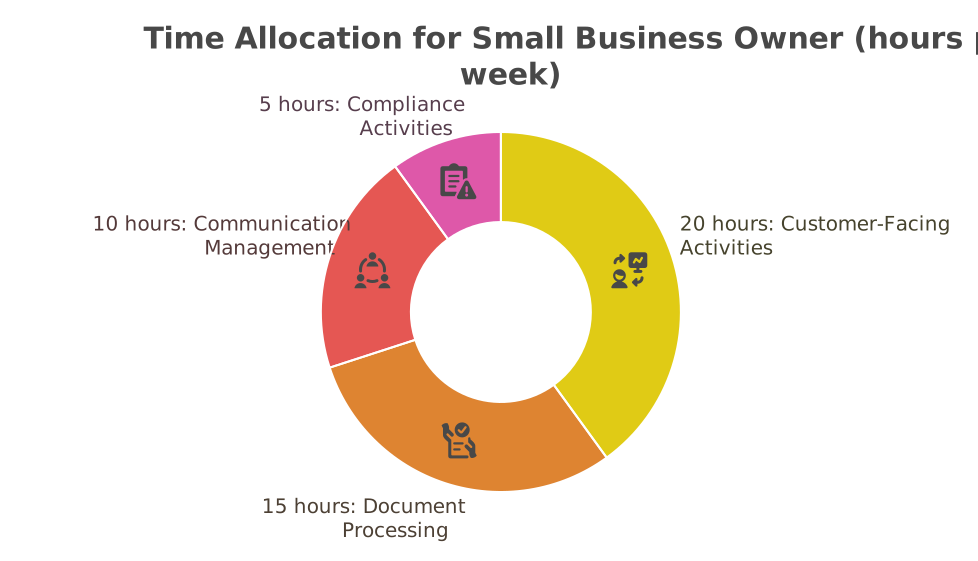
Contemporary artificial intelligence platforms have evolved to address these specific challenges through sophisticated orchestration of multiple AI technologies working in concert. Large language models, natural language processing systems, intelligent document processing engines, and automated workflow management tools can now be deployed collectively to create comprehensive back office automation solutions that rival enterprise-level capabilities while remaining accessible to smaller organizations with limited technical resources and budgets.
Small businesses operate under unique constraints that distinguish their operational challenges from those faced by larger organizations. Limited staffing means individual team members often wear multiple hats, juggling customer service responsibilities alongside administrative duties, financial management, and regulatory compliance requirements. This multitasking reality creates bottlenecks where critical back office functions receive inadequate attention, leading to delayed invoice processing, inconsistent client communication, and compliance gaps that can expose businesses to regulatory risks.
The financial implications of inefficient back office operations extend far beyond the obvious costs of employee time. Delayed invoice processing directly impacts cash flow, creating ripple effects throughout the organization that can limit growth opportunities and strain vendor relationships. Inconsistent communication management often results in missed opportunities, customer dissatisfaction, and damaged professional relationships that take significant time and resources to repair. Compliance oversights can trigger regulatory penalties, legal complications, and reputational damage that disproportionately impact smaller organizations lacking dedicated legal and compliance teams.
Document management represents a particularly acute challenge for small businesses handling diverse client needs, regulatory requirements, and operational processes. Traditional approaches often involve manual document creation, review, and processing workflows that consume hours of employee time while introducing multiple opportunities for errors. Contract management, invoice processing, regulatory filing preparation, and client communication documentation frequently require specialized knowledge and careful attention to detail that can overwhelm generalist staff members responsible for multiple operational areas.
The communication complexity facing modern small businesses has expanded dramatically with the proliferation of digital channels and customer expectations for immediate, personalized responses across multiple platforms. Email management, SMS communications, social media interactions, and messaging platform engagement each require distinct approaches and consistent monitoring. Small businesses must maintain professional communication standards across all channels while ensuring prompt responses and accurate information sharing, often without dedicated communication specialists or sophisticated customer relationship management systems.
Compliance requirements continue to evolve and expand across industries, creating ongoing challenges for small business owners who must stay current with regulatory changes while maintaining operational efficiency. Privacy regulations, industry-specific compliance requirements, financial reporting obligations, and employment law considerations each demand specialized knowledge and systematic approaches to documentation and reporting. Small businesses often lack the resources to maintain dedicated compliance staff, leaving owners and managers responsible for understanding and implementing complex regulatory requirements alongside their other responsibilities.
Artificial intelligence technologies have undergone remarkable advancement in recent years, transitioning from experimental research applications to practical business tools capable of addressing real-world operational challenges. The development of large language models has created new possibilities for automating complex cognitive tasks that previously required human expertise, including document analysis, content generation, and communication management. These models can understand context, generate appropriate responses, and make intelligent decisions based on established parameters and learned patterns.
Modern AI platforms leverage multiple complementary technologies working together to create comprehensive automation solutions. Natural language processing enables systems to understand and generate human-like text across various contexts and purposes. Computer vision capabilities allow for intelligent document scanning, data extraction, and visual content analysis. Machine learning algorithms continuously improve system performance by learning from user interactions and feedback, creating increasingly sophisticated automation capabilities over time.
The integration of these technologies through intelligent orchestration platforms has made enterprise-grade automation accessible to smaller organizations. Rather than requiring extensive technical expertise or significant infrastructure investments, modern AI solutions can be implemented through user-friendly interfaces that allow business owners to configure automation workflows, set processing parameters, and monitor system performance without specialized programming knowledge. This democratization of AI technology represents a fundamental shift in how small businesses can approach operational efficiency and competitive positioning.
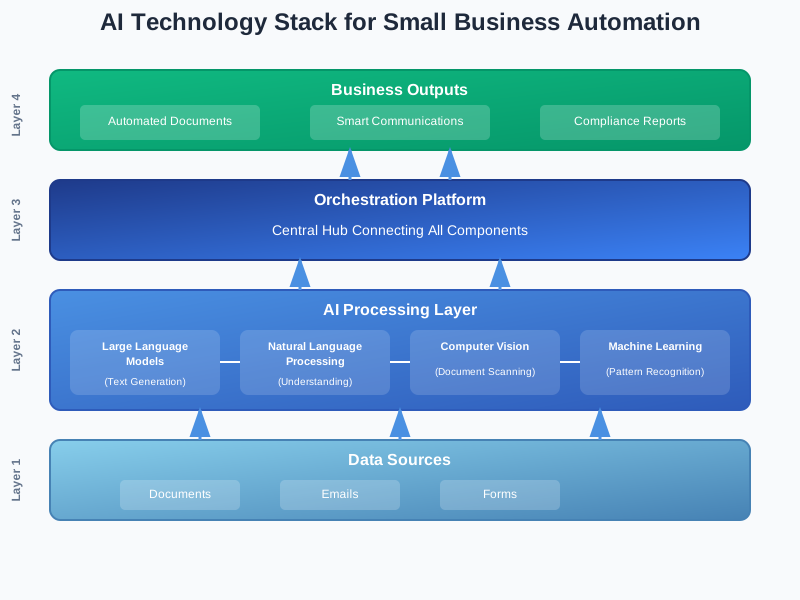
Cloud-based deployment models have further reduced barriers to AI adoption by eliminating the need for substantial upfront infrastructure investments. Small businesses can access sophisticated AI capabilities through subscription-based services that scale with their needs and growth trajectories. This approach provides access to cutting-edge technology while maintaining predictable operating costs and allowing for gradual expansion of automation capabilities as businesses become more comfortable with AI-powered processes.
Document processing represents one of the most immediately impactful areas where artificial intelligence can transform small business operations. Traditional document workflows often involve multiple manual steps including data entry, review, approval, and filing processes that consume significant time while creating opportunities for errors and inconsistencies. Intelligent document processing systems can automate these workflows by extracting relevant information, validating data accuracy, routing documents for appropriate approvals, and maintaining organized digital records.
Modern AI-powered document processing begins with advanced optical character recognition capabilities that can accurately extract text, numbers, and structured data from various document formats including scanned images, PDFs, and digital files. Natural language processing algorithms then analyze extracted content to identify key information such as dates, amounts, names, addresses, and other relevant data points. This automated extraction process eliminates manual data entry requirements while ensuring greater accuracy and consistency than traditional manual approaches.
Named entity recognition models specifically trained for business document processing can identify and categorize important information with remarkable precision. These models can distinguish between different types of entities such as company names, person names, financial amounts, dates, addresses, and product descriptions, automatically organizing this information into structured databases that support reporting, analysis, and workflow automation. The ability to automatically extract and categorize document information enables small businesses to maintain comprehensive records without dedicating staff time to manual data entry and organization tasks.
Invoice processing represents a particularly valuable application of intelligent document processing for small businesses. AI systems can automatically extract vendor information, line items, amounts, due dates, and other critical data from incoming invoices, routing them through appropriate approval workflows based on predetermined business rules. Integration with accounting systems enables automatic entry of approved invoices, reducing processing time from hours to minutes while ensuring accurate financial records and timely payments that maintain positive vendor relationships.
Contract management through AI-powered document processing offers significant advantages for small businesses handling multiple client agreements, vendor contracts, and partnership arrangements. Intelligent systems can extract key terms, identify important dates, flag potential issues or inconsistencies, and maintain organized contract databases that support proactive contract management. Automated alerts for renewal dates, milestone deadlines, and compliance requirements help ensure that important contractual obligations receive appropriate attention without requiring manual calendar management and reminder systems.
Regulatory document preparation and compliance monitoring benefit substantially from intelligent document processing capabilities. AI systems can extract relevant information from various business records, automatically populate regulatory forms, identify potential compliance issues, and maintain audit trails that support regulatory reporting requirements. This automation reduces the risk of compliance oversights while ensuring that regulatory obligations receive consistent attention regardless of other business priorities and time constraints.
Communication management represents another critical area where artificial intelligence can dramatically improve small business efficiency and customer satisfaction. Modern businesses must maintain consistent, professional communication across email, SMS, messaging platforms, and social media channels while ensuring timely responses and appropriate follow-up actions. AI-powered communication management systems can automate routine communications, prioritize important messages, and ensure consistent brand voice across all channels.
Email automation through intelligent systems goes far beyond simple autoresponder functionality. Advanced AI platforms can analyze incoming messages to understand intent, extract relevant information, and generate appropriate responses based on established communication templates and business rules. These systems can handle routine inquiries, schedule appointments, provide basic information, and route complex questions to appropriate staff members while maintaining detailed communication logs for reference and follow-up.
The integration of large language models enables communication systems to generate natural, contextually appropriate responses that maintain professional tone and brand consistency. These models can adapt communication style based on recipient preferences, message urgency, and communication history while ensuring that all automated responses align with established business policies and customer service standards. The ability to maintain high-quality communication standards through automation allows small businesses to provide responsive customer service without dedicating excessive staff time to routine communication tasks.
Multi-channel communication orchestration ensures that customer interactions remain consistent regardless of the communication platform used. AI systems can track customer preferences, communication history, and ongoing issues across email, SMS, messaging platforms, and phone interactions, providing staff members with comprehensive context when personal intervention becomes necessary. This unified approach prevents communication gaps and ensures that customers receive consistent service regardless of how they choose to contact the business.
Intelligent message prioritization helps small business owners and staff focus attention on communications requiring immediate response or personal intervention. AI systems can analyze message content, sender importance, urgency indicators, and business impact to automatically sort communications and alert staff to high-priority items. This automated triage process ensures that critical communications receive prompt attention while routine messages are handled efficiently through automated processes.
SMS and messaging platform integration enables businesses to maintain consistent communication across channels that customers increasingly prefer for quick interactions and updates. AI-powered systems can send automated appointment reminders, delivery notifications, payment confirmations, and other routine communications through customers' preferred channels while maintaining professional standards and compliance with communication regulations.
Regulatory compliance represents a significant challenge for small businesses operating in increasingly complex regulatory environments. Privacy regulations, industry-specific requirements, employment law obligations, and financial reporting standards each demand specialized knowledge and systematic approaches to documentation and reporting. AI-powered compliance management systems can automate many compliance-related tasks while providing ongoing monitoring and alerting capabilities that help ensure regulatory obligations receive appropriate attention.
Privacy regulation compliance, including requirements such as GDPR and various state privacy laws, benefits significantly from AI-powered automation. Intelligent systems can automatically identify personal information within business records, track data processing activities, maintain consent records, and generate required privacy notices and disclosures. Automated data subject request processing can handle routine requests for information access, correction, or deletion while maintaining detailed audit trails that support regulatory compliance and demonstrate good faith compliance efforts.
Financial reporting and tax preparation automation can significantly reduce the administrative burden associated with regulatory compliance while improving accuracy and consistency. AI systems can extract relevant financial information from various business systems, organize data according to regulatory requirements, and populate standard reporting forms with appropriate information. Integration with accounting systems ensures that financial data remains current and accurate while automated validation processes identify potential errors or inconsistencies before submission.
Industry-specific compliance monitoring enables businesses to stay current with evolving regulatory requirements while maintaining operational efficiency. AI systems can monitor regulatory updates, assess their impact on business operations, and generate alerts when new compliance obligations require attention. Automated compliance checklists and workflow management ensure that required actions receive appropriate follow-up while maintaining documentation that supports audit readiness and regulatory compliance.
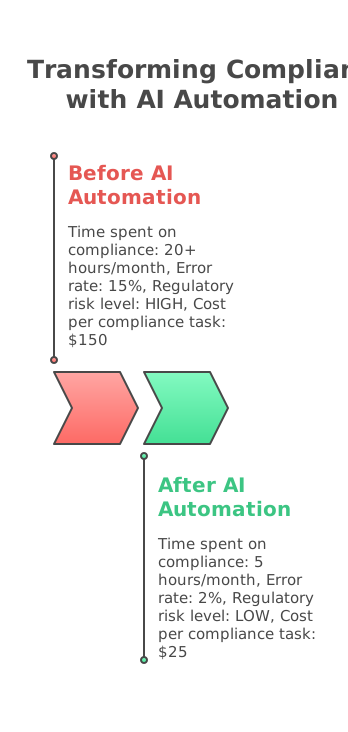
Employment law compliance automation helps small businesses navigate complex employment regulations while maintaining positive employee relationships. AI systems can track employment-related deadlines, generate required notices and disclosures, maintain personnel records in compliance with retention requirements, and provide guidance on employment law obligations. Automated monitoring of wage and hour requirements, benefits administration, and workplace safety obligations helps prevent compliance oversights that could result in regulatory penalties or employee relations issues.
Successful implementation of AI-powered back office automation requires careful consideration of integration with existing business systems and workflows. Small businesses often rely on various software platforms for accounting, customer relationship management, project management, and other operational functions. Effective AI automation must work seamlessly with these existing systems to avoid creating additional complexity or requiring wholesale replacement of functional business tools.
Customer relationship management system integration enables AI-powered automation to leverage existing customer data while enhancing customer service capabilities. Intelligent systems can access customer history, preferences, and communication records to provide personalized automated responses and ensure that staff members have comprehensive context when personal intervention becomes necessary. This integration maintains continuity of customer relationships while extending capabilities through automation.
Accounting system integration ensures that AI-powered document processing and workflow automation align with existing financial management processes. Automated invoice processing, expense management, and financial reporting capabilities must integrate seamlessly with established accounting workflows to maintain accurate financial records and support existing reporting and analysis requirements. Proper integration prevents data silos and ensures that automation enhances rather than complicates financial management processes.
Enterprise resource planning system integration enables comprehensive automation across multiple business functions while maintaining data consistency and operational visibility. AI-powered systems can access inventory data, production schedules, customer orders, and other operational information to provide intelligent automation that considers broader business context and priorities. This integration supports sophisticated workflow automation that can adapt to changing business conditions and priorities.
Email and communication platform integration ensures that AI-powered communication management works seamlessly with existing email systems, messaging platforms, and other communication tools. Proper integration maintains existing communication workflows while adding intelligent automation capabilities that enhance efficiency and consistency. Integration also ensures that automated communications maintain appropriate branding, signatures, and compliance requirements established through existing communication systems.
Project management and workflow integration enables AI automation to support existing project management processes while providing intelligent task prioritization, deadline monitoring, and resource allocation support. Integration with established project management tools ensures that automation enhances existing workflows rather than requiring adoption of entirely new project management approaches.
Small business owners must carefully evaluate the financial implications of implementing AI-powered back office automation to ensure that technology investments generate appropriate returns on investment. The cost-benefit analysis for AI automation involves consideration of both direct financial impacts and indirect benefits that may be more difficult to quantify but equally important for long-term business success.
Direct cost savings from AI automation primarily result from reduced labor requirements for routine back office tasks. Document processing automation can eliminate hours of manual data entry, document review, and filing activities each week. Communication automation reduces time spent on routine customer inquiries, appointment scheduling, and follow-up communications. Compliance automation minimizes time required for regulatory reporting, document preparation, and compliance monitoring activities. These time savings translate directly into cost reductions or enable staff reallocation to revenue-generating activities.
Indirect financial benefits from AI automation often exceed direct cost savings over time. Improved accuracy in document processing reduces errors that can result in financial losses, customer dissatisfaction, or compliance issues. Faster invoice processing improves cash flow by reducing payment delays and enabling early payment discounts. Enhanced communication consistency and responsiveness can improve customer satisfaction and retention rates, generating ongoing revenue benefits that compound over time.
Risk reduction represents another significant financial benefit of AI-powered automation. Compliance automation reduces the risk of regulatory penalties, legal complications, and reputational damage that can result from compliance oversights. Improved document management and audit trails reduce legal risks and support better decision-making. Enhanced communication management reduces the risk of customer dissatisfaction and lost business opportunities.
Implementation costs for AI automation have decreased significantly as cloud-based platforms have matured and competition has increased among solution providers. Modern AI platforms typically operate on subscription-based pricing models that allow small businesses to access sophisticated capabilities without substantial upfront investments. Implementation costs often include platform subscriptions, setup and configuration services, and staff training requirements, but these costs are generally predictable and manageable within small business budgets.
The scalability of AI automation provides additional financial benefits as businesses grow. Unlike traditional staffing approaches that require proportional increases in personnel as business volume grows, AI automation can often handle increased workloads without proportional cost increases. This scalability enables small businesses to grow more efficiently while maintaining operational quality and consistency.
Return on investment calculations for AI automation should consider both short-term cost savings and long-term strategic benefits. While direct labor cost savings often justify implementation costs within six to twelve months, the strategic advantages of improved operational efficiency, reduced risk exposure, and enhanced scalability provide ongoing value that supports long-term business growth and competitive positioning.
Successful implementation of AI-powered back office automation requires a systematic approach that considers business priorities, technical requirements, and organizational readiness. Small businesses should develop implementation roadmaps that prioritize high-impact automation opportunities while building organizational capabilities and confidence in AI-powered solutions.
The initial assessment phase involves comprehensive evaluation of existing back office processes to identify automation opportunities and potential challenges. Business owners should document current workflows, measure time requirements for various tasks, and assess the accuracy and consistency of existing processes. This assessment provides baseline metrics for measuring automation impact while identifying specific areas where AI-powered solutions can provide the greatest value.
Priority identification focuses on selecting initial automation projects that offer high impact potential with manageable implementation complexity. Document processing automation often represents an excellent starting point because it provides immediate, measurable benefits while building organizational familiarity with AI-powered solutions. Communication automation and compliance monitoring may follow as organizations become more comfortable with AI integration and see positive results from initial implementations.
Vendor selection requires careful evaluation of AI platform capabilities, integration requirements, support services, and pricing models. Small businesses should prioritize vendors that offer comprehensive solutions with strong integration capabilities rather than point solutions that may create additional complexity. Vendor evaluation should include consideration of scalability, customization options, training and support services, and long-term viability.
The pilot implementation phase involves deploying AI automation for selected processes while maintaining existing backup procedures during the transition period. Pilot implementations allow organizations to validate automation effectiveness, identify potential issues, and refine configurations before fully committing to automated processes. Successful pilots provide proof of concept and build organizational confidence in AI-powered solutions.
Staff training and change management represent critical components of successful AI automation implementation. Employees need training on new workflows, system interfaces, and quality assurance procedures. Change management efforts should address concerns about job displacement while emphasizing how automation enables staff to focus on higher-value activities that support business growth and professional development.
Monitoring and optimization ensure that AI automation continues to deliver expected benefits while adapting to changing business requirements. Regular performance reviews should measure automation effectiveness against established metrics while identifying opportunities for configuration improvements or expanded automation scope. Ongoing optimization ensures that AI systems continue to provide value as business needs evolve.
Effective measurement of AI automation success requires establishment of relevant key performance indicators that align with business objectives and provide actionable insights for ongoing optimization. Small businesses should develop measurement frameworks that capture both quantitative performance metrics and qualitative benefits that may be more difficult to measure but equally important for overall business success.
Operational efficiency metrics provide direct measurement of automation impact on business processes. Time savings measurements compare processing times before and after automation implementation, providing clear evidence of efficiency improvements. Accuracy measurements track error rates and quality improvements resulting from automated processes. Throughput measurements assess the volume of work processed through automated systems compared to manual approaches.
Financial performance indicators measure the direct and indirect financial impact of AI automation. Cost per transaction measurements compare processing costs before and after automation implementation. Revenue impact measurements assess how improved efficiency and customer service quality affect business revenue. Cash flow improvements resulting from faster invoice processing and improved collection processes provide measurable financial benefits.
Customer satisfaction metrics evaluate how AI automation affects customer experience and relationships. Response time measurements track improvements in communication responsiveness. Customer feedback scores assess satisfaction with automated communications and service quality. Customer retention rates provide insight into whether automation improvements translate into stronger customer relationships.
Compliance and risk management indicators measure how AI automation affects regulatory compliance and business risk exposure. Compliance audit results provide objective assessment of regulatory compliance improvements. Error rates in regulatory reporting and documentation track risk reduction benefits. Incident tracking measures reductions in compliance-related issues and their associated costs.
Employee satisfaction and productivity measurements assess how AI automation affects workplace dynamics and staff effectiveness. Employee feedback surveys can provide insight into how automation affects job satisfaction and work-life balance. Productivity measurements track how automation enables staff to focus on higher-value activities. Training and development metrics assess skill development opportunities created by automation implementation.
Long-term strategic measurements evaluate how AI automation supports broader business objectives and competitive positioning. Market responsiveness measurements assess how improved operational efficiency affects ability to pursue new opportunities and respond to market changes. Scalability measurements track how automation supports business growth without proportional increases in operational complexity or costs.
The artificial intelligence landscape continues to evolve rapidly, with new capabilities and applications emerging regularly that may provide additional opportunities for small business automation and competitive advantage. Understanding emerging trends and capabilities enables small businesses to make informed decisions about current implementations while positioning themselves to leverage future developments effectively.
Large language model capabilities continue to advance, with newer models demonstrating improved reasoning abilities, domain-specific knowledge, and integration capabilities. These improvements may enable more sophisticated automation of complex business processes that currently require human expertise and judgment. Small businesses should consider how evolving AI capabilities might expand automation opportunities while planning implementation strategies that can accommodate future enhancements.
Integration and orchestration platforms are becoming more sophisticated, enabling seamless coordination between multiple AI systems and business applications. These developments may enable small businesses to implement comprehensive automation solutions that coordinate activities across multiple business functions while maintaining unified data management and reporting capabilities.
Industry-specific AI solutions are emerging that address unique requirements and challenges within particular business sectors. Small businesses should monitor developments in AI solutions designed for their specific industries while considering how specialized capabilities might provide competitive advantages or address unique operational challenges.
Regulatory developments affecting AI implementation and data management continue to evolve, potentially affecting how small businesses can implement and operate AI-powered systems. Staying informed about regulatory trends enables proactive compliance planning while ensuring that AI implementations remain viable under changing regulatory requirements.
The democratization of AI development tools may eventually enable small businesses to customize and extend AI capabilities to address unique business requirements. Understanding these trends helps small businesses plan for potential future capabilities while making current implementation decisions that support long-term flexibility and growth.
The transformation of small business back office operations through artificial intelligence represents more than a technological upgrade; it constitutes a fundamental shift toward more efficient, accurate, and scalable business operations that enable small businesses to compete effectively in increasingly digital marketplaces. The convergence of advanced AI technologies, cloud-based deployment models, and user-friendly implementation approaches has created unprecedented opportunities for small businesses to access enterprise-grade automation capabilities without enterprise-level complexity or costs.
The evidence supporting AI-powered back office automation continues to strengthen as early adopters demonstrate measurable improvements in operational efficiency, cost management, customer satisfaction, and regulatory compliance. These success stories provide compelling proof that artificial intelligence can deliver significant value for small businesses willing to embrace technological transformation while maintaining focus on their core business objectives and customer relationships.
The implementation of AI-powered automation should be viewed as an investment in long-term business sustainability and competitive positioning rather than simply a cost-reduction initiative. While immediate efficiency gains and cost savings often justify implementation investments, the strategic advantages of improved scalability, reduced risk exposure, and enhanced operational capabilities provide ongoing value that supports business growth and market responsiveness over time.
Small business owners considering AI automation should focus on identifying specific operational challenges that align with proven AI capabilities rather than attempting to automate all business processes simultaneously. Starting with high-impact, manageable implementations allows organizations to build expertise and confidence while demonstrating value that supports expanded automation initiatives over time.
The future of small business operations will increasingly rely on intelligent automation that enhances human capabilities rather than replacing human judgment and creativity. Successful small businesses will be those that thoughtfully integrate AI-powered solutions to handle routine tasks while enabling their human teams to focus on strategic thinking, relationship building, and creative problem-solving that drives business growth and customer satisfaction.
The opportunity for small businesses to leverage AI-powered back office automation has never been greater, and the competitive advantages available to early adopters continue to expand as AI technologies become more sophisticated and accessible. Business owners who act decisively to implement intelligent automation solutions position their organizations for sustained success in an increasingly competitive and technology-driven business environment.

Head IT Operations - Co Founder of Artificio
See it in your SAP environment
Bring us a document, a process, or a bottleneck. We'll show how Artificio captures, validates, and posts into SAP — then scale from there.
Security & compliance
ISO 27001:2013 certified, SOC 2 Type 2 compliant, GDPR and HIPAA ready. Every agent action is logged, auditable, and runs in isolated environments.