

Blog
No-Code AP Automation is Democratizing Financial Operations
Discover how no-code platforms are empowering finance teams to build sophisticated AP automation workflows, transforming operations and driving strategic value.

Blog
Discover how no-code platforms are empowering finance teams to build sophisticated AP automation workflows, transforming operations and driving strategic value.
The accounts payable department is experiencing a quiet revolution. Finance teams across the globe are no longer waiting months for IT departments to build custom solutions or spending fortunes on complex enterprise software that requires armies of consultants to implement. Instead, they're taking matters into their own hands, building sophisticated AP automation workflows using no-code platforms that put the power of customization directly in their hands.
This shift represents more than just a technological upgrade. It's a fundamental reimagining of how financial operations can adapt, innovate, and respond to business needs in real-time. The emergence of "citizen finance" professionals who can design, build, and deploy their own automation solutions is transforming AP departments from cost centers into agile, strategic powerhouses that drive business value.
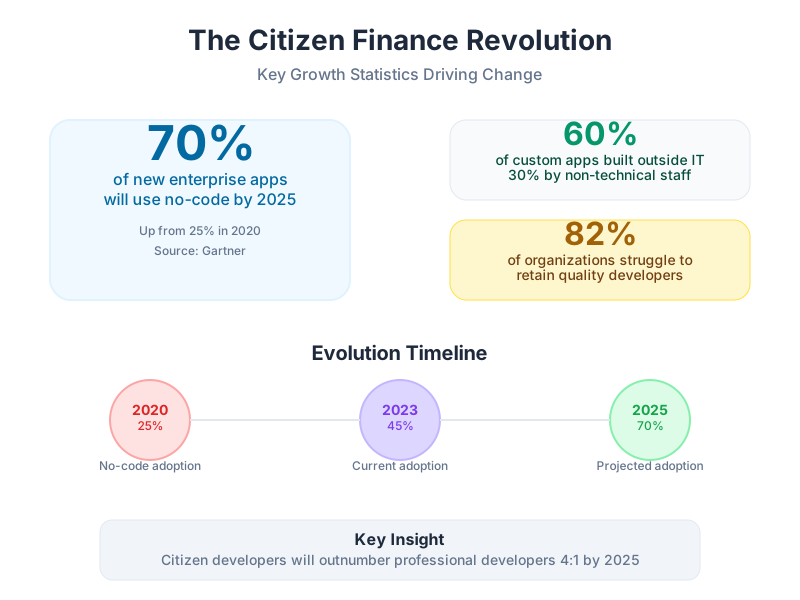
The convergence of several powerful trends has created the perfect conditions for citizen finance to flourish. Organizations worldwide are grappling with a severe shortage of technical talent, with 82% of companies unable to attract and retain the quality and quantity of software engineers they need. This scarcity has created massive bottlenecks in IT departments, where 72% of IT leaders report that project backlogs prevent them from working on strategic initiatives. Meanwhile, finance teams have urgent needs that can't wait for the traditional development queue.
The numbers tell a compelling story. Gartner predicts that by 2025, 70% of new applications developed by enterprises will use no-code or low-code technologies, representing a dramatic jump from less than 25% in 2020. This isn't a distant future prediction anymore. Almost 60% of custom enterprise applications are already being built outside traditional IT departments, with 30% created by employees who have limited or no formal technical development skills.
The COVID-19 pandemic accelerated this trend dramatically. Companies that had no-code platforms in place adapted significantly faster to remote operations, supply chain disruptions, and changing financial processes than those relying solely on traditional development approaches. Finance teams found themselves needing to modify approval workflows, adjust payment processes, and create new reporting dashboards almost overnight. Those with citizen development capabilities could make these changes in days rather than months.
The technology itself has reached a tipping point. Modern no-code platforms designed for financial operations offer sophisticated capabilities that would have required extensive custom development just a few years ago. These platforms can handle complex approval routing, integrate with multiple ERP systems, process unstructured data using AI, and generate detailed compliance reports. The visual interfaces have become so intuitive that finance professionals can build comprehensive AP automation workflows using drag-and-drop components, pre-built templates, and natural language configuration.
Traditional AP automation implementations have been notorious for their complexity, cost, and time requirements. Enterprise-grade solutions often require 6-18 months to implement, teams of consultants, extensive training programs, and ongoing technical support. The total cost of ownership can easily reach hundreds of thousands of dollars for mid-sized companies, making sophisticated automation accessible only to large enterprises with substantial IT budgets.
No-code AP automation platforms are shattering these barriers. Finance teams can now deploy sophisticated automation workflows in weeks rather than months, often with minimal IT involvement. The visual development environment allows AP managers to design custom workflows that reflect their organization's unique approval hierarchies, compliance requirements, and business rules without writing a single line of code.
Consider the experience of a mid-sized manufacturing company that needed to automate their three-way matching process. Under the traditional approach, they would have needed to engage their IT department, potentially hire external consultants, and wait months for a custom solution. Instead, their AP manager used a no-code platform to create a sophisticated matching system in just two weeks. The solution automatically matched invoices with purchase orders and receiving documents, flagged discrepancies for manual review, and routed approvals based on dollar thresholds and department hierarchies.
The beauty of citizen-developed solutions lies in their deep understanding of actual business processes. Finance professionals who build these systems know intimately where the pain points exist, which exceptions require human intervention, and how workflows need to flex during busy periods or special circumstances. This domain expertise translates into more practical, user-friendly solutions that actually solve real problems rather than imposing rigid processes that don't fit the business reality.
No-code platforms also enable rapid iteration and continuous improvement. When business requirements change or new regulations emerge, finance teams can modify their workflows immediately rather than submitting change requests to IT and waiting for the next development cycle. This agility has become crucial in today's fast-changing business environment, where companies need to adapt their financial processes quickly in response to market conditions, regulatory changes, or operational shifts.
The rise of citizen finance is creating a new category of financial professional who combines deep domain expertise with practical technology skills. These individuals aren't traditional developers, but they're far from technology-averse. They're finance professionals who have embraced the power of no-code tools to solve business problems, optimize processes, and create value for their organizations.
Citizen finance professionals typically emerge from the ranks of experienced AP managers, financial analysts, and process improvement specialists who have grown frustrated with the limitations of manual processes and the slow pace of traditional IT-driven solutions. They're motivated by a desire to eliminate repetitive tasks, reduce errors, and create more strategic value in their roles. Many discover no-code development almost by accident, starting with simple workflow automations and gradually building more sophisticated solutions as their confidence and skills develop.
The learning curve for citizen finance development is surprisingly gentle. Modern no-code platforms are designed with business users in mind, offering intuitive interfaces, extensive documentation, and community support. Many platforms include AI-powered assistants that can suggest workflow improvements, identify potential bottlenecks, and even generate components based on natural language descriptions. A typical finance professional can become proficient in basic workflow automation within weeks and develop advanced skills over several months.
The impact of citizen finance professionals extends far beyond their individual contributions. They often become evangelists within their organizations, training colleagues, sharing best practices, and building a culture of continuous improvement and innovation. Gartner predicts that by 2025, citizen developers will outnumber professional developers by 4 to 1 in large enterprises, creating vast networks of business-savvy technologists who can rapidly respond to changing needs.
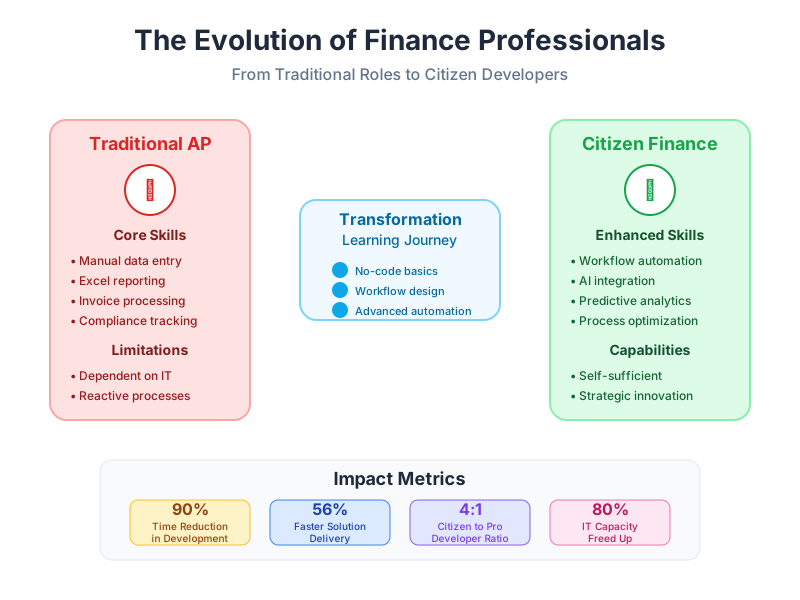
Organizations are beginning to recognize and formally support citizen finance initiatives. Leading companies are creating centers of excellence, providing training programs, and establishing governance frameworks that encourage innovation while maintaining appropriate controls. Some are even creating new career paths that recognize the unique value of citizen finance professionals, offering advancement opportunities that blend financial expertise with technology leadership.
The practical applications of citizen finance in AP automation are remarkably diverse and sophisticated. Finance teams are building solutions that go far beyond simple workflow automation, creating comprehensive systems that address complex business requirements with elegant, user-friendly interfaces.
One particularly impressive example involves a global consulting firm that needed to automate expense management across 15 countries, each with different approval hierarchies, local compliance requirements, and currency considerations. Rather than implementing a one-size-fits-all enterprise solution, their finance team used a no-code platform to create localized workflows that respected regional business practices while maintaining global visibility and control. The system automatically routes expenses based on local approval hierarchies, applies country-specific tax rules, converts currencies in real-time, and generates consolidated reports for global management.
Another compelling case involves a healthcare organization that built a sophisticated vendor onboarding and management system using no-code tools. The system guides new vendors through a complex qualification process, automatically validates credentials against regulatory databases, scores suppliers based on risk factors, and maintains ongoing monitoring of vendor performance. What would have been a major IT project costing hundreds of thousands of dollars was built by the procurement team in less than three months using drag-and-drop components and pre-built integrations.
Manufacturing companies are using citizen finance solutions to create dynamic approval workflows that adjust based on real-time business conditions. For example, one automotive supplier built a system that automatically escalates purchase approvals during supply chain disruptions, routes critical component purchases to expedited workflows during production ramp-ups, and applies different approval thresholds based on cash flow forecasts. The system integrates with their ERP, production planning systems, and cash management tools to provide intelligent, context-aware automation.
Service organizations are particularly creative in their citizen finance implementations. A professional services firm created a comprehensive project financial management system that tracks billable time, manages project budgets, generates client invoices, and provides real-time profitability analysis. The system automatically flags projects that are over budget, suggests resource reallocations, and provides predictive analytics on project completion dates and final margins. The entire solution was built by their finance team without any traditional development resources.
These examples share several common characteristics that distinguish citizen finance solutions from traditional implementations. They're deeply tailored to specific business needs, they integrate seamlessly with existing workflows, they provide immediate value to end users, and they can be modified quickly as requirements evolve. Most importantly, they're built by people who understand the actual work being automated, resulting in solutions that truly solve problems rather than creating new ones.
The technological foundation enabling the citizen finance revolution has evolved dramatically over the past few years. Early no-code platforms were limited to simple form builders and basic workflow automation. Today's platforms incorporate artificial intelligence, machine learning, and advanced analytics capabilities that rival enterprise-grade solutions developed by teams of professional programmers.
Modern no-code AP automation platforms leverage AI in several powerful ways. Intelligent document processing can extract data from invoices regardless of format, layout, or language, learning and improving accuracy over time. Natural language processing enables users to configure workflows using plain English descriptions, with the platform automatically translating business rules into executable logic. Predictive analytics can forecast payment patterns, identify potential fraud, and optimize cash flow based on historical data and market conditions.
The integration capabilities of contemporary no-code platforms are particularly impressive. Pre-built connectors enable seamless integration with dozens of ERP systems, banking platforms, e-procurement tools, and business intelligence applications. API management tools allow citizen developers to connect with virtually any system that exposes data through standard interfaces. Many platforms include AI-powered data mapping that can automatically identify and connect related fields across different systems, dramatically reducing the complexity of integration projects.
Visual development environments have become increasingly sophisticated while maintaining ease of use. Modern platforms offer drag-and-drop interface builders, sophisticated workflow designers, and powerful reporting tools that generate publication-quality dashboards and reports. Real-time collaboration features enable teams to work together on solutions, with version control and approval processes that ensure quality and compliance.
Security and governance capabilities have evolved to meet enterprise requirements. Leading platforms provide role-based access controls, audit trails, data encryption, and compliance frameworks that satisfy regulatory requirements in heavily regulated industries. Automated testing and validation tools help citizen developers identify potential issues before deploying solutions to production environments.
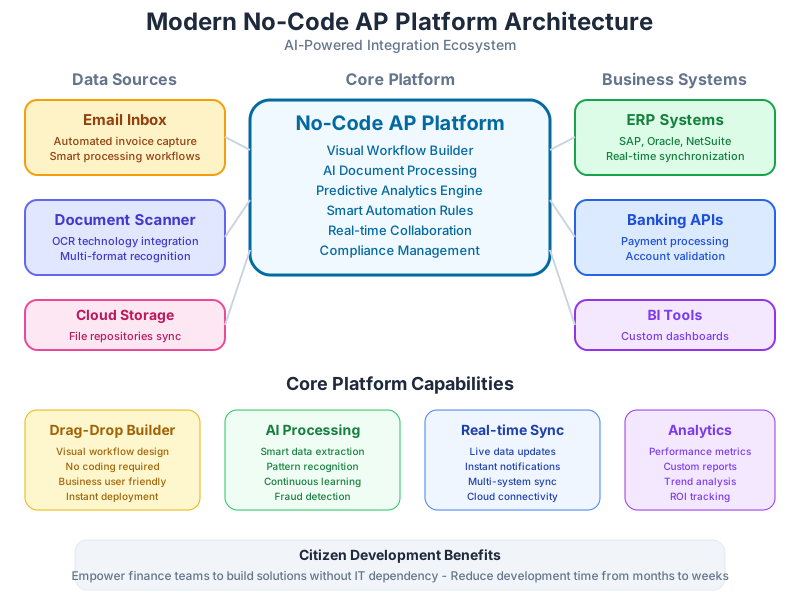
The artificial intelligence components of these platforms are becoming particularly sophisticated. Machine learning algorithms can analyze spending patterns to identify optimization opportunities, predict supplier payment behaviors to improve cash flow forecasting, and detect anomalies that might indicate fraud or errors. Natural language generation capabilities can automatically create summary reports, generate exception explanations, and produce narrative insights that help finance teams understand complex data patterns.
Platform vendors are also incorporating collaborative AI features that help citizen developers build better solutions. AI assistants can suggest workflow improvements, identify potential bottlenecks, recommend integration approaches, and even generate code components based on natural language descriptions. These capabilities effectively democratize advanced automation techniques that previously required deep technical expertise.
While the citizen finance revolution offers tremendous opportunities, it also presents new challenges that organizations must address thoughtfully. The democratization of application development creates potential risks around data security, regulatory compliance, solution quality, and organizational governance that require careful management.
Data security represents perhaps the most critical concern. Finance applications handle sensitive information including vendor details, payment data, financial forecasts, and competitive intelligence. Traditional IT departments have well-established security protocols, but citizen developers may lack awareness of security best practices. Leading organizations address this challenge through comprehensive training programs, automated security scanning tools, and governance frameworks that provide guardrails without stifling innovation.
Regulatory compliance adds another layer of complexity. Financial processes must often comply with industry-specific regulations, international standards, and audit requirements. Citizen-developed solutions must incorporate appropriate controls, maintain audit trails, and support compliance reporting. Successful organizations develop compliance templates, automated validation rules, and approval processes that ensure citizen finance solutions meet regulatory requirements from the outset.
Solution quality and maintainability represent ongoing concerns as citizen finance initiatives scale. Individual solutions developed by finance professionals may lack the documentation, error handling, and architectural considerations that characterize professional development projects. Organizations are addressing these challenges through peer review processes, solution templates, and center of excellence programs that establish best practices and provide ongoing support.
Integration and data governance become increasingly complex as citizen finance solutions proliferate throughout an organization. Multiple teams building independent solutions can create data silos, duplicate functionality, and integration nightmares. Leading companies establish enterprise data models, shared service catalogs, and coordination mechanisms that enable innovation while maintaining organizational coherence.
Change management represents another significant challenge. The transition to citizen finance models requires cultural shifts, new skill development, and revised organizational structures. Finance professionals must embrace new roles and responsibilities, IT departments must evolve from gatekeepers to enablers, and senior leadership must support experimentation while maintaining appropriate controls.
Successful organizations approach these challenges proactively, viewing them as manageable risks rather than insurmountable barriers. They invest in training programs, establish governance frameworks, create support communities, and develop metrics that track both innovation and risk management. The most effective approaches balance empowerment with accountability, encouraging experimentation while maintaining appropriate oversight.
The transformation of AP departments through citizen finance initiatives represents more than operational improvement. Organizations are discovering that empowering finance teams to build their own solutions fundamentally changes the strategic value and organizational impact of financial operations.
Traditional AP departments focus primarily on transaction processing, working to minimize costs and errors while ensuring regulatory compliance. Citizen finance capabilities enable these same teams to become innovation engines that continuously optimize processes, identify business opportunities, and provide strategic insights. Finance professionals who can build their own analytical tools and automation solutions become much more valuable strategic partners to business leaders.
The speed of innovation increases dramatically when finance teams can implement solutions directly rather than competing for IT resources. Problems that might have languished for months in development backlogs can be addressed within weeks or even days. This responsiveness enables finance organizations to support business initiatives more effectively, respond to market changes more quickly, and implement continuous improvements that compound over time.
Data accessibility and insight generation improve significantly when finance professionals can build their own analytical tools. Rather than relying on standard reports or waiting for custom dashboard development, citizen finance professionals can create sophisticated analytics that provide exactly the insights needed for specific decisions. This capability transforms finance teams from data reporters into strategic advisors who can provide actionable intelligence.
The cultural impact within finance organizations is equally significant. Citizen finance initiatives create learning cultures where continuous improvement becomes the norm rather than the exception. Finance professionals develop new skills, take ownership of solution development, and become more engaged in their work. Organizations report higher job satisfaction, lower turnover, and increased innovation as finance teams embrace their expanded capabilities.
Cross-functional collaboration improves when finance teams can rapidly prototype solutions and respond to business partner needs. Rather than saying "that's not possible" or "we'll need to submit a request to IT," citizen finance professionals can often build proof-of-concept solutions on the spot, enabling more productive conversations about business requirements and solution possibilities.
The citizen finance revolution is still in its early stages, but the trajectory is clear. As no-code platforms become more sophisticated and AI capabilities continue to advance, the scope of what finance professionals can build will expand dramatically. We're moving toward a future where any finance professional will be able to create sophisticated automation solutions, analytical tools, and business applications without traditional development skills.
Artificial intelligence will play an increasingly important role in citizen finance development. AI assistants will guide users through solution design, suggest optimizations, identify potential issues, and even generate components automatically based on business requirements described in natural language. Machine learning will enable solutions to continuously improve their performance, adapting to changing business conditions and user behaviors without manual intervention.
The integration between citizen finance solutions and enterprise systems will become seamless and automatic. Advanced platforms will provide universal connectivity, intelligent data mapping, and real-time synchronization that eliminates the complexity currently associated with system integration. Finance professionals will be able to build solutions that span multiple applications and data sources without worrying about technical connectivity challenges.
Collaborative development will become the norm, with teams of citizen finance professionals working together on complex solutions. Version control, real-time collaboration, and automated testing will enable distributed teams to build sophisticated applications that rival traditional development projects in quality and capability. Organizations will develop internal marketplaces where citizen finance solutions can be shared, adapted, and improved by colleagues across different departments and geographies.
The governance and security frameworks supporting citizen finance will mature significantly. Automated compliance checking, intelligent risk assessment, and built-in security controls will ensure that citizen-developed solutions meet enterprise standards without limiting innovation. Organizations will develop comprehensive training programs, certification processes, and career development paths that recognize citizen finance skills as core professional competencies.
The rise of citizen finance represents a fundamental shift in how organizations approach financial operations and technology innovation. Rather than waiting for traditional IT-driven solutions or accepting the limitations of manual processes, finance teams are taking control of their technological destiny, building sophisticated automation solutions that address their specific needs and challenges.
This transformation offers tremendous opportunities for organizations willing to embrace change. Companies that successfully implement citizen finance initiatives report faster innovation cycles, more responsive financial operations, higher employee engagement, and stronger business partnership capabilities. The competitive advantages of organizational agility, rapid problem-solving, and continuous optimization are becoming increasingly important in today's dynamic business environment.
The barriers to entry continue to fall as no-code platforms become more capable and accessible. Finance professionals who develop citizen development skills position themselves for career advancement and increased strategic value. Organizations that support citizen finance initiatives create cultures of innovation and continuous improvement that benefit far beyond the finance department.
The future belongs to organizations that can adapt quickly, innovate continuously, and respond effectively to changing business requirements. Citizen finance provides the tools and capabilities that enable finance teams to become strategic assets rather than operational necessities. The revolution is already underway. The question isn't whether citizen finance will transform financial operations, but how quickly organizations will embrace the transformation and realize its benefits.
For finance leaders considering citizen finance initiatives, the time to start is now. Begin with pilot projects, invest in training and support, establish appropriate governance frameworks, and create cultures that encourage experimentation and innovation. The investment in citizen finance capabilities will pay dividends in operational efficiency, strategic value, and competitive advantage for years to come.
The democratization of financial technology through citizen finance represents one of the most significant trends reshaping modern business operations. Organizations that recognize and embrace this trend will find themselves with more agile, innovative, and strategically valuable finance functions. Those that resist or ignore the trend risk being left behind by competitors who have empowered their finance teams to build the future they need.

Head IT Operations - Co Founder of Artificio
See it in your SAP environment
Bring us a document, a process, or a bottleneck. We'll show how Artificio captures, validates, and posts into SAP — then scale from there.
Security & compliance
ISO 27001:2013 certified, SOC 2 Type 2 compliant, GDPR and HIPAA ready. Every agent action is logged, auditable, and runs in isolated environments.