

Blog
Generative PDFs: From Static to Strategic Document Workflows
Bridge the gap between dynamic data and static documents. Learn how generative PDFs drive adaptive workflows with real-time insights.

Blog
Bridge the gap between dynamic data and static documents. Learn how generative PDFs drive adaptive workflows with real-time insights.
Picture this: it's Monday morning, and your finance team just finished creating a beautifully designed quarterly report. The charts are crisp, the branding is perfect, and every stakeholder receives their copy by 9 AM. But by Wednesday, three key metrics have changed, two new initiatives launched, and suddenly that "perfect" report is telling yesterday's story. Sound familiar?
We've all been there. PDFs have long been the gold standard for professional document sharing because they preserve formatting, maintain visual consistency, and work across every platform imaginable. There's something reassuring about a well-crafted PDF that looks exactly the same whether it's opened on a smartphone in Tokyo or printed in a boardroom in New York. But here's the challenge that's been quietly plaguing organizations worldwide: traditional PDFs are snapshots frozen in time, and in today's rapid-fire business environment, yesterday's data might as well be ancient history.
The beautiful irony is that while we've revolutionized how we collect, analyze, and visualize data in real-time, we're still sharing insights through documents that become outdated the moment they're created. We've built sophisticated dashboards that update every second, implemented AI systems that predict market trends before they happen, and created workflows that adapt to changing conditions instantly. Yet when it comes to formal reporting and stakeholder communication, we revert to static documents that require manual updates, version control nightmares, and constant vigilance to keep current.
This disconnect between our dynamic data capabilities and static document workflows isn't just inefficient; it's becoming a competitive disadvantage. Organizations that can bridge this gap, creating documents that live and breathe with their data, aren't just solving a technical problem. They're fundamentally reimagining how business intelligence flows through their organization and out to their stakeholders.
Let's be honest about what happens in most organizations today. Someone spends hours crafting a comprehensive report, pulling data from multiple sources, ensuring every chart tells the right story, and formatting everything to perfection. The document gets distributed, stakeholders review it, and decisions get made based on that information. But what happens when the underlying data changes? In most cases, nothing happens, at least not immediately.
The finance team might update their quarterly projections based on new market data, but the PDF report distributed last week still shows the old numbers. The logistics manager receives updated delivery schedules that could impact customer commitments, but the status report sitting in everyone's inbox reflects yesterday's timeline. The HR department updates their onboarding procedures to comply with new regulations, but new hires are still receiving outdated handbooks because someone forgot to regenerate and redistribute the latest version.
This isn't a story about negligence or poor processes. This is the inevitable result of treating dynamic information through static mediums. Every organization faces this challenge because traditional document workflows weren't designed for our current pace of change. The gap between when data updates and when documents reflect those updates creates a window of risk where decisions might be made on incomplete or outdated information.
Consider the cascading effects of this disconnect. In financial services, outdated risk assessments could lead to inappropriate investment recommendations. In healthcare, old protocol documents might not reflect the latest safety guidelines. In manufacturing, static inventory reports could result in overproduction or stockouts. The stakes aren't just about efficiency; they're about accuracy, compliance, and competitive advantage.
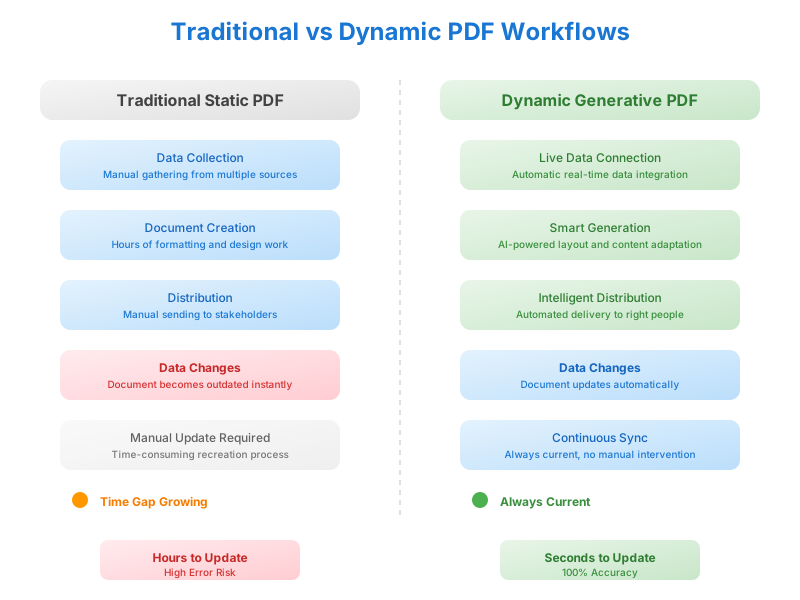
The traditional solution has been to create more frequent update cycles, assign more people to document maintenance, or implement complex version control systems. But these approaches treat symptoms rather than the underlying problem. They add overhead without fundamentally solving the disconnect between dynamic data and static documents. What if, instead of working harder to keep static documents current, we could make the documents themselves dynamic?
Generative PDFs represent a fundamental shift in how we think about document workflows. Instead of creating static snapshots that immediately begin aging, generative PDFs maintain living connections to their data sources. They don't just display information; they actively monitor for changes, adapt their content accordingly, and maintain the professional formatting and brand consistency that makes PDFs so valuable in the first place.
The magic happens through intelligent automation that understands not just what data to include, but how to present it effectively. When underlying metrics change, generative PDFs don't just swap out numbers. They recalculate derived insights, adjust chart scales for optimal readability, modify narrative sections to reflect new trends, and even reorganize sections based on changing priorities. The result is a document that maintains its professional polish while staying perpetually current.
This isn't about replacing human judgment with automated processes. Generative PDFs work best when they amplify human expertise rather than substitute for it. The marketing director still determines which metrics matter most for the monthly board report, but the generative PDF ensures those metrics are always current and properly contextualized. The operations manager still decides how to frame quarterly performance reviews, but the document automatically reflects the latest operational data and regulatory requirements.
The sophistication extends beyond simple data updates. Modern generative PDFs can implement conditional logic that shows different sections based on current circumstances. A financial report might automatically include additional risk analysis sections when market volatility exceeds certain thresholds. An operational dashboard could expand compliance sections when audit deadlines approach. A customer proposal might dynamically adjust payment terms based on current credit ratings and inventory levels.
The layout intelligence is equally impressive. Traditional mail merge solutions often result in awkward spacing, misaligned charts, or broken page layouts when data ranges change. Generative PDFs understand design principles and automatically adjust layouts to maintain visual hierarchy and readability. If a chart needs more space due to additional data points, the document intelligently reflows content while preserving brand standards and design integrity.
Brand consistency becomes automated rather than manually enforced. When corporate style guides update, generative PDFs can automatically implement new color schemes, typography changes, or logo updates across all active documents. This ensures that every stakeholder always receives materials that reflect current brand standards without requiring manual intervention across potentially hundreds of document templates.
The power of generative PDFs multiplies when they connect seamlessly with existing data ecosystems. Modern organizations don't store their critical information in single databases; they use specialized systems for different functions. Customer data lives in CRM platforms, financial information flows through ERP systems, operational metrics track through IoT sensors and monitoring tools, and compliance data updates through regulatory feeds.
Generative PDFs can pull from all these sources simultaneously, creating comprehensive documents that would be impossible to maintain manually. A customer health score report might combine CRM data showing engagement trends, support ticket systems revealing service issues, billing systems indicating payment patterns, and product usage analytics demonstrating feature adoption. The resulting document provides a complete picture that updates automatically as any of these data sources change.
The integration goes beyond simple data pulling. Advanced generative PDF systems can implement sophisticated business logic that mirrors how human analysts interpret information. If customer engagement drops below certain thresholds while support tickets increase, the document might automatically highlight this correlation and include additional context about potential causes. If financial metrics show unexpected variance from projections, the system can cross-reference operational data to identify contributing factors and surface relevant explanations.
API connectivity makes these integrations possible at scale. Whether pulling from Salesforce, SAP, Microsoft Dynamics, custom databases, or third-party data providers, generative PDFs can establish secure, automated connections that respect existing security protocols and access controls. The same permission structures that govern direct system access apply to document generation, ensuring that sensitive information remains properly protected.
Real-time triggers add another layer of intelligence. Instead of updating on arbitrary schedules, generative PDFs can respond to meaningful business events. A quarterly board report might regenerate when month-end financial close completes. An inventory status document could update when stock levels hit reorder points. A compliance summary might refresh when new regulatory guidance publishes. This event-driven approach ensures that documents update when it matters most, not just when calendars dictate.
The data quality improvements are significant. Manual data entry always introduces the possibility of transcription errors, outdated information, or inconsistent formatting. When documents connect directly to authoritative data sources, these errors largely disappear. Numbers automatically format according to corporate standards, dates display consistently across time zones, and calculations update precisely when underlying figures change.
The most powerful generative PDF implementations don't work in isolation; they operate as part of integrated AI agent ecosystems that handle different aspects of document workflow management. This orchestrated approach creates synergies that amplify the value of each individual component while reducing the complexity burden on users.
Data Integrator agents serve as the foundation of this ecosystem. These specialized AI systems understand the nuances of different data sources and can navigate complex integration challenges that would be difficult to hardcode into traditional workflows. They don't just pull raw data; they interpret it, clean it, and contextualize it for document consumption. When a CRM system uses different field names than an ERP system for similar concepts, the Data Integrator agent maps these relationships intelligently. When external APIs change their response formats, these agents adapt automatically rather than breaking existing document workflows.
The intelligence extends to handling data quality issues that inevitably arise in real-world systems. Missing values get identified and handled according to business rules rather than breaking document generation. Outliers are flagged for review while still allowing documents to generate with appropriate disclaimers. Data freshness indicators help stakeholders understand the currency of different information sections within the same document.
Document Intelligence agents add another layer of sophistication by understanding the context and purpose of different document types. These agents don't just populate templates; they make content decisions based on changing circumstances. A weekly performance report during normal operations might focus on trend analysis and forward-looking metrics. But during crisis situations, the same document template could automatically shift emphasis to real-time status updates and risk mitigation measures.
The content adaptation goes beyond simple conditional logic. Document Intelligence agents can analyze which sections of previous reports generated the most stakeholder engagement, which metrics correlate with subsequent business decisions, and which formatting approaches improve comprehension. This analysis feeds back into document generation, creating a continuous improvement loop that makes reports more valuable over time.
Communication Assistant agents handle the distribution and lifecycle management aspects that often get overlooked in document automation discussions. These agents understand stakeholder preferences, access permissions, and communication protocols. They know that the CEO prefers executive summaries delivered to her mobile device by 7 AM, while the board requires full reports distributed 48 hours before meetings with read receipts confirmed.
The communication intelligence includes understanding optimal timing for different types of information. Quarterly financial reports might automatically delay distribution until after market close to comply with regulatory requirements. Operational updates could pause during known stakeholder travel periods and resume when recipients are available to review time-sensitive information. Crisis communications might bypass normal approval workflows when certain threshold conditions trigger emergency protocols.
Version control becomes automated and intelligent rather than manually managed. Communication Assistant agents track which stakeholders have received which versions of documents, automatically notify relevant parties when significant updates occur, and maintain audit trails for compliance purposes. They can even personalize update notifications, highlighting the specific changes most relevant to each recipient's role and responsibilities.
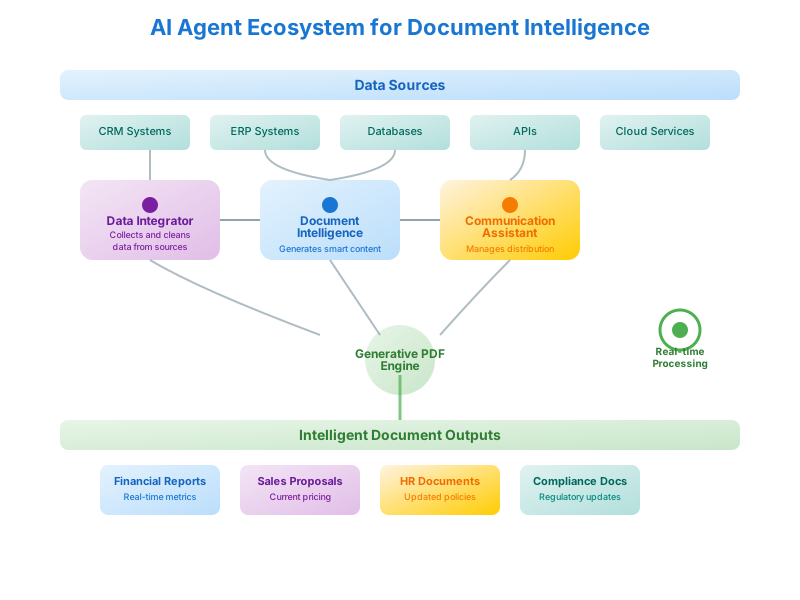
Compliance Guardian agents add specialized oversight for organizations operating in regulated industries. These agents understand industry-specific requirements and ensure that generated documents meet all applicable standards. In financial services, they might verify that risk disclosures update according to regulatory schedules. In healthcare, they could ensure that patient communications reflect the latest privacy requirements. In manufacturing, they might confirm that safety documentation includes current regulatory updates.
The compliance intelligence extends to proactive risk management. These agents can identify when regulatory changes might impact existing document templates and flag these for human review before automated updates could create compliance issues. They maintain awareness of audit calendars and automatically increase documentation rigor during sensitive periods. They can even generate compliance reports that demonstrate adherence to document management requirements.
The theoretical benefits of generative PDFs become clear when we examine specific use cases where organizations have implemented these solutions successfully. These aren't hypothetical scenarios; they represent real implementations that demonstrate the transformative potential of dynamic document workflows.
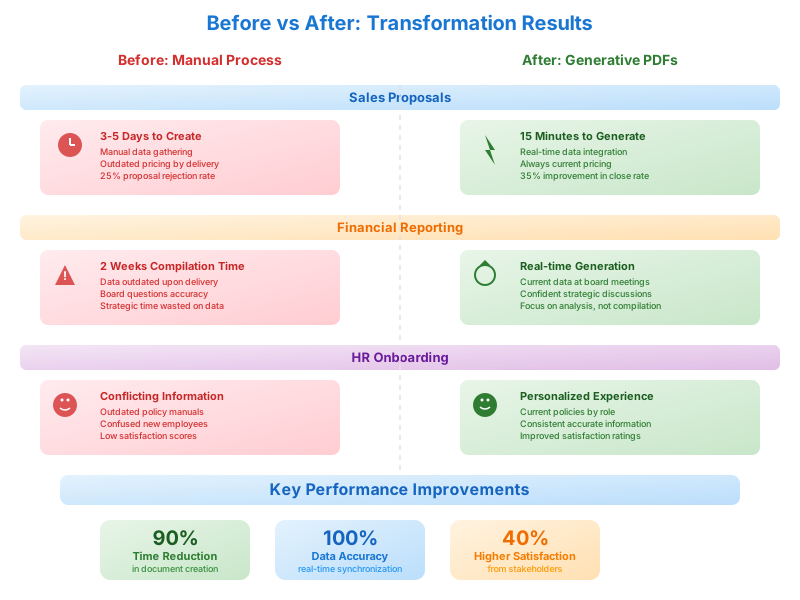
Consider a B2B software company that traditionally struggled with proposal accuracy and speed. Their sales team would spend days crafting custom proposals, pulling pricing from multiple systems, checking current inventory levels, and coordinating with legal teams to ensure appropriate terms and conditions. By the time proposals reached prospects, pricing might have changed, inventory levels could have shifted, and competitive landscapes often evolved.
Their generative PDF solution transformed this process completely. Now, when a sales representative identifies a qualified opportunity, they input basic parameters into their CRM system. The generative PDF system automatically pulls current pricing from the billing system, checks real-time inventory levels, incorporates the prospect's industry-specific compliance requirements, and generates a fully customized proposal within minutes.
But the magic continues after initial generation. If the prospect requests modifications or delays their decision, the proposal automatically updates to reflect current conditions. Pricing remains accurate to the moment of signature, inventory commitments stay valid, and regulatory changes get incorporated seamlessly. The sales team reports that their proposal-to-close ratio improved by 35% simply because prospects receive more accurate, current information throughout their decision process.
The system even handles complex scenarios like multi-phase implementations. As project timelines shift or technical requirements evolve, the proposal automatically adjusts pricing, resource allocation, and delivery schedules. Legal terms update according to changing compliance requirements. Partnership agreements reflect current vendor relationships and capabilities. The result is a living document that maintains accuracy throughout extended sales cycles.
A mid-sized manufacturing company faced constant pressure from investors and board members who questioned the currency of financial reports. Traditional monthly board packages required two weeks to compile, during which significant business changes could occur. Board members frequently asked for real-time updates during meetings, but the finance team could only provide approximations or promise follow-up information.
Their generative PDF implementation connected directly to their ERP system, cost accounting software, and operational dashboards. Board reports now generate automatically on specified schedules with the most current financial data available. More importantly, the system can regenerate reports on demand when significant events occur between regular reporting periods.
The impact extends beyond simple data updates. The system automatically identifies variances from budget projections and includes explanatory context based on operational data. If material costs spike due to supply chain issues, the report automatically cross-references procurement data to explain the variance and project future impacts. If revenue exceeds projections in specific product lines, the system includes market analysis and capacity utilization data to contextualize the performance.
Board members now receive reports that answer their questions before they ask them. The finance team spends less time compiling data and more time analyzing trends and developing strategic recommendations. The company reports that board meetings have become more strategic and forward-looking because everyone starts with complete, current information rather than spending time clarifying outdated figures.
A technology startup experienced rapid growth that strained their HR processes. New hire onboarding involved dozens of documents, policy manuals, and procedural guides that frequently became outdated as the company evolved. New employees often received conflicting information from different sources, leading to confusion and compliance risks.
Their generative PDF solution creates personalized onboarding packages for each new hire based on their role, location, start date, and department. The system automatically includes current policy versions, up-to-date organizational charts, relevant compliance training requirements, and personalized schedules that reflect actual facility availability and trainer calendars.
The personalization goes deeper than basic customization. Engineers receive technical onboarding materials that reflect current development tools and processes. Sales team members get access to current pricing guides and competitive analysis documents. Remote employees receive location-specific information about tax requirements and local regulations.
As company policies evolve, the system automatically updates all active onboarding materials. New employees starting next week automatically receive current information, while those who started last month get notified of relevant policy changes. The HR team reports that new hire satisfaction scores improved significantly because employees receive consistent, accurate information that actually matches their day-to-day experience.
A financial services firm struggled to keep their compliance documentation current across multiple jurisdictions. Regulatory requirements changed frequently, and the process of updating hundreds of client communications, internal procedures, and regulatory filings consumed enormous resources while still leaving gaps in coverage.
Their generative PDF implementation monitors regulatory feeds from relevant authorities and automatically flags when changes might impact existing document templates. The system doesn't make compliance decisions automatically; instead, it alerts compliance teams to relevant changes and suggests which document templates might need review.
When compliance teams approve updates, the system propagates changes across all affected documents automatically. Client communications update to reflect new disclosure requirements. Internal procedures incorporate new regulatory guidance. Training materials include current compliance standards. The process that previously took weeks of manual work now happens in days, with higher accuracy and complete audit trails.
The system also generates compliance reports that demonstrate adherence to document management requirements. Auditors can see exactly when documents were updated, which versions were distributed to which stakeholders, and how regulatory changes were incorporated into operational procedures. This transparency has significantly reduced compliance-related stress and improved audit outcomes.
Organizations implementing generative PDF solutions aren't just solving technical problems; they're gaining competitive advantages that compound over time. These benefits extend beyond operational efficiency to impact customer relationships, stakeholder confidence, and strategic decision-making capabilities.
Accuracy becomes a differentiating factor in industries where trust is paramount. When clients receive consistently current information, they develop confidence in an organization's competence and attention to detail. This trust translates into stronger relationships, higher retention rates, and more referral business. Conversely, organizations that frequently provide outdated information lose credibility that's difficult to rebuild.
Speed to market improves dramatically when document workflows don't create bottlenecks. Sales teams can respond to opportunities faster, marketing departments can launch campaigns sooner, and operational teams can implement changes more quickly. In competitive markets, being first often matters more than being perfect, and generative PDFs enable organizations to maintain both speed and accuracy.
Stakeholder satisfaction increases when people receive information they can actually use for decision-making. Board members appreciate reports that reflect current conditions rather than historical snapshots. Customers value proposals that accurately reflect available options and realistic timelines. Employees trust onboarding materials that match their actual experience. This satisfaction creates positive feedback loops that strengthen relationships over time.
Risk mitigation becomes proactive rather than reactive. When documents automatically reflect current conditions, organizations reduce exposure to decisions based on outdated information. Compliance risks decrease when regulatory changes propagate automatically. Operational risks diminish when status reports accurately reflect current conditions. Financial risks reduce when pricing and terms stay current throughout extended transaction cycles.
The scalability advantages become more significant as organizations grow. Traditional document workflows require proportional increases in human resources to maintain quality and currency. Generative PDF solutions scale automatically, handling larger volumes and more complex integrations without proportional staff increases. This scalability enables organizations to maintain document quality through rapid growth phases that might otherwise strain operational capabilities.
Data-driven insights emerge from document interaction patterns that weren't previously visible. Organizations can analyze which sections of reports generate the most stakeholder engagement, which types of proposals have the highest success rates, and which communication formats improve comprehension. These insights feed back into document design and business strategy development.
Successful generative PDF implementations require thoughtful planning that goes beyond technical considerations. Organizations need to balance ambition with practicality, ensuring that new capabilities enhance rather than disrupt existing workflows.
The phased approach works best for most organizations. Starting with high-value, low-complexity use cases allows teams to build confidence and expertise before tackling more challenging applications. A financial reporting department might begin with automated executive dashboards before moving to complex regulatory filings. A sales organization might start with standard proposals before implementing complex multi-phase project quotes.
Change management becomes crucial because generative PDFs can fundamentally alter how people interact with information. Some stakeholders initially resist receiving automatically generated documents, preferring the perceived human touch of manually created materials. Others worry about losing control over messaging and formatting. Addressing these concerns requires clear communication about how automation enhances rather than replaces human judgment.
Training requirements extend beyond technical system usage to include understanding how to design effective document templates and workflows. Teams need to learn how to structure data sources for optimal document generation, how to create business rules that reflect organizational knowledge, and how to monitor and maintain automated systems effectively.
Integration complexity varies significantly depending on existing system architectures and data quality. Organizations with well-structured data sources and robust API capabilities can implement generative PDF solutions relatively quickly. Those with legacy systems or inconsistent data formats may need to invest in data infrastructure improvements before seeing full benefits.
Security and compliance considerations require careful attention, particularly in regulated industries. Generative PDF systems need to maintain the same access controls and audit capabilities as the underlying data sources they connect to. Document distribution mechanisms must comply with privacy requirements and retention policies. Automated processes need oversight mechanisms that ensure appropriate human review when required.
The governance framework should establish clear policies about when automation is appropriate and when human oversight is required. Some organizations implement approval workflows for automatically generated documents that exceed certain thresholds or contain sensitive information. Others create exception processes that allow manual intervention when circumstances require human judgment.
Success metrics should extend beyond technical performance to include business impact measures. Document accuracy improvements, stakeholder satisfaction scores, time savings in document preparation, and reduction in version control issues all provide valuable indicators of implementation success. These metrics help justify continued investment and guide future enhancement priorities.
The evolution of generative PDF technology continues accelerating as artificial intelligence capabilities advance and integration possibilities expand. Future developments promise even more sophisticated document intelligence that will further blur the lines between static reports and interactive analytics.
Natural language generation capabilities are becoming sophisticated enough to create narrative sections that truly explain what data means rather than simply describing it. Future generative PDFs might include executive summaries that identify the most significant trends in complex datasets, risk assessments that explain the business implications of statistical variations, and recommendation sections that suggest specific actions based on current conditions.
Interactive elements within PDFs are expanding beyond simple hyperlinks to include embedded calculators, scenario planning tools, and collaborative annotation capabilities. Stakeholders might be able to adjust assumptions within financial models and see updated projections immediately, or add comments and questions directly within documents that automatically route to appropriate subject matter experts.
Predictive analytics integration will enable documents that don't just report current conditions but project future trends. Financial reports might include automatically generated forecasts based on current performance trajectories. Operational dashboards could highlight potential bottlenecks before they occur. Strategic planning documents might identify emerging risks and opportunities based on market trend analysis.
The personalization possibilities continue expanding as AI systems become better at understanding individual preferences and requirements. Future generative PDFs might automatically adjust complexity levels based on reader expertise, emphasize different metrics based on role responsibilities, or include additional context based on previous reading patterns and engagement history.
Multi-modal capabilities will enable generative PDFs to incorporate diverse content types seamlessly. Voice annotations, video explanations, and interactive visualizations could become standard elements in automatically generated documents. The distinction between traditional reports and multimedia presentations may disappear as generation systems become capable of selecting optimal content formats for different types of information.
Real-time collaboration features will transform generative PDFs from distribution mechanisms into collaborative platforms. Teams might work together within automatically updating documents, with AI systems facilitating coordination and ensuring that collaborative changes maintain consistency with underlying data sources.
The transformation from static to strategic document workflows represents more than a technological upgrade; it's a fundamental reimagining of how organizations create, share, and use information. Generative PDFs bridge the gap between our sophisticated data capabilities and our communication needs, ensuring that decision-makers always have access to current, accurate, and contextually relevant information.
The organizations that embrace this transformation early will gain competitive advantages that compound over time. They'll build stronger stakeholder relationships through consistently accurate communication. They'll make better decisions based on current rather than outdated information. They'll operate more efficiently by eliminating the overhead of manual document maintenance. Most importantly, they'll create organizational cultures that expect and deliver information excellence.
The technology is ready, the use cases are proven, and the competitive pressures are intensifying. Organizations that continue relying on static document workflows risk falling behind competitors who leverage the full potential of their data through intelligent, adaptive communication systems.
The future belongs to organizations that can bridge the gap between dynamic data and strategic communication. Generative PDFs provide that bridge, transforming documents from static snapshots into living, breathing extensions of organizational intelligence. The question isn't whether this transformation will happen; it's whether your organization will lead or follow in the document revolution.
Ready to see how generative PDFs can transform your organization's document workflows? Explore Artificio's dynamic document generation capabilities and discover how your reports, proposals, and communications can become as intelligent and adaptive as your data. The era of static documents is ending; the age of strategic, intelligent communication has begun.

Head IT Operations - Co Founder of Artificio
See it in your SAP environment
Bring us a document, a process, or a bottleneck. We'll show how Artificio captures, validates, and posts into SAP — then scale from there.
Security & compliance
ISO 27001:2013 certified, SOC 2 Type 2 compliant, GDPR and HIPAA ready. Every agent action is logged, auditable, and runs in isolated environments.