

Blog
From Extraction to Generation: AI-Powered PDF Workflows
Transform your business with AI-powered document workflows. Go from data extraction to document creation on one platform.

Blog
Transform your business with AI-powered document workflows. Go from data extraction to document creation on one platform.
Modern businesses live and breathe documents. Every department, from finance to legal, healthcare to supply chain, processes hundreds or thousands of documents daily. These documents arrive in various formats, contain critical information that needs extraction, and often require the creation of new documents based on that extracted data. For years, companies have tackled these challenges with separate tools and disconnected workflows, creating inefficiencies that cost time, money, and sanity.
The traditional approach forces teams to juggle multiple platforms: one system for document intake, another for data extraction, a third for validation, and yet another for creating new documents. This fragmented ecosystem creates bottlenecks, introduces errors, and makes it nearly impossible to maintain consistent workflows across departments. Teams spend more time managing their tools than actually accomplishing their work.
But what if there was a better way? What if you could handle document extraction and generation within a single, AI-powered platform that understands your business needs and adapts to your workflows? Artificio's latest platform update makes this vision a reality by introducing comprehensive PDF generation capabilities that work seamlessly with existing extraction and processing features. This isn't just about adding another feature to the toolkit – it's about fundamentally changing how businesses approach document workflows.
The integration of extraction and generation capabilities within one platform represents a significant shift in document management philosophy. Instead of thinking about document processing as separate, disconnected tasks, businesses can now approach it as a unified workflow where extracted data naturally flows into professionally formatted outputs. This unified approach eliminates the traditional handoffs between systems, reduces the chance for errors, and dramatically speeds up document-heavy processes.
Anyone who's worked in a document-heavy environment knows the frustrations all too well. Picture this scenario: your finance team receives hundreds of invoices each week in various formats scanned PDFs, emailed attachments, faxed documents, and digital submissions. Each invoice needs to be processed, validated, and then incorporated into monthly reports, compliance documents, and payment authorizations.
In a traditional workflow, this process involves multiple systems and countless manual steps. First, someone manually sorts and categorizes incoming documents. Then, data entry specialists extract key information like vendor names, amounts, dates, and purchase order numbers. This extracted data gets entered into spreadsheets or databases, often requiring multiple rounds of validation and correction. Finally, when it's time to create reports or payment documents, another team member manually pulls this data and formats it into new documents using word processors or specialized report generators.
This fragmented approach creates numerous problems that compound over time. Version control becomes a nightmare when multiple people work with the same data across different systems. One person might be working with an outdated spreadsheet while another uses the most recent database export, leading to inconsistencies and errors that can take weeks to identify and resolve. Manual data entry introduces human error at multiple points in the process, and these errors often cascade through subsequent steps, affecting everything from compliance reports to vendor payments.
Healthcare organizations face similar challenges when processing patient records and insurance documents. A single patient admission might involve intake forms, insurance verification documents, medical histories, and consent forms. Each document contains critical information that needs extraction and validation, and this information must then flow into electronic health records, billing systems, and treatment plans. The traditional approach requires staff to manually review each document, extract relevant information, and then create new documents for different departments and purposes.
Legal firms deal with comparable complexities when handling contract reviews and client communications. Incoming contracts need thorough analysis and data extraction for key terms, dates, and obligations. This information then needs to be compiled into client summaries, compliance checklists, and internal tracking documents. The traditional workflow often involves lawyers and paralegals spending hours manually reviewing documents, extracting key points, and then recreating this information in various formats for different audiences.
The supply chain sector experiences these pain points on a massive scale. Purchase orders, shipping documents, customs forms, and vendor communications all contain critical data that needs extraction and processing. This information then flows into tracking systems, compliance reports, and vendor management documents. Traditional workflows require coordination between multiple departments and systems, creating opportunities for delays and miscommunication that can affect entire supply chains.
All these scenarios share common challenges: siloed systems that don't communicate effectively, manual processes that introduce errors and consume valuable time, and the constant need to recreate information in different formats for different purposes. Teams spend more time managing their tools and processes than focusing on their core responsibilities. The result is inefficiency, frustration, and missed opportunities for business growth.
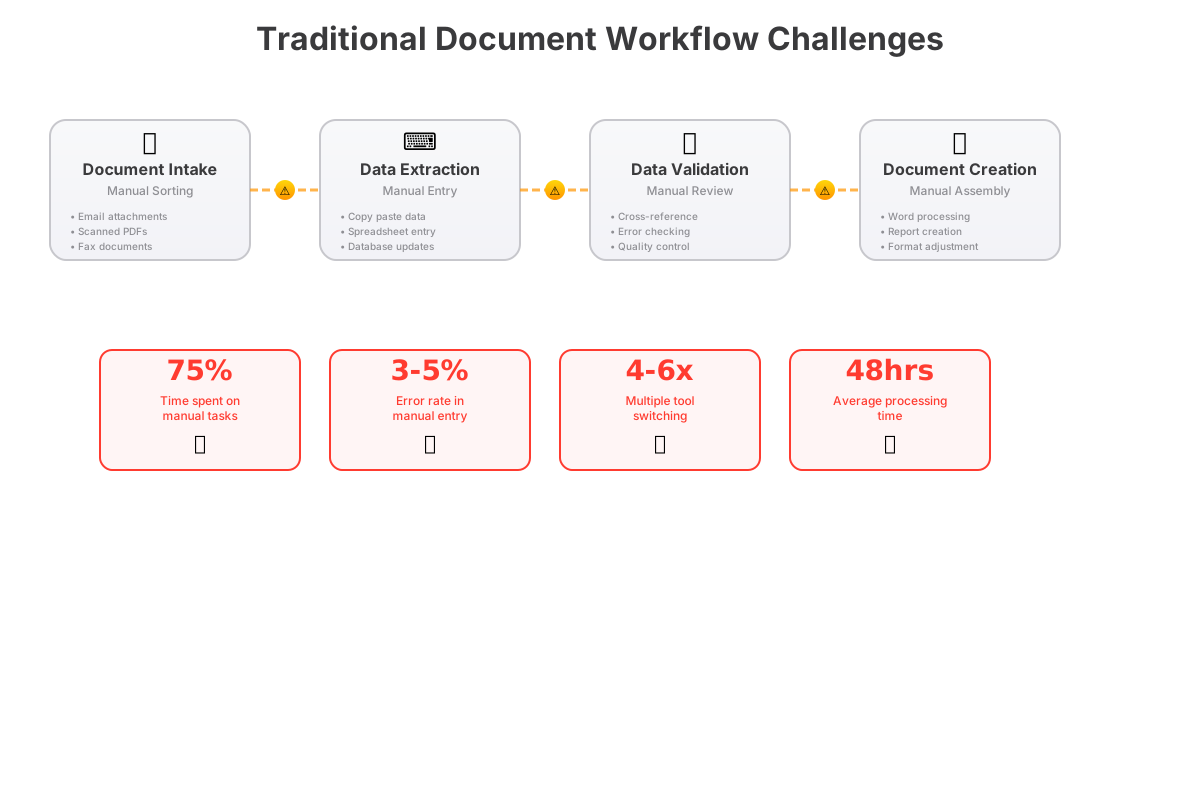
Artificio's platform fundamentally changes this landscape by treating document processing as a unified, intelligent workflow rather than a collection of separate tasks. The platform's AI agents work together to handle every step of the document lifecycle, from initial intake and classification through data extraction, validation, and final document generation. This integrated approach eliminates the traditional silos that create inefficiencies and introduces intelligent automation that learns from your specific business needs.
The document intake process begins with intelligent classification that automatically identifies document types and routes them to appropriate processing workflows. Whether you're dealing with invoices, contracts, medical records, or compliance documents, the AI understands the context and applies the correct extraction and processing rules. This eliminates the need for manual sorting and ensures that documents enter the right workflows from the beginning.
Data extraction capabilities go far beyond simple text recognition. The platform's AI agents understand document structure, context, and business logic. They can identify key-value pairs, extract table data, recognize signatures and dates, and even understand complex relationships between different pieces of information within a document. This intelligent extraction means that businesses get clean, structured data that's ready for immediate use in downstream processes.
The validation process leverages AI to identify potential errors, inconsistencies, or missing information before it affects other systems. The platform can cross-reference extracted data against existing databases, validate formats and ranges, and flag unusual patterns that might indicate errors or fraud. This proactive validation prevents problems from propagating through the workflow and reduces the need for manual review and correction.
Where Artificio truly shines is in its seamless transition from extraction to generation. The same platform that intelligently processes incoming documents can create professional, polished outputs using the extracted data. The drag-and-drop document editor allows users to create templates that automatically populate with extracted information, maintaining consistent formatting and branding while eliminating manual data entry.
The template engine supports complex document structures including headers, footers, tables, charts, and embedded images. Users can create templates for any type of document their business requires, from simple letters and reports to complex contracts and compliance documents. The AI understands the relationship between extracted data and template fields, automatically formatting information appropriately and handling edge cases like missing data or unusual formats.
Digital signature support integrates directly into the document generation process, allowing businesses to create documents that are ready for immediate execution. This eliminates the need for separate signature platforms and reduces the time between document creation and completion. The platform maintains audit trails for all signatures and modifications, supporting compliance requirements and legal documentation needs.
API connectivity ensures that Artificio integrates seamlessly with existing business systems. Extracted data can flow directly into CRM systems, accounting platforms, or custom databases, while generated documents can be automatically distributed through email systems, document management platforms, or client portals. This connectivity means that businesses don't need to replace their existing tools but can enhance them with intelligent document processing capabilities.
The unified approach delivers benefits that extend far beyond simple tool consolidation. Process consistency improves dramatically when all document operations follow the same workflows and use the same data validation rules. Compliance becomes easier to manage when audit trails span the entire document lifecycle and all operations follow established governance policies. Response times decrease significantly when manual handoffs between systems are eliminated and intelligent automation handles routine tasks.
Teams report that the unified platform reduces the cognitive load associated with managing multiple tools and workflows. Instead of remembering different procedures for different systems, staff can focus on a single, intuitive interface that handles all their document processing needs. This simplification leads to faster onboarding for new team members and reduces the support burden on IT departments.
Financial institutions handle enormous volumes of documents daily, from loan applications and supporting documentation to regulatory reports and client communications. Traditional workflows in this sector are particularly complex because they must balance speed with accuracy while maintaining strict compliance standards.
Consider a typical loan processing scenario at a regional bank. Applications arrive through multiple channels including online submissions, branch visits, and broker referrals. Each application includes personal financial statements, tax returns, employment verification, property appraisals, and various supporting documents. Traditional processing requires loan officers to manually review each document, extract key financial data, and then create loan summaries, approval documents, and compliance reports.
With Artificio's unified platform, this entire workflow transforms into an intelligent, automated process. Incoming loan documents are automatically classified and routed to appropriate processing workflows. AI agents extract critical information including income figures, debt obligations, property values, and employment details. The platform validates this information against lending criteria and external databases, flagging potential issues or discrepancies for human review.
The magic happens when the platform seamlessly transitions from extraction to generation. Using the extracted and validated data, the system automatically creates comprehensive loan summaries that include all relevant financial metrics, risk assessments, and compliance checkpoints. These summaries maintain consistent formatting and include all required regulatory disclosures, eliminating the manual work typically required to compile this information.
For approved loans, the platform generates complete document packages including loan agreements, disclosure statements, and closing documents. All documents are automatically populated with the correct borrower information, loan terms, and regulatory requirements. Digital signature capabilities allow for immediate execution, while integrated compliance checks ensure that all documents meet current regulatory standards.
The compliance benefits are particularly significant in financial services where regulatory requirements are constantly evolving. Artificio's platform maintains audit trails for all document processing activities, providing the documentation required for regulatory examinations. When regulations change, template updates can be implemented across all document types simultaneously, ensuring immediate compliance without manual intervention.
Risk management improves dramatically when all loan processing activities follow consistent, automated workflows. The platform's AI can identify patterns that might indicate fraud or unusual risk factors, flagging these applications for additional review. This proactive approach helps financial institutions maintain portfolio quality while processing applications more efficiently.
Healthcare organizations manage some of the most complex document workflows in any industry. Patient care requires the coordination of medical records, insurance information, treatment plans, and billing documentation, all while maintaining strict privacy and compliance standards.
A typical patient admission at a hospital involves dozens of documents from multiple sources. Patients provide insurance cards, previous medical records, and consent forms. Referring physicians send medical histories and test results. Insurance companies require prior authorization documents and treatment justifications. All this information must be processed, validated, and then incorporated into electronic health records, treatment plans, and billing systems.
Traditional healthcare document processing is notoriously inefficient and error-prone. Staff spend countless hours manually entering information from paper forms into electronic systems. Insurance verification requires phone calls and fax exchanges that can delay treatment. Billing documentation often requires recreation of information that was already captured during the admission process.
Artificio's platform revolutionizes this workflow by creating intelligent connections between all document processing activities. Patient intake documents are automatically processed using AI that understands medical terminology and healthcare-specific data formats. Insurance information is extracted and immediately validated against payer databases, identifying coverage limitations or authorization requirements before treatment begins.
The platform's ability to generate documents using extracted data eliminates redundant data entry and ensures consistency across all patient documentation. Treatment plans automatically incorporate relevant medical history and current symptoms. Billing documents are generated with complete procedure codes and supporting documentation, reducing claim denials and speeding payment processing.
Privacy and compliance requirements are built into every aspect of the platform's operation. All document processing activities maintain HIPAA compliance, with encryption, access controls, and audit trails that meet healthcare industry standards. Patient consent management is integrated into the workflow, ensuring that information sharing follows appropriate authorization protocols.
The efficiency gains in healthcare document processing can be dramatic. Admission times decrease when insurance verification and medical record processing happen automatically in the background. Clinical staff spend more time on patient care and less time on administrative tasks. Billing accuracy improves when all documentation is generated from the same validated data sources.
Legal practices depend heavily on document analysis and creation, making them ideal candidates for unified document processing platforms. Contract reviews, due diligence investigations, and client communications all involve extracting information from incoming documents and creating new documents based on that analysis.
A typical contract review engagement involves analyzing dozens or hundreds of agreements to identify key terms, potential risks, and compliance issues. Traditional approaches require attorneys and paralegals to manually read through each contract, extract relevant information into spreadsheets or databases, and then create summary reports and recommendations for clients.
This manual process is not only time-consuming but also prone to inconsistencies when different people review similar contracts. Important clauses might be missed or interpreted differently, leading to incomplete analysis or conflicting recommendations. The final deliverables often require significant time to compile and format, delaying client communications and project completion.
Artificio's platform transforms contract analysis by applying AI that understands legal terminology and contract structures. The system can identify standard clauses, extract key terms like dates and monetary amounts, and flag unusual or potentially problematic language. This analysis happens consistently across all contracts, ensuring that nothing is missed and that similar terms are identified and categorized appropriately.
The platform's document generation capabilities shine in legal contexts where client deliverables must be professional, comprehensive, and precisely formatted. Contract analysis reports are automatically generated using extracted data and AI-powered insights. These reports maintain consistent structure and formatting while incorporating all relevant findings and recommendations.
For ongoing client matters, the platform can generate regular status updates, billing summaries, and communication documents using information extracted from case files and time tracking systems. This automation ensures that clients receive timely, accurate updates without requiring attorneys to spend time on routine administrative tasks.
Due diligence investigations benefit significantly from the platform's ability to process large volumes of documents quickly and consistently. When reviewing potential acquisitions or investments, legal teams can process corporate documents, contracts, and regulatory filings at scale, generating comprehensive reports that highlight key findings and potential issues.
The audit trail capabilities are particularly valuable in legal contexts where document handling and analysis must be defensible and transparent. The platform maintains records of all processing activities, supporting professional responsibility requirements and client confidentiality obligations.
Supply chain operations involve constant document exchange between multiple parties including suppliers, manufacturers, distributors, and customers. Purchase orders, shipping documents, customs forms, and quality certifications all contain critical information that must be processed and used to generate additional documentation for downstream processes.
A typical procurement cycle involves multiple document touchpoints that traditionally require manual coordination. Purchase requisitions must be processed and converted into purchase orders. Vendor acknowledgments need review and validation. Shipping documents require processing for inventory management and accounts payable. Quality certificates must be verified and filed for compliance purposes.
Traditional supply chain document processing creates bottlenecks and communication delays that can affect entire production schedules. Manual data entry introduces errors that propagate through multiple systems. Version control becomes problematic when multiple parties work with the same documents at different times. Communication gaps between trading partners can lead to misunderstandings that affect delivery schedules and product quality.
Artificio's platform addresses these challenges by creating intelligent document workflows that span the entire supply chain ecosystem. Purchase requisitions are automatically processed and converted into properly formatted purchase orders with all necessary terms and conditions. Vendor responses are analyzed for compliance with original requirements and any discrepancies are flagged for resolution.
The platform's ability to generate documents using extracted data streamlines vendor communication and reduces errors. Shipping instructions are automatically created using information from purchase orders and delivery requirements. Customs documentation is generated with correct product classifications and values. Quality requirements are communicated clearly with specifications extracted from product databases and regulatory requirements.
Integration capabilities allow the platform to work seamlessly with existing supply chain management systems. Extracted data flows directly into inventory management platforms, while generated documents can be automatically distributed through supplier portals or electronic data interchange systems. This connectivity eliminates manual data entry and ensures that all systems maintain consistent, up-to-date information.
The compliance benefits are significant in supply chain contexts where regulatory requirements vary by product, destination, and transportation method. The platform maintains audit trails for all document processing activities, supporting regulatory compliance and providing documentation for quality management systems.
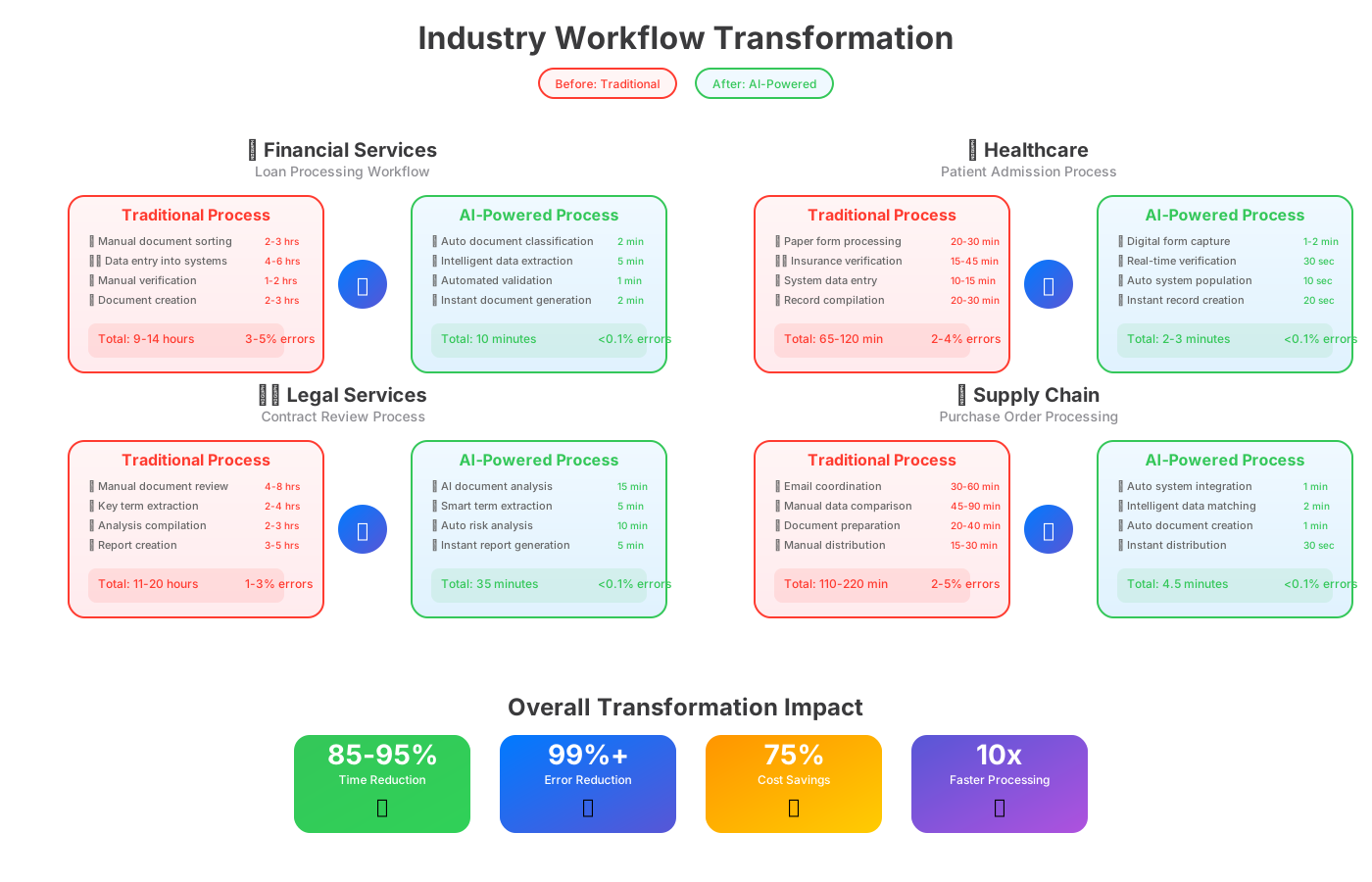
The technological foundation that enables Artificio's unified document processing capabilities combines advanced artificial intelligence with enterprise-grade integration and security features. Understanding this technology helps businesses appreciate both the current capabilities and future potential of the platform.
The AI engine powering document processing leverages multiple machine learning models that work together to understand document structure, content, and context. Optical character recognition technology handles text extraction from scanned documents and images, but this is just the starting point. Natural language processing models understand the meaning and relationships between different pieces of text, enabling the platform to extract not just individual data points but the context and connections between them.
Computer vision capabilities allow the platform to understand document layout and structure without relying solely on text-based analysis. The system can identify tables, forms, signatures, and other visual elements, extracting information based on position and formatting as well as content. This visual understanding is particularly important for complex documents like financial statements or technical drawings where spatial relationships convey important information.
The template engine that powers document generation uses a sophisticated rules-based system that understands how different types of data should be formatted and presented. The system can handle complex formatting requirements including conditional content, dynamic tables, and calculated fields. Template logic can incorporate business rules and validation criteria, ensuring that generated documents meet specific requirements for different use cases or regulatory environments.
Machine learning models continuously improve their performance by learning from user feedback and processing patterns. When users make corrections or adjustments to extracted data, the system incorporates this feedback to improve future processing accuracy. Template usage patterns help the system optimize document generation performance and suggest improvements to existing templates.
The drag-and-drop document editor provides an intuitive interface for creating and modifying templates without requiring technical expertise. Users can design complex document layouts using visual tools, then map extracted data fields to specific locations within the template. The editor supports rich formatting options including fonts, colors, images, and embedded content, allowing businesses to create professional documents that match their branding and style requirements.
API connectivity follows enterprise standards for security and reliability, supporting both REST and GraphQL interfaces for maximum flexibility. The platform can integrate with virtually any business system including customer relationship management platforms, enterprise resource planning systems, document management solutions, and custom applications. Real-time data synchronization ensures that all connected systems maintain consistent information without manual intervention.
Security architecture incorporates multiple layers of protection including encryption at rest and in transit, role-based access controls, and comprehensive audit logging. The platform supports single sign-on integration with enterprise identity management systems, while multi-factor authentication provides additional security for sensitive operations. Data residency options allow businesses to meet regulatory requirements for data location and handling.
The cloud-native architecture ensures scalability and reliability for businesses of all sizes. The platform automatically scales processing capacity based on demand, handling peak loads without performance degradation. Redundancy and backup systems provide high availability and disaster recovery capabilities, while global content delivery networks ensure optimal performance regardless of user location.
Digital signature capabilities integrate with leading signature platforms while also providing native signing functionality. The system supports various signature types including electronic signatures, digital signatures, and advanced electronic signatures that meet different regulatory requirements. Signature workflows can be customized to match business processes, with automatic routing and reminder capabilities that ensure timely completion.
Integration with existing enterprise technology stacks happens through pre-built connectors for popular business applications as well as custom integration capabilities for specialized systems. The platform's flexible architecture allows businesses to implement gradual migrations or hybrid approaches that leverage existing investments while adding intelligent document processing capabilities.
Performance monitoring and analytics provide insights into document processing efficiency and accuracy. Businesses can track processing times, error rates, and user satisfaction metrics to optimize their workflows and identify opportunities for improvement. The platform's reporting capabilities support both operational monitoring and strategic planning, helping businesses understand the impact of automated document processing on their overall operations.
The financial benefits of implementing unified document processing extend far beyond simple cost savings from reduced manual labor. Businesses that adopt Artificio's integrated platform typically see improvements across multiple dimensions of their operations, creating compound benefits that continue to grow over time.
Time savings represent the most immediate and measurable benefit. Traditional document workflows that previously required hours or days can often be completed in minutes when intelligent automation handles routine processing tasks. Artificio's ROI calculator demonstrates that businesses commonly achieve 75-90% reductions in document processing time, but these figures only tell part of the story.
Consider the cascading effects of faster document processing in a financial services context. When loan applications are processed more quickly, loan officers can handle larger case loads and provide better customer service. Faster processing also means that competitive loan offers can be presented to borrowers before they commit to other lenders. The revenue impact of closing more loans often exceeds the cost savings from automation by a significant margin.
Quality improvements provide another significant source of value. Manual data entry typically introduces errors in 1-3% of transactions, and these errors often require expensive correction processes that can involve multiple departments and external parties. Automated document processing reduces error rates to near zero for routine transactions, eliminating the downstream costs associated with corrections and improving customer satisfaction.
In healthcare contexts, quality improvements can have life-or-death implications. Faster, more accurate processing of patient information means that medical staff have access to complete, reliable data when making treatment decisions. Reduced administrative burden allows clinical staff to spend more time on patient care, improving outcomes and satisfaction while reducing liability risks.
Compliance costs decrease significantly when document processing follows automated, auditable workflows. Manual processes often struggle to maintain consistent compliance standards, particularly as regulations change or business volumes increase. Automated workflows ensure that all documents are processed according to current requirements, while comprehensive audit trails provide the documentation needed for regulatory examinations.
The scalability benefits of unified document processing become apparent as businesses grow. Traditional manual processes require proportional increases in staffing as document volumes increase. Automated processing can handle dramatic increases in volume with minimal additional cost, allowing businesses to grow without proportional increases in administrative overhead.
Resource allocation improvements provide strategic value that can be difficult to quantify but creates significant competitive advantages. When staff members are freed from routine document processing tasks, they can focus on higher-value activities like customer service, business development, and strategic planning. This shift in resource allocation often leads to improved innovation and customer satisfaction that drives long-term business growth.
Technology consolidation benefits extend beyond software licensing costs to include reduced training requirements, simplified support needs, and improved system reliability. When businesses replace multiple specialized tools with a single unified platform, they reduce the complexity of their technology environment and the associated management overhead.
Customer experience improvements provide indirect but significant value through increased retention and referral rates. Faster processing times, fewer errors, and more professional document presentation all contribute to improved customer satisfaction. In competitive markets, these improvements can be decisive factors in customer acquisition and retention.
The compounding nature of these benefits means that the total value of unified document processing often exceeds initial projections. As businesses become more proficient with the platform and identify additional use cases, the benefits continue to expand. Many organizations report that their ROI calculations, while positive initially, significantly underestimated the total value they would realize from the platform.
Risk reduction represents another important but often overlooked benefit. Manual document processing introduces operational risks related to errors, compliance failures, and information security. Automated processing with comprehensive audit trails and access controls significantly reduces these risks, providing value that may not be apparent until a potential incident is avoided.
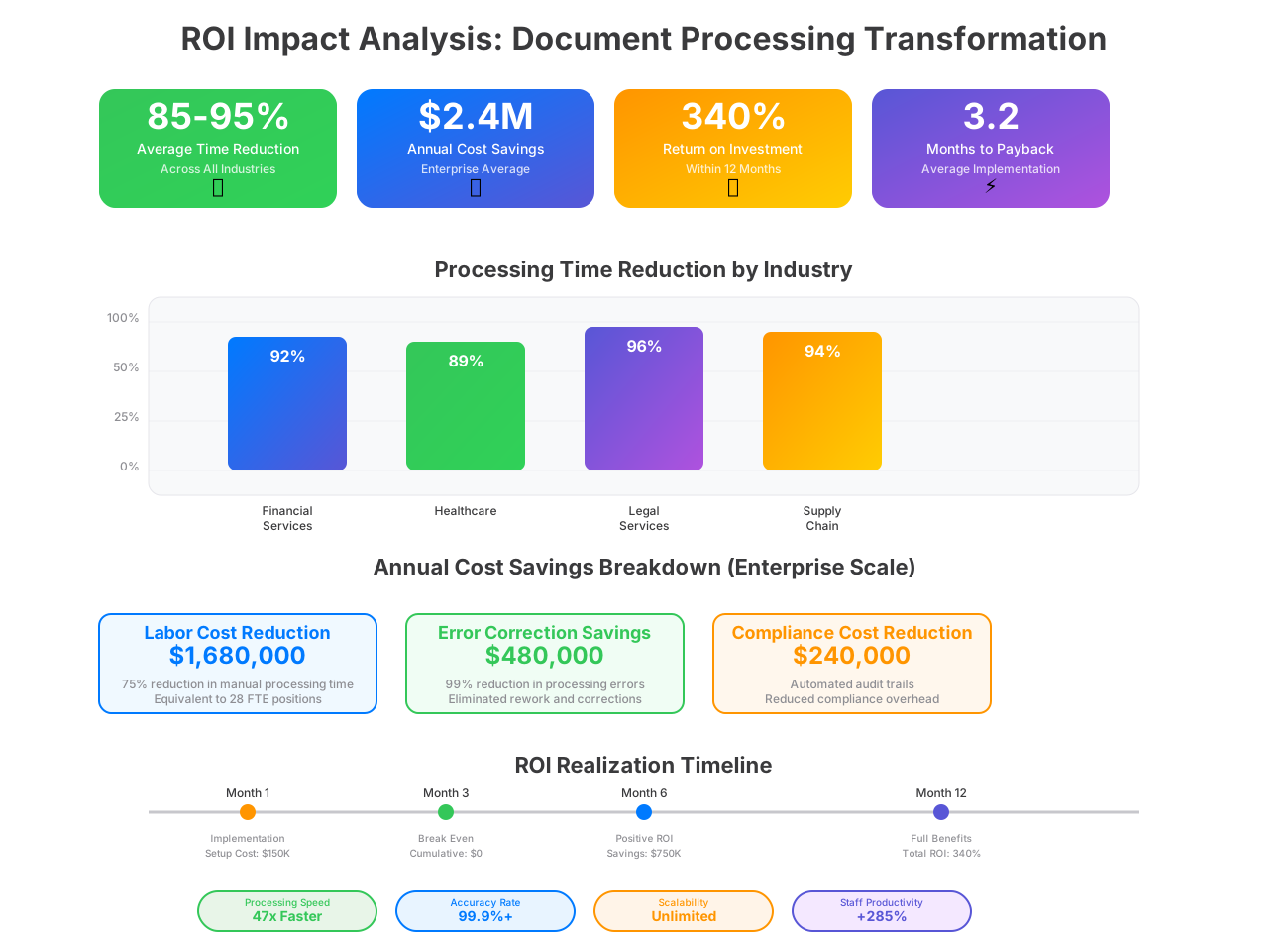
Successful implementation of unified document processing requires thoughtful planning and gradual adoption that allows organizations to build expertise while delivering immediate value. The most successful deployments follow proven patterns that minimize disruption while maximizing the benefits of intelligent automation.
Template design represents one of the most critical success factors for document generation capabilities. Effective templates balance flexibility with consistency, allowing for customization while maintaining professional appearance and regulatory compliance. Start by identifying the most commonly used document types in your organization and creating templates for these high-volume use cases. Simple templates like letters and basic reports provide excellent starting points that allow teams to build confidence with the system before tackling more complex document types.
When designing templates, consider both current needs and future requirements. Templates should be structured to accommodate variations in data availability and format, using conditional logic to handle cases where certain information might be missing or presented differently. Build in appropriate default values and fallback options that ensure generated documents are always complete and professional, even when source data is incomplete.
Data mapping between extraction and generation processes requires careful attention to field formats, validation rules, and business logic. Spend time understanding how extracted data will be used in generated documents, and design extraction workflows that produce clean, consistently formatted data. Consider creating data transformation rules that standardize formats and handle common variations in source documents.
Workflow testing should begin with small pilot projects that allow teams to understand the platform's capabilities without affecting critical business processes. Choose pilot projects that are representative of your organization's needs but not mission-critical, allowing for experimentation and learning without business risk. Document the results of pilot projects thoroughly, capturing both successes and areas for improvement that can inform broader deployment strategies.
Change management planning is essential for successful adoption, particularly in organizations with established document processing procedures. Staff members who have developed expertise with existing tools may be reluctant to adopt new approaches, even when the new capabilities are clearly superior. Provide comprehensive training that demonstrates the benefits of unified processing while acknowledging the challenges of transitioning from familiar workflows.
Training programs should combine technical instruction with practical exercises that allow users to experience the benefits of automated processing firsthand. Focus on real-world scenarios that demonstrate how the platform addresses current pain points and enables new capabilities. Provide ongoing support during the transition period, recognizing that adoption happens gradually as users build confidence with new tools and workflows.
Integration planning should prioritize compatibility with existing systems while identifying opportunities for consolidation and simplification. Map current data flows and identify where unified document processing can eliminate redundant steps or manual handoffs. Consider both technical integration requirements and business process changes that will maximize the benefits of automation.
Security and compliance considerations should be addressed early in the adoption process, particularly in regulated industries where document handling must meet specific requirements. Work with security and compliance teams to understand current requirements and ensure that automated workflows meet or exceed existing standards. Document all security and compliance features to support audit requirements and regulatory examinations.
Performance monitoring should begin immediately upon deployment, tracking both technical metrics like processing speed and business metrics like error rates and user satisfaction. Establish baseline measurements before automation begins, then track improvements over time. Use this data to identify optimization opportunities and demonstrate the value of unified document processing to stakeholders.
Version control and template management become increasingly important as adoption expands across the organization. Establish clear governance processes for template creation, modification, and approval. Consider creating template libraries that allow different departments to share common elements while maintaining appropriate customization for their specific needs.
User feedback collection should be systematic and ongoing, providing insights into both technical issues and opportunities for process improvement. Regular user surveys and feedback sessions help identify pain points and feature requests that can guide future optimization efforts. Create channels for users to share success stories and best practices that can benefit other teams within the organization.
Gradual expansion strategies work better than attempting to automate all document processes simultaneously. Start with high-volume, routine processes that provide clear benefits and low implementation risk. Build expertise and confidence with these initial use cases before expanding to more complex processes that require greater customization or integration work.
Success metrics should align with business objectives while providing actionable insights for continuous improvement. Track not just efficiency metrics like processing time and cost savings, but also quality measures like error rates and customer satisfaction. Consider both short-term operational improvements and long-term strategic benefits when evaluating the success of unified document processing implementation.
The evolution from fragmented document processing to unified, AI-powered workflows represents more than just a technological upgrade. It's a fundamental shift in how businesses approach one of their most critical operational challenges. By bringing together extraction and generation capabilities within a single platform, Artificio enables organizations to reimagine their document workflows in ways that seemed impossible just a few years ago.
The benefits extend far beyond simple efficiency gains, though those alone justify the investment for most organizations. When businesses eliminate the friction between document intake and output creation, they unlock new possibilities for customer service, compliance management, and operational excellence. Staff members who previously spent their time managing tools and transferring data between systems can focus on higher-value activities that drive business growth and customer satisfaction.
The unified approach also provides a foundation for future innovation. As artificial intelligence capabilities continue to advance, businesses that have established integrated document workflows will be better positioned to take advantage of new features and capabilities. The data insights generated by comprehensive document processing can inform business intelligence and predictive analytics initiatives that provide competitive advantages in rapidly evolving markets.
Perhaps most importantly, unified document processing democratizes access to advanced automation capabilities. Small and medium-sized businesses can now implement sophisticated document workflows that were previously available only to large enterprises with substantial IT resources. This leveling of the playing field creates opportunities for innovation and competition that benefit entire industries.
The organizations that adopt unified document processing today are positioning themselves for success in an increasingly digital business environment. As customer expectations continue to rise and competitive pressures intensify, the ability to process documents quickly, accurately, and professionally becomes a critical differentiator. The time and cost savings from automation provide resources for investment in other strategic initiatives, creating a virtuous cycle of improvement and growth.
The transformation isn't just about technology – it's about reimagining what's possible when intelligent automation handles routine tasks while human expertise focuses on strategy, creativity, and relationship building. This vision of human-AI collaboration represents the future of knowledge work, where technology amplifies human capabilities rather than simply replacing manual processes.
For businesses ready to embrace this future, Artificio's platform provides a comprehensive solution that grows with organizational needs and adapts to changing requirements. The combination of proven AI capabilities, enterprise-grade security and integration features, and intuitive user interfaces makes advanced document processing accessible to organizations of all sizes and technical sophistication levels.
The question isn't whether unified document processing will become the standard approach – it's how quickly organizations will adopt these capabilities and begin realizing the benefits. Early adopters are already seeing dramatic improvements in efficiency, quality, and customer satisfaction. As more organizations recognize the strategic value of intelligent document workflows, the competitive advantages will become even more pronounced.
The future of document processing is here, and it's unified, intelligent, and transformative. Organizations that embrace this future today will be better positioned for success tomorrow, with the operational excellence and efficiency gains that come from treating document processing as a strategic capability rather than a necessary burden.
Take the next step toward transforming your document workflows. Explore how Artificio's unified platform can address your specific use cases, calculate the potential ROI for your organization, or request a demo that showcases the power of combining AI-powered extraction with intelligent document generation. The future of document processing is waiting, and it's more powerful and accessible than ever before.

Head IT Operations - Co Founder of Artificio
See it in your SAP environment
Bring us a document, a process, or a bottleneck. We'll show how Artificio captures, validates, and posts into SAP — then scale from there.
Security & compliance
ISO 27001:2013 certified, SOC 2 Type 2 compliant, GDPR and HIPAA ready. Every agent action is logged, auditable, and runs in isolated environments.