

Blog
Cut Real Estate Due Diligence Costs with AI
Uncover the hidden costs of manual real estate due diligence. Learn how AI document processing slashes costs & accelerates transactions.

Blog
Uncover the hidden costs of manual real estate due diligence. Learn how AI document processing slashes costs & accelerates transactions.
Consider this: a typical commercial real estate transaction involves processing between 200-500 individual documents, from purchase agreements and lease abstracts to environmental reports and financial statements. Each document requires careful review, data extraction, cross-referencing, and compliance verification. When this process relies on manual labor, the cumulative impact on transaction costs, timeline delays, and risk exposure can easily exceed $50,000 per deal. For real estate firms handling dozens of transactions annually, these hidden costs can represent millions in lost profitability.
The problem isn't just about money lost, it's about opportunities missed. In today's competitive real estate market, firms that can process due diligence faster, more accurately, and with greater compliance confidence win the best deals. While competitors struggle with document bottlenecks and manual review processes, forward-thinking firms are leveraging AI-powered document processing to slash turnaround times, eliminate costly errors, and free up their teams to focus on what they do best: building relationships and closing deals.
This comprehensive analysis breaks down the real financial impact of manual document processing in real estate transactions and shows how intelligent automation can transform your bottom line. We'll examine specific cost centers, walk through real-world case studies, and provide a practical roadmap for implementing AI-driven document workflows that can save your firm tens of thousands per transaction while dramatically improving your competitive position.
Every real estate professional has experienced the frustration of a delayed closing, but few have calculated the true financial impact. When document processing bottlenecks push closing dates back, the ripple effects cascade through multiple cost centers. The average commercial real estate transaction delay costs approximately $15,000 in direct expenses, not including opportunity costs or damaged relationships.
Consider the immediate financial impacts: extended loan commitment fees typically range from $2,000 to $5,000 per month for commercial properties, while carrying costs for the seller (property taxes, insurance, maintenance, and utilities) can easily add another $3,000 to $8,000 monthly depending on property size and location. Legal fees accumulate as attorneys spend additional time managing extended negotiations and document revisions, often adding $2,000 to $4,000 in unexpected costs. For properties with existing tenants, delayed closings can trigger lease complications or require additional legal documentation, potentially adding thousands more in legal and administrative expenses.
The opportunity costs are even more significant. A seller holding a property for an additional month due to document delays loses the opportunity to deploy that capital elsewhere. For a $5 million property, even a conservative 6% annual return means each delayed month costs approximately $25,000 in lost investment opportunity. Buyers face similar challenges, particularly in competitive markets where delayed closings can result in lost deals or force them to accept less favorable terms on alternative properties.
Document processing delays also create a domino effect throughout the transaction ecosystem. Real estate agents lose productivity as they manage extended transaction timelines instead of pursuing new business. Property managers must maintain additional oversight for properties in transition. Insurance providers may require policy extensions with associated fees. Even seemingly minor delays in document processing can extend transaction timelines by weeks, turning what should be efficient closings into costly, drawn-out affairs that strain relationships and erode profitability.
The most insidious aspect of these delays is their apparent randomness. Teams rarely identify document processing as the root cause, instead attributing delays to "complicated deals" or "difficult parties." Manual document review processes create unpredictable bottlenecks that make accurate timeline forecasting nearly impossible. This uncertainty forces teams to build excessive buffer time into every transaction, slowing overall business velocity and reducing annual transaction volume.
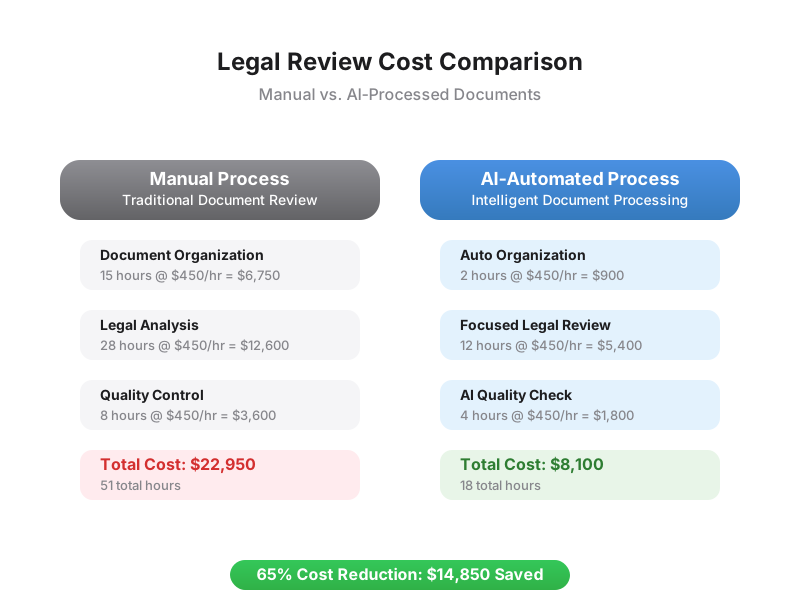
Legal review represents one of the largest hidden costs in real estate transactions, particularly when lawyers must work with poorly organized, inconsistent, or incomplete document packages. Commercial real estate attorneys typically charge between $300-600 per hour, and the difference between reviewing a well-organized, digitally processed document package versus a manually compiled one can represent 20-40 additional billable hours per transaction.
When documents arrive in inconsistent formats, with varying naming conventions, missing pages, or unclear organization, legal teams must spend significant time simply organizing and cross-referencing materials before substantive review can begin. A typical commercial property acquisition might involve lease abstracts, financial statements, environmental reports, survey documents, title materials, and numerous other supporting documents. If these arrive as a mix of scanned PDFs, physical documents, and email attachments without standardized formatting or organization, lawyers often spend 10-15 hours just creating a coherent document index and identifying missing materials.
The review process itself becomes significantly more time-intensive when key data points aren't readily accessible. Instead of quickly scanning extracted rent rolls or lease terms, attorneys must manually read through entire lease documents to identify critical information. Environmental reports that haven't been properly indexed require page-by-page review to locate specific findings. Financial statements without standardized formatting force lawyers to spend additional time ensuring they understand the property's true financial position.
Perhaps most costly is the iterative nature of manual document review. When initial reviews reveal missing information or inconsistencies, legal teams must loop back with requests for additional documentation or clarification. Each iteration adds 3-5 hours of legal time as attorneys review new materials and reconcile them with previously reviewed documents. Complex commercial transactions often require 3-4 such iterations, adding $3,600-7,200 in legal fees that could be eliminated with proper initial document processing.
The quality of legal review also suffers when lawyers are forced to work with substandard document packages. Time pressure to complete reviews within transaction deadlines means less thorough analysis of critical issues. Important clauses might be overlooked, risk factors inadequately assessed, or compliance issues missed entirely. These shortcuts can expose clients to significant post-closing liabilities that dwarf the initial cost savings from avoiding proper document processing.
Modern legal practice increasingly relies on technology-assisted review tools and document analysis software. These tools work best with properly formatted, digitally searchable documents with consistent metadata. Manual document processing often produces materials that can't take advantage of these efficiency tools, forcing legal teams to rely on slower, more expensive manual review methods even when better alternatives exist.
Regulatory compliance in real estate transactions has never been more complex or costly to get wrong. Environmental regulations, fair housing laws, anti-money laundering requirements, and local zoning compliance create a web of requirements that manual document processing struggles to navigate consistently. The average compliance violation in commercial real estate carries penalties ranging from $20,000 to $100,000, with some violations triggering criminal liability or transaction nullification.
Environmental compliance represents one of the highest-risk areas for document processing errors. Phase I Environmental Site Assessments, soil reports, and hazardous materials disclosures contain critical information that must be accurately identified and properly communicated to all parties. Manual processing of these technical documents frequently results in missed disclosures or inadequate risk assessment. When environmental issues are discovered post-closing due to document processing failures, remediation costs can reach hundreds of thousands or even millions of dollars.
Fair housing compliance adds another layer of complexity, particularly for properties with existing tenant relationships. Lease documents, rental applications, and tenant correspondence must be carefully reviewed for any evidence of discriminatory practices. Manual review processes often lack the systematic approach needed to identify subtle compliance issues or pattern recognition that might indicate problems. Fair housing violations carry substantial penalties and can result in forced property sales or operational restrictions that dramatically impact property values.
Anti-money laundering (AML) and know-your-customer (KYC) requirements have expanded significantly in recent years, requiring detailed documentation and verification of all transaction parties. Manual processing of corporate ownership documents, financial statements, and identity verification materials creates numerous opportunities for compliance gaps. AML violations can result in transaction freezes, criminal prosecution, and substantial fines that can easily exceed $100,000 for serious violations.
Local zoning and land use compliance requires careful cross-referencing of property documents with current municipal regulations. Manual processing often fails to identify zoning non-conformities, illegal uses, or required permits that should be addressed before closing. Post-closing discovery of these issues can force costly property modifications, use restrictions, or in extreme cases, require property demolition. The financial exposure from zoning compliance failures can exceed the property's entire purchase price.
The documentation requirements for compliance have also expanded beyond simple disclosure. Regulatory agencies increasingly require detailed audit trails showing how compliance determinations were made, what documents were reviewed, and who was responsible for each compliance assessment. Manual document processing rarely produces the detailed metadata and process documentation needed to satisfy these audit requirements, potentially turning minor compliance issues into major violations due to inadequate documentation.
Insurance implications add another dimension to compliance costs. Professional liability and errors & omissions insurance policies often contain specific exclusions for claims arising from inadequate document review or compliance failures. When compliance violations stem from document processing errors, insurance coverage may be denied, leaving firms fully exposed to potentially massive liabilities. Even when coverage applies, claims can result in increased premiums and reduced coverage limits that impact long-term business operations.
The administrative burden of manual document processing extends far beyond the obvious tasks of filing and organizing paperwork. Real estate professionals across all roles find themselves spending enormous amounts of time on document-related activities that add no direct value to transactions but consume resources at an alarming rate. The typical commercial real estate transaction requires 40-60 hours of administrative time specifically related to document processing, representing $3,000-4,500 in direct labor costs at average industry rates.
Real estate agents and brokers spend approximately 15-20 hours per transaction managing document flow between parties. This includes chasing missing documents, coordinating with various professionals to obtain required materials, reformatting documents for different systems, and maintaining multiple versions as changes occur throughout the transaction process. Instead of focusing on client relationship building or business development, experienced professionals find themselves functioning as highly paid administrative assistants.
Transaction coordinators and paralegals bear an even heavier burden, often spending 25-35 hours per transaction on document-related tasks. They must create and maintain detailed document checklists, track completion status across multiple parties, identify and resolve discrepancies between documents, and ensure all materials meet format requirements for various systems and parties. The complexity increases exponentially with transaction size, as larger deals involve more parties, more documents, and more opportunities for coordination failures.
Property managers face unique challenges when properties change ownership, requiring detailed documentation transitions that can consume 10-15 hours per property. Lease files must be organized and transferred, tenant records consolidated, vendor contracts reviewed and documented, and financial records reconciled and presented in formats usable by new ownership. This process often reveals gaps in existing documentation that require additional time to research and resolve.
The iterative nature of manual document processing multiplies these time investments. When initial document reviews reveal missing information or formatting issues, the entire administrative cycle repeats. Each revision cycle adds 5-10 hours of administrative time as teams re-coordinate document collection, update tracking systems, and communicate changes to all parties. Complex transactions often require 3-4 such cycles, tripling or quadrupling the administrative burden.
Technology integration challenges compound these time drains. Many real estate professionals work with multiple software systems that don't communicate effectively with each other. Document information must be manually entered into CRM systems, transaction management platforms, accounting software, and reporting tools. Each data entry process creates opportunities for errors that require additional time to identify and correct. The lack of automated data flow between systems means the same information gets entered multiple times, multiplying both time requirements and error opportunities.
Quality control adds another significant time component. Experienced team members must review work completed by junior staff, checking for completeness, accuracy, and compliance with firm standards. This review process often reveals issues that require additional time to research and resolve. The quality control burden increases with team size and transaction complexity, as more people touching documents creates more opportunities for inconsistencies and errors.
To illustrate the real financial impact of manual document processing, let's examine a actual commercial office building acquisition handled by a mid-sized real estate investment firm. The property was a 150,000 square foot Class A office building in a major metropolitan market with a purchase price of $45 million and 23 existing tenant leases. This transaction, which should have been straightforward given the property's quality and the buyer's experience, became a costly lesson in the hidden expenses of manual document processing.
The initial document package from the seller arrived as a mixture of physical documents, scanned PDFs, and Excel spreadsheets scattered across multiple email chains and file sharing platforms. The package included 47 individual lease documents, 5 years of financial statements, environmental reports spanning 200+ pages, survey documents, title materials, and extensive tenant correspondence. The buying team's first challenge was simply organizing these materials into a coherent structure that could support systematic review.
The firm's transaction coordinator spent 32 hours over the first two weeks just creating a master document index and identifying missing materials. Each lease required manual review to extract key terms like rent amounts, escalation clauses, renewal options, and tenant responsibilities. Financial statements needed reformatting to enable proper analysis, as they arrived in inconsistent formats from different accounting periods. Environmental reports required page-by-page review to identify any concerning findings, as the documents lacked proper indexing or executive summaries.
Legal review proved particularly challenging and expensive. The firm's law firm charged $450 per hour for partner-level review and $275 per hour for associate work. Because documents arrived in poor condition without standardized formatting, the legal team spent 43 billable hours just organizing materials and creating proper lease abstracts before substantive legal analysis could begin. The lack of consistent formatting meant attorneys couldn't use their standard document analysis tools, forcing time-intensive manual review of every document.
Three weeks into the due diligence period, the legal team identified significant discrepancies between the seller's provided rent roll and the actual lease documents. Several leases contained different rent amounts than listed in the financial summaries, and two major tenants had renewal options that weren't properly disclosed in the initial package. Resolving these discrepancies required additional document requests to the seller and another 15 hours of legal time to review and reconcile the new materials.
The environmental review process revealed another costly complication. The Phase I Environmental Site Assessment identified a potential concern regarding historical dry cleaning operations in an adjacent property, but the relevant soil testing reports were buried within a 300-page appendix without proper indexing. The environmental consultant spent an additional 8 hours locating and reviewing these materials, ultimately determining that additional soil testing was needed. This testing delayed the closing by three weeks and cost an additional $12,000.
Tenant estoppel certificates presented yet another challenge. Because the lease abstracts were incomplete and contained errors, the initial estoppel requests sent to tenants included inaccurate information about lease terms. This forced a second round of estoppel requests with corrected information, delaying tenant responses and extending the due diligence timeline. Three tenants requested lease modifications before signing estoppels, requiring additional legal review and negotiation that consumed another 12 hours of attorney time.
The financing process suffered from similar document-related delays. The lender's underwriting team required specific formatting for financial information and detailed lease abstracts that the firm hadn't prepared in their initial review. Reformatting financial data and creating comprehensive lease summaries required another 20 hours of work and delayed loan approval by 10 days. The loan commitment extension fee alone cost $3,500.
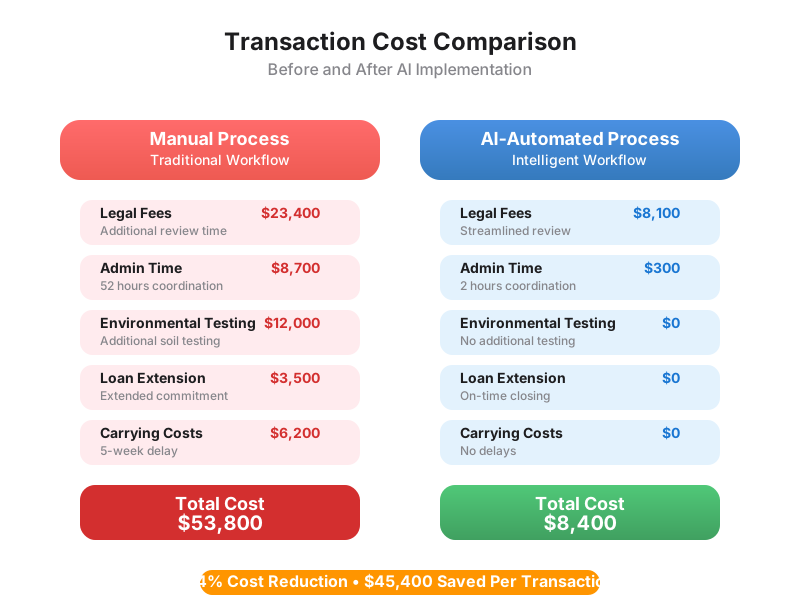
By closing, the document processing challenges had extended the transaction timeline by 5 weeks beyond the original schedule. Direct costs included $23,400 in additional legal fees, $8,700 in transaction coordinator time, $12,000 in additional environmental testing, $3,500 in loan extension fees, and $6,200 in carrying costs for the delayed closing. The total excess cost directly attributable to manual document processing exceeded $53,800, not including opportunity costs or the productivity lost by senior team members who had to redirect time from other transactions to manage this deal's complications.
Six months later, the same investment firm acquired a similar property using Artificio's AI-powered document processing platform. This transaction involved a 175,000 square foot office building with a $52 million purchase price and 31 existing leases. Despite being larger and more complex than the previous deal, the AI-automated workflow transformed both the timeline and cost structure dramatically.
The seller's document package arrived in similarly chaotic condition – multiple formats, inconsistent naming conventions, and scattered across various platforms. But instead of beginning with manual organization, the firm uploaded all materials directly to Artificio's platform. The AI system immediately began automated document classification, separating leases from financial documents, environmental reports, and other materials. Within 4 hours, the platform had created a comprehensive document index with standardized naming conventions and identified 12 missing documents that should have been included based on the type of transaction and property characteristics.
Lease abstraction, which had taken weeks in the manual process, was completed within 24 hours. Artificio's AI extracted key terms from all 31 leases, including rent amounts, escalation clauses, renewal options, tenant responsibilities, and critical dates. The system automatically flagged 6 leases with unusual clauses that required additional attention and identified 3 leases with renewal options expiring within the next 18 months. All extracted data was immediately available in standardized formats compatible with the firm's existing analysis tools.
Financial document processing demonstrated equally impressive improvements. The AI system automatically reformatted financial statements from different periods into consistent layouts, calculated key performance metrics, and identified discrepancies between different financial reports. What had previously required days of manual spreadsheet work was completed in hours, with results automatically integrated into the firm's underwriting models.
Environmental document analysis proved particularly valuable. Artificio's platform automatically indexed all environmental reports, created executive summaries of key findings, and flagged potential concerns for expert review. The system identified the same historical dry cleaning concern that had caused delays in the previous transaction, but this time the relevant soil testing data was immediately accessible with clear risk assessments. Environmental consultants could focus their time on analysis rather than document hunting, completing their review in half the time and identifying no need for additional testing.
Legal review efficiency improved dramatically. Instead of receiving disorganized document packages, the law firm received properly indexed materials with key terms already extracted and flagged. Attorneys could immediately access standardized lease abstracts, pre-identified compliance issues, and comprehensive document summaries. The total legal time for document review dropped to 18 hours – a 58% reduction compared to the manual process. The improved organization allowed legal teams to focus on substantive analysis rather than administrative document management.
Tenant estoppel coordination became streamlined and accurate. Because lease abstracts were comprehensive and error-free, initial estoppel requests contained accurate information that tenants could quickly verify. The platform automatically generated estoppel forms pre-populated with correct lease terms, reducing tenant confusion and accelerating response times. All 31 tenants returned signed estoppels within the original timeline, with no requests for corrections or modifications.
Lender coordination was similarly improved. Artificio automatically generated financial summaries and lease abstracts in formats commonly required by commercial lenders. The underwriting package was delivered to the lender with comprehensive, professional formatting that accelerated their review process. Loan approval was received 2 weeks ahead of schedule, eliminating any need for commitment extensions.
The results spoke for themselves: the transaction closed exactly on the original timeline with total document processing costs of only $8,400. This represented an 84% reduction in document-related expenses compared to the manual process. More importantly, the deal team's productivity improved dramatically, allowing them to focus on value-added activities like market analysis, deal structuring, and relationship building rather than administrative document management.
The side-by-side comparison between these two similar transactions provides clear evidence of AI document processing's financial impact. Direct cost savings totaled $45,400 per transaction, but the broader productivity and timeline improvements generated even greater value for the investment firm.
Time savings were equally impressive across all roles. Transaction coordinators reduced their document-related work from 52 hours to 12 hours per deal, freeing up 40 hours for higher-value activities like client communication and deal coordination. Legal teams cut their document processing time by more than half, allowing them to take on additional transactions or provide deeper analysis on complex issues. Environmental consultants could complete reviews in 60% less time, reducing costs and accelerating transaction timelines.
The productivity improvements enabled the firm to increase their annual transaction volume by 35% without adding staff. Senior professionals who had been bogged down in document management could return to business development and client relationship activities that directly drive revenue growth. The firm calculated that improved productivity and faster transaction cycles generated an additional $280,000 in annual revenue beyond the direct cost savings on individual deals.
Risk reduction provided another significant value component. Automated compliance checking and comprehensive document analysis reduced the likelihood of post-closing surprises or regulatory issues. The firm's insurance broker noted the improved documentation standards and offered a 12% reduction in professional liability premiums, saving an additional $8,400 annually.
Client satisfaction improved measurably as well. Faster transaction timelines and more comprehensive due diligence reporting enhanced the firm's reputation with both buyers and sellers. Client surveys showed increased satisfaction scores and higher likelihood to recommend the firm's services. These improvements translated into increased referral business and higher win rates on competitive deals.
The cumulative financial impact extended well beyond individual transaction savings. Improved efficiency enabled the firm to pursue larger, more complex deals that had previously required prohibitive time investments. Enhanced documentation capabilities opened opportunities in institutional markets where comprehensive reporting standards are mandatory. The firm estimated that AI-powered document processing capabilities expanded their addressable market by approximately 40% and increased their average transaction size by 15%.
One of the most pervasive and costly challenges in real estate transactions stems from data inconsistencies across the numerous documents required for closing. A typical commercial property acquisition involves 50-200 individual documents from various sources, each potentially containing the same information presented in different formats, with different data points, or even contradictory details. These inconsistencies create verification nightmares that can derail transactions and expose parties to significant post-closing risks.
Rent rolls provide a perfect example of this challenge. A property's actual rental income might be represented differently in the seller's marketing materials, the property management company's rent roll, individual lease documents, financial statements, and tenant estoppel certificates. Marketing materials often show "pro forma" rent amounts that include projected increases or assumed market rates rather than actual contracted rents. Property management rent rolls might include additional fees or charges not clearly separated from base rent. Individual leases contain the definitive terms but may include complex escalation formulas or percentage rent calculations that aren't properly reflected in summary documents.
Financial statements add another layer of complexity. A property's income might appear differently in cash-basis versus accrual-basis accounting, with timing differences creating apparent discrepancies that require careful analysis to resolve. Expense categorizations vary between different accounting systems and reporting periods, making year-over-year comparisons difficult and potentially misleading. Common area maintenance charges, real estate taxes, and insurance costs might be allocated differently across various reports, creating confusion about the property's true operating performance.
Environmental documentation presents particularly challenging consistency issues. Phase I Environmental Site Assessments reference historical reports and government databases that may contain outdated or contradictory information. Soil testing results from different time periods or testing companies may use varying measurement standards or contamination thresholds. Environmental compliance certificates from different agencies might reflect different regulatory requirements or inspection standards. Reconciling these differences requires specialized expertise and significant time investment.
Survey documents and legal descriptions create another consistency challenge. Property boundaries might be described differently in title documents, survey reports, zoning records, and municipal databases. Easement rights and restrictions may be referenced inconsistently across various documents, with some reports providing detailed descriptions while others offer only brief summaries. Building measurements and square footage calculations often vary between different sources, affecting everything from property valuations to lease rate calculations.
The manual process of identifying and resolving these inconsistencies is both time-intensive and error-prone. Teams must compare dozens of documents line by line, creating spreadsheets to track discrepancies and researching source documents to determine which information is accurate. This process often reveals additional inconsistencies that require further investigation, creating cascading delays throughout the due diligence process. Even experienced professionals struggle to maintain systematic approaches to consistency checking when faced with large document volumes and tight transaction deadlines.
The financial impact of unresolved inconsistencies can be severe. Rent roll discrepancies discovered after closing might reveal that property income is significantly lower than expected, affecting property valuations and loan compliance. Environmental inconsistencies could indicate unidentified contamination risks that require expensive remediation. Survey discrepancies might reveal encroachments or easement issues that affect property use or development potential. Legal description errors could result in purchasing the wrong property or acquiring less property than intended.
Modern AI-powered document processing platforms address these consistency challenges through automated cross-referencing and discrepancy identification. These systems can instantly compare data points across hundreds of documents, flagging inconsistencies for human review and providing detailed reports showing exactly where discrepancies occur. This automated approach ensures comprehensive consistency checking while dramatically reducing the time required for verification.
Lease documents represent the foundation of income-producing property valuations, yet extracting and verifying critical lease terms remains one of the most error-prone aspects of real estate due diligence. Commercial leases are complex legal documents that often span 50-100 pages and contain intricate clauses governing rent calculations, tenant responsibilities, renewal options, and termination rights. Manual extraction of key terms from these documents is notoriously unreliable and time-intensive, creating significant transaction risks and delays.
Rent calculation clauses exemplify the complexity of lease term extraction. Base rent amounts seem straightforward but often include escalation formulas tied to consumer price indices, fixed percentage increases, or market rate adjustments at specific intervals. Percentage rent clauses for retail properties involve complex calculations based on tenant sales performance, with different breakpoints and exclusions that significantly affect income projections. Common area maintenance charges may be calculated using different methodologies, with caps, floors, and allocation formulas that dramatically impact tenant costs and property profitability.
Renewal and termination options present another extraction challenge. These clauses often contain specific notice requirements, rental rate adjustment formulas, and conditional triggers that aren't immediately apparent from casual document review. Early termination rights might be buried within lengthy legal provisions and include complex penalty calculations or conditional triggers based on business performance or market conditions. Expansion and contraction rights allow tenants to modify their space requirements under specific circumstances that must be carefully identified and understood.
Tenant responsibility clauses require detailed extraction to understand property operating cost allocation. Some leases require tenants to pay for specific utilities, maintenance responsibilities, or property improvements, while others include these costs in base rent calculations. Insurance and indemnification requirements vary significantly between leases and can affect property operating costs and liability exposure. Compliance responsibilities for environmental regulations, building codes, and accessibility requirements may be allocated differently across tenants, affecting both income and expense projections.
Assignment and subletting provisions control tenant flexibility and can significantly impact property values. Some leases provide tenants broad rights to assign their interests or sublet space, while others require landlord consent or include specific conditions that limit tenant options. These provisions affect tenant creditworthiness assessments and property stability evaluations. Understanding these terms is critical for accurate property valuation and investment risk assessment.
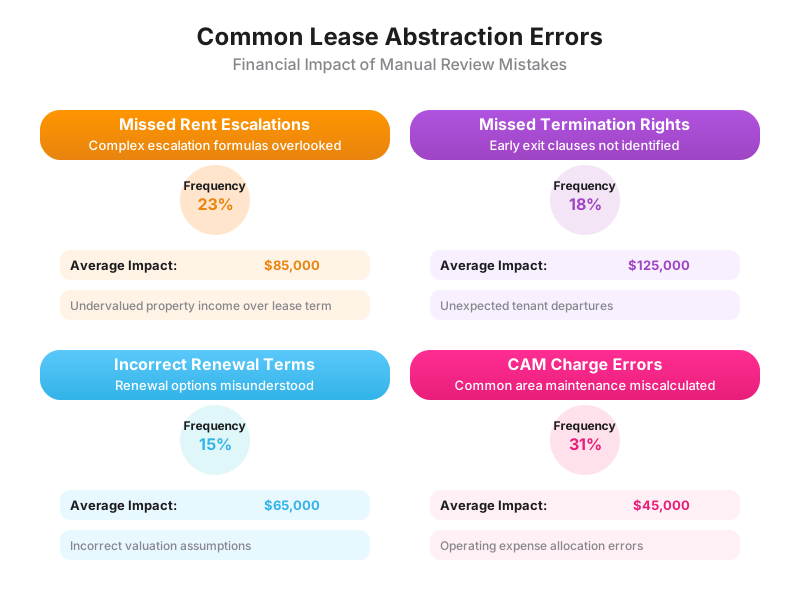
Manual lease abstraction processes frequently miss critical terms or extract information incorrectly. Time pressure during due diligence periods forces reviewers to focus on obvious terms like rent amounts and lease expiration dates while potentially overlooking complex clauses that could significantly affect property performance. Different reviewers may interpret the same lease language differently, creating inconsistencies across lease abstracts that require additional time to resolve.
The consequences of missing or incorrectly extracted lease terms can be financially devastating. Unidentified early termination rights might allow major tenants to vacate without penalty, dramatically reducing property income. Missed renewal options could result in unexpected tenant departures when leases expire. Incorrectly calculated rent escalations might show inflated income projections that affect property valuations and loan underwriting. Overlooked tenant improvement allowances or capital expenditure responsibilities could create unexpected cash flow obligations for new property owners.
Quality control processes for manual lease abstraction are time-intensive and often incomplete. Senior team members must review abstracts created by junior staff, comparing them against original lease documents to verify accuracy. This review process often identifies errors that require additional research and correction, extending due diligence timelines and increasing costs. Even comprehensive review processes may miss subtle but important lease provisions that could affect long-term property performance.
AI-powered lease abstraction platforms solve these challenges through comprehensive automated extraction that identifies and categorizes all lease terms regardless of document complexity or language variations. These systems use advanced natural language processing to understand lease provisions in context, ensuring critical terms aren't overlooked due to unusual phrasing or complex legal language. Automated quality control processes cross-reference extracted terms with document text to verify accuracy and identify potential inconsistencies.
Document version control represents one of the most frustrating and risky aspects of manual real estate transaction management. Complex deals involve multiple parties creating, reviewing, and revising documents throughout the transaction process, often resulting in dozens of versions of critical documents with unclear revision tracking and approval status. This version control chaos creates significant risks for transaction delays, legal complications, and costly post-closing disputes.
Purchase agreements exemplify version control challenges in real estate transactions. Initial draft agreements undergo multiple revision cycles as parties negotiate terms, with each revision potentially affecting pricing, timelines, contingencies, and responsibilities. Legal teams from both sides create marked-up versions with proposed changes, often working from different base documents or failing to incorporate previous revisions properly. Email chains become cluttered with different versions labeled "draft," "revised," "final," and "final-final," making it unclear which document represents the current negotiation status.
Lease amendments and modifications compound version control problems, particularly for properties with multiple tenants undergoing simultaneous lease negotiations. Each tenant's lease modifications may affect common area calculations, parking allocations, or building operating procedures that impact other tenants. Tracking these interdependent changes across multiple concurrent negotiations requires systematic version control that manual processes struggle to maintain. Confusion about which lease terms are current versus proposed can derail tenant negotiations and delay transaction closings.
Financial documents present unique version control challenges due to their time-sensitive nature and frequent updates. Operating statements, rent rolls, and budget projections may be revised monthly or quarterly as new information becomes available. Due diligence teams must ensure they're analyzing the most current financial data while maintaining audit trails showing how key metrics have changed over time. Using outdated financial information for underwriting or valuation purposes can result in significant investment mistakes.
Environmental reports and compliance documents undergo frequent revisions as new testing data becomes available or regulatory requirements change. Phase I Environmental Site Assessments may be updated based on additional research or site visits. Soil testing reports might include supplemental data or revised interpretations of contamination levels. Tracking these revisions is critical for accurate risk assessment, but manual systems often fail to maintain clear version histories or properly communicate updates to all relevant parties.
Construction and development documents face particularly complex version control challenges. Architectural plans, engineering drawings, and construction specifications undergo constant revision as design details are refined and regulatory approvals are obtained. Each revision can affect project costs, timelines, and regulatory compliance requirements. Ensuring all parties work from current document versions is critical for project success, but manual tracking systems often fail when multiple consultants and contractors are involved.
The financial consequences of version control failures can be substantial. Legal disputes often arise when parties discover they were working from different document versions during negotiations, leading to disagreements about agreed-upon terms and expensive litigation. Construction projects may proceed based on outdated plans, requiring costly rework when discrepancies are discovered. Lenders may base underwriting decisions on outdated financial information, potentially affecting loan terms or requiring costly loan modifications.
Time delays represent another significant cost of version control chaos. Teams waste countless hours searching for current document versions, reconciling differences between versions, and recreating work based on outdated information. Conference calls and meetings are spent clarifying which documents represent current status rather than advancing substantive negotiations. These delays extend transaction timelines and increase costs across all transaction participants.
Risk management suffers when version control systems fail. Legal and compliance reviews based on outdated documents may miss critical issues or fail to address current risks. Insurance underwriting using outdated information could result in inadequate coverage or claim denials. Investment decisions based on superseded financial data might expose investors to unexpected risks or missed opportunities.
Manual version control relies heavily on individual discipline and systematic file naming conventions, but these approaches break down under the pressure of complex transactions with tight deadlines. Email-based document sharing makes version tracking particularly difficult, as different parties may receive different versions or fail to receive important updates. File sharing platforms provide some improvement but still require manual organization and version tracking that proves unreliable under pressure.
Modern document management platforms address version control challenges through automated tracking, approval workflows, and real-time collaboration features. These systems maintain complete audit trails showing who made changes, when revisions occurred, and what approvals were obtained. Automated notifications ensure all parties receive current versions, while access controls prevent outdated documents from being used for critical decisions.
Regulatory compliance in real estate transactions involves navigating an increasingly complex web of federal, state, and local requirements that manual checking processes struggle to address systematically. Environmental regulations, fair housing laws, zoning requirements, building codes, and financial compliance standards each carry significant penalties for violations, yet manual compliance checking often fails to identify critical issues or properly document compliance efforts.
Environmental compliance presents some of the highest stakes for manual checking errors. Properties must comply with federal environmental regulations including the Clean Air Act, Clean Water Act, and Resource Conservation and Recovery Act, each containing hundreds of specific requirements that vary based on property type, location, and historical use. State environmental regulations add additional layers of complexity, often with stricter standards than federal requirements. Local environmental ordinances may include unique requirements for specific geographic areas or property types.
Manual environmental compliance checking typically involves reviewing Phase I Environmental Site Assessments, historical records, and regulatory database searches to identify potential issues. But this process often fails to cross-reference information systematically or identify subtle compliance risks that could trigger expensive remediation requirements. Environmental consultants working under time pressure may focus on obvious concerns while missing emerging regulatory requirements or failing to properly assess cumulative risks from multiple minor issues.
Fair housing compliance requires systematic review of tenant selection procedures, marketing materials, lease terms, and property management practices to ensure no discriminatory patterns exist. Manual compliance checking often focuses on obvious policy language while missing subtle indicators of discriminatory practices that could trigger investigations. Marketing materials, application procedures, and tenant communications must be reviewed for compliance with fair housing requirements, but manual processes may overlook problematic language or procedures that seem routine but violate regulatory standards.
Zoning compliance involves verifying that current property uses comply with local zoning ordinances and that any planned modifications meet regulatory requirements. Local zoning codes are frequently updated, and manual compliance checking may rely on outdated information or fail to identify recent changes that affect property compliance. Parking requirements, setback regulations, height restrictions, and use limitations must all be verified against current codes, but manual processes often miss nuanced requirements or fail to identify grandfathered uses that may not be transferable to new owners.
Building code compliance adds another layer of complexity, particularly for older properties that may not meet current standards but operate under grandfathered approvals. Fire safety systems, accessibility requirements, structural standards, and mechanical system specifications must all comply with applicable codes at the time of construction and any subsequent modifications. Manual compliance checking often fails to identify code violations that could trigger expensive upgrade requirements or prevent property financing.
Financial compliance requirements have expanded significantly in recent years, particularly for anti-money laundering (AML) and know-your-customer (KYC) regulations. Commercial real estate transactions must comply with Bank Secrecy Act requirements, Foreign Investment in Real Property Tax Act (FIRPTA) regulations, and various reporting requirements for foreign ownership or large cash transactions. Manual compliance checking often fails to properly identify reporting requirements or maintain adequate documentation to satisfy regulatory audit requirements.
The interconnected nature of compliance requirements makes manual checking particularly challenging. Environmental compliance affects zoning approval processes, building code modifications may trigger accessibility upgrade requirements, and financial compliance requirements may affect ownership structure decisions. Manual processes struggle to identify these interconnections and often address compliance requirements in isolation rather than considering cumulative impacts.
Documentation requirements for compliance have become increasingly sophisticated, requiring detailed audit trails showing how compliance determinations were made, what sources were consulted, and who was responsible for compliance verification. Manual compliance checking rarely produces the comprehensive documentation needed to satisfy regulatory audits or defend against compliance challenges. This documentation gap can transform minor compliance issues into major violations when regulatory agencies investigate.
The cost of compliance errors extends beyond direct penalties to include transaction delays, increased insurance costs, and potential criminal liability for serious violations. Environmental compliance violations can trigger cleanup orders that cost hundreds of thousands of dollars and delay property transfers indefinitely. Fair housing violations may require property operational changes and ongoing monitoring that affects long-term profitability. Zoning violations could prevent planned property uses or require expensive modifications that affect investment returns.
AI-powered compliance checking systems address these challenges through comprehensive regulatory database integration, automated cross-referencing of requirements, and systematic documentation of compliance verification processes. These systems maintain current information about regulatory requirements, automatically identify applicable regulations based on property characteristics, and provide detailed audit trails documenting all compliance assessments.
Modern real estate operations rely on multiple software systems that often fail to communicate effectively with each other, creating data silos and workflow inefficiencies that dramatically increase document processing time and error rates. Customer relationship management (CRM) systems, transaction management platforms, accounting software, document storage systems, and reporting tools each require manual data entry and document uploading, multiplying administrative burdens and creating numerous opportunities for errors and inconsistencies.
CRM systems typically serve as the central repository for client and property information, but they rarely integrate seamlessly with transaction management platforms where deal-specific documents and timelines are tracked. This disconnect means property information, contact details, and transaction history must be manually entered into multiple systems, often with different formatting requirements and data field structures. When property details change during due diligence, updates must be manually propagated across all systems, creating opportunities for inconsistencies and outdated information.
Transaction management platforms excel at tracking deal progress and document requirements but often fail to integrate with accounting systems where financial analysis and reporting occur. Financial documents analyzed in spreadsheet applications must be manually summarized and entered into transaction management systems, while deal information tracked in transaction platforms must be separately entered into accounting systems for commission calculations and financial reporting. This dual data entry requirement doubles administrative time and creates opportunities for calculation errors.
Document storage and sharing systems present another integration challenge. While cloud storage platforms provide excellent document sharing capabilities, they rarely integrate with CRM or transaction management systems in ways that automatically update deal progress or notify relevant parties of document changes. Teams must manually update transaction status in management systems when documents are uploaded or revised, often leading to outdated progress tracking and missed deadline notifications.
Accounting and financial reporting systems require specific data formats and chart of account structures that rarely align with how information is organized in transaction management or CRM systems. Property operating statements, commission calculations, and deal profitability analysis must be manually recreated in accounting systems using data extracted from other platforms. This recreation process is time-intensive and error-prone, particularly for complex deals with multiple properties or parties.
Communication platforms including email, messaging systems, and video conferencing tools operate independently of transaction management systems, requiring manual documentation of important communications and decisions. Deal progress updates communicated via email or messaging must be manually entered into transaction tracking systems, while document changes discussed in meetings must be separately updated in document management platforms. This manual coordination requirement increases the likelihood of missed communications or incomplete documentation.
Marketing and listing platforms require separate data entry for property information, photographs, and marketing materials that may already exist in CRM or transaction management systems. When property details change during marketing or due diligence periods, updates must be manually propagated across all marketing platforms, creating opportunities for inconsistent property information and confused prospects.
The financial impact of technology integration failures extends beyond obvious administrative inefficiencies. Data inconsistencies between systems can lead to incorrect financial reporting, missed commission payments, or inaccurate property valuations. Communication gaps between platforms may result in missed deadlines, incomplete document packages, or inadequate client updates that damage relationships and delay transactions.
Quality control becomes significantly more challenging when information exists in multiple disconnected systems. Verifying data accuracy requires manual cross-referencing between platforms, while ensuring all systems contain current information requires systematic update procedures that are difficult to maintain under transaction pressure. These quality control challenges increase error rates and reduce confidence in system-generated reports and analysis.
Team collaboration suffers when different team members work in different systems without effective integration. Sales teams working in CRM systems may have different property information than transaction coordinators working in deal management platforms, while accounting teams working in financial systems may have different commission or fee information than what appears in transaction tracking systems. These disconnects create confusion and require additional coordination time to resolve.
Modern integration platforms and APIs provide solutions to many technology integration challenges, enabling automated data flow between systems and reducing manual data entry requirements. However, implementing these integration solutions requires technical expertise and ongoing maintenance that many real estate firms struggle to provide. The complexity of integration projects often deters firms from pursuing solutions that could dramatically improve their operational efficiency.
Cloud-based platforms increasingly offer built-in integrations with other commonly used real estate tools, reducing the need for custom integration development. These integrated platforms can automatically sync property information, deal progress, and document status across multiple tools, eliminating manual update requirements and ensuring all team members work with current information.
The first week of implementing AI-powered document processing should focus on comprehensive assessment of current workflows and establishing clear implementation objectives. This assessment phase provides the foundation for successful automation by identifying specific pain points, quantifying current costs, and establishing measurable improvement targets that will guide the implementation process.
Begin by conducting a detailed audit of your current document processing workflows for a recent transaction. Document every step from initial document receipt through final closing, noting the time required for each activity, the people involved, and the systems used. Pay particular attention to bottlenecks, rework cycles, and quality control processes that consume significant time or create delays. This baseline assessment will provide the data needed to measure improvement after implementation and identify the highest-priority areas for automation.
Calculate the true cost of your current manual processes by tracking time investments across all roles and adding associated costs for delays, errors, and rework. Include obvious costs like staff time and legal fees, but also factor in hidden costs like opportunity costs from delayed closings, client satisfaction impacts from extended timelines, and productivity losses from senior staff time spent on administrative tasks. This cost analysis will provide compelling justification for automation investment and help prioritize implementation areas based on potential return on investment.
Evaluate your current technology infrastructure to ensure compatibility with AI document processing platforms. Review your existing document storage systems, transaction management platforms, CRM systems, and communication tools to understand integration requirements and potential technical challenges. Identify any system upgrades or modifications that might be needed to support seamless automation implementation.
Establish clear, measurable objectives for your automation implementation. Rather than vague goals like "improve efficiency," set specific targets such as "reduce document processing time by 60%," "eliminate 90% of manual data entry," or "reduce legal review time by 40%." These specific objectives will guide platform selection and provide clear success metrics for measuring implementation results.
Select a pilot transaction type and team that will serve as your initial implementation focus. Choose a transaction type that occurs frequently enough to provide meaningful testing opportunities but isn't so critical that implementation delays would seriously impact business operations. Consider starting with a specific property type or transaction size that represents a significant portion of your business volume.
Research available AI document processing platforms to identify solutions that best fit your specific needs and technical requirements. Evaluate platforms based on their real estate industry experience, integration capabilities with your existing systems, pricing structure, and customer support quality. Request demonstrations focused on your specific use cases and ask for references from similar firms who have implemented the technology successfully.
Develop a preliminary project timeline that extends beyond the initial 30-day implementation to include ongoing optimization and expansion phases. Consider seasonal business cycles, major transactions that might be disrupted by implementation activities, and staff availability for training and testing. Build buffer time into your timeline to accommodate unexpected technical challenges or additional training requirements.
The second week should focus on finalizing platform selection and beginning the technical setup process. This phase requires careful evaluation of platform capabilities against your specific requirements and establishing the technical foundation for successful implementation.
Complete your platform evaluation by conducting detailed demonstrations with your top vendor candidates using actual documents from recent transactions. Don't rely on generic demonstrations – insist on seeing how each platform handles your specific document types, lease structures, and compliance requirements. Test the platforms with problematic documents that have caused issues in your manual processes to evaluate how well the AI handles real-world complications.
Evaluate integration capabilities by testing each platform's ability to connect with your existing systems. Most AI document processing platforms offer APIs and pre-built integrations with common real estate software, but the quality and reliability of these integrations vary significantly. Test data flow between the document processing platform and your CRM, transaction management, and accounting systems to ensure seamless information sharing.
Consider the learning curve and training requirements for each platform. While AI platforms are designed to be user-friendly, some offer more intuitive interfaces and better training resources than others. Evaluate each platform's training materials, customer support quality, and user community resources to ensure your team can achieve proficiency quickly.
Review pricing structures carefully, looking beyond initial licensing costs to understand ongoing expenses for document processing volume, additional users, premium features, and integration maintenance. Some platforms charge per document processed while others use flat monthly fees. Consider your transaction volume and growth projections to identify the most cost-effective pricing model for your business.
Make your final platform selection based on a combination of functionality, integration capabilities, ease of use, and total cost of ownership. Avoid the temptation to choose based solely on price – the productivity gains from a superior platform will quickly offset higher licensing costs. Consider the vendor's financial stability and product development roadmap to ensure long-term viability.
Begin the technical setup process by establishing accounts and configuring basic system settings. Most platforms offer guided setup processes that walk you through essential configuration steps. Pay particular attention to security settings, user access controls, and data retention policies to ensure compliance with your firm's data security requirements and applicable regulations.
Configure integrations with your existing systems, starting with the most critical connections such as your CRM or transaction management platform. Test these integrations thoroughly with sample data to ensure proper data flow and formatting. Work with vendor technical support teams to resolve any configuration issues before proceeding to document processing tests.
Set up user accounts for your pilot team and configure appropriate access levels based on roles and responsibilities. Most platforms offer granular permission controls that allow you to limit access to sensitive documents or restrict certain functions to senior team members. Establish clear policies for user account management and access level modifications.
Upload sample documents from recent transactions to test the platform's processing capabilities with your actual document types. Start with straightforward documents like simple leases or financial statements before testing more complex materials. Monitor processing results carefully and work with vendor support teams to optimize accuracy for your specific document types.
The third week focuses on comprehensive team training and beginning controlled testing with actual transactions. This phase establishes the human foundation for successful implementation by ensuring team members understand platform capabilities and feel confident using the new tools.
Conduct comprehensive training sessions for your pilot team, starting with platform overview and basic functionality before progressing to advanced features and troubleshooting procedures. Most vendor training programs include both general platform training and customized sessions focused on your specific use cases and workflows. Take advantage of these customized training opportunities to ensure maximum relevance to your team's daily activities.
Establish clear roles and responsibilities for platform usage within your pilot team. Designate platform administrators who will manage system configuration and user accounts, power users who will handle complex document processing tasks, and regular users who will perform routine document uploads and review. Clear role definitions prevent confusion and ensure appropriate skill development for each team member.
Create standardized procedures for document uploading, processing monitoring, and quality control review. While AI platforms automate much of the document processing work, human oversight remains critical for ensuring accuracy and handling exceptions. Develop checklists and procedures that team members can follow consistently to maintain quality standards and identify issues that require additional attention.
Begin testing with lower-risk transactions that won't significantly impact business operations if technical issues arise. Choose transactions with standard document types and straightforward requirements that will allow your team to focus on learning platform functionality rather than dealing with complex processing challenges. Monitor these initial tests carefully and document any issues or questions that arise.
Establish feedback collection procedures to capture team member observations, suggestions, and concerns during the testing phase. Regular feedback sessions help identify training gaps, workflow improvements, and technical issues that need attention. Encourage honest feedback about both positive experiences and frustrations to ensure continuous improvement of your implementation process.
Test integration functionality by processing documents through the AI platform and monitoring how extracted data flows into your existing systems. Verify that property information, lease terms, and financial data appear correctly in your CRM, transaction management, and accounting systems. Test various document types and complexity levels to identify any integration issues that need resolution.
Develop quality control procedures specific to AI-processed documents. While AI platforms dramatically improve accuracy compared to manual processing, human review remains important for complex documents and unusual situations. Create guidelines for when additional review is needed and establish approval workflows for critical documents or high-value transactions.
Practice exception handling procedures for documents that don't process correctly or require special attention. Even the best AI platforms occasionally encounter documents with unusual formatting, poor scan quality, or complex legal language that requires human intervention. Develop procedures for handling these exceptions efficiently without disrupting overall workflow.
Conduct parallel processing tests where documents are processed both manually and through the AI platform to compare results. These parallel tests help build confidence in platform accuracy and identify any systematic issues that need attention. Use these tests to refine quality control procedures and establish benchmarks for acceptable accuracy levels.
The final week focuses on transitioning from testing to full operational implementation while establishing optimization procedures for ongoing improvement. This phase marks the beginning of realizing productivity and cost benefits from AI document processing automation.
Transition your pilot team to full operational use of the AI platform for all appropriate transactions. Begin with transaction types and document categories that performed best during testing before gradually expanding to more complex materials. Maintain close monitoring during this transition to quickly identify and resolve any issues that arise under full operational loads.
Implement comprehensive monitoring procedures to track platform performance, processing accuracy, and productivity improvements. Establish key performance indicators (KPIs) such as document processing time, error rates, staff time savings, and client satisfaction scores. Regular monitoring helps identify optimization opportunities and provides data for demonstrating implementation success to firm leadership.
Optimize platform configuration based on insights gained during testing and initial operational use. Most AI platforms offer extensive customization options that can be fine-tuned to improve accuracy for your specific document types and business requirements. Work with vendor support teams to implement configuration optimizations that enhance performance for your most common use cases.
Expand usage to additional team members and transaction types based on pilot results and team confidence levels. Gradual expansion allows you to maintain quality control while scaling benefits across more of your business operations. Consider transaction volume, complexity, and team member skill levels when deciding on expansion priorities.
Establish ongoing training procedures for new team members and refresher training for existing users. AI platforms continuously evolve with new features and capabilities, requiring ongoing education to maximize benefits. Regular training sessions help ensure all team members understand best practices and can take advantage of platform improvements.
Develop advanced workflow procedures that take advantage of platform capabilities for complex transactions or special situations. As your team becomes more proficient with basic platform functionality, explore advanced features like custom document templates, automated compliance checking, and sophisticated data extraction rules that can provide additional productivity benefits.
Create reporting procedures that demonstrate implementation results to firm leadership and stakeholders. Regular reports showing productivity improvements, cost savings, and client satisfaction enhancements help justify continued investment in AI technology and support expansion to additional areas of your business.
Establish vendor relationship management procedures for ongoing support, platform updates, and feature requests. Strong vendor relationships ensure you receive timely support when issues arise and provide input into product development that benefits your specific business needs. Regular vendor meetings help you stay informed about new capabilities and industry best practices.
Plan for continued expansion and optimization beyond the initial 30-day implementation period. Successful AI implementation is an ongoing process that evolves as your team gains experience and platform capabilities improve. Develop long-term plans for expanding automation to additional document types, integrating with additional systems, and exploring advanced AI capabilities that can provide further productivity benefits.
The evidence is overwhelming: manual document processing in real estate transactions represents a massive hidden cost that forward-thinking firms can no longer afford to ignore. Our detailed analysis demonstrates that AI-powered document automation can save $50,000 or more per transaction while dramatically improving accuracy, compliance, and client satisfaction. These aren't theoretical benefits – they're real, measurable improvements that leading firms are achieving today through intelligent implementation of AI document processing technology.
The transformation extends far beyond simple cost savings. Firms implementing AI document processing report fundamental improvements in their competitive positioning, client relationships, and business growth opportunities. When teams spend 60-80% less time on administrative document tasks, they can focus on high-value activities like client relationship building, market analysis, and deal structuring that directly drive revenue growth. This productivity shift often enables firms to increase transaction volume by 30-40% without adding staff, while improving service quality and client satisfaction.
The competitive implications are equally significant. In markets where transaction speed and accuracy provide decisive advantages, firms using AI document processing consistently outperform competitors relying on manual processes. Faster due diligence cycles allow these firms to close deals ahead of schedule, creating client loyalty and referral opportunities that compound over time. Enhanced documentation capabilities open doors to institutional markets and complex transactions that require sophisticated reporting and compliance capabilities.
Risk reduction provides another compelling benefit that extends well beyond immediate cost savings. AI-powered compliance checking and comprehensive document analysis dramatically reduce exposure to regulatory penalties, post-closing disputes, and professional liability claims. These risk reductions often translate into lower insurance premiums and improved access to capital that further enhance profitability and growth opportunities.
The implementation roadmap we've outlined provides a practical, step-by-step approach that minimizes disruption while maximizing benefits. The 30-day timeline allows firms to achieve operational benefits quickly while building confidence and expertise for broader implementation. Most firms report positive ROI within 60-90 days of implementation, with benefits continuing to expand as teams develop greater proficiency with AI capabilities.
The technology landscape continues to evolve rapidly, with AI document processing capabilities becoming more sophisticated and cost-effective each year. Firms that begin implementation now position themselves to take advantage of these ongoing improvements while building operational expertise that will serve them well as competition intensifies. Early adopters consistently report that AI implementation becomes easier and more beneficial over time as both technology capabilities and team expertise develop.
The choice facing real estate firms is clear: continue absorbing the hidden costs and competitive disadvantages of manual document processing, or take decisive action to implement AI automation that transforms operational efficiency and business performance. The firms that act quickly will establish decisive competitive advantages, while those that delay will find themselves increasingly disadvantaged in a market where AI-powered efficiency becomes the baseline expectation rather than a differentiating factor.

Head IT Operations - Co Founder of Artificio
See it in your SAP environment
Bring us a document, a process, or a bottleneck. We'll show how Artificio captures, validates, and posts into SAP — then scale from there.
Security & compliance
ISO 27001:2013 certified, SOC 2 Type 2 compliant, GDPR and HIPAA ready. Every agent action is logged, auditable, and runs in isolated environments.