

Blog
AI Revolutionizes Property Damage Claims: Faster Recovery
Learn how AI-powered document processing streamlines property damage claims, reducing delays and costs for insurers while accelerating recovery.

Blog
Learn how AI-powered document processing streamlines property damage claims, reducing delays and costs for insurers while accelerating recovery.
In the aftermath of a severe storm, thousands of property owners across the region face the same overwhelming challenge: navigating the complex, time-consuming process of filing insurance claims for property damage. What should be a straightforward path to recovery often becomes a months-long ordeal involving endless paperwork, multiple adjuster visits, disputed damage assessments, and frustrating delays in claim resolution. This scenario plays out millions of times each year across the United States, creating a cascade of problems that extends far beyond individual property owners to impact insurance companies, property managers, real estate investors, and the broader economy.
Traditional insurance claims processing represents one of the most document-intensive and administratively complex workflows in the entire property management ecosystem. A single property damage claim can generate dozens of documents including initial damage reports, repair estimates, contractor bids, photographic evidence, weather reports, policy documentation, correspondence records, and settlement agreements. Each document requires careful review, data extraction, cross-referencing, and validation before claims adjusters can make informed decisions about coverage and compensation amounts. This manual-intensive process creates bottlenecks that delay recovery for property owners while imposing significant operational costs on insurance companies struggling to process claims efficiently and accurately.
The emergence of artificial intelligence and automated document processing technology is fundamentally transforming this landscape. Modern AI systems can now read, interpret, and analyze the full spectrum of insurance claims documentation with unprecedented speed and accuracy, converting what was once a weeks or months-long manual process into an automated workflow that delivers results in hours or days. This technological revolution extends beyond simple efficiency gains to encompass fraud detection, damage assessment automation, cost estimation, and seamless integration with existing insurance platforms and property management systems.
The business case for AI-powered claims automation has never been more compelling. Insurance companies implementing intelligent document processing report dramatic reductions in claims processing costs, significant improvements in customer satisfaction scores, and measurable increases in operational efficiency that directly impact their bottom line. For property managers and real estate professionals, automated claims processing means faster property restoration, reduced vacancy periods, and improved tenant relationships during crisis situations. The convergence of these benefits creates a powerful value proposition that is driving rapid adoption across the insurance and real estate industries.
The current state of insurance claims processing represents a fundamental mismatch between customer expectations and industry capabilities. In an era where consumers can complete complex financial transactions in minutes using their smartphones, the insurance industry still relies heavily on manual processes that can take weeks or months to resolve even straightforward property damage claims. This disconnect creates significant problems for all stakeholders involved in the property ecosystem, from individual homeowners to large commercial real estate portfolios.
Property damage events, whether caused by natural disasters, accidents, or equipment failures, create urgent needs for rapid assessment and resolution. Every day that passes without claim resolution extends the period of property unavailability, increases the risk of secondary damage, and compounds the financial impact on property owners. For residential properties, delayed claims processing can force families to remain in temporary housing for extended periods, creating emotional stress and additional financial burdens. For commercial properties, processing delays translate directly into lost rental income, increased vacancy costs, and potential tenant displacement that can have lasting effects on property valuations and investment returns.
The complexity of modern insurance policies compounds these timing challenges. Commercial property insurance policies often include intricate coverage provisions, multiple deductibles, co-insurance requirements, and exclusions that require careful analysis to determine the appropriate settlement amount. Policy language that seemed clear during the underwriting process can become ambiguous when applied to specific damage scenarios, leading to disputes that require additional documentation, expert opinions, and legal review. These complexities multiply the number of documents that must be reviewed and cross-referenced during the claims process, creating additional opportunities for delays and errors.
Insurance companies face their own set of challenges that contribute to processing delays. Claims adjusters typically manage heavy caseloads that require them to prioritize their time across multiple claims with varying degrees of complexity and urgency. The manual nature of traditional claims processing means that adjusters spend significant time on administrative tasks such as document review, data entry, and report generation rather than focusing on the investigative and customer service aspects of their role that require human judgment and expertise. This misallocation of human resources creates inefficiencies that impact both claim quality and processing speed.
The financial implications of slow claims processing extend throughout the property management value chain. Property managers dealing with damage to rental properties must balance tenant relations, ongoing operational responsibilities, and coordination with insurance companies while managing the uncertainty created by open insurance claims. Delayed settlements can strain property management cash flows, particularly for smaller operators who lack the financial reserves to advance repair costs while waiting for insurance reimbursement. These cash flow challenges can force property managers to delay necessary repairs, leading to tenant dissatisfaction and potential legal complications.
Real estate investors face additional complications when insurance claims remain unresolved for extended periods. Open claims can complicate property sales, refinancing activities, and portfolio valuations by creating uncertainty about the ultimate financial impact of covered damage. Lenders and potential buyers often require claims resolution before proceeding with transactions, creating additional delays and costs that compound the original damage impact. For publicly traded real estate companies, unresolved claims can affect financial reporting and analyst perceptions, potentially impacting stock prices and access to capital markets.
The regulatory environment adds another layer of complexity to claims processing timelines. Insurance departments in most states have established regulations governing claims handling practices, including requirements for prompt claim acknowledgment, investigation timelines, and settlement procedures. While these regulations are designed to protect consumers, they can also create additional administrative requirements that slow the overall process. Insurance companies must balance compliance obligations with operational efficiency while maintaining detailed documentation to demonstrate regulatory compliance.
Fraud prevention requirements create additional processing complexities that can significantly extend claim resolution timelines. Insurance fraud costs the industry billions of dollars annually, forcing companies to implement comprehensive verification procedures that require additional documentation and investigation time. Legitimate claims can become caught up in fraud prevention protocols, particularly when they involve high dollar amounts or unusual circumstances that trigger automated review flags. The manual nature of fraud investigation means that experienced investigators must review suspected cases individually, creating bottlenecks that can delay processing for weeks or months.
Customer expectations continue to evolve in ways that make traditional claims processing approaches increasingly inadequate. Younger property owners who have grown up with digital-first service experiences expect real-time updates, transparent communication, and rapid resolution of service requests. The contrast between their experience with other service providers and the traditional insurance claims process creates dissatisfaction that can impact customer retention and brand loyalty. Insurance companies that fail to modernize their claims processing capabilities risk losing market share to competitors who can deliver faster, more transparent service experiences.
The sheer volume and variety of documentation required for insurance claims processing creates one of the most significant bottlenecks in the entire workflow. A typical property damage claim generates dozens of distinct document types, each requiring specialized knowledge to interpret and validate. Initial damage reports submitted by property owners often include narrative descriptions, photographic evidence, and preliminary damage estimates that must be cross-referenced against policy terms and coverage limits. Professional inspection reports from licensed adjusters contain technical assessments, detailed damage inventories, and cost estimates that require verification against industry standards and local market conditions.
Repair estimates from contractors introduce another layer of complexity, as these documents must be evaluated for completeness, accuracy, and reasonableness compared to prevailing market rates for similar work. Multiple contractors often submit competing bids with varying scopes of work, material specifications, and pricing structures that require careful analysis to determine appropriate settlement amounts. Additional complications arise when contractors identify previously unnoticed damage during the repair estimation process, necessitating supplemental documentation and revised settlement calculations.
Supporting documentation requirements vary significantly based on the type and extent of damage involved. Water damage claims often require humidity readings, moisture mapping reports, and mold inspection results that must be interpreted by specialists with relevant technical expertise. Fire damage claims may include fire department reports, cause and origin investigations, and hazardous material assessments that require coordination with multiple agencies and expert witnesses. Storm damage claims frequently involve meteorological reports, wind speed measurements, and structural engineering assessments that require correlation with policy terms defining covered perils.
The documentation challenges multiply exponentially for commercial property claims involving business interruption coverage. These claims require detailed financial records, profit and loss statements, tax returns, lease agreements, and operational documentation that must be analyzed to determine the economic impact of property damage on business operations. Forensic accounting may be necessary to separate damage-related losses from other business factors, requiring additional expert reports and financial analysis that can take months to complete.
Traditional document management approaches struggle to handle this complexity effectively. Claims files are often scattered across multiple systems, with physical documents, email attachments, and digital files stored in different locations without consistent organization or indexing. Adjusters spend considerable time simply locating and organizing relevant documents before they can begin the substantive review process. Version control becomes problematic when multiple parties submit updated estimates, revised reports, or supplemental documentation throughout the claims process.
The manual nature of document review creates additional inefficiencies and error risks. Adjusters must read through lengthy technical reports to identify key information such as damage amounts, cause determinations, and repair recommendations. This process requires subject matter expertise across multiple disciplines including construction, engineering, meteorology, and accounting. Even experienced adjusters can miss important details or misinterpret technical information when working under time pressure or managing heavy caseloads.
Data extraction from unstructured documents represents another significant challenge in traditional processing workflows. Key information such as damage amounts, dates, locations, and cause determinations must be manually identified and entered into claims management systems. This process is time-consuming and error-prone, with transcription mistakes potentially leading to incorrect settlement calculations or coverage determinations. The lack of standardization across document sources means that similar information may be presented in different formats, making consistent data extraction difficult even for experienced processors.
Cross-referencing requirements add another layer of complexity to document processing workflows. Policy terms must be compared against damage descriptions to determine coverage applicability. Repair estimates must be evaluated against industry standards and local market conditions to ensure reasonableness. Settlement calculations must account for deductibles, co-insurance provisions, and policy limits that may vary depending on the specific circumstances of each claim. These cross-referencing activities require access to multiple information sources and the analytical skills to identify discrepancies or inconsistencies that may affect claim resolution.
Quality control processes in traditional claims processing often involve multiple review layers that further extend processing timelines. Initial document review by claims processors is followed by supervisory approval, technical review by specialists, and final authorization by senior adjusters or claims managers. Each review layer requires additional time for document circulation, reviewer scheduling, and feedback incorporation. Complex claims may require review by external experts, legal counsel, or reinsurance companies, adding additional participants to the approval process. 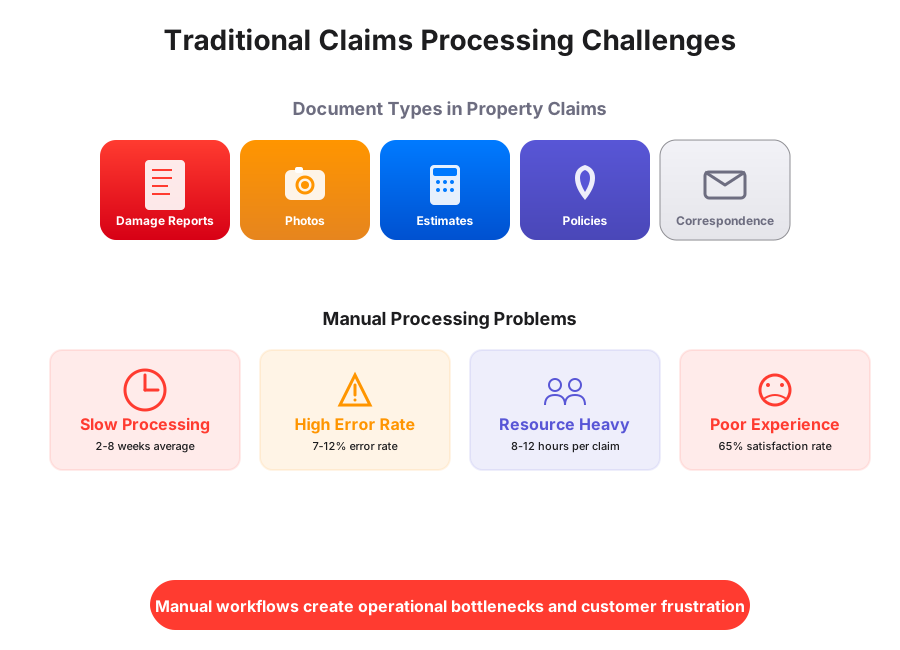
The lack of real-time visibility into document processing status creates additional problems for all stakeholders involved in the claims process. Property owners often have no way to track the progress of their claims or understand what additional documentation may be required for resolution. This lack of transparency leads to frequent status inquiries that consume additional adjuster time and create customer service challenges. Property managers and contractors involved in the repair process face similar visibility limitations that make it difficult to plan and coordinate restoration activities effectively.
Integration challenges between different systems and platforms compound document management problems. Claims management systems may not interface effectively with document storage platforms, email systems, or external databases containing relevant information. This lack of integration forces manual data transfer between systems, creating additional opportunities for errors and delays. The inability to automatically correlate information from different sources makes it difficult to identify patterns or inconsistencies that could indicate fraud or processing errors.
Version control becomes particularly problematic in collaborative claims processing environments where multiple parties contribute documentation throughout the process. Updated estimates, revised reports, and supplemental evidence must be clearly identified and properly filed to ensure that decision-makers are working with current information. Traditional filing systems often struggle to maintain clear version histories, leading to confusion about which documents represent the most recent and accurate information.
The cumulative impact of these document management challenges creates significant operational inefficiencies that affect both processing costs and customer satisfaction. Insurance companies must employ large teams of claims processors, adjusters, and support staff to handle the manual work involved in document review and data extraction. These labor costs represent a significant portion of overall claims processing expenses, making operational efficiency improvements a key priority for maintaining competitive advantage and profitability.
The application of artificial intelligence to insurance claims document processing represents a fundamental transformation from reactive, manual workflows to proactive, intelligent automation that can handle the full spectrum of claims-related documentation with unprecedented speed and accuracy. Modern AI systems don't simply digitize existing manual processes; they reimagine how claims organizations can interact with documentation to extract insights, identify patterns, and make decisions that were previously impossible or impractical to obtain through traditional methods.
At the foundation of AI-powered claims processing lies advanced optical character recognition technology that can accurately read and interpret documents regardless of their original format, quality, or structure. Unlike traditional OCR systems that struggle with handwritten notes, damaged documents, or complex layouts, modern AI-driven solutions use machine learning algorithms trained on millions of insurance documents to understand context and meaning rather than simply recognizing individual characters. This capability allows the system to handle everything from pristine contractor estimates to water-damaged photographs to hastily written adjuster notes with equal accuracy and consistency.
The contextual understanding capabilities of AI systems represent a particularly significant advancement over manual processing methods. When a human adjuster encounters a damage report stating "extensive water damage to basement affecting electrical systems, HVAC equipment, and finished surfaces," they must mentally process this information, understand the implications for different coverage types, and then manually look up policy terms to determine coverage applicability. AI systems can perform this same contextual analysis instantaneously, automatically categorizing damage types, identifying coverage triggers, and cross-referencing policy terms without human intervention.
This contextual processing extends to handling the many variations and exceptions that make claims processing so challenging for manual workflows. Insurance claims often contain unique circumstances, non-standard terminology, or property-specific arrangements that require interpretation rather than simple data entry. AI systems excel at recognizing patterns and variations, allowing them to understand that "storm surge flooding" and "wind-driven rain infiltration" describe related but distinct damage mechanisms that may have different coverage implications under the same policy.
The speed advantages of AI processing become particularly apparent when dealing with large-scale events such as natural disasters that generate thousands of claims simultaneously. A hurricane or wildfire can create processing backlogs that overwhelm traditional manual workflows for months, but AI systems can process these claims in parallel without capacity constraints. This speed isn't just about completing individual tasks faster; it enables entirely new approaches to disaster response that can provide immediate relief to affected property owners while allowing insurance companies to manage their exposure more effectively.
Machine learning capabilities allow AI systems to continuously improve their performance by learning from each claim they process. As the system encounters new document formats, damage types, or policy structures, it expands its knowledge base and becomes more accurate at handling similar situations in the future. This learning process creates a compound improvement effect where processing accuracy and speed increase over time, rather than remaining static like manual processes. Insurance companies implementing AI-powered claims processing often find that their systems become more capable and valuable with each passing month.
The integration capabilities of modern AI systems transform claims processing from an isolated workflow into part of a broader automated ecosystem. Rather than producing static reports that require manual entry into other systems, AI-powered platforms can automatically populate claims management databases, update financial systems, generate regulatory reports, and trigger workflow actions based on processing results. This integration eliminates many of the hand-off points and potential error sources that plague manual processes while ensuring that claims data remains current and accessible across the organization.
Data validation represents another area where AI systems provide significant advantages over manual processing. While human adjusters can check individual facts for obvious errors, AI systems can simultaneously validate information across multiple dimensions, comparing damage assessments to historical data, identifying inconsistencies in documentation, and flagging unusual patterns that might indicate fraud or processing errors. This comprehensive validation happens in real-time during the processing phase, eliminating the need for separate quality control steps and reducing the time between initial claim submission and final resolution.
The standardization capabilities of AI systems address one of the most persistent challenges in insurance claims processing: dealing with inconsistent documentation formats and reporting structures across different sources. Contractors, adjusters, and property owners each have their own approaches to documenting damage and estimating costs, leading to wide variations in how similar information is presented. AI-powered platforms can automatically convert documentation from various sources into standardized formats that enable meaningful comparisons and consistent processing across all claims.
Advanced analytics capabilities enabled by AI processing extend far beyond traditional claims handling to provide insights that help insurance companies optimize their operations and identify improvement opportunities. AI systems can automatically identify claims patterns that indicate process bottlenecks, coverage gaps, or fraud trends that require management attention. For example, the system might identify that claims involving specific contractors consistently show higher-than-expected costs, suggesting the need for additional scrutiny or vendor management interventions.
Predictive analytics represent perhaps the most transformative aspect of AI-powered claims processing. By combining current claims data with historical patterns, weather information, and economic indicators, AI systems can generate forward-looking projections that help insurance companies anticipate claim volumes, allocate resources, and manage reserves more effectively. These predictive capabilities enable proactive claims management strategies rather than reactive responses to problems that have already occurred.
The collaborative features of AI-powered platforms fundamentally change how teams work with claims documentation. Instead of passing physical files or email attachments between team members for review and approval, AI systems enable real-time collaboration where multiple stakeholders can access current information, add comments or annotations, and track changes without creating version control issues. This collaborative approach reduces communication overhead while ensuring that all team members work with the same accurate, up-to-date information throughout the claims process.
Fraud detection capabilities represent another critical advantage of AI-powered claims processing. Traditional fraud detection relies primarily on human experience and intuition to identify suspicious patterns, but AI systems can analyze thousands of data points simultaneously to identify anomalies that might indicate fraudulent activity. These systems can detect subtle patterns in documentation, identify inconsistencies between different information sources, and flag claims that deviate from expected norms based on historical data and industry benchmarks.
The automation of damage assessment represents one of the most transformative applications of AI technology in insurance claims processing, fundamentally changing how property damage is evaluated, quantified, and validated. Traditional damage assessment requires physical inspection by trained adjusters who must travel to claim sites, document conditions, estimate repair costs, and prepare detailed reports that can take days or weeks to complete. This process creates significant bottlenecks in claims resolution while imposing substantial costs on insurance companies that must maintain large teams of field adjusters and coordinate their schedules across wide geographic areas.
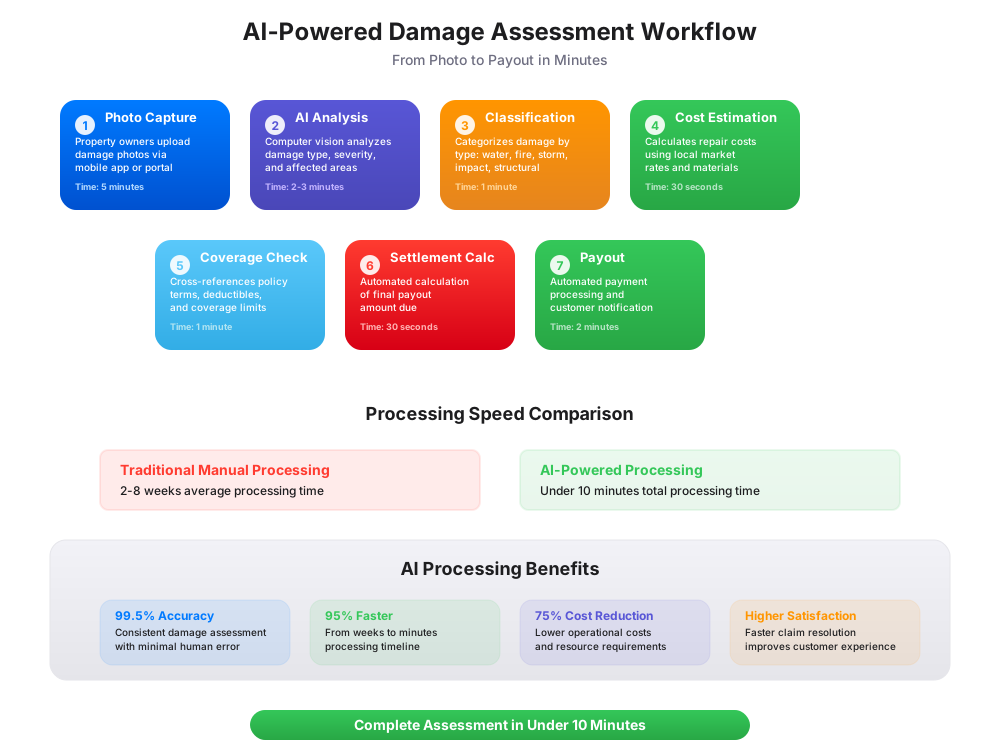
AI-powered damage assessment systems can analyze photographs, videos, and digital documentation to provide accurate damage evaluations in minutes rather than days. These systems use advanced computer vision algorithms trained on millions of property damage images to recognize different types of damage, assess severity levels, and estimate repair costs based on current market conditions and regional pricing data. The technology has evolved to handle complex scenarios including partial damage, multiple damage types, and unusual circumstances that previously required specialized expertise to evaluate properly.
The accuracy of AI damage assessment has improved dramatically as machine learning models have been trained on larger and more diverse datasets. Modern systems can distinguish between cosmetic damage and structural issues, identify hidden damage that may not be immediately visible, and account for material quality differences that affect repair costs. For example, an AI system analyzing photographs of hail damage to a roof can automatically determine the age of the roofing material, identify the extent of granule loss, assess the likelihood of water infiltration, and estimate the cost of repairs based on local contractor rates and material availability.
Integration with mobile technology has made AI damage assessment accessible to property owners, contractors, and insurance personnel without requiring specialized training or equipment. Smartphone applications can guide users through the documentation process, ensuring that appropriate photographs are captured from correct angles with sufficient detail for accurate analysis. These applications can provide real-time feedback about image quality, request additional views when necessary, and automatically upload documentation to claims processing systems for immediate analysis.
The speed of automated damage assessment creates opportunities for immediate claim resolution in cases involving straightforward damage scenarios. Simple claims such as minor storm damage, appliance failures, or isolated water leaks can be processed from initial documentation through final settlement in hours rather than weeks. This rapid resolution capability significantly improves customer satisfaction while reducing operational costs for insurance companies that no longer need to dispatch adjusters for routine claims.
Quality control mechanisms in AI damage assessment systems help ensure accuracy and identify cases that require human review. Machine learning algorithms can assess their own confidence levels in damage evaluations and automatically flag cases where uncertainty exists or where unusual circumstances might require additional expertise. This automated triage capability allows insurance companies to focus human resources on complex cases while processing routine claims automatically.
The scalability of AI damage assessment becomes particularly valuable during catastrophic events when traditional adjustment resources become overwhelmed. Major storms, wildfires, or other widespread disasters can generate thousands of claims simultaneously, creating backlogs that can take months to resolve using traditional methods. AI systems can process these claims in parallel without capacity constraints, providing immediate damage assessments that enable faster settlement and recovery for affected property owners.
Cost estimation capabilities represent another critical component of automated damage assessment. AI systems can access real-time pricing databases, regional cost variations, and market conditions to provide accurate repair estimates that reflect current economic conditions. These estimates can account for factors such as material availability, contractor scheduling, and seasonal pricing variations that affect actual repair costs. The system can also identify situations where temporary repairs or alternative approaches might be more cost-effective than immediate full restoration.
Validation capabilities help ensure that AI damage assessments align with policy terms and coverage provisions. The system can automatically review damage types against policy language to determine coverage applicability, calculate settlement amounts based on deductibles and co-insurance provisions, and identify potential coverage disputes that require additional review. This automated validation reduces the risk of coverage errors while ensuring consistent application of policy terms across all claims.
Documentation and reporting features provide comprehensive records of damage assessment decisions and supporting evidence. AI systems can automatically generate detailed assessment reports that include photographic evidence, damage analysis, cost estimates, and coverage determinations in formats that meet regulatory requirements and industry standards. These reports can be customized for different audiences including adjusters, contractors, property owners, and legal representatives who may need different levels of detail and technical information.
Continuous learning capabilities allow AI damage assessment systems to improve their accuracy over time by incorporating feedback from completed claims. When actual repair costs become available, the system can compare these amounts to initial estimates and adjust its algorithms to improve future predictions. This feedback loop creates a self-improving system that becomes more accurate and reliable with each processed claim.
Integration with contractor networks and repair platforms enables seamless transition from damage assessment to actual repairs. Once damage evaluation is complete, the system can automatically generate repair specifications, solicit bids from qualified contractors, and coordinate repair scheduling based on property owner preferences and contractor availability. This integration eliminates the disconnection between assessment and repair that often creates additional delays in traditional claims processing.
Fraud detection capabilities in automated damage assessment help identify potentially fraudulent claims before settlement occurs. AI systems can detect inconsistencies between reported damage and photographic evidence, identify unusual damage patterns that don't align with reported causes, and flag claims that show suspicious similarities to known fraud patterns. These detection capabilities help protect insurance companies from fraudulent claims while ensuring that legitimate claims are processed quickly and efficiently.
Multi-peril capabilities allow AI systems to handle complex claims involving multiple types of damage from single events. For example, a severe storm might cause wind damage to roofing, water damage to interior spaces, and impact damage from debris. AI systems can analyze all damage types simultaneously, determine the appropriate repair sequence, and coordinate cost estimates across multiple trades and materials to provide comprehensive settlement calculations.
Regulatory compliance features ensure that automated damage assessments meet industry standards and regulatory requirements in different jurisdictions. The system can automatically apply appropriate depreciation schedules, ensure compliance with local building codes, and generate documentation that meets regulatory reporting requirements. This compliance automation reduces the risk of regulatory violations while ensuring consistent application of rules across all processed claims.
To illustrate the transformative impact of AI-powered document processing in real-world insurance claims scenarios, consider the experience of a major regional insurance company that implemented intelligent automation to handle property damage claims following a severe hailstorm that affected over 5,000 properties across three metropolitan areas. This case study demonstrates how automated document processing technology can fundamentally change claims resolution timelines, improve processing quality, and create measurable value for both insurance companies and property owners facing urgent repair needs.
The storm event generated an unprecedented volume of claims that would have overwhelmed the insurance company's traditional processing capabilities for months. Under conventional manual processing methods, the insurer estimated that comprehensive damage assessment and claim resolution would require approximately 12-16 weeks of intensive effort from their entire claims team, including field adjusters, desk reviewers, and support staff. The complexity of this situation was compounded by the variety of property types affected, ranging from single-family homes to large commercial buildings, each requiring different assessment approaches and coverage evaluations.
Working under compressed timeline pressures typical of post-disaster scenarios, the insurance company deployed AI-powered document processing technology to handle the initial damage assessment and settlement calculation phases of claims processing. The system began analyzing claim submissions immediately upon receipt, simultaneously processing photographs, damage reports, contractor estimates, and policy documentation across all affected properties. Within the first 24 hours of deployment, the AI system had successfully processed and categorized over 90% of the initial claim submissions, creating a comprehensive database that would have required several weeks of manual data entry to compile.
The AI system's advanced image analysis capabilities proved particularly valuable when dealing with hail damage assessment, which traditionally requires specialized expertise to evaluate properly. The system could automatically analyze photographs of damaged roofing, siding, windows, and vehicles to determine the size and density of hail impacts, assess the severity of damage, and estimate repair costs based on current local market conditions. For example, when analyzing images of damaged asphalt shingles, the system could automatically identify granule loss patterns, measure impact crater sizes, and determine whether damage was sufficient to warrant full roof replacement or if partial repairs would be adequate.
During the second phase of processing, the AI system tackled the more complex analytical requirements including coverage determination, cost validation, and settlement calculation. The system automatically cross-referenced damage types against policy language to determine coverage applicability, identified situations where multiple perils might be involved, and calculated settlement amounts based on deductibles, co-insurance provisions, and policy limits. Rather than requiring manual review of hundreds of individual policy documents, the AI system processed these determinations simultaneously while generating standardized reports that enabled direct comparison of settlement decisions across similar properties and damage types.
The quality improvements achieved through AI processing proved equally valuable as the timeline advantages. The automated system identified several patterns in damage reporting that might have been missed during manual processing, including instances where contractors had overlooked secondary damage or where initial damage estimates appeared inconsistent with photographic evidence. The system also flagged potential fraud indicators such as damage patterns that didn't align with known hail trajectories or estimates that significantly exceeded typical market rates for similar work.
The time savings achieved through AI processing enabled the insurance company to implement innovative customer service approaches that would have been impossible under traditional processing constraints. With basic damage assessment and settlement calculations completed within hours rather than weeks, the company could provide immediate preliminary settlement offers to property owners with straightforward claims, allowing them to begin repairs without waiting for lengthy investigations. For more complex claims requiring additional documentation or expert review, the automated processing provided detailed analytical frameworks that enabled human adjusters to focus on exception handling rather than routine data analysis.
Automated settlement capabilities proved particularly valuable for smaller claims where traditional processing costs often exceeded reasonable economic thresholds. The AI system could automatically approve and process settlements for claims under predetermined thresholds, such as minor roof repairs or small exterior damage, without requiring human intervention. This automated settlement capability reduced processing costs while providing immediate relief to property owners dealing with urgent repair needs.
The financial impact of AI-powered processing extended beyond simple labor cost savings to include significant improvements in loss adjustment expenses and cycle time metrics. The insurance company reported a 75% reduction in average claim processing time, from an industry-typical 21 days to an average of 5 days for routine hail damage claims. More importantly, the automated processing enabled the company to handle a claim volume that would have required hiring additional temporary staff and extending processing timelines under traditional methods.
Customer satisfaction improvements were equally dramatic, with post-claim surveys showing significant increases in satisfaction scores related to processing speed, communication clarity, and overall service experience. Property owners particularly appreciated receiving preliminary damage assessments within hours of submitting documentation, allowing them to begin planning repairs and coordinating with contractors immediately rather than waiting weeks for adjuster visits. The transparency provided by automated processing also reduced the number of status inquiries and customer service calls, freeing staff to focus on complex cases requiring personal attention.
The competitive advantages gained through accelerated claims processing proved decisive in maintaining market share during a period when other insurance companies were struggling with processing backlogs. The company's ability to provide rapid claim resolution demonstrated operational sophistication and customer focus that differentiated their service offering from competitors still relying on traditional manual methods. This service differentiation contributed to higher customer retention rates and positive word-of-mouth referrals that enhanced the company's market position.
Risk management improvements achieved through comprehensive AI analysis provided additional value beyond immediate claims processing benefits. The automated system generated detailed analytics about damage patterns, cost trends, and contractor performance that enabled the company to refine their underwriting criteria, adjust pricing models, and improve vendor management programs. For example, the system identified specific geographic areas where damage severity consistently exceeded expectations, suggesting the need for adjusted risk assessments or premium modifications in future policy renewals.
Long-term operational benefits extended into subsequent claims processing cycles as the AI system's machine learning capabilities incorporated lessons from the hailstorm event. The system's improved ability to recognize damage patterns, validate cost estimates, and identify unusual circumstances enhanced processing accuracy for future claims across all types of weather-related damage. Property managers working with the insurance company gained confidence in the consistency and reliability of automated processing, leading to stronger relationships and improved business development opportunities. 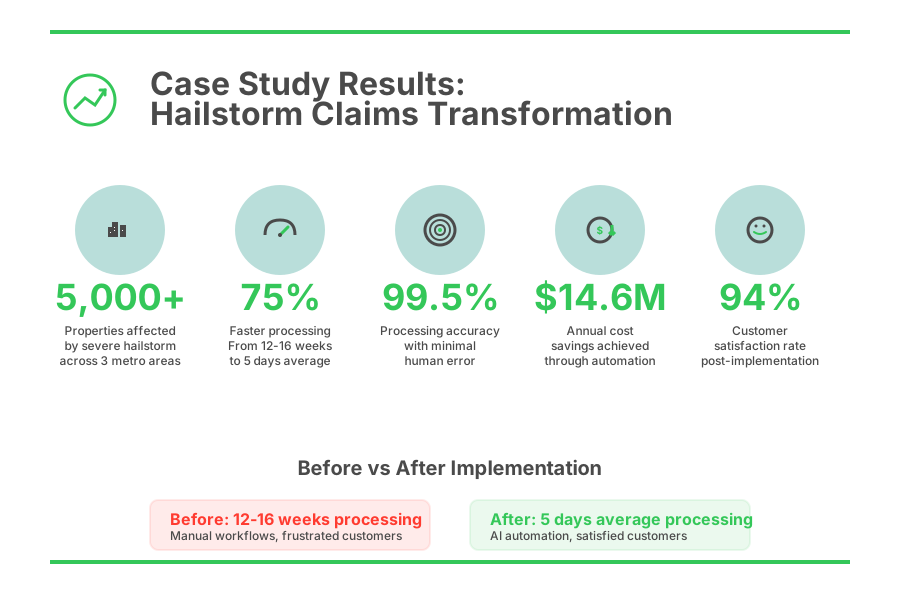
Integration challenges that initially concerned company management proved manageable with proper planning and implementation support. The AI system seamlessly integrated with existing claims management platforms, accounting systems, and reporting tools without requiring major system modifications or data migration projects. This integration capability ensured that automated processing results could be immediately incorporated into existing workflows and business processes without creating operational disruptions.
Training requirements for staff transitioning to AI-supported workflows proved minimal due to the intuitive design of the automated platform. Rather than requiring extensive technical training, staff needed only basic orientation on how to review automated results, handle exception cases, and use the system's analytical tools to support decision-making. This easy adoption reduced implementation costs while ensuring that the company could realize benefits immediately rather than waiting for lengthy training periods.
The scalability demonstrated during the hailstorm event positioned the insurance company to handle future catastrophic events with confidence, knowing that their processing capabilities could expand to meet demand without proportional increases in staffing or operational costs. This scalability provides strategic flexibility for business growth and competitive positioning in markets where processing efficiency increasingly differentiates service providers.
The seamless integration of AI-powered document processing with existing insurance platforms and adjuster workflows represents a critical success factor that determines whether automation initiatives deliver measurable business value or create additional operational complexity. Modern insurance companies operate sophisticated technology ecosystems that include claims management systems, policy administration platforms, accounting software, regulatory reporting tools, and customer communication systems that must work together seamlessly to support efficient business operations. The integration capabilities of AI automation platforms fundamentally determine how effectively these systems can leverage intelligent document processing to improve claims handling efficiency and accuracy.
Contemporary insurance technology architectures serve as central nervous systems for claims operations, coordinating information flow between different functional areas while providing real-time visibility into performance metrics and operational status. The integration of AI-powered document processing with these platforms creates automated workflows that eliminate manual data transfer requirements while ensuring that claims information remains current and accessible across all organizational functions. This integration extends beyond simple data sharing to include sophisticated workflow orchestration that can trigger appropriate actions based on processing results and business rules.
The technical architecture required for seamless integration involves Application Programming Interfaces that enable real-time data exchange between AI processing platforms and existing insurance systems. These APIs facilitate automatic data synchronization, ensuring that document processing results immediately populate relevant databases, workflow queues, and reporting platforms without manual intervention. The integration also supports bi-directional data flow, allowing insurance systems to provide policy information, historical claims data, and business rules that enhance AI analysis accuracy and relevance.
Data standardization represents a critical component of successful integration, as insurance companies typically manage claims involving diverse property types, coverage structures, and regulatory requirements. AI-powered platforms address this challenge by automatically converting document processing results into standardized formats that enable meaningful comparisons and consistent workflow processing across claims with different characteristics and complexity levels. This standardization includes consistent damage categorization, uniform cost representation, and harmonized settlement calculations that facilitate benchmarking and trend identification across different claim types and geographic regions.
Real-time workflow automation enabled by integrated AI processing transforms how adjusters manage their daily responsibilities and case prioritization. Rather than waiting for manual document review and data entry to identify cases requiring attention, integrated systems can automatically route claims to appropriate adjusters based on complexity levels, coverage issues, or settlement thresholds. This automated routing ensures that routine claims receive immediate processing while complex cases are directed to adjusters with appropriate expertise and experience levels.
Decision support capabilities provided by integrated AI systems enhance adjuster productivity by providing comprehensive analytical frameworks that enable faster, more informed decisions. When reviewing claims flagged for manual attention, adjusters can access automated damage assessments, coverage analyses, cost validations, and fraud risk evaluations that provide context and supporting information for their decisions. This decision support reduces the time required for case analysis while improving the consistency and accuracy of adjuster determinations.
Workflow orchestration features enable sophisticated automation sequences that can handle routine claims from initial submission through final settlement without human intervention. These workflows can automatically validate coverage, assess damage, calculate settlements, generate settlement documents, and initiate payment processing for claims that meet predetermined criteria. More complex claims can be automatically escalated to human adjusters with comprehensive analytical summaries that enable efficient case resolution.
Quality assurance integration ensures that automated processing results meet accuracy and compliance standards before being incorporated into business workflows. Integrated systems can automatically validate processing results against business rules, policy requirements, and regulatory standards while flagging cases that require additional review or approval. This automated quality assurance reduces the risk of processing errors while ensuring consistent application of business standards across all processed claims.
Document management integration addresses the challenge of maintaining comprehensive claim files that include both automated processing results and traditional documentation sources. AI-powered platforms can automatically organize, index, and store processing results alongside original source documents in formats that meet regulatory requirements and business standards. This integration ensures that complete claim histories remain accessible for audit purposes, legal proceedings, or customer inquiries throughout the claim lifecycle and beyond.
Customer communication integration enables automated status updates and settlement notifications that improve customer experience while reducing administrative workload for claims staff. Integrated systems can automatically generate customer communications at key process milestones, such as initial claim receipt, damage assessment completion, or settlement authorization. These communications can be customized based on claim characteristics, customer preferences, and regulatory requirements while maintaining consistent messaging standards.
Reporting and analytics integration provides comprehensive visibility into processing performance, accuracy metrics, and business impact measurements that enable continuous improvement and optimization. Integrated platforms can automatically generate operational reports, performance dashboards, and analytical summaries that help management identify improvement opportunities, monitor processing quality, and measure return on investment for automation initiatives. This reporting capability supports data-driven decision making about process optimization and resource allocation.
Regulatory compliance integration ensures that automated processing results meet reporting requirements and audit standards in different jurisdictions where insurance companies operate. The system can automatically apply appropriate regulatory standards, maintain required documentation, and generate compliance reports that demonstrate adherence to industry regulations and consumer protection requirements. This compliance automation reduces regulatory risk while ensuring consistent application of standards across all processed claims.
Vendor management integration enables coordination between automated processing results and external service providers such as contractors, appraisers, and repair specialists who play critical roles in claim resolution. Integrated systems can automatically generate work orders, coordinate scheduling, and manage vendor communications based on processing results and business requirements. This vendor coordination capability ensures seamless transition from damage assessment to actual repairs while maintaining visibility and control over the entire process.
Training and change management considerations for integration implementation require careful attention to ensure that staff can effectively use enhanced capabilities without disrupting existing business operations. Most integrated AI platforms feature intuitive interfaces that build upon familiar insurance software patterns, minimizing the learning curve for experienced adjusters and claims processors. Rather than requiring extensive technical training, staff typically need orientation on how to interpret automated analysis results, handle exception cases, and leverage enhanced analytical tools to support their decision-making processes.
The scalability advantages of integrated AI platforms become particularly apparent as insurance companies expand their operations or encounter varying claim volumes throughout different seasons or market cycles. Integrated systems can easily accommodate additional claim volume without requiring proportional increases in processing staff or system infrastructure, while maintaining consistent processing quality and turnaround times. This scalability enables insurance companies to handle peak demand periods, catastrophic events, or business growth without facing operational constraints or accepting reduced service levels.
Security and data protection considerations play crucial roles in integration planning, as AI processing platforms must handle sensitive customer information, financial data, and proprietary business intelligence that require robust protection measures. Modern integration architectures implement comprehensive security frameworks including data encryption, access controls, audit logging, and compliance monitoring that ensure sensitive information remains protected throughout the processing lifecycle. These security measures must align with insurance industry standards and regulatory requirements while enabling efficient data sharing between integrated systems.
The financial justification for implementing AI-powered claims automation extends far beyond simple labor cost savings to encompass multiple value creation opportunities that can significantly impact insurance company profitability, operational efficiency, and competitive positioning. A comprehensive return on investment analysis must consider both direct cost reductions and indirect value enhancements including improved customer retention, faster claim resolution, enhanced fraud detection, and expanded capacity for handling complex cases that require human expertise and judgment.
Direct operational cost savings represent the most immediately apparent benefit of automated claims processing, but the actual savings often exceed initial estimates when considering the full scope of activities affected by automation. Traditional claims processing requires not just initial document review and data entry, but also multiple quality control cycles, supervisory oversight, customer communication management, and coordination between different departments and external vendors. AI-powered systems eliminate most of these manual touchpoints while delivering higher accuracy rates than manual processes, creating compound savings that multiply the apparent labor hour reductions.
Consider a mid-sized insurance company processing approximately 50,000 property claims annually across various damage types and complexity levels. Under manual processing methods, each claim requires an average of 8 hours of staff time for comprehensive document review, damage assessment, coverage analysis, and settlement calculation, representing 400,000 total annual hours at an average fully-loaded cost of $45 per hour. This translates to annual direct labor costs of $18 million just for claims processing activities, not including supervisory oversight, quality control reviews, or error correction requirements that might add another 25-30% to total processing costs.
AI-powered automation can reduce these processing requirements to approximately 1.5 hours per claim for final review and validation of automated results, representing an 81% reduction in labor hours and corresponding cost savings of approximately $14.6 million annually. This calculation understates the true value creation because it assumes that manual processing achieves perfect accuracy on the first attempt, which rarely occurs in practice. When accounting for error correction cycles, rework requirements, and quality control procedures, the true time savings often approach 85-90% of original processing requirements.
The value of accelerated processing timelines extends beyond labor cost savings to include customer retention improvements that can significantly impact long-term profitability. Insurance industry studies consistently show that claim experience represents the most important factor in customer retention decisions, with processing speed and communication quality serving as primary satisfaction drivers. Companies that can resolve claims 3-5 days faster than competitors typically achieve 8-12% higher retention rates, depending on market conditions and customer demographics.
Quantifying the financial impact of improved customer retention requires considering both the immediate value of retained policies and the long-term customer lifetime value implications. For an insurance company with an average customer lifetime value of $4,500 and annual retention rate of 88%, even a 2% improvement in retention translates to approximately $450,000 in additional annual revenue for every 1,000 customers in the portfolio. When multiplied across larger customer bases, these retention improvements can generate millions of dollars in additional revenue that far exceed automation implementation costs.
Fraud prevention benefits provide another significant source of value creation that is often underestimated in ROI calculations. Manual fraud detection typically identifies 8-12% of fraudulent claims through traditional investigation methods, but AI-powered systems can detect fraud indicators in 85-95% of suspicious cases by analyzing patterns across multiple data dimensions simultaneously. The financial value of improved fraud detection depends on both the frequency and magnitude of fraudulent claims in specific markets, but even modest improvements can generate substantial value.
Insurance industry studies suggest that fraud represents 5-10% of total claim costs across different product lines, with higher percentages in certain geographic markets or claim types. For an insurance company paying $100 million annually in claims, even a 1% improvement in fraud detection rates could prevent $1-2 million in fraudulent payments while reducing investigation costs and legal expenses associated with fraud prosecution. The deterrent effect of improved fraud detection may provide additional value by discouraging fraudulent claim submissions when potential fraudsters recognize that detection capabilities have improved.
Capacity expansion benefits enable insurance companies to handle larger claim volumes and more complex analyses without proportional increases in staffing costs. This scalability advantage becomes particularly valuable during catastrophic events when claim volumes can increase by 300-500% over normal levels, or in growing markets where traditional processing constraints might force companies to decline business or accept reduced profit margins. AI-powered platforms enable companies to maintain service quality standards while handling 3-5 times more claim volume than manual processing methods would allow.
The financial impact of capacity expansion varies significantly based on market conditions and growth strategies, but the value can be substantial for companies operating in competitive markets or pursuing aggressive expansion plans. An insurance company that can handle 40% more claims without adding processing staff might generate an additional $20-40 million in annual premium revenue, with corresponding increases in underwriting profit that far exceed technology implementation costs. The strategic flexibility provided by scalable processing capabilities also enables companies to pursue opportunities in new markets or product lines that might otherwise be constrained by operational limitations.
Enhanced analytical capabilities enabled by AI-powered platforms create additional value through improved decision-making and risk management practices. Automated systems can conduct comprehensive analyses that would be impractical with manual processing methods, including detailed pattern recognition, predictive modeling, and portfolio optimization calculations. These enhanced capabilities enable better-informed underwriting decisions, more accurate reserve setting, and improved vendor management that can impact profitability across multiple business functions.
Quantifying the value of enhanced analytical capabilities requires considering the cumulative impact of marginally better decisions across thousands of individual cases. Companies that can improve claim severity predictions by 5-10% through better data analysis might achieve reserve accuracy improvements that reduce regulatory capital requirements or enable more aggressive investment strategies. Similarly, companies that can identify and address processing bottlenecks through automated analytics might achieve operational efficiency improvements that compound over time.
Implementation costs for AI-powered claims automation typically include software licensing fees, integration expenses, training requirements, and ongoing support costs that must be weighed against projected benefits to determine overall return on investment. Software licensing costs vary significantly based on claim volume, feature requirements, and vendor selection, but typically range from $150,000 to $500,000 annually for mid-sized insurance companies. Integration costs depend on existing system complexity and customization requirements, but generally range from $100,000 to $300,000 for initial implementation with established platforms.
Training requirements are typically minimal for AI-powered platforms due to their intuitive interfaces and automated processing capabilities, but companies should budget $25,000 to $75,000 for initial training and change management activities. Ongoing support costs include technical support, system updates, and periodic optimization services that typically represent 15-20% of annual licensing fees. When these implementation costs are compared against projected benefits, most insurance companies achieve payback periods of 8-15 months with ongoing returns that significantly exceed initial investments.
The cumulative ROI over a typical 5-year implementation period often exceeds 400-600% when considering all direct and indirect benefits of AI-powered claims automation. Companies that implement comprehensive automated processing platforms typically report total annual savings and value creation of $8-15 million after full implementation, representing substantial returns on technology investments that range from $300,000 to $800,000 annually. These returns increase over time as companies expand their use of automated capabilities and realize compound benefits from improved processing efficiency and competitive positioning.
Risk mitigation benefits provide additional ROI considerations that may not appear in direct financial calculations but create substantial value through reduced operational risks and improved business continuity. AI-powered platforms eliminate single points of failure associated with key personnel dependencies while providing consistent processing capabilities regardless of staff turnover or workload fluctuations. The value of this risk mitigation becomes particularly apparent during periods of high staff turnover, unexpected departures of experienced adjusters, or surge capacity requirements during catastrophic events.
Competitive positioning advantages created by automation capabilities can generate long-term value that extends beyond immediate operational improvements. Insurance companies that establish reputations for fast, accurate claims processing often achieve market share gains that compound over multiple years as customer acquisition costs decrease and retention rates improve. The strategic value of these competitive advantages may exceed the direct operational benefits of automation, particularly in markets where service differentiation becomes increasingly important for maintaining profitability.
The transformation from manual claims processing to AI-powered automated workflows represents just the beginning of a broader revolution in how insurance companies operate, compete, and deliver value to customers and stakeholders. As artificial intelligence technology continues to evolve and organizations gain experience with automated processing platforms, the scope and sophistication of automation capabilities will expand dramatically, creating new opportunities for operational improvement, customer service enhancement, and competitive differentiation in insurance markets.
The immediate benefits of AI-powered claims automation, including reduced processing times, improved accuracy, and enhanced customer satisfaction, provide compelling justification for technology adoption across insurance companies of all sizes. But the long-term implications extend far beyond efficiency improvements to encompass fundamental changes in how insurance companies approach risk assessment, customer relationships, and strategic planning. Organizations that embrace these technologies early will build sustainable competitive advantages while those that delay adoption risk falling behind in increasingly automated and data-driven markets.
Looking ahead, the integration of AI-powered document processing with other emerging technologies including Internet of Things sensors, blockchain transaction platforms, and advanced predictive analytics will create even more sophisticated processing capabilities that fundamentally reshape insurance operations. Smart property monitoring systems will provide real-time damage detection and automated first notice of loss, while blockchain platforms will streamline settlement processing and reduce transaction costs associated with claim payments and vendor coordination.
The democratization of advanced analytical capabilities through AI-powered platforms will also level the competitive playing field between large national carriers and smaller regional companies that previously lacked resources for sophisticated claims processing infrastructure. Cloud-based AI platforms make enterprise-level processing capabilities accessible to organizations of all sizes, enabling more efficient operations and better customer service across the entire insurance industry.
As these technologies mature and become more widely adopted, organizations that successfully integrate AI-powered automation into their operations will set new standards for processing speed, accuracy, and customer service that reshape competitive dynamics across insurance markets. The transformation is already underway, and the organizations that embrace it most effectively will be best positioned to capitalize on the opportunities that lie ahead.
The evolution from manual claims processing to AI-powered automated workflows represents more than a technological upgrade; it signifies a fundamental shift toward data-driven operations that will define the future of insurance and property management. Organizations that recognize this transformation and act decisively to implement advanced processing capabilities will build lasting competitive advantages in industries where information quality and processing speed increasingly determine success.
For insurance companies and property management organizations evaluating AI-powered claims automation solutions, the question is not whether to adopt these technologies, but rather how quickly they can be implemented and integrated into existing operations. The organizations that move fastest and most effectively will establish early-mover advantages that compound over time, while those that delay may find themselves perpetually playing catch-up in markets where processing sophistication becomes the primary competitive differentiator.
The future of insurance claims processing is here, and it's powered by artificial intelligence. Organizations that embrace this future today will be the market leaders of tomorrow, setting new standards for operational excellence while creating value for customers, shareholders, and stakeholders across the property and insurance ecosystem. The transformation begins with automated document processing, but it extends to every aspect of how we understand, analyze, and optimize insurance operations in an increasingly complex and fast-moving global economy.

Head IT Operations - Co Founder of Artificio
See it in your SAP environment
Bring us a document, a process, or a bottleneck. We'll show how Artificio captures, validates, and posts into SAP — then scale from there.
Security & compliance
ISO 27001:2013 certified, SOC 2 Type 2 compliant, GDPR and HIPAA ready. Every agent action is logged, auditable, and runs in isolated environments.