

Blog
AI Agents: Revolutionizing the 9-to-5 Workdays
Discover how AI agents are silently revolutionizing the workday, freeing professionals from tedious tasks & making work more human.

Blog
Discover how AI agents are silently revolutionizing the workday, freeing professionals from tedious tasks & making work more human.
An accounts payable manager at a mid-sized manufacturing company used to arrive at the office every morning with a knot in her stomach. She knew her day would begin the same way it had for the past five years: drowning in a sea of invoices, purchase orders, and approval requests. By 9 AM, her desk would be covered with papers requiring manual data entry. By noon, she'd be sending her third follow-up email to department heads about pending approvals. By 5 PM, she'd still be cross-referencing vendor information against purchase orders, often staying late to catch up on the work that actually mattered to the business.
Today, this same manager walks into her office with a completely different energy. She grabs her coffee, checks her dashboard, and sees that her AI agents have already processed 47 invoices overnight, routed 23 approval requests to the right managers, and flagged 3 discrepancies for her review. Instead of spending her morning buried in data entry, she's analyzing spending patterns, negotiating better terms with key vendors, and working on the strategic initiatives that actually drive business value. Her lunch break, which used to be a rushed 20-minute affair between document processing sessions, now stretches to a full hour where she can actually step away from her desk and recharge.
This transformation isn't unique. Across industries and job functions, professionals are discovering that AI agents aren't replacing them but liberating them from the mind-numbing tasks that have defined modern office work for decades. These invisible digital assistants are quietly revolutionizing the workplace, not by taking over jobs but by giving workers their humanity back.
The change is happening so gradually, so seamlessly, that many people don't immediately recognize the magnitude of what's occurring. It's a silent revolution because the technology works best when it's barely noticeable, handling the tedious background processes that used to consume hours of human attention. Workers aren't losing their jobs to robots in some dramatic sci-fi scenario. Instead, they're rediscovering what drew them to their professions in the first place, freed from the administrative burden that had slowly eroded their enthusiasm and effectiveness.
Think of AI agents as the ultimate backstage crew. While you're focused on the main performance of your job, they're handling all the technical details that make the show possible. Unlike human assistants who need training, breaks, and supervision, these digital workers operate continuously in the background, processing documents, extracting data, validating information, and routing tasks to the right people at the right time.
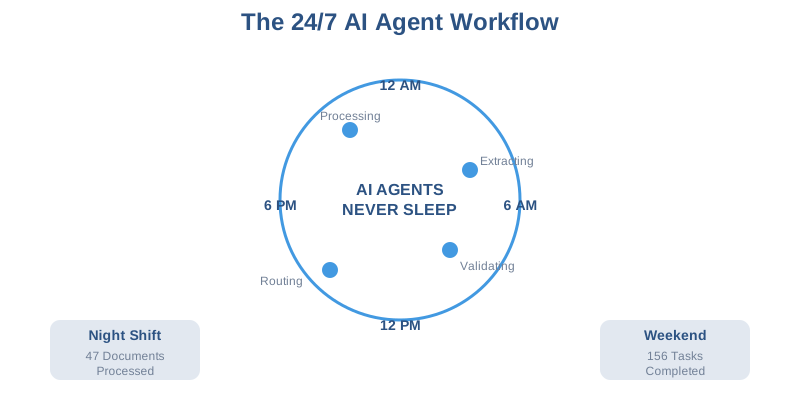
The beauty of this system lies in its invisibility. When AI agents are working properly, you barely notice them. Documents appear where they need to be, data gets extracted and organized automatically, and workflows move seamlessly from one stage to the next without manual intervention. It's like having a perfectly trained assistant who anticipates your needs and handles the tedious work while you focus on what humans do best: think strategically, build relationships, and solve complex problems.
The sophistication of modern AI agents goes far beyond simple automation. These systems can interpret context, understand variations in document formats, and make intelligent decisions about data classification and routing. They don't just follow rigid rules but adapt to the nuances of real-world business processes. When an invoice arrives in an unexpected format, the AI agent doesn't break down or require human intervention. It analyzes the document structure, extracts the relevant information, and processes it appropriately.
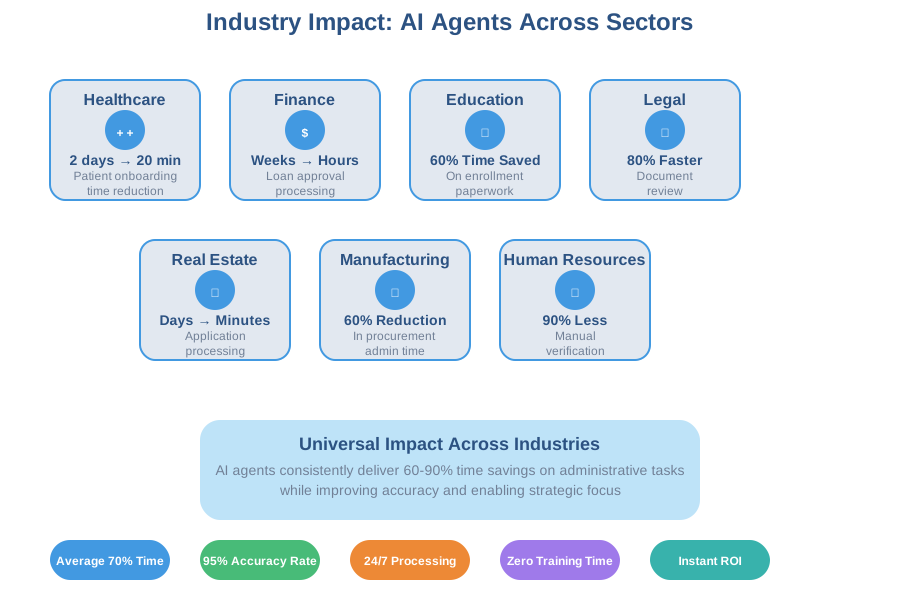
Consider how this plays out in real-world scenarios. A healthcare clinic that once required patients to fill out mountains of paperwork and wait days for processing now handles the entire onboarding experience in under 20 minutes. Medical assistants no longer spend hours manually entering insurance information and verifying coverage. Instead, AI agents capture patient data from uploaded documents, cross-reference insurance databases, and populate electronic health records automatically. The result? Medical staff can focus entirely on patient care rather than administrative busywork.
The transformation extends beyond simple data entry. AI agents can identify potential issues before they become problems, flagging inconsistencies in patient information or insurance coverage gaps that might cause delays later in the treatment process. They can automatically schedule follow-up appointments based on treatment protocols and send personalized reminder messages to patients. What used to require multiple phone calls, manual scheduling, and careful tracking now happens automatically in the background.
In the lending industry, the transformation is equally dramatic. Loan officers who previously spent weeks gathering documents, verifying income, and calculating risk scores now watch as AI agents perform these tasks in hours. The technology doesn't just speed up the process but actually improves accuracy by eliminating human transcription errors and ensuring consistent application of underwriting criteria. What used to be a stressful, paper-heavy process for both lenders and borrowers has become streamlined and efficient.
The AI agents handling loan processing can verify employment information, cross-reference credit reports, analyze bank statements for income patterns, and even assess the authenticity of submitted documents. They can identify potential red flags that human reviewers might miss and ensure that all regulatory requirements are met consistently. When exceptions arise, they route cases to the appropriate human experts with all relevant information already compiled and analyzed.
The most surprising aspect of AI agent adoption isn't the efficiency gains but the emotional and psychological impact on workers. When people are freed from repetitive, mind-numbing tasks, something remarkable happens. They rediscover what drew them to their profession in the first place. The HR manager who went into human resources to help people grow and develop can now spend time on mentoring and career development instead of processing paperwork. The financial analyst who loves uncovering insights can dive deep into data patterns instead of manually entering numbers into spreadsheets.
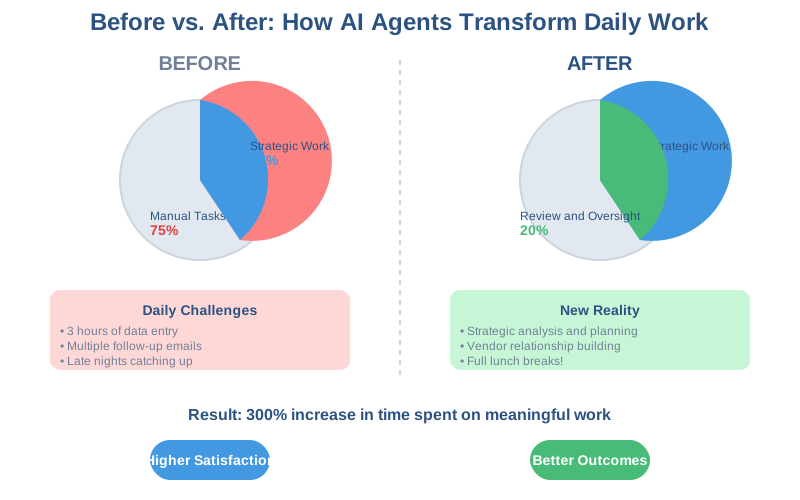
This shift has profound implications for job satisfaction and workplace stress. Research conducted across multiple industries shows that workers who use AI automation tools report significantly higher levels of engagement and lower burnout rates. They describe feeling more valued and intellectually challenged when their time is spent on work that requires human judgment, creativity, and interpersonal skills. The constant pressure of falling behind on administrative tasks diminishes, replaced by a sense of accomplishment from meaningful contributions.
The psychological benefits extend beyond individual satisfaction. When workers aren't consumed by routine tasks, they have mental bandwidth for innovation and creative problem-solving. Ideas that might have been pushed aside due to daily urgencies now get the attention they deserve. Teams report more robust brainstorming sessions because participants aren't mentally exhausted from processing minutiae. Strategic planning becomes more thoughtful because leaders have access to timely, accurate data without waiting for manual compilation.
The ripple effects extend beyond individual satisfaction. Teams become more collaborative when they're not bogged down by individual processing bottlenecks. Decision-making speeds up when data is readily available and properly formatted. Customer service improves when representatives have instant access to complete, accurate information rather than struggling to piece together details from multiple systems.
One manufacturing company discovered that their procurement team's morale improved dramatically after implementing AI agents for vendor management. Previously, team members spent 60% of their time on data entry and document verification. The work was necessary but mind-numbing, leading to high turnover and difficulty attracting skilled professionals. After automation, they could focus on supplier relationship building, market analysis, and strategic sourcing decisions. The result wasn't just operational efficiency but a team that felt energized about their work again.
The transformation affected not just what people did but how they felt about their professional identity. Instead of seeing themselves as data processors who occasionally got to do strategic work, they became strategic professionals who happened to work with data. This shift in self-perception had lasting effects on job satisfaction, career development, and retention.
The Unexpected Cascade Effects: When Time Multiplies
When organizations implement AI agents, they often focus on the direct time savings from automated document processing. A task that took three hours now takes fifteen minutes. An approval workflow that stretched over days now completes in hours. These immediate benefits are significant and easily measurable, but they represent only the beginning of the transformation.
The real magic happens in the cascade effects. When people reclaim hours from mundane tasks, those hours don't just disappear into thin air. They get reinvested in activities that generate exponential returns. A sales manager who no longer spends mornings processing contract paperwork can make additional client calls, leading to new deals. A project manager freed from status report compilation can spend time identifying and resolving bottlenecks before they become critical issues.
These secondary benefits often dwarf the initial time savings. Consider a legal firm that implemented AI agents for document review and case preparation. The immediate benefit was obvious: paralegals could review contracts in minutes rather than hours, and junior associates could prepare case briefs much more quickly. But the unexpected benefit was that senior attorneys, no longer needed for routine document oversight, could take on more complex cases and provide deeper strategic counsel to clients. The firm's revenue per attorney increased by 40% within six months, far exceeding the cost savings from automation.
The cascade effects also transform organizational agility. When routine processes run smoothly in the background, teams can respond more quickly to unexpected opportunities or challenges. A marketing team that previously spent days compiling campaign performance reports can now pivot strategies in real-time based on continuously updated analytics. A finance team freed from manual month-end closing processes can provide strategic analysis during budget planning cycles.
These improvements compound over time. As AI agents learn and improve, they handle increasingly sophisticated tasks, freeing up even more human capacity for high-value work. Organizations that embrace this transformation early find themselves with significant competitive advantages as their workforce becomes more strategic, innovative, and responsive.
The transformation happening across industries tells a consistent story: AI agents don't replace human judgment but amplify human capabilities. Each sector faces unique challenges, but the underlying pattern remains the same - technology handles the routine while humans focus on the exceptional.
In education, administrators who once spent entire days processing enrollment paperwork now use that time for student engagement and program development. A registrar at a mid-sized university described her experience: "I used to dread the start of each semester because I knew I'd be buried in transcript requests, grade transfers, and compliance reporting for weeks. Now the AI agents handle all the standard processing, and I can focus on helping students navigate complex academic situations that require human judgment and empathy."
The technology handles document verification, grade transfers, and compliance reporting while educators focus on what matters most - teaching and learning. But the benefits extend beyond time savings. AI agents can identify students at risk of academic difficulty by analyzing patterns in course selections, grade trends, and engagement metrics. They can automatically connect students with appropriate support resources and flag cases that need personal attention from academic advisors.
A real estate management company provides another compelling example of sector-specific transformation. Property managers traditionally juggled dozens of tasks: lease agreements, tenant applications, maintenance requests, and regulatory compliance. Each required manual document handling, data entry, and follow-up communications. The workload was overwhelming, leading to delayed responses and frustrated tenants.
After implementing AI agents, the same property managers can handle portfolios twice as large while providing better service. The technology processes rental applications in minutes rather than days, automatically verifying tenant information against credit databases and employment records. It generates lease documents with appropriate terms and conditions, routes maintenance requests to qualified contractors based on availability and specialization, and tracks compliance with local regulations automatically.
One property manager explained the transformation: "I used to spend my days chasing paperwork and playing phone tag with contractors. Now I spend time building relationships with tenants, identifying properties for improvement, and working with owners on investment strategies. The administrative work still gets done, but it doesn't consume my day anymore."
The legal industry, long resistant to technological change, is experiencing similar transformations. Law firms use AI agents to process discovery documents, extract relevant information from contracts, and prepare initial case summaries. The technology doesn't replace legal analysis but provides a foundation that allows attorneys to focus on higher-level strategy and advocacy.
A partner at a commercial litigation firm described the impact: "Discovery used to consume months of paralegal and associate time. Now AI agents can review thousands of documents overnight, flagging relevant passages and organizing information by topic. Our legal team can focus on building arguments and developing case strategy instead of hunting through paperwork for key facts."
The transformation extends to client service as well. AI agents can automatically generate case status updates, compile billing summaries, and prepare client communications based on recent case developments. Clients receive more frequent, detailed updates without requiring additional attorney time, improving satisfaction while maintaining profitability.
Healthcare represents one of the most compelling examples of AI agent transformation because the stakes are so high and the administrative burden so overwhelming. Medical professionals enter the field to heal and help people, but many find themselves spending more time on paperwork than patient care. AI agents are beginning to restore the balance, handling administrative complexity while preserving the human elements that define quality healthcare.
A family practice clinic that implemented comprehensive AI agent solutions saw immediate improvements in both efficiency and patient satisfaction. The technology handles insurance verification, prior authorization requests, prescription refill processing, and appointment scheduling. Nurses who previously spent hours on phone calls with insurance companies now use that time for patient education and care coordination.
The impact on patient experience is equally significant. Instead of waiting days for insurance verification or prescription approvals, patients receive answers within hours. AI agents can identify potential drug interactions, verify coverage for recommended treatments, and even suggest alternative therapies when insurance limitations apply. The technology ensures that patients receive appropriate care while minimizing administrative delays.
More sophisticated applications are emerging as healthcare organizations become comfortable with the technology. AI agents can analyze patient symptoms and medical history to suggest diagnostic tests, review lab results for abnormal patterns, and identify patients who might benefit from preventive interventions. They don't replace medical judgment but provide comprehensive information that helps physicians make better decisions more quickly.
A cardiologist at a large medical center described how AI agents transformed his practice: "I can now spend consultation time actually talking with patients instead of hunting through their medical records or waiting for test results to be compiled. The AI agent presents me with a complete picture of the patient's condition, relevant history, and treatment options before I walk into the room. It's like having a research assistant who never sleeps and never misses important details."
The technology also improves care coordination across multiple providers. AI agents can automatically share relevant patient information with specialists, ensure that all providers have access to current test results and treatment plans, and identify potential conflicts between different medical interventions. Patients benefit from more coordinated care while providers can focus on their areas of expertise.
The financial services industry presents unique challenges for AI agent implementation because of strict regulatory requirements and the need for absolute accuracy in monetary transactions. However, these same characteristics make the industry an ideal candidate for automation, as AI agents can ensure consistent compliance while eliminating the human errors that create regulatory risks.
Mortgage lending provides a perfect example of transformation potential. The traditional mortgage process involves dozens of documents, multiple verification steps, and coordination between borrowers, lenders, real estate agents, and various service providers. Each step requires careful review and approval, creating bottlenecks that frustrate all parties involved.
AI agents can streamline every aspect of the mortgage process while maintaining the security and verification standards required by regulators. They can automatically verify employment and income information, analyze bank statements for spending patterns and debt obligations, review property appraisals for accuracy and completeness, and ensure that all documentation meets regulatory requirements.
A mortgage broker described the transformation: "The traditional process was painful for everyone involved. Borrowers would submit documents multiple times because of formatting issues or missing information. Underwriters would spend days reviewing files that could be processed in hours. Now AI agents handle the initial review and verification, flagging only genuine issues that require human judgment. Borrowers get faster approvals, and our team can focus on helping people navigate complex financial situations."
The technology also improves risk assessment by analyzing patterns that human reviewers might miss. AI agents can identify subtle inconsistencies in financial documents, assess the stability of employment and income sources, and evaluate the long-term sustainability of proposed mortgage payments. They don't replace underwriter judgment but provide comprehensive analysis that supports better decision-making.
Investment management is another area where AI agents are creating significant value. Portfolio managers who previously spent hours collecting and analyzing market data can now focus on strategy development and client relationships. AI agents continuously monitor market conditions, analyze portfolio performance, and identify potential opportunities or risks that warrant attention.
The technology can automatically generate client reports, prepare compliance documentation, and even execute routine trades based on predetermined criteria. Clients receive more frequent updates and better service while investment professionals can manage larger portfolios without sacrificing attention to individual client needs.
Manufacturing has always been at the forefront of automation, but AI agents represent a new evolution that extends beyond the factory floor to the administrative and management functions that support production. While robotic automation transformed manufacturing processes decades ago, AI agents are now revolutionizing the paperwork and coordination activities that consume significant management time.
Supply chain management provides an excellent example of AI agent potential in manufacturing. Traditional procurement involves vendor research, quote requests, contract negotiation, order processing, delivery tracking, and invoice reconciliation. Each step requires human coordination and creates opportunities for delays or errors.
AI agents can handle most routine procurement activities automatically while escalating complex situations to human managers. They can identify qualified vendors for specific requirements, request and compare quotes based on predetermined criteria, generate purchase orders when approvals are obtained, track deliveries against schedules, and process invoices when goods are received.
A procurement manager at an automotive parts manufacturer explained the impact: "I used to spend 70% of my time on routine purchase orders and vendor communications. Now I focus on strategic supplier relationships, market analysis, and cost reduction initiatives. The AI agents handle all the standard transactions, and I only get involved when there are exceptions or opportunities for improvement."
The technology also improves supply chain visibility and risk management. AI agents can monitor supplier performance, identify potential disruptions before they affect production, and suggest alternative sources when primary vendors experience problems. They provide early warning systems that help manufacturers avoid costly production delays.
Quality management is another area where AI agents create significant value. Traditional quality processes involve extensive documentation, inspection reports, and compliance tracking. AI agents can automatically compile quality data from multiple sources, identify trends that might indicate potential problems, and generate compliance reports for regulatory agencies.
The technology doesn't replace quality inspectors or engineers but provides them with better information for decision-making. AI agents can correlate quality metrics with production variables, supplier performance, and environmental conditions to identify root causes of quality issues. This analysis helps manufacturers implement more effective corrective actions and prevent future problems.
Government agencies face unique challenges in implementing new technologies because of strict procurement requirements, security concerns, and the need to serve diverse populations with varying technological capabilities. However, AI agents offer particular value in government settings because they can improve service delivery while ensuring consistent application of policies and procedures.
Permit processing provides an excellent example of AI agent potential in government. Traditional permit applications involve multiple forms, supporting documentation, review by various departments, and coordination between applicants and government staff. The process is often slow and frustrating for citizens while consuming significant staff time.
AI agents can streamline permit processing while maintaining all necessary reviews and approvals. They can automatically check applications for completeness, verify that proposed projects meet zoning and building code requirements, coordinate reviews between different departments, and generate approval documents when all criteria are satisfied.
A city planning director described the transformation: "Permit processing used to be our biggest source of citizen complaints because of delays and inconsistent requirements. Now AI agents ensure that every application gets the same thorough review in a fraction of the time. Citizens get faster service, and our staff can focus on complex cases that require professional judgment."
The technology also improves consistency in government decision-making. AI agents apply policies and procedures uniformly, reducing the risk of discrimination or favoritism. They maintain detailed records of all decisions and can provide clear explanations of how conclusions were reached.
Social services represent another area where AI agents can improve government efficiency while enhancing citizen service. Benefit eligibility determination typically involves reviewing multiple forms of documentation, verifying income and asset information, and coordinating with other agencies. AI agents can handle routine eligibility assessments while ensuring that all applicable benefits are identified and processed.
The technology can also improve fraud detection by identifying inconsistencies in applications or unusual patterns that warrant further investigation. This protects program integrity while ensuring that legitimate beneficiaries receive appropriate assistance.
When workers reclaim hours from mundane tasks, the benefits cascade throughout organizations in unexpected ways. Innovation increases because people have mental bandwidth for creative thinking. Customer relationships improve because team members can invest time in understanding client needs rather than processing paperwork. Strategic planning becomes more thoughtful because leaders have access to timely, accurate data without waiting for manual compilation.
The psychological impact runs deeper than simple time savings. Workers describe feeling more professional and respected when their days involve strategic thinking rather than data entry. This shift affects recruitment and retention, as positions become more attractive to talented candidates seeking meaningful work. Companies report reduced turnover in roles that previously suffered from high burnout rates.
The change also affects work-life balance in profound ways. When people can accomplish their core responsibilities more efficiently, they leave the office on time more often. The stress of incomplete tasks diminishes when AI agents handle routine processing outside business hours. Weekend work becomes the exception rather than the rule for many professionals who previously struggled to keep up with administrative demands.
Organizations also discover that AI agents improve decision-making quality in addition to speed. When data is processed consistently and accurately, managers can make better informed decisions more quickly. Financial reports are available when needed rather than delayed by manual compilation. Performance metrics are current and comprehensive rather than outdated snapshots.
The competitive advantages compound over time. Organizations that embrace AI agents early find themselves able to respond more quickly to market opportunities, provide better customer service, and attract top talent who want to work for innovative companies. These advantages become self-reinforcing as success enables further investment in technology and talent.
Despite the clear benefits of AI agents, many organizations hesitate to implement these technologies because of concerns about cost, complexity, or change management. These concerns are understandable but often based on outdated assumptions about artificial intelligence and automation.
Modern AI agent platforms are designed for business users rather than technical specialists. Implementation typically involves configuring workflows and training the system on existing documents rather than complex programming or system integration. Many solutions can be deployed in weeks rather than months and provide immediate value while expanding capabilities over time.
Cost concerns often reflect misunderstanding about AI agent economics. While enterprise AI solutions require significant investment, the return on investment typically occurs within months through reduced labor costs and improved efficiency. More importantly, the competitive advantages from faster decision-making and better customer service often exceed the direct cost savings.
Change management represents the most significant challenge for many organizations because workers may fear job displacement or struggle to adapt to new workflows. However, experience shows that AI agents actually improve job satisfaction by eliminating tedious tasks and enabling more meaningful work. Success requires clear communication about the technology's purpose and comprehensive training on new processes.
Organizations that succeed with AI agent implementation typically start with specific use cases that provide clear value and gradually expand to more complex applications. They invest in training and change management to ensure that workers understand how the technology enhances rather than threatens their roles. They also maintain focus on improving customer service and business outcomes rather than simply reducing costs.
Imagine arriving at work in a world where AI agents have become seamlessly integrated into every business process. Your morning coffee ritual includes reviewing what your digital assistants accomplished overnight: contracts processed, data validated, reports generated, and priorities organized for your attention. Instead of dreading the day's administrative burden, you anticipate tackling the strategic challenges that require your unique human skills.
Your calendar shows meaningful meetings: brainstorming sessions, client consultations, team development conversations. The documents you need are prepared and waiting, data is current and accurate, and follow-up tasks are already scheduled. When urgent requests arise, AI agents handle the immediate processing while you focus on the human elements - understanding context, making judgment calls, and maintaining relationships.
The workday flows smoothly because routine processes happen automatically in the background. Email responses are drafted for your review when appropriate, meeting summaries are generated and distributed, and action items are tracked and followed up without manual intervention. You spend time on work that engages your creativity, analytical skills, and interpersonal abilities.
Customer interactions improve because you have complete, current information at your fingertips. Client questions receive faster, more accurate responses because AI agents provide relevant background and suggest appropriate solutions. Follow-up activities happen automatically, ensuring that commitments are met and relationships are maintained.
This isn't science fiction but the reality already emerging in forward-thinking organizations. The technology exists today to eliminate the majority of manual document processing, data entry, and routine administrative tasks that consume professional time. The question isn't whether this transformation will happen but how quickly organizations will embrace it and what they'll do with the human potential it unleashes.
The silent revolution is already underway. AI agents are working behind the scenes in thousands of companies, quietly handling the tedious tasks that have defined office work for generations. Workers are rediscovering what it means to have a fulfilling professional life where their time is spent on work that matters. And lunch breaks? They're finally long enough to actually enjoy.
The transformation isn't dramatic or disruptive in the way many predicted. There are no robot overlords or massive job displacement. Instead, there's a gradual but profound shift toward more human-centered work where technology handles the routine while people focus on strategy, creativity, and relationship building.
Organizations that embrace this change early will find themselves with significant competitive advantages. Their workers will be more engaged and productive, their customers will receive better service, and their decision-making will be faster and more informed. The silent revolution rewards those who recognize that the best technology doesn't replace humans but amplifies their capabilities.
The future of work isn't about humans versus machines but about humans empowered by intelligent automation to do what they do best: think, create, connect, and solve problems that matter. The revolution is silent because the best technology feels invisible - it simply makes everything work better while giving people back the time and energy to be human.
As we move forward, the organizations and individuals who thrive will be those who understand that AI agents aren't a threat to human work but a liberation from the mundane tasks that have obscured the real value humans bring to their professions. The silent revolution continues, one automated process at a time, restoring the human element to work and giving people back their professional lives.

Head IT Operations - Co Founder of Artificio
See it in your SAP environment
Bring us a document, a process, or a bottleneck. We'll show how Artificio captures, validates, and posts into SAP — then scale from there.
Security & compliance
ISO 27001:2013 certified, SOC 2 Type 2 compliant, GDPR and HIPAA ready. Every agent action is logged, auditable, and runs in isolated environments.