

Blog
WhatsApp Automation: Streamlining Document Approvals
Streamline document approvals with WhatsApp automation. Reduce approval times, errors, & boost compliance. Learn how it transforms workflows.

Blog
Streamline document approvals with WhatsApp automation. Reduce approval times, errors, & boost compliance. Learn how it transforms workflows.
Picture this: A potential customer uploads their bank statement at 2 PM. By 2:03, the data is extracted, validated, and sitting in your system. But the final approval? It's buried somewhere in a WhatsApp group chat with seventeen other messages about lunch plans and birthday wishes. Three hours later, your credit manager finally sees it and types back "Approved."
By then, your customer has moved on to your competitor.
At Artificio, we see this story play out hundreds of times across Indian businesses. And we think it's completely avoidable.
Walk into any growing business in India and you'll find the same pattern. Whether it's a fintech processing KYC documents, a logistics company verifying vendor credentials, or a manufacturing unit approving purchase orders, the workflow looks remarkably similar.
Documents come in. Data gets extracted (sometimes manually, sometimes through basic OCR). Rules get applied. And then comes the bottleneck: human approval.
This final step often happens on WhatsApp. Not because it's the best tool for the job, but because it's where people actually live. Your credit manager isn't refreshing a dashboard every five minutes. Your operations head isn't checking emails obsessively. But they're definitely on WhatsApp.
The problem isn't that people use WhatsApp for business. The problem is how they use it.
Let's trace through what typically happens when a document needs approval via WhatsApp:
Step 1: The Screenshot Dance Someone takes a screenshot of the extracted data or the original document. They paste it into a WhatsApp group with a message like "Please approve - urgent." No context. No reference number. No clear action required.
Step 2: The Chaos of Group Chats The message gets lost among discussions about office supplies, meeting schedules, and weekend plans. Important approvals sit between "Can someone get more tea?" and "Happy birthday Priya!"
Step 3: The Context Hunt Hours later, the approver sees the message but has no idea what they're looking at. They have to hunt through previous messages, call someone for context, or make a decision based on incomplete information.
Step 4: The Informal Response The approval comes back as "OK" or "Fine" or "👍". No timestamp in your system. No audit trail. No structured data that can feed back into your workflow.
Step 5: The Manual Update Someone has to manually update the system based on the WhatsApp response. More delay. More room for error. More frustration.
This isn't just inefficient. It's actively harmful to business growth.
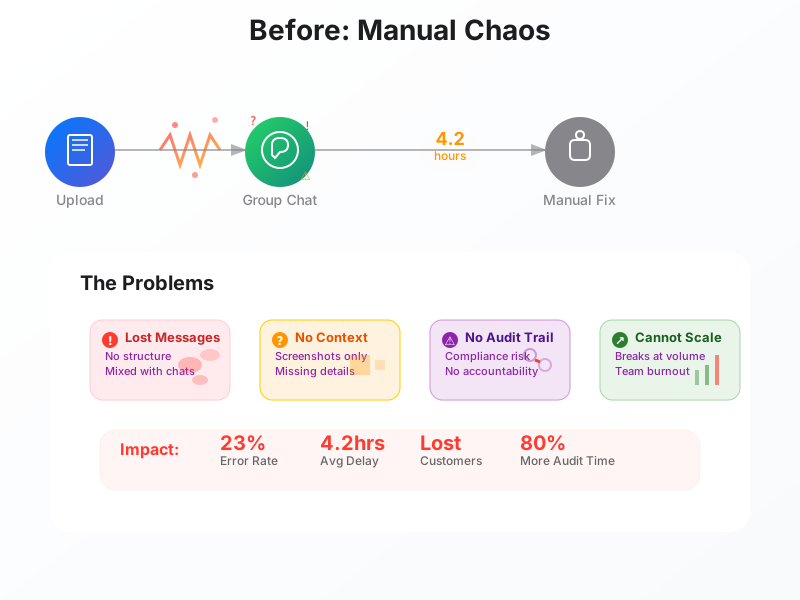
When we analyzed approval workflows across our client base, the numbers were staggering:
Time Costs: The average document approval took 4.2 hours when routed through traditional WhatsApp workflows. Not because the decision itself was complex, but because of the friction in communication.
Error Costs: 23% of approvals contained errors or required clarification because the approver lacked sufficient context. This led to rework, delays, and occasionally, wrong decisions.
Compliance Costs: During audits, companies struggled to provide clear approval trails. WhatsApp messages don't map neatly to compliance requirements, especially in regulated industries.
Opportunity Costs: Fast-growing companies reported losing customers during peak periods simply because approvals couldn't keep up with demand.
But the biggest cost was cultural. Teams started avoiding formal approval processes altogether, creating shadow workflows that bypassed necessary checks. The cure became worse than the disease.
Before we dive into solutions, let's acknowledge reality: WhatsApp is here to stay in Indian business communication.
This isn't a failure of digital adoption. It's a recognition of human behavior. WhatsApp works because it removes friction from communication. It's immediate, informal, and ubiquitous. Your credit manager can approve a loan while commuting on the local train. Your operations head can clear a vendor while attending their child's school function.
Email feels formal and slow. Dedicated approval dashboards feel like work that can be postponed. WhatsApp feels like action that needs to happen now.
The solution isn't to fight this behavior. It's to structure it.
WhatsApp's dominance in Indian business communication isn't accidental. It perfectly fits several cultural and practical realities:
Mobile-First Reality: Most business decisions in India are made on mobile phones. WhatsApp's mobile interface is far superior to most business software interfaces designed for desktop use.
Hierarchical Communication: Indian business culture often involves multiple levels of approval. WhatsApp groups naturally accommodate this hierarchy while maintaining the informal tone that makes communication comfortable.
Time Zone Flexibility: With global businesses and 24/7 operations, approvers might be in different time zones or working odd hours. WhatsApp's asynchronous nature accommodates this flexibility.
Digital Divide Bridge: WhatsApp works across smartphones of all price ranges and network conditions. It doesn't require high-end devices or stable broadband connections.
Trust Through Familiarity: People trust communication channels they use personally. WhatsApp feels safe and familiar in ways that enterprise software often doesn't.
The challenge isn't replacing WhatsApp. It's making WhatsApp work better for business processes.
At Artificio, we took a different approach. Instead of trying to move approvals out of WhatsApp, we decided to make WhatsApp approvals smarter, faster, and more structured.
Our WhatsApp approval automation sits between your document processing system and your approvers. It maintains the familiarity and speed of WhatsApp while adding the structure and auditability that businesses need.
Here's how the transformation works:
Step 1: Intelligent Document Processing When a document is uploaded to your system, our AI immediately gets to work. It extracts all relevant data points, validates them against your business rules, and formats everything into a clear, actionable summary.
For a loan application, this might include:
Step 2: Automated Risk Assessment Before any human sees the case, our system runs it through your predefined rules engine. Simple cases that clearly meet or clearly violate your criteria can be auto-approved or auto-rejected without human intervention.
This ensures that human approvers only see cases that actually require human judgment. No more rubber-stamping obvious approvals or rejecting clear violations.
Step 3: Structured WhatsApp Message For cases requiring human approval, the system automatically generates a structured WhatsApp message to the appropriate approver. This isn't a screenshot or a casual text. It's a formatted message that includes:
Example message:
🔔 LOAN APPROVAL REQUIRED
Ref: LA2024-0342
Applicant: Rajesh Kumar
Amount: ₹5,50,000
Salary: ₹85,000/month
Credit Score: 742
Recommendation: APPROVE (meets all criteria)
Reply: A for Approve, R for Reject, M for More Info
Deadline: 2 hours
Step 4: Structured Response Capture When the approver responds, the system immediately captures and processes their decision. A simple "A" updates the loan status to approved, triggers the next step in the workflow, and creates a complete audit trail.
No manual data entry. No risk of messages getting lost. No ambiguity about decisions.
Step 5: Intelligent Follow-up If a decision isn't received within the specified timeframe, the system can automatically escalate to backup approvers, send reminders, or flag the case for urgent attention. 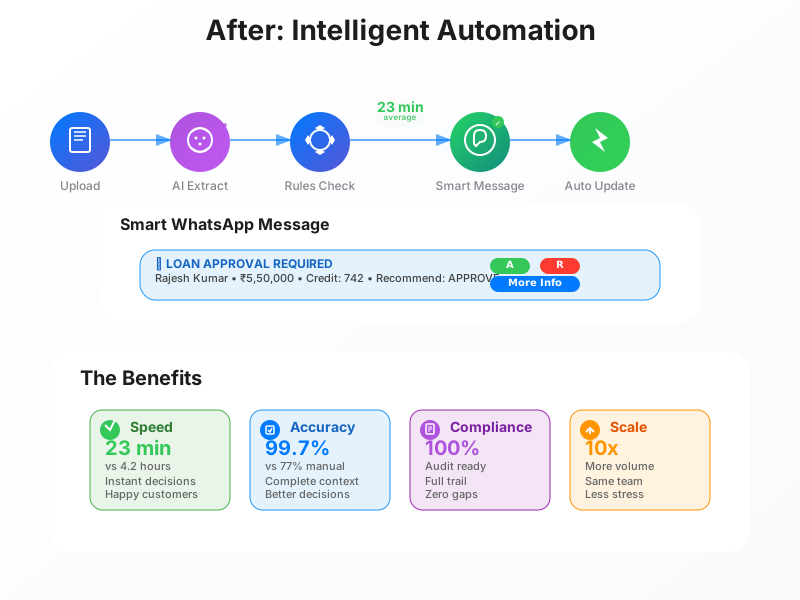
Building reliable WhatsApp automation for business-critical approvals requires more than just connecting to WhatsApp's API. It requires thoughtful architecture that handles edge cases, ensures message delivery, and maintains security standards.
Message Delivery Guarantee: Our system uses multiple delivery confirmation mechanisms to ensure critical approval requests never get lost. If a primary WhatsApp number is unavailable, messages automatically route to backup numbers or alternative channels.
Security Layer: All approval messages include encrypted case identifiers that prevent unauthorized access even if someone gains access to approval messages. The actual sensitive data remains in your secure systems.
Response Parsing Intelligence: The system understands natural language responses, not just coded replies. "Yes, approved" and "A" and "👍" all register as approvals, while "Need more info about guarantor" triggers appropriate follow-up workflows.
Integration Framework: The automation layer connects to your existing document management systems, CRM platforms, and business process management tools through secure APIs. No data silos, no manual synchronization.
Audit Trail Generation: Every message, response, and action gets logged with timestamps, approver identification, and full context. This creates compliance-ready audit trails without additional overhead.
The difference between theory and practice is often dramatic. Let's look at how WhatsApp approval automation has transformed document workflows for some of our clients.
The Challenge: A growing micro-finance company was processing 500 loan applications per day, each requiring manual approval from regional managers scattered across different cities. The approval process was taking 6-8 hours per application, creating customer dissatisfaction and operational bottlenecks.
The Solution: We implemented WhatsApp approval automation that could route applications to the appropriate regional manager based on location and loan amount. Each manager received structured approval requests with all relevant information pre-formatted.
The Results:
The Human Element: Regional managers initially worried that automation would make their jobs impersonal. Instead, they found they could focus on complex cases that truly required their expertise, while routine approvals happened seamlessly in the background.
The Challenge: A mid-size manufacturing company needed to onboard 50-100 new vendors monthly. Each vendor required document verification, credit checks, and approval from multiple stakeholders including procurement, finance, and operations teams.
The Traditional Process: Documents were collected manually, verified through phone calls and emails, and approval happened through a combination of email chains and WhatsApp messages. The entire process took 2-3 weeks per vendor.
The Automated Solution: We created a comprehensive vendor onboarding workflow that extracted data from vendor documents, ran automated checks against government databases, and routed approvals to the right stakeholders in the right sequence.
The Transformation:
The Unexpected Benefit: The system's transparency improved vendor relationships. Vendors could see exactly where their application stood in the approval process, reducing anxiety and phone calls to the procurement team.
The Challenge: A large educational institution needed to verify documents for 5,000+ student admissions during peak season. The verification process involved checking academic records, identity documents, and fee payment confirmations across multiple departments.
The Manual Nightmare: During admission season, staff worked 12-hour days manually checking documents, cross-referencing databases, and coordinating approvals between academic and administrative departments. Errors were common, and students often waited weeks for confirmation.
The Automated Approach: We implemented a system that could automatically extract data from student documents, verify them against educational board databases, and route approvals based on complex criteria including course eligibility, reservation categories, and fee payment status.
The Results:
The Human Impact: Staff members went from being overwhelmed and error-prone during admission season to being able to focus on helping students with complex cases and providing better customer service.
Creating WhatsApp automation that businesses can depend on requires more than just connecting to messaging APIs. It requires a comprehensive technology stack designed for reliability, security, and scalability.
AI-Powered Data Extraction: Our system uses advanced OCR combined with machine learning models trained specifically on Indian documents. Whether it's a handwritten form from a rural bank or a digitally generated statement from a fintech app, the system can extract relevant data with high accuracy.
Format Agnostic Processing: The system handles PDFs, images, scanned documents, and even smartphone photos. It automatically adjusts for lighting conditions, rotation, and image quality to maximize extraction accuracy.
Contextual Validation: Beyond just extracting text, the system understands document context. It knows that the number in the top-right corner of a cheque is likely the cheque number, not the account number, even if both are six-digit numbers.
Multi-Language Support: With business documents often containing multiple languages (English headers with Hindi details, for example), our processing engine handles code-switching seamlessly.
Flexible Rule Configuration: Business rules can be configured without programming knowledge. Simple if-then logic for basic cases, complex decision trees for sophisticated approval workflows.
Dynamic Rule Updates: Rules can be updated in real-time without system downtime. This is crucial for businesses that need to adjust approval criteria based on market conditions or regulatory changes.
Exception Handling: The system gracefully handles edge cases and exceptions, routing them to human approvers with clear explanations of why automated processing couldn't handle the case.
Machine Learning Enhancement: Over time, the system learns from approval patterns to suggest rule optimizations and identify potential bottlenecks.
Enterprise-Grade Reliability: Our WhatsApp integration uses business APIs with guaranteed message delivery, read receipts, and failure handling. Personal WhatsApp accounts aren't suitable for business-critical processes.
Multi-Channel Failover: If WhatsApp delivery fails, the system can automatically fall back to SMS, email, or other communication channels without losing the approval request.
Response Intelligence: The system understands natural language responses, handles typos, and can even interpret emojis as valid approval signals when configured appropriately.
Security Protocols: All messages are encrypted, and sensitive data is never transmitted directly through WhatsApp. Only reference codes and summary information travel through messaging channels. 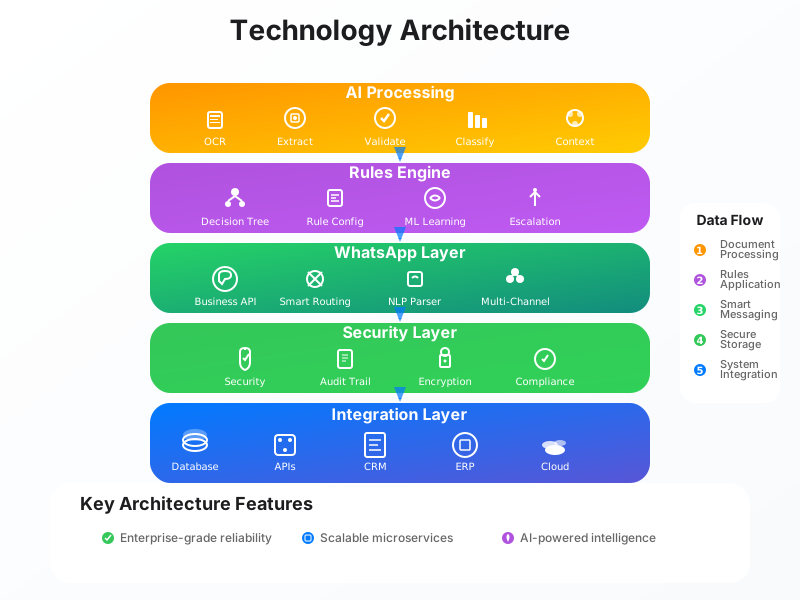
Universal Connectivity: The system integrates with virtually any business software through REST APIs, database connections, or file-based transfers. From legacy systems running on decades-old technology to cutting-edge cloud platforms.
Real-Time Synchronization: Changes made through WhatsApp approvals immediately update connected systems. No batch processing delays or synchronization issues.
Webhook Support: External systems can trigger approval workflows and receive real-time updates when approvals are completed.
Data Transformation: The system handles data format conversions between different systems, ensuring seamless information flow regardless of technical architecture differences.
Implementing WhatsApp approval automation isn't just about installing software. It's about transforming business processes while maintaining operational continuity. Based on our experience with dozens of implementations, here's how successful transformations typically unfold.
Before automating anything, we map existing approval processes in detail. This often reveals surprising insights about how work actually gets done versus how organizations think it gets done.
Shadow Process Discovery: Many companies discover they have multiple unofficial approval processes running in parallel. Different departments might have evolved their own WhatsApp-based workflows that bypass official procedures.
Bottleneck Identification: Time-motion analysis often reveals that the actual decision-making takes minutes, but communication friction adds hours or days to the process.
Stakeholder Mapping: Understanding who really makes decisions (versus who officially should make decisions) is crucial for automation success. The org chart doesn't always reflect reality.
Exception Pattern Recognition: Every business has exceptions to standard processes. Successful automation accommodates common exceptions rather than forcing them into rigid workflows.
We always start with a single, well-defined approval workflow rather than trying to automate everything at once. This allows teams to build confidence and identify issues before full deployment.
Selection Criteria for Pilot: The ideal pilot workflow is high-volume, low-complexity, and has clear success metrics. Loan pre-approvals often work better than final loan approvals for initial pilots.
Training and Change Management: Even though the end-user experience is designed to be intuitive, teams need training on how the new process works and what to expect.
Feedback Loops: Daily feedback sessions during the pilot help identify user experience issues and process gaps that weren't apparent during planning.
Metrics Tracking: Detailed tracking of approval times, error rates, and user satisfaction during the pilot provides baseline data for measuring success.
After pilot success, we gradually expand automation to additional workflows and user groups. This staged approach prevents overwhelming teams and allows for continuous optimization.
Process Prioritization: Not all approval processes are equally suitable for automation. We typically prioritize based on volume, business impact, and automation feasibility.
User Group Expansion: Starting with tech-savvy early adopters and gradually expanding to more traditional users helps build internal champions for the new system.
Integration Deepening: As confidence grows, we add more sophisticated integrations with existing business systems and more complex approval logic.
Advanced Features: Features like escalation rules, approval delegation, and advanced reporting are typically added after basic automation is running smoothly.
Once automation is handling the majority of approval workflows, focus shifts to optimization and continuous improvement.
Performance Tuning: Analyzing approval patterns to identify opportunities for further automation or process improvement.
Rule Refinement: Business rules are continuously refined based on real-world usage patterns and changing business requirements.
Advanced Analytics: Detailed reporting and analytics help identify trends, predict future needs, and optimize resource allocation.
Integration Expansion: Connecting to additional business systems and adding new approval workflows as the organization grows.
One of the most surprising benefits of structured WhatsApp approval automation is how it transforms compliance and audit processes. What was once a liability becomes a competitive advantage.
Every WhatsApp approval generates a complete, tamper-proof audit trail that includes:
Decision Timeline: Exact timestamps for when approval requests were sent, viewed, and responded to. This helps identify bottlenecks and ensures SLA compliance.
Approver Identification: Clear records of who made each decision, with phone number verification and role authentication.
Decision Context: Complete record of the information available to the approver at the time of decision, preventing "I didn't know that" scenarios during audits.
Response Tracking: Full record of the exact response given, including any clarifications or conditions attached to approvals.
System Actions: Automatic logging of all system actions triggered by approvals, creating end-to-end process visibility.
Different industries have different compliance requirements, but WhatsApp approval automation can be configured to meet most regulatory frameworks:
Financial Services: Maintains records required by RBI guidelines for loan approvals, KYC processes, and risk management decisions.
Healthcare: Tracks approval decisions for patient data access, treatment authorizations, and insurance claim processing.
Government Contracts: Provides the documentation trail required for public sector procurement and vendor approval processes.
International Trade: Maintains export/import documentation approvals with full audit trails for customs and regulatory bodies.
Structured approval processes reduce business risk in multiple ways:
Decision Quality: When approvers receive complete, structured information, they make better decisions. Our clients report 34% fewer approval reversals after implementing structured workflows.
Accountability: Clear accountability for decisions reduces the likelihood of careless or biased approvals.
Pattern Recognition: Automated systems can identify concerning patterns in approval behavior that might indicate fraud or policy violations.
Control Implementation: Business controls become automatic rather than dependent on manual compliance efforts.
No technology implementation is without challenges. Based on our experience, here are the most common obstacles and how to overcome them.
The Problem: People are comfortable with existing WhatsApp processes, even if they're inefficient. Change feels risky and unnecessary.
The Solution: Focus on making their jobs easier, not different. When approvers can make better decisions faster with less hassle, resistance melts away.
Success Tactics:
The Problem: Existing business systems often weren't designed to integrate with modern workflow automation tools.
The Solution: Build flexible integration layers that can accommodate legacy systems without requiring major changes.
Technical Approaches:
The Problem: Businesses worry about sensitive data flowing through WhatsApp channels.
The Solution: Design architecture that keeps sensitive data secure while using WhatsApp only for decision communication.
Security Measures:
The Problem: Solutions that work for 50 approvals per day might break at 500 approvals per day.
The Solution: Design for scale from the beginning, with load testing and performance monitoring built into the architecture.
Scalability Features:
WhatsApp approval automation is just the beginning. As AI and communication technologies continue to evolve, we see several trends shaping the future of business approval processes.
Future systems will use machine learning to automatically route approval requests to the best available approver based on expertise, workload, approval patterns, and availability. The right person will get the right decision at the right time.
By analyzing historical approval patterns, future systems will be able to predict approval likelihood, identify potential delays, and suggest process optimizations before problems occur.
As voice recognition and video processing improve, approval workflows will expand beyond text-based communication to include voice approvals, video verification, and multimedia decision support.
Immutable blockchain-based audit trails will provide even stronger compliance assurance and reduce the cost of regulatory reporting.
Future approval systems will seamlessly work across WhatsApp, Telegram, Slack, Microsoft Teams, and other communication platforms, letting users work in their preferred environment while maintaining process consistency.
If you're tired of approval bottlenecks slowing down your business growth, WhatsApp approval automation might be the solution you've been looking for. But where do you start?
Begin by documenting your existing approval processes. How many documents require human approval each day? How long do approvals typically take? Where are the biggest bottlenecks? What compliance requirements do you need to meet?
This assessment helps identify the biggest opportunities for improvement and the most suitable processes for automation.
Select a pilot process that's high-volume but low-complexity. Loan pre-approvals, vendor verifications, or employee expense approvals often work well for initial implementations.
The goal is to demonstrate clear value quickly while building confidence in the automation approach.
Define clear metrics for success before starting implementation. Common metrics include:
WhatsApp approval automation involves multiple technical components and business process expertise. Look for partners who understand both the technology and your industry's specific requirements.
At Artificio, we've implemented WhatsApp approval automation for companies across industries, from fintech startups to traditional manufacturing companies. We understand the unique challenges of Indian business environments and the regulatory requirements that shape approval processes.
The modern business environment demands speed, accuracy, and transparency in all processes. Document approval workflows that worked when you were processing 50 cases per month won't scale to 500 or 5,000 cases.
WhatsApp approval automation offers a path forward that respects how people actually work while adding the structure and reliability that businesses need to grow. It's not about replacing human judgment with artificial intelligence. It's about giving human experts the right information at the right time so they can make better decisions faster.
The companies that embrace this approach first will have a significant competitive advantage. While their competitors struggle with approval bottlenecks and compliance headaches, they'll be processing more cases with higher accuracy and happier customers.
The transformation doesn't require ripping out existing systems or retraining entire teams. It builds on the communication patterns people already use while adding the automation and intelligence that modern business demands.
The only question is whether you'll lead this transformation or follow it. In a market where customer expectations are rising and competition is intensifying, delay isn't just costly it's dangerous.
Your customers expect instant responses. Your team wants to focus on meaningful work rather than administrative overhead. Your auditors demand clear, traceable processes. WhatsApp approval automation delivers all three.

Head IT Operations - Co Founder of Artificio
See it in your SAP environment
Bring us a document, a process, or a bottleneck. We'll show how Artificio captures, validates, and posts into SAP — then scale from there.
Security & compliance
ISO 27001:2013 certified, SOC 2 Type 2 compliant, GDPR and HIPAA ready. Every agent action is logged, auditable, and runs in isolated environments.