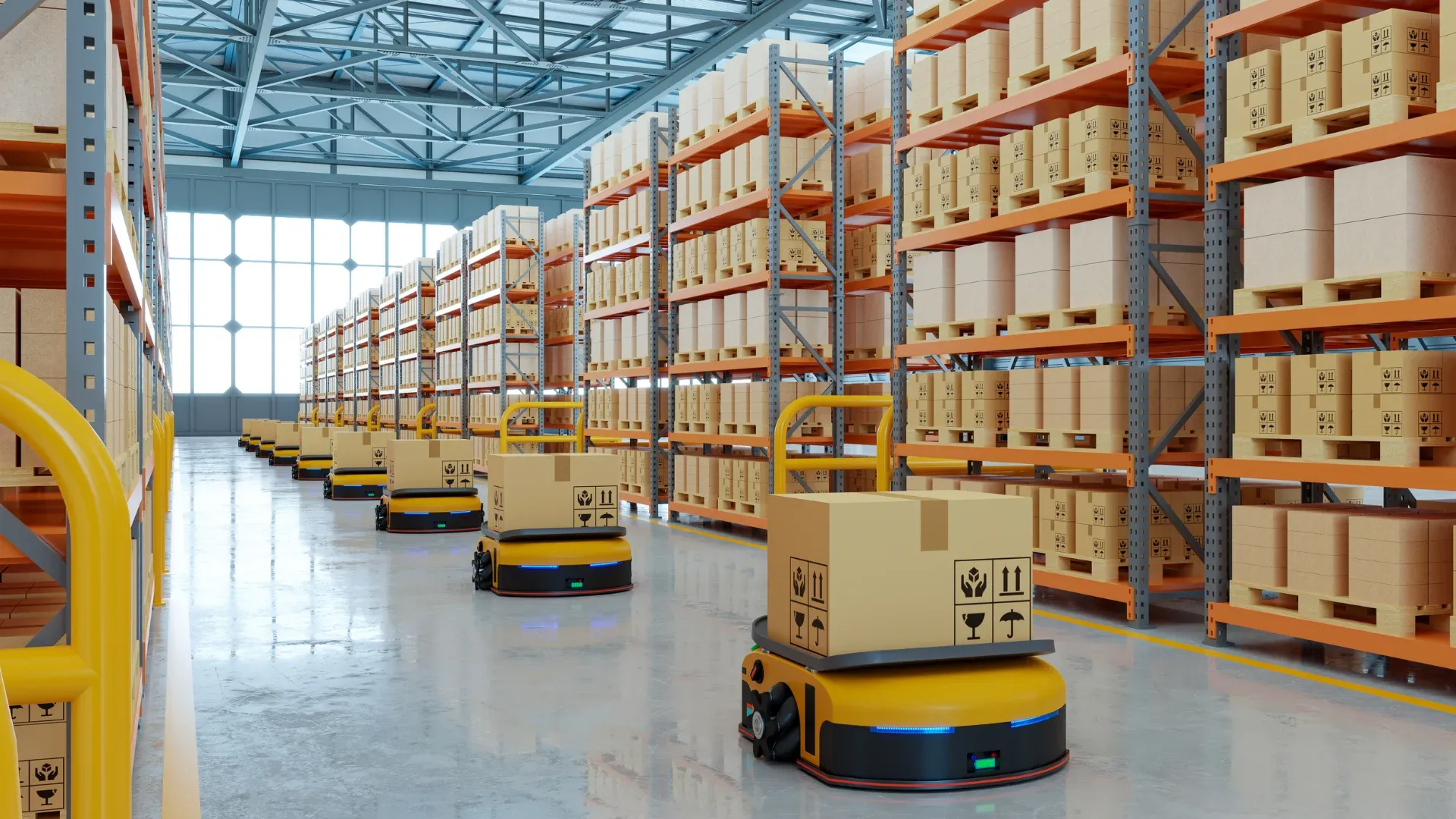
It is 5:50 on a Tuesday morning at a Tier 1 seating plant. A new JIS call from the OEM's assembly line has just landed in SAP, and it tells the plant exactly which seat sets to build, in exactly which vehicle order, for the next few hours. The frames are in stock. The foam is in stock. The recliner mechanisms are not, at least not according to SAP.
Physically, they are sitting on the dock. A Tier 2 supplier in Poland shipped them yesterday afternoon. Its EDI connection has been down since Friday, so instead of an ASN, the plant received a scanned delivery note attached to an email. That email now sits in a shared purchasing inbox that nobody opens before seven. Until someone reads it, matches it to the right scheduling agreement line, and posts the goods receipt, the parts do not exist as far as production planning is concerned. The MRP run flags a shortage. A planner starts calling around for premium freight.
Nobody did anything wrong here. A connection failed, a supplier did the sensible thing and sent a PDF, and one document fell into the gap between a highly automated EDI backbone and the manual work that still surrounds it. In automotive, that gap is where time and money leak out. Siemens' 2024 True Cost of Downtime report estimated that an idle line at a large automotive plant costs more than $2 million per hour. Most document problems never come close to stopping a line, but they do not need to. Blocked invoices, late goods receipts, unrecorded engineering changes, and unchecked freight bills chip away at margins every single day.
This article walks through supplier paperwork, production records, and logistics documents, the three document families that move through an automotive SAP landscape. It looks at why so many of them still live outside clean EDI flows, and how AI agents can read, validate, and post them into SAP without adding another layer of manual checking.
Automotive Runs on EDI, Until It Does Not
The automotive industry was one of the earliest serious adopters of electronic data interchange, and it shows. German suppliers work with VDA message standards. European trading partners exchange Odette messages. North American plants follow AIAG guidelines. Between a large OEM and its biggest Tier 1 suppliers, forecasts, delivery schedules, JIT and JIS calls, advance shipping notices, and self-billing invoices flow electronically, often without anyone touching them.
That picture changes as you move down the supply chain. A single vehicle contains tens of thousands of parts, and they come from a pyramid of suppliers that gets wider, and the companies smaller, at every tier. A Tier 1 module supplier might have a few hundred direct suppliers. Some are global corporations with mature EDI. Many are family-owned machine shops, die casters, plastic molders, and fastener distributors that run on email, spreadsheets, and a supplier portal login they use twice a month.
Then there are the parties outside the buyer-supplier relationship entirely. Carriers send bills of lading, CMR consignment notes, and proof of delivery photos. Customs brokers send declarations and duty statements. Testing labs send certificates. OEM engineering departments send change notices as PDF packages with drawings attached. None of that was ever designed to be EDI.
So the real shape of automotive data looks like this. A structured backbone carries the high-volume, predictable transactions. Around it sits a large and messy layer of documents that carry the exceptions, the quality evidence, the cross-border paperwork, and everything from the smaller end of the supply base. SAP sits in the middle, whether that means S/4HANA, an ECC system still waiting on its migration, or several instances inherited from acquisitions, usually surrounded by SAP Ariba, EWM, TM, and GTS. Every one of those systems expects structured data. Every document that arrives in any other form needs someone to translate it.
Three Document Families, One SAP Landscape
It helps to group automotive documents by where they come from and what they do in SAP. Three families cover almost everything.
Supplier Documents
These are the documents that come in from the supply base. Order confirmations, delivery notes, supplier invoices, credit and debit notes, price change letters, and raw material surcharge invoices all land here. So do tooling invoices, material certificates such as EN 10204 type 3.1 inspection certificates, PPAP submissions with their Part Submission Warrants, IMDS material data confirmations, and 8D responses to quality complaints.
In SAP, they touch MM for purchasing, scheduling agreements, and purchasing info records, FI for invoice verification, and QM for inspection lots and supplier quality notifications. A single part can generate all of them over its life. The volume is high and the formats vary by supplier, by country, and sometimes by whichever person at the supplier happened to create the file that day.
Production Documents
Production documents describe what gets built and whether it was built right. Engineering change notices from the OEM, deviation requests and approved waivers, first article inspection reports, control plans, work instructions, test and torque records, rework tags, and customer complaints all belong to this family. Some come from outside the plant. Many are created inside it, often on paper at a workstation.
These documents feed SAP PP for production orders and BOMs, engineering change management for change masters and effectivity, QM for inspection results and notifications, and batch or serial number management for traceability. Under IATF 16949, the automotive quality management standard, a plant has to show that this information is controlled and traceable. Auditors do not accept "it is in someone's inbox" as a control.
Logistics documents move with the physical goods. Advance shipping notices, packing lists, transport labels, bills of lading, CMR notes, commercial invoices, certificates of origin, long-term supplier declarations, customs declarations, freight invoices, proof of delivery, damage reports, and returnable container slips all fit here.
They connect to SAP LE or EWM for inbound deliveries and handling units, TM for freight orders and freight settlement, and GTS for customs processing and preferential origin. They also carry some of the most direct financial consequences in the whole landscape. A freight invoice with a wrongly applied surcharge costs money straight away. A missing supplier declaration can mean paying full duty on goods that should have qualified for a preference.
Why Templates and Classic OCR Never Closed the Gap
Automotive companies have tried to automate these documents before. The usual approach was template-based OCR. Someone designed a template for each supplier layout, mapped the fields, and hoped the supplier would never change its invoice design. For a handful of high-volume suppliers, that worked well enough.
It never scaled to the long tail. A plant with 400 non-EDI suppliers would need 400 templates, plus new ones every time a supplier updated its ERP system or switched to a new billing format. Carriers and brokers added hundreds more layouts. Maintaining the templates became a job in itself.
Classic OCR also stopped at reading text. It could pull the string "VE 12" off a delivery note but had no idea that "VE" means Verpackungseinheit, a packaging unit, and that 12 packaging units of 50 pieces each is 600 pieces in SAP. It could read "KW 38" in a delivery date field without understanding that automotive suppliers routinely schedule by calendar week. It saw "A4471-203 Rev C" but could not tell that SAP only knows revision B of that part, which is exactly the problem somebody needs to hear about.
Automotive documents need understanding, not just character recognition. That is where AI agents change the picture.
How AI Agents Fit Into an Automotive SAP Landscape
Artificio approaches automotive documents with a team of AI agents rather than a single extraction engine. Each agent handles one part of the job, and together they take a document from the moment it arrives to the moment its data is correctly posted in SAP.
Intake comes first. Documents arrive from shared inboxes, supplier portals, carrier platforms, scanners at the receiving dock, and even from failed EDI transmissions where the original document is the only reliable source. The intake agent gathers them in one place, regardless of channel.
A classification agent then works out what each document is. A German Lieferschein, a Czech dodací list, and a Mexican remisión are all delivery notes. A three-page PDF might hold a commercial invoice, a packing list, and a certificate of origin stapled together, which the agent splits into three separate documents. Nobody has to build a template for any of this, because the agent recognizes documents by their content and structure.
An extraction agent pulls the fields that matter for each document type. For a delivery note, that means supplier, delivery note number, ship date, part numbers with revision levels, quantities, packaging units, batch numbers, and handling unit labels. For a material certificate, it means heat number, chemical composition, mechanical properties, and the standard the material was tested against.
The validation agent is where the real value sits. Instead of simply passing extracted data along, it checks every field against what SAP already knows. Does this supplier exist in the vendor master? Is there an open scheduling agreement or purchase order for this part? Does the supplier part number map to an internal material number through the purchasing info record? Is the revision level current? Does the quantity, once converted from packaging units to the SAP order unit, fall within tolerance? Has this delivery note already been posted?
Only when the checks pass does the posting agent write to SAP, using standard interfaces such as IDocs, BAPIs, and OData APIs. Depending on the process, that means creating an inbound delivery, posting a goods receipt, parking or posting an invoice, recording inspection results, or creating a quality notification. When something does not add up, the document goes to an exception queue with the source document, the extracted data, the relevant SAP records, and a plain explanation of what failed. The buyer or planner decides in seconds instead of starting an investigation from scratch.

Invoice verification in automotive has its own quirks. Much of the direct material volume runs through scheduling agreements rather than individual purchase orders, and supplier invoices often reference a delivery note number or ASN number instead of a PO. A clerk trying to match an invoice has to find the right goods receipt by delivery note, then check it against the scheduling agreement line and the current price condition.
An AI agent does this matching the same way, just faster and without fatigue. It reads the delivery note reference from the invoice, finds the matching goods receipt in SAP, confirms the quantities, checks the unit price against the condition record, and parks or posts the invoice through invoice verification. Where large suppliers already run on evaluated receipt settlement or self-billing, the agents leave that flow alone and focus on the suppliers who still send invoices.
Surcharge invoices deserve special attention. Automotive contracts often tie prices to steel, aluminum, copper, or resin indexes, and suppliers send separate surcharge invoices or price change letters when those indexes move. These documents rarely match anything neatly in SAP. The agent extracts the index period, the base price, the surcharge rate, and the affected parts, then compares them to the agreed contract terms. A buyer sees a clear summary instead of a dense two-page letter, along with a flag if the supplier used the wrong index period or applied the surcharge to parts that are not covered.
Quality documents are where the supplier family gets interesting. Take a steel supplier sending a 3.1 inspection certificate with every coil. Traditionally, someone in incoming inspection glances at the certificate, maybe compares a few values to the drawing, and files it. With agents, the chemical composition and mechanical property values are extracted and compared to the specification limits stored in the QM inspection plan. Results go into the inspection lot. If manganese content sits outside the limit, the lot is flagged before the coil ever reaches a press.
PPAP submissions work in a similar way. A full PPAP package can contain up to 18 elements, from design records and process flow diagrams to measurement system analysis studies and the Part Submission Warrant itself. The agent checks which elements are present, pulls the key data from the warrant, and updates supplier approval status so that nobody releases a new part for series production with a missing capability study.
Supplier quality also runs in the other direction. When the plant raises a complaint in SAP QM, the supplier eventually replies with an 8D report. The agent reads it, extracts the root cause, containment actions, and corrective actions, and attaches them to the right quality notification. That record matters later, when an auditor asks how a recurring defect was closed.
Production Documents: Keeping Engineering and the Shop Floor in Step
Engineering change notices are one of the most underrated risks in automotive document handling. An OEM sends a change package that updates a part from revision D to revision E, with an effectivity date or a starting vehicle serial number. That change has to reach SAP engineering change management, the BOM, the routings, open purchase orders with suppliers, and the shop floor. If any link in that chain is slow, the plant either builds with an obsolete part or scraps inventory it should have used up.
An AI agent reads the change notice and extracts the affected part numbers, old and new revision levels, the effectivity date or serial number, and the nature of the change. It then looks at SAP to see what the change actually touches. How much stock of revision D sits in the warehouse? How many open schedule lines with suppliers still specify revision D? Which production orders are already released? The engineer receiving the notice gets that picture straight away, rather than after a day of running reports.
Deviation approvals carry a similar risk with an added twist. They expire. A customer might approve a temporary waiver allowing a slightly different material for 5,000 pieces or 90 days, whichever comes first. The agent captures the limits and tracks them against production in SAP, so the waiver does not quietly outlive its approval.
Customer complaints come in from OEMs as portal notifications, emails, or formal complaint PDFs with photos. The agent extracts the part number, the defect description, the affected quantity, the OEM's reference number, and any batch or date codes. It creates the customer complaint notification in QM and links it to the batches that shipped in that window. When a containment action requires sorting stock at a customer warehouse, the team already knows which batches to look for.
Traceability records close the loop. Plants still produce paper at workstations, from test sheets and torque logs to rework tags and first-off approvals. Many plants have digitized the critical points with MES, but paper persists at subassembly stations and in rework areas. Agents can read printed forms and legible handwritten entries, attach them to the right production order or batch, and make them searchable. If a recall ever reaches the plant, the question "which batch of brackets went into which vehicles, and who approved the rework on that batch" gets answered from SAP rather than from a filing cabinet.
Logistics Documents: Dock, Border, and Freight Bill
The opening scenario at the seating plant is a logistics document problem, and a common one. When an ASN does not arrive, the delivery note and packing list become the only record of what is on the truck. An agent reads them, matches the lines to the scheduling agreement, reads handling unit numbers from the transport labels, and creates the inbound delivery in EWM or LE. Receiving staff scan the labels as usual. The only difference is that SAP already knows what to expect.
Cross-border shipments bring a heavier stack. Commercial invoices, packing lists, certificates of origin, and customs declarations all need to agree with each other and with SAP. Long-term supplier declarations are a good example of a document that quietly carries a lot of money. In European preferential trade, a manufacturer can only claim preferential origin for its finished goods if it holds valid declarations from its suppliers. Those declarations usually arrive as signed PDFs once a year. The agent extracts the supplier, the covered materials, the validity period, and the origin statement, then updates the relevant records in GTS. When a declaration is about to expire, the right people hear about it well before the next export shipment.
Freight invoices are where logistics documents hit the bottom line most directly. Carriers bill base rates, fuel surcharges, waiting time, extra stops, and a long list of accessorial charges. The agent compares each invoice to the freight order and the agreed rates in SAP TM and flags any charge that does not match. Premium freight deserves its own mention. Expedited shipments, such as an air freight run or a dedicated truck sent to prevent a line stop, are expensive and frequent in automotive. When a supplier's late delivery caused the premium freight, the cost should go back to that supplier. That only happens if someone captures the reason and the cost cleanly, which is exactly the kind of work agents do well.
Returnable packaging rounds out the family. OEMs and suppliers circulate huge numbers of plastic bins, steel racks, and custom dunnage. Container slips and packaging account statements tell each party who holds how many of which container. Discrepancies turn into write-offs or disputes. Reading those slips automatically and reconciling them against packaging account balances keeps both sides honest.
A general-purpose document tool can read an automotive delivery note. Getting the data right enough to post in SAP without a person checking it is a different job. A few automotive-specific details explain why.
Part numbers carry more meaning than they appear to. The same physical part can have an OEM part number, a supplier part number, and an internal material number, each with its own revision or index level. Correct extraction means knowing which number is which on a given document, and then resolving them through SAP info records and customer-material records.
Units rarely match. Suppliers deliver in packaging units, pallets, meters, kilograms, or thousands of pieces. SAP might order in pieces and store in kilograms. Every quantity has to pass through the correct unit conversion from the material master before it can be compared with anything.
Dates come in unusual formats. Calendar weeks are standard on automotive delivery schedules, sitting next to European, American, and ISO date formats. A delivery note dated 03/04 means one thing in Detroit and another in Stuttgart.
Language varies within a single supply chain. A Tier 1 plant in Slovakia might receive documents in Slovak, German, Czech, Hungarian, English, and Chinese in one week, full of technical terms that general translation models get wrong.
The SAP landscape itself is complex. Multi-plant, multi-company-code environments mean the same supplier might deliver to three plants under three different scheduling agreements. The agent has to post against the right one.
Validation against live SAP data is what makes all of this manageable. An agent that knows the supplier only delivers this part to plant 1200, in boxes of 50, under scheduling agreement 5500012345, can resolve ambiguity that no amount of text recognition would ever solve alone.

Rolling It Out Without Disrupting the Line
Automotive plants are rightly cautious about anything that touches the production system. The good news is that document automation does not require a big-bang project.
Most successful rollouts start with one plant and one document family where the pain is obvious. Delivery notes from non-EDI suppliers are a common first choice because the link to production is so direct. Freight invoices are another, because the savings are easy to measure. The team runs the agents in shadow mode for a few weeks, comparing their proposed postings to what clerks actually entered, and then sets confidence thresholds for touchless posting.
EDI stays where it works. There is no reason to replace a stable VDA or Odette connection with document processing. The agents take over the documents EDI never covered, and they act as a safety net when EDI fails, reading the original paperwork so that a broken connection does not turn into a shortage.
SAP authorization and integration teams should be involved from the first week. The agents post through standard interfaces with their own technical users and roles, and every posting carries a reference back to the source document. That traceability is what gets internal audit and IT security comfortable.
The metrics to watch are practical ones. Touchless processing rate, the time from truck arrival to goods receipt, invoice cycle time, the number of blocked invoices, premium freight recovered from suppliers, and quality notifications closed on time all show whether the automation is actually helping. Once the first family is stable, the same agents extend to the next plant or the next document type with far less effort than the first.
The Bigger Picture: Resilience, Audits, and New Data Demands
Recent years have shown how quickly automotive supply chains can shift. During the semiconductor shortage, many manufacturers had to qualify alternative sources in weeks rather than months. New suppliers rarely arrive with EDI connections ready to go. A plant that can process documents from any supplier, in any format, from day one is simply more flexible when the next disruption hits.
The move to electric vehicles brings new suppliers too, including battery cell makers, power electronics firms, and specialized materials processors. Many come from outside the traditional automotive supply base and do not speak VDA or Odette at all.
Regulation is also turning documents into data requirements. The EU Battery Regulation introduces a digital battery passport for EV batteries from February 2027, which depends on detailed information about materials, origin, and carbon footprint gathered from across the supply chain. The EU Carbon Border Adjustment Mechanism entered its definitive phase in 2026, and importers of steel, aluminum, and certain other goods now need embedded emissions data from their suppliers. Sustainability reporting pushes companies to gather Scope 3 data from the supply base as well. Almost all of this information arrives first as documents, spreadsheets, and supplier declarations. Companies that can extract and validate it at scale will meet these requirements with far less strain.
IATF 16949 audits benefit in a quieter way. When every certificate, change notice, deviation, and 8D report is captured, linked to the right SAP record, and traceable back to its source, audit preparation stops being a scramble. The evidence is already where the auditor expects it.
Back at the Seating Plant
Run that Tuesday morning again. The Polish supplier's EDI link is still down, and the scanned delivery note still arrives by email at 5:14. This time an Artificio agent picks it up within a minute. It classifies the document as a delivery note, extracts the part numbers, quantities, and handling unit labels, converts the packaging units into pieces, and matches everything to the open scheduling agreement line. It notices that one carton contains 48 pieces instead of the expected 50 and flags the variance for the buyer. Then it creates the inbound delivery, and once the dock team scans the labels, the goods receipt posts.
When the JIS call lands at 5:50, SAP shows the recliners in stock. MRP does not raise a shortage. Nobody calls for premium freight. The seats get built in sequence and the trucks leave on time. The buyer sees one short note about two missing pieces, which takes half a minute to handle.
That is the real promise of document automation in an automotive SAP landscape. It is not about removing people from the process. It is about making sure the paperwork around every car moves as reliably as the parts do, so people spend their time on the decisions that actually need them.
If your plants still depend on inboxes, spreadsheets, and manual keying to bridge the gap between suppliers, the shop floor, the dock, and SAP, Artificio can help you close it one document family at a time.