

Blog
Seamless Omnichannel: Artificio Integrates WhatsApp, Email & ERP
Transform customer journeys with Artificio's AI. Integrate WhatsApp, Email, & ERP for seamless omnichannel experiences, boosting satisfaction & efficiency.

Blog
Transform customer journeys with Artificio's AI. Integrate WhatsApp, Email, & ERP for seamless omnichannel experiences, boosting satisfaction & efficiency.
In today's hyperconnected business landscape, customers don't think in terms of channels. They start a conversation on WhatsApp during their lunch break, expect follow-up information via email at their desk, and assume your sales team has immediate access to everything they've shared when they call later. Yet most organizations still operate with disconnected systems that create friction at every touchpoint. This comprehensive guide explores how Artificio's AI-powered platform transforms fragmented customer interactions into seamless omnichannel experiences that drive both customer satisfaction and operational efficiency.
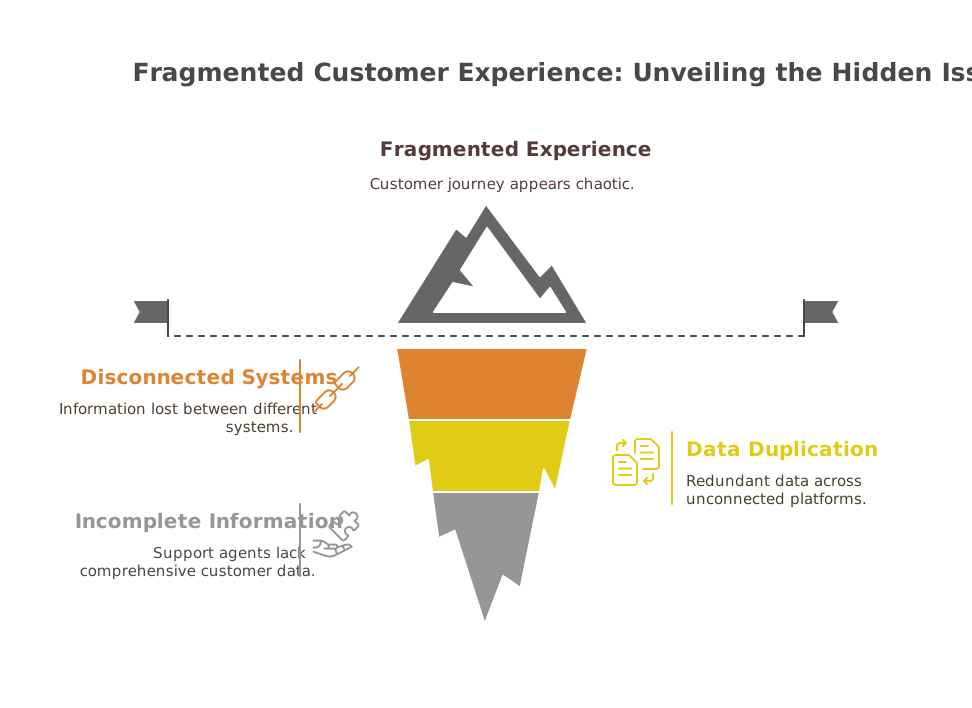
Think about your own customer experience for a moment. You've probably felt the frustration of explaining the same problem to multiple representatives or wondering why a company's email marketing doesn't reflect what you discussed in their chat system. This fragmentation isn't just annoying for customers; it's expensive for businesses. When your WhatsApp conversations don't inform your email marketing campaigns, and your ERP data exists in isolation from customer support interactions, you're essentially maintaining multiple, contradictory versions of each customer relationship.
The real cost extends beyond customer frustration. Sales teams waste time reconstructing customer histories from scattered sources. Support representatives can't access order details when customers reach out through different channels. Marketing campaigns miss opportunities for personalization because customer data lives in departmental silos. Each disconnected interaction represents a missed opportunity to build stronger customer relationships and operational efficiency.
Traditional integration approaches often make these problems worse rather than better. Point-to-point integrations create brittle connections that break whenever systems change. Manual data synchronization introduces errors and delays. Custom coding solutions require ongoing maintenance and technical expertise that most organizations struggle to maintain. These approaches treat integration as a technical challenge rather than a business transformation opportunity.
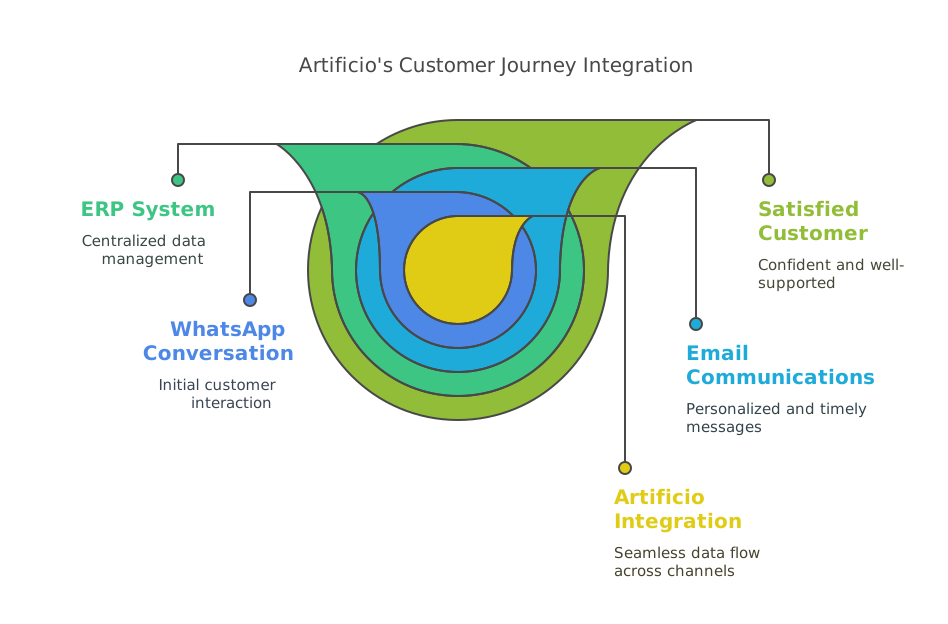
Artificio approaches omnichannel integration differently. Rather than simply moving data between systems, the platform creates an intelligent layer that understands context, extracts meaning, and transforms information across channels. This AI-powered approach recognizes that true omnichannel experiences require more than just technical connectivity; they demand intelligent interpretation of customer intent and business context.
The platform's strength lies in its intelligent document processing capabilities, which serve as a universal translator between different business systems. When a customer sends a purchase order through WhatsApp, Artificio doesn't just forward the message. It extracts key information, validates data against business rules, creates structured records in your ERP system, and triggers appropriate follow-up communications. This intelligent processing eliminates the manual handoffs that typically slow down business processes and introduce errors.
What makes Artificio particularly powerful for omnichannel experiences is its no-code approach to workflow automation. Business users can design complex integration workflows without requiring technical expertise or IT department involvement. This democratization of automation means that the people who best understand customer needs can directly create the solutions that improve customer experiences. The visual workflow builder allows teams to map out their ideal customer journeys and then implement the automation needed to make those journeys reality.
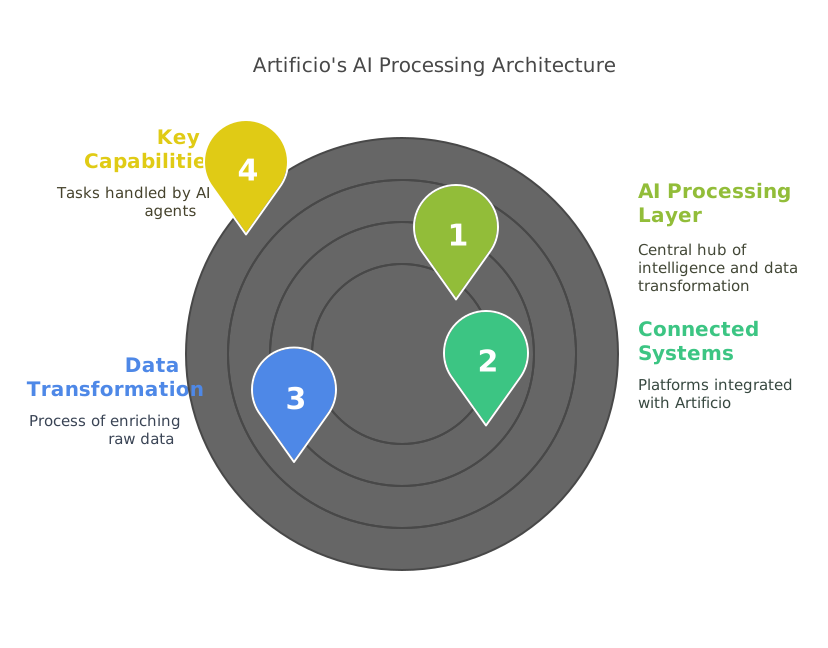
The platform's communication suite goes beyond basic messaging capabilities to enable truly personalized interactions across channels. Dynamic content generation ensures that whether a customer receives an email, SMS, or WhatsApp message, the content reflects their specific situation, preferences, and history with your organization. This personalization isn't just about inserting names into templates; it's about creating contextually relevant communications that demonstrate understanding of each customer's unique needs.
Successful omnichannel implementation requires strategic thinking rather than tactical system connections. The process begins with understanding your current customer journey touchpoints and identifying the gaps where disconnected systems create friction. Most organizations discover that their customers are already trying to interact across multiple channels, but manual processes and system limitations prevent seamless experiences.
The assessment phase involves mapping not just your technical systems, but your business processes and customer expectations. Where do customers typically start their journey with your organization? What information do they need at each stage? How do your internal teams currently share customer information? Understanding these patterns reveals the highest-impact opportunities for omnichannel automation.
Creating a robust data architecture forms the foundation for all subsequent automation efforts. This isn't just about technical data mapping; it's about establishing how customer information will flow between systems while maintaining accuracy and consistency. The architecture must account for different data formats, validation rules, and business logic that governs how information should be processed and routed.
The phased implementation approach starts with high-impact, low-complexity integrations that demonstrate immediate value. Early wins build organizational confidence and provide learning opportunities that inform more complex automation projects. Starting with customer onboarding or order status updates allows teams to experience the benefits of omnichannel automation while developing the skills needed for more sophisticated implementations.
Consider how most organizations currently handle new customer onboarding. A prospect might initiate contact through WhatsApp because it's convenient and immediate. They share basic information and express interest in your products. From there, the process typically fragments. Someone manually transfers information from the chat to email systems. The prospect receives generic email templates that don't reference their specific conversation. Forms and documentation arrive separately, often requiring the customer to re-enter information they've already provided. Sales teams access incomplete customer records because information remains scattered across different systems.
Artificio transforms this fragmented process into a cohesive experience that demonstrates professionalism and efficiency from the first interaction. When a prospect reaches out through WhatsApp, intelligent conversation processing immediately captures relevant information and creates a comprehensive customer profile. The system doesn't just store chat transcripts; it extracts key details like company size, specific needs, budget considerations, and timeline requirements.
The automated workflow then generates personalized email sequences that reference the specific conversation details and customer context. Rather than generic welcome messages, prospects receive communications that directly address their stated needs and continue the conversation seamlessly across channels. Dynamic PDF generation creates customized proposals and documentation that incorporate the customer's specific requirements and branding preferences.
Meanwhile, the ERP system receives structured customer data that's been validated and formatted according to your business rules. Sales teams have immediate access to complete conversation history, customer preferences, and any documents or commitments made during initial interactions. Status updates flow automatically back to the customer through their preferred communication channel, creating transparency and building trust throughout the onboarding process.
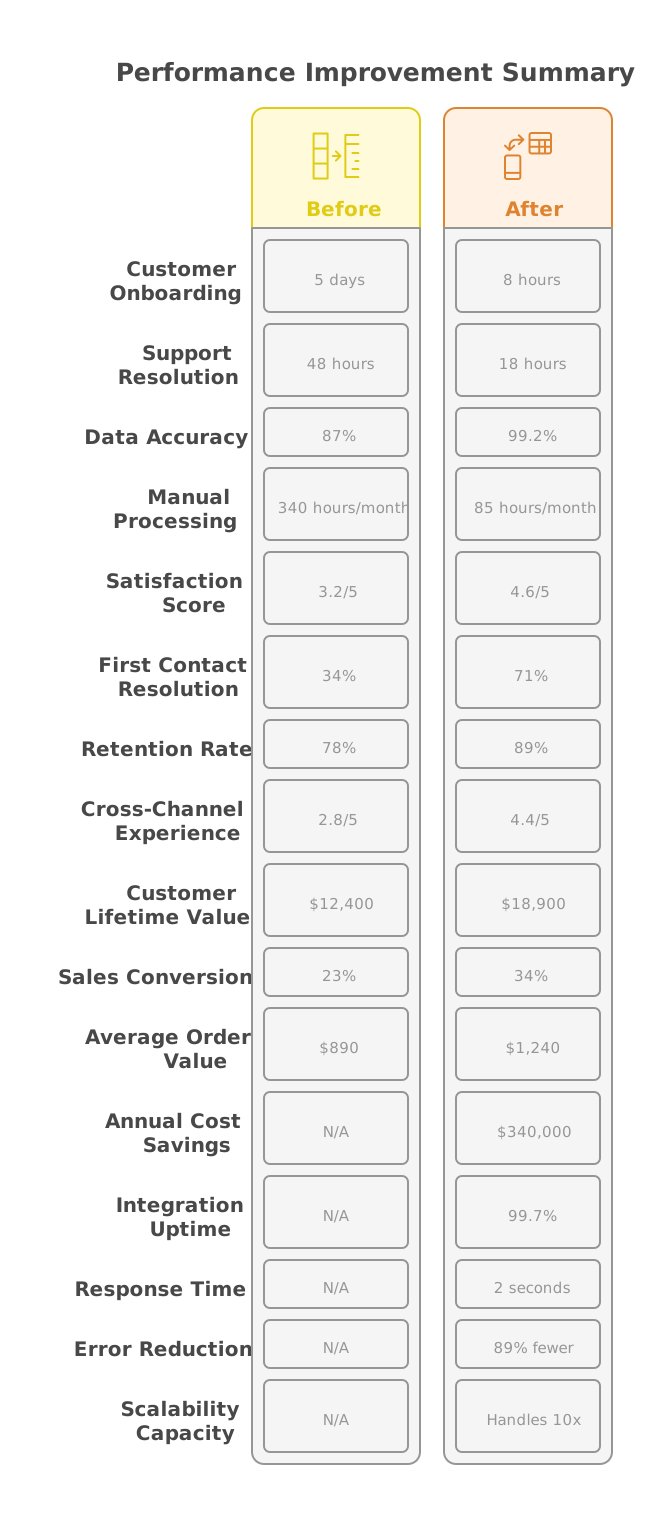
The measurable impact extends beyond customer satisfaction metrics. Organizations typically see significant reductions in onboarding time, improved data accuracy, and higher conversion rates from prospect to customer. Sales teams report spending less time on administrative tasks and more time on relationship building and solution development.
Traditional order management creates anxiety for customers and administrative burden for businesses. Customers place orders and then wonder about status updates. They reach out through various channels asking for information that exists in ERP systems but isn't easily accessible to support teams. Support representatives spend time researching order details instead of solving customer problems. The entire process is reactive, responding to customer inquiries rather than proactively providing information.
Artificio enables a fundamentally different approach where order management becomes an opportunity for positive customer engagement. The system monitors ERP status changes in real-time and automatically triggers personalized notifications through each customer's preferred communication channel. These aren't generic status updates; they're contextual communications that explain what's happening, what comes next, and how customers can take action if needed.
The intelligent routing system ensures that customers receive information through the channels they use most effectively. Business customers might prefer detailed email updates with tracking information and delivery schedules. Individual consumers might want simple WhatsApp messages with quick status updates. The system learns from customer engagement patterns and optimizes communication preferences over time.
When issues arise, the automated escalation processes immediately engage appropriate team members while keeping customers informed about resolution efforts. Exception handling workflows can automatically offer alternative solutions, expedite replacements, or provide compensation based on predefined business rules. This proactive approach often resolves potential customer service issues before customers even realize problems exist.
Support teams benefit from complete order visibility regardless of how customers choose to contact them. Whether someone calls, emails, or messages through WhatsApp, representatives have immediate access to order history, communication records, and any automated actions already taken. This comprehensive view enables faster resolution and more personalized service.
The business impact includes significant reductions in support ticket volume, improved customer satisfaction scores, and enhanced operational efficiency. Teams report that proactive communication often turns potential service issues into opportunities for positive customer engagement and relationship building.
Customer support represents one of the most complex omnichannel challenges because requests arrive through multiple channels with varying levels of urgency, complexity, and customer context. Traditional ticketing systems treat each inquiry as an isolated event, requiring manual effort to gather relevant information and route requests appropriately. This approach creates delays, inconsistencies, and frustrated customers who must repeat information they've already provided.
Artificio's intelligent support system transforms reactive customer service into proactive problem-solving. When customers submit requests through any channel, the system immediately begins intelligent information gathering. Document processing capabilities extract relevant details from attachments, whether they're screenshots of error messages, invoices with billing questions, or contracts requiring clarification. This automated analysis eliminates the back-and-forth communication typically required to understand customer issues.
The system automatically accesses customer history from your ERP system, previous support interactions, and communication records across all channels. This comprehensive view enables immediate understanding of customer context, including their service history, product configurations, billing status, and previous resolution preferences. Support representatives receive not just the immediate request, but a complete picture of the customer relationship.
Intelligent routing algorithms consider multiple factors when assigning tickets to appropriate specialists. Customer value, issue complexity, technical requirements, and representative expertise all influence routing decisions. High-value customers with complex technical issues automatically reach senior specialists, while routine requests get handled by appropriate team members. The system also considers representative workloads and availability to optimize response times.
Cross-channel communication management ensures that customers receive updates through their preferred channels while maintaining consistent messaging across all touchpoints. If a customer submits a ticket via email but prefers WhatsApp updates, the system automatically adapts communication preferences. All team members working on the case see the complete communication history regardless of which channels were used.
The measurable improvements include faster resolution times, improved first-contact resolution rates, and enhanced customer satisfaction scores. Teams report that intelligent information gathering and routing allows them to focus on solution development rather than information collection and case management.
Successful omnichannel implementation requires careful technical planning that goes beyond simple system connections. The architecture must support real-time data flows, maintain security standards, and scale with business growth. Understanding these technical foundations helps ensure that your omnichannel automation remains reliable and performant as your organization's needs evolve.
The integration architecture centers on Artificio's intelligent processing layer, which serves as the hub for all cross-system communication. This approach eliminates the complexity of managing multiple point-to-point connections while providing centralized monitoring and control over data flows. The platform handles data transformation, validation, and routing automatically, reducing the technical expertise required for ongoing maintenance.
WhatsApp Business API integration requires careful attention to message handling and security considerations. The platform manages webhook configuration and message routing while providing tools for creating rich conversational experiences. Document sharing capabilities enable customers to submit forms, images, and other attachments directly through WhatsApp conversations. These documents are automatically processed and integrated into your broader business workflows.
Email platform integration goes beyond basic sending capabilities to include sophisticated template management and automation rules. Dynamic content generation ensures that email communications reflect current customer data and context from all connected systems. Advanced automation rules can trigger email sequences based on customer actions across any channel or system events from your ERP platform.
ERP system integration presents unique challenges because these systems often contain the most critical business data and have stringent security requirements. Artificio's approach focuses on real-time synchronization that maintains data integrity while enabling immediate access to customer information across all channels. Custom field management accommodates the unique data structures and business rules that characterize different ERP implementations.
The platform's security framework addresses the complex requirements of handling customer data across multiple channels and systems. Encryption, access controls, and audit trails ensure that sensitive information remains protected while enabling the seamless experiences that customers expect. Compliance capabilities help organizations meet regulatory requirements across different industries and geographic regions.
Creating an effective omnichannel experience requires ongoing optimization based on real-world usage patterns and customer feedback. The platform provides comprehensive analytics that reveal how customers interact across different channels and where automation can be improved. These insights enable continuous refinement of workflows and communication strategies.
Performance monitoring focuses on metrics that reflect customer experience quality rather than just technical system performance. Response times, resolution rates, and customer satisfaction scores provide better indicators of omnichannel success than traditional IT metrics. The platform tracks how smoothly information flows between channels and identifies bottlenecks that impact customer experiences.
Continuous improvement frameworks help organizations systematically identify optimization opportunities and test new automation approaches. A/B testing capabilities enable teams to experiment with different communication strategies, workflow designs, and personalization approaches. These experiments provide data-driven insights that guide platform optimization and business process improvements.
Advanced automation opportunities emerge as organizations become comfortable with basic omnichannel integration. Predictive customer service uses historical data and behavior patterns to anticipate customer needs and proactively provide solutions. Automated upselling and cross-selling workflows identify opportunities for revenue growth based on customer interaction patterns and purchase history.
The return on investment from omnichannel automation typically includes both quantitative and qualitative benefits. Cost savings from reduced manual work and improved efficiency are often accompanied by revenue increases from better customer experiences and enhanced sales processes. Customer lifetime value improvements reflect the compounding benefits of seamless, personalized interactions across all touchpoints.
Organizations that successfully implement comprehensive omnichannel strategies often discover that the platform becomes a competitive advantage that's difficult for competitors to replicate. The combination of improved customer experiences, operational efficiency, and organizational agility creates sustainable business benefits that grow over time.
The omnichannel landscape continues to evolve rapidly, with new communication channels and customer expectations emerging regularly. Organizations that build flexible, AI-powered integration platforms position themselves to adapt quickly to these changes without requiring complete system overhauls. Artificio's approach provides a foundation that can accommodate future technologies and business requirements.
Emerging communication channels like voice assistants, augmented reality interfaces, and IoT devices will require integration capabilities that traditional systems can't provide. The platform's intelligent processing capabilities and flexible integration architecture enable organizations to incorporate new channels as they become relevant to their customer base.
Advancing AI and machine learning capabilities will enhance omnichannel automation in ways that are just beginning to be understood. Natural language processing improvements will enable more sophisticated customer interaction analysis. Predictive analytics will become more accurate and actionable. Personalization capabilities will reach new levels of precision and relevance.
The strategic value of omnichannel automation extends beyond immediate operational improvements to enable fundamental business transformation. Organizations that master seamless customer experiences across all channels create competitive advantages that compound over time. They build customer loyalty that transcends individual transactions. They develop operational capabilities that enable rapid response to market changes and customer needs.
Building a truly seamless omnichannel experience requires more than just connecting systems; it demands a strategic approach that puts customer experience at the center of business operations. Artificio provides the intelligent automation platform that makes this transformation possible, but success depends on thoughtful implementation that addresses both technical requirements and organizational change management.
The organizations that thrive in an increasingly connected world will be those that can deliver consistent, personalized, and intelligent customer experiences across every touchpoint. This comprehensive approach to omnichannel integration provides the roadmap for achieving that vision while building the operational capabilities needed for sustained business success.

Head IT Operations - Co Founder of Artificio
See it in your SAP environment
Bring us a document, a process, or a bottleneck. We'll show how Artificio captures, validates, and posts into SAP — then scale from there.
Security & compliance
ISO 27001:2013 certified, SOC 2 Type 2 compliant, GDPR and HIPAA ready. Every agent action is logged, auditable, and runs in isolated environments.