

Blog
Resume Parsing to AI Talent Intelligence Systems
Discover how AI agents transform resume parsing into intelligent talent systems, enhancing hiring with predictive insights and strategic workforce planning.
Blog
Discover how AI agents transform resume parsing into intelligent talent systems, enhancing hiring with predictive insights and strategic workforce planning.
The recruitment landscape has fundamentally shifted. What started as simple keyword matching has evolved into something far more sophisticated. Today's organizations don't just need to extract information from resumes. They need to understand candidates at a deeper level, predict their potential, and make data-driven hiring decisions that impact their bottom line.
Traditional resume parsing served its purpose well for years. It automated the tedious task of manually entering candidate information, saved recruiters countless hours, and brought some order to the chaos of high-volume hiring. But as we move deeper into 2025, the limitations of basic parsing have become glaringly obvious. Companies are drowning in data but starving for insights. They can extract skills and experience from resumes, but they can't predict which candidates will thrive in their unique culture or identify hidden gems who might not tick every conventional box.
This is where AI agents come in, transforming resume parsing from a simple data extraction tool into a comprehensive talent intelligence system. These aren't just algorithms that pull out contact information and work history. They're sophisticated digital assistants that work together to understand context, identify patterns, predict success, and continuously learn from every hiring decision. The shift from traditional parsing to agent-based intelligence represents a quantum leap in recruitment technology, one that promises to revolutionize how organizations identify, assess, and engage talent.
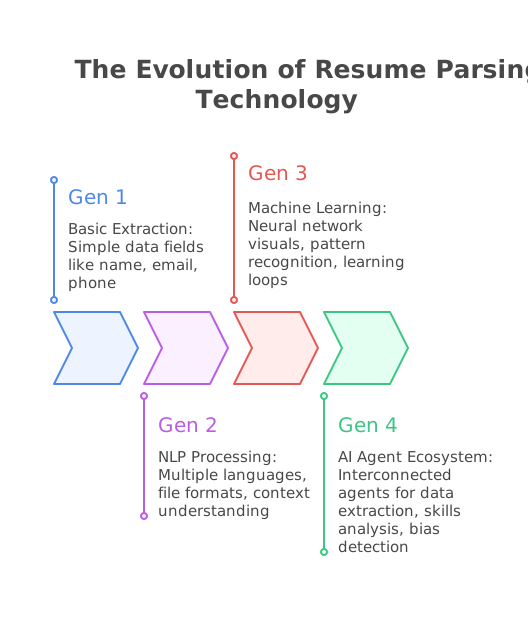
To understand where we're going, we need to appreciate where we've been. First-generation resume parsers were essentially glorified data entry tools. They could recognize common patterns in resumes, extract basic information like names, email addresses, and job titles, and populate database fields. This was revolutionary at the time, eliminating hours of manual work and reducing human error in data entry.
Second-generation parsers got smarter. They incorporated natural language processing to better understand context, could handle multiple file formats and languages, and began to standardize data for easier searching and matching. These systems could extract skills from job descriptions, identify educational qualifications, and even parse social media profiles. But they still operated on a fundamental limitation: they were reactive rather than proactive, descriptive rather than predictive.
The third generation, powered by machine learning, started to bridge this gap. These parsers could learn from patterns, improve accuracy over time, and handle increasingly complex resume formats. They introduced features like sentiment analysis, skill taxonomy mapping, and basic matching algorithms. Yet even these advanced systems remained fundamentally transactional, processing each resume in isolation without building a broader understanding of talent patterns or organizational needs.
Enter the age of AI agents. Unlike their predecessors, agent-based systems don't just process resumes. They create a living, breathing talent intelligence ecosystem. Each agent specializes in a specific aspect of the recruitment process, from initial parsing to predictive analytics, working in concert to deliver insights that go far beyond what any single algorithm could achieve. These agents don't just tell you what's in a resume. They help you understand what it means for your organization.
AI agents represent a paradigm shift in how we think about automation. Unlike traditional software that follows predetermined rules, agents are autonomous entities that can perceive their environment, make decisions, and take actions to achieve specific goals. In the context of recruitment, this means moving from static parsing to dynamic intelligence gathering.
Think of each agent as a specialized expert on your recruitment team. The Data Extraction Agent is like your most meticulous administrator, capturing every detail from resumes with incredible accuracy. The Skills Analysis Agent acts as your industry expert, understanding not just what skills candidates claim to have, but how those skills relate to each other and to your specific needs. The Bias Detection Agent serves as your diversity and inclusion officer, ensuring fair evaluation of all candidates. The Workflow Optimization Agent is your process improvement consultant, constantly looking for ways to streamline operations. And the Exception Resolution Agent is your problem solver, handling edge cases and unusual situations that would stump traditional systems.
What makes these agents truly powerful is their ability to collaborate. When a resume enters the system, it doesn't just go through a linear processing pipeline. Instead, multiple agents analyze it simultaneously, each from their unique perspective. The Data Extraction Agent pulls out the raw information while the Skills Analysis Agent evaluates competencies. The Bias Detection Agent flags potential issues while the Workflow Optimization Agent determines the most efficient routing. All of this happens in seconds, with agents sharing insights and building on each other's work.
This collaborative intelligence creates emergent properties that no single agent could achieve alone. For example, the combination of skills analysis and workflow optimization might reveal that candidates with certain skill combinations tend to move faster through your hiring process. The interaction between bias detection and data extraction might uncover unconscious preferences in your job descriptions that limit diversity. These insights emerge naturally from the agent ecosystem, providing value that goes far beyond simple resume parsing.
The agents also learn and adapt over time. Every interaction, every hiring decision, every piece of feedback becomes part of their collective knowledge base. If your company tends to hire candidates with non-traditional backgrounds who excel in certain roles, the agents will recognize this pattern and adjust their recommendations accordingly. If certain skills become more or less relevant to your organization, the agents will update their analysis in real time. This continuous learning ensures that your talent intelligence system becomes more valuable over time, perfectly attuned to your organization's unique needs and culture.
The journey from basic parsing to intelligent talent systems isn't just about adding more features. It's about fundamentally reimagining what's possible when AI agents work together to understand human potential. Traditional parsers ask "What information is in this resume?" Intelligent systems ask "What can this person contribute to our organization?"
This shift begins with enhanced data extraction. Modern AI agents don't just pull out text, they understand context and nuance. When a candidate mentions "led a team," the system understands the difference between leading a team of 3 in a startup versus leading a team of 300 in an enterprise. When skills are listed, agents recognize proficiency levels even when they're not explicitly stated, inferring from project descriptions and achievements. The agents can even identify skills that aren't mentioned but are implied by the candidate's experience.
But extraction is just the beginning. The real magic happens when agents start connecting dots. The Skills Analysis Agent doesn't just catalog abilities, it maps them to your organization's competency framework, identifies skill adjacencies that suggest learning potential, and predicts how quickly candidates might acquire new capabilities. It understands that someone with deep expertise in Python and R probably has the analytical mindset to quickly learn other data science tools. It recognizes that leadership experience in volunteer organizations often translates to professional settings.
Pattern recognition takes this analysis to another level. By examining successful hires across your organization, AI agents identify non-obvious indicators of success. Maybe candidates who mention specific types of side projects tend to excel in your innovative culture. Perhaps those who use certain language patterns in their cover letters are more likely to stay long-term. These patterns would be invisible to human reviewers processing hundreds of resumes, but AI agents can spot them consistently and reliably.
The intelligence layer also extends to market analysis. Agents don't just evaluate candidates in isolation, they understand them in the context of the broader talent market. They know when certain skills are becoming more or less common, when salary expectations are shifting, and when new roles are emerging. This market intelligence helps organizations make competitive offers, identify emerging skill gaps, and adjust their talent strategies proactively.
The true power of AI agents emerges when they work together in sophisticated orchestration patterns. Let's walk through how this orchestration transforms a simple resume submission into comprehensive talent intelligence.
When a candidate submits their application, the first wave of agents springs into action. The Data Extraction Agent performs initial parsing, but it's not working alone. The Format Recognition Agent identifies the resume structure and any unusual elements, while the Language Detection Agent determines the primary language and any multilingual competencies. These agents share their findings instantly, creating a rich initial dataset that goes far beyond basic parsing.
The second wave builds on this foundation. The Skills Analysis Agent takes the extracted data and begins deep competency mapping. It doesn't just list skills, it understands relationships between them, assesses proficiency levels based on context, and identifies both explicit and implicit capabilities. Meanwhile, the Experience Evaluation Agent analyzes career progression, identifying patterns of growth, areas of deep expertise, and potential red flags. The Education Assessment Agent goes beyond degree verification to understand the relevance and recency of formal learning.
Simultaneously, the Bias Detection Agent reviews the entire analysis for potential unfairness. It checks whether certain terms or patterns might be unfairly weighted, ensures that non-traditional backgrounds aren't penalized, and flags any potential discrimination issues. This agent doesn't just look for obvious bias, it uses advanced statistical models to identify subtle patterns that might disadvantage certain groups. Its work is crucial for building diverse, inclusive teams.
The Workflow Optimization Agent orchestrates the entire process, deciding which agents need to be involved, in what order, and with what priority. For a senior technical role, it might prioritize deep skills analysis and technical assessment. For a customer-facing position, it might emphasize communication analysis and cultural fit evaluation. This dynamic orchestration ensures that each candidate gets the most relevant and thorough evaluation possible. 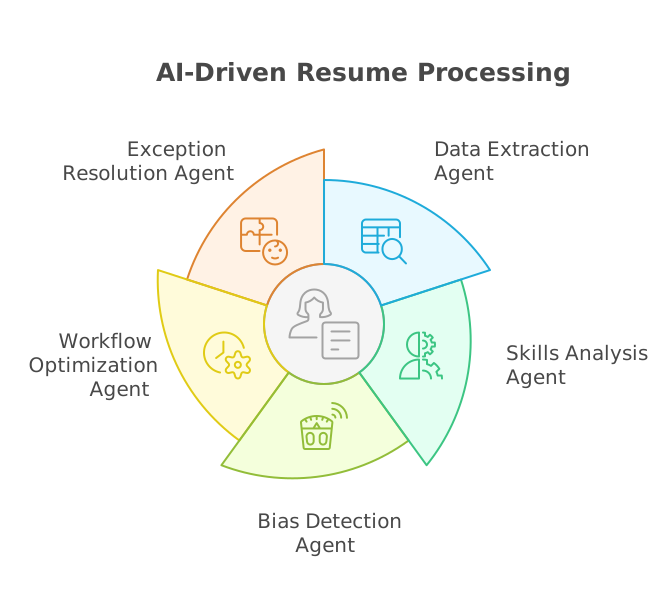
The Exception Resolution Agent handles the inevitable edge cases. When a resume doesn't follow standard formats, when career paths are highly unusual, or when data conflicts arise, this agent steps in to resolve issues. It might engage additional specialized agents, request human review for particularly complex cases, or apply advanced heuristics to make sense of ambiguous information. This ensures that no candidate falls through the cracks due to system limitations.
All of these agents feed their insights into the Synthesis Agent, which creates a unified candidate intelligence profile. This isn't just a summary of the resume, it's a comprehensive analysis that includes extracted data, inferred competencies, market context, cultural fit indicators, and predictive success metrics. The profile is dynamic, updating as new information becomes available and as the agents continue to learn from organizational hiring patterns.
The shift from reactive parsing to proactive intelligence enables organizations to build true talent analytics capabilities. Instead of just processing applications as they arrive, AI agents continuously analyze your talent pipeline, identify trends, and provide predictive insights that drive strategic decision-making.
Real-time analytics start with pipeline intelligence. Agents monitor application flow, identifying surges and drops that might indicate brand perception issues or market changes. They analyze conversion rates at each stage, spotting bottlenecks that slow down hiring or cause candidate drop-off. If qualified candidates suddenly stop accepting offers, agents can identify patterns in the declinations and suggest adjustments to compensation, benefits, or the interview process.
Predictive modeling takes this analysis further. By examining historical hiring data, agent systems can forecast future talent needs, predict which sources will yield the best candidates, and even estimate the likelihood of accepting offers. These predictions aren't based on simple historical averages but on complex models that consider market conditions, competitive landscape, seasonal patterns, and organizational changes. The agents might predict that you'll need to start recruiting for data scientists three months earlier than usual due to increasing market competition, or that your traditional university recruiting channels are becoming less effective for certain roles.
The talent pool intelligence that agents provide is particularly valuable. Instead of treating each recruitment cycle as a discrete event, agents build and maintain a living talent database. They track candidates who weren't hired but showed promise, monitor their career progression through public data, and alert recruiters when these candidates might be ready for a new opportunity. They identify skills that are becoming more or less common in your talent pool, helping you adjust job requirements and development programs accordingly.
Competitive intelligence is another crucial capability. Agents analyze public data to understand how your talent acquisition performance compares to competitors. They track where your candidates go when they don't join your organization and where your new hires come from. This intelligence helps you identify competitive threats, adjust your employer branding, and make strategic decisions about compensation and benefits.
Quality of hire metrics become far more sophisticated with agent-based systems. Instead of waiting months or years to evaluate hiring decisions, agents can identify early indicators of success or struggle. They correlate pre-hire assessments with performance data, identifying which evaluation criteria actually predict success in your organization. This creates a continuous feedback loop that improves hiring decisions over time.
Modern talent intelligence systems don't operate in isolation. The real value emerges when AI agents integrate seamlessly with your entire HR technology stack, creating a unified ecosystem that enhances every aspect of talent management.
Integration with Applicant Tracking Systems (ATS) goes far beyond simple data transfer. AI agents enhance ATS functionality by providing intelligent routing, automated scheduling recommendations, and dynamic workflow adjustments. When integrated with your ATS, agents can automatically prioritize candidates based on urgency of need, likelihood of success, and strategic importance. They can suggest optimal interview panels based on availability and expertise matching. They can even predict which candidates are at risk of dropping out of the process and recommend interventions.
Human Resource Information Systems (HRIS) integration enables agents to understand your organization's structure, culture, and needs at a deep level. Agents can analyze successful employees to build ideal candidate profiles, identify internal mobility opportunities that might fill open positions, and understand team dynamics that affect hiring decisions. This integration also enables sophisticated succession planning, with agents identifying external candidates who could fill future leadership gaps.
Learning Management System (LMS) integration adds another dimension to talent intelligence. Agents can assess not just current skills but learning potential and development trajectory. They can recommend candidates who might not meet all current requirements but have demonstrated the ability to quickly acquire new skills. Post-hire, agents can suggest personalized development paths based on the gap between current capabilities and role requirements, ensuring new hires are set up for success.
Performance management integration closes the talent loop. Agents learn from performance data to refine their hiring recommendations continuously. They identify which pre-hire indicators actually correlate with high performance in your organization. This might reveal surprising insights, like certain educational backgrounds or experience types that predict success in ways you hadn't anticipated. The agents also track performance trends across different hiring sources, teams, and roles, providing strategic intelligence for workforce planning.
Communication and collaboration tools integration ensures that talent intelligence is accessible when and where it's needed. Agents can push insights directly into Slack channels, create automated reports in business intelligence platforms, and even participate in virtual meetings to provide real-time candidate intelligence. This accessibility democratizes talent insights across the organization, enabling better decision-making at every level.
The integration architecture itself is designed for flexibility and scalability. Modern AI agent platforms use API-first approaches that enable rapid integration with new tools as your tech stack evolves. They support real-time data synchronization, ensuring that insights are always based on current information. They also maintain data lineage and audit trails, crucial for compliance and continuous improvement.
While time savings remain a significant benefit of AI-powered talent intelligence, focusing solely on efficiency metrics misses the transformative business impact these systems deliver. The true ROI comes from better hiring decisions, improved retention, enhanced diversity, and strategic talent advantages that drive business growth.
Quality of hire improvements directly impact the bottom line. When AI agents help you identify candidates who are not just qualified but genuinely well-suited to your organization, the ripple effects are substantial. These employees ramp up faster, requiring less training and supervision. They're more engaged and productive, contributing innovations and improvements that wouldn't have emerged otherwise. They stay longer, reducing the enormous costs associated with turnover. Studies show that a bad hire can cost up to 30% of their first-year earnings, while a great hire can deliver 5-10x their salary in value. AI agents dramatically improve your odds of making great hires consistently.
Retention rates see marked improvement when hiring decisions are informed by deep talent intelligence. Agents identify candidates whose values, work styles, and career aspirations align with your organizational culture and growth opportunities. They can even predict retention risk during the hiring process, allowing you to address potential issues proactively. This might mean adjusting role responsibilities, providing additional support, or setting different expectations. The result is employees who are more satisfied, more committed, and more likely to build long-term careers with your organization.
Diversity and inclusion metrics transform when bias detection and mitigation are built into every step of the talent process. AI agents don't just help you avoid discrimination, they actively promote diversity by identifying qualified candidates from non-traditional backgrounds who might otherwise be overlooked. They ensure that job descriptions appeal to diverse audiences, that evaluation criteria don't inadvertently favor certain groups, and that the entire process promotes equitable outcomes. Organizations using AI-powered talent intelligence report significant improvements in diversity hiring, with some seeing 40-50% increases in underrepresented groups.
Strategic workforce planning becomes proactive rather than reactive. AI agents provide the intelligence needed to anticipate talent needs, identify emerging skill gaps, and build talent pipelines before positions become urgent. This proactive approach reduces time-to-fill for critical roles, ensures business continuity, and enables organizations to seize opportunities that require specific talent. The agents might identify that your competitors are all hunting for the same scarce skills, suggesting alternative talent strategies or early investment in developing these capabilities internally.
Innovation and competitive advantage emerge from having the right talent in the right roles. AI agents help identify candidates with innovative mindsets, entrepreneurial experience, or unique perspectives that can drive business transformation. They recognize patterns that suggest creative problem-solving abilities or disruptive thinking. By consistently bringing in talent that pushes boundaries and challenges status quo, organizations build innovation capacity that translates directly to market advantages.
The financial impact extends to reduced agency fees, lower recruitment advertising costs, and decreased reliance on expensive executive search firms. When your internal talent intelligence is sophisticated enough to identify and attract top talent directly, external recruitment costs plummet. Some organizations report 60-70% reductions in agency fees after implementing AI-powered talent intelligence systems.
Successfully transforming resume parsing into intelligent talent systems requires thoughtful implementation and careful change management. Organizations that rush implementation or treat it as purely technical projects often fail to realize the full potential of AI agents. Those that approach it strategically see transformative results.
Start with clear objectives tied to business outcomes. Don't implement AI agents because they're innovative or trendy. Define specific goals like reducing time-to-hire for critical roles by 40%, improving diversity hiring by 30%, or increasing quality of hire scores by 25%. These concrete objectives guide implementation decisions and provide clear success metrics. They also help secure stakeholder buy-in by connecting talent intelligence to business results.
Phase implementation thoughtfully. While AI agent systems can transform entire talent processes, trying to change everything at once invites failure. Start with a pilot program focused on high-volume roles or critical positions where improved hiring decisions have immediate impact. Use early successes to build momentum and refine your approach before expanding. This phased approach also allows your team to develop expertise gradually rather than being overwhelmed by wholesale change.
Invest in change management from day one. AI agents augment human decision-making rather than replacing it, but this requires recruiters and hiring managers to work differently. Provide comprehensive training not just on how to use the system but on how to interpret AI-generated insights and when to override algorithmic recommendations. Address fears about job displacement by emphasizing how AI agents free recruiters to focus on high-value activities like relationship building and strategic talent consulting. 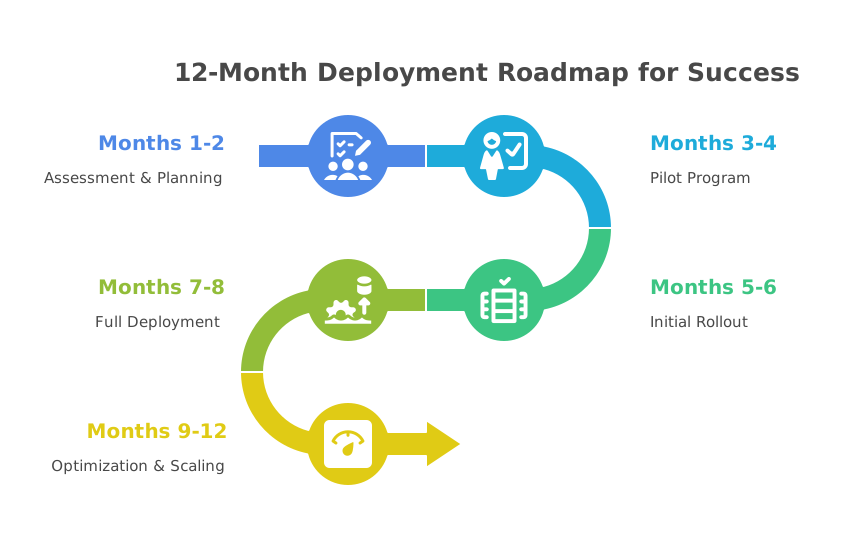
Data quality and governance cannot be afterthoughts. AI agents are only as good as the data they process. Establish clear data standards, regular quality audits, and governance processes that ensure compliance with privacy regulations. This includes defining what data agents can access, how long it's retained, and how candidate privacy is protected. Strong data governance builds trust with candidates and ensures your talent intelligence remains accurate and actionable.
Build feedback loops into every process. AI agents learn and improve from feedback, but this requires systematic capture and incorporation of human insights. When a recruiter overrides an agent recommendation, capture why. When a hire succeeds or fails contrary to predictions, understand what the agents missed. This feedback makes the system smarter and builds user confidence as they see their input directly improving outcomes.
Measure and communicate success regularly. Track not just operational metrics like time-to-hire but strategic outcomes like quality of hire, retention rates, and diversity improvements. Share success stories that illustrate how AI agents helped identify exceptional candidates who might have been overlooked. Celebrate recruiters who effectively leverage AI insights to make great hires. This ongoing communication maintains momentum and encourages adoption.
Address ethical considerations proactively. AI agents must be transparent, fair, and accountable. Establish clear principles for AI use in hiring, regular audits for bias and fairness, and mechanisms for candidates to understand and challenge automated decisions. This ethical framework isn't just about compliance, it's about building a talent intelligence system that reflects your organizational values and earns trust from all stakeholders.
As we look ahead, the evolution from resume parsing to intelligent talent systems is just the beginning. Emerging technologies and changing workforce dynamics will continue to reshape how organizations identify, attract, and develop talent.
Natural language processing advances will enable even more sophisticated understanding of candidate potential. Future agents will analyze not just what candidates write but how they communicate, identifying cultural fit and soft skills with unprecedented accuracy. They'll understand context and nuance at near-human levels, catching subtleties that reveal problem-solving approaches, leadership styles, and collaboration preferences.
Predictive analytics will extend beyond hiring to entire career lifecycles. AI agents will forecast not just hiring success but career trajectories, identifying future leaders early in their careers and suggesting development paths that maximize potential. They'll predict when high performers might be ready for new challenges, enabling proactive retention efforts. They'll even identify when external market changes might create retention risks for specific skill sets.
Integration with emerging assessment methods will add new dimensions to talent intelligence. Virtual reality assessments, gamified evaluations, and biometric data will provide agents with richer datasets to understand candidate capabilities. Imagine agents that can assess problem-solving skills through VR simulations, evaluate cultural fit through game-based assessments, or understand stress responses through consensual biometric monitoring during interviews.
The democratization of talent intelligence will extend these capabilities to organizations of all sizes. Cloud-based AI agent platforms will make sophisticated talent intelligence accessible to small and medium businesses that couldn't afford enterprise solutions. This democratization will level the playing field in the war for talent, enabling innovative startups to compete with established corporations for top candidates.
Continuous learning and adaptation will accelerate. Future AI agents won't just learn from your organization's data but from anonymized patterns across entire industries. They'll identify emerging skills before they become mainstream, spot talent trends before they impact hiring, and suggest strategic adjustments based on broad market intelligence. This collective intelligence will make every organization's talent decisions smarter.
The transformation from basic resume parsing to intelligent talent systems represents more than a technology upgrade. It's a fundamental shift in how organizations think about talent acquisition and management. By embracing AI agents that work together to understand, predict, and optimize talent decisions, companies gain competitive advantages that extend far beyond faster hiring.
This transformation requires vision, commitment, and careful execution. It demands that we reimagine recruitment not as a transactional process but as a strategic function that drives business success. It challenges us to think beyond efficiency metrics to consider quality, diversity, innovation, and long-term value creation.
Organizations that make this leap will find themselves with more than just better hiring processes. They'll have talent intelligence systems that continuously learn and improve, that surface insights humans would miss, and that enable strategic decisions based on deep understanding rather than gut instinct. They'll build teams that are more diverse, more capable, and better aligned with organizational goals.
The journey from parsing to intelligence is already underway. Early adopters are seeing remarkable results, from dramatic improvements in quality of hire to strategic advantages in competitive talent markets. As AI agents become more sophisticated and accessible, these advantages will only grow.
The question isn't whether to transform your resume parsing into intelligent talent systems. The question is how quickly you can make the transformation and how fully you can realize the potential. Because in a world where talent is the ultimate differentiator, organizations with true talent intelligence will be the ones that thrive.
The future of recruitment isn't about processing more resumes faster. It's about understanding human potential more deeply and matching that potential with organizational needs more precisely. AI agents make this future possible today. The organizations that embrace this transformation won't just hire better, they'll build the workforce that defines tomorrow's success.

Head IT Operations - Co Founder of Artificio
See it in your SAP environment
Bring us a document, a process, or a bottleneck. We'll show how Artificio captures, validates, and posts into SAP — then scale from there.
Security & compliance
ISO 27001:2013 certified, SOC 2 Type 2 compliant, GDPR and HIPAA ready. Every agent action is logged, auditable, and runs in isolated environments.