

Blog
The AI Revolution in Recruitment: Automating Candidate Outreach
Discover how AI revolutionizes recruitment by automating tasks and delivering personalized candidate outreach.

Blog
Discover how AI revolutionizes recruitment by automating tasks and delivering personalized candidate outreach.
The contemporary human resources landscape faces a profound paradox: as organizations strive to find exceptional talent in an increasingly competitive market, they simultaneously struggle with the burden of administrative processes that consume valuable time and resources. The review of resumes, screening of candidates, and personalized outreach represent critical touchpoints in the recruitment journey, yet these processes often remain stubbornly manual, repetitive, and time-intensive. According to recent industry research, talent acquisition professionals spend approximately 30% of their workweek on administrative tasks that could potentially be automated, with resume screening and initial outreach consuming the largest portion of this time.
This inefficiency creates a significant opportunity cost, as HR professionals find themselves dedicating hours to routine tasks rather than engaging in strategic talent acquisition activities that truly require human judgment, emotional intelligence, and relationship-building skills. The challenge becomes even more pronounced when organizations face high-volume recruitment needs or competitive hiring environments where rapid candidate engagement can make the difference between securing or losing exceptional talent.
In this context, artificial intelligence and agentic technologies have emerged as transformative forces, offering the potential to simultaneously address two seemingly contradictory goals: increasing operational efficiency through automation while enhancing the personalization and relevance of candidate interactions. This article explores how AI-powered platforms like Artificio are revolutionizing recruitment workflows by automatically parsing resume data and generating highly personalized outreach communications, thus creating a more efficient and candidate-centric recruitment experience.
Traditional recruitment processes typically follow a linear and labor-intensive workflow. Resumes accumulate in email inboxes, shared drives, or applicant tracking systems, awaiting manual review by recruitment professionals. Each document must be individually opened, read, analyzed, and categorized a process that can take anywhere from 5 to 30 minutes per resume, depending on the complexity of the role and the detail of evaluation.
For organizations receiving hundreds or thousands of applications, this manual screening process creates a substantial bottleneck. Industry research indicates that for each corporate position, recruiters spend an average of 23 hours reviewing resumes and conducting initial screenings. This investment of time exists before any meaningful candidate engagement even begins.
Once potentially suitable candidates are identified, another manual process commences: crafting personalized outreach communications. Recruitment professionals must review the candidate's background again, identify relevant points of connection between their experience and the open position, and compose emails or messages that speak to these connections. In an effort to streamline this process, many organizations resort to template-based communications that lack genuine personalization, often leading to lower response rates and diminished candidate experience.
The recruitment industry faces a fundamental tension between efficiency and personalization. When recruiters are overwhelmed by volume, personalization suffers. When they prioritize personalization, efficiency declines. This trade-off has long been considered unavoidable, but emerging AI technologies are challenging this assumption.
This traditional approach creates several problematic outcomes:
Traditional recruitment approaches often result in delayed response times that allow candidates to pursue other opportunities, inconsistent evaluation criteria applied across different resumes, limited personalization in candidate communications, recruitment professionals experiencing burnout from repetitive administrative tasks, and strategic talent acquisition initiatives receiving inadequate attention and resources.
The financial implications are equally significant. Recent human capital research indicates that inefficient recruitment processes increase cost-per-hire by approximately 30% and extend average time-to-fill by 15-20 days metrics that directly impact organizational performance and competitive positioning in talent markets.
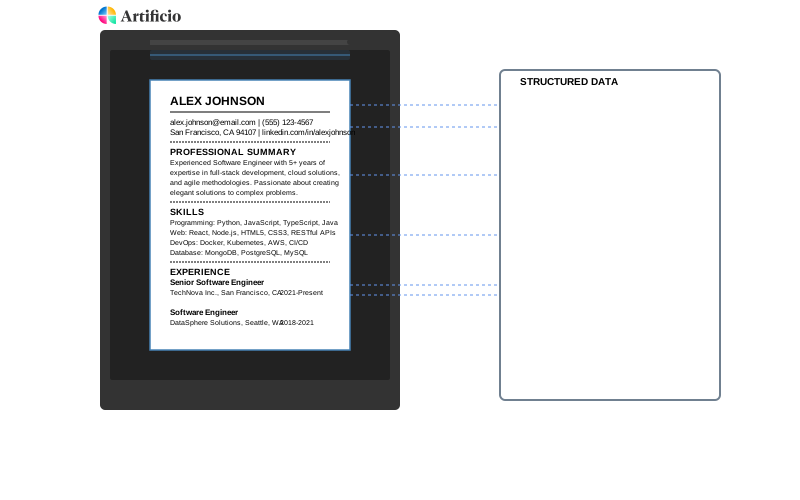
The emergence of sophisticated AI technologies has created new possibilities for automating the most time-consuming aspects of the recruitment process. At the foundation of this transformation is the ability of artificial intelligence systems to parse, understand, and extract structured information from unstructured resume documents a process visualized as below
Modern AI-powered resume parsing represents a substantial evolution from earlier keyword-based extraction systems. Contemporary solutions leverage several sophisticated technologies working in concert:
Natural Language Processing (NLP): Advanced NLP capabilities enable systems to understand the semantic meaning within resume content, recognizing the significance of phrases, context, and relationships between different elements of information. Unlike previous generation parsers that simply identified keywords, modern NLP can distinguish between different uses of the same term (e.g., Python as a programming language versus python as a snake) and understand contextual meaning.
Machine Learning Models: These systems continuously improve their accuracy through exposure to diverse resume formats, structures, and content patterns. The machine learning foundation allows the system to adapt to new resume formats, industry-specific terminology, and evolving job descriptions without requiring manual reconfiguration.
Named Entity Recognition: Specialized AI components identify and categorize key entities within resumes, including organizations, job titles, technologies, time periods, educational institutions, certifications, and accomplishments. This categorization creates a structured representation of the candidate's background that can be systematically analyzed and compared.
Document Understanding: Beyond the text itself, modern systems can interpret the structural elements of resumes, understanding the hierarchical relationships between sections, subsections, and list items. This structural comprehension enables more accurate information extraction across diverse document formats.
The resume parsing process, as illustrated in our first visualization, follows a systematic workflow:
The outcome of this parsing process is a comprehensive, structured representation of the candidate's background including their contact information, career progression, technical capabilities, educational qualifications, and notable achievements. This structured data serves as the foundation for subsequent automated processes, including the generation of personalized outreach communications.
Modern resume parsing technology enables the transformation of unstructured document data into organized, searchable, and actionable information that forms the foundation for intelligent recruitment automation. This capability fundamentally changes how organizations approach the initial stages of candidate evaluation and engagement.
Once the AI system has created a structured representation of candidate information, it leverages this data to generate personalized outreach communications a process illustrated in the second visualization accompanying this article. This generation process represents a complex orchestration of multiple AI capabilities working in concert to produce communications that are not merely mail-merged templates, but thoughtfully crafted messages tailored to each candidate's specific background and potential fit with open positions.

The figure above shows how the structured resume data is processed by an AI system that analyzes the candidate's experience, skills, and background to generate a personalized recruitment email. It demonstrates how specific elements from the candidate's profile are dynamically incorporated into the email content, creating a tailored message that references their current role, technical skills, and company experience.
The process of generating personalized candidate communications involves several sophisticated components:
Context Analysis: The system analyzes the structured candidate data in relation to the requirements and opportunities of the open position. This analysis identifies meaningful points of connection such as relevant experience, technical skills, industry background, or educational qualifications that would make the candidate potentially suitable for the role.
Content Strategy Determination: Based on the identified connections, the system determines the optimal structure and emphasis for the communication. For candidates with directly relevant experience, the message might highlight career advancement opportunities. For candidates with transferable skills from different industries, the message might emphasize the organization's training and development resources.
Natural Language Generation: The system employs advanced natural language generation capabilities to draft communications that reflect natural human writing patterns, including appropriate transitions, varied sentence structures, and cohesive paragraph development. This generation process goes beyond simple template filling, creating genuinely unique communications for each candidate.
Personalization Calibration: The system incorporates specific details from the candidate's background throughout the message, creating multiple reference points that demonstrate genuine understanding of their experience and potential value to the organization.
Tone and Cultural Alignment: Advanced systems can adjust the tone, formality, and stylistic elements of communications to align with the organization's employer brand and cultural attributes, ensuring consistency in external communications.
Call-to-Action Optimization: The system strategically positions and phrases calls-to-action based on the candidate's seniority level, current employment status, and the nature of the potential role, maximizing the likelihood of positive response.
As shown in our second visualization, the entire process unfolds through a series of connected steps, with information flowing from the structured candidate data through an AI processing center that generates the personalized content of the outreach email. The animation illustrates how specific elements of the candidate's profile their current role, technical skills, and company experience are directly referenced in the generated communication, creating authentic points of connection.
The value of AI-generated candidate communications lies not merely in their efficiency, but in their ability to create relevant, personalized interactions at scale. These systems enable organizations to maintain high-quality, individualized outreach even when dealing with large volumes of potential candidates something that would be practically impossible using traditional manual approaches.
The transformative potential of AI in recruitment extends beyond individual process improvements to enable fully integrated workflows that dramatically reduce manual intervention while enhancing candidate experience. These integrated workflows connect previously siloed processes into seamless sequences that accelerate recruitment timelines while maintaining or improving quality.
The Artificio platform exemplifies this integrated approach, offering a comprehensive workflow that includes:
The system automatically identifies and retrieves candidate resumes from various sources, including email attachments, cloud storage platforms, and applicant tracking system uploads. This collection process eliminates the need for manual document handling and organization. As illustrated in our first visualization, the platform applies sophisticated AI techniques to transform unstructured resume documents into structured, analyzable data. This parsing process captures comprehensive candidate information, including contact details, work history, educational background, technical skills, certifications, and notable achievements. The platform evaluates the parsed candidate data against the requirements and preferences specified for open positions, generating match scores and identifying specific areas of alignment or potential gaps. This matching process helps prioritize outreach efforts toward candidates with the highest potential fit. As shown in our second visualization, the system leverages the structured candidate data to generate highly personalized outreach communications that reference specific aspects of the candidate's background and establish clear connections to the potential opportunity. These communications maintain the organization's voice and employer brand messaging while delivering genuine personalization. The platform coordinates the delivery of these personalized communications across appropriate channels, including email, text messaging, and professional networking platforms, optimizing timing and approach based on candidate preferences and behavior patterns. Sophisticated tracking capabilities monitor candidate responses and engagement patterns, automatically logging interactions in the applicant tracking system and triggering appropriate follow-up communications for non-responders or interested candidates. Throughout the process, the platform maintains bidirectional data synchronization with the organization's applicant tracking system, ensuring that all candidate interactions, status updates, and new information are properly recorded without manual data entry.
This integrated workflow addresses the full lifecycle of initial candidate identification and engagement, dramatically reducing the administrative burden on recruitment professionals while improving the speed and quality of candidate connections. Organizations implementing such solutions typically report 85-90% reduction in time spent on resume screening and initial outreach, 30-40% increase in candidate response rates to initial communications, 25-35% improvement in diversity of candidate pools, 45-60% acceleration in overall time-to-fill metrics, and 15-25% reduction in overall recruitment costs.
What we're witnessing isn't simply the automation of discrete recruitment tasks, but the emergence of intelligent workflows that fundamentally reimagine the recruitment process. These technologies are shifting human resources professionals from administrative processors to strategic talent advisors, allowing them to focus on the high-value aspects of recruitment that truly benefit from human judgment and relationship-building skills.
The transformative potential of these technologies lies not merely in their ability to automate routine tasks, but in their capacity to fundamentally reimagine the recruitment process as a more efficient, personal, and effective experience for all stakeholders. By automating administrative aspects of recruitment while enhancing personalization, these technologies enable organizations to simultaneously address the seemingly contradictory goals of increased efficiency and improved candidate experience.
As with any significant technological transformation, the most successful implementations will be those that thoughtfully balance technological capabilities with human expertise, ethical considerations, and strategic objectives. Organizations that approach AI-powered recruitment as a tool for augmenting rather than replacing human judgment will be best positioned to realize its full potential for creating more efficient, effective, and equitable hiring practices.
A critical consideration in the adoption of AI-powered recruitment technologies is understanding how these systems transform rather than eliminate the role of human resources professionals. Rather than replacing recruiters, these technologies augment their capabilities and redirect their focus toward higher-value activities that leverage uniquely human strengths.
The implementation of AI-driven recruitment automation enables a significant evolution in the HR professional's role:
With administrative burdens reduced, recruitment professionals can dedicate more time to meaningful candidate interactions, including in-depth interviews, detailed role discussions, and authentic relationship building. This human connection becomes increasingly valuable as initial processes become more automated. Rather than rushing through resume screening due to volume pressures, recruiters can leverage AI-generated insights and pre-screening to make more thoughtful, comprehensive evaluations of candidate suitability, leading to better hiring decisions. The time freed from administrative tasks allows HR professionals to engage more deeply in workforce planning, skill gap analysis, and proactive talent pipeline development activities that directly influence organizational capability and competitive positioning. Recruitment professionals can dedicate greater attention to developing and expressing the organization's employer value proposition, ensuring that all candidate communications whether human or AI-generated authentically reflect the organization's culture and values. With comprehensive data generated through AI-powered processes, HR professionals can engage in sophisticated analysis of recruitment effectiveness, continuously refining approaches based on outcome metrics rather than intuition alone.
Implementing AI-powered recruitment automation doesn't reduce the importance of talent acquisition teams it transforms them into more strategic partners to the business. They can spend a majority of their time on activities that directly influence quality of hire and candidate experience, rather than drowning in administrative tasks that technology can handle more efficiently.
The implementation of AI-powered recruitment technologies introduces important ethical considerations that organizations must thoughtfully address to ensure these systems advance fair, inclusive, and effective hiring practices. Responsible implementation requires attention to several key dimensions:
AI systems learn from historical data, which may contain embedded biases from past recruitment decisions. Organizations implementing these technologies must take proactive measures to identify and mitigate potential biases:
Diverse Training Data: Systems should be trained on diverse datasets that include candidates from varied demographic backgrounds, educational paths, and career trajectories to minimize the risk of perpetuating historical biases.
Regular Bias Audits: Organizations should conduct regular audits of system outputs to identify any patterns that might indicate bias, such as systematic differences in match scores or communication tone across different candidate groups.
Human Oversight: Critical decision points should maintain appropriate human oversight, with AI serving as a decision support tool rather than an autonomous decision-maker, particularly for final candidate selection decisions.
Continuous Improvement Processes: Organizations should establish feedback loops that enable ongoing refinement of algorithms based on outcomes and diversity metrics, ensuring the system evolves toward greater fairness over time.
As automation increases, maintaining transparency and a positive candidate experience becomes increasingly important:
Appropriate Disclosure: Organizations should clearly communicate when AI technologies are being used in the recruitment process, helping candidates understand how their information is being processed and evaluated.
Meaningful Explanations: When providing feedback to candidates, organizations should offer substantive explanations of evaluation factors rather than opaque algorithmic assessments.
Human Connection Points: Even in highly automated processes, organizations should maintain clear pathways for candidates to connect with human recruiters when they have questions or need additional information.
Feedback Collection: Regular solicitation of candidate feedback about their experience with AI-enhanced recruitment processes can identify potential issues and improvement opportunities.
Successfully implementing AI-powered recruitment technologies requires thoughtful change management and a phased approach:
Start with Hybrid Implementation: Begin by implementing AI technologies alongside existing processes, allowing recruitment professionals to validate system outputs and build confidence in the technology.
Invest in Training and Development: Provide comprehensive training to help recruitment professionals understand how to effectively collaborate with AI systems, interpret their outputs, and leverage the technologies to enhance their effectiveness.
Focus on Outcomes, Not Activity: Shift performance metrics for recruitment professionals from activity-based measures (e.g., number of resumes screened) to outcome-based measures (e.g., quality of hire, diversity of candidate pools, candidate satisfaction).
Iterative Refinement: Approach implementation as an iterative process, continuously gathering feedback from recruiters, candidates, and hiring managers to refine the system's operation and integration into overall workflows.
The integration of AI-powered resume parsing and personalized outreach generation represents a significant evolution in recruitment practices, offering the potential to simultaneously increase operational efficiency and enhance candidate experience. As these technologies continue to mature, several emerging trends will likely shape their future development and implementation:
Future systems will likely develop more nuanced understanding of career progression patterns, enabling more accurate identification of candidates who may be ready for their next career move based on typical tenure and advancement patterns in their field. As global talent mobility increases, AI recruitment systems will expand their ability to accurately parse and evaluate resumes in multiple languages, making cross-border recruitment more efficient and effective. Recruitment AI will increasingly connect with comprehensive skills taxonomies and ontologies, enabling more precise matching between candidate capabilities and role requirements, even when different terminology is used to describe similar skills. Advanced systems will incorporate predictive models that estimate the likelihood of positive candidate response based on communication approach, timing, and channel, enabling further optimization of outreach strategies. The next generation of these systems will likely incorporate conversational AI capabilities that can engage candidates in initial screening discussions through chat or voice interfaces, further streamlining the early stages of the recruitment process.

Head IT Operations - Co Founder of Artificio
See it in your SAP environment
Bring us a document, a process, or a bottleneck. We'll show how Artificio captures, validates, and posts into SAP — then scale from there.
Security & compliance
ISO 27001:2013 certified, SOC 2 Type 2 compliant, GDPR and HIPAA ready. Every agent action is logged, auditable, and runs in isolated environments.