

Blog
Exploring Artificio's Open Data Extraction Tools
Explore Artificio's free tools for efficient income verification and contract data extraction. Streamline document workflows today!

Blog
Explore Artificio's free tools for efficient income verification and contract data extraction. Streamline document workflows today!
The contemporary business environment is increasingly characterized by an overwhelming proliferation of digital documents contracts, financial statements, identity verifications, and countless other forms that constitute the foundation of modern organizational operations. Within these documents resides valuable information that, when properly extracted and analyzed, can yield significant operational efficiencies, strategic insights, and competitive advantages. However, the challenge lies not merely in the storage or retrieval of these documents but in the systematic extraction of relevant data points from diverse document formats, structures, and qualities. This challenge is particularly acute when organizations must process hundreds or thousands of documents daily, each containing critical information that requires accuracy, consistency, and timeliness in processing. Conventional approaches to document processing often involve manual data entry, which is not only time-consuming and expensive but also prone to human error. The cost implications of these inefficiencies are substantial, with organizations expending significant resources on tasks that fundamentally do not add value to their core operations.
Against this backdrop, Artificio has emerged as a pioneering entity that is democratizing access to sophisticated document processing technologies. Recognizing that document processing represents a universal challenge across sectors and organizational scales, Artificio has developed a suite of open tools that are available to all visitors to their website, allowing organizations to experience firsthand the transformative potential of intelligent data extraction. This approach is particularly noteworthy as it departs from conventional models where advanced technologies are accessible only to organizations with substantial resources. By making these tools openly available, Artificio is not only showcasing their technological capabilities but also fostering a community of practice where the benefits of intelligent document processing can be widely appreciated and implemented.
The purpose of this comprehensive exploration is to examine in depth the suite of open tools that Artificio provides, with particular emphasis on their Income Verification Process and Contract Data Extraction Tool. These tools exemplify the sophisticated yet user-friendly approach that characterizes Artificio's contribution to the field of document processing. By understanding these tools in detail their functionalities, underlying technologies, and practical applications we can gain insights into how intelligent document processing is reshaping organizational practices and creating new possibilities for efficiency and innovation. This exploration will also consider the broader implications of these technologies for organizational transformation, industry practices, and the future trajectory of document processing in an increasingly digital world.
The Income Verification Process represents one of Artificio's signature offerings within their suite of open tools. This process addresses a specific but widespread challenge across various sectors: the efficient and accurate verification of income information from disparate financial documents. Financial institutions, mortgage lenders, rental property managers, and human resource departments routinely confront the task of verifying income claims against documentary evidence. This process traditionally involves manual review of documents such as paystubs, W2 forms, tax returns, and bank statements, extracting relevant information, cross-referencing for consistency, and making determinations based on established criteria. The manual nature of this process introduces several inherent inefficiencies: it is time-consuming, requires specialized knowledge, is prone to errors, and creates bottlenecks in broader processes such as loan approvals or rental applications.
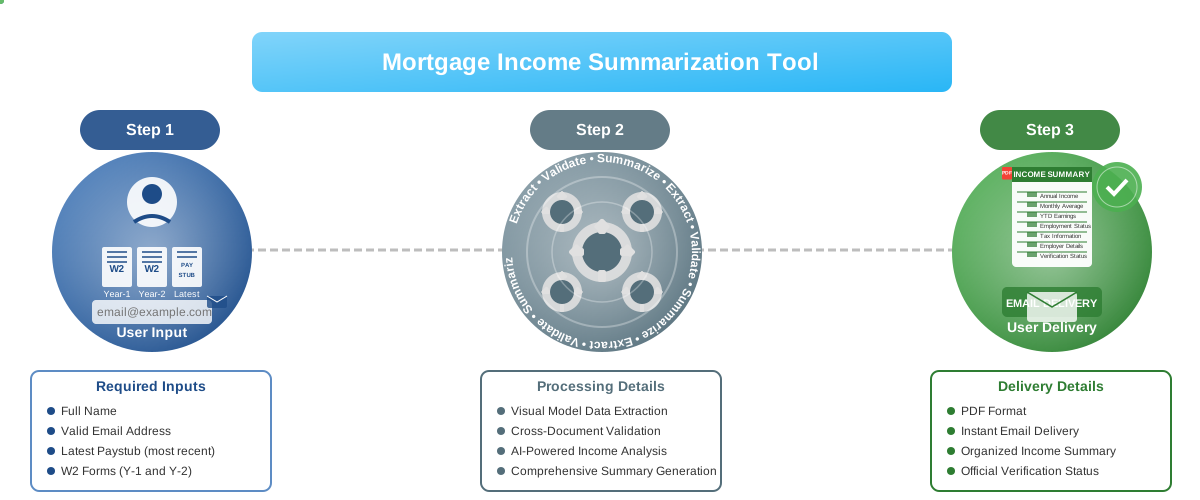
Artificio's Income Verification Process systematically addresses these inefficiencies through a sophisticated yet intuitive workflow that encompasses document intake, data extraction, validation, summarization, and secure delivery. The process begins with the user submitting their name, email address, and the relevant financial documents, specifically their latest paystub and W2 forms from the previous two years. This initial step is designed for simplicity and security, ensuring that the verification process can commence with all necessary documentation while maintaining appropriate data protection measures. The system's ability to simultaneously process different document types (paystubs and W2 forms) is particularly noteworthy, as it demonstrates the tool's capacity to handle heterogeneous document sets that contain complementary information.
Once the documents are submitted, the system enters its processing phase, which represents the core technical sophistication of Artificio's approach. During this phase, the system employs a combination of optical character recognition (OCR), natural language processing (NLP), and specialized machine learning models to extract relevant information from the submitted documents. The extraction process is comprehensive, identifying key financial data points such as gross income, net income, year-to-date earnings, employer information, tax withholdings, and employment duration. Crucially, the system is designed to recognize and accommodate variations in document formats, layouts, and terminology across different employers and timeframes, ensuring that the extraction process remains robust despite the lack of standardization in financial documentation.
Following extraction, the system performs a validation phase that significantly enhances the reliability of the processed information. This validation involves cross-referencing information between different documents and within the same document to identify inconsistencies, anomalies, or potential errors. For instance, the system might compare the employer information across different documents to ensure consistency, or it might verify that the year-to-date earnings on a paystub are proportionally aligned with the annual income reported on a W2 form. This cross-validation process is particularly valuable as it mimics the critical thinking and attention to detail that a human reviewer would bring to the task, but with the added advantages of computational speed and systematic consistency.
The culmination of the Income Verification Process is the generation of a comprehensive income summary that synthesizes the extracted and validated information into a coherent and standardized format. This summary is delivered to the user via email in a secure PDF format, ensuring both accessibility and data protection. The summary typically includes an overview of annual income, monthly averages, employment status, tax information, and other relevant financial metrics. By presenting this information in a standardized format, the system facilitates downstream processes such as loan underwriting, rental approvals, or employment verifications, where consistent data presentation enhances decision-making efficiency.
The visual representation of Artificio's Income Verification Process is particularly illuminating, as it employs an intuitive horizontal flow diagram with three primary nodes: User Input, Processing, and User Delivery. Each node is visually distinct, utilizing a different color scheme (blue for input, grey for processing, and green for delivery) that intuitively conveys the progression of the process. Within each node, animated elements illustrate the specific activities occurring at that stage, such as document uploads in the input node, gear mechanisms in the processing node, and email delivery in the final node. The connecting lines between nodes feature animated particles that visually represent the flow of data through the system, reinforcing the sense of a seamless, end-to-end process. This visual representation is not merely decorative but serves as an effective communication tool that enhances user understanding of the system's functionality and builds confidence in its capabilities.
The significance of Artificio's Income Verification Process extends beyond its immediate technical functionality. By streamlining a traditionally cumbersome process, it addresses several broader organizational challenges. First, it reduces the time and resources required for income verification, allowing organizations to reallocate staff to higher-value activities. Second, it enhances accuracy and consistency in verification outcomes, reducing the risk of errors that could lead to inappropriate approvals or rejections. Third, it accelerates the overall processing time for applications that depend on income verification, improving customer experience and potentially increasing transaction volumes. Fourth, it creates a standardized and auditable trail of verification activities, which is increasingly important in regulatory compliance contexts. These benefits collectively represent a significant value proposition for organizations across multiple sectors, explaining the growing interest in and adoption of such automated verification processes.
Building upon the success and foundational technologies of the Income Verification Process, Artificio has developed another powerful open tool: the Contract Data Extraction Tool. This tool addresses a distinct but equally pervasive challenge in the organizational landscape: the efficient extraction and analysis of critical information from legal contracts and agreements. Contracts are perhaps the quintessential example of complex documents that combine standardized elements with highly specific and variable content. They often span dozens or hundreds of pages, incorporate specialized legal terminology, include nuanced clauses and conditions, and exist in various formats ranging from standardized templates to bespoke agreements. Extracting relevant information from these documents traditionally requires specialized legal knowledge, careful reading, and meticulous documentation a process that is both time-intensive and intellectually demanding.
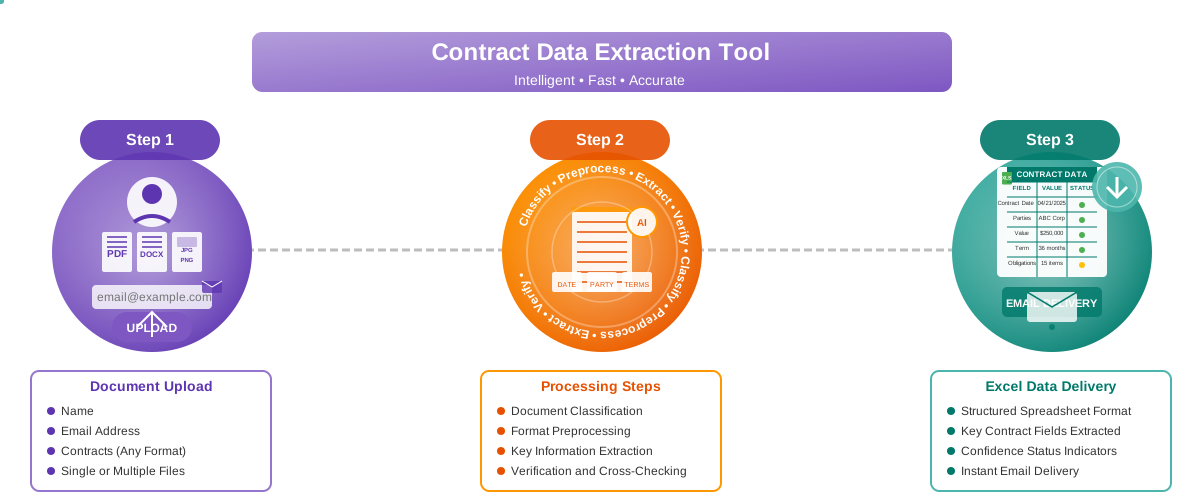
The Contract Data Extraction Tool represents Artificio's systematic approach to transforming contract analysis through intelligent automation. The tool follows a structured workflow that begins, like the Income Verification Process, with the user submitting basic identification information along with the contract documents they wish to analyze. A particularly noteworthy feature of this tool is its format flexibility it accepts documents in virtually any format, including PDF, DOCX, and various image formats such as JPG and PNG. This flexibility is crucial in the contract domain, where documents may exist in different formats depending on their age, source, or the technologies used in their creation. By accommodating this diversity of formats, the tool significantly reduces the preliminary preparation work that might otherwise be required to standardize document inputs.
Once the documents are submitted, the Contract Data Extraction Tool embarks on a sophisticated processing journey that encompasses several distinct but interconnected stages. The first stage involves document classification, where the system identifies the nature and type of the contract whether it is a sales agreement, employment contract, lease agreement, non-disclosure agreement, or any other contractual form. This classification is not merely nominal but informs subsequent processing steps, as different contract types prioritize different information elements and exhibit distinct structural patterns. Following classification, the system performs format preprocessing, which involves converting the document into a standardized internal representation that facilitates consistent analysis regardless of the original format. This preprocessing may include OCR for image-based documents, text normalization, and structural parsing to identify sections, clauses, and hierarchical relationships within the document.
The core value of the Contract Data Extraction Tool emerges in the next stage: key information extraction. Here, the system employs advanced natural language processing and machine learning techniques to identify and extract specific data points that are critical to understanding the contract's implications. These data points typically include basic metadata such as contract dates, parties involved, and monetary values, but also extend to more complex elements such as term duration, renewal conditions, termination clauses, indemnification provisions, jurisdictional specifications, and performance obligations. The sophistication of this extraction process lies in its ability to navigate the linguistic complexity and structural variability of contracts to consistently identify information that is contextually important.
Following extraction, the system performs a verification and cross-checking phase that enhances the reliability of the extracted information. This verification process involves both internal consistency checks (ensuring that extracted information is logically coherent) and, where applicable, cross-document validation (comparing information across related documents to identify discrepancies). For instance, the system might verify that the contract term specified in one section aligns with relevant dates mentioned elsewhere in the document, or it might confirm that the party names are consistently referenced throughout the agreement. This verification process is particularly valuable in identifying potential errors, omissions, or contradictions within the contract that might have legal or operational implications.
The culmination of the Contract Data Extraction Tool's processing is the generation of a structured data output in Excel format. This format choice is significant as Excel represents a universally accessible platform for data analysis that allows users to sort, filter, and further process the extracted information according to their specific requirements. The Excel output typically organizes the extracted data into a tabular format with clear field designations, corresponding values, and confidence indicators that reflect the system's certainty regarding each extracted element. This structured presentation transforms the unstructured narrative of the original contract into a data asset that can be more readily analyzed, compared, and integrated into broader data ecosystems. The final delivery of this Excel file occurs via email, ensuring that the user has immediate access to the processing results.
The visual representation of the Contract Data Extraction Tool employs a similar horizontal flow structure to the Income Verification Process but utilizes a different color palette (purples, oranges, and teals) to create a distinct visual identity. The three main nodes Document Upload, Processing, and Excel Data Delivery are visually rendered with rich iconography and animations that illustrate the specific activities occurring at each stage. Particularly noteworthy in this visualization is the circular text that surrounds the processing node, displaying the cyclic stages of "Classify • Preprocess • Extract • Verify" in a continuous loop. This circular arrangement visually reinforces the iterative and comprehensive nature of the processing methodology. Additionally, the detailed representation of the Excel output, complete with sample data and status indicators, provides users with a clear preview of what they can expect from the tool, enhancing user understanding and setting appropriate expectations.
The strategic significance of the Contract Data Extraction Tool extends far beyond its immediate technical capabilities. By transforming contracts from unstructured text documents into structured data assets, it enables several transformative organizational capabilities. First, it facilitates comprehensive contract portfolio analysis, allowing organizations to gain insights into patterns, risks, and opportunities across hundreds or thousands of agreements. Second, it enhances compliance monitoring by systematically identifying obligations, deadlines, and conditions that require attention. Third, it accelerates contract review processes during due diligence activities, potentially reducing the time and cost associated with mergers, acquisitions, or major transactions. Fourth, it creates a foundation for more sophisticated contract lifecycle management by establishing structured data that can be monitored, updated, and analyzed over time. These capabilities collectively represent a significant advancement in how organizations manage their contractual relationships and the associated risks and opportunities.
The impressive capabilities demonstrated by Artificio's Income Verification Process and Contract Data Extraction Tool are underpinned by a sophisticated technological infrastructure that merits detailed examination. Understanding these technological foundations is essential for appreciating both the current capabilities of these tools and their potential for future development and application. At the core of Artificio's approach is a multi-layered technology stack that combines established document processing techniques with cutting-edge artificial intelligence and machine learning methodologies, all orchestrated within a secure and scalable cloud environment.
The foundational layer of Artificio's technology stack involves document ingestion and preprocessing capabilities that can handle diverse document formats, qualities, and structures. This layer encompasses technologies such as Optical Character Recognition (OCR) for converting image-based documents into machine-readable text, format conversion utilities for standardizing document representations, and preliminary structural analysis for identifying document sections, tables, forms, and other organizational elements. The sophistication of this preprocessing layer is particularly evident in its ability to handle suboptimal document conditions such as poor image quality, unusual fonts, or non-standard layouts which are common challenges in real-world document processing scenarios. By establishing a robust preprocessing foundation, Artificio ensures that subsequent analytical processes can operate on consistent and high-quality document representations, regardless of the original document characteristics.
Building upon this preprocessing foundation, Artificio employs a suite of natural language processing (NLP) technologies that form the analytical core of their data extraction capabilities. These NLP technologies encompass both general-purpose language understanding models and domain-specific models that have been trained on particular document types such as financial statements or legal contracts. The general-purpose models provide broad linguistic capabilities such as entity recognition, relationship extraction, semantic similarity assessment, and contextual interpretation. These capabilities allow the system to identify key information elements within unstructured text and understand their relationships and significance. The domain-specific models, meanwhile, bring specialized knowledge about particular document types, incorporating understanding of domain terminology, conventional structures, and expected information patterns. This dual approach combining general linguistic intelligence with domain expertise enables Artificio's tools to achieve high accuracy in information extraction across diverse document contexts.
A particularly noteworthy aspect of Artificio's technological approach is their implementation of machine learning models that continuously improve through exposure to diverse document examples. These models employ various architectures, including deep neural networks, that can identify patterns and relationships that might not be apparent through rule-based approaches. The training of these models likely involves both supervised learning, where the models are trained on labeled examples of correctly extracted information, and unsupervised learning, where the models discover patterns and structures within documents without explicit guidance. This learning capability is crucial for adapting to the variability and evolution of document formats and contents, ensuring that the extraction capabilities remain robust as document practices change over time.
The verification and validation components of Artificio's technology stack represent another sophisticated element that enhances the reliability of the extracted information. These components employ a combination of rule-based checks, statistical analysis, and cross-referencing techniques to identify inconsistencies, anomalies, or potential errors in the extracted data. For instance, the system might verify that numerical values fall within expected ranges, that dates follow logical sequences, or that entity references are consistent throughout a document. These validation processes are crucial for ensuring that the extracted information meets quality standards before being presented to users, addressing one of the primary concerns with automated data extraction systems: the risk of propagating errors or misinterpretations.
Underpinning all these technologies is a secure and scalable cloud infrastructure that enables Artificio to process documents efficiently while maintaining appropriate data protection measures. This infrastructure likely includes components for secure data storage, computational resources for processing-intensive operations such as OCR and machine learning inference, and communication channels for receiving documents and delivering results. The cloud-based approach offers several advantages, including the ability to scale resources dynamically based on processing demand, to update models and algorithms centrally without requiring user-side changes, and to implement robust security measures that might be difficult to maintain in distributed environments.
The visual representations of Artificio's tools, as evidenced in the SVG animations for both the Income Verification Process and Contract Data Extraction Tool, suggest a sophisticated understanding of user experience design principles. These visualizations employ intuitive flow diagrams, clear iconography, meaningful color schemes, and animated elements that effectively communicate the processes and capabilities of the tools. The attention to visual communication reflects an understanding that technology adoption depends not only on functional capabilities but also on user comprehension and confidence. By creating visualizations that make complex processes accessible and understandable, Artificio enhances the usability and perceived value of their tools.
The technological sophistication of Artificio's data extraction tools translates into practical applications that can significantly transform organizational processes across various sectors. By examining these applications in detail, we can appreciate the breadth and depth of impact that these tools can have on operational efficiency, decision-making quality, and strategic positioning. The applications span industries and functional areas, demonstrating the versatility and adaptability of Artificio's approach to document processing.
In the financial services sector, Artificio's Income Verification Process offers particularly compelling applications. Banks and lending institutions can leverage this tool to streamline mortgage origination processes, reducing the time required to verify borrower income and enhancing the accuracy of underwriting decisions. Similarly, credit card issuers can expedite credit limit determinations by quickly analyzing income documentation against their established criteria. Wealth management firms can enhance client onboarding by efficiently processing financial documentation to develop comprehensive client profiles. Insurance companies can streamline premium determinations for income-based insurance products such as disability coverage. In each of these applications, the tool not only reduces processing time but also creates standardized documentation that can be valuable for regulatory compliance and audit purposes.
The real estate sector represents another domain where the Income Verification Process offers significant value. Property management companies can enhance tenant screening processes by efficiently verifying that prospective tenants meet income requirements, reducing vacancy periods and minimizing the risk of payment defaults. Commercial real estate firms can expedite lease approvals for business tenants by quickly assessing financial documentation against their qualification criteria. Real estate development companies can streamline investor verification processes for participation in development projects, ensuring that investors meet accreditation requirements based on income and asset verification. These applications collectively enhance the operational efficiency of real estate organizations while potentially reducing the risk of problematic tenancies or partnerships.
Human resources departments across various industries can leverage the Income Verification Process to enhance employment-related processes. During hiring, HR teams can verify candidate salary histories to inform appropriate compensation offers. For benefits administration, they can efficiently process financial documentation related to qualified life events that might affect benefits eligibility. When conducting compensation benchmarking, they can analyze salary documentation across the organization to identify patterns, disparities, or opportunities for adjustment. During mergers and acquisitions, HR teams can expedite the integration of new employees by quickly processing their financial documentation into standardized formats that align with existing systems. These applications demonstrate how automated income verification can enhance not only transactional HR processes but also strategic workforce management activities.
Turning to the Contract Data Extraction Tool, we find equally compelling applications across various organizational contexts. Legal departments can transform their contract management practices by automatically extracting key provisions, obligations, and risks from their contract portfolio, enabling more proactive management of contractual relationships. During mergers and acquisitions, due diligence teams can expedite the review of hundreds or thousands of contracts to identify potential liabilities, commitments, or valuable rights that might affect transaction valuation. Procurement departments can enhance vendor management by systematically extracting and monitoring key terms, performance metrics, and renewal dates across their supplier agreements. Compliance teams can maintain comprehensive awareness of regulatory obligations, reporting requirements, and potential risk areas embedded within contractual documentation. These applications demonstrate how the transformation of contracts from unstructured documents into structured data assets can enhance organizational intelligence and operational efficiency.
In specialized sectors such as healthcare, the Contract Data Extraction Tool offers unique applications related to the complex agreements that characterize the industry. Healthcare providers can analyze payer contracts to identify reimbursement terms, exclusions, and procedural requirements that affect revenue cycle management. Pharmaceutical companies can extract and monitor obligations related to clinical trials, research partnerships, and licensing agreements. Medical device manufacturers can enhance compliance with distribution agreements by systematically tracking exclusivity provisions, territorial restrictions, and performance requirements. These sector-specific applications highlight the adaptability of Artificio's approach to different contractual contexts and regulatory environments.
Government agencies and public sector organizations represent another domain where both tools offer significant value. Government housing agencies can streamline affordable housing applications by efficiently verifying applicant income against program requirements. Economic development agencies can expedite grant approval processes by analyzing financial documentation from applicant businesses. Procurement offices can enhance contract oversight by systematically extracting and monitoring vendor obligations, performance metrics, and compliance requirements. Regulatory agencies can improve enforcement activities by efficiently processing financial and contractual documentation related to investigations or compliance reviews. These public sector applications demonstrate how automated document processing can enhance government effectiveness and resource utilization, ultimately benefiting the broader community.
Across all these applications, a common theme emerges: the transformation of document processing from a burden into a strategic capability. By automating the extraction and analysis of critical information from financial documents and contracts, organizations can not only reduce costs and processing times but also enhance decision quality, risk management, and strategic insight. This transformation is particularly significant given the volume of documents that most organizations must process from hundreds to millions annually and the cumulative impact of efficiency improvements across this scale of operations. Moreover, the standardization of extracted information creates new possibilities for data integration, analysis, and insight generation that simply cannot be achieved when information remains locked within unstructured documents. These strategic implications explain why document processing automation has moved from an operational consideration to a strategic priority for many organizations.
While the Income Verification Process and Contract Data Extraction Tool represent impressive initial offerings within Artificio's suite of open tools, they are best understood as the foundation of an expanding ecosystem rather than isolated capabilities. Artificio's approach suggests a long-term vision of creating a comprehensive platform for intelligent document processing that addresses diverse document types, use cases, and organizational needs. By examining the potential trajectories of this expansion, we can anticipate how Artificio might continue to transform document processing practices in the coming years.
One evident direction for expansion involves the development of additional specialized tools for particular document types that present unique processing challenges. For instance, we might anticipate tools specifically designed for invoice processing, which would extract vendor information, line items, amounts, payment terms, and tax details from diverse invoice formats. Similarly, we might expect tools for processing medical records, extracting diagnoses, procedures, medications, and patient information while navigating the complex terminology and structured elements of healthcare documentation. Tools for analyzing financial statements might extract balance sheet components, income statement elements, cash flow details, and financial ratios from annual reports, 10-K filings, and similar documents. Tools for processing academic transcripts might extract course information, grades, credits, and degree progress details from educational records. Each of these specialized tools would build upon the core technologies established in the initial offerings while incorporating domain-specific knowledge and processing techniques appropriate to their target document types.
Another expansion direction involves enhancing the existing tools with additional capabilities that extend their utility beyond basic information extraction. For the Income Verification Process, we might anticipate capabilities such as fraud detection, which would identify suspicious patterns or inconsistencies that suggest potential document manipulation. Income trend analysis might examine documentation over time to identify patterns of income growth, stability, or volatility that could inform risk assessments. Comprehensive financial profile generation might combine income information with other financial data points to create holistic views of individual financial situations. For the Contract Data Extraction Tool, enhancements might include risk scoring, which would evaluate extracted contract provisions against risk frameworks to identify potential areas of concern. Contract comparison capabilities might systematically analyze differences between multiple versions of an agreement or between an agreement and standard templates. Obligation management features might generate structured timelines and responsibilities based on contractual commitments. These capability expansions would transform the tools from information extraction utilities into comprehensive analytical platforms that deliver higher-level insights and actionable intelligence.
Integration capabilities represent another promising direction for Artificio's ecosystem expansion. By developing application programming interfaces (APIs) and integration frameworks, Artificio could enable their tools to connect seamlessly with other enterprise systems such as customer relationship management (CRM) platforms, enterprise resource planning (ERP) systems, content management systems, and business intelligence platforms. These integrations would allow the extracted document information to flow automatically into appropriate organizational systems, eliminating manual data transfer and enabling real-time updating of organizational data assets based on document processing outcomes. Such integration capabilities would significantly enhance the value proposition of the tools by reducing the operational friction associated with incorporating document-derived information into broader business processes and decision-making frameworks.
Customization and training capabilities represent yet another potential expansion direction that would increase the adaptability of Artificio's tools to specific organizational contexts. By developing interfaces and methodologies for organizations to train the extraction models on their particular document types, formats, and information requirements, Artificio could enable more precise and relevant extraction outcomes. For instance, a financial institution might train the Income Verification Process on the specific paystub formats commonly received from major employers in their region, enhancing extraction accuracy for their particular customer base. A legal department might train the Contract Data Extraction Tool on their organization's standard contract templates, improving the system's ability to identify deviations from established norms. These customization capabilities would address the inherent variability in document practices across organizations and industries, ensuring that the extraction tools remain effective across diverse document ecosystems.
Collaboration and workflow capabilities represent a further expansion direction that would enhance the integration of Artificio's tools into broader organizational processes. By incorporating features for routing, approval, exception handling, and collaborative review, Artificio could transform their tools from standalone utilities into components of comprehensive workflow systems. For instance, the Income Verification Process might include capabilities for routing exceptional cases to human reviewers, tracking verification status across multiple documents, and generating approval notifications when verification is complete. The Contract Data Extraction Tool might incorporate features for assigning contract review tasks to appropriate personnel, tracking review progress across multiple agreements, and facilitating collaborative annotation and discussion of contract provisions. These workflow capabilities would enhance the tools' utility in complex organizational environments where document processing is embedded within broader procedural frameworks.
Analytics and reporting capabilities represent a final expansion direction that would enhance the strategic value of Artificio's tools. By developing dashboards, visualization tools, and analytical frameworks that operate on the extracted document information, Artificio could enable organizations to generate insights beyond the level of individual documents. For instance, income verification analytics might identify patterns in income documentation across geographic regions, employment sectors, or time periods, potentially revealing broader economic trends or risk factors. Contract analytics might identify patterns in contractual terms across vendors, product categories, or business units, potentially revealing opportunities for term standardization or negotiation leverage. These analytical capabilities would transform document processing from a purely operational activity into a strategic intelligence function that contributes to organizational decision-making and planning.
Artificio's suite of open tools for intelligent document processing represents a significant contribution to the evolving landscape of organizational information management. By making sophisticated data extraction capabilities freely available to website visitors, Artificio is not only demonstrating their technological expertise but also democratizing access to capabilities that have traditionally been available only to organizations with substantial resources. This approach aligns with broader trends toward open innovation, where value is created not through technological restriction but through widespread adoption, feedback, and continuous improvement. The Income Verification Process and Contract Data Extraction Tool exemplify this philosophy, offering powerful capabilities that address common organizational challenges while establishing a foundation for an expanding ecosystem of document processing solutions.
The significance of Artificio's approach extends beyond the immediate functional capabilities of their tools to encompass broader implications for organizational practices and industry evolution. By automating document processing activities that have traditionally required intensive manual effort, these tools enable a reallocation of human resources from routine data extraction to higher-value analytical and decision-making activities. This reallocation not only enhances operational efficiency but also potentially transforms the nature of work within organizations, elevating human contributions to more intellectually engaging and strategically valuable domains. Additionally, by standardizing and structuring information that has traditionally remained locked within unstructured documents, these tools create new possibilities for data integration, analysis, and insight generation that can inform more sophisticated organizational decision-making and planning.
As Artificio continues to develop and expand their suite of open tools, we can anticipate several evolutionary trajectories that will further enhance their impact on document processing practices. The development of additional specialized tools for particular document types will extend the benefits of intelligent extraction to new domains and use cases. The enhancement of existing tools with additional analytical capabilities will transform them from basic extraction utilities into comprehensive platforms for document intelligence. The development of integration frameworks will seamlessly connect document-derived information with broader organizational systems and processes. Customization capabilities will ensure that the tools remain effective across diverse document ecosystems. Collaboration and workflow features will embed the tools within broader organizational processes. Analytics and reporting capabilities will generate insights beyond the level of individual documents, contributing to strategic intelligence and planning.
The democratization of advanced document processing capabilities through open tools represents an important step in the broader digital transformation journey. By reducing the technical and financial barriers to implementing intelligent document processing, Artificio is enabling organizations of all sizes and resource levels to participate in this transformation. This inclusive approach has the potential to accelerate innovation and adoption in the document processing domain, as a diverse community of users discovers new applications, identifies improvement opportunities, and contributes to the evolution of best practices. In this sense, Artificio's suite of open tools represents not just a technological advancement but a catalyst for a community-driven transformation in how organizations extract, process, and utilize the wealth of information contained within their document repositories.
In conclusion, Artificio's open tools for data extraction exemplify the transformative potential of intelligent document processing when made accessible to a broad community of users. The Income Verification Process and Contract Data Extraction Tool address pervasive organizational challenges with sophisticated yet intuitive approaches that combine technological innovation with practical utility. As these tools continue to evolve and expand, they will likely play an increasingly important role in how organizations manage their document-based information assets, potentially reshaping practices across sectors and functional domains. In this evolution, we see not only the advancement of specific technologies but also the emergence of new paradigms for how organizations interact with, extract value from, and make decisions based on the documents that constitute the foundation of their operations and relationships.

Head IT Operations - Co Founder of Artificio
See it in your SAP environment
Bring us a document, a process, or a bottleneck. We'll show how Artificio captures, validates, and posts into SAP — then scale from there.
Security & compliance
ISO 27001:2013 certified, SOC 2 Type 2 compliant, GDPR and HIPAA ready. Every agent action is logged, auditable, and runs in isolated environments.