

Blog
Automate Regulatory Compliance Reporting with AI & Generative PDFs
Streamline compliance reporting with end-to-end automation using AI agents and generative PDF workflows, reducing manual effort, errors, and costs.

Blog
Streamline compliance reporting with end-to-end automation using AI agents and generative PDF workflows, reducing manual effort, errors, and costs.
Regulatory compliance reporting has become one of the most demanding aspects of running a modern business. Whether you're managing financial disclosures, environmental impact assessments, healthcare quality reports, or safety documentation, the process often feels like an endless cycle of manual data entry, formatting headaches, and approval bottlenecks. What should be a straightforward task of presenting accurate information to regulators instead becomes a resource-intensive operation that pulls talented professionals away from strategic work.
The traditional approach to compliance reporting hasn't evolved much over the past decade. Teams still spend countless hours copying data from various systems into standardized templates, manually checking for errors, reformatting documents to meet specific regulatory requirements, and then routing these reports through approval chains that can take weeks to complete. By the time a report reaches its final destination, the data might already be outdated, and the team is already behind on the next reporting cycle.
This manual approach creates several critical vulnerabilities. Human error becomes inevitable when dealing with complex data sets and repetitive tasks. Version control issues arise when multiple team members work on different sections of the same report. Formatting inconsistencies emerge when documents are created across different software platforms. Approval delays compound when stakeholders are traveling or unavailable, and distribution problems occur when reports need to reach dozens or hundreds of recipients with varying access requirements.
The cost of these inefficiencies extends beyond just time and labor. Regulatory penalties for late or inaccurate reporting can reach into millions of dollars. Audit findings related to poor documentation practices can damage an organization's reputation and trigger increased scrutiny from regulators. Perhaps most importantly, the manual nature of traditional compliance reporting makes it nearly impossible to scale operations or respond quickly to changing regulatory requirements.
But what if there was a different way? What if you could automate the entire compliance reporting workflow from initial data ingestion through final distribution, while maintaining the accuracy and control that regulators demand? This isn't just a theoretical possibility anymore. Advanced AI agents and generative PDF workflows have matured to the point where end-to-end automation of regulatory compliance reporting is not only feasible but increasingly becoming a competitive necessity.
Before exploring automated solutions, it's worth examining just how expensive and risky manual compliance processes have become. Most organizations dramatically underestimate the true cost of their current approach because they focus only on the obvious expenses like staff time and software licenses, while overlooking the hidden costs that can be even more significant.
Consider a typical mid-sized healthcare organization preparing monthly quality reports for state regulators. The process usually begins with data analysts extracting information from electronic health records, laboratory systems, and administrative databases. This data extraction alone can take several days because different systems use different formats, and the data often needs to be cleaned and validated before it can be used. Once the raw data is ready, compliance specialists begin the painstaking process of organizing it into the required report format.
Creating the actual report involves far more than just inserting data into a template. Regulatory requirements often specify exact formatting, particular calculations, specific chart types, and detailed explanations for any anomalies or variations from expected ranges. Each section of the report might need to be reviewed by different subject matter experts, creating coordination challenges and potential delays. When reviewers request changes, those modifications need to be implemented across multiple document versions, increasing the risk of inconsistencies.
The approval process adds another layer of complexity. Senior executives and department heads need to review and sign off on different sections, but their schedules rarely align with reporting deadlines. Documents get passed back and forth via email, creating version control nightmares. Someone inevitably discovers a last-minute error that requires starting portions of the review process over again. What should be a straightforward approval workflow becomes a weeks-long coordination effort.
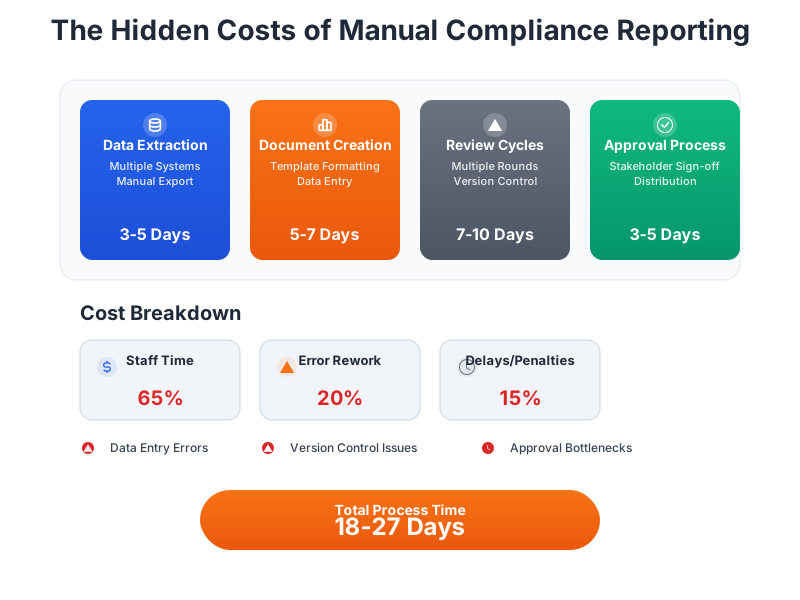
Distribution presents its own set of challenges. Different stakeholders need different versions of the same underlying report. Some regulators require printed copies with original signatures, while others accept electronic submissions but with specific file naming conventions and security requirements. Internal stakeholders might need executive summaries or detailed appendices that external recipients don't receive. Managing these distribution requirements manually virtually guarantees that someone will receive the wrong version or be left off the distribution list entirely.
The error rate in manual processes compounds at each step. A data extraction error might not be discovered until the final review stage, requiring the entire process to start over. Formatting mistakes can cause regulatory rejections, triggering expensive resubmission processes. Version control problems can result in outdated information being submitted, potentially leading to compliance violations. Even when everything goes right, the manual process is so time-consuming that teams often start working on the next report before the current one is fully completed, creating a perpetual state of rushing to meet deadlines.
These inefficiencies become even more problematic as organizations grow or face changing regulatory environments. Adding new reporting requirements under a manual system often means hiring additional staff or asking existing teams to work longer hours. When regulations change, updating manual processes requires retraining multiple people and updating numerous templates and procedures. The lack of automation makes it nearly impossible to scale compliance operations efficiently.
Artificio's platform addresses these challenges through a comprehensive automation approach that handles every aspect of the compliance reporting lifecycle. Rather than simply digitizing existing manual processes, Artificio reimagines how compliance reporting should work in an AI-driven world. The platform combines advanced document processing capabilities with intelligent workflow automation to create a system that can handle the complexity of regulatory requirements while dramatically reducing the time and effort required from human team members.
The transformation begins with how data enters the system. Traditional compliance processes require human operators to manually extract data from various sources, often involving copying and pasting information between different applications. Artificio's AI-powered document ingestion capabilities can automatically process documents from virtually any source, whether they're structured database exports, scanned paper documents, electronic files, or even photographs of physical documents taken with mobile devices.
Most organizations already use some form of optical character recognition (OCR) technology, but Artificio's approach goes far beyond basic text extraction. The platform employs advanced AI agents that can understand document context, classify different types of information, and even interpret handwritten notes or partially damaged documents. This means that source documents don't need to be perfectly formatted or completely digital to be processed effectively.
The classification capabilities are particularly powerful for organizations dealing with diverse document types. A single compliance report might need to incorporate information from laboratory test results, financial statements, employee training records, environmental monitoring data, and customer feedback surveys. Traditional OCR systems would require human operators to manually sort and categorize these documents before processing. Artificio's AI agents can automatically identify document types, extract relevant information, and route that information to the appropriate sections of the compliance report.
This automated classification extends to understanding regulatory-specific requirements. The system learns to recognize which pieces of information are required for different types of reports, which data points need special handling or validation, and which documents might contain sensitive information requiring additional security measures. Over time, the AI agents become increasingly sophisticated at handling the nuances of specific regulatory environments.
The platform can also handle complex document relationships that would be nearly impossible to manage manually. For example, a safety compliance report might reference specific incident reports, training records, and corrective action plans. Artificio can automatically identify these relationships and ensure that all relevant supporting documentation is included in the final report package, properly cross-referenced and formatted according to regulatory requirements.
Once documents are ingested and classified, Artificio's data extraction capabilities go to work identifying and extracting the specific information needed for compliance reports. This process involves far more than simply locating text strings or numerical values. The AI agents understand the context and meaning of different data points, can perform validation checks to identify potential errors or anomalies, and can even flag information that might require human review.
The key-pair extraction functionality is particularly valuable for regulatory compliance because it can handle the complex relationships between different pieces of information that are common in compliance contexts. For example, a laboratory test result isn't just a number – it's a value that needs to be associated with a specific test type, collection date, patient or sample identifier, testing methodology, and acceptable range. Artificio can automatically extract all of these related pieces of information and maintain their relationships throughout the reporting process.
The AI Validator component provides an additional layer of quality assurance that goes beyond what's possible with manual review processes. The system can identify statistical anomalies, flag values that fall outside expected ranges, detect inconsistencies between related data points, and even identify patterns that might indicate data quality issues in source systems. This validation happens in real-time as data is processed, allowing potential issues to be addressed immediately rather than being discovered during final review stages.
Perhaps most importantly, the validation process is designed to learn from each organization's specific patterns and requirements. The AI agents develop an understanding of what constitutes normal ranges and patterns for different types of data, becoming increasingly sophisticated at identifying genuine anomalies while reducing false positives that can slow down the reporting process.
Creating professional-looking compliance reports that meet regulatory formatting requirements has traditionally required either design expertise or expensive consulting services. Artificio's generative layout design capabilities democratize this process, allowing any organization to produce polished, regulation-compliant documents without needing specialized design skills.
The drag-and-drop interface makes it easy for compliance professionals to create custom report templates that incorporate their organization's branding while meeting all regulatory requirements. But the real power comes from the dynamic content insertion capabilities. Rather than creating static templates that need to be manually updated each reporting period, users can design intelligent templates that automatically adjust based on the type and amount of data being reported.
For example, a template might automatically include additional charts or tables when certain thresholds are exceeded, or it might change the layout to accommodate variable amounts of explanatory text. The system can even generate different versions of the same report for different audiences, automatically including or excluding certain sections based on who will be receiving the document.
The page sequencing functionality ensures that complex reports maintain proper flow and organization regardless of how much content is included. This is particularly valuable for compliance reports that might need to include varying amounts of supporting documentation or explanatory material. The system can automatically adjust page breaks, update table of contents entries, and ensure that related information stays together even when report length varies significantly from period to period.
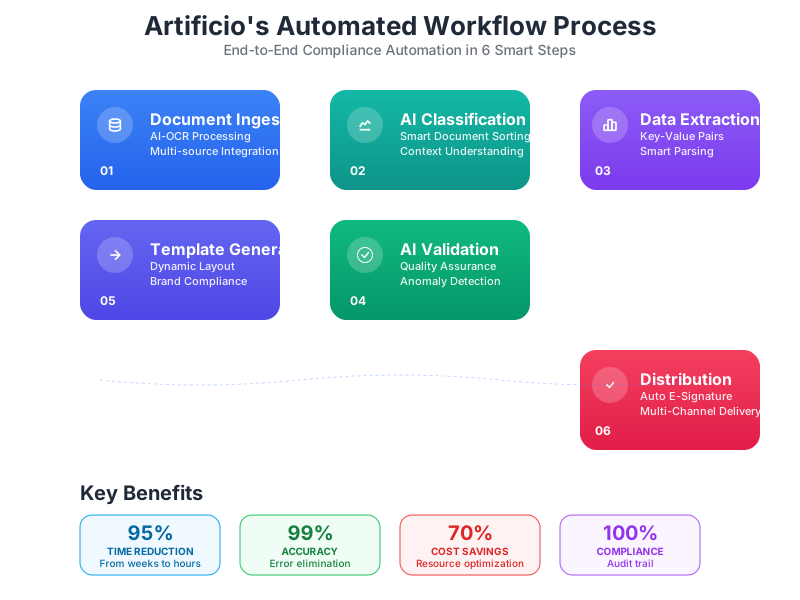
One of the biggest bottlenecks in traditional compliance reporting is the approval process. Artificio addresses this challenge by creating intelligent approval workflows that maintain the necessary oversight and control while dramatically reducing the time required to obtain necessary approvals.
The automatic e-signature integration eliminates the need for printing, manually signing, scanning, and re-distributing documents. But more importantly, the intelligent routing ensures that the right people review the right sections of each report in the most efficient order. The system can automatically identify which reviewers need to see which sections based on their roles and responsibilities, and it can route sections in parallel when dependencies allow for faster processing.
The approval workflow also includes built-in escalation procedures for handling situations where reviewers are unavailable or when urgent changes need to be made. Rather than having documents sit in someone's inbox for days or weeks, the system can automatically route to alternate approvers or notify supervisors when approval delays threaten to impact reporting deadlines.
Perhaps most importantly, the system maintains complete audit trails of all approval activities. Every review, comment, change, and approval is automatically logged with timestamps and user identifications. This level of documentation is often required for regulatory compliance, but it also provides valuable insights into process efficiency and potential improvement opportunities.
The final step in the compliance reporting process is often as complex as any other: ensuring that completed reports reach all necessary recipients in the proper format and within required timeframes. Artificio's distribution capabilities handle this complexity automatically while providing the flexibility needed to accommodate diverse stakeholder requirements.
The platform can automatically generate multiple versions of the same underlying report, customized for different audiences. Regulators might receive the complete report with all supporting documentation, while executive stakeholders receive summary versions focused on key findings and recommendations. Board members might need versions that emphasize strategic implications, while operational managers need versions that focus on process improvements and corrective actions.
Email integration allows for automated distribution to large recipient lists, with built-in tracking to confirm delivery and provide read receipts where supported. The mass mail capabilities can handle situations where reports need to be distributed to hundreds or thousands of recipients, such as when compliance updates need to be shared with all employees or when customer notifications are required.
Archive integration ensures that all distributed reports are automatically stored in appropriate document management systems with proper metadata and version control. This capability is crucial for organizations that need to maintain long-term records for audit or legal purposes. The system can automatically apply retention policies, ensuring that documents are preserved for the required period but not longer than necessary for privacy or storage efficiency reasons.
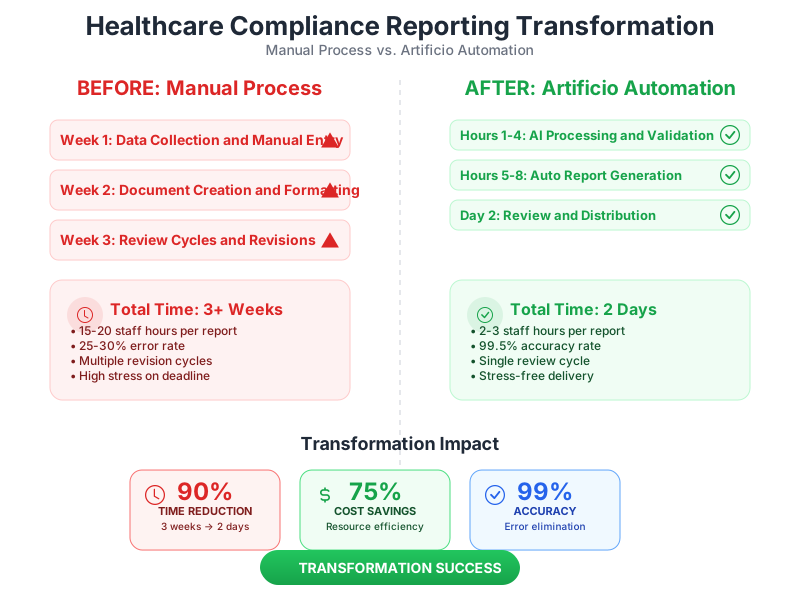
To illustrate how these capabilities work together in practice, consider how Artificio might transform the monthly health compliance reporting process for a regional healthcare network. This scenario demonstrates the platform's ability to handle complex, multi-source data integration while maintaining the accuracy and auditability that healthcare regulations demand.
The process begins on the first business day of each month when the system automatically initiates data collection from multiple sources. Laboratory information systems provide test results and quality metrics, electronic health record systems contribute patient safety indicators and clinical outcomes data, and administrative systems supply staffing levels, training completion rates, and financial performance metrics. Rather than requiring manual data exports and transfers, Artificio's AI agents can directly interface with these systems to extract only the information needed for compliance reporting.
As data flows into the system, the AI classification agents automatically sort and categorize information according to regulatory requirements. Laboratory data gets classified by test type and clinical significance, patient safety incidents are categorized by severity and type, and staffing information is organized by department and credential level. This automated classification ensures that information is properly allocated to the correct sections of the compliance report without requiring manual intervention.
The data extraction process handles the complex task of identifying relationships between different pieces of information. For example, when a laboratory quality control failure is detected, the system automatically identifies related patient tests that might be affected, corrective actions that were implemented, and follow-up testing that was performed. This comprehensive data linking ensures that regulators receive complete information about any issues and the organization's response to them.
Validation occurs continuously throughout the data extraction process. The AI Validator flags laboratory results that fall outside expected ranges, identifies unusual patterns in patient safety metrics, and detects staffing levels that might indicate compliance risks. When anomalies are detected, the system automatically generates alerts for appropriate personnel while continuing to process other data. This parallel processing capability means that potential issues can be investigated and resolved without delaying the overall reporting timeline.
The generative layout design capabilities automatically format all extracted data into the required report structure. Charts and graphs are generated to illustrate trends and patterns, tables are formatted according to regulatory specifications, and explanatory text is automatically generated for any flagged anomalies or unusual findings. The system ensures that all formatting requirements are met while maintaining a professional appearance that reflects the organization's brand standards.
When the draft report is complete, the approval workflow automatically routes different sections to appropriate reviewers. The chief medical officer reviews clinical quality metrics, the chief financial officer approves financial disclosures, and department heads review sections related to their areas of responsibility. The system coordinates these parallel reviews to minimize overall approval time while ensuring that all necessary oversight is maintained.
E-signature integration allows reviewers to approve their sections electronically, even when they're traveling or working remotely. The system automatically tracks approval status and sends reminders when deadlines approach. If a reviewer requests changes, those modifications are automatically incorporated into the master document and re-routed to affected reviewers for final approval.
Once all approvals are obtained, the distribution process begins automatically. The complete report is submitted to state health regulators through their electronic portal, while customized summary versions are distributed to board members, department heads, and quality improvement committees. Internal stakeholders receive versions that include additional operational details and improvement recommendations that aren't included in regulatory submissions.
Throughout this entire process, the system maintains detailed audit trails of all activities, from initial data extraction through final distribution. This documentation provides the comprehensive records that auditors and regulators expect while also giving the organization valuable insights into process efficiency and potential improvement opportunities.
The transformation from manual to automated processing reduces the time required for monthly compliance reporting from approximately three weeks to less than two days. More importantly, it eliminates most opportunities for human error while providing much more comprehensive and timely information to all stakeholders. The healthcare network can redirect the time and resources that were previously devoted to manual report preparation toward direct patient care and quality improvement initiatives.
While the time savings achieved through automation are substantial and immediately obvious, the broader benefits of automated compliance reporting extend far beyond simple efficiency gains. Organizations that implement comprehensive automation solutions typically experience improvements across multiple dimensions that contribute significantly to their overall operational effectiveness and competitive position.
Error reduction represents one of the most significant benefits, particularly given the potential consequences of compliance reporting mistakes. Manual data entry and document preparation processes inevitably introduce errors, even when performed by experienced professionals. These errors can range from simple typos that cause regulatory rejections to more serious mistakes that result in compliance violations and financial penalties. Automated systems virtually eliminate data transcription errors and significantly reduce formatting and calculation mistakes.
The consistency achieved through automation provides benefits that extend beyond individual reports. When reports are generated using standardized, automated processes, stakeholders can rely on consistent formatting, calculation methodologies, and presentation standards across reporting periods. This consistency makes it easier to identify trends and patterns over time, improving the analytical value of compliance reports beyond their basic regulatory function.
Scalability becomes a strategic advantage as organizations grow or face changing regulatory environments. Adding new reporting requirements to an automated system typically requires configuration changes rather than hiring additional staff or extensively retraining existing team members. When regulations change, updates can be implemented once in the automation platform rather than requiring modifications to multiple manual processes and procedures.
The audit trail capabilities provided by automated systems often exceed what's possible with manual processes. Every data transformation, validation check, approval action, and distribution activity is automatically logged with precise timestamps and user identifications. This level of documentation not only satisfies regulatory requirements but also provides valuable insights for process improvement and risk management.
Compliance assurance improves significantly when reporting processes are standardized and automated. Manual processes are vulnerable to variations in individual performance, changes in personnel, and the inevitable human errors that occur under deadline pressure. Automated systems perform the same validation checks and formatting procedures consistently, regardless of external pressures or staffing changes.
The strategic impact of automation often proves to be the most valuable benefit in the long term. When compliance professionals are freed from manual, repetitive tasks, they can focus on higher-value activities like trend analysis, process improvement, and strategic planning. This shift from tactical execution to strategic thinking can transform compliance from a cost center into a source of competitive advantage.
Risk reduction extends beyond compliance-specific risks to include broader operational and reputational risks. Automated systems are less vulnerable to the disruptions caused by personnel changes, training gaps, or temporary workload increases. The consistency and reliability of automated processes also reduce the risk of regulatory scrutiny that can result from inconsistent or low-quality reporting.
Successfully implementing automated compliance reporting requires careful planning and a systematic approach that addresses both technical and organizational factors. The most successful implementations typically follow a phased approach that allows organizations to realize benefits quickly while building toward more comprehensive automation over time.
The initial assessment phase involves thoroughly documenting existing compliance reporting processes, identifying pain points and inefficiencies, and establishing baseline metrics for time, cost, and error rates. This documentation provides the foundation for measuring improvement and helps identify which processes should be automated first. Organizations often discover that their existing processes are more complex and time-consuming than they initially realized, which helps build the business case for automation investment.
Stakeholder engagement is crucial throughout the implementation process. Compliance professionals, IT staff, senior management, and end users all need to understand how automation will affect their roles and responsibilities. Early engagement helps identify potential resistance or concerns that need to be addressed, and it ensures that the automated system will meet the needs of all users.
Data quality assessment often reveals issues that need to be addressed before automation can be fully effective. Source systems might contain inconsistent formats, missing information, or data quality problems that would be amplified by automation. Addressing these issues upfront prevents problems and ensures that the automated system produces reliable results from the beginning.
Change management becomes particularly important when implementing automation because it fundamentally changes how compliance work gets done. Training programs need to address not just how to use the new system, but also how roles and responsibilities will evolve. Some team members will shift from manual data processing to system monitoring and exception handling, while others might focus more on analysis and strategic planning.
Security and access controls require careful consideration, particularly in regulated industries where data privacy and integrity are paramount. Automated systems often require access to sensitive information from multiple sources, and the distribution capabilities mean that reports might be automatically shared with large numbers of recipients. Implementing appropriate security measures from the beginning is much easier than retrofitting security into an operational system.
Integration with existing systems needs to be planned carefully to minimize disruption to ongoing operations. Most organizations can't afford to shut down compliance reporting while implementing new systems, so integration typically needs to happen in phases with parallel operations during transition periods. Planning these transitions carefully helps ensure continuity while building confidence in the new automated processes.
Performance monitoring and continuous improvement capabilities should be built into the system from the beginning. Automated systems generate large amounts of data about process performance, error rates, and user activities. This information can provide valuable insights for ongoing optimization, but only if appropriate monitoring and analysis capabilities are implemented.
The field of compliance automation continues to evolve rapidly as AI capabilities advance and regulatory environments become increasingly complex. Organizations that implement comprehensive automation solutions today are positioning themselves to take advantage of emerging capabilities while building the foundational systems needed to handle future regulatory challenges.
Machine learning capabilities are becoming increasingly sophisticated at understanding regulatory requirements and automatically adapting to changes. Future systems will likely be able to automatically update reporting templates and validation rules based on regulatory changes, reducing the manual effort required to maintain compliance with evolving requirements.
Natural language processing advances are making it possible to automate more complex aspects of compliance reporting, such as generating explanatory text for unusual findings or automatically creating executive summaries that highlight key insights and recommendations. These capabilities will further reduce the human effort required for compliance reporting while improving the analytical value of the resulting documents.
Integration capabilities continue to expand as more business systems provide API access and standardized data formats. This trend will make it easier to incorporate information from diverse sources into compliance reports while maintaining data quality and security standards.
Real-time monitoring and reporting capabilities are becoming more feasible as data processing speeds increase and storage costs decrease. Organizations will increasingly be able to provide regulators with continuous compliance monitoring rather than periodic reports, potentially reducing regulatory burden while improving oversight effectiveness.
The organizations that invest in comprehensive compliance automation today will be best positioned to take advantage of these emerging capabilities. They'll have the foundational systems, data quality processes, and organizational capabilities needed to quickly adopt new features and technologies as they become available.
More importantly, they'll have already realized the immediate benefits of reduced manual effort, improved accuracy, and enhanced scalability. In an increasingly competitive business environment where regulatory compliance is becoming more complex and demanding, these advantages can provide significant strategic value that extends far beyond simple cost savings.
Automated compliance reporting represents a fundamental shift from reactive, manual processes to proactive, intelligent systems that can adapt to changing requirements while providing better information to all stakeholders. Organizations that embrace this transformation will find themselves better equipped to handle current compliance challenges while building the capabilities needed for future success.

Head IT Operations - Co Founder of Artificio
See it in your SAP environment
Bring us a document, a process, or a bottleneck. We'll show how Artificio captures, validates, and posts into SAP — then scale from there.
Security & compliance
ISO 27001:2013 certified, SOC 2 Type 2 compliant, GDPR and HIPAA ready. Every agent action is logged, auditable, and runs in isolated environments.