

Blog
Automate Invoice Processing via WhatsApp to SAP
Streamline accounts payable with WhatsApp & AI. Automate invoice receipt, extraction, approvals, and SAP integration.
Blog
Streamline accounts payable with WhatsApp & AI. Automate invoice receipt, extraction, approvals, and SAP integration.
Picture this: It's Monday morning, and your accounts payable team is drowning in a sea of paper invoices, email attachments, and vendor receipts. Sound familiar? You're not alone. A staggering 82% of businesses still process invoices manually, wasting over 120 hours monthly on tedious data entry tasks that could be automated in minutes.
The cost of manual invoice processing goes beyond just time. Every manual invoice costs companies an average of $15-20 to process, while automated invoices cost less than $3. With the average mid-sized company processing 500+ invoices monthly, we're talking about potential savings of $85,000+ annually. That's not pocket change.
But here's where it gets interesting. While most businesses are stuck in the stone age of invoice processing, forward-thinking companies are leveraging WhatsApp Business API automation to transform their entire accounts payable workflow. Why WhatsApp? Because it boasts a 98% open rate compared to email's measly 20%, and with over 2.78 billion users worldwide, your vendors and team members are already using it daily.
The marriage of AI-powered document processing with WhatsApp's ubiquitous messaging platform creates a perfect storm for invoice automation. Imagine receiving invoices via WhatsApp photos, having AI extract and validate the data instantly, routing approvals through automated workflows, and posting directly to your SAP system without human intervention. It's not science fiction anymore, it's happening right now.
In this comprehensive guide, we'll walk you through five game-changing ways to automate your entire invoice processing workflow using WhatsApp integration. From the moment a vendor snaps a photo of their invoice to the final posting in your ERP system, every step can be streamlined, accelerated, and error-proofed through intelligent automation.
Before diving into solutions, let's acknowledge the elephant in the room. Traditional invoice processing is fundamentally broken. The typical workflow looks something like this: vendors email invoices as PDF attachments, employees manually download and review them, data gets re-typed into spreadsheets or ERP systems, approval chains involve printing and physical signatures, and finally someone manually posts entries to accounting software. Each step introduces delays, errors, and frustration.
The problems run deeper than inefficiency. Manual data entry has an error rate of 1-3%, which might sound small until you realize that means 5-15 mistakes per 500 invoices processed. These errors cascade through your financial systems, creating reconciliation nightmares, vendor payment delays, and compliance headaches. Add in the fact that 65% of invoices require some form of exception handling, and you have a recipe for operational chaos.
Remote work has made these challenges even more pronounced. Teams scattered across different locations struggle to maintain visibility into invoice status, approval bottlenecks multiply when managers aren't physically present to sign documents, and coordinating between departments becomes a logistical nightmare. The old ways of doing business simply don't work in today's distributed work environment.
This is where WhatsApp automation shines. Unlike email, which often gets buried in overflowing inboxes, WhatsApp messages are seen immediately. Unlike traditional document management systems that require training and adoption, WhatsApp is already familiar to your entire team. And unlike paper-based approval processes that grind to a halt when someone's out of office, WhatsApp-based workflows can continue seamlessly from anywhere.
The first revolution in invoice processing happens at the point of receipt. Instead of vendors scanning documents and sending email attachments that might get lost in spam folders, they can simply snap a photo of their invoice using WhatsApp and send it directly to your business number. This might sound simple, but the implications are profound.
Traditional invoice receipt involves multiple failure points. Vendors forget to send invoices, emails bounce due to file size limits, attachments get blocked by security filters, and invoices sit in individual employee inboxes instead of flowing into centralized processing queues. With WhatsApp receipt automation, all these problems disappear overnight.
Here's how the automated receipt process works in practice. Your vendors receive a dedicated WhatsApp Business number for invoice submissions. When they photograph and send an invoice, Artificio's AI agents immediately spring into action. The document chat functionality recognizes that an invoice has been received, automatically extracts key information like vendor name, invoice number, amount, and due date, and creates a digital record in your document processing system.
The beauty of this approach lies in its universality. Whether your vendor is a tech-savvy startup using digital invoicing or a small local supplier who still handwrites receipts, they can participate in your automated workflow. The barrier to entry is essentially zero since everyone already knows how to take a photo and send a WhatsApp message.
But the real magic happens with AI-powered quality control. The system automatically checks image quality, ensuring invoices are legible before processing begins. If a photo is too blurry or missing critical information, the vendor gets an immediate response asking for a clearer image. This real-time feedback loop eliminates the back-and-forth emails that typically plague invoice collection.
The system also handles batch processing elegantly. Vendors can send multiple invoices in a single WhatsApp conversation, and each document gets processed individually while maintaining the conversation context. This is particularly valuable for vendors who submit weekly or monthly batch invoices, as they can send everything at once rather than creating separate email threads for each document.
Security concerns, which often derail automation initiatives, are addressed through WhatsApp's end-to-end encryption. Invoice data remains protected throughout transmission, and access controls ensure only authorized personnel can view sensitive financial information. This level of security actually exceeds what most companies achieve with email-based invoice receipt.
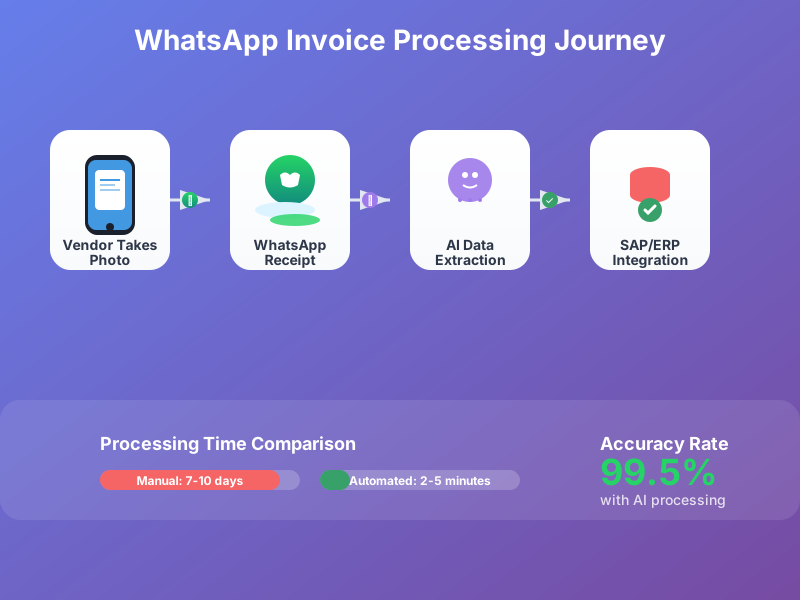
Once invoices arrive via WhatsApp, the real heavy lifting begins with intelligent data extraction and validation. This is where artificial intelligence transforms from a buzzword into a tangible business advantage. Traditional OCR (Optical Character Recognition) tools can read text from images, but they can't understand context, catch discrepancies, or learn from patterns. Modern AI document processing goes far beyond simple text recognition.
Artificio's AI agents don't just extract data; they understand invoice structures across thousands of different formats. Whether you're dealing with a professionally designed invoice from a major supplier or a handwritten receipt from a local vendor, the system adapts its extraction approach based on document characteristics. The AI has been trained on millions of invoices across different industries, countries, and languages, giving it an almost human-like ability to interpret varied document layouts.
The validation process happens in real-time and operates on multiple levels. First, there's format validation to ensure all required fields are present and properly formatted. The system checks that dates are valid, amounts are numerical, and tax calculations are correct. If something doesn't add up literally, the vendor gets an immediate WhatsApp message asking for clarification or a corrected document.
Beyond basic format checking, the system performs intelligent business rule validation. It cross-references vendor information against your approved supplier database, flags invoices that exceed purchase order amounts, and identifies duplicate submissions that might indicate fraud or simple mistakes. This level of validation typically requires human oversight in manual processes, but AI can perform these checks instantly and consistently.
The learning aspect of modern AI makes this process continuously better over time. When your team makes corrections or approves exceptions, the system learns from these decisions and applies similar logic to future invoices. If you consistently approve overtime charges from a particular vendor, the system will stop flagging those as exceptions. If you reject invoices missing specific documentation, the system will automatically request those documents from vendors.
One of the most powerful features is contextual validation using your historical data. The system knows that your office supplies vendor typically charges $200-500 per month, so an invoice for $5,000 will automatically get flagged for additional review. It understands seasonal patterns in your business, so higher utility bills in summer months won't trigger false alarms. This contextual intelligence eliminates most false positives that plague rule-based validation systems.
The extraction accuracy rates are impressive. While manual data entry typically achieves 97-99% accuracy (meaning 1-3 errors per 100 invoices), AI-powered extraction consistently delivers 99.5%+ accuracy. More importantly, when the AI is uncertain about extracted data, it flags those fields for human review rather than making confident mistakes. This hybrid approach combines the speed of automation with the reliability of human oversight.
Error handling is seamless and user-friendly. When the system can't extract certain information or identifies potential issues, it doesn't just fail silently. Instead, it sends a WhatsApp message back to the vendor with specific requests. "I couldn't read the invoice number in your photo. Could you send a clearer image of the top-right corner?" or "This invoice total doesn't match the line item calculations. Please verify the amounts and resend if needed." This conversational approach to error resolution feels natural and keeps the process moving forward.
The system also handles multi-page invoices intelligently. Rather than treating each page as a separate document, it recognizes invoice continuation patterns and assembles complete records from multiple images. This is particularly important for detailed service invoices or bills of materials that span several pages.
Traditional invoice approval processes are where good intentions go to die. Purchase orders get stuck on managers' desks, approval emails get buried in overflowing inboxes, and urgent invoices wait weeks for signatures from people who are traveling or simply overwhelmed. WhatsApp-based approval workflows eliminate these bottlenecks by bringing approvals into the messaging platform that people actually use and respond to quickly.
The approval process begins immediately after data extraction and validation. Instead of generating approval emails that might sit unread for days, the system sends WhatsApp messages to the appropriate approvers based on your business rules. These aren't generic notifications; they're contextual messages that include all the information needed to make an informed decision. "New invoice from ABC Supplies: $1,247.50 for office furniture. Purchase order #12345. Approved by requesting department. Please review and approve."
The interactive nature of WhatsApp makes approvals feel more like conversations than bureaucratic processes. Approvers can respond with simple commands like "Approve," "Reject," or "Need more info." For more complex scenarios, they can ask questions directly in the chat. "Is this the new conference table we discussed?" or "Can you verify this is within budget for Q1?" The system routes these questions to the appropriate team members and keeps everyone in the loop.
Multi-level approval workflows are handled elegantly through WhatsApp group chats or sequential individual messages, depending on your organizational preferences. For invoices requiring multiple sign-offs, the system automatically routes to the next approver once the previous level is complete. If someone's out of office, their designated backup receives the approval request instead. The system maintains complete audit trails showing who approved what and when, satisfying compliance requirements while streamlining the actual process.
One of the most valuable features is exception handling through natural conversation. When an approver has concerns about an invoice, they don't need to fill out forms or send formal emails. They can simply type their concerns in WhatsApp: "This seems high for routine maintenance" or "We already paid a similar invoice last month." The system captures these comments as part of the approval record and can route the invoice back to procurement or accounting for additional review.
The approval process becomes even more powerful when integrated with your existing business systems. The system can pull up relevant context like remaining budget amounts, purchase order details, or previous invoices from the same vendor. Approvers receive this information automatically, enabling faster and more informed decisions. They don't need to log into multiple systems or hunt down supporting documents; everything they need is delivered directly to their WhatsApp.
Time-sensitive approvals get special treatment through escalation workflows. If an invoice hasn't been approved within your specified timeframes, the system automatically escalates to the next level or sends reminder messages. For urgent invoices, like those needed to avoid late payment penalties, the system can immediately notify multiple approvers simultaneously and route to whoever responds first.
The mobile-first nature of WhatsApp makes approvals possible from anywhere. Managers can approve invoices while traveling, from client sites, or even during lunch breaks. This accessibility dramatically reduces approval cycle times and prevents the bottlenecks that occur when key people are temporarily unavailable. The system works equally well on smartphones, tablets, and desktop computers, ensuring no one is excluded from the approval process due to technology limitations.
Bulk approval capabilities handle high-volume scenarios efficiently. For routine invoices from trusted vendors, approvers can review and approve multiple invoices simultaneously. The system presents batch approval options while still maintaining individual invoice visibility for items that need special attention. This hybrid approach balances efficiency with appropriate oversight.
The ultimate goal of invoice automation isn't just faster processing; it's seamless integration with your existing business systems. This is where WhatsApp-based workflows truly shine, creating real-time connections between conversational interfaces and enterprise resource planning systems. The integration eliminates the final manual step that typically bottlenecks even partially automated processes.
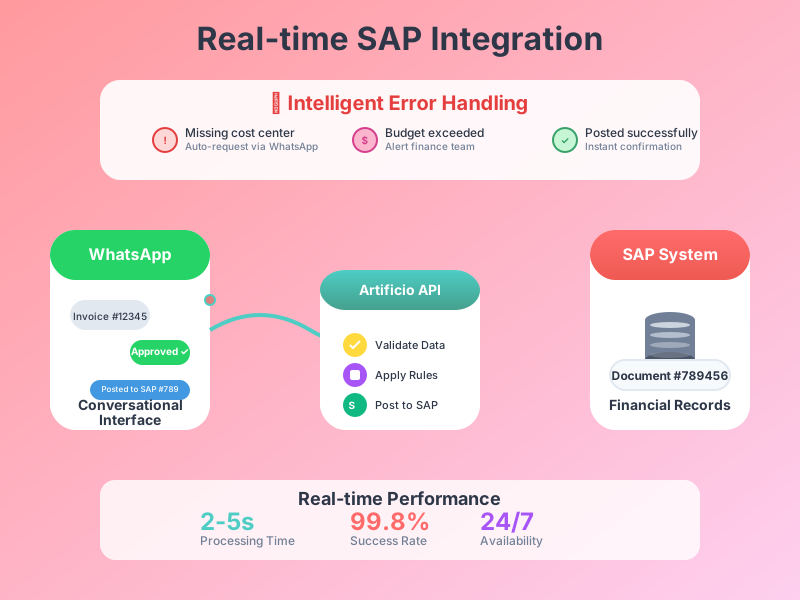
SAP integration represents the gold standard for enterprise invoice processing. When an invoice completes the WhatsApp approval workflow, Artificio's AI agents automatically create the corresponding entries in your SAP system. This isn't a batch process that runs overnight; it happens in real-time as approvals are completed. Approvers receive confirmation messages showing that invoices have been posted to SAP, complete with document numbers and posting dates.
The integration handles the complexity of SAP's document structures behind the scenes. Different invoice types require different posting logic; purchase order-based invoices follow three-way matching procedures, while non-PO invoices use general ledger posting rules. Service invoices might require approval from multiple cost centers, while goods receipts need warehouse verification. The AI agents understand these business rules and route data appropriately without requiring users to understand SAP's internal workings.
Error handling during SAP integration is particularly sophisticated. If posting fails due to missing cost centers, closed accounting periods, or budget overruns, the system doesn't just log an error and move on. Instead, it sends WhatsApp messages to the appropriate team members explaining what went wrong and suggesting corrective actions. "Invoice posting failed: Cost center 4500 is closed for Q4. Please assign to an open cost center or contact accounting to reopen." This conversational error resolution keeps processes moving instead of creating silent failures.
The system maintains perfect synchronization between WhatsApp conversations and SAP documents. Every message, approval, and comment gets stored as SAP document text, creating complete audit trails that satisfy both internal controls and external auditing requirements. When auditors review SAP transactions, they can see the entire approval conversation that led to each posting. This transparency actually exceeds what most manual processes achieve.
Beyond basic posting, the integration enables advanced SAP workflows. The system can automatically trigger payment runs for approved invoices, update cash flow forecasts based on new payables, and generate exception reports for invoices that deviate from normal patterns. Procurement teams receive WhatsApp notifications when spending approaches budget limits, enabling proactive vendor management conversations.
The integration extends to other ERP systems beyond SAP. QuickBooks, NetSuite, Oracle, and Microsoft Dynamics all benefit from similar real-time posting capabilities. The AI agents adapt their integration logic based on the target system's requirements while maintaining consistent user experiences through WhatsApp. This flexibility means companies don't need to change their core financial systems to benefit from conversational invoice automation.
Multi-entity and multi-currency scenarios are handled gracefully. Companies with subsidiaries in different countries can route invoices through appropriate approval chains and post to the correct legal entities automatically. Currency conversions happen in real-time using current exchange rates, and any significant rate fluctuations trigger notifications to finance teams. This global capability makes WhatsApp automation viable for companies with complex organizational structures.
The integration also enables powerful reporting and analytics. Since every invoice flows through the WhatsApp system before posting to SAP, the AI agents can generate real-time insights about vendor performance, approval cycle times, and processing efficiency. Finance teams receive automated reports showing trends in invoice volumes, payment terms, and exception rates. These insights help optimize vendor relationships and internal processes continuously.
The final piece of the invoice automation puzzle addresses one of the most frustrating aspects of vendor relationships: payment communication. Traditional processes leave vendors in the dark about payment status, leading to constant inquiry calls and emails that consume accounts payable team time. WhatsApp automation transforms payment communication from a reactive burden into a proactive relationship management tool.
Automated payment reminders begin immediately after invoice posting to your ERP system. Instead of vendors calling to ask "When will I get paid?" they receive proactive WhatsApp messages with payment timelines. "Your invoice #12345 for $1,247.50 has been approved and will be paid on March 15th according to net-30 terms." This simple communication eliminates 90% of vendor inquiry calls while building trust through transparency.
The system handles complex payment scenarios intelligently. For vendors with multiple outstanding invoices, it sends consolidated payment summaries rather than separate messages for each invoice. "ABC Supplies: 3 invoices totaling $4,892.33 scheduled for payment on March 15th. Details: Invoice #12345 ($1,247.50), Invoice #12367 ($2,134.83), Invoice #12389 ($1,510.00)." This consolidated approach respects vendors' communication preferences while providing complete information.
Payment status updates continue throughout the payment process. When checks are cut, vendors receive notification messages. When electronic payments are initiated, they get ACH transfer details. If payments are delayed due to banking holidays or technical issues, vendors receive explanatory messages with revised payment dates. This level of communication transparency significantly improves vendor satisfaction and reduces payment disputes.
The system also handles payment exceptions gracefully. If an invoice can't be paid due to missing documentation, budget holds, or approval issues, vendors receive detailed explanations rather than simply experiencing delayed payments. "Payment for invoice #12345 is on hold pending receipt of original receipts for travel expenses. Please send documentation to continue processing." This proactive communication enables quick resolution of payment blockers.
Early payment discount opportunities are automatically identified and communicated. The system calculates potential savings from taking advantage of vendor discount terms and sends recommendations to finance teams. "ABC Supplies offers 2% discount for payment within 10 days on invoice #12345. Potential savings: $24.95. Approve early payment?" When approved, vendors receive immediate notification of accelerated payment schedules.
Vendor self-service capabilities reduce administrative overhead significantly. Vendors can text queries like "Status of invoice #12345" or "When is my next payment?" and receive immediate automated responses based on current system data. This eliminates the need for accounts payable staff to field routine status inquiries while providing vendors with instant access to information.
The communication extends to dispute resolution as well. When payment discrepancies arise, the system can automatically retrieve the complete invoice history, including original photos, approval conversations, and posting details. This information gets shared with vendors through WhatsApp, enabling quick resolution of disputes without lengthy email chains or phone tag.
Analytics and reporting capabilities provide valuable insights into vendor payment patterns and communication effectiveness. Finance teams can see which vendors frequently inquire about payment status, identifying opportunities to adjust payment terms or communication frequency. They can track the correlation between proactive communication and vendor satisfaction scores, demonstrating the ROI of automated payment updates.
The system also enables proactive cash flow management through vendor communication. When cash flow constraints require payment delays, the system can automatically negotiate extended terms with vendors through WhatsApp conversations. "Due to temporary cash flow constraints, we're requesting 15-day payment extension for invoices due March 15th. Will you accept payment on March 30th?" This transparent communication maintains vendor relationships during challenging periods.
Implementing WhatsApp invoice automation doesn't require ripping and replacing your existing systems. The most successful deployments follow a phased approach that minimizes disruption while demonstrating value quickly. Start with a pilot program involving 5-10 vendors who process 20-50 invoices monthly. This manageable scope allows you to refine workflows and train team members without overwhelming your organization.
The first phase focuses on invoice receipt and basic data extraction. Choose vendors who are tech-savvy and open to trying new processes. Provide them with clear instructions and your dedicated WhatsApp Business number. Set up basic AI extraction for key invoice fields and route everything to your existing approval processes initially. This phase typically takes 2-4 weeks to implement and immediately demonstrates time savings in data entry.
Phase two introduces automated approval workflows for routine invoices. Start with invoices under $1,000 from pre-approved vendors, where approval decisions are typically straightforward. Configure the system to automatically route these invoices through appropriate approval chains and post to your ERP system upon approval. Expand gradually to higher-value invoices and more complex approval scenarios as confidence builds.
The third phase adds advanced features like payment automation, vendor communication, and analytics. By this point, your team is comfortable with the WhatsApp interface and basic workflows. Adding these capabilities feels like natural evolution rather than disruptive change. Most organizations reach full deployment within 3-6 months of starting their pilot program.
Change management is crucial for successful implementation. Your accounts payable team needs training on the new workflows, but more importantly, they need to understand how automation enhances rather than replaces their roles. Instead of spending time on data entry and status updates, they can focus on exception handling, vendor relationship management, and process improvement. Frame automation as career development rather than job replacement.
Vendor onboarding requires communication and support, but it's easier than most people expect. Create simple instruction sheets showing how to photograph and send invoices via WhatsApp. Offer phone support during the initial transition period. Most vendors appreciate the simplicity of WhatsApp compared to portal-based submission systems that require passwords and complex navigation.
Integration with existing systems requires technical planning but doesn't necessarily require IT resources. Modern automation platforms like Artificio offer pre-built connectors for major ERP systems and can often be configured by business users rather than programmers. Plan for some technical support during initial setup, but ongoing maintenance is typically minimal.
Security and compliance considerations are often overstated as implementation barriers. WhatsApp's end-to-end encryption provides better security than email for invoice transmission. Document retention policies can be configured to automatically archive conversations and extracted data according to your compliance requirements. Most auditors are more concerned with process consistency and auditability than the specific technology used.
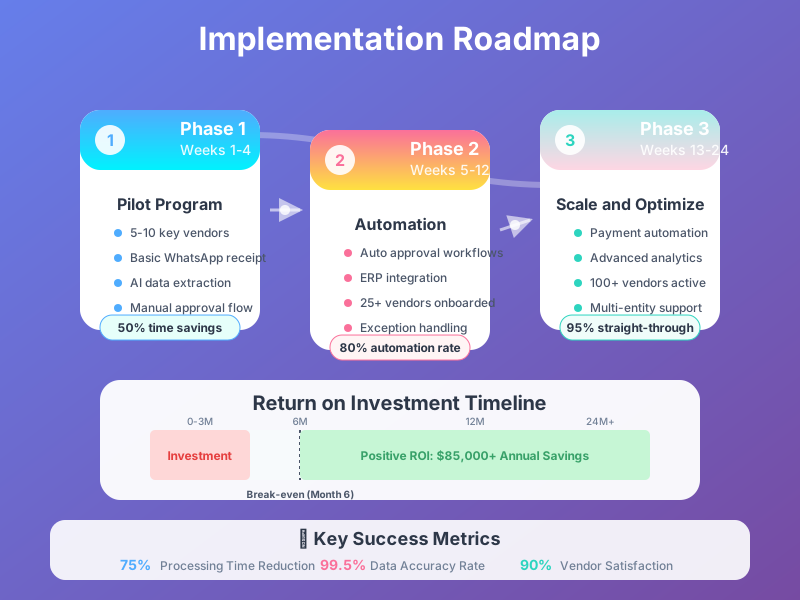
The return on investment from WhatsApp invoice automation extends far beyond simple cost savings, although those alone typically justify implementation costs within 6-12 months. Direct cost reduction comes primarily from eliminated manual data entry hours. If your team currently spends 40 hours monthly on invoice data entry at $25/hour loaded cost, automation saves $12,000 annually just in labor costs.
Processing time improvements create additional value through better cash flow management and vendor relationships. When invoice processing cycles drop from 7-10 days to 1-2 days, you can take advantage of early payment discounts more frequently. On $500,000 in monthly vendor spending, capturing just 50% of available 2% early payment discounts generates $5,000 monthly in additional savings.
Error reduction has both quantifiable and intangible benefits. Fewer data entry mistakes mean less time spent on reconciliation and dispute resolution. More importantly, improved accuracy strengthens vendor relationships and reduces the risk of compliance issues during audits. While these benefits are harder to quantify, they contribute significantly to operational efficiency.
Employee satisfaction improvements shouldn't be overlooked as success metrics. Teams that spend less time on repetitive data entry and more time on strategic activities report higher job satisfaction and engagement. This translates to reduced turnover costs and improved productivity across the finance organization.
Key performance indicators should be tracked monthly and shared with stakeholders to maintain implementation momentum. Invoice processing time (from receipt to posting) typically improves by 60-80% within three months of full deployment. Data accuracy rates improve from 97-99% to 99.5%+ as AI handles extraction tasks. Vendor inquiry volume drops by 70-90% due to proactive communication.
Advanced metrics provide insights for continuous improvement. Approval cycle time by approver helps identify bottlenecks in decision-making processes. Exception rates by vendor type reveal opportunities for better vendor onboarding or contract terms. Cost per invoice processed demonstrates efficiency gains over time as volumes scale.
The beauty of WhatsApp automation is that success builds on itself. As more vendors adopt the process and team members become comfortable with conversational workflows, processing efficiency continues improving. What starts as a pilot program to handle 20% of invoice volume often expands to cover 80%+ of transactions within a year.
The intersection of AI, messaging platforms, and enterprise systems represents the future of business process automation. Companies implementing WhatsApp invoice automation today are positioning themselves for continued evolution as these technologies advance. Machine learning algorithms will become more sophisticated, conversation interfaces will handle increasingly complex scenarios, and integration capabilities will expand to cover more business processes.
Looking ahead, expect to see multilingual processing capabilities that automatically translate invoices and conduct approval conversations in preferred languages. Voice message support will enable hands-free invoice submission and approval, particularly valuable for field-based workers and mobile teams. Blockchain integration might provide immutable audit trails and automated smart contract execution for routine vendor payments.
The key is choosing automation platforms that evolve with technological advances rather than requiring replacement every few years. Modern AI systems learn and improve continuously, making them more valuable over time rather than obsolete. Investment in conversational automation today creates capabilities that will support increasingly sophisticated workflows in the future.
Manual invoice processing is a relic of the past that's costing your organization time, money, and competitive advantage. The combination of WhatsApp's ubiquitous messaging platform with AI-powered document automation creates unprecedented opportunities to streamline accounts payable operations while improving vendor relationships and employee satisfaction.
The five approaches outlined in this guide - automated receipt, intelligent extraction, conversational approvals, real-time ERP integration, and proactive payment communication - work together to create seamless invoice workflows that feel natural to users while delivering enterprise-grade reliability and compliance.
The question isn't whether to automate invoice processing, but how quickly you can implement automation to capture available benefits. Every month of delay means continued waste of manual processing costs, missed early payment discounts, and frustrated vendors and employees dealing with inefficient processes.
Start small with a pilot program, but start today. Choose a handful of cooperative vendors and begin with basic WhatsApp receipt and extraction. As you see immediate time savings and improved accuracy, expand gradually to cover more vendors and more sophisticated workflows. Within six months, you'll wonder how your organization ever managed without conversational invoice automation.
The future of business process automation is conversational, intelligent, and integrated. Companies that embrace these capabilities now will have significant competitive advantages as AI and messaging technologies continue advancing. More importantly, they'll have teams focused on strategic value creation rather than repetitive data entry tasks.
Your vendors are already using WhatsApp. Your employees are already using WhatsApp. Your ERP system is already ready for automated integration. The only missing piece is the decision to transform your invoice processing from a manual burden into an automated competitive advantage.
The technology is mature, the business case is clear, and the implementation path is proven. The only question remaining is: when will you start your transformation?

Head IT Operations - Co Founder of Artificio
See it in your SAP environment
Bring us a document, a process, or a bottleneck. We'll show how Artificio captures, validates, and posts into SAP — then scale from there.
Security & compliance
ISO 27001:2013 certified, SOC 2 Type 2 compliant, GDPR and HIPAA ready. Every agent action is logged, auditable, and runs in isolated environments.