

Blog
AI For Commercial Real Estate Management
Automate rent roll processing with AI. Boost accuracy, cut costs, and accelerate commercial real estate decisions.

Blog
Automate rent roll processing with AI. Boost accuracy, cut costs, and accelerate commercial real estate decisions.
In the fast-paced world of commercial real estate, portfolio managers and investment professionals face an increasingly complex challenge. Every acquisition, refinancing, or asset evaluation depends on one critical document: the rent roll. This seemingly simple spreadsheet contains the financial DNA of any income-producing property, detailing everything from tenant lease terms and rental rates to upcoming expirations and potential vacancy risks. Despite its importance, rent roll analysis remains one of the most time-consuming and error-prone processes in commercial real estate operations.
Traditional rent roll processing involves teams of analysts manually transcribing data from property management systems, cross-referencing lease documents, and building complex financial models. This process can take weeks during due diligence periods, creating bottlenecks that delay critical investment decisions and increase transaction costs. The manual nature of this work also introduces significant risks. A single misplaced decimal point or overlooked lease clause can impact property valuations by millions of dollars, while the pressure to meet tight deadlines often forces teams to work with incomplete or unverified data.
The emergence of artificial intelligence and automated document processing technology is changing this landscape dramatically. Modern AI systems can now read, interpret, and analyze rent rolls with unprecedented speed and accuracy, transforming what was once a weeks-long manual process into an automated workflow that delivers results in hours. This technological revolution isn't just about efficiency gains. It's about fundamentally reimagining how commercial real estate professionals interact with property data, enabling more informed investment decisions and creating competitive advantages in an increasingly data-driven market.
To understand the transformative potential of AI-powered rent roll analysis, we first need to examine the true cost of traditional manual processing methods. Most commercial real estate professionals understand that manual data entry is time-consuming, but the full impact extends far beyond obvious labor costs. The hidden expenses and risks associated with manual rent roll processing create a compelling business case for automation that many organizations are only beginning to recognize.
The most immediate cost impact comes from the sheer amount of human resources required for thorough rent roll analysis. A typical mid-sized commercial property with 50 to 100 tenants can generate rent rolls containing hundreds of data points that require careful review and verification. Senior analysts, often billing at rates exceeding $150 per hour, spend days manually entering tenant names, lease terms, rental rates, escalation clauses, and expiration dates into standardized formats. This process becomes exponentially more complex when dealing with portfolio acquisitions involving multiple properties, each with different property management systems and reporting formats.
The time investment extends beyond initial data entry. Manual processing requires multiple quality control layers, with different team members cross-referencing lease documents, verifying calculations, and ensuring data consistency across various reports and financial models. During peak acquisition periods, it's not uncommon for teams to work around the clock to meet due diligence deadlines, leading to overtime costs that can easily double the effective hourly rate for rent roll processing. These extended work periods also increase the likelihood of errors, creating a vicious cycle where additional time must be spent identifying and correcting mistakes.
Perhaps more concerning than direct labor costs are the opportunity costs associated with manual processing delays. In competitive commercial real estate markets, the ability to quickly analyze and respond to investment opportunities often determines success or failure. When rent roll analysis becomes a bottleneck, organizations may miss acquisition opportunities or be forced to submit offers based on incomplete information. The competitive disadvantage extends beyond individual transactions, as slower analytical capabilities can prevent firms from pursuing complex, high-value deals that require rapid financial modeling and decision-making.
Error rates in manual rent roll processing create additional hidden costs that are difficult to quantify but impossible to ignore. Even experienced analysts working under normal conditions typically achieve accuracy rates of 95-97% for straightforward data entry tasks. This might seem acceptable until you consider that a single error in key metrics like net rentable area calculations or rent escalation formulas can cascade through financial models, affecting everything from property valuations to investment return projections. During high-pressure due diligence periods, error rates can increase significantly as teams rush to meet deadlines or work with unfamiliar property types or lease structures.
The impact of these errors can be substantial. Consider a scenario where an analyst misreads a lease escalation clause, understating future rental income by just 1% annually. For a $50 million property, this seemingly minor error could result in a valuation discrepancy of several million dollars over a typical hold period. Even when errors are caught before closing, the time and expense required to re-run analyses, update financial models, and communicate corrections to stakeholders can delay transactions and increase professional service costs.
Manual processing also creates challenges in maintaining data consistency across multiple reports and stakeholders. Different team members may interpret lease terms differently, leading to variations in how rent escalations, tenant improvement allowances, or operating expense recoveries are categorized and calculated. These inconsistencies become particularly problematic in large organizations where multiple teams work on different aspects of the same transaction, or when external parties like lenders or investors require standardized reporting formats that don't match the property's native rent roll structure.
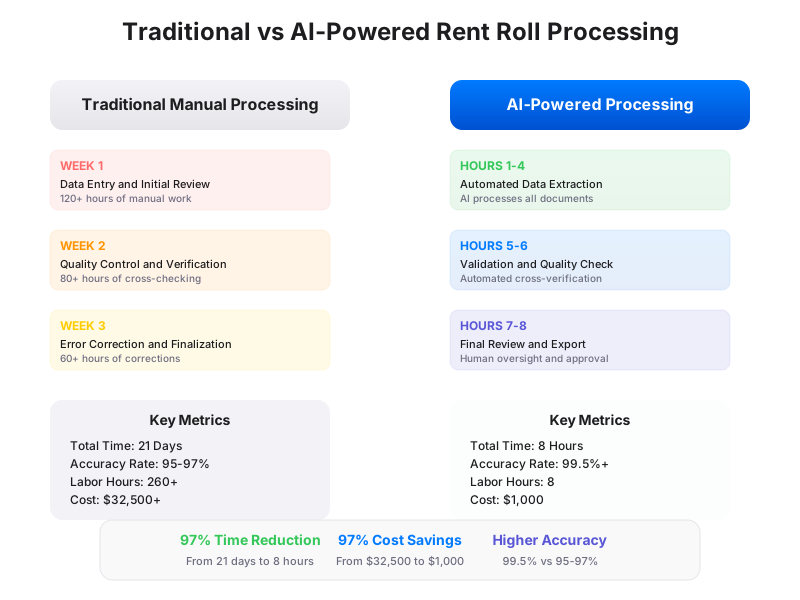
The scalability limitations of manual processing create additional strategic challenges for growing commercial real estate organizations. As firms expand their portfolios or increase transaction volume, the linear relationship between property count and processing time becomes unsustainable. Adding more properties doesn't just require proportionally more analyst time; it often requires additional coordination overhead, more complex quality control processes, and greater expertise in handling diverse property types and lease structures. This scaling challenge forces organizations to choose between limiting growth opportunities or accepting higher error rates and longer processing times.
Technology infrastructure requirements for manual processing also impose hidden costs that organizations often overlook. Teams working with manual rent roll analysis typically rely on basic spreadsheet software that lacks the collaboration features, version control capabilities, and data validation tools needed for complex multi-property analyses. This leads to situations where multiple versions of the same rent roll circulate among team members, creating confusion about which data set contains the most current information. The lack of automated backup and recovery capabilities also creates data loss risks that can set projects back days or weeks if key files become corrupted or accidentally deleted.
Training and knowledge management costs represent another significant challenge in manual processing environments. Each new hire requires extensive training on company-specific procedures, property management system quirks, and lease analysis techniques. This knowledge often exists only in the minds of experienced team members, creating succession planning risks and limiting the organization's ability to handle unexpected staff turnover or sudden increases in workload. The specialized nature of rent roll analysis also means that training investments in individual analysts don't easily transfer to other business functions, limiting career development opportunities and potentially increasing turnover rates.
The application of artificial intelligence to rent roll analysis represents a fundamental shift from reactive data processing to proactive intelligence generation. Modern AI systems don't simply digitize existing manual processes; they reimagine how commercial real estate professionals can interact with property data to generate insights that were previously impossible or impractical to obtain. This transformation touches every aspect of rent roll analysis, from initial data extraction through final reporting and ongoing portfolio monitoring.
At the core of AI-powered rent roll processing lies advanced optical character recognition technology that can accurately read and interpret documents regardless of their original format, quality, or structure. Unlike traditional OCR systems that struggle with complex layouts or poor image quality, modern AI-driven solutions use machine learning algorithms trained on millions of real estate documents to understand context and meaning rather than simply recognizing individual characters. This capability allows the system to handle rent rolls exported from different property management platforms, scanned PDF documents, or even photographs of printed reports with equal accuracy.
The contextual understanding capabilities of AI systems represent a particularly significant advancement over manual processing methods. When a human analyst encounters a rent roll entry showing "Base Rent: $15.50/SF + 3% annual increases," they must mentally process this information, understand that it refers to a per-square-foot rental rate with built-in escalations, and then calculate future rental income based on lease terms and timing. AI systems can perform this same contextual analysis instantaneously, automatically categorizing the rent type, identifying escalation mechanisms, and projecting future cash flows without human intervention.
This contextual processing extends to handling the many variations and exceptions that make rent roll analysis so challenging for manual processes. Commercial leases often contain unique provisions, non-standard terminology, or property-specific arrangements that require interpretation rather than simple data entry. AI systems excel at recognizing patterns and variations, allowing them to understand that "NNN lease with landlord-paid insurance" and "Triple net lease - tenant responsible for taxes and CAM only" describe similar but distinct lease structures that require different financial modeling approaches.
The speed advantages of AI processing become particularly apparent when dealing with large portfolios or complex property types. A rent roll that might require several days of manual analysis can be processed by AI systems in minutes, with results that often exceed human accuracy levels. This speed isn't just about completing individual tasks faster; it enables entirely new analytical approaches that were previously impractical due to time constraints. Portfolio managers can now conduct scenario analyses across hundreds of properties simultaneously, testing different assumptions about rental growth, vacancy rates, or market conditions to identify optimization opportunities or risk concentrations.
Machine learning capabilities allow AI systems to continuously improve their performance by learning from each rent roll they process. As the system encounters new document formats, lease structures, or property types, it expands its knowledge base and becomes more accurate at handling similar situations in the future. This learning process creates a compound improvement effect where processing accuracy and speed increase over time, rather than remaining static like manual processes. Organizations implementing AI-powered rent roll analysis often find that their systems become more capable and valuable with each passing month.
The integration capabilities of modern AI systems transform rent roll analysis from an isolated task into part of a broader automated workflow. Rather than producing static spreadsheets that require manual integration with other systems, AI-powered platforms can automatically populate property management databases, update financial models, generate standardized reports, and even trigger alerts when specific conditions are met. This integration eliminates many of the hand-off points and potential error sources that plague manual processes while ensuring that rent roll data remains current and accessible across the organization.
Data validation represents another area where AI systems provide significant advantages over manual processing. While human analysts can check individual data points for obvious errors, AI systems can simultaneously validate information across multiple dimensions, comparing rent rates to market data, identifying inconsistencies in lease terms, and flagging unusual patterns that might indicate errors or opportunities. This comprehensive validation happens in real-time during the processing phase, eliminating the need for separate quality control steps and reducing the time between initial data receipt and final analysis completion.
The standardization capabilities of AI systems address one of the most persistent challenges in commercial real estate portfolio management: dealing with inconsistent data formats and reporting structures across different properties and management companies. AI-powered platforms can automatically convert rent rolls from various sources into standardized formats that enable meaningful comparisons and portfolio-level analyses. This standardization doesn't just improve efficiency; it enables new analytical capabilities that help portfolio managers identify trends, benchmark performance, and make more informed strategic decisions.
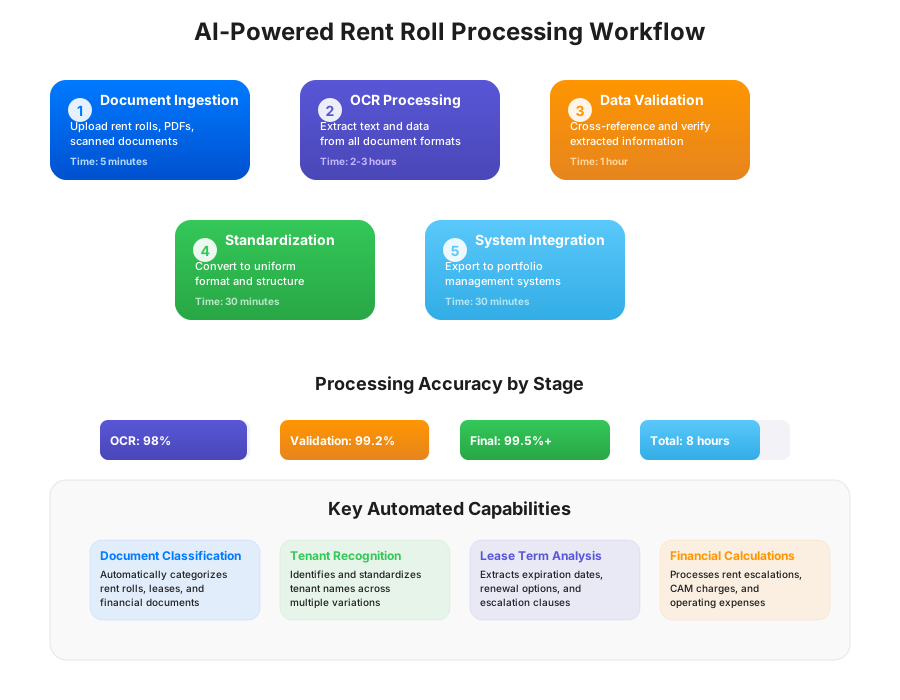
Advanced analytics capabilities enabled by AI processing extend far beyond traditional rent roll analysis to provide insights that manual methods simply cannot deliver efficiently. AI systems can automatically identify rent roll patterns that indicate lease rollover risks, market positioning opportunities, or operational inefficiencies that require management attention. For example, the system might identify that properties in a particular submarket consistently show higher-than-expected vacancy rates for certain tenant size ranges, suggesting market conditions or leasing strategies that warrant further investigation.
Predictive analytics represent perhaps the most transformative aspect of AI-powered rent roll analysis. By combining current rent roll data with historical performance information, market trends, and economic indicators, AI systems can generate forward-looking projections that help portfolio managers anticipate challenges and opportunities before they materialize. These predictive capabilities enable proactive portfolio management strategies rather than reactive responses to problems that have already occurred.
The collaborative features of AI-powered platforms fundamentally change how teams work with rent roll data. Instead of passing static documents between team members for review and analysis, AI systems enable real-time collaboration where multiple stakeholders can access current information, add comments or annotations, and track changes without creating version control issues. This collaborative approach reduces communication overhead while ensuring that all team members work with the same accurate, up-to-date information throughout the analysis process.
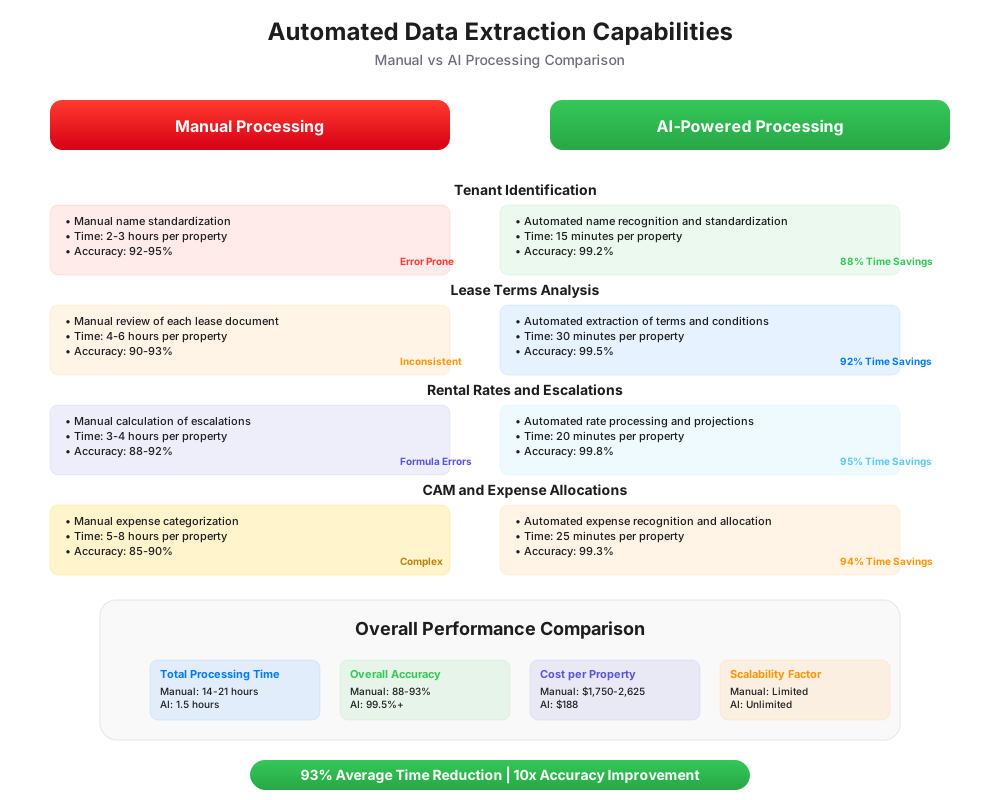
The comprehensive nature of AI-powered rent roll analysis becomes most apparent when examining the specific data points and calculations that can be automated without human intervention. Modern AI systems can extract, validate, and process virtually every element of commercial lease arrangements, from basic tenant identification through complex operating expense reconciliations. This automation extends beyond simple data entry to include sophisticated calculations and interpretations that traditionally required significant analytical expertise and time investment.
Tenant identification and categorization represent the foundation of any rent roll analysis, but even these seemingly straightforward elements can present significant complexity in commercial real estate environments. AI systems excel at recognizing and standardizing tenant names across different variations, identifying parent companies and subsidiaries, and categorizing tenants by industry type or credit quality. When a rent roll lists "McDonald's Corporation," "McDonald's USA LLC," and "MCD Rest. #4751," the AI system can recognize these as related entities and apply appropriate credit ratings and analytical assumptions. This capability extends to identifying tenant concentrations that might create portfolio risks or recognizing franchise relationships that affect lease interpretation and renewal likelihood.
Lease term analysis automation encompasses far more than simple start and end date identification. AI systems can interpret complex lease structures including options periods, early termination rights, and renewal terms that significantly impact cash flow projections and property valuations. The system automatically calculates remaining lease terms, identifies upcoming expiration concentrations, and factors in probability-weighted renewal scenarios based on market conditions and tenant characteristics. This analysis includes recognition of lease provisions that might not be immediately apparent, such as co-tenancy clauses that allow major tenants to reduce rent or terminate if anchor tenants vacate.
Rental rate processing demonstrates the sophisticated interpretation capabilities of modern AI systems. Commercial leases often include multiple rent components including base rent, percentage rent, additional rent, and various pass-through charges that must be correctly identified and categorized for accurate financial modeling. AI systems can distinguish between gross leases, net leases, and various modified lease structures while automatically calculating effective rent rates that account for tenant improvement allowances, free rent periods, and step-up schedules. The system also identifies and processes percentage rent clauses, understanding breakpoint calculations and sales reporting requirements that affect total rental income projections.
Escalation clause automation represents one of the most valuable aspects of AI-powered rent roll processing, given the complexity and variety of rent increase mechanisms used in commercial leases. The system can identify and interpret fixed percentage increases, Consumer Price Index adjustments, market rate resets, and complex formulas that combine multiple escalation methods. AI processing automatically calculates future rental income based on these escalation mechanisms while accounting for caps, floors, and other limiting provisions that affect the actual rent increases tenants will pay. This capability extends to recognizing expense escalation provisions that tie rent increases to changes in operating costs, taxes, or insurance premiums.
Operating expense reconciliation automation addresses one of the most time-consuming and error-prone aspects of commercial property management. AI systems can extract and categorize operating expense pass-through provisions, identifying which tenants are responsible for specific expense categories and calculating appropriate allocation methods based on lease terms. The system automatically handles complex reconciliation calculations including expense stops, base year provisions, and controllable versus non-controllable expense distinctions that affect tenant obligations. This automation extends to generating reconciliation reports and identifying discrepancies that require follow-up with property management teams.
Security deposit and letter of credit tracking automation ensures that important tenant obligations are properly identified and monitored throughout the lease term. AI systems can extract deposit amounts, identify acceptable security forms, and track reduction schedules or return requirements based on lease performance criteria. This capability includes recognizing guaranty arrangements and understanding how parent company creditworthiness affects security requirements and collection risks.
Space measurement and allocation automation addresses the critical but often inconsistent area of rentable area calculations and tenant space assignments. AI systems can interpret various measurement standards, identify common area allocations, and ensure consistency in how space calculations affect rental rates and operating expense allocations. The system recognizes different space types including office, retail, warehouse, and specialty spaces that may have different measurement conventions or rental rate structures within the same property.
Tenant improvement and capital expenditure tracking automation captures important lease provisions that affect property cash flows and capital planning requirements. AI systems can identify tenant improvement allowances, landlord work obligations, and tenant modification rights that impact future capital requirements and lease renewal negotiations. The system automatically calculates amortization schedules for tenant improvements and identifies situations where unamortized costs might affect lease termination decisions or renewal economics.
Assignment and subletting provisions automation recognizes important lease clauses that affect tenant credit quality and lease transferability. AI systems can identify consent requirements, profit-sharing arrangements, and other provisions that govern tenant assignment rights while flagging situations where subtenants might be operating without proper lease documentation. This capability includes recognizing guaranty transfer requirements and understanding how assignment provisions affect collection risks and lease enforcement capabilities.
Renewal option automation captures valuable tenant rights that significantly impact property cash flows and investment returns. AI systems can identify renewal terms, option exercise requirements, and market rate reset mechanisms while calculating probability-weighted cash flow projections based on renewal likelihood and expected market conditions. The system automatically tracks option exercise deadlines and identifies situations where tenant notification requirements might create administrative challenges or legal risks.
Default and termination provision automation identifies important lease clauses that affect collection risks and tenant retention strategies. AI systems can extract cure periods, default interest rates, and termination rights while identifying accelerated rent clauses and other provisions that affect collection procedures and tenant relationship management. This capability includes recognizing co-tenancy provisions, sales performance requirements, and other conditions that might trigger tenant termination rights or rent reduction obligations.
Compliance and regulatory provision automation addresses increasingly important lease clauses related to environmental requirements, accessibility standards, and other regulatory obligations. AI systems can identify compliance responsibilities, recognize indemnification provisions, and track certification requirements that affect property operations and tenant relationships. The system automatically flags provisions that might create compliance risks or require ongoing monitoring by property management teams.
The automation of these diverse data points creates a comprehensive analytical foundation that enables sophisticated portfolio management strategies previously impractical with manual processing methods. By capturing and processing this information automatically, AI systems free portfolio managers to focus on strategic decision-making rather than data compilation while ensuring that important lease provisions and obligations are properly identified and monitored throughout the investment holding period.
To illustrate the transformative impact of AI-powered rent roll analysis in real-world commercial real estate transactions, consider the experience of a major institutional investor evaluating a $125 million office portfolio acquisition in multiple markets. This case study demonstrates how automated document processing technology can fundamentally change transaction timelines, improve analysis quality, and create competitive advantages in fast-moving commercial real estate markets.
The portfolio under consideration consisted of eight Class A office buildings across three metropolitan markets, with a total of 347 tenants and approximately 2.8 million square feet of rentable space. The properties were managed by different companies using various property management systems, resulting in rent rolls delivered in multiple formats including native software exports, PDF reports, and scanned historical documents dating back several years. Under traditional manual processing methods, the investor's acquisition team estimated that comprehensive rent roll analysis would require approximately three weeks of intensive effort from multiple senior analysts.
The complexity of this analysis extended beyond simple data entry requirements. The portfolio included several large law firms and financial services tenants with sophisticated lease structures featuring complex escalation mechanisms, extensive tenant improvement allowances, and detailed operating expense allocation formulas. Multiple properties contained retail components with percentage rent provisions, while several buildings included parking garage operations with separate revenue streams that needed integration with office rental income projections. The investor also required detailed cash flow modeling that incorporated probability-weighted renewal assumptions, market rent projections, and sensitivity analyses around key variables like vacancy rates and expense growth.
Working under compressed timeline pressures typical of competitive acquisition processes, the investor deployed AI-powered rent roll processing technology to handle the initial data extraction and standardization phases of the analysis. The system began processing rent rolls immediately upon receipt, simultaneously handling documents in different formats while extracting tenant information, lease terms, rental rates, and escalation provisions across all properties. Within the first four hours of processing, the AI system had successfully extracted and standardized over 95% of the basic tenant and lease term information, creating a comprehensive database that would have required several days of manual data entry to compile.
The AI system's contextual interpretation capabilities proved particularly valuable when dealing with non-standard lease provisions and property-specific arrangements common in large office buildings. For example, several properties included telecommunications licensing agreements, rooftop antenna leases, and building signage rights that generated additional revenue streams but were documented using inconsistent terminology across different properties. The AI system successfully identified these revenue sources and categorized them appropriately for financial modeling purposes, while flagging unusual provisions that required additional legal review.
During the second phase of processing, the AI system tackled the more complex analytical requirements including escalation calculations, operating expense reconciliations, and cash flow projections. The system automatically identified over 40 different escalation mechanisms across the portfolio, ranging from simple fixed percentage increases to complex formulas tying rent adjustments to Consumer Price Index changes with caps and floors. Rather than requiring manual calculation of hundreds of individual escalation scenarios, the AI system processed these calculations simultaneously while generating standardized reports that enabled direct comparison of escalation patterns across properties and markets.
Operating expense analysis presented particular challenges given the different management companies and accounting practices across the portfolio properties. The AI system successfully interpreted varying expense allocation methodologies, identified inconsistencies in expense categorization that required management attention, and generated standardized operating expense projections that accounted for property-specific provisions and market-typical expense growth assumptions. This analysis included identification of expense stops, base year provisions, and controllable expense limitations that significantly affected tenant obligations and property cash flows.
The time savings achieved through AI processing enabled the acquisition team to conduct more comprehensive analysis than would have been possible under manual processing constraints. With basic data extraction and standardization completed within hours rather than days, the team invested additional time in market research, comparable transaction analysis, and strategic planning that improved their understanding of the acquisition opportunity and strengthened their competitive position. The accelerated timeline also allowed for multiple scenario analyses and sensitivity testing that provided greater confidence in investment assumptions and risk assessment.
Quality improvements achieved through AI processing proved equally valuable to timeline advantages. The automated system identified several errors in the original rent rolls provided by the seller, including incorrect lease expiration dates, missing escalation provisions, and inconsistent space measurements that could have significantly affected property valuations if undetected. The system also flagged potential issues such as below-market rents that might indicate renewal risks and above-market rents that could affect tenant retention during economic downturns. These insights enabled more informed due diligence discussions and more accurate risk assessment than would have been possible with manual processing alone.
The standardized data format produced by AI processing facilitated seamless integration with the investor's existing portfolio management systems and financial modeling platforms. Rather than requiring extensive manual reformatting and data entry into proprietary systems, the standardized rent roll data was automatically imported into cash flow models, portfolio reporting dashboards, and asset management tracking systems. This integration eliminated potential transcription errors while ensuring that portfolio-level analyses could incorporate the new acquisition data immediately upon closing.
Competitive advantages gained through accelerated due diligence processing proved decisive in this particular transaction. The investor was able to submit a refined offer with detailed financial analysis within 48 hours of receiving due diligence materials, significantly faster than competing bidders who were still working through initial rent roll analysis. This rapid response demonstrated analytical sophistication and transaction readiness that impressed the seller and contributed to successful offer acceptance despite multiple competing bids at similar price levels.
The long-term benefits of AI-powered rent roll processing extended beyond the acquisition phase into ongoing asset management operations. The standardized data structure and automated processing workflows established during due diligence continued to provide value through quarterly reporting cycles, annual budget preparation, and strategic planning processes. Property managers could easily update rent roll information as leases expired and renewed, while portfolio managers gained real-time visibility into performance trends and emerging opportunities across all properties.
Risk mitigation achieved through comprehensive AI analysis proved particularly valuable as market conditions evolved following the acquisition. The detailed lease expiration schedules and renewal probability assessments generated during due diligence enabled proactive leasing strategies that minimized vacancy risks during challenging market periods. Similarly, the comprehensive operating expense analysis provided early warning of cost pressures that allowed for proactive management responses and tenant communication strategies.
The true value of AI-powered rent roll analysis emerges not as an isolated analytical tool, but as an integrated component of comprehensive portfolio management platforms that connect property-level data with broader investment strategies and operational workflows. Modern commercial real estate organizations require seamless data flow between rent roll processing, financial reporting, asset management, and strategic planning systems to maximize operational efficiency and investment performance. The integration capabilities of AI-powered platforms fundamentally transform how organizations collect, process, and use property data across all aspects of commercial real estate operations.
Contemporary portfolio management systems serve as central nervous systems for commercial real estate organizations, coordinating information flow between property management, accounting, leasing, and investment functions while providing real-time visibility into portfolio performance and emerging trends. The integration of AI-powered rent roll processing with these platforms creates automated workflows that eliminate manual data transfer requirements while ensuring that property-level information remains current and accessible across all organizational functions. This integration extends beyond simple data sharing to include sophisticated analytical capabilities that leverage rent roll information for predictive modeling, performance benchmarking, and strategic decision support.
The technical architecture required for seamless integration involves Application Programming Interfaces that enable real-time data exchange between AI processing platforms and existing portfolio management systems. These APIs facilitate automatic data synchronization, ensuring that rent roll updates processed by AI systems immediately populate relevant dashboards, financial models, and reporting platforms without manual intervention. The integration also supports bi-directional data flow, allowing portfolio management systems to provide market data, historical performance information, and strategic assumptions that enhance AI analysis accuracy and relevance.
Data standardization represents a critical component of successful integration, as commercial real estate organizations typically manage properties with diverse lease structures, management approaches, and reporting requirements. AI-powered platforms address this challenge by automatically converting rent roll information from various sources into standardized formats that enable meaningful comparisons and portfolio-level analyses. This standardization includes consistent tenant categorization, uniform lease term representation, and harmonized escalation calculations that facilitate benchmarking and trend identification across properties with different characteristics and management approaches.
Real-time reporting capabilities enabled by integrated AI processing transform how portfolio managers monitor and respond to changing market conditions and property performance trends. Rather than waiting for monthly or quarterly reporting cycles to identify emerging issues or opportunities, integrated systems provide continuous updates on key performance indicators including occupancy rates, rental growth, lease expiration concentrations, and tenant credit quality. This real-time visibility enables proactive management responses that can prevent small issues from becoming significant problems while identifying optimization opportunities that might otherwise go unnoticed.
Financial modeling integration represents one of the most valuable aspects of AI-powered rent roll processing, as it eliminates the time-consuming and error-prone process of manually updating cash flow projections with current lease information. Integrated systems automatically populate financial models with updated rent rolls, escalation assumptions, and lease expiration schedules while maintaining consistency across multiple analysis scenarios and sensitivity tests. This automation enables more frequent model updates and more comprehensive scenario analysis than would be practical with manual processing methods.
Asset management workflow integration extends AI-powered rent roll analysis beyond financial reporting to support operational decision-making and strategic planning processes. Integrated platforms can automatically trigger alerts when lease expiration concentrations exceed predetermined thresholds, identify properties where rental rates have fallen significantly below market levels, or flag situations where tenant credit quality deterioration requires management attention. These automated workflows ensure that important issues receive prompt attention while freeing asset management teams to focus on strategic initiatives rather than routine monitoring tasks.
Leasing management integration enables seamless coordination between rent roll analysis and active leasing campaigns, providing leasing teams with current market positioning information and renewal probability assessments that inform leasing strategies and tenant negotiations. AI-powered systems can automatically identify leases approaching expiration, assess renewal likelihood based on market conditions and tenant characteristics, and provide comparative market analysis that supports lease renewal negotiations. This integration ensures that leasing activities align with broader portfolio strategies while maximizing rental income and tenant retention.
Budgeting and forecasting integration leverages AI-processed rent roll information to generate more accurate and detailed operating budgets and capital expenditure plans. Integrated systems can automatically project rental income based on current lease terms and market assumptions while identifying properties that may require significant capital investment for tenant improvements or building upgrades. This integration enables more sophisticated budget preparation and variance analysis while providing early warning of capital requirements that might affect investment returns or financing arrangements.
Compliance monitoring integration addresses the increasingly complex regulatory environment facing commercial real estate organizations by automatically tracking lease provisions related to environmental requirements, accessibility standards, and other regulatory obligations. AI-powered systems can identify compliance deadlines, track certification requirements, and flag potential violations that require immediate attention. This automated compliance monitoring reduces regulatory risks while ensuring that portfolio managers maintain awareness of obligations that might affect property operations or investment values.
Performance benchmarking integration enables sophisticated comparative analysis by leveraging AI-processed rent roll data alongside market information and historical performance trends. Integrated platforms can automatically compare property performance against market benchmarks, identify properties that are over-performing or under-performing relative to similar assets, and generate insights that inform strategic decisions about property positioning, capital allocation, and disposition timing. This benchmarking capability provides objective performance measurement that supports data-driven investment decisions.
Risk management integration utilizes AI-processed rent roll information to identify and monitor various risk factors that might affect portfolio performance including tenant concentration, lease expiration timing, and market exposure. Integrated systems can automatically calculate risk metrics, compare current exposures against predetermined limits, and generate alerts when risk concentrations exceed acceptable levels. This automated risk monitoring enables proactive risk management strategies while ensuring that portfolio construction remains aligned with investment objectives and risk tolerance parameters.
The scalability advantages of integrated AI-powered platforms become particularly apparent as organizations grow their portfolios or expand into new markets. Integrated systems can easily accommodate additional properties without requiring proportional increases in analytical staff or processing time, while maintaining consistent data quality and reporting standards across all assets. This scalability enables organizations to pursue growth opportunities without facing operational constraints or accepting reduced analytical rigor.
The financial justification for implementing AI-powered rent roll processing extends far beyond simple labor cost savings to encompass multiple value creation opportunities that can significantly impact commercial real estate organization profitability and competitive positioning. A comprehensive return on investment analysis must consider both direct cost reductions and indirect value enhancements including improved decision-making speed, enhanced analytical capabilities, reduced error rates, and expanded capacity for handling complex transactions and larger portfolios.
Direct labor cost savings represent the most immediately apparent benefit of automated rent roll processing, but the actual savings often exceed initial estimates when considering the full scope of activities affected by automation. Traditional rent roll analysis requires not just initial data entry, but also multiple quality control reviews, error correction cycles, and coordination between different team members working on various aspects of the same analysis. AI-powered systems eliminate most of these manual touchpoints while delivering higher accuracy rates than manual processes, creating compound savings that multiply the apparent labor hour reductions.
Consider a mid-sized commercial real estate investment firm processing approximately 200 properties annually across acquisition due diligence, refinancing activities, and routine portfolio analysis. Under manual processing methods, each property requires an average of 12 hours of senior analyst time for comprehensive rent roll analysis, representing 2,400 total annual hours at an average fully-loaded cost of $125 per hour. This translates to annual direct labor costs of $300,000 just for rent roll processing activities, not including supervisory oversight, quality control reviews, or error correction requirements that might add another 25-30% to total processing costs.
AI-powered automation can reduce these processing requirements to approximately 2 hours per property for final review and validation of automated results, representing an 83% reduction in labor hours and corresponding cost savings of approximately $250,000 annually. However, this calculation understates the true value creation because it assumes that manual processing achieves perfect accuracy on the first attempt, which rarely occurs in practice. When accounting for error correction cycles, re-work requirements, and quality control procedures, the true time savings often approach 90% of original processing requirements.
The value of accelerated processing timelines extends beyond labor cost savings to include opportunity value creation that can significantly impact investment returns and competitive positioning. In acquisition scenarios, the ability to complete comprehensive rent roll analysis within hours rather than days enables organizations to respond more quickly to investment opportunities while conducting more thorough due diligence than competitors constrained by manual processing limitations. This speed advantage can be decisive in competitive bidding situations where sellers favor buyers who demonstrate analytical sophistication and transaction readiness.
Quantifying the opportunity value of accelerated processing requires considering both the frequency of time-sensitive opportunities and the financial impact of improved competitive positioning. Organizations that can complete due diligence analysis 5-7 days faster than competitors may win an additional 10-15% of competitive transactions, depending on market conditions and transaction characteristics. For an organization evaluating $500 million in acquisition opportunities annually, even a modest improvement in win rates can generate substantial additional investment volume and corresponding fee income or investment returns.
Error reduction benefits provide another significant source of value creation that is often underestimated in ROI calculations. Manual rent roll processing typically achieves accuracy rates of 95-97% under normal operating conditions, with error rates increasing during periods of high workload or tight deadlines. These errors can have substantial financial consequences, particularly when they affect key metrics like net rentable area calculations, escalation formulas, or lease expiration dates that drive property valuations and investment decisions.
AI-powered processing typically achieves accuracy rates exceeding 99.5% while maintaining consistent performance regardless of workload pressures or deadline constraints. The financial value of this accuracy improvement depends on the magnitude and frequency of errors prevented, but even modest improvements can generate substantial value. Consider a scenario where improved accuracy prevents one significant valuation error annually that might otherwise result in a $500,000 pricing mistake on a property acquisition. The present value of avoiding such errors over a multi-year implementation period easily justifies substantial technology investments.
Capacity expansion benefits enable organizations to handle larger transaction volumes and more complex analyses without proportional increases in staffing costs. This scalability advantage becomes particularly valuable during periods of high market activity when manual processing constraints might force organizations to decline attractive opportunities or accept reduced analytical rigor to meet deadline requirements. AI-powered platforms enable organizations to maintain analytical quality standards while handling 3-5 times more transaction volume than manual processing methods would allow.
The financial impact of capacity expansion varies significantly based on organizational growth strategies and market conditions, but the value can be substantial for organizations pursuing aggressive growth or operating in highly active markets. An organization that can handle 50% more acquisition opportunities without adding analytical staff might generate an additional $50-100 million in annual transaction volume, with corresponding increases in fee income, carried interest, or investment returns that far exceed technology implementation costs.
Enhanced analytical capabilities enabled by AI-powered platforms create additional value through improved investment decision-making and portfolio optimization strategies. Automated systems can conduct sophisticated analyses that would be impractical with manual processing methods, including comprehensive sensitivity testing, scenario modeling, and portfolio-level optimization calculations. These enhanced capabilities enable better-informed investment decisions that can improve investment returns by identifying opportunities and risks that might otherwise go unnoticed.
Quantifying the value of enhanced analytical capabilities requires considering the improvement in investment decision quality and the financial impact of better portfolio optimization. Organizations that can identify and avoid even one poor investment annually, or optimize portfolio construction to improve returns by 25-50 basis points, can generate value that significantly exceeds technology implementation costs. The compound effect of improved decision-making over multiple investment cycles can create substantial long-term value that justifies significant upfront technology investments.
Implementation costs for AI-powered rent roll processing typically include software licensing fees, integration expenses, training requirements, and ongoing support costs that must be weighed against projected benefits to determine overall return on investment. Software licensing costs vary significantly based on transaction volume, feature requirements, and vendor selection, but typically range from $50,000 to $200,000 annually for mid-sized organizations. Integration costs depend on existing system complexity and customization requirements, but generally range from $25,000 to $100,000 for initial implementation with established platforms.
Training requirements are typically minimal for AI-powered platforms due to their intuitive interfaces and automated processing capabilities, but organizations should budget $10,000 to $25,000 for initial training and change management activities. Ongoing support costs include technical support, system updates, and periodic optimization services that typically represent 15-20% of annual licensing fees. When these implementation costs are compared against projected benefits, most organizations achieve payback periods of 12-18 months with ongoing returns that significantly exceed initial investments.
The cumulative ROI over a typical 5-year implementation period often exceeds 300-500% when considering all direct and indirect benefits of AI-powered rent roll processing. Organizations that implement comprehensive automated processing platforms typically report total annual savings and value creation of $400,000 to $800,000 after full implementation, representing substantial returns on technology investments that range from $100,000 to $300,000 annually. These returns increase over time as organizations expand their use of automated capabilities and realize compound benefits from improved analytical capabilities and competitive positioning.
Risk mitigation benefits provide additional ROI considerations that may not appear in direct financial calculations but create substantial value through reduced operational risks and improved business continuity. AI-powered platforms eliminate single points of failure associated with key personnel dependencies while providing consistent analytical capabilities regardless of staff turnover or workload fluctuations. The value of this risk mitigation becomes particularly apparent during periods of organizational transition or unexpected staff departures that might otherwise disrupt critical analytical capabilities.
The transformation of rent roll analysis through artificial intelligence represents just the beginning of a broader revolution in how commercial real estate professionals collect, process, and utilize property data to drive investment decisions and operational strategies. As AI technology continues to evolve and organizations gain experience with automated processing platforms, the scope and sophistication of automated analysis capabilities will expand dramatically, creating new opportunities for value creation and competitive differentiation in commercial real estate markets.
The immediate benefits of AI-powered rent roll processing—including reduced processing times, improved accuracy, and enhanced analytical capabilities—provide compelling justification for technology adoption across organizations of all sizes. But the long-term implications extend far beyond efficiency improvements to encompass fundamental changes in how commercial real estate professionals approach property analysis, portfolio management, and strategic planning. Organizations that embrace these technologies early will build sustainable competitive advantages while those that delay adoption risk falling behind in increasingly data-driven and fast-moving markets.
Looking ahead, the integration of AI-powered document processing with other emerging technologies including Internet of Things sensors, blockchain transaction platforms, and advanced predictive analytics will create even more sophisticated analytical capabilities that fundamentally reshape commercial real estate operations. Smart building systems will provide real-time occupancy and utilization data that complements traditional rent roll analysis, while blockchain platforms will streamline transaction processing and reduce the time and cost associated with property transfers and lease administration.
The democratization of advanced analytical capabilities through AI-powered platforms will also level the competitive playing field between large institutional investors and smaller organizations that previously lacked resources for sophisticated analysis. Cloud-based AI platforms make enterprise-level analytical capabilities accessible to organizations of all sizes, enabling more informed investment decisions and better portfolio management across the entire commercial real estate industry.
As these technologies mature and become more widely adopted, organizations that successfully integrate AI-powered analysis into their operations will set new standards for analytical rigor, processing speed, and decision-making quality that reshape competitive dynamics across commercial real estate markets. The transformation is already underway, and the organizations that embrace it most effectively will be best positioned to capitalize on the opportunities that lie ahead.
The evolution from manual rent roll processing to AI-powered automated analysis represents more than a technological upgrade—it signifies a fundamental shift toward data-driven decision-making that will define the future of commercial real estate investment and operations. Organizations that recognize this transformation and act decisively to implement advanced analytical capabilities will build lasting competitive advantages in an industry where information quality and processing speed increasingly determine success.
For commercial real estate professionals evaluating AI-powered rent roll processing solutions, the question is not whether to adopt these technologies, but rather how quickly they can be implemented and integrated into existing operations. The organizations that move fastest and most effectively will establish early-mover advantages that compound over time, while those that delay may find themselves perpetually playing catch-up in markets where analytical sophistication becomes the primary competitive differentiator.
The future of commercial real estate analysis is here, and it's powered by artificial intelligence. Organizations that embrace this future today will be the market leaders of tomorrow, setting new standards for analytical excellence while creating value for investors, tenants, and stakeholders across the commercial real estate ecosystem. The transformation begins with automated rent roll processing, but it extends to every aspect of how we understand, analyze, and optimize commercial real estate investments in an increasingly complex and fast-moving global economy.

Head IT Operations - Co Founder of Artificio
See it in your SAP environment
Bring us a document, a process, or a bottleneck. We'll show how Artificio captures, validates, and posts into SAP — then scale from there.
Security & compliance
ISO 27001:2013 certified, SOC 2 Type 2 compliant, GDPR and HIPAA ready. Every agent action is logged, auditable, and runs in isolated environments.