

Blog
Automated Income Summarization for Mortgage Lending
Automated mortgage income summarization saves time, improves accuracy, and enhances compliance. Learn how it works!

Blog
Automated mortgage income summarization saves time, improves accuracy, and enhances compliance. Learn how it works!
In the complex world of mortgage lending, few processes have remained as stubbornly time-consuming and error-prone as income verification. For decades, mortgage professionals have manually combed through W-2s, paystubs, and tax returns, meticulously extracting data, calculating averages, and creating summaries that meet underwriting requirements. This process has been a significant bottleneck in the loan origination process, often adding days or even weeks to closing timelines.
Today, we're introducing a solution that addresses this challenge head-on: our Mortgage Income Summarization Tool. This technology leverages advanced document processing capabilities to transform how mortgage professionals verify and document borrower income. In this comprehensive guide, we'll explore how automated income summarization works, the real-world benefits it delivers, and how it fits into the broader evolution of mortgage technology.
Before diving into our solution, it's worth understanding why income verification has remained such a persistent challenge in mortgage lending. The process involves several inherent complexities that have made automation difficult:
Every employer formats their W-2s and paystubs differently. Some include detailed year-to-date figures, others don't. Some clearly label different income types (base salary, overtime, bonuses), while others combine them into single figures. This variability makes it extremely difficult to create a one-size-fits-all approach to data extraction.
Different loan programs have different income calculation requirements. Conventional loans might require a two-year average, while FHA loans might focus more on current income stability. VA loans have their own specific guidelines. These variations mean that the same set of documents might need to be interpreted differently depending on the loan type.
Income verification isn't just about getting a number it's about getting the right number. Mistakes can lead to loan denials, repurchase demands, or regulatory issues. This high-stakes environment has made many lenders rightfully cautious about embracing automation for this critical step.
Mortgage lending is highly regulated, with strict documentation requirements. Any automated solution must not only be accurate but also create an audit trail that demonstrates compliance with applicable regulations and investor requirements.
These challenges have meant that while other aspects of mortgage lending have become increasingly digitized from application to closing income verification has remained stubbornly manual at many lending institutions.
Our Mortgage Income Summarization Tool tackles these challenges through a sophisticated three-step process that combines advanced technology with mortgage-specific expertise:
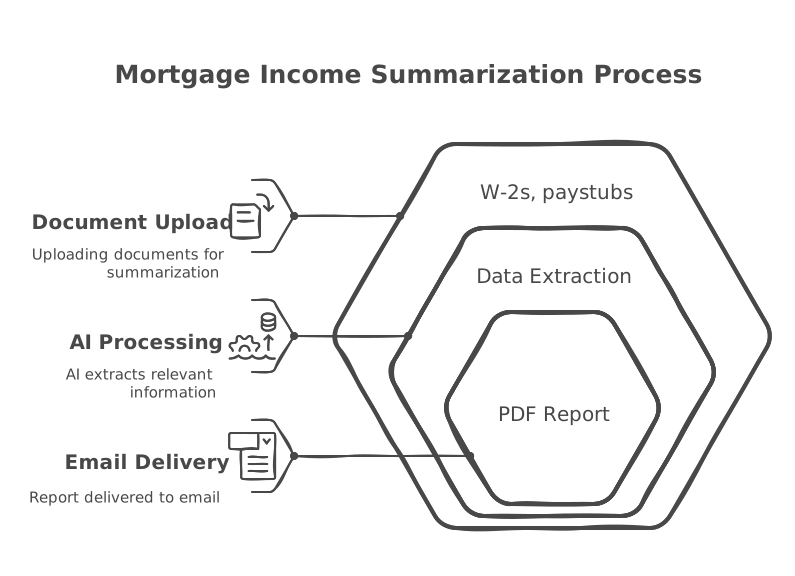
The process begins with document collection. Users upload key income documents typically W-2 forms from the previous two years and the most recent paystub and provide an email address where they'd like to receive the completed summary.
What happens behind the scenes during this step is far more complex than simple document uploading. The system performs initial validation checks to ensure the documents are complete, legible, and appropriate for income verification. It identifies document types automatically, distinguishing between W-2s, paystubs, 1099s, and other income documentation.
This intelligent intake process lays the foundation for accurate data extraction by ensuring that only high-quality, relevant documents enter the workflow. It also reduces the likelihood of having to go back to borrowers for additional documentation later in the process.
Once the documents are validated, the system employs sophisticated data extraction technology to identify and capture relevant income information. This is where the true innovation happens:
Unlike traditional OCR (Optical Character Recognition) that simply captures all text on a page, our system uses specialized visual models trained specifically on financial documents. These models understand the context and layout of W-2s and paystubs, allowing them to locate and extract the right data fields even when the document format varies.
The system recognizes common patterns in how income information is presented, looking beyond just the text to understand the relationships between different data elements. This approach dramatically improves accuracy compared to generic text extraction methods.
A key differentiator in our approach is cross-document validation. The system doesn't just extract data from each document in isolation it compares information across multiple documents to identify discrepancies and ensure consistency.
For example, if a paystub shows a year-to-date income figure that doesn't align with the salary information on the W-2, the system flags this for review. This cross-validation mimics what experienced processors do manually, but performs these checks systematically and comprehensively.
Beyond simple data extraction, the system performs intelligent analysis of the income information. It identifies different income types, distinguishing between base salary, overtime, bonuses, and commissions. It evaluates income stability and trends, such as whether income is increasing, decreasing, or remaining stable over time.
The system also applies loan-specific calculation methodologies, ensuring that income is analyzed according to the appropriate guidelines. This nuanced approach to income analysis goes far beyond what traditional document automation systems can achieve.
Finally, the system synthesizes all this extracted and analyzed data into a comprehensive income summary. This isn't just a collection of numbers—it's a structured representation of the borrower's income profile, organized to support underwriting decisions.
The summary includes not just raw income figures but also calculated values such as monthly averages, projected annual income, and trend analysis. It provides context for the calculations, noting which source documents were used and how specific figures were derived.
Once the income analysis is complete, the final summary is formatted as a professional PDF document and delivered directly to the specified email address. This delivery is both immediate and secure, ensuring that sensitive financial information is protected throughout the process.
The PDF format ensures that the summary can be easily incorporated into existing loan file documentation without compatibility issues. The structured format makes it easy for underwriters to quickly locate the information they need without having to hunt through multiple pages.
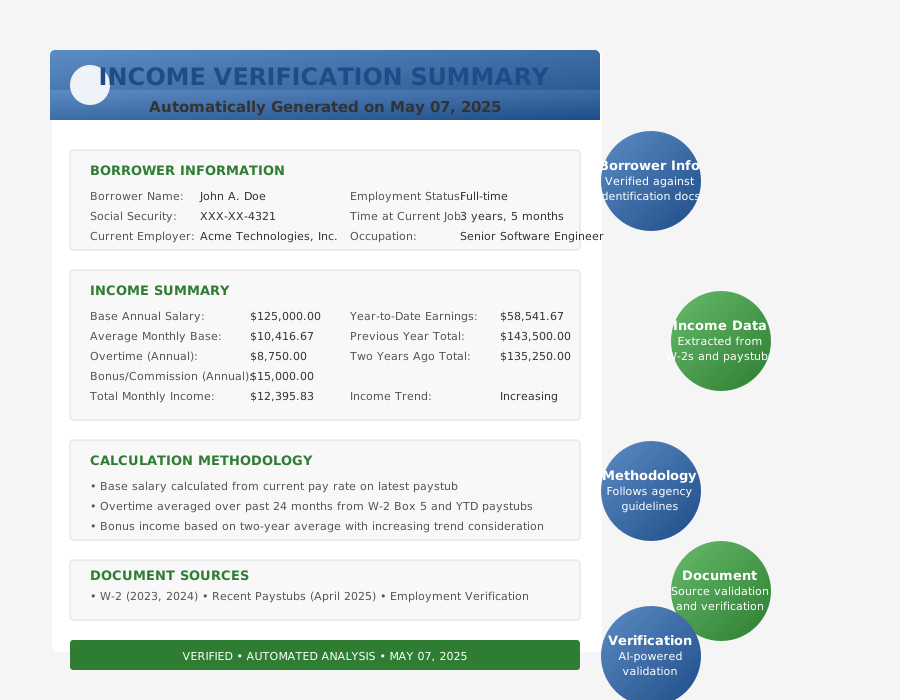
Importantly, the email delivery includes clear explanations about the nature of the summary, acknowledging that this represents one approach to income analysis and that different methodologies might be appropriate in different situations. This transparency helps users understand both the capabilities and limitations of the automated summary.
The technical capabilities of our Mortgage Income Summarization Tool are impressive, but what matters most is how these capabilities translate into tangible benefits for mortgage professionals and their customers. Let's explore the real-world impact of this technology:
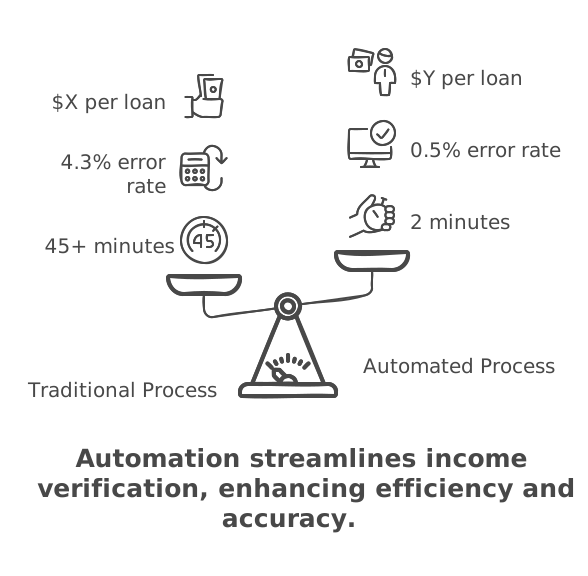
The most immediate benefit is time savings. What typically takes a processor 30-45 minutes per loan can be completed in just minutes using automated summarization. This efficiency gain is particularly significant for lending operations that handle high volumes of loans.
This time savings doesn't just accelerate the overall loan process it also allows processors to focus their expertise on more complex cases that truly require human judgment, rather than spending their days on routine data extraction tasks.
Human processors, no matter how experienced, can make errors when manually extracting data from complex financial documents. The automated approach eliminates common issues such as transposition errors, missed fields, or calculation mistakes.
Just as importantly, the system applies consistent methodologies across all loans, ensuring that similar income situations are analyzed in similar ways. This consistency is particularly valuable for lenders seeking to standardize their underwriting practices across multiple locations or teams.
Mortgage lending is heavily regulated, with strict requirements for documenting income verification. Our automated system creates a clear, auditable record of how income was calculated, including which source documents were used and which methodologies were applied.
This comprehensive documentation helps lenders demonstrate compliance with regulatory requirements and investor guidelines. In the event of an audit or quality control review, having this standardized documentation can significantly reduce the time and effort required to address questions or concerns.
The efficiency gains from automated income summarization don't just benefit lenders—they also translate into a better experience for borrowers. Faster income verification means faster loan decisions, reducing the overall time to closing.
The process also reduces the likelihood of having to go back to borrowers multiple times for additional documentation. By identifying potential issues early in the process, the system helps lenders gather all necessary information upfront, minimizing delays and frustration for borrowers.
The labor costs associated with manual income verification are substantial. By automating this process, lenders can achieve significant cost savings while improving productivity. These savings can be passed on to borrowers in the form of more competitive pricing or reinvested in other areas of the business.
Additionally, the improved accuracy of automated verification reduces costly errors that can lead to loan buybacks or regulatory penalties. This risk reduction represents a significant but often overlooked financial benefit of automation.
While our Mortgage Income Summarization Tool offers immediate benefits for standard income verification scenarios, its capabilities extend far beyond these basic use cases. As lenders become more comfortable with the technology, they can leverage it for more advanced applications:
One of the most challenging aspects of mortgage underwriting is evaluating non-traditional income sources, such as self-employment, investment income, or rental property income. These income types often require specialized analysis of complex documentation like tax returns, profit and loss statements, or property leases.
Our technology can be extended to handle these more complex income scenarios, applying specialized extraction and analysis rules based on the specific income type. This capability is particularly valuable as the workforce continues to evolve, with more borrowers deriving income from multiple or non-traditional sources.
The real power of automated income summarization emerges when it's integrated with broader automated underwriting systems. By feeding verified income data directly into decision engines, lenders can achieve end-to-end automation of key underwriting decisions.
This integration eliminates manual data entry errors and accelerates the overall loan process. It also enables more sophisticated risk analysis by ensuring that accurate, detailed income information is available to underwriting algorithms.
Beyond individual loan processing, automated income verification generates structured data that can be valuable for portfolio-level analysis and quality control. Lenders can analyze income trends across their borrower population, identify potential risk factors, and evaluate the effectiveness of their underwriting criteria.
This data-driven approach to portfolio management represents a significant evolution from traditional quality control methods that rely on limited sampling and manual reviews.
While our standard tool applies widely accepted income calculation methodologies, advanced users can develop customized frameworks tailored to their specific underwriting philosophy or loan products. These custom frameworks can incorporate proprietary risk models, specialized calculation methodologies, or institution-specific documentation requirements.
This customization capability ensures that the technology supports rather than constrains a lender's unique approach to evaluating borrower income and risk.
As with any technological advancement, successful implementation of automated income summarization requires thoughtful planning and execution. Here are key considerations for organizations looking to adopt this technology:
Most mortgage lenders already have established loan origination systems, document management platforms, and workflow tools. Successful implementation of automated income summarization requires seamless integration with these existing systems.
Our technology is designed with open APIs and flexible integration options, allowing it to fit into diverse technological environments. Whether you're using a leading commercial LOS or a proprietary platform, the income summarization tool can be incorporated into your existing workflows.
While the technology itself is sophisticated, the user experience is intentionally simple and intuitive. Nevertheless, effective implementation requires appropriate staff training and change management to ensure that team members understand how to use the system and interpret its outputs.
Beyond technical training, it's important to address the cultural aspects of this change. Some processors may initially be skeptical of automated income analysis, particularly if they've spent years developing expertise in manual verification. Demonstrating the accuracy and reliability of the automated approach, while emphasizing how it frees them to focus on more valuable activities, can help overcome this resistance.
Even with highly accurate automation, appropriate quality control measures remain essential. We recommend implementing a graduated approach to quality control, with higher sampling rates during initial implementation that can be reduced as confidence in the system grows.
This quality control process serves two purposes: it validates the accuracy of the automated analysis, and it identifies edge cases or document types that might require refinement of the extraction and analysis rules.
Rather than attempting a "big bang" implementation across all loan types and scenarios, most organizations benefit from a phased approach. Starting with straightforward W-2 income scenarios allows teams to become comfortable with the technology before expanding to more complex income types or loan programs.
This measured approach reduces implementation risk and allows for iterative improvement based on real-world experience and feedback.
As powerful as today's automated income summarization technology is, it represents just the beginning of a broader transformation in how mortgage lenders evaluate and verify borrower income. Looking ahead, several emerging trends will further enhance these capabilities:
The future of income verification will increasingly shift toward real-time data sources rather than static documents. Integration with payroll providers, banking systems, and tax authorities will enable instant verification of income information without requiring borrowers to collect and submit documents.
This real-time approach not only accelerates the verification process but also reduces fraud risk by obtaining information directly from authoritative sources. Our technology is being designed with these future data sources in mind, ensuring a smooth transition as they become more widely available.
Beyond simply documenting current and historical income, advanced analytics will enable predictive evaluation of future income stability and growth. By analyzing patterns in a borrower's income history along with broader economic and industry trends, these models will help lenders make more informed decisions about long-term affordability.
This forward-looking approach represents a significant evolution from traditional income verification, which has primarily been backwards-looking. It has the potential to reduce default risk while expanding access to credit for borrowers with strong future income prospects.
Traditional income verification is a point-in-time activity that occurs during loan origination. Emerging technologies will enable continuous monitoring of borrower income throughout the life of the loan, alerting servicers to significant changes that might affect repayment ability.
This ongoing verification creates opportunities for early intervention when borrowers experience income disruptions, potentially reducing default rates and foreclosure activity. It also enables more proactive management of portfolio risk, allowing lenders to identify emerging trends before they significantly impact loan performance.
As income verification becomes increasingly automated, sophisticated fraud detection capabilities will become essential to identify falsified or manipulated documents. Advanced image analysis, consistency checks, and comparison against known templates will help identify suspicious documentation that requires further investigation.
These fraud detection capabilities will help maintain the integrity of the mortgage system while streamlining the process for legitimate borrowers. Our technology includes multiple layers of fraud prevention features, with ongoing enhancement based on emerging threat patterns.
The mortgage industry has long recognized the need for more efficient, accurate income verification processes. What's been missing until now is technology sophisticated enough to handle the complexities of financial documentation while meeting the stringent requirements of mortgage underwriting.
Our Mortgage Income Summarization Tool represents a breakthrough in addressing this challenge. By combining advanced document processing technology with mortgage-specific expertise, it delivers automation that truly works in real-world lending environments.
For mortgage professionals, the benefits are clear: dramatic time savings, improved accuracy, enhanced compliance, and better borrower experiences. For the industry as a whole, this technology represents an important step toward truly digital mortgage lending that is faster, more accessible, and more reliable than traditional processes.
As we continue to refine and expand these capabilities, we remain committed to working closely with lenders to understand their unique challenges and requirements. The future of income verification will be shaped not just by technological possibilities but by the practical needs of the professionals who use these tools every day.
We invite you to experience the difference that automated income summarization can make in your lending operations. Whether you're handling a few loans per month or thousands, this technology can transform how you verify and document borrower income saving time, reducing costs, and improving outcomes for both your institution and your customers.

Head IT Operations - Co Founder of Artificio
See it in your SAP environment
Bring us a document, a process, or a bottleneck. We'll show how Artificio captures, validates, and posts into SAP — then scale from there.
Security & compliance
ISO 27001:2013 certified, SOC 2 Type 2 compliant, GDPR and HIPAA ready. Every agent action is logged, auditable, and runs in isolated environments.