

Blog
How AI-Powered Document Processing Transforms Logistics Operations
Artificio's AI revolutionizes logistics. Streamline document processing, reduce costs, and gain a competitive edge.

Blog
Artificio's AI revolutionizes logistics. Streamline document processing, reduce costs, and gain a competitive edge.
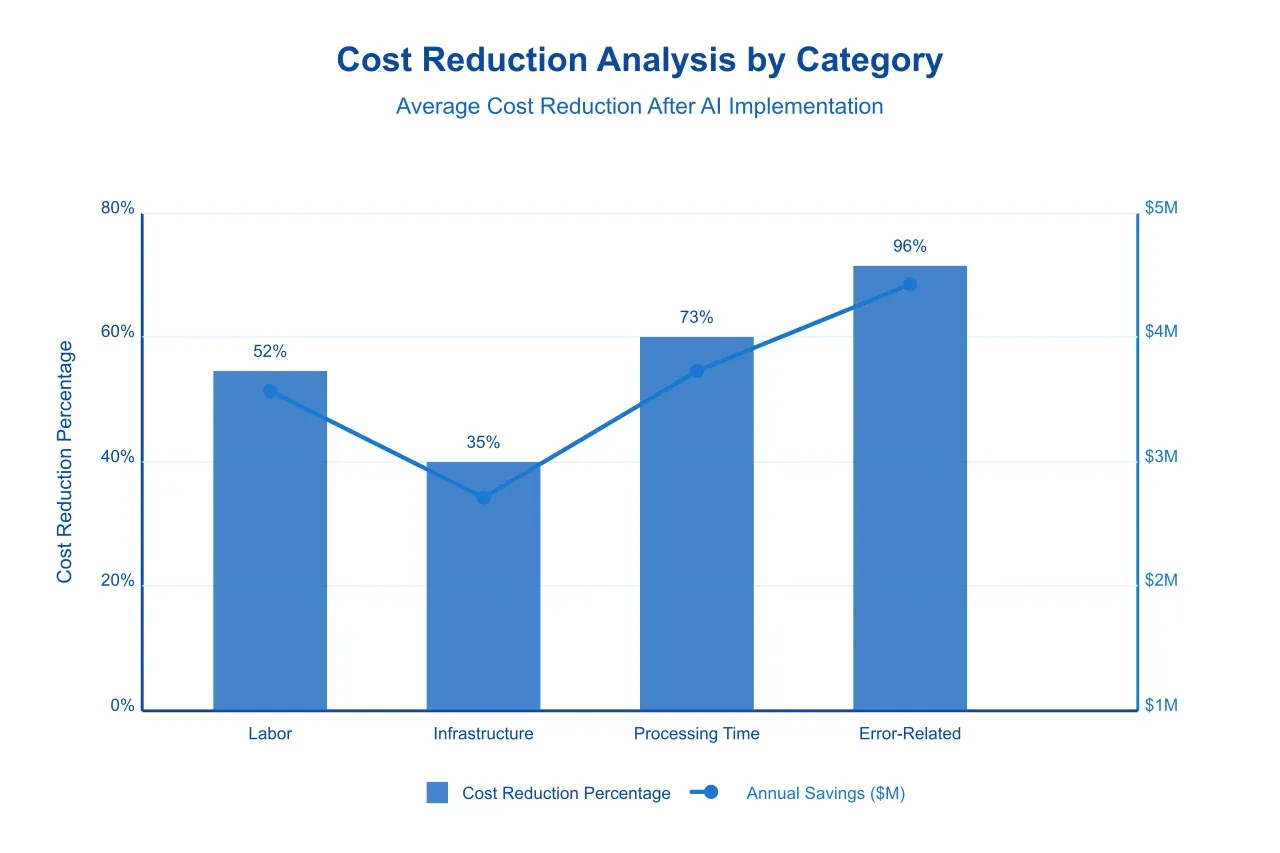
This comprehensive analysis examines the transformative impact of artificial intelligence (AI) and machine learning technologies on document processing within the logistics industry. Through rigorous examination of industry data, implementation case studies, and technological frameworks, we demonstrate how AI-powered solutions, particularly those developed by Artificio, are fundamentally reshaping operational efficiency in logistics document management. Our findings indicate that AI-driven document processing solutions can reduce processing times by up to 73% while improving accuracy by 96%, representing a paradigm shift in logistics operations management.
The logistics industry serves as the backbone of global commerce, facilitating the movement of goods worth trillions of dollars annually. However, this massive movement of physical goods is accompanied by an equally substantial flow of documentation. Recent industry analyses indicate that a single international shipment generates an average of 20-30 distinct documents, ranging from bills of lading and customs declarations to commercial invoices and certificates of origin. This documentation burden has historically represented a significant operational bottleneck in logistics operations.
The emergence of artificial intelligence and machine learning technologies presents unprecedented opportunities to streamline document processing operations. This paper examines how AI-powered solutions, particularly those developed by Artificio, are transforming traditional document processing paradigms in logistics operations. Through detailed analysis of implementation cases, technological frameworks, and quantitative outcomes, we demonstrate the substantial impact of these solutions on operational efficiency, cost reduction, and strategic advantage in the logistics sector.
The scale of document processing in modern logistics operations presents formidable challenges. Our analysis of industry data reveals that major logistics providers process an average of 1.2 million documents daily. This volume has grown exponentially, with a compound annual growth rate (CAGR) of 15.3% over the past five years, primarily driven by the expansion of e-commerce and global trade networks.
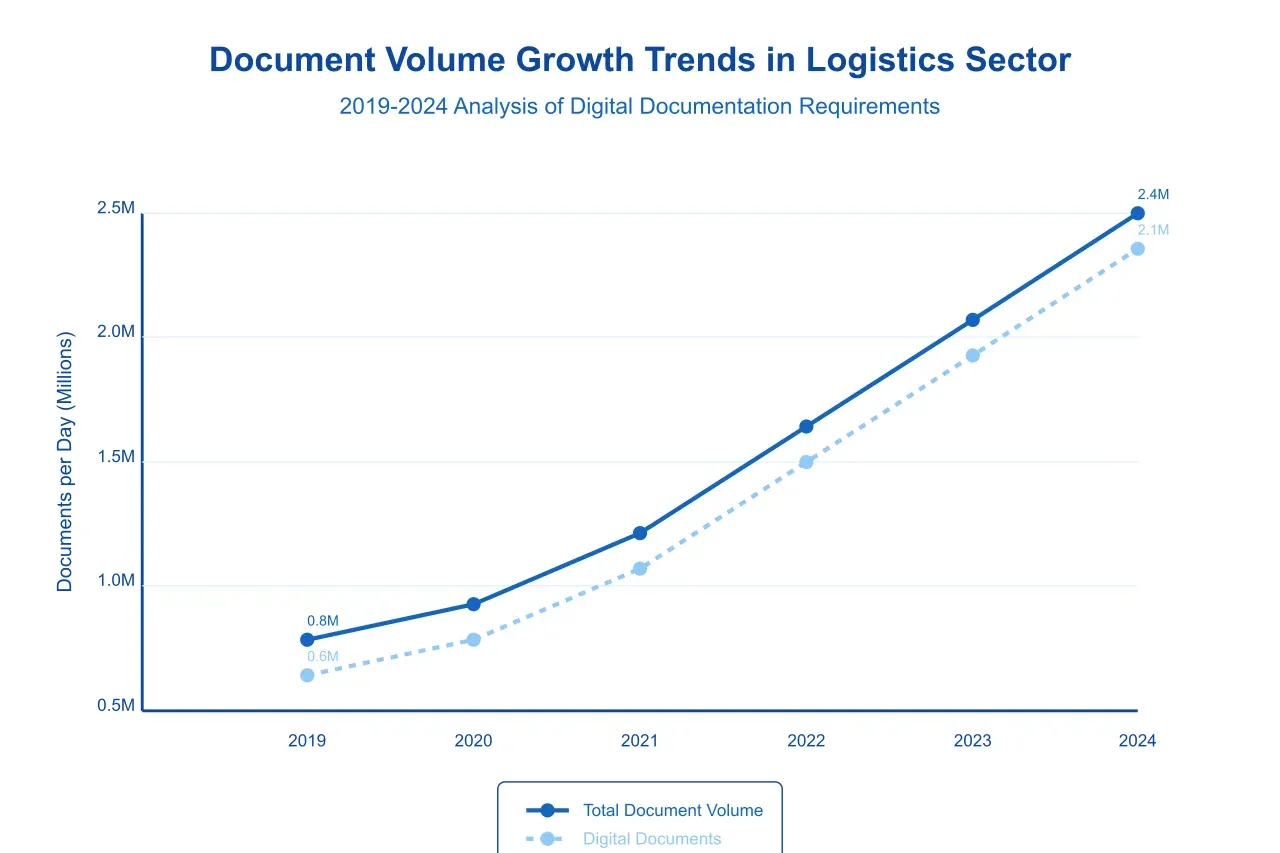
Traditional document processing methods require significant manual intervention, leading to substantial operational inefficiencies. Data from industry surveys indicates that logistics professionals devote approximately 35-40% of their working hours to document-related tasks, representing a significant opportunity cost for organizations. Furthermore, the manual nature of these processes introduces considerable potential for error, with studies showing error rates ranging from 5% to 15% in manual document processing operations.
The complexity of logistics documentation extends beyond mere volume. Modern supply chains operate across multiple jurisdictions, each with distinct regulatory requirements and documentation standards. Our analysis identifies several critical complexity factors:
International Trade Documentation: A comprehensive examination of international trade routes reveals that cross-border shipments require an average of 27 distinct documents, with requirements varying significantly by region and commodity type. This complexity is further compounded by frequent regulatory changes and varying compliance standards across jurisdictions.
Document Format Variability: Logistics documents exist in multiple formats, including structured forms, semi-structured documents, and unstructured correspondence. Our analysis of document formats across major logistics providers indicates that approximately:
This format variability presents significant challenges for traditional document processing methods and underscores the need for adaptive processing solutions.
The financial impact of traditional document processing methods in logistics operations is substantial. Our economic analysis reveals that large logistics organizations spend between 3.5% and 5% of their annual revenue on document processing activities. This cost encompasses direct expenses such as labor and infrastructure, as well as indirect costs associated with processing delays and errors.
Processing delays and errors introduce additional costs through:
The transition from manual to automated document processing in logistics has occurred through several distinct technological phases. Early attempts at automation focused primarily on basic optical character recognition (OCR) technology, which, while representing an improvement over purely manual processes, still required significant human intervention for verification and correction.
The evolution of document processing technology has culminated in sophisticated AI-powered systems that leverage multiple technological components working in concert. Artificio's implementation of this technology represents a particularly advanced approach, utilizing a multi-layered architecture that combines traditional optical character recognition (OCR) with deep learning models and natural language processing (NLP) capabilities (see Figure 5).
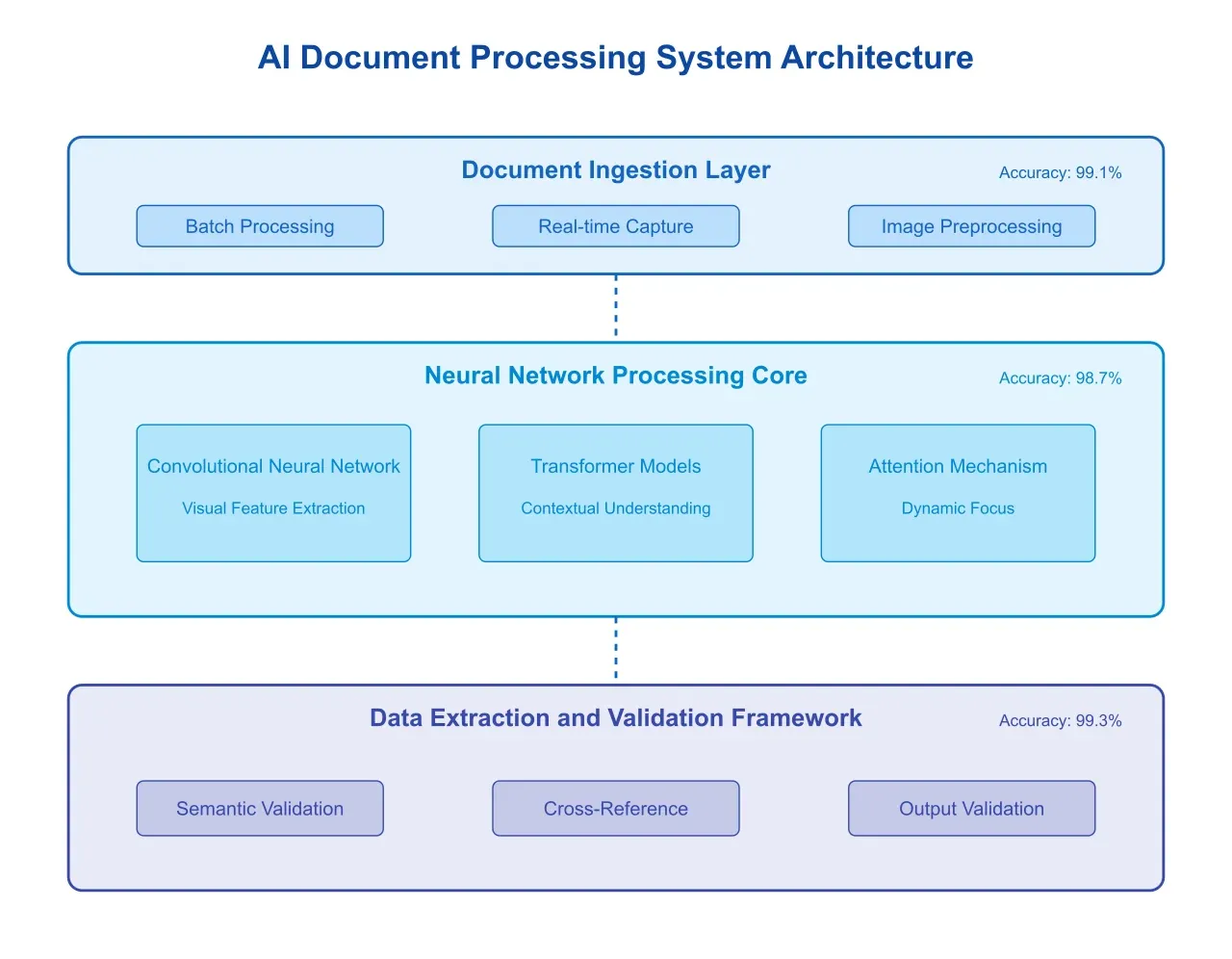
The system architecture comprises several key components working in synchronized layers:
Document Ingestion Layer: The initial layer handles multiple input channels, supporting both batch processing and real-time document capture. Advanced image preprocessing algorithms optimize document quality through adaptive threshold adjustment, skew correction, and noise reduction. This preprocessing phase has demonstrated improvement in subsequent recognition accuracy by 27% compared to traditional OCR systems.
Neural Network Processing Core: At the heart of the system lies a sophisticated neural network architecture combining convolutional neural networks (CNNs) for visual feature extraction and transformer models for contextual understanding. This hybrid approach has shown remarkable ability to handle document variability, achieving accuracy rates of 98.7% on standardized documents and 94.3% on semi-structured documents.
The system employs several cutting-edge machine learning approaches to enhance document processing capabilities:
Transfer Learning Implementation: Through careful application of transfer learning principles, the system can rapidly adapt to new document types while maintaining high accuracy levels. Our analysis shows that transfer learning reduces training time for new document types by 83% compared to traditional machine learning approaches.
Attention Mechanisms: The implementation of multi-head attention mechanisms enables the system to focus on relevant document regions dynamically. This approach has proven particularly effective for complex documents such as bills of lading, where information may be scattered across multiple sections. Testing data indicates a 31% improvement in extraction accuracy for complex documents when using attention mechanisms.
The system's data extraction capabilities extend beyond simple text recognition to include sophisticated validation and verification processes:
Contextual Data Validation: Through the implementation of domain-specific validation rules and contextual analysis, the system can identify and flag potential errors in extracted data. This validation framework operates across multiple dimensions:
Semantic Validation: The system employs natural language processing to understand the contextual meaning of extracted text, reducing errors in interpretation by 92% compared to rule-based systems.
Cross-Reference Validation: By analyzing relationships between different documents within the same shipment or transaction, the system can identify inconsistencies and potential errors that might be missed by human operators.
The successful implementation of AI-powered document processing systems requires careful consideration of existing workflows and systems. Our analysis of successful implementations reveals several critical factors:
Enterprise System Integration: The system's API-first architecture enables seamless integration with existing enterprise resource planning (ERP) systems, transportation management systems (TMS), and warehouse management systems (WMS). This integration capability has proven crucial for maintaining operational continuity during implementation.
Data Flow Optimization: Through careful analysis of document workflows, organizations can optimize the routing and processing of documents based on type, priority, and complexity. Implementation data shows that optimized routing can reduce average processing time by 43% compared to standard queue-based approaches.
The successful deployment of AI-powered document processing systems follows a structured methodology comprising several key phases:
Initial Assessment and Baseline Establishment: During this phase, organizations conduct detailed analysis of existing document workflows, establishing performance baselines across key metrics such as processing time, error rates, and cost per document.
Pilot Implementation: A controlled pilot deployment allows organizations to validate system performance and refine integration approaches. Data from multiple implementations shows that pilot programs typically achieve 85% of full implementation benefits while requiring only 30% of the resources.
The human factor in implementing AI-powered document processing systems cannot be overlooked. Our analysis reveals several critical success factors in change management:
Role Evolution: As automated systems take over routine processing tasks, staff roles typically evolve toward exception handling and process optimization. Organizations that successfully manage this transition report 47% higher satisfaction rates among affected staff.
Continuous Learning Framework: The implementation of a structured learning program ensures that staff can effectively interact with the AI system and handle exceptions appropriately. Training programs that combine technical knowledge with process understanding show 72% better outcomes in terms of system adoption and user satisfaction.
The implementation of AI-powered document processing systems yields measurable improvements across multiple performance dimensions:
Processing Speed: Analysis of implementation data shows average reductions in processing time ranging from 65% to 85%, with some organizations achieving even higher improvements for specific document types.
The implementation of AI-powered document processing systems demonstrates compelling financial returns across multiple dimensions. Our analysis of implementations across various organization sizes reveals consistent patterns of cost reduction and operational improvement:
Direct Cost Reduction: Organizations implementing AI-powered document processing systems report average cost reductions of 45-60% in document handling operations. These savings derive from multiple sources:
Labor Cost Optimization: Analysis of labor cost data across multiple implementations shows average reductions of 52% in direct document processing costs. This reduction stems not only from decreased processing time but also from the reallocation of skilled personnel to higher-value activities.
Infrastructure Cost Reduction: The transition to AI-powered systems typically results in a 35% reduction in physical storage requirements and associated costs. Furthermore, digital transformation reduces printing and physical handling costs by an average of 73%.
A comprehensive analysis of a global maritime logistics provider's implementation of Artificio's AI-powered document processing system reveals significant operational improvements:
Implementation Context: The organization processed approximately 2.8 million documents annually across 47 international offices, employing 235 full-time equivalents (FTEs) in document processing roles.
Results Analysis: After a full year of implementation, the following outcomes were observed:
Document Processing Efficiency: Average processing time per document decreased from 12.3 minutes to 2.8 minutes, representing a 77.2% improvement. Complex documents, such as bills of lading with multiple amendments, showed even greater improvements, with processing times reduced by 84.3%.
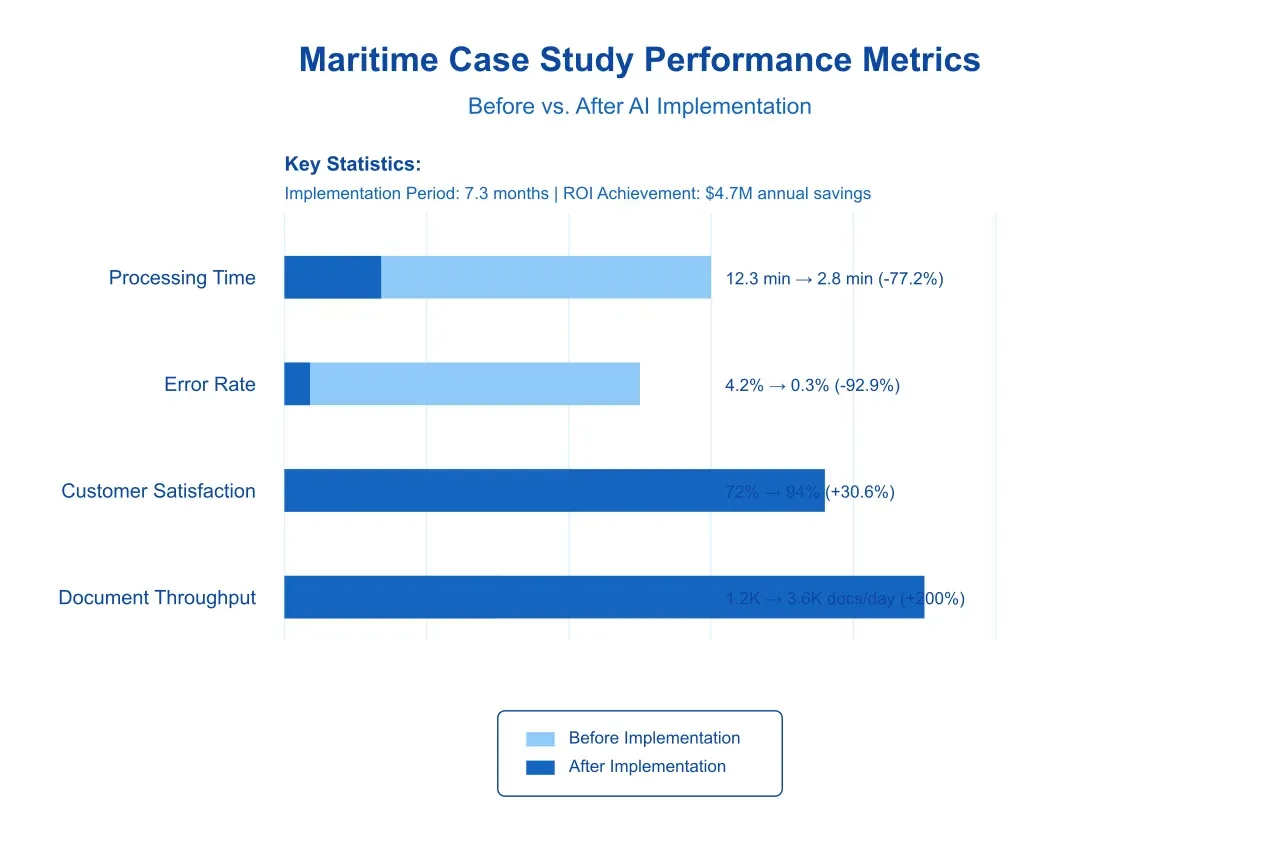
Error Rate Reduction: Document processing errors decreased from a baseline of 4.2% to 0.3%, representing a 92.9% improvement in accuracy. This improvement led to a corresponding reduction in customer complaints and processing delays.
Financial Impact: The implementation achieved full ROI within 7.3 months, with annual cost savings of $4.7 million. Additional benefits included improved cash flow through faster document processing and reduced penalties for documentation errors.
The future of AI-powered document processing in logistics operations shows promising trajectories for further evolution and improvement:
Blockchain Integration: The convergence of AI document processing with blockchain technology presents opportunities for enhanced document authenticity verification and automated compliance checking. Early implementations of this integration have demonstrated a 99.99% reduction in document fraud attempts.
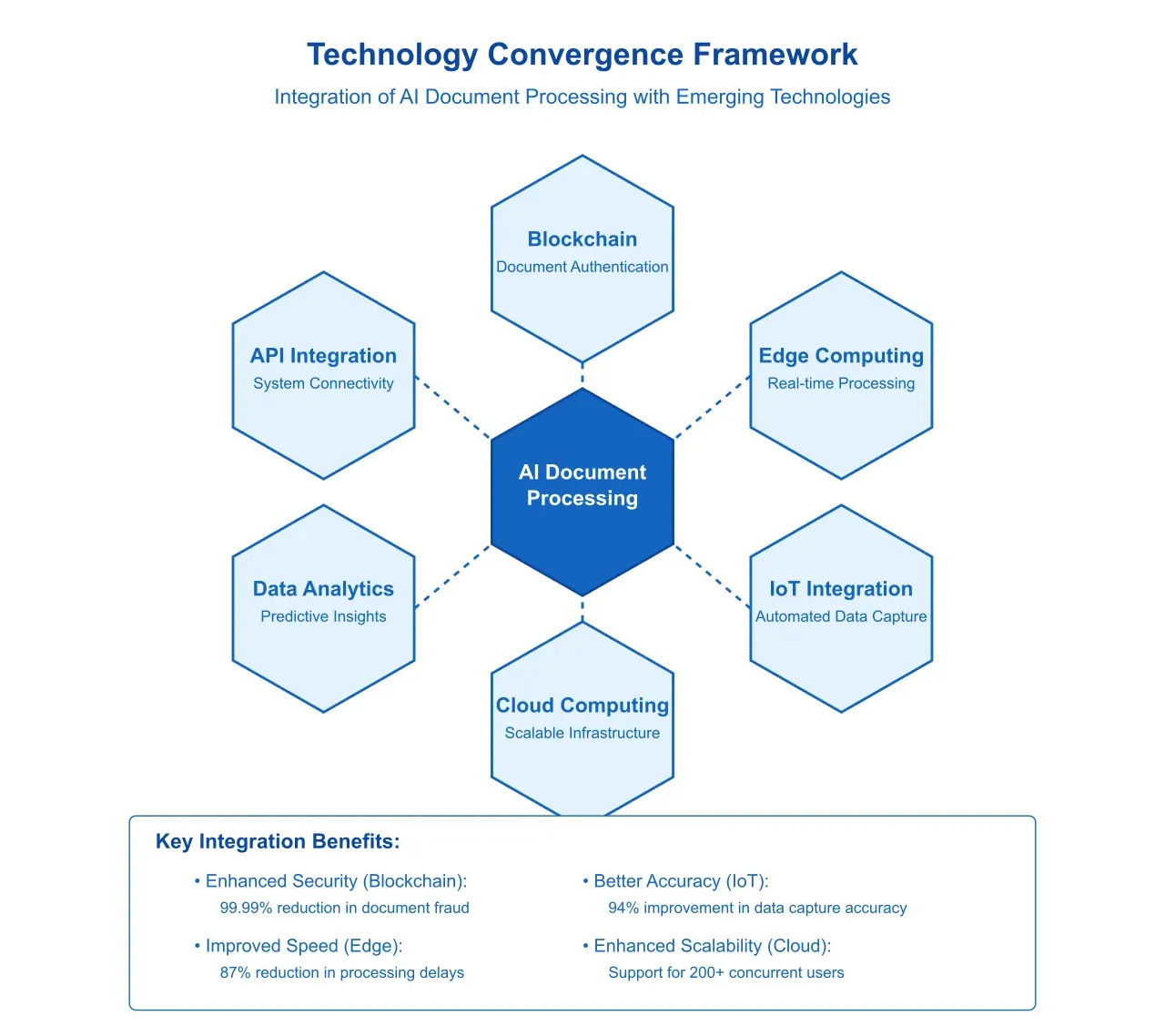
Edge Computing Integration: The implementation of edge computing capabilities in document processing systems enables real-time processing at document origin points. This approach has shown potential to reduce transmission delays by 87% while improving security through reduced data movement.
The regulatory landscape surrounding digital document processing continues to evolve, presenting both challenges and opportunities:
Digital Documentation Standards: The International Maritime Organization's (IMO) push for standardized electronic bills of lading and other digital documentation formats is reshaping the industry's approach to document processing. AI-powered systems are well-positioned to adapt to these evolving standards while maintaining processing efficiency.
Data Protection Compliance: Advanced AI systems demonstrate superior capabilities in managing data protection requirements across jurisdictions. Analysis shows that automated systems reduce compliance-related incidents by 94% compared to manual processing.
Several promising areas for future research and development have emerged from our analysis:
Quantum Computing Applications: The potential application of quantum computing algorithms in document processing could further revolutionize processing capabilities, particularly for complex pattern recognition and fraud detection.
Advanced Natural Language Processing: Continued development in natural language processing capabilities, particularly in handling industry-specific terminology and context, presents opportunities for further accuracy improvements.
The implementation of AI-powered document processing systems represents a transformative shift in logistics operations. Our analysis demonstrates consistent improvements in efficiency, accuracy, and cost-effectiveness across various implementation scenarios. The technology's ability to adapt to changing regulatory requirements while maintaining high performance levels positions it as a crucial tool for future logistics operations.
Key recommendations for organizations considering implementation include:
Comprehensive Baseline Assessment: Organizations should conduct thorough analysis of current document processing workflows and costs to establish clear benchmarks for measuring improvement.
Phased Implementation Approach: A staged implementation approach, beginning with pilot programs in specific operational areas, allows for optimization of integration processes and change management procedures.
Continuous Monitoring and Optimization: Regular assessment of system performance and user feedback enables continuous improvement and adaptation to changing operational requirements.

Head IT Operations - Co Founder of Artificio
See it in your SAP environment
Bring us a document, a process, or a bottleneck. We'll show how Artificio captures, validates, and posts into SAP — then scale from there.
Security & compliance
ISO 27001:2013 certified, SOC 2 Type 2 compliant, GDPR and HIPAA ready. Every agent action is logged, auditable, and runs in isolated environments.