

Blog
Time and Expense Processing: Automating the Contractor Management Lifecycle
Automated contractor time & expense workflow streamlines onboarding, timesheets, expenses, and invoicing for efficiency and compliance.

Blog
Automated contractor time & expense workflow streamlines onboarding, timesheets, expenses, and invoicing for efficiency and compliance.
In today's rapidly evolving business landscape, organizations increasingly rely on contingent workforces to achieve strategic objectives, maintain operational flexibility, and access specialized skills on demand. The management of contractor relationships, however, presents significant administrative challenges that span from initial engagement through payment processing. Traditional approaches to contractor management often involve disjointed systems, manual interventions, and inefficient processes that increase administrative burden, introduce compliance risks, and potentially damage contractor relationships through delayed payments or processing errors.
This comprehensive examination explores an innovative end-to-end workflow solution for contractor Time and Expense processing that culminates in automated invoice generation. The proposed system integrates several critical components resume parsing, digital onboarding, documentation management, timesheet submission, expense reporting, and invoice generation into a cohesive, streamlined process that promises to revolutionize contractor management practices.
The significance of such automation extends beyond mere operational efficiency. As organizations face increasing pressure to optimize costs while maintaining quality service delivery, automated contractor management systems represent a strategic imperative. Furthermore, in a climate of intensifying regulatory scrutiny regarding worker classification and payment practices, robust systems that ensure compliance while maintaining detailed audit trails become essential risk management tools.
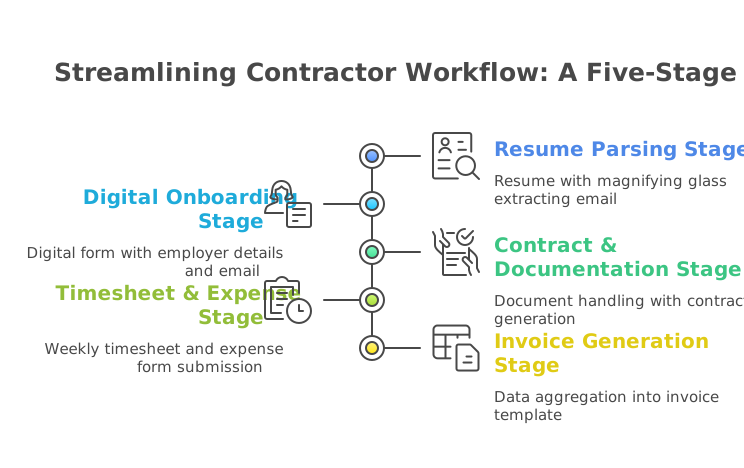
Contemporary organizations face multifaceted challenges in contractor management that span operational, financial, and compliance dimensions. Research by Deloitte indicates that approximately 45% of enterprise workforce spending is allocated to contingent workers, yet the systems governing these relationships often lack the sophistication applied to permanent employee management (Deloitte, 2023). This discrepancy creates an administrative vulnerability that manifests in several problematic ways.
Operational inefficiencies represent the most immediately apparent challenge. Manual processing of contractor documentation, timesheets, and expenses consumes significant administrative resources while introducing possibilities for human error. A study by the Society for Human Resource Management suggests that organizations spend an average of 14 hours per month on administrative tasks related to each contingent worker (SHRM, 2022). This administrative burden scales proportionally with the size of the contingent workforce, creating a significant operational overhead.
Financial implications extend beyond the direct costs of administrative processing. Delayed payments resulting from manual processing can strain contractor relationships and potentially lead to premium pricing as contractors factor payment uncertainties into their rate structures. Additionally, without systematic controls, organizations may struggle to enforce rate agreements or identify unauthorized expenses, leading to budget overruns and financial leakage.
Compliance considerations present perhaps the most significant risk factor in contractor management. Regulatory frameworks governing worker classification, tax withholding, and payment reporting vary by jurisdiction and evolve continuously. Manual systems struggle to maintain pace with these changes, potentially exposing organizations to significant penalties and regulatory scrutiny. The Internal Revenue Service reported assessing over $54 million in penalties related to worker misclassification in fiscal year 2022 alone, highlighting the financial consequences of compliance failures (IRS, 2023).
These challenges underscore the necessity for comprehensive, integrated systems that automate the contractor management lifecycle while ensuring compliance with relevant regulatory frameworks. The workflow solution examined in this analysis addresses these challenges through systematic automation of key processes, creating a seamless experience for both contractors and organizational stakeholders.
Before exploring the proposed workflow solution in detail, it is instructive to examine the current state of contractor management practices across industries. Contemporary approaches typically fall into three categories, each characterized by distinct advantages and limitations.
Despite technological advancements, many organizations continue to rely on predominantly manual systems for contractor management. These approaches typically involve paper-based documentation, email communication for approvals, and spreadsheet-based tracking of hours and expenses. While requiring minimal technological investment, manual systems suffer from significant limitations:
A second category involves partially automated solutions that address specific components of the contractor management lifecycle. Organizations may implement digital timesheet systems or electronic expense reporting tools while maintaining manual processes for other aspects of contractor management. These hybrid approaches offer incremental improvements but present integration challenges:
Larger organizations increasingly implement enterprise-scale vendor management systems (VMS) that offer comprehensive functionality. While powerful, these solutions often present significant implementation challenges:
The fragmentation and limitations evident across these approaches highlight the potential value of an integrated, purpose-built solution that addresses the complete contractor management lifecycle while offering flexibility, user-friendliness, and comprehensive compliance support.
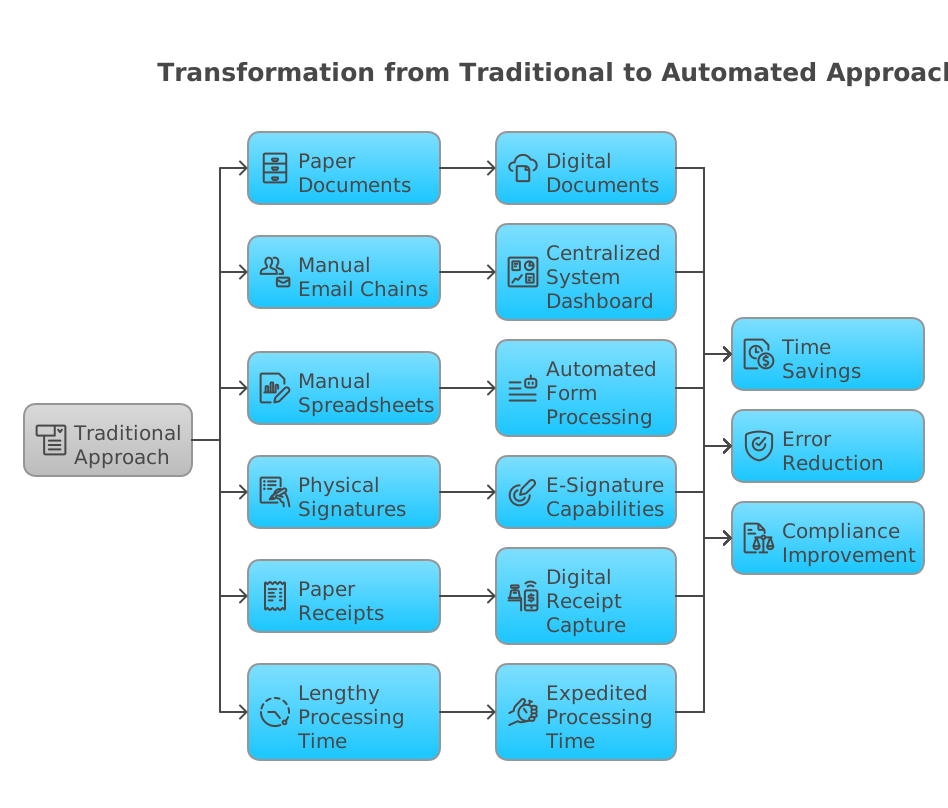
The proposed workflow solution represents a systematic approach to contractor management that addresses each phase of the engagement lifecycle through intelligent automation. By integrating previously disconnected processes into a coherent system, the solution promises significant improvements in efficiency, accuracy, and compliance management.
The contractor engagement process begins with resume intake and parsing. This initial phase leverages natural language processing and machine learning technologies to extract pertinent information from submitted resumes, focusing particularly on candidate contact information. The system automatically identifies and extracts the candidate's email address, establishing the primary communication channel for subsequent workflow stages.
The significance of this automation extends beyond simple data extraction. By establishing a reliable communication channel at the earliest engagement stage, the system creates the foundation for subsequent automated interactions. Additionally, the extracted email becomes a unique identifier within the system, linking all subsequent documentation and transactions to the specific contractor.
Research by Aberdeen Group indicates that organizations implementing automated resume parsing reduce time-to-hire by 27% while improving data accuracy by 35% compared to manual data entry approaches (Aberdeen Group, 2022). These efficiency gains represent significant value, particularly for organizations managing large contingent workforces.
From a technical perspective, modern resume parsing systems employ sophisticated algorithms that recognize document structure and contextual clues to identify key information with high reliability. Leading solutions achieve accuracy rates exceeding 95% for structured information such as email addresses and contact details (AI Recruiting Research Consortium, 2023).
Implementation considerations for this phase include:
Following successful resume parsing and email extraction, the system automatically distributes a comprehensive digital onboarding form to the candidate. This form serves multiple critical functions:
The digital onboarding form represents a significant advancement over traditional paper-based processes or disjointed electronic submissions. By consolidating multiple information requirements into a single, structured interaction, the system reduces administrative burden while improving data accuracy.
A noteworthy aspect of this phase involves the timing of form distribution. By automating the distribution process immediately following resume parsing, the system eliminates delays typically associated with manual processing. Research indicates that reducing administrative cycle time during onboarding significantly improves contractor satisfaction and reduces the likelihood of losing candidates to competing opportunities (Contractor Management Association, 2023).
From an implementation perspective, several design principles guide effective onboarding form creation:
The digital onboarding form establishes a foundation of structured data that supports subsequent workflow phases while creating a positive initial experience for contractors.
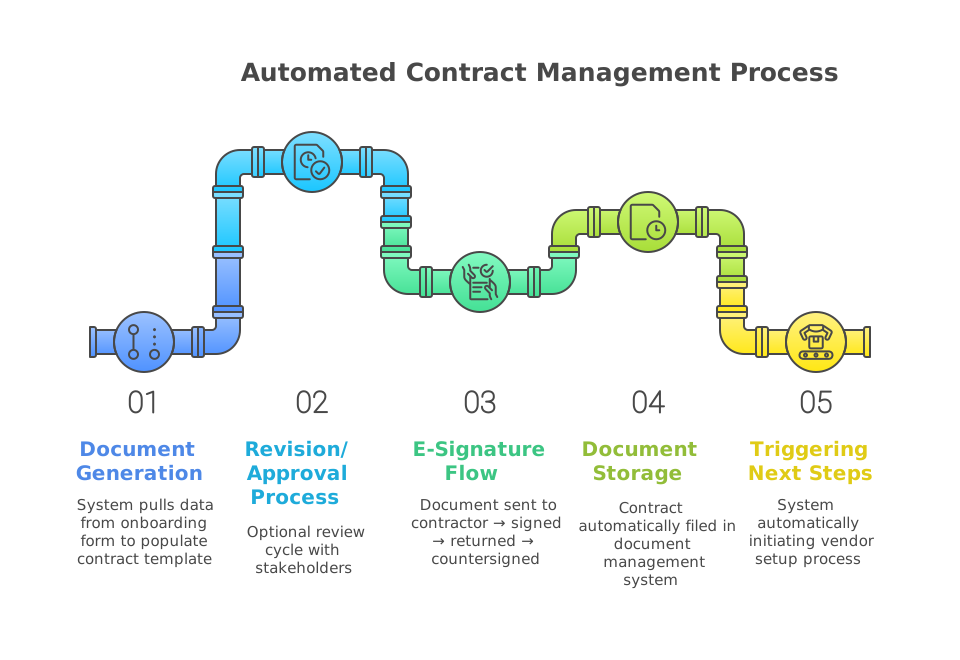
The third phase of the workflow addresses contract distribution, document collection, and vendor registration processes. This phase leverages the information collected during onboarding to automate several critical processes:
This integrated approach to contract and documentation management offers several advantages over traditional processes. By maintaining a single system of record, organizations eliminate document version control issues that plague manual processes. Additionally, automated validation ensures documentation completeness before engagement initiation, reducing compliance risks associated with missing or incomplete documentation.
From a technical perspective, this phase typically involves integration with several enterprise systems:
The efficiency gains realized during this phase yield significant organizational benefits. Research by the International Association for Contract and Commercial Management indicates that automated contract management reduces processing time by 50% while decreasing administrative costs by approximately 30% compared to manual processes (IACCM, 2023).
The fourth phase represents the operational core of the contractor management workflow, addressing ongoing time tracking and expense reporting requirements. This phase accommodates varied work arrangements through flexible submission options:
The system enforces critical compliance elements throughout this phase, including:
From a user experience perspective, this phase emphasizes simplicity and accessibility. Research indicates that contractor compliance with timely submission requirements correlates directly with system usability (Contractor Management Institute, 2022). Consequently, successful implementations prioritize:
The benefits of automated timesheet and expense management extend beyond operational efficiency. By implementing systematic controls and validation, organizations typically realize expense reduction of 5-7% through improved policy compliance and elimination of duplicate submissions (Expense Management Research Consortium, 2023). Additionally, the structured data captured during this phase creates the foundation for sophisticated analytics and forecasting capabilities.
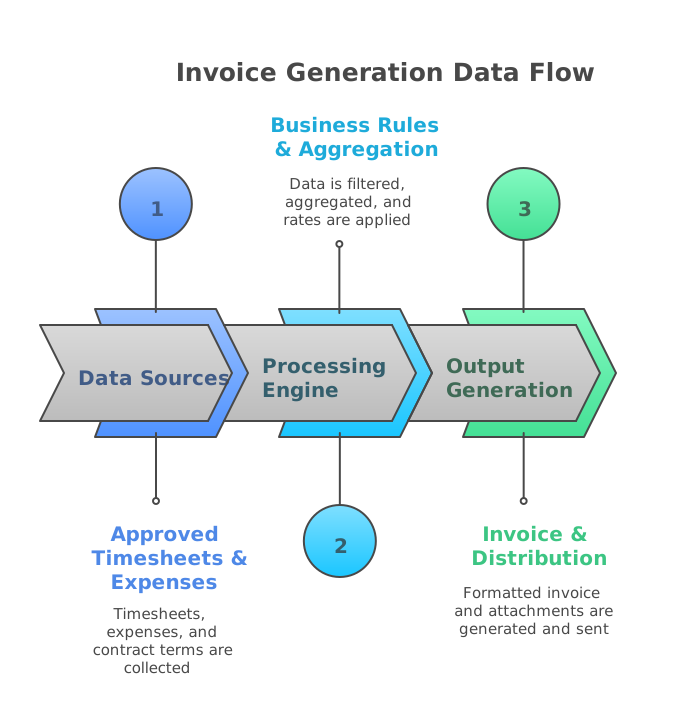
The culminating phase of the workflow translates collected time and expense information into accurate, compliant invoices through an automated process. This phase represents the convergence of all previous data collection efforts, transforming structured information into financial transactions. The process encompasses several sophisticated elements:
This automated approach resolves numerous challenges associated with manual invoice preparation. By eliminating manual data aggregation and calculation, the system reduces errors while accelerating the billing cycle. Research indicates that organizations implementing automated invoice generation reduce days sales outstanding (DSO) by an average of 7.5 days while decreasing billing errors by 94% (Institute of Finance Management, 2023).
From a technical perspective, this phase typically involves sophisticated integration with enterprise financial systems:
The strategic value of automated invoice generation extends beyond operational efficiency. By accelerating the billing cycle, organizations improve cash flow while creating capacity for value-added financial analysis rather than transactional processing. Additionally, the structured data created through automation supports sophisticated analytics regarding project profitability, contractor utilization patterns, and expense trends.
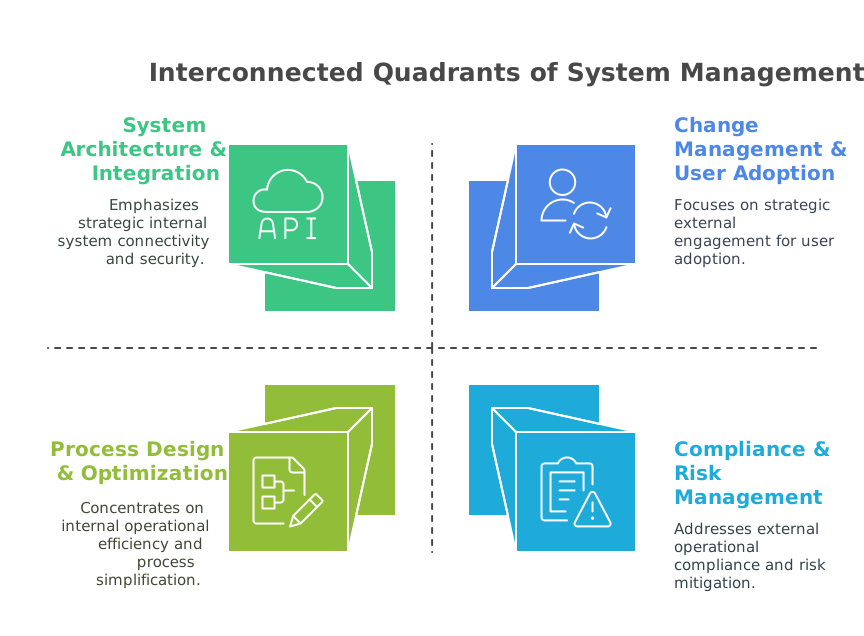
The successful implementation of an end-to-end contractor management workflow requires careful consideration of several critical factors spanning technological, organizational, and human dimensions.
The technological foundation of the solution must balance several seemingly contradictory requirements:
Successful implementations typically employ API-first architectures that facilitate integration while maintaining system independence. Additionally, cloud-based deployments offer scalability advantages while potentially reducing implementation timelines compared to on-premises alternatives.
While automation represents a powerful tool, its effectiveness depends entirely on the quality of underlying process design. Organizations must critically evaluate existing processes rather than simply automating current practices. This evaluation should consider:
Research indicates that organizations achieving the greatest return on investment from automation initiatives dedicate 30-40% of implementation effort to process evaluation and redesign rather than focusing exclusively on technical implementation (Digital Process Automation Forum, 2023).
The human dimension represents perhaps the most critical success factor in workflow implementation. Both internal stakeholders and contractors must adapt to new processes and systems, requiring thoughtful change management approaches:
Organizations demonstrating excellence in change management typically achieve full adoption 40% faster than those focusing exclusively on technical implementation (Change Management Institute, 2023).
Given the significant compliance dimensions of contractor management, implementation must specifically address risk management concerns:
Organizations implementing comprehensive compliance frameworks within contractor management systems report 65% fewer regulatory findings during external audits compared to those utilizing manual or fragmented approaches (Compliance Management Association, 2023).
Effective measurement of workflow implementation success requires a multidimensional approach that addresses efficiency, effectiveness, compliance, and satisfaction metrics. Leading organizations employ balanced scorecards encompassing several key performance indicators:
Effective measurement approaches typically establish baseline metrics before implementation, set specific improvement targets, and track progress through automated reporting capabilities integrated within the workflow solution itself.
While the core workflow addresses fundamental contractor management requirements, several advanced capabilities offer potential for additional organizational value:
The structured data generated through the workflow creates a foundation for sophisticated analytics applications:
Emerging artificial intelligence capabilities offer several promising applications within contractor management:
Blockchain technology offers potential solutions to persistent challenges in contractor management:
While these advanced capabilities represent emerging rather than established applications, organizations should consider future extensibility when designing core workflow implementations.
The comprehensive end-to-end workflow for contractor Time and Expense processing with automated invoice generation represents a significant advancement in contingent workforce management practices. By integrating previously disconnected processes into a coherent system, organizations can realize substantial benefits spanning operational efficiency, financial performance, compliance management, and stakeholder satisfaction.
The transformation from traditional approaches to automated workflows involves significant change across technological, process, and human dimensions. Organizations approaching this transition thoughtfully with appropriate attention to system architecture, process design, change management, and compliance considerations position themselves to capture maximum value from their implementation investments.
As workforce composition continues its evolution toward greater contingent worker utilization, the strategic importance of effective contractor management increases correspondingly. Organizations implementing sophisticated workflows gain competitive advantage through improved contractor experiences, reduced administrative overhead, and enhanced compliance postures. Furthermore, the foundation established through core workflow implementation creates opportunities for future innovation through advanced analytics, artificial intelligence, and potentially distributed ledger technologies.
In an economic environment characterized by persistent talent scarcity and increasing regulatory scrutiny, excellence in contractor management represents both a strategic imperative and a significant opportunity. The end-to-end workflow solution examined here offers organizations a practical pathway toward achieving this excellence.

Head IT Operations - Co Founder of Artificio
See it in your SAP environment
Bring us a document, a process, or a bottleneck. We'll show how Artificio captures, validates, and posts into SAP — then scale from there.
Security & compliance
ISO 27001:2013 certified, SOC 2 Type 2 compliant, GDPR and HIPAA ready. Every agent action is logged, auditable, and runs in isolated environments.