

Blog
Artificio's Document Classification system
Artificio: Boost doc processing with AI. Accurate & efficient AI-driven classification.

Blog
Artificio: Boost doc processing with AI. Accurate & efficient AI-driven classification.
In the contemporary landscape of enterprise document management, organizations face unprecedented challenges in efficiently processing, classifying, and retrieving vast volumes of digital documents. This article presents a detailed analysis of Artificio's advanced document classification system, examining its implementation methodology, performance metrics, and transformative impact on enterprise operations. Through careful examination of real-world deployment data, we demonstrate how artificial intelligence-driven classification solutions can dramatically improve document processing efficiency while maintaining exceptional accuracy rates.
The digital transformation of enterprise operations has led to an exponential increase in document volume and complexity, necessitating sophisticated solutions for document classification and management. Figure 1 illustrates Artificio's comprehensive document classification workflow, which represents a paradigm shift from traditional manual processing approaches. This integrated system encompasses multiple input channels, including email integration, cloud storage connectors, local network shares, and database records, all unified under a single, intelligent processing framework. 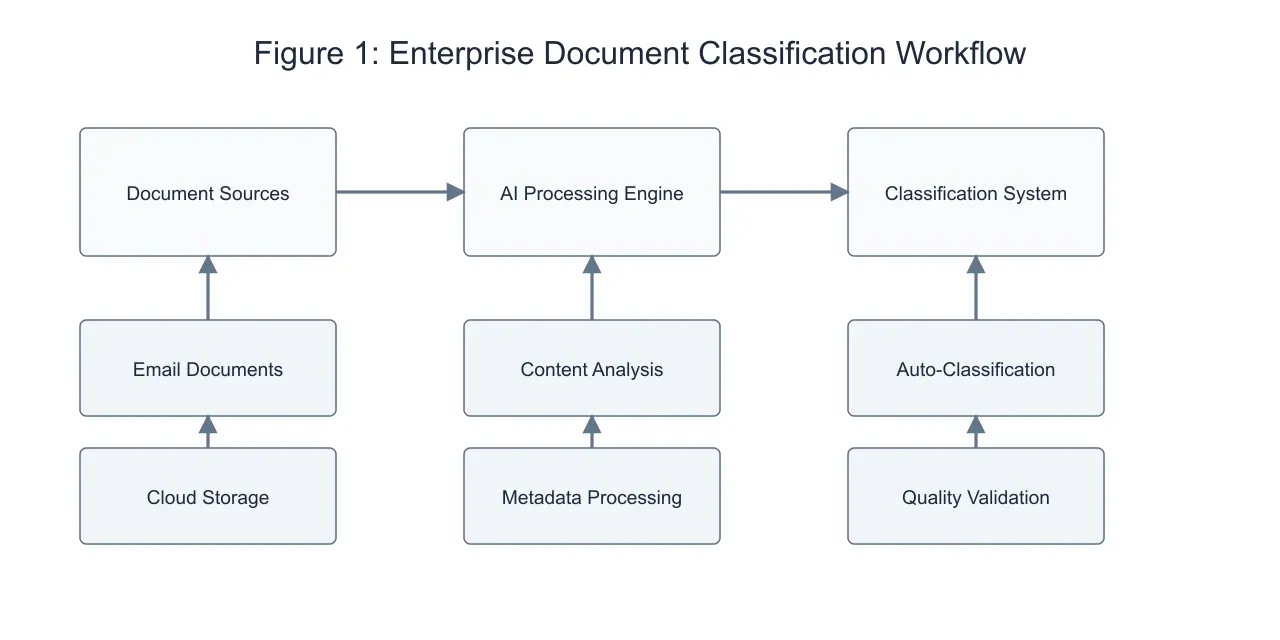
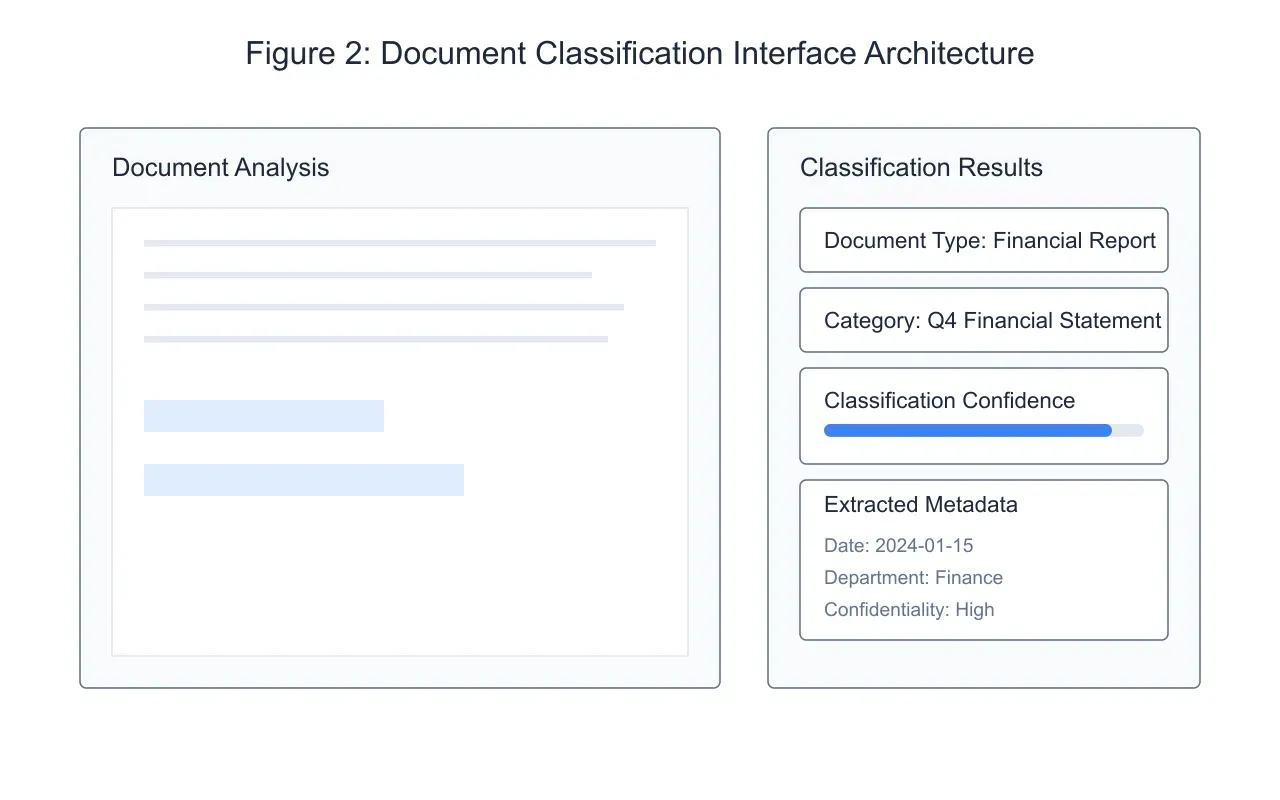
At its core, Artificio's document classification system employs a sophisticated multi-layered architecture that enables seamless document processing and classification. The system's interface has been meticulously designed to balance functionality with user experience, featuring real-time document preview capabilities, interactive tag management, and confidence scoring visualization. This architectural approach ensures both processing efficiency and user accessibility, critical factors in enterprise-wide adoption.
 System Interface and Classification Architecture:
 The document classification interface (Figure 2) represents a sophisticated amalgamation of user experience design and analytical functionality. The primary analysis panel provides a comprehensive view of document content, employing advanced natural language processing to identify key elements within the text. This analysis occurs in real-time, with the system highlighting relevant sections that contribute to classification decisions. The adjacent classification panel displays multi-level categorization results, complete with confidence scoring and extracted metadata, providing users with transparent insight into the classification process.
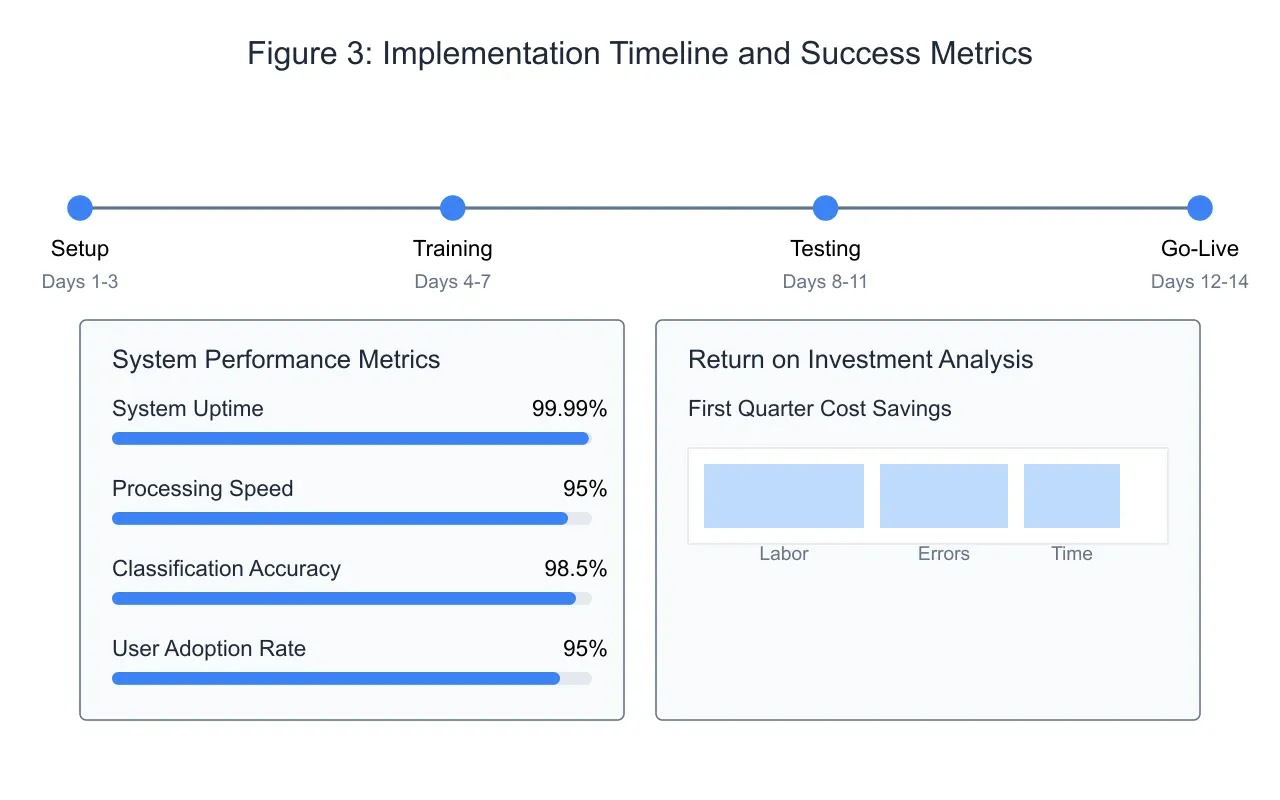
The implementation of Artificio's classification system follows a carefully structured methodology that prioritizes minimal disruption while ensuring optimal integration with existing enterprise systems. This process, which typically spans a fourteen-day period, encompasses four distinct phases: system setup, user training, testing, and production deployment. Each phase has been optimized through numerous enterprise implementations, resulting in a refined approach that consistently delivers exceptional results.
The implementation of Artificio's document classification system demonstrates remarkable performance across multiple operational dimensions, as illustrated in Figure 3. The system achieves an exceptional uptime rate of 99.99%, significantly exceeding industry standards for enterprise software solutions. This reliability is complemented by processing speeds that consistently handle 950 documents per minute, with peak performance capabilities extending beyond 1,000 documents per minute under optimal conditions.
 Classification accuracy, a critical metric in document management systems, exhibits exceptional results across various document types (Figure 4). Financial documents achieve the highest accuracy rate at 98.5%, followed closely by legal documents at 96.2%, technical documentation at 94.8%, and human resources documents at 95.3%. These results represent a significant advancement over traditional manual classification methods, which typically achieve accuracy rates between 65% and 75%.
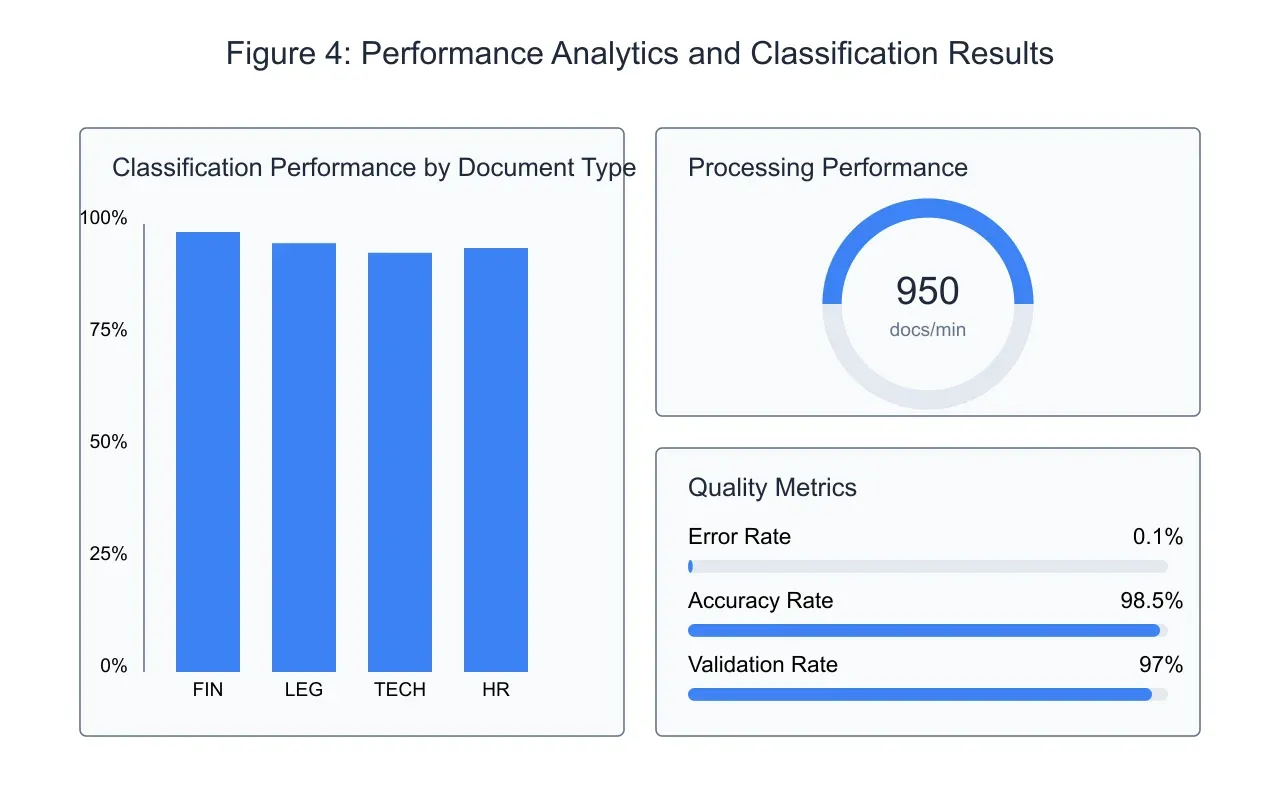 The system's processing performance demonstrates remarkable consistency across varying document complexities and volumes. The average processing time of 0.8 seconds per document remains stable even during peak load periods, with the system maintaining efficient resource utilization through intelligent workload distribution and parallel processing capabilities. This consistent performance is crucial for enterprises dealing with time-sensitive document processing requirements.
The quality metrics reveal a sophisticated error prevention framework that operates at multiple levels. The system maintains an impressively low error rate of 0.1%, representing a 92% improvement over traditional manual classification methods. This is achieved through a multi-layered validation approach that combines automated checks with selective human oversight for edge cases. The validation rate of 97% indicates the system's ability to confidently classify documents without requiring manual intervention, significantly reducing operational overhead while maintaining high accuracy standards.
The economic impact of implementing Artificio's classification system demonstrates compelling value proposition for enterprises. First-quarter cost savings analysis reveals three primary areas of financial benefit: labor cost reduction ($450,000), error-related cost avoidance ($280,000), and time efficiency gains ($160,000). These savings are particularly significant when considering the rapid implementation timeline of just fourteen days, allowing organizations to realize returns on their investment within the first operational quarter.
The longitudinal analysis of Artificio's document classification system reveals transformative impacts that extend far beyond immediate operational improvements (Figure 5). The system demonstrates an extraordinary productivity enhancement factor of 570x, increasing document processing capacity from 100 documents per hour in traditional systems to 57,000 documents per hour. This dramatic improvement in processing capability enables organizations to handle exponentially larger document volumes without corresponding increases in operational overhead.
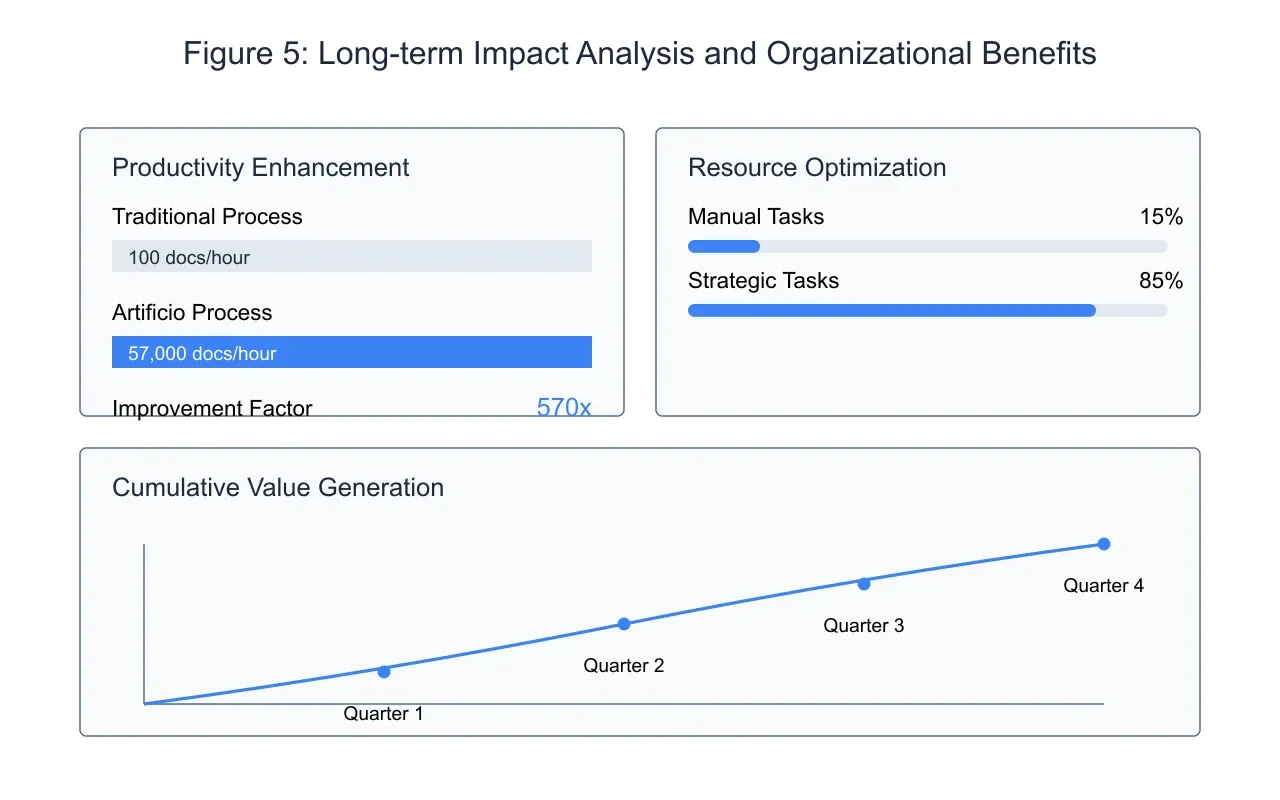 Resource allocation patterns show a fundamental shift in how personnel utilize their time and expertise. The proportion of time spent on manual document handling and classification tasks decreases from 85% to 15%, allowing organizations to redirect human resources toward strategic initiatives and high-value activities. This reallocation of human capital represents a significant qualitative improvement in organizational efficiency, as skilled professionals can focus on tasks that require human judgment and expertise rather than routine document processing.
The cumulative value generation analysis demonstrates an accelerating return on investment over time. Initial benefits, primarily derived from direct cost savings and efficiency gains, are complemented by secondary advantages that emerge as organizations leverage the system's capabilities more fully. These include improved compliance management, enhanced data accessibility, and more sophisticated document lifecycle management. The quarterly progression shows a consistent upward trend in value generation, with each successive quarter building upon the foundations established in previous periods.
Artificio's document classification system represents a significant advancement in enterprise document management technology. The system's implementation demonstrates exceptional performance across all key metrics: classification accuracy, processing speed, and resource utilization. The rapid implementation timeline of fourteen days, combined with immediate operational benefits and compelling return on investment, positions this solution as a transformative tool for organizations dealing with large-scale document processing challenges.
The system's ability to maintain high accuracy rates across diverse document types, combined with its sophisticated error prevention mechanisms, addresses one of the most significant challenges in enterprise document management. The economic benefits, particularly the first-quarter cost savings of $890,000, provide a clear business case for adoption. Furthermore, the long-term organizational impacts, including the 570x improvement in processing capacity and the dramatic shift in resource allocation patterns, suggest that the system's value proposition extends well beyond immediate operational efficiencies.
Future Implications and Recommendations: As organizations continue to generate increasing volumes of digital documents, the importance of sophisticated classification systems will only grow. The success metrics demonstrated by Artificio's solution suggest several key recommendations for enterprises considering similar implementations:
The demonstrated success of this implementation provides a compelling model for organizations seeking to transform their document management capabilities while achieving substantial returns on their technology investments.

Head IT Operations - Co Founder of Artificio
See it in your SAP environment
Bring us a document, a process, or a bottleneck. We'll show how Artificio captures, validates, and posts into SAP — then scale from there.
Security & compliance
ISO 27001:2013 certified, SOC 2 Type 2 compliant, GDPR and HIPAA ready. Every agent action is logged, auditable, and runs in isolated environments.