

Blog
Transforming Educational Workflows with Online Forms App
Discover Artificio's AI form platform. Streamline education admin, improve student experience, and boost efficiency.

Blog
Discover Artificio's AI form platform. Streamline education admin, improve student experience, and boost efficiency.
The education sector stands as one of the most document-intensive industries worldwide, with institutions managing countless forms throughout a student's academic journey. From initial enrollment applications to graduation documentation, educational institutions process an overwhelming volume of paperwork that impacts administrative efficiency, student experience, and ultimately, educational outcomes. The traditional approach to form management relying on paper-based systems or disconnected digital solutions creates significant operational challenges that ripple throughout the educational ecosystem.
Educational institutions of all sizes face similar documentation challenges: enrollment forms that require manual data entry, financial aid applications that sit in processing queues, and student information updates that fail to synchronize across departmental systems. These inefficiencies not only burden administrative staff but also create frustrating experiences for students and parents navigating these essential processes. The consequences extend beyond mere inconvenience, affecting decision-making, compliance reporting, and resource allocation across the institution.
Artificio emerges in this landscape as a transformative solution, leveraging artificial intelligence and machine learning technologies to fundamentally reimagine form management in education. As illustrated in Figure 1: The Educational Form Lifecycle, the typical form process in educational institutions involves multiple touchpoints that can benefit from intelligent automation. By providing both pre-trained models for common educational documents and customizable solutions for institution-specific needs, Artificio addresses the unique documentation challenges faced by schools, colleges, and universities.
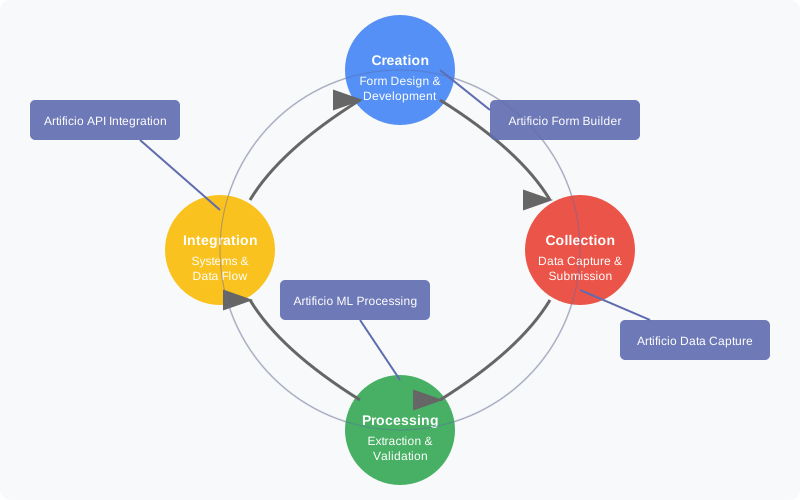
This comprehensive article explores how Artificio's intelligent form management platform is revolutionizing administrative processes in education. We examine the current documentation challenges in the sector, the specific capabilities of Artificio's solution, implementation strategies for educational institutions, and the measurable outcomes that can be achieved through intelligent form processing. Through case studies and practical examples, we demonstrate how educational institutions can not only streamline administrative workflows but also enhance data accuracy, improve the student experience, and ultimately deliver better educational outcomes through more efficient information management.
The education sector's reliance on forms and documentation continues to grow as regulatory requirements expand, student populations diversify, and educational models evolve. Modern educational institutions must manage an increasingly complex array of forms throughout the student lifecycle:
Admissions and Enrollment: The entry point for most students begins with application forms, transcript submissions, recommendation letters, and various supplementary documents. These materials require careful processing to support timely and fair admissions decisions.
Financial Aid and Scholarships: Students and families navigate complex financial aid applications, scholarship forms, and supporting financial documentation, all of which contain sensitive information requiring secure handling and precise processing.
Student Information Management: Throughout a student's academic journey, their personal information, emergency contacts, health records, and academic preferences must be updated and maintained across multiple institutional systems.
Course Registration and Academic Planning: Each academic term brings a new wave of registration forms, course selection documents, and academic planning paperwork that must be processed efficiently to support student progress.
Assessment and Evaluation: Beyond standard testing, many educational programs require specialized assessment forms, internship evaluations, practicum feedback, and similar documentation that must be integrated with student records.
Regulatory Compliance and Reporting: Educational institutions face ever-increasing reporting requirements from accreditation bodies, government agencies, and other regulatory entities, each demanding specific documentation formats and data points.
The sheer volume of these documents presents a formidable challenge. A mid-sized university processes hundreds of thousands of forms annually, while even small K-12 schools manage thousands of documents each academic year. Traditional approaches to handling this documentation burden have proven increasingly inadequate, as they:
The financial impact of these inefficiencies is substantial. Research from the Education Data Initiative suggests that administrative costs in U.S. higher education institutions have grown by more than 60% in the past two decades, with document processing representing a significant portion of this increase. K-12 institutions similarly report allocating an increasing percentage of their operational budgets to administrative functions, diverting resources from direct educational services.
Beyond the financial costs, inefficient form management creates negative experiences for students and families. The National Student Clearinghouse reports that administrative friction including complex form requirements and processing delays contributes to enrollment abandonment and student dissatisfaction. In an era when educational institutions compete intensely for students, these administrative pain points can significantly impact recruitment and retention efforts.
Artificio has developed a comprehensive form management platform specifically tailored to address the unique challenges of the education sector. By combining artificial intelligence, machine learning capabilities, and intuitive design principles, Artificio offers a solution that transforms how educational institutions create, deploy, and process forms throughout the student lifecycle.
At the foundation of Artificio's platform is an intuitive form builder that empowers educational staff to create sophisticated forms without requiring technical expertise. Unlike generic form solutions, Artificio's form builder includes:
Education-Specific Templates: The platform offers pre-designed templates for common educational forms enrollment applications, financial aid requests, course registrations, and more that comply with standard requirements while remaining customizable to institutional needs.
Adaptive Field Intelligence: Forms created in Artificio can adapt dynamically based on user responses, displaying only relevant fields and sections based on previous answers. This intelligent adaptation simplifies complex processes like program-specific enrollment or financial aid qualification.
Multi-language Support: Recognizing the diversity of student populations, Artificio enables the creation of multilingual forms that automatically present in a user's preferred language, supporting inclusive access to educational opportunities.
Accessibility Compliance: All forms generated through Artificio adhere to WCAG 2.1 accessibility standards, ensuring that educational opportunities remain accessible to students with diverse needs and abilities.
Mobile-Responsive Design: Forms automatically adapt to any device critical for reaching today's students who predominantly access digital services via mobile devices.
As shown in Figure 2: Artificio's Intelligent Form Processing System, the form creation process integrates seamlessly with subsequent data collection and processing stages, creating a unified workflow rather than disconnected steps.
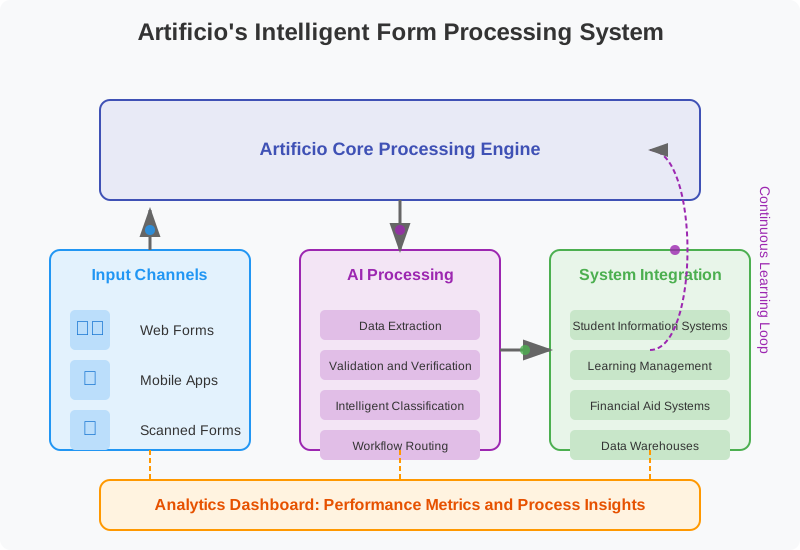
Once forms are deployed, Artificio's platform revolutionizes how data is captured and validated:
Multi-Channel Submission: Recognizing that educational institutions must accommodate diverse user preferences, Artificio enables form submission through multiple channels web forms, mobile applications, email attachments, and even scanned paper documents.
Real-Time Validation: As users complete forms, Artificio's intelligent validation ensures data accuracy by checking entries against expected patterns, institutional databases, and logical constraints. This prevents submission of incomplete or incorrect information that would typically require manual follow-up.
Document Intelligence: For forms requiring supporting documentation (transcripts, financial records, identification), Artificio's AI-powered document processing extracts relevant information automatically, eliminating manual review and data entry from attached files.
Progressive Data Collection: For complex processes like college applications that occur over time, Artificio enables progressive data collection, allowing students to save partially completed forms and continue later without data loss.
Secure Data Handling: Recognizing the sensitivity of educational data, particularly when involving minors, Artificio implements advanced encryption, role-based access controls, and compliance features that align with FERPA, GDPR, and other relevant data protection regulations.
Where Artificio truly differentiates itself is in post-submission data processing and system integration:
AI-Powered Data Extraction: Using sophisticated machine learning models, Artificio automatically extracts structured data from submitted forms even from non-standard formats or handwritten entries on scanned documents. This capability dramatically reduces the manual data entry burden on administrative staff.
Cross-System Integration: Educational institutions typically maintain multiple information systems (student information systems, learning management systems, financial systems, etc.). Artificio provides seamless API integration with leading educational platforms, ensuring that form data flows automatically to the appropriate systems without manual intervention.
Automated Workflow Triggers: Based on form submissions, Artificio can initiate subsequent workflow processes scheduling admission interviews, generating financial aid packages, or triggering course enrollment processes without requiring staff to manually monitor and action incoming forms.
Intelligent Document Routing: For forms requiring human review or approval, Artificio uses rule-based and AI-assisted routing to direct submissions to appropriate staff members, balancing workloads and ensuring timely processing.
Data Transformation: Recognizing that different systems require different data formats, Artificio provides intelligent data transformation services, ensuring that information is correctly formatted for each destination system.
Beyond the operational benefits of streamlined form processing, Artificio delivers strategic value through comprehensive analytics:
Process Efficiency Metrics: Administrators gain visibility into form completion rates, abandonment points, processing times, and bottlenecks, enabling continuous improvement of administrative processes.
Predictive Analytics: By analyzing historical form data, Artificio can help educational institutions predict enrollment trends, identify at-risk students based on application information, and optimize resource allocation.
Compliance Reporting: The platform generates automated compliance reports for regulatory submissions, accreditation requirements, and internal governance, reducing the administrative burden of mandated reporting.
User Experience Insights: Detailed analytics on form completion patterns help institutions identify and address pain points in student-facing processes, improving satisfaction and retention.
These analytics capabilities transform form management from a necessary administrative burden into a strategic asset that provides actionable intelligence for institutional decision-making.
While Artificio's capabilities are powerful, successful implementation requires thoughtful planning and execution. Educational institutions can maximize the benefits of Artificio's form management platform by following these proven implementation strategies:
Rather than attempting a comprehensive overhaul of all form processes simultaneously, successful implementations typically follow a phased approach:
Process Assessment and Prioritization: Begin with a thorough audit of existing form processes, identifying those with the highest volume, greatest inefficiency, or most significant impact on student experience. Common starting points include admissions applications, financial aid forms, and course registration processes.
Quick-Win Pilots: Select 1-2 high-impact processes for initial implementation, allowing the institution to demonstrate value quickly while developing implementation expertise. These early successes build organizational momentum and support for broader deployment.
Systematic Expansion: Based on lessons learned from pilot implementations, systematically expand to additional form processes, continuously refining the approach based on feedback and results.
Integration Deepening: As core form processes are optimized, focus on deepening integration with institutional systems, enhancing analytics capabilities, and implementing more sophisticated automation features.
Successful implementations invariably involve cross-functional teams that bring together:
Administrative Leadership: Executives who can champion the initiative, secure resources, and align the implementation with institutional strategic priorities.
IT Specialists: Technical team members who manage system integration, security requirements, and technical infrastructure considerations.
Process Owners: Departmental leaders and staff who deeply understand current form processes and can identify improvement opportunities.
End-User Representatives: Students, faculty, and staff who will use the forms and can provide essential user experience feedback.
Data Governance Experts: Specialists who ensure compliance with institutional data policies, privacy regulations, and security requirements.
Change Management Leaders: Professionals skilled in guiding organizational adaptation to new processes and technologies.
The technical implementation of Artificio is often straightforward; the greater challenge typically lies in organizational adaptation to new processes:
Role-Based Training Programs: Develop targeted training for different user groups form designers, administrative processors, departmental approvers, and system administrators focusing on their specific responsibilities within the new system.
Process Documentation: Create clear documentation that maps both the technical steps and business processes associated with each form workflow.
Transition Support: Establish support mechanisms during the transition period, including help desk resources, peer mentors, and regular check-in sessions to address emerging challenges.
Continuous Improvement Mechanisms: Implement formal feedback channels and regular review cycles to identify and address process refinements and system enhancements.
For maximum value, Artificio must be thoughtfully integrated with the institution's broader technology ecosystem:
Systems Inventory and Mapping: Document all systems that currently receive or provide data related to form processes, including student information systems, learning management platforms, financial systems, and compliance reporting tools.
Data Flow Design: For each form process, map the optimal flow of data between systems, identifying where Artificio will serve as the system of record versus where it will pass data to other authoritative systems.
API and Integration Planning: Based on data flow requirements, develop a comprehensive integration approach that leverages Artificio's API capabilities, pre-built connectors, and custom integration options as needed.
Testing Protocol: Establish rigorous testing procedures that validate data integrity across the integrated ecosystem, particularly for high-stakes processes like financial aid or academic progression.
A major public university with 35,000+ students implemented Artificio to transform its undergraduate admissions process. Prior to implementation, the university processed over 50,000 application packages annually, each requiring manual review, data entry, and document verification that consumed thousands of staff hours.
Implementation Focus: The university deployed Artificio's form management platform to automate application intake, document processing, and initial qualification screening.
Technical Approach: The implementation team integrated Artificio with the university's existing student information system and document management platform. Custom ML models were trained to process transcript information from over 500 different high school formats. Intelligent routing capabilities were configured to direct applications to appropriate departmental reviewers based on program selection and qualification characteristics.
Results:
Key Insight: Beyond the operational improvements, the university discovered that faster application processing yielded a competitive advantage in recruitment. By providing admission decisions 3-4 weeks earlier than in previous years, the university saw a 12% increase in yield rate (accepted students who enrolled) as students received decisions before competing institutions.
A mid-sized school district serving 28,000 students across 35 schools faced challenges with parent information management. Annual information updates, permission forms, and program registrations created massive paper workflows and data inconsistencies across school sites.
Implementation Focus: The district implemented Artificio's form platform to digitize all parent-facing forms and information collection processes, with particular emphasis on annual information updates and program enrollments.
Technical Approach: The implementation created a centralized parent portal integrating Artificio's form capabilities with the district's student information system. Multi-language support was prioritized to serve the district's diverse community, with forms automatically presented in families' preferred languages. The system was configured to identify and flag discrepancies in contact information across siblings within the same household.
Results:
Key Insight: The district found that the digital transformation of forms created new opportunities for parent engagement. By analyzing form completion patterns, they identified families who might need additional support and developed targeted outreach programs that improved participation in school events and academic support initiatives.
A community college serving 15,000 students struggled with financial aid processing efficiency, leading to delayed disbursements and frustration for students relying on aid to begin their studies.
Implementation Focus: The college implemented Artificio specifically to transform financial aid application processing, verification, and award management.
Technical Approach: Artificio's platform was integrated with both federal aid systems and the college's financial management platform. Custom ML models were trained to verify supporting documentation and identify discrepancies requiring human review. Automated notification workflows were implemented to proactively request missing information and provide status updates to applicants.
Results:
Key Insight: The college discovered that faster aid processing had a direct impact on enrollment and retention. By providing aid packages earlier, students could make more informed enrollment decisions, leading to a 7% increase in conversion from accepted to enrolled status and a 5% improvement in term-to-term retention for aid recipients.
Educational institutions considering Artificio's form management platform naturally want to understand the return on investment. While specific results vary based on institutional characteristics and implementation approaches, consistent patterns emerge across deployments:
Staff Time Optimization: Institutions typically report 60-80% reductions in administrative time devoted to manual data entry and document processing, creating capacity for higher-value activities or potential staffing adjustments.
Error Reduction: Form automation reduces error rates by 40-70%, eliminating costly reconciliation activities, compliance issues, and rework processes.
Processing Throughput: Most institutions achieve 50-200% improvements in form processing capacity, reducing or eliminating the need for temporary staffing during peak periods.
Direct Cost Savings: Reductions in paper, printing, scanning, storage, and related costs typically range from $10,000 to $500,000 annually, depending on institutional size.
Integration Efficiency: API-driven data exchange eliminates redundant systems and manual integration processes, reducing IT maintenance costs by 15-30% for related systems.
As illustrated in Figure 3: Educational Form Automation ROI Components, the return on investment compounds over time as institutions expand implementation scope and deepen integration capabilities.
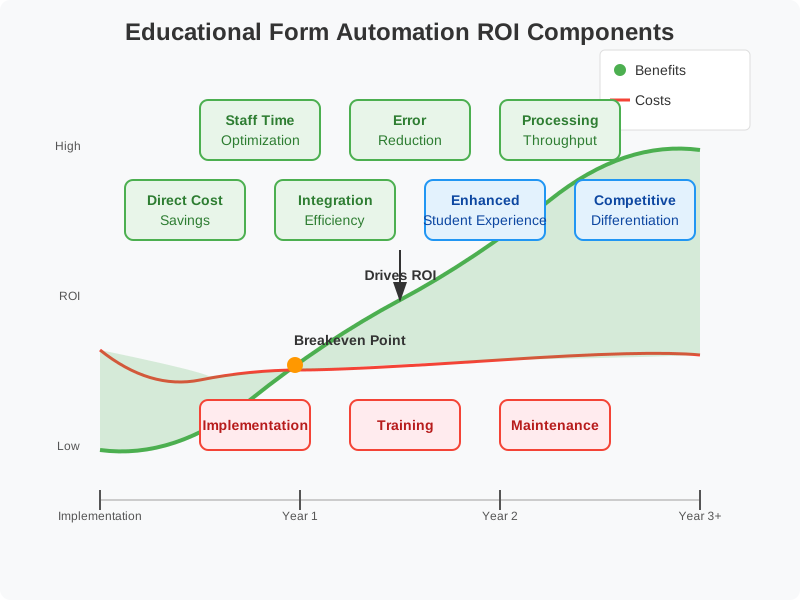
Beyond direct financial returns, Artificio deployment delivers strategic advantages:
Enhanced Student Experience: Streamlined administrative processes reduce friction in the student journey, positively impacting recruitment, retention, and institutional reputation.
Data-Driven Decision Making: Comprehensive form analytics provide previously unavailable insights into student behaviors, process efficiency, and institutional operations.
Competitive Differentiation: Institutions with efficient administrative processes can respond more rapidly to student needs, creating meaningful differentiation in increasingly competitive educational markets.
Staff Satisfaction and Development: Reducing mundane data processing activities allows administrative staff to focus on student service, professional development, and higher-value contributions.
Compliance and Security Enhancement: Automated processes with built-in validation and secure handling improve regulatory compliance and reduce institutional risk.
Educational institutions can typically expect:
Initial Deployment: Basic implementation for targeted processes can be achieved in 4-12 weeks, depending on integration complexity and institutional readiness.
Expanded Implementation: Comprehensive deployment across major institutional processes generally requires 6-18 months for full optimization and change management.
Resource Requirements: Successful implementations typically involve:
As educational institutions continue to navigate increasing administrative complexity, rising student expectations, and constrained operational resources, intelligent form management has emerged as a critical capability. Artificio's platform represents a transformative approach that aligns with the education sector's unique needs for flexibility, security, integration, and student-centered design.
The case studies and implementation patterns highlighted in this article demonstrate that form automation delivers far more than operational efficiency it creates capacity for enhanced student service, generates actionable insights, and supports strategic institutional objectives. Forward-thinking educational leaders recognize that administrative excellence contributes directly to educational outcomes by removing barriers, improving access, and creating more responsive institutional environments.
For institutions beginning their form automation journey, the key is to start with high-impact processes that demonstrate clear value, then systematically expand based on institutional priorities and resource availability. The phased approach allows organizations to build expertise, refine processes, and develop the change management capabilities essential for sustainable transformation.
As Artificio continues to evolve its educational offerings, innovative capabilities like predictive analytics, adaptive learning applications, and expanded integration options will further enhance the platform's value proposition. The future of educational form management lies not merely in digitizing paper processes, but in fundamentally reimagining how information flows through the institution to support student success, operational excellence, and strategic objectives.
Educational institutions partnering with Artificio gain not only powerful technology but also domain expertise, implementation best practices, and a community of peer institutions sharing innovation. Together, these elements create a foundation for administrative excellence that supports the core educational mission in an increasingly complex and competitive landscape.

Head IT Operations - Co Founder of Artificio
See it in your SAP environment
Bring us a document, a process, or a bottleneck. We'll show how Artificio captures, validates, and posts into SAP — then scale from there.
Security & compliance
ISO 27001:2013 certified, SOC 2 Type 2 compliant, GDPR and HIPAA ready. Every agent action is logged, auditable, and runs in isolated environments.