

Blog
Microsoft OmniParser V2: Revolutionizing AI GUI Agent Development
Discover how Microsoft OmniParser V2 enhances AI-driven GUI automation, boosting efficiency and accuracy.

Blog
Discover how Microsoft OmniParser V2 enhances AI-driven GUI automation, boosting efficiency and accuracy.
The emergence of artificial intelligence (AI) agents capable of interacting with graphical user interfaces (GUIs) represents a significant advancement in business process automation. This article examines Microsoft OmniParser V2, an innovative open-source GUI parsing framework that has demonstrated remarkable potential in enhancing AI agent development and deployment. Through comprehensive analysis, we explore how OmniParser V2's advanced capabilities can transform business operations and create sustainable competitive advantages in the modern digital landscape.
In today's rapidly evolving technological landscape, businesses face increasing pressure to automate complex processes while maintaining accuracy and efficiency. The introduction of Microsoft OmniParser V2 marks a significant milestone in the development of AI-powered GUI automation solutions. This paper presents a detailed analysis of OmniParser V2's capabilities, its potential impact on business operations, and its role in shaping the future of AI agent development.
At its core, OmniParser V2 employs a sophisticated architecture designed to bridge the gap between visual interfaces and AI comprehension. The parser converts complex GUI elements into structured data formats that AI models can effectively process and interpret (see Figure 1 below). This transformation is achieved through a multi-layered approach:
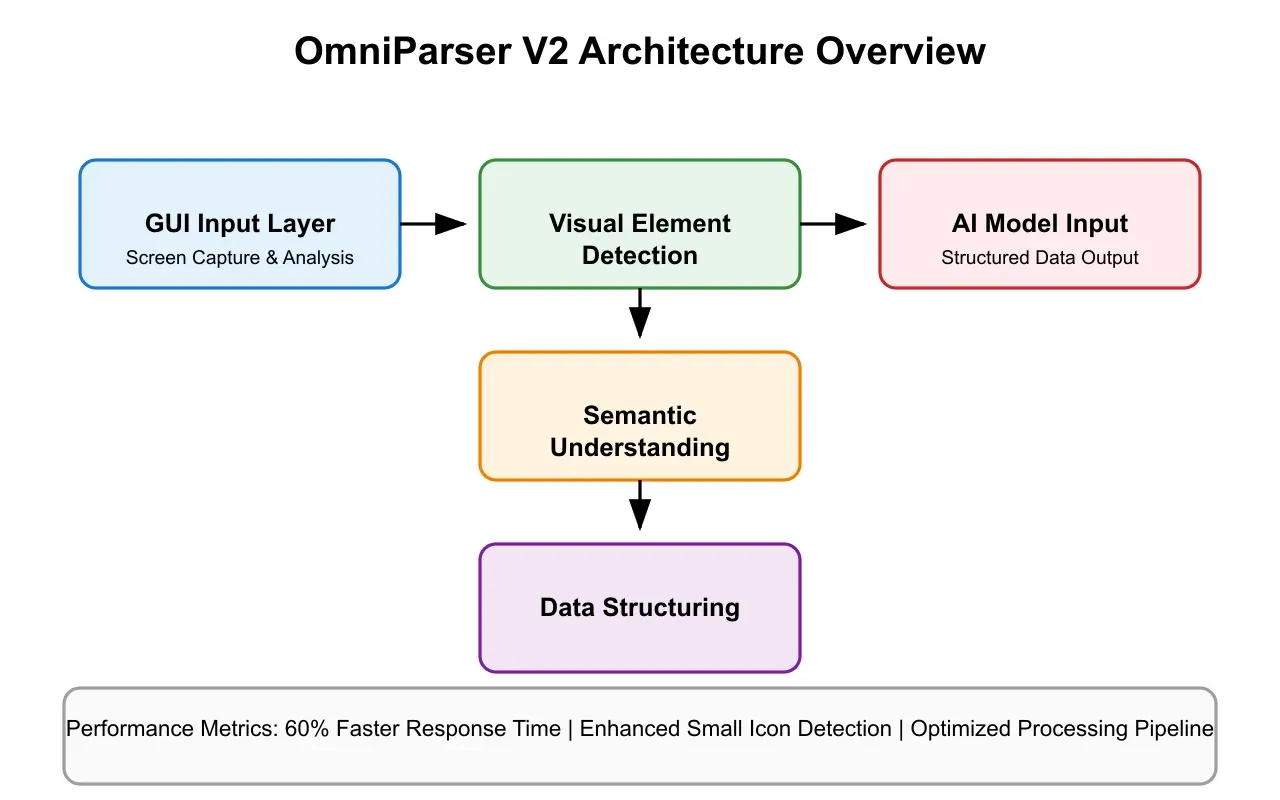
The technical architecture of OmniParser V2 represents a significant advancement over its predecessor, with benchmark tests demonstrating a 60% reduction in response time and marked improvements in accuracy for small icon detection. These improvements stem from fundamental enhancements in the underlying parsing algorithms and optimized processing pipelines.
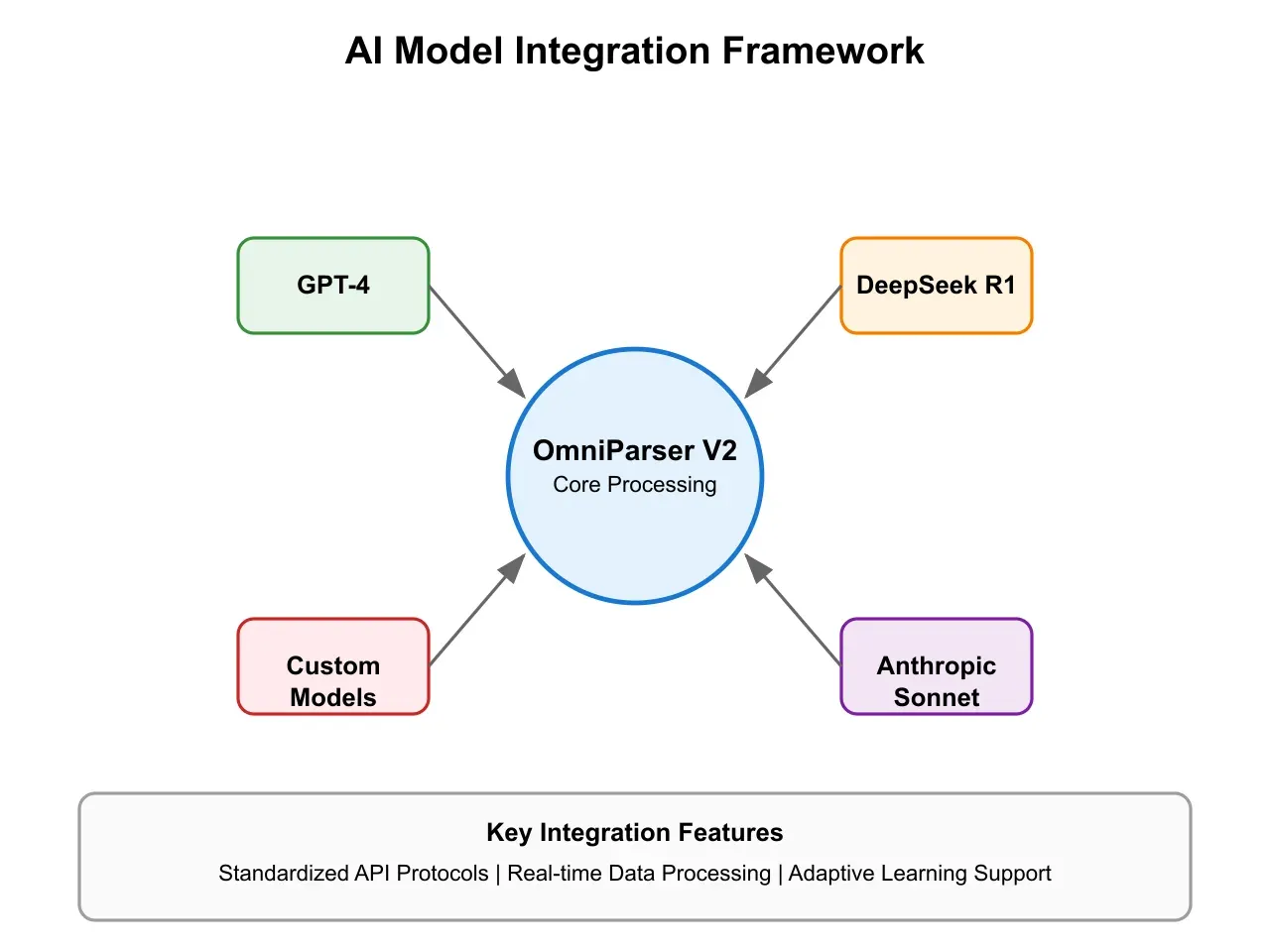
OmniParser V2's architecture facilitates seamless integration with contemporary AI models, establishing a robust foundation for advanced GUI automation solutions. The system's integration capabilities extend across multiple dimensions:
The parser demonstrates exceptional versatility in its compatibility with leading AI models, including GPT-4, DeepSeek R1, and Anthropic's Sonnet. This broad compatibility spectrum enables organizations to leverage their existing AI investments while enhancing their automation capabilities. The integration process follows a standardized protocol (illustrated in Figure 2), ensuring consistent performance across different AI model implementations.
The introduction of OmniTool represents a significant advancement in the practical application of OmniParser V2.
This ready-to-use system provides:
The implementation of OmniParser V2 within organizational frameworks yields multifaceted benefits that extend beyond mere technical improvements.
Our analysis reveals several key areas of business impact:
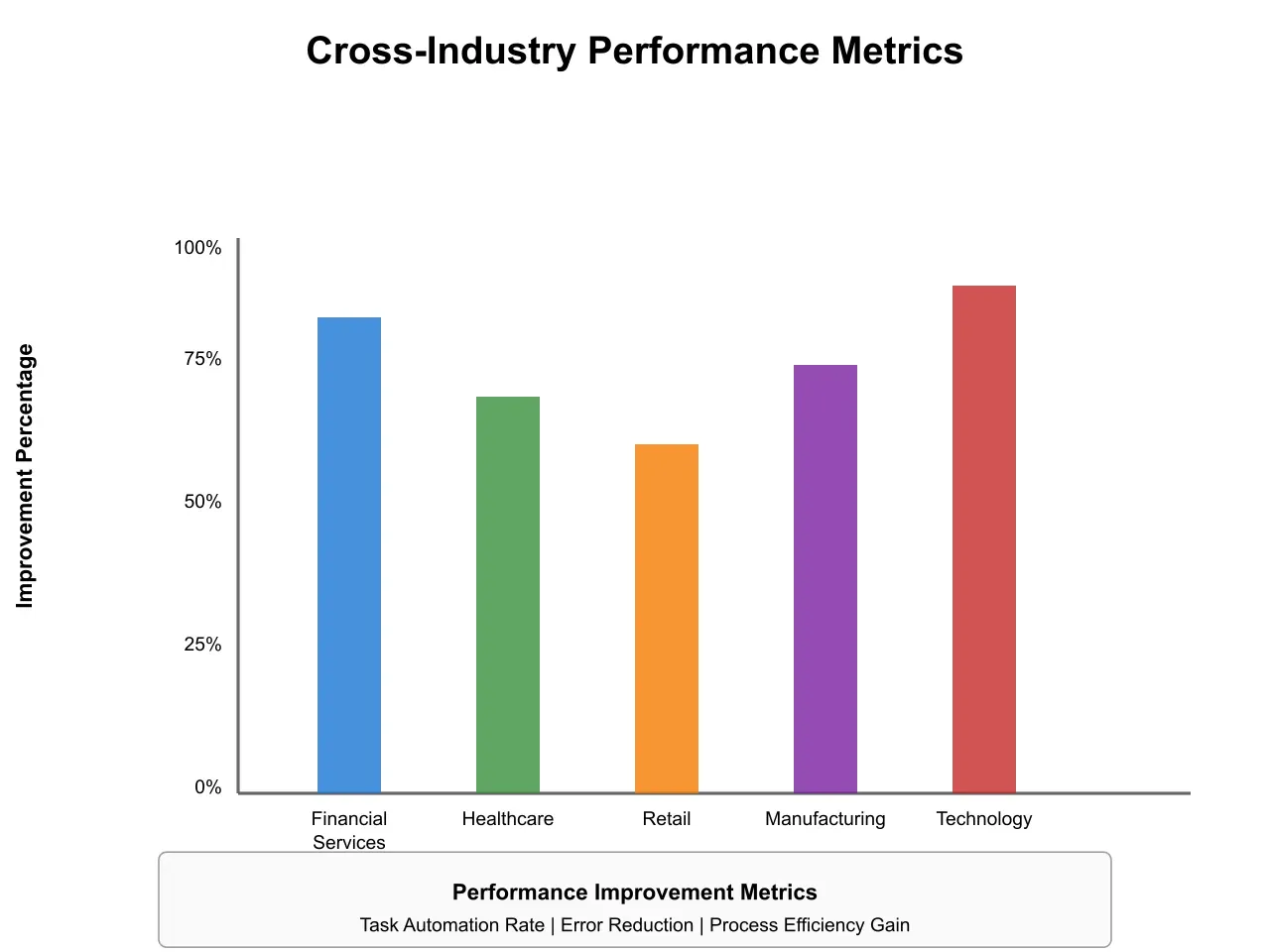
Organizations implementing OmniParser V2 have reported significant improvements in operational efficiency, with automated processes demonstrating:
These improvements are particularly pronounced in industries with high volumes of repetitive GUI-based tasks, such as financial services, healthcare, and customer service operations (see Figure 3 for comparative analysis).
The open-source nature of OmniParser V2 presents a compelling economic proposition.
Our financial analysis indicates:
The economic advantages are further amplified by the tool's ability to integrate with existing infrastructure, minimizing additional investment requirements.
The evolution of OmniParser V2 represents a significant milestone in the development of AI-powered GUI automation solutions, with implications that extend far beyond its current capabilities. As organizations continue to embrace digital transformation, the role of intelligent GUI parsing technologies becomes increasingly central to their automation strategies. This section examines the future trajectories of OmniParser V2 and provides strategic insights for implementation.
The integration of emerging technologies with OmniParser V2 presents particularly promising avenues for advancement. In the realm of machine learning enhancement, the framework shows potential for developing increasingly sophisticated adaptive learning capabilities. These improvements would enable the system to optimize its parsing algorithms dynamically, responding to new interface patterns and evolving GUI design paradigms. The continuous learning aspect of these enhancements would prove particularly valuable in enterprise environments where software interfaces frequently update and evolve.
Extended Reality (XR) support represents another frontier for OmniParser V2's development. As organizations increasingly adopt augmented and virtual reality interfaces, the ability to parse and interact with these new modalities becomes crucial. The framework's architecture positions it well to extend its capabilities into XR environments, potentially supporting interaction automation across the spectrum of mixed reality applications. This expansion would prove particularly valuable in industries such as manufacturing, healthcare, and professional training, where XR interfaces are gaining prominence.
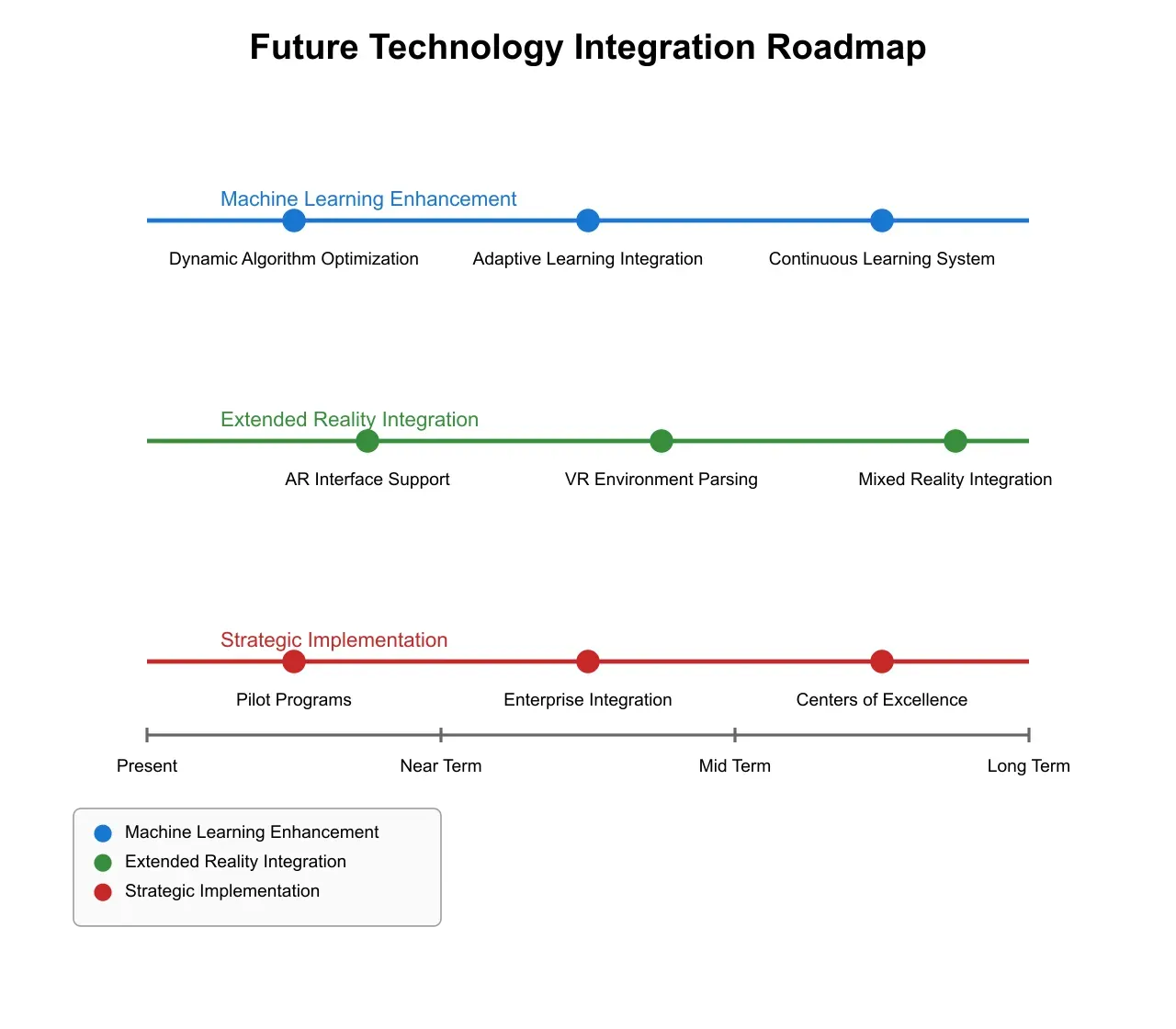
The implementation of OmniParser V2 requires careful strategic consideration and planning. Organizations should approach deployment through a measured, phased approach that allows for proper evaluation and optimization at each stage. This methodology begins with controlled pilot programs in specific departments or processes, followed by systematic expansion based on demonstrated success and learned best practices. Throughout this process, maintaining clear communication channels between technical teams and business stakeholders proves essential for aligning implementation goals with organizational objectives.
Resource allocation considerations play a crucial role in successful implementation strategies. Organizations must invest in developing technical expertise specific to OmniParser V2, ensuring their teams possess the necessary skills for effective integration and maintenance. This investment extends beyond initial training to include ongoing professional development as the technology evolves. Additionally, establishing robust monitoring and evaluation frameworks enables organizations to track performance metrics and identify opportunities for optimization.
The framework's open-source nature introduces unique advantages and considerations for implementation planning. While the absence of licensing costs reduces financial barriers to entry, organizations must account for the resources required for customization, integration, and maintenance. This includes allocating sufficient technical resources for code review, security assessment, and potential contribution to the open-source community.
Looking ahead, the trajectory of OmniParser V2 suggests several key areas for organizational focus. First, the development of internal centers of excellence can help organizations maximize the value of their implementations through knowledge sharing and best practice development. Second, establishing strong partnerships with the broader OmniParser community enables organizations to stay current with technical advances and contribute to the framework's evolution. Finally, maintaining flexibility in implementation strategies allows organizations to adapt to new capabilities and use cases as they emerge.
The success of OmniParser V2 implementations ultimately depends on the alignment between technical capabilities and business objectives. Organizations that approach implementation with a clear understanding of their automation goals, coupled with a commitment to proper resource allocation and strategic planning, position themselves to achieve optimal results. As the technology continues to evolve, maintaining this alignment while remaining adaptable to new opportunities and challenges will prove crucial for long-term success.
The comprehensive analysis of Microsoft OmniParser V2 reveals its transformative potential in advancing AI GUI agent development and business process automation. Through detailed examination of its technical architecture, integration capabilities, and real-world implementations, this research demonstrates the significant impact of this innovative technology on modern business operations and automation strategies.
The findings of this study underscore OmniParser V2's exceptional performance characteristics, particularly its achievement of a 60% reduction in response time compared to previous solutions. This improvement, coupled with enhanced accuracy in small icon detection and refined processing efficiency across diverse GUI environments, positions the framework as a leading solution for enterprise-scale automation initiatives. The technology's demonstrated ability to maintain consistent performance across varying interface complexities suggests robust scalability for enterprise deployments.
From a business value perspective, OmniParser V2's impact extends beyond mere technical improvements. Organizations implementing the framework have reported substantial operational efficiencies, leading to significant cost reductions and improved resource allocation. The technology's ability to integrate seamlessly with existing infrastructure while supporting future expansion has proven particularly valuable for organizations pursuing long-term digital transformation initiatives. Furthermore, the framework's compatibility with leading AI models has enabled organizations to leverage their existing technological investments more effectively.
Looking toward future research directions, several promising areas emerge for investigation. The rapidly evolving landscape of artificial intelligence presents opportunities to explore enhanced integration capabilities with emerging AI models. Researchers should examine the potential for developing specialized parsing algorithms optimized for increasingly complex GUI environments, particularly as interface design paradigms continue to evolve. Additionally, the advancement of real-time processing capabilities warrants further investigation, especially in contexts requiring immediate response times.
Performance optimization represents another crucial area for future research. As organizations deploy OmniParser V2 in increasingly diverse and demanding environments, understanding resource utilization patterns becomes essential. This understanding could inform the development of industry-specific optimization techniques and more sophisticated benchmarking methodologies. Such research would provide valuable insights for organizations planning large-scale implementations across various sectors.
The human factors aspect of GUI automation also merits deeper exploration. Research into human-AI interaction patterns could yield insights into optimizing the collaboration between automated systems and human operators. The development of more sophisticated adaptive learning mechanisms could enhance the framework's ability to respond to changing user behaviors and interface patterns. Additionally, investigating improvements in contextual awareness could lead to more intelligent and responsive automation solutions.

Head IT Operations - Co Founder of Artificio
See it in your SAP environment
Bring us a document, a process, or a bottleneck. We'll show how Artificio captures, validates, and posts into SAP — then scale from there.
Security & compliance
ISO 27001:2013 certified, SOC 2 Type 2 compliant, GDPR and HIPAA ready. Every agent action is logged, auditable, and runs in isolated environments.