

Blog
Manual Mortgage Income Verification Challenges & Solutions
Discover the top 5 challenges of manual mortgage income verification and how automation solves them for efficiency and accuracy.

Blog
Discover the top 5 challenges of manual mortgage income verification and how automation solves them for efficiency and accuracy.
In today's competitive mortgage landscape, efficiency and accuracy are not merely operational goals they are essential competitive advantages. Yet many lending institutions continue to grapple with manual income verification processes that create bottlenecks, introduce errors, and ultimately impact customer satisfaction. This article explores the five most significant challenges in traditional income verification and examines how emerging automation technologies are revolutionizing this critical aspect of mortgage processing.
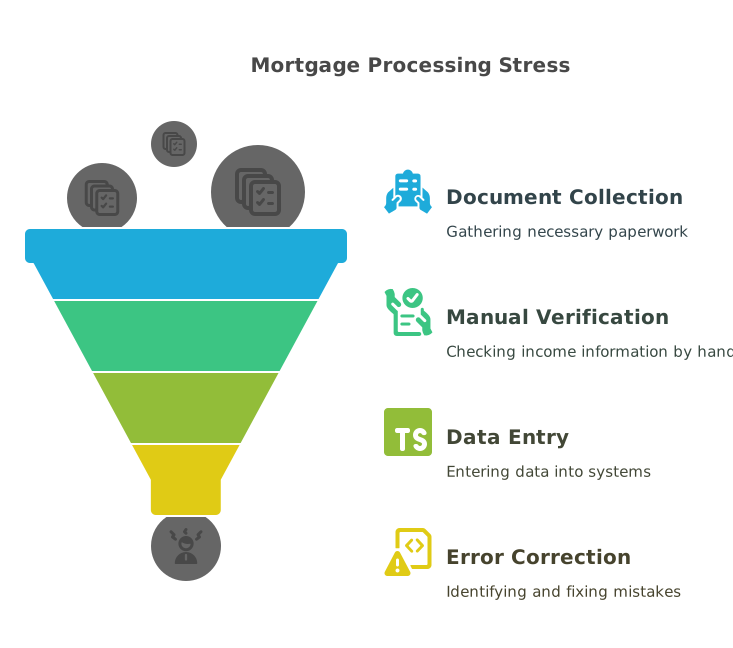
Income verification stands as one of the most labor-intensive and error-prone aspects of mortgage processing. Traditionally, mortgage professionals must meticulously review various financial documents W-2 forms, pay stubs, tax returns, bank statements to establish a borrower's income stability and repayment capacity. This process not only consumes valuable human resources but also introduces numerous opportunities for human error, creating a cascade of inefficiencies that reverberate throughout the lending pipeline.
According to industry reports, income verification can account for up to 30% of the total time spent processing a mortgage application. This represents a significant operational burden that directly impacts closing times, customer satisfaction, and ultimately, a lender's competitive position in an increasingly crowded marketplace.
The mortgage income verification process begins with document collection a seemingly straightforward step that frequently becomes a source of considerable friction. Borrowers often submit incomplete documentation, provide outdated information, or fail to include necessary forms. Mortgage processors then find themselves in the unenviable position of having to make multiple follow-up requests, which extends processing timelines and creates customer dissatisfaction.
Once documents are received, they must be organized, categorized, and stored in a manner that facilitates efficient review. In a manual system, this typically involves physical filing or basic digital storage without intelligent classification. The result is a disorganized collection of critical financial information that makes systematic review challenging and time-consuming. Mortgage professionals often spend inordinate amounts of time simply locating and organizing the necessary documentation before the actual verification work can begin.
Furthermore, the diversity of document formats scanned PDFs with varying quality, digital files, and occasionally even photographs of documents creates additional complexity. Extracting standardized information from these heterogeneous sources becomes an exercise in patience and attention to detail, with each document requiring individual handling and interpretation.
Modern document management systems with AI capabilities are transforming this aspect of the mortgage process. These systems can automatically classify incoming documents, extract relevant information regardless of format, and flag missing or incomplete documentation immediately. This proactive approach reduces the need for follow-up requests and creates a well-organized digital repository of borrower information.
Automation platforms can send customized reminders to borrowers about missing documentation and provide secure upload portals that validate document completeness upon submission. The result is a streamlined document collection process that reduces frustration for both borrowers and mortgage professionals. With tools like Artificio's automated mortgage income summary tool, documents are processed instantly upon upload, eliminating the organizational burden entirely and moving directly to data extraction and analysis.
Once documents are collected and organized, mortgage processors face the tedious task of manually entering income data into their loan origination systems. This process is not only time-consuming but also inherently prone to errors. Transposition mistakes, decimal point errors, and simple typing missteps can lead to significant discrepancies in income calculations.
Consider the complexity involved in manually entering information from multiple years of W-2 forms, biweekly or monthly pay stubs with varying formats, and potentially complex tax returns. Each document requires careful attention and accurate transcription of numerous data points. Even with the most diligent professionals, the sheer volume of manual data entry creates an environment where errors are virtually inevitable.
These transcription errors can have serious downstream consequences. Incorrect income calculations may lead to improper debt-to-income ratios, affecting loan approval decisions or resulting in inappropriate loan terms. When these errors are discovered later in the process, they necessitate rework that further delays closing and erodes customer confidence.
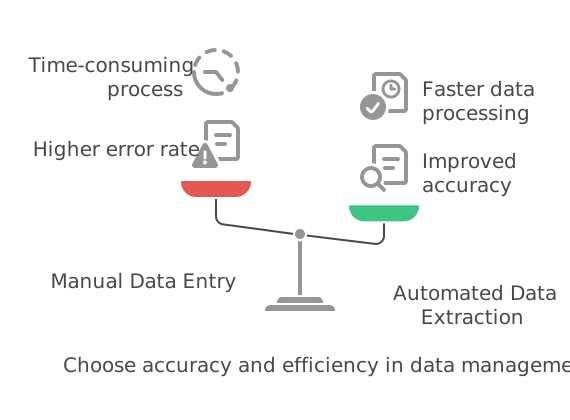
Intelligent document processing (IDP) systems are specifically designed to address the challenges of manual data entry. Using advanced optical character recognition (OCR) and machine learning algorithms, these systems can accurately extract data from diverse financial documents with minimal human intervention.
The best automation platforms don't merely capture information they validate it across multiple documents to ensure consistency. For instance, annual income reported on a W-2 can be automatically cross-referenced with pay stub information to identify discrepancies immediately. This cross-validation capability significantly reduces the likelihood of errors propagating through the loan approval process.
Artificio's solution takes this approach even further by employing visual model data extraction that can interpret complex document layouts and recognize important income fields automatically. The system performs cross-document validation to ensure consistency across all provided materials, dramatically reducing the possibility of transcription errors while simultaneously accelerating the process.
Beyond basic data entry lies the complex task of income analysis. Mortgage underwriters must calculate various income metrics gross monthly income, year-to-date earnings, year-over-year changes, overtime consistency, bonus eligibility and interpret these figures in the context of loan qualification criteria. This analytical work requires specialized knowledge and careful consideration of multiple factors.
The complexity increases exponentially when dealing with self-employed borrowers, individuals with multiple income sources, or those with irregular income patterns. In these scenarios, income analysis becomes a time-intensive process requiring significant professional judgment and meticulous calculations.
Making matters worse, different loan programs often have unique requirements for income verification and calculation methods. FHA, VA, conventional, and jumbo loans each have their own specific guidelines that mortgage professionals must navigate accurately. This variability introduces additional complexity and opportunities for misinterpretation or calculation errors.
AI-powered income analysis tools are revolutionizing this aspect of mortgage processing by applying consistent calculation methodologies across various income scenarios. These systems can be programmed with the specific requirements of different loan programs, ensuring that income is always calculated according to the relevant guidelines.
Advanced automation platforms can identify patterns in income history, flag potential concerns, and even make preliminary eligibility assessments based on the extracted data. This capability not only speeds up the process but also introduces a level of consistency that is difficult to achieve with manual analysis.
With Artificio's AI-powered income analysis, complex calculations happen automatically in the background. The system can recognize different income types, apply appropriate calculation methodologies, and generate a comprehensive income summary that aligns with industry standards. This automated approach ensures consistency across all applications while significantly reducing the analytical burden on mortgage professionals.
The mortgage industry operates in a highly regulated environment where compliance failures can result in significant penalties. Income verification is particularly sensitive from a compliance perspective, as it directly impacts loan qualification decisions and must adhere to various regulatory requirements, including those from Fannie Mae, Freddie Mac, and other government-sponsored enterprises.
Manual verification processes introduce compliance risks through inconsistent application of guidelines, incomplete documentation, or failure to properly demonstrate the verification process. In the event of an audit, lenders must be able to show that they followed appropriate procedures and maintained adequate documentation of their income verification efforts.
Documentation deficiencies often become apparent only during quality control reviews or post-closing audits. At this stage, remediation becomes difficult and potentially costly. Furthermore, inconsistent verification practices can lead to fair lending concerns if they result in disparate treatment or impact across different borrower demographics.
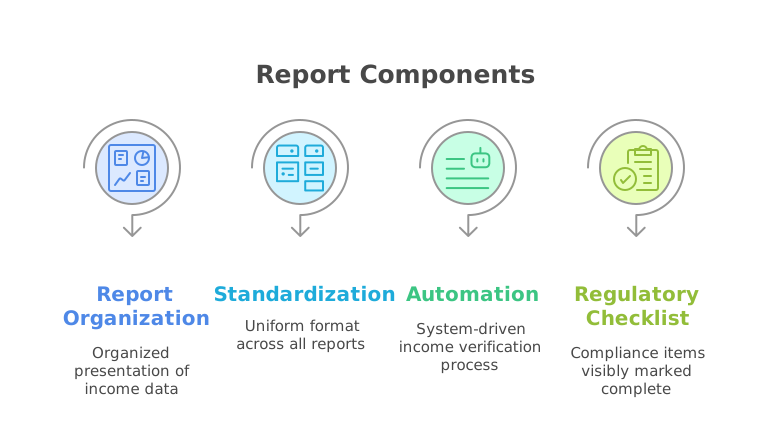
Automation addresses compliance concerns by enforcing standardized verification procedures across all applications. These systems create detailed audit trails that document every step of the verification process, from initial document receipt through final income determination.
Modern verification platforms can be regularly updated to reflect the latest regulatory requirements, ensuring that all income analyses comply with current guidelines. This automatic updating feature removes the burden from mortgage professionals to constantly monitor regulatory changes and manually adjust their processes.
The standardized PDF summaries generated by systems like Artificio's mortgage income tool provide consistent documentation that satisfies regulatory requirements. Each summary follows industry standards for income verification and includes all necessary details to demonstrate compliance with applicable guidelines. This standardization not only reduces compliance risk but also simplifies the quality control and audit processes.
Perhaps the most visible consequence of manual income verification is the impact on processing times and, by extension, the overall customer experience. In a competitive market where borrowers have multiple options, delays caused by inefficient verification processes can lead to application withdrawals and lost business opportunities.
Traditional verification methods typically add days or even weeks to the loan processing timeline. These delays occur at multiple points waiting for document submission, following up on missing information, manually entering and analyzing data, and addressing discrepancies or errors discovered during quality control reviews.
The contemporary borrower expects a streamlined, digital-first experience across all aspects of the mortgage process. Manual verification methods, with their inherent delays and frequent requests for additional documentation, create friction that contradicts these expectations. The result is customer frustration and potentially negative reviews or reduced referral business.
Automation dramatically accelerates the income verification process by eliminating manual handling at nearly every stage. Documents can be processed immediately upon receipt, with data extraction and analysis occurring in minutes rather than hours or days. This speed translates directly into reduced time-to-close metrics and enhanced customer satisfaction.
Beyond pure speed, automation also improves the customer experience by reducing the number of follow-up requests and providing clear, immediate feedback on document submissions. Borrowers receive a more transparent process with fewer unexpected delays or last-minute documentation requirements.
Artificio's solution exemplifies these benefits by providing instant processing and email delivery of completed income summaries. What traditionally might have taken hours of processor time is reduced to minutes, allowing mortgage professionals to focus on value-added activities like customer communication and complex decision-making rather than routine data entry and calculation tasks.
The challenges outlined above represent significant operational hurdles for mortgage lenders still relying on manual verification processes. Yet they also present a clear opportunity for competitive differentiation through technological advancement. By implementing automated income verification solutions, lenders can simultaneously address multiple pain points while positioning themselves for future growth.
The most effective automation platforms offer comprehensive solutions that address the entire income verification workflow from initial document collection through final income determination and compliance documentation. These integrated approaches deliver maximum value by eliminating process fragmentation and creating a seamless experience for both mortgage professionals and borrowers.
It's important to note that automation doesn't eliminate the need for human expertise in the mortgage process. Rather, it elevates the role of mortgage professionals by freeing them from routine tasks and allowing them to focus on higher-value activities that truly require human judgment. The most successful implementations recognize this complementary relationship between technology and human expertise.
As the mortgage industry continues to evolve, those who embrace automation in critical processes like income verification will gain significant advantages in operational efficiency, compliance management, and customer satisfaction. The question for lenders is no longer whether to automate but how quickly they can implement these transformative technologies to remain competitive in an increasingly digital marketplace.
Tools like Artificio's automated mortgage income summary solution represent the vanguard of this technological transformation. By offering bank-level security, comprehensive income analysis, and instant delivery of professionally formatted summaries, these platforms are setting new standards for efficiency and accuracy in mortgage processing. Lenders who adopt these technologies position themselves not just to overcome current challenges but to thrive in the increasingly competitive and regulated mortgage environment of the future.
Ready to transform your mortgage income verification process? Discover how Artificio's automated mortgage income summary tool can eliminate manual verification challenges while improving accuracy, compliance, and customer satisfaction. Visit Artificio.ai/tools/mortgage to learn more and try our free tool today.

Head IT Operations - Co Founder of Artificio
See it in your SAP environment
Bring us a document, a process, or a bottleneck. We'll show how Artificio captures, validates, and posts into SAP — then scale from there.
Security & compliance
ISO 27001:2013 certified, SOC 2 Type 2 compliant, GDPR and HIPAA ready. Every agent action is logged, auditable, and runs in isolated environments.