

Blog
HIPAA Compliant Document Processing: Ensuring Data Security in Healthcare
HIPAA-compliant AI for healthcare. Artificio's platform secures PHI with advanced document processing, ensuring compliance & efficiency.

Blog
HIPAA-compliant AI for healthcare. Artificio's platform secures PHI with advanced document processing, ensuring compliance & efficiency.
In the evolving landscape of healthcare information management, the digitization and automation of document processing present both unprecedented opportunities and significant challenges. This comprehensive analysis examines the critical intersection of HIPAA compliance and automated document processing technologies, with a specific focus on Artificio's innovative platform. Through detailed examination of current practices, regulatory frameworks, and technological solutions, we explore how modern artificial intelligence and machine learning solutions can be implemented while maintaining strict adherence to healthcare privacy regulations, ensuring the security of protected health information (PHI), and fostering trust among healthcare organizations.
The healthcare industry generates an unprecedented volume of sensitive documents daily, from patient records and insurance claims to diagnostic reports and prescription orders. Recent studies indicate that a typical 500-bed hospital generates approximately 50 terabytes of data annually, with unstructured documents accounting for nearly 80% of this information. The Health Insurance Portability and Accountability Act (HIPAA) of 1996 establishes strict guidelines for protecting this sensitive information, making compliance a fundamental requirement for any technology solution in the healthcare space. This paper examines the intricate relationship between advanced document processing technologies and HIPAA compliance requirements, with particular attention to how modern platforms like Artificio address these challenges.
Healthcare organizations face mounting pressures to digitize and automate their document processing while ensuring absolute compliance with privacy regulations. The complexity of managing millions of documents across different formats and sources, coupled with the need for real-time processing and immediate access to critical patient information, creates significant operational challenges. These challenges are further compounded by the need to maintain rigorous security measures against increasingly sophisticated cybersecurity threats while seamlessly integrating with existing healthcare information systems.
HIPAA's implementation marked a watershed moment in healthcare privacy protection, establishing a comprehensive framework that continues to evolve with technological advancement. The legislation's evolution began with the Privacy Rule in 2003, which established national standards for the protection of individuals' medical records and other personal health information. This was followed by the Security Rule in 2005, which set national standards for securing electronic protected health information. The HITECH Act of 2009 significantly strengthened these provisions, introducing more stringent privacy and security protections and increasing the legal liability for non-compliance.
The Omnibus Rule of 2013 further refined these requirements, implementing additional modifications to HIPAA Rules that strengthened privacy and security protections for PHI and strengthened the enforcement program. The subsequent Enforcement Rule established provisions for HIPAA Rules enforcement, creating a more robust framework for ensuring compliance and addressing violations.
HIPAA compliance encompasses a complex web of administrative, physical, and technical safeguards, each playing a crucial role in protecting patient information. Administrative safeguards form the foundation of a healthcare organization's security infrastructure, encompassing comprehensive security management processes and information access management systems. These measures are supported by robust workforce training programs and regular security evaluations that ensure ongoing compliance and effectiveness.
Physical safeguards extend beyond basic facility access control to encompass comprehensive workstation and device security measures, along with sophisticated media handling procedures and hardware inventory management systems. These physical controls work in concert with technical safeguards, which include advanced access control systems, comprehensive audit controls, and sophisticated data integrity measures.
The financial implications of non-compliance are significant, with penalties structured in tiers based on the nature and extent of the violation. Organizations found to be in violation of HIPAA requirements may face fines ranging from $100 to $50,000 per violation, with maximum annual penalties of $1.5 million per violation type. These substantial penalties underscore the critical importance of maintaining robust compliance measures in healthcare document processing systems.
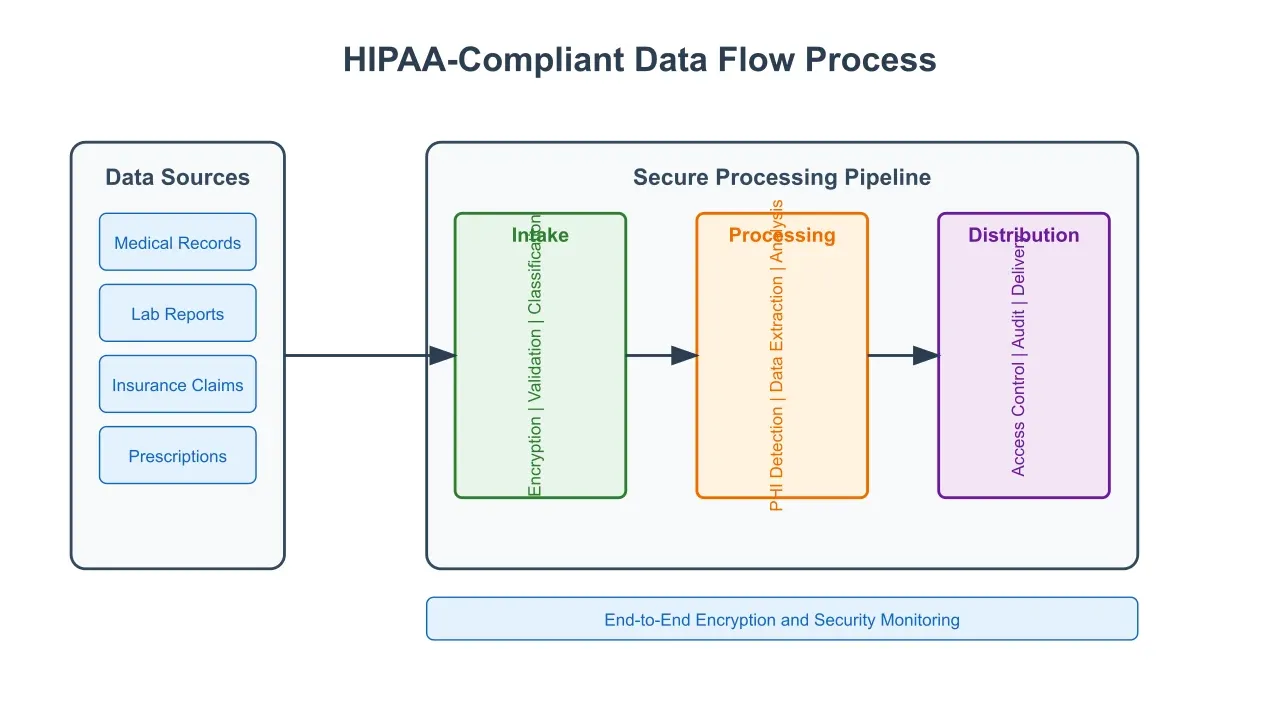
The regulatory framework established by HIPAA has profound implications for the development and implementation of healthcare technology solutions. Modern systems must incorporate privacy and security measures from the earliest stages of design, implementing comprehensive audit trails and maintaining detailed system documentation throughout their lifecycle. Regular security risk assessments and mitigation strategies must be integrated into operational procedures, while formal business associate agreements must govern relationships with technology providers. Furthermore, organizations must maintain detailed incident response procedures, including breach notification protocols that align with HIPAA's stringent requirements.
The integration of artificial intelligence and machine learning in healthcare document processing represents a paradigm shift in how medical records are managed and utilized. Recent advancements in natural language processing and computer vision have enabled unprecedented capabilities in automated document handling, fundamentally transforming the healthcare information landscape. Modern optical character recognition systems now achieve accuracy rates exceeding 99.9% for medical documents, while sophisticated natural language processing algorithms enable context-aware PHI detection with unprecedented precision.
The implementation of machine learning models for document classification and routing has dramatically improved operational efficiency, while deep learning systems have made significant strides in accurately interpreting handwritten medical notes. These technological advances are complemented by automated quality assurance and validation processes that ensure consistent accuracy and compliance across all processed documents.
The implementation of AI systems in healthcare presents a unique set of challenges that require sophisticated solutions. Data quality and standardization remain persistent concerns, as healthcare systems must process documents across numerous formats and layouts while managing inconsistent terminology and abbreviations. The presence of handwritten notes and annotations adds another layer of complexity to the processing requirements.
Processing speed and accuracy requirements present additional challenges, as healthcare environments demand real-time document analysis capabilities while maintaining extremely high accuracy standards. These systems must successfully navigate complex medical terminology while ensuring that no protected health information is inadvertently exposed or mishandled during processing.
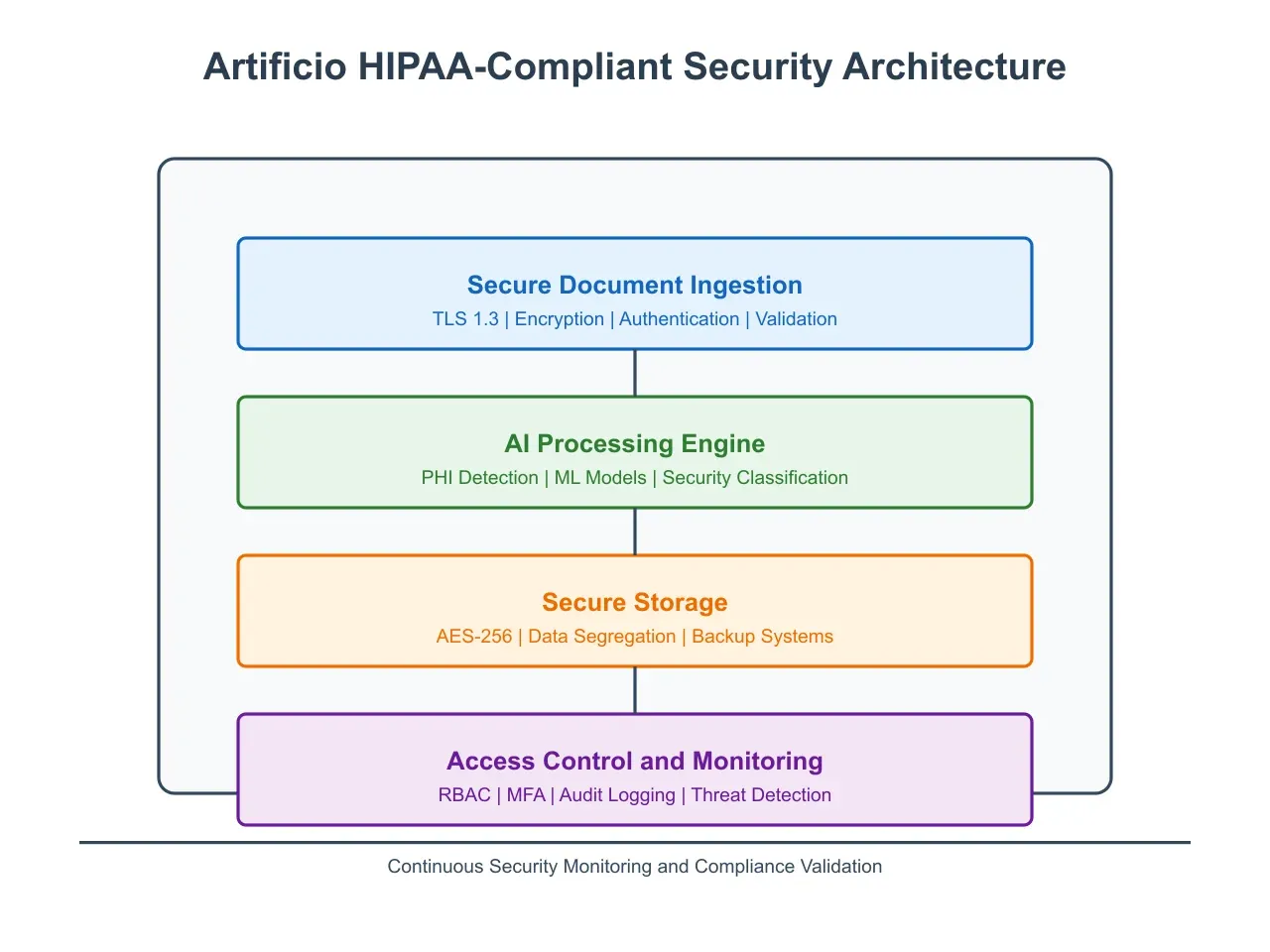
Artificio's platform implements a sophisticated multi-layered security architecture specifically designed for healthcare document processing. The system's document ingestion layer employs state-of-the-art TLS 1.3 encryption for all data transmission, coupled with robust multi-factor authentication systems for upload portals. Real-time virus and malware scanning, combined with thorough document integrity verification and format validation processes, ensures the security of incoming data from the earliest point of contact.
The AI processing layer represents the core of the system's capabilities, utilizing advanced natural language processing models for PHI detection and automated document classification. This sophisticated processing environment maintains strict security protocols while enabling efficient data extraction and validation, supported by continuous quality assurance checks and privacy-preserving machine learning models.
The platform's secure storage layer implements AES-256 encryption for all data at rest, with sophisticated geographic data segregation and redundant backup systems ensuring both security and availability. A comprehensive secure key management system and regular data integrity checks maintain the confidentiality and integrity of stored information.
Access control mechanisms are implemented through a sophisticated combination of role-based and attribute-based access control systems, supported by robust session management and monitoring capabilities. Multi-factor authentication requirements and automated access reviews provide additional layers of security, ensuring that protected health information remains accessible only to authorized users.
The platform's document processing workflow implements security measures at every stage of the document lifecycle. The document reception process begins with secure upload channels that implement comprehensive validation and virus scanning protocols. Advanced document classification algorithms prioritize incoming documents while extracting and validating essential metadata.
During the processing and analysis phase, sophisticated automated PHI detection systems identify and mark sensitive information, while advanced data extraction algorithms structure the information for secure storage and retrieval. Comprehensive quality assurance checks and compliance validation processes ensure that all processed documents meet both technical and regulatory requirements.
The storage and management phase employs encrypted storage systems with granular access controls, generating detailed audit trails for all document interactions. Sophisticated backup and recovery procedures ensure data availability while maintaining security and compliance requirements.
Document access and distribution processes are governed by secure retrieval mechanisms that authenticate authorized users through multiple factors, logging all activity and monitoring for potential security concerns. The platform's secure document sharing capabilities enable healthcare organizations to collaborate effectively while maintaining strict control over protected health information.
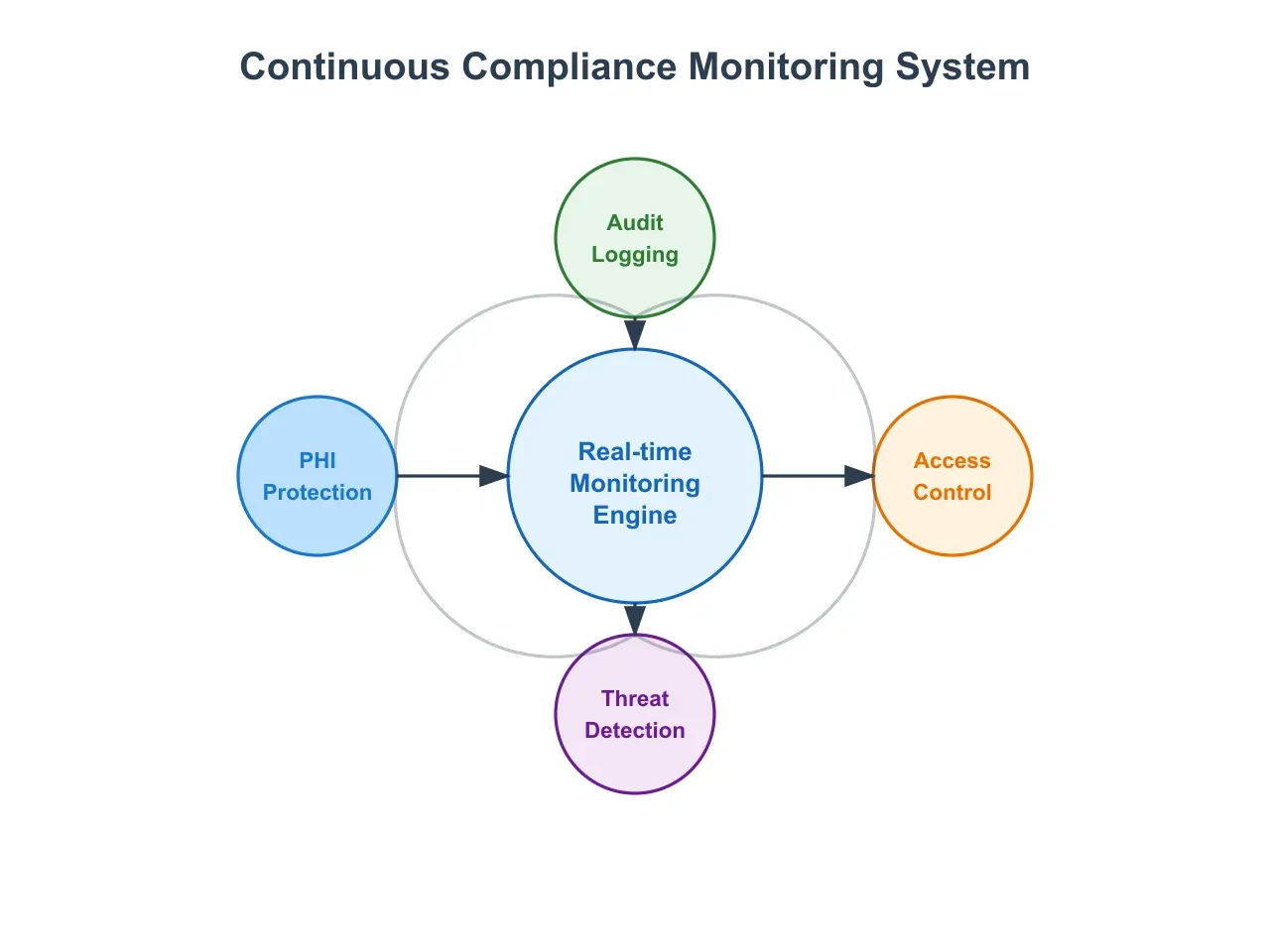
The implementation of HIPAA-compliant document processing systems requires a sophisticated approach to continuous monitoring and assessment. Artificio's platform incorporates an advanced monitoring framework that operates continuously across all system components, providing real-time visibility into compliance status and potential security concerns. This comprehensive monitoring system integrates automated surveillance mechanisms with intelligent alerting systems, enabling rapid response to potential compliance issues while maintaining detailed documentation of all system activities.
The platform's audit logging system captures detailed information about all system interactions, from document access attempts to processing operations. These logs are secured through advanced encryption mechanisms and maintained in a tamper-evident format that ensures their integrity for compliance purposes. Sophisticated log analysis tools employ machine learning algorithms to identify patterns and anomalies that might indicate security concerns or compliance violations, enabling proactive response to potential issues before they escalate into significant problems.
Modern healthcare environments face increasingly sophisticated cyber threats, necessitating advanced threat detection capabilities. The platform employs a multi-layered approach to threat detection, combining signature-based detection with behavioral analysis and machine learning-based anomaly detection. This comprehensive security framework monitors system activities continuously, identifying potential threats through pattern analysis and behavioral profiling while maintaining strict compliance with HIPAA requirements for data protection and privacy.
Understanding and controlling access patterns represents a critical component of HIPAA compliance. The platform implements sophisticated access analysis systems that monitor user behavior patterns, identifying potential security risks while ensuring appropriate access to protected health information. This analysis extends beyond simple login monitoring to encompass detailed tracking of document access patterns, modification attempts, and data extraction activities.
The successful implementation of HIPAA-compliant document processing systems requires careful consideration of existing healthcare infrastructure. Integration strategies must address both technical and operational requirements while maintaining security and compliance throughout the transition process. This includes developing comprehensive data migration plans that ensure the security of legacy information while enabling efficient transfer to new processing systems.
Effective implementation requires comprehensive training programs that address both technical and compliance aspects of the system. These programs must cover proper document handling procedures, security protocols, and compliance requirements while ensuring that all users understand their roles in maintaining HIPAA compliance. Regular refresher training and updates ensure that staff remain current with evolving security requirements and system capabilities.
HIPAA compliance requires robust disaster recovery and business continuity planning. The platform incorporates sophisticated backup and recovery systems that ensure data availability while maintaining security and compliance requirements. These systems include geographically distributed backup facilities, automated failover capabilities, and detailed recovery procedures that address both technical and compliance requirements during system restoration.
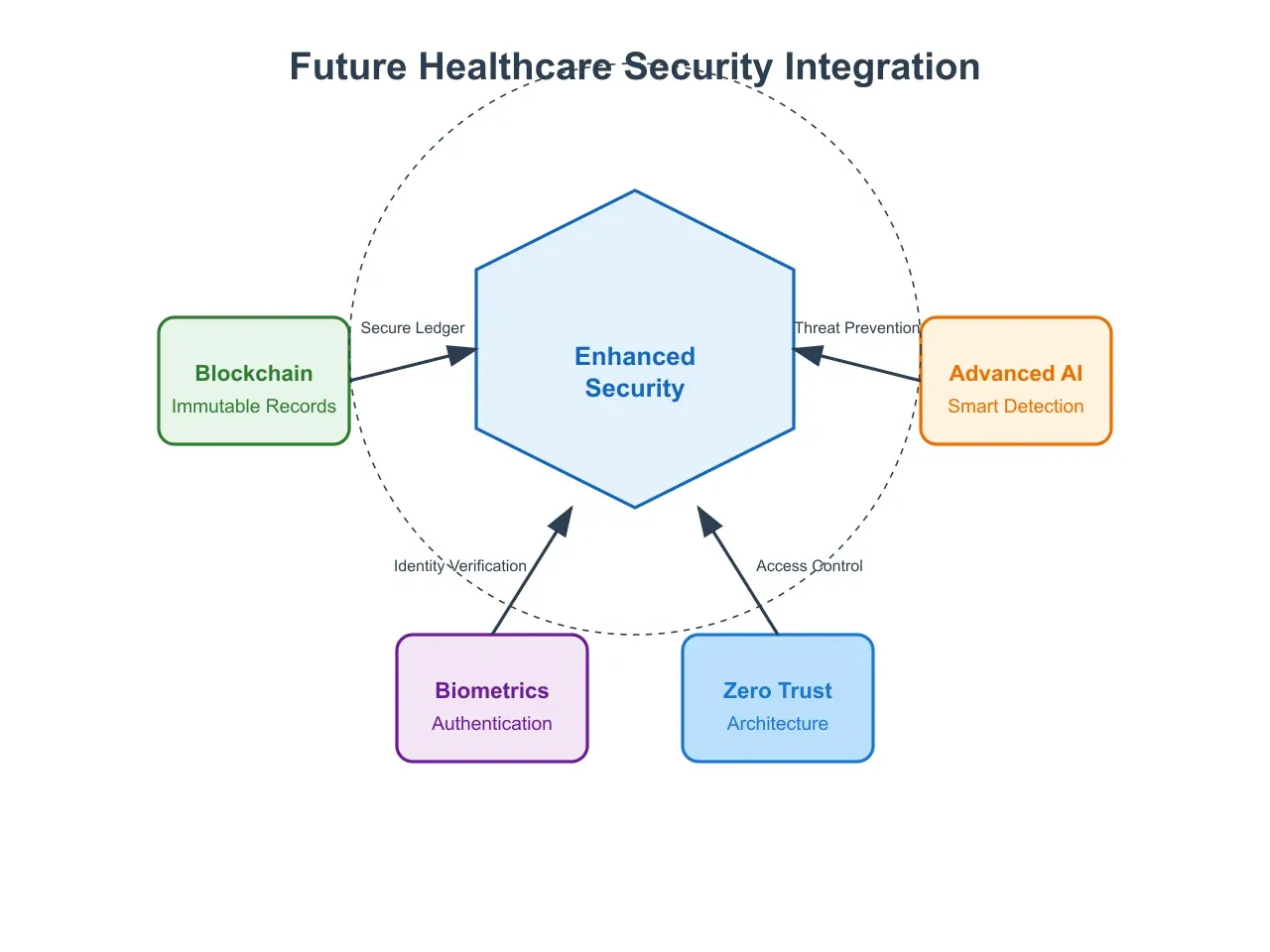
The landscape of healthcare data security continues to evolve with the emergence of new technologies. Blockchain technology presents promising applications for secure medical records management, offering immutable audit trails and enhanced data integrity verification. Advanced biometric authentication methods are increasingly being integrated into healthcare systems, providing more robust user verification while maintaining compliance with privacy requirements.
The continued advancement of artificial intelligence capabilities presents both opportunities and challenges for HIPAA compliance. Enhanced AI systems offer improved capabilities for real-time compliance monitoring and automated threat detection, while raising new questions about data privacy and security in machine learning environments. These developments necessitate ongoing adaptation of compliance frameworks and security measures to address emerging technological capabilities and challenges.
The regulatory framework governing healthcare data security continues to evolve in response to technological advancement and emerging threats. Future regulations are likely to address new challenges in areas such as artificial intelligence, cloud computing, and distributed healthcare systems. Organizations must maintain flexible compliance frameworks that can adapt to these evolving requirements while ensuring consistent protection of patient information.
The healthcare industry's growing focus on interoperability presents new challenges for maintaining security and compliance in document processing systems. Future developments will require careful balance between enabling efficient information exchange and maintaining strict security controls. This includes the development of standardized security protocols for information exchange and the implementation of sophisticated access control mechanisms that work across different healthcare systems and organizations.
The implementation of HIPAA-compliant document processing systems represents a critical challenge for modern healthcare organizations. Artificio's platform demonstrates how sophisticated technology solutions can effectively address this challenge through a combination of advanced AI capabilities and robust security measures. The success of these systems depends on their ability to adapt to evolving regulatory requirements while delivering tangible benefits to healthcare organizations.
As the healthcare industry continues to digitize and automate its processes, the importance of maintaining strict compliance while improving efficiency will only grow. Through careful attention to security, privacy, and usability, platforms like Artificio are helping to shape the future of healthcare information management. The continued evolution of technology and regulatory requirements will require ongoing adaptation and enhancement of these systems to ensure they meet the changing needs of healthcare organizations while maintaining the highest standards of data security and patient privacy.
The future of healthcare document processing lies in the development of increasingly sophisticated systems that can balance the competing demands of efficiency, security, and compliance. Success in this domain requires not only technical excellence but also a deep understanding of healthcare operations and regulatory requirements. As technology continues to advance, the integration of new capabilities must be carefully managed to ensure that security and compliance remain paramount in the protection of sensitive healthcare information.

Head IT Operations - Co Founder of Artificio
See it in your SAP environment
Bring us a document, a process, or a bottleneck. We'll show how Artificio captures, validates, and posts into SAP — then scale from there.
Security & compliance
ISO 27001:2013 certified, SOC 2 Type 2 compliant, GDPR and HIPAA ready. Every agent action is logged, auditable, and runs in isolated environments.