Email remains one of the most effective marketing channels, delivering an average ROI of $36 for every $1 spent. Behind successful email campaigns lies robust infrastructure that ensures your messages reach the intended recipients. Amazon Simple Email Service (SES) has emerged as a leading solution for handling the technical aspects of email delivery, working alongside specialized email marketing platforms that manage the creative and strategic elements of campaigns.
This comprehensive guide explores how Amazon SES works with email marketing tools to create a complete email marketing ecosystem. We'll examine the technical capabilities of SES, how it integrates with various marketing platforms, implementation strategies, cost considerations, and real-world applications.
Understanding Amazon SES: The Email Delivery Powerhouse
What Amazon SES Actually Is
Amazon SES is a cloud-based email sending service designed to help digital marketers and application developers send marketing, notification, and transactional emails. Unlike comprehensive email marketing platforms, SES focuses exclusively on the reliable delivery of email messages at scale.
Core Technical Capabilities
1. High Deliverability Infrastructure
SES operates on Amazon's vast cloud infrastructure, providing:
- Global sending capacity: Ability to send millions of emails daily
- Dedicated IP addresses: Optional dedicated IPs for maintaining sender reputation
- Automatic IP warming: Gradual increase in sending volume to establish reputation
- DKIM signing: Cryptographic authentication to verify email legitimacy
- SPF and DMARC support: Additional authentication protocols to prevent spoofing
2. Deliverability Monitoring and Management
SES provides robust tools for monitoring delivery performance:
- Bounce tracking: Automatic handling of hard bounces (invalid addresses) and soft bounces (temporary delivery issues)
- Complaint handling: Monitoring and processing recipient complaints through feedback loops with ISPs
- Delivery delays: Detection and notification of temporary delivery issues
- Reputation dashboard: Metrics on sender reputation and potential deliverability problems
- Suppression list management: Automatic filtering of addresses with history of bounces or complaints
3. Sending Mechanisms
SES offers multiple ways to send emails:
- SMTP interface: Direct integration with existing applications using standard SMTP protocol
- API-based sending: Programmatic email sending through AWS SDK in various programming languages
- AWS Management Console: Web interface for manual sending and configuration
- AWS CLI: Command-line interface for automation and scripting
4. Content Validation and Enhancement
SES helps ensure your emails meet industry standards:
- Content filtering: Scanning for potentially spammy content before sending
- MIME validation: Verification of proper email formatting
- Header checking: Validation of email headers for compliance with standards
- Attachment handling: Support for sending and validating email attachments
- HTML sanitization: Cleaning of potentially problematic HTML code
5. Sending Analytics
SES provides detailed metrics on email performance:
- Delivery rate monitoring: Tracking of successful email deliveries
- Open and click tracking: Optional tracking of recipient engagement (when enabled)
- Bounce and complaint analytics: Detailed reporting on delivery failures and issues
- Sending quotas: Monitoring of daily sending limits and utilization
- Delivery streams: Real-time event notifications for email sending events
SES includes features to maintain security and regulatory compliance:
- TLS encryption: Secure transfer of email content
- IAM integration: Fine-grained access control to sending capabilities
- CloudTrail integration: Audit logging of all API calls
- Regional compliance: Support for region-specific data requirements
- Configurable sending permissions: Control which entities can send through your SES account
What Amazon SES Is Not
To fully understand SES, it's important to recognize what it doesn't provide:
- No subscriber management: SES doesn't maintain or manage email lists
- No campaign builder: No native interface for creating email templates or campaigns
- No advanced segmentation: No tools for dividing subscribers based on behavior or characteristics
- No automation workflows: No capability for creating triggered email sequences
- No native A/B testing: No built-in functionality for testing email variations
- No comprehensive analytics: Limited reporting focused primarily on delivery metrics
- No drag-and-drop editors: No visual tools for creating email content
Email Marketing Tools: The Strategic Layer
While SES handles the technical delivery of emails, email marketing platforms provide the strategic and creative functionality needed for effective campaigns.
Essential Features of Email Marketing Platforms
1. Advanced List Management
Modern email marketing tools provide sophisticated subscriber management:
- List segmentation: Division of subscribers based on demographics, behavior, and engagement
- Custom fields: Storage of subscriber-specific data for personalization
- Tags and categories: Organizational systems for subscriber classification
- Subscription preferences: Management of topic and frequency preferences
- List cleaning: Automatic removal of inactive or unengaged subscribers
- Double opt-in processes: Verification workflows for new subscribers
- GDPR and compliance tools: Features to maintain regulatory compliance
- Import/export capabilities: Tools for moving subscriber data between systems
Email marketing platforms excel at content creation:
- Drag-and-drop editors: Visual interfaces for designing emails without coding
- Responsive templates: Pre-built designs that adapt to different devices
- Dynamic content: Content that changes based on recipient attributes
- Personalization tokens: Automated insertion of subscriber-specific information
- Custom code editors: Options for advanced HTML/CSS customization
- Brand asset management: Storage and organization of logos, images, and styling elements
- Accessibility checking: Tools to ensure emails are accessible to all recipients
- Spam trigger scanning: Analysis of content for potential deliverability issues
Automation capabilities allow for sophisticated email sequences:
- Triggered emails: Messages sent based on specific subscriber actions
- Drip campaigns: Pre-scheduled sequences of emails
- Behavioral triggers: Emails triggered by website or product interactions
- Time-based sequences: Messages sent at specific intervals
- Conditional branching: Different email paths based on subscriber responses
- Re-engagement campaigns: Automated workflows for inactive subscribers
- Welcome sequences: Multi-part introduction series for new subscribers
- Integration-based triggers: Emails triggered by events in other systems (e.g., CRM, ecommerce)
Email marketing platforms provide in-depth performance metrics:
- Open rate tracking: Measurement of email opens
- Click tracking: Monitoring of link clicks within emails
- Conversion tracking: Following subscriber actions after clicking
- Revenue attribution: Connecting email campaigns to sales
- Comparative reporting: Benchmarking against industry standards
- List growth metrics: Tracking subscriber acquisition and churn
- Engagement scoring: Evaluation of subscriber interest levels
- Heat maps: Visual representation of click patterns
- Device and client analytics: Insights into how and where emails are opened
5. Testing and Optimization
Email marketing tools offer features to improve campaign performance:
- A/B testing: Comparison of different email variations
- Multivariate testing: Testing multiple elements simultaneously
- Send time optimization: Automatic delivery at optimal times
- Subject line testing: Comparison of different subject lines
- Preview functionality: Testing how emails appear across devices and clients
- Spam filter testing: Checking deliverability before sending
- Content optimization: Suggestions for improving engagement
- Automated winner selection: Selection of best-performing variations
Email marketing platforms connect with other business systems:
- CRM integration: Synchronization with customer relationship management tools
- Ecommerce connections: Links to online stores for purchase data
- Website tracking: Monitoring of subscriber website behavior
- Form builders: Tools for creating signup forms
- Landing page creators: Functionality for building campaign-specific pages
- Social media integration: Connection with social platforms
- Data import/export: Tools for moving data between systems
- Webhook support: Custom integrations with other applications
The Integration: How SES Works With Email Marketing Tools
The real power emerges when Amazon SES is paired with email marketing platforms, creating a system that combines delivery reliability with marketing sophistication.
Integration Models
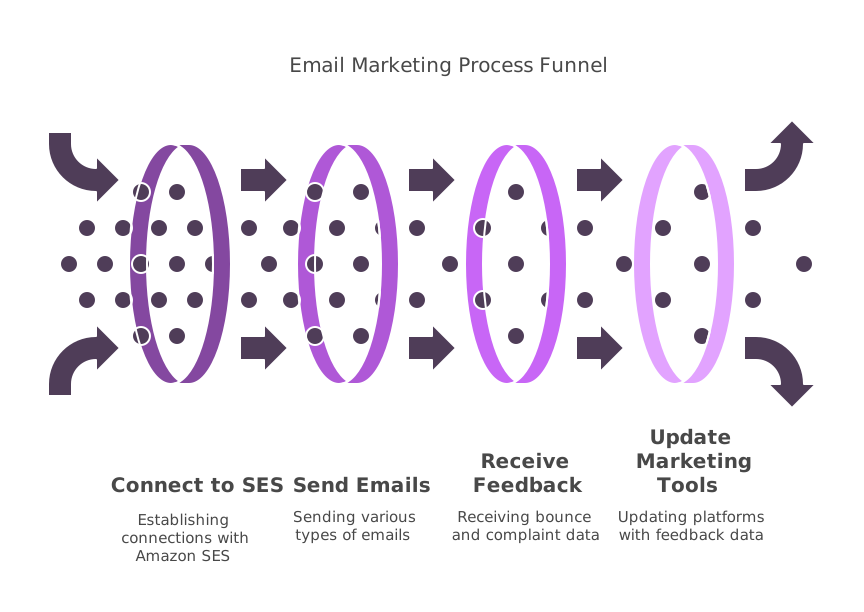
Many email marketing platforms offer native integration with Amazon SES:
- SMTP relay configuration: Setting up the marketing tool to send through SES SMTP servers
- API-based sending: Using SES APIs for programmatic sending
- Bounce and complaint handling: Processing SES feedback for list hygiene
- Sending identity management: Configuration of sending domains and addresses
- Throttling and quota management: Respecting SES sending limits
Organizations often build custom integrations between SES and their marketing stack:
- Webhook processors: Custom code to handle SES event notifications
- Middleware solutions: Software that sits between marketing platforms and SES
- Data synchronization services: Tools to ensure consistent data across systems
- Specialized sending logic: Custom rules for routing different types of emails
- Fallback mechanisms: Systems to use alternative providers if issues arise
3. Third-Party Connector Services
Several services specialize in connecting email marketing platforms with SES:
- Integration platforms: Services like Zapier or Integromat that connect systems
- Email infrastructure managers: Specialized tools for managing email delivery
- API gateways: Services that facilitate communication between platforms
- Data transformation tools: Systems that format data appropriately for each platform
- Monitoring services: Third-party tools to track the integration health
Technical Implementation Process
Setting up an integration between email marketing tools and SES involves several steps:
1. SES Account Setup and Verification
Before integration, SES requires proper configuration:
- Account creation: Setting up an AWS account if not already established
- Sender verification: Verifying ownership of sending domains and email addresses
- Production access request: Moving beyond the SES sandbox for full functionality
- DKIM setup: Configuring domain keys for authentication
- SPF records: Adding Amazon's sending servers to DNS records
- MAIL FROM domain: Configuring a custom bounce domain
- Feedback loops: Setting up complaint notification handling
The marketing platform needs specific settings to use SES:
- SMTP credentials setup: Configuring access to SES SMTP servers
- API key management: Setting up secure access to SES APIs
- Default sending identity: Specifying which verified identity to use
- Bounce handling configuration: Setting up processing of bounce notifications
- Complaint processing: Establishing procedures for handling recipient complaints
- Tracking domain setup: Configuring domains for click and open tracking
- Testing mode: Initial configuration for validation without actual sending
3. Data Flow Setup
Establishing proper data exchange between systems:
- Event webhook configuration: Setting up SES to notify of email events
- Feedback processing: Creating handlers for bounce and complaint data
- Delivery status updates: Configuring systems to track message delivery
- Engagement synchronization: Ensuring open and click data flows correctly
- List health management: Establishing processes for maintaining clean lists
- Reporting data aggregation: Setting up consolidated analytics
4. Testing and Validation
Before full implementation, thorough testing is essential:
- Send pattern testing: Validating various sending scenarios
- Volume testing: Ensuring the integration handles required email volume
- Failure handling: Testing system response to various error conditions
- Monitoring setup: Establishing alerts for integration issues
- Performance benchmarking: Measuring delivery times and success rates
- Compliance verification: Ensuring all regulatory requirements are met
Benefits of the SES + Email Marketing Tool Combination
Cost Optimization
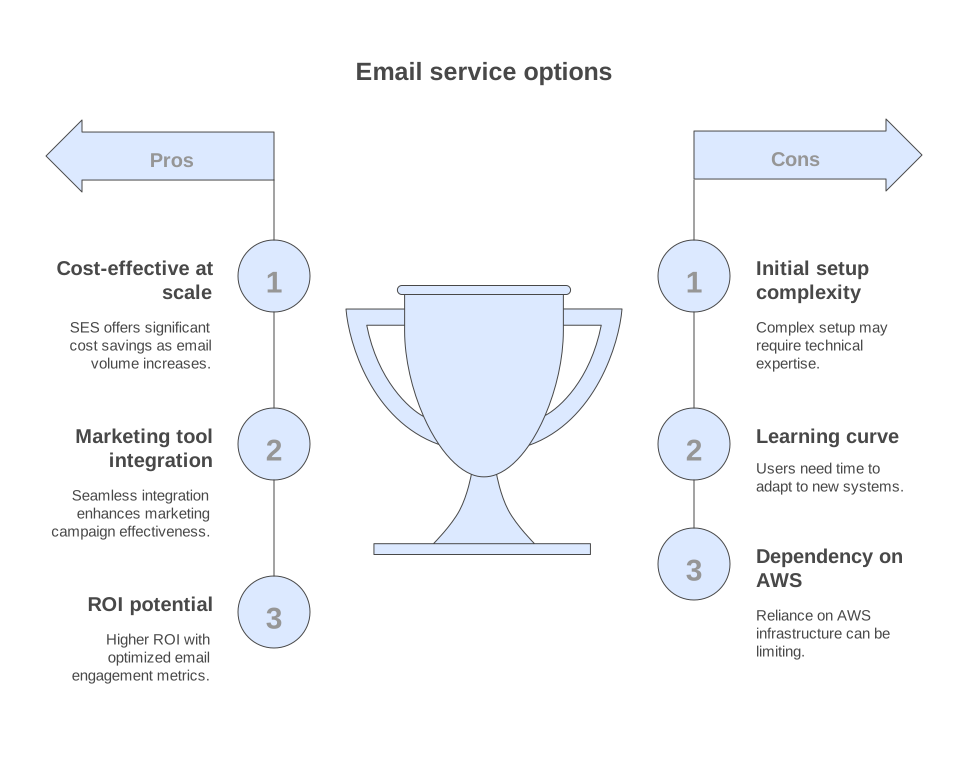
The combined approach offers significant financial advantages:
- Volume-based pricing: SES charges based on actual sending volume (approximately $0.10 per 1,000 emails)
- Infrastructure cost reduction: Elimination of self-managed email servers
- Scalability without premium fees: Ability to handle volume spikes without paying for unused capacity
- Feature-based tool selection: Choosing marketing platforms based on needed features rather than sending capacity
- Reduced development costs: Leveraging existing infrastructure instead of building custom solutions
- Maintenance savings: AWS handles infrastructure maintenance and updates
Enhanced Deliverability
The combination improves email reaching recipients:
- Established IP reputation: Benefit from Amazon's sender reputation management
- Advanced authentication: Implementation of all modern authentication protocols
- Proactive bounce handling: Immediate processing of delivery failures
- ISP relationship management: Amazon's established relationships with major inbox providers
- Compliance enforcement: Tools to ensure adherence to email regulations
- Cross-client compatibility: Testing and optimization for various email clients
- Feedback loop integration: Direct processing of recipient complaints
- Automatic IP warming: Gradual reputation building for new senders
Technical Flexibility
The paired approach provides greater technical options:
- Multi-platform sending: Ability to send through different systems based on message type
- Custom sending logic: Implementation of complex rules for message routing
- API-driven workflows: Programmatic control of the entire email process
- Cross-service tracking: Unified tracking across transactional and marketing emails
- Development environment support: Separate configurations for testing and production
- Multi-region capability: Sending from different geographic regions for compliance or performance
- Hybrid sending models: Combining internal systems with cloud services
- Fallback configurations: Secondary sending paths if primary systems experience issues
Real-World Implementation Scenarios
Ecommerce Integration
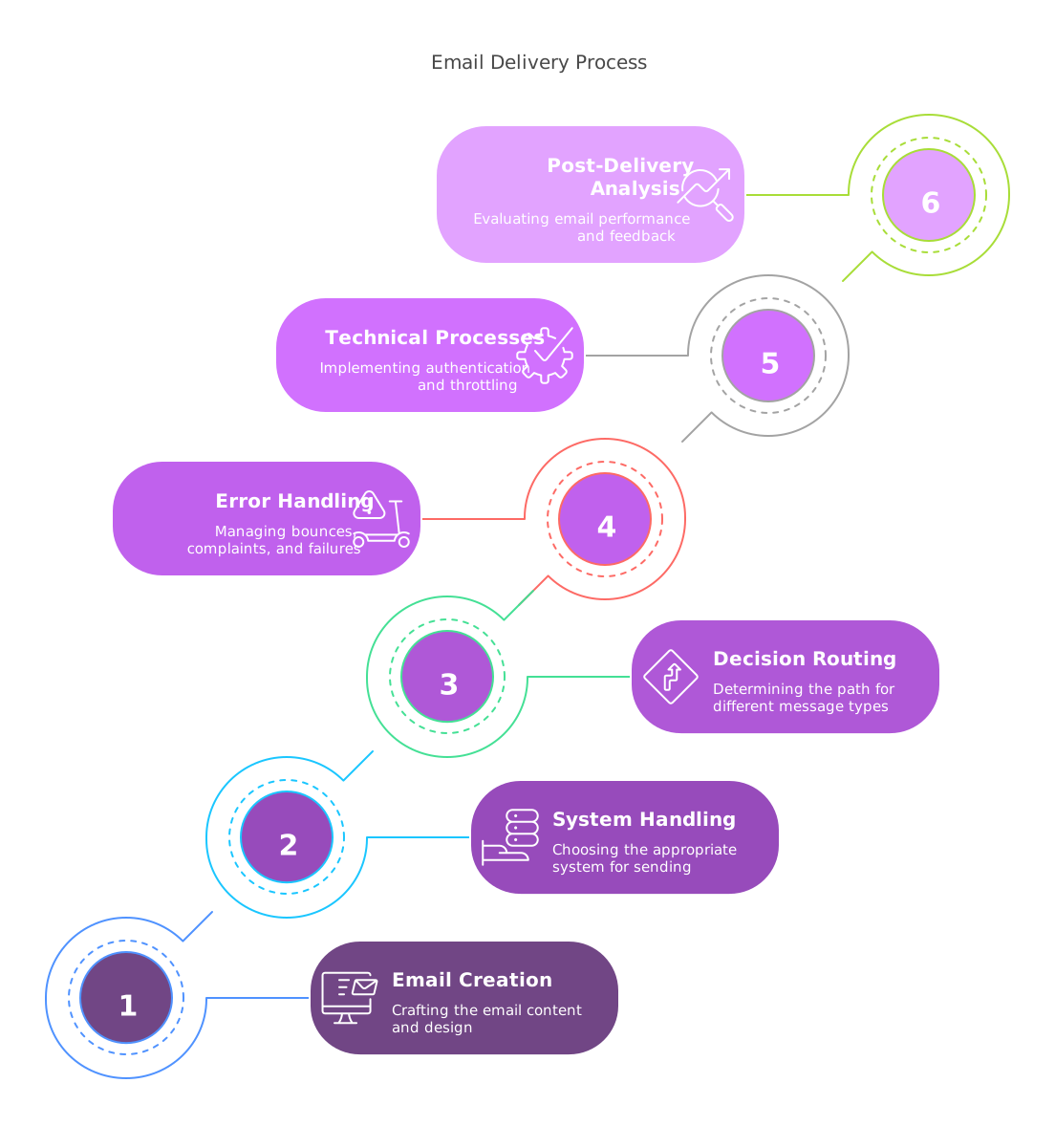
Online retailers often implement sophisticated email systems:
- SES for transactional messages: Order confirmations, shipping updates, and password resets
- Marketing platform for campaigns: Product announcements, sales, and promotional content
- Unified customer view: Synchronized data between transactional and marketing systems
- Abandoned cart workflows: Triggered emails for incomplete purchases
- Post-purchase sequences: Follow-up emails based on specific product purchases
- Review solicitation: Automated requests for product reviews
- Inventory notifications: Alerts for restocked items
- Personalized recommendations: Product suggestions based on purchase history
- VIP customer programs: Special messaging for high-value customers
SaaS Application Implementation
Software companies typically need comprehensive email solutions:
- User onboarding sequences: Step-by-step guidance for new users
- Feature announcement campaigns: Communications about new capabilities
- Usage-based messaging: Emails triggered by specific in-app actions
- Account status notifications: Updates about subscription status
- Technical alerts: Notifications about maintenance or issues
- Educational content: Training materials and best practices
- Renewal reminders: Communications about upcoming subscription renewals
- Re-engagement campaigns: Attempts to reactivate dormant users
- API status updates: Notifications for developers using the platform
- Segmented feature announcements: Different messaging based on user type or plan
Enterprise Multi-System Architecture
Large organizations often implement complex email ecosystems:
- Centralized sending infrastructure: SES as the common sending service across departments
- Multiple marketing platforms: Different tools for various business units
- Unified reputation management: Coordinated approach to sender reputation
- Cross-platform analytics: Aggregated reporting across systems
- Shared suppression lists: Company-wide opt-out management
- Compliance oversight: Centralized monitoring of regulatory adherence
- Staggered sending coordination: Preventing email overload to shared customers
- Tiered access controls: Different sending permissions based on role
- Global/local sending balance: Combination of centralized and regional sending
- Brand management: Consistent brand application across diverse sending systems
Advanced Configuration Techniques
Optimizing SES for Maximum Deliverability
Fine-tuning SES configurations can significantly improve performance:
- Dedicated IP leasing: Moving from shared to dedicated IPs for better reputation control
- Custom MAIL FROM domain: Creating specific domains for bounce handling
- SNS notification processing: Real-time handling of bounce and complaint events
- Sending quota management: Systems to prevent exceeding SES limits
- IP pool management: Strategic use of multiple IPs for different message types
- Regional sending strategies: Utilizing different AWS regions for geo-specific sending
- Configuration sets: Creating different settings for various email types
- Rate limiting implementation: Preventing sending spikes that trigger filters
- Domain reputation monitoring: Tracking and responding to reputation metrics
- Suppression list management: Strategic handling of bounces and complaints
Sophisticated Data Synchronization
Advanced implementations require careful data management:
- Bi-directional synchronization: Keeping marketing platforms and SES in sync
- Real-time event processing: Immediate handling of email events
- Consolidated suppression management: Unified approach to unsubscribes and complaints
- Cross-platform subscriber profiles: Consistent contact data across systems
- Engagement data aggregation: Unified view of recipient interactions
- Attribute-based segmentation: Dynamic grouping based on behavior across systems
- Automated list hygiene: Systematic cleaning of inactive or problematic addresses
- Identity resolution: Connecting different email addresses to the same person
- Preference center integration: Honoring subscriber choices across platforms
- GDPR/CCPA compliance framework: Systematic approach to privacy regulations
Proper security measures are essential for email systems:
- IAM role-based access: Granular permissions for SES access
- API key rotation: Regular updating of authentication credentials
- Encryption implementation: Protecting sensitive subscriber data
- Audit logging: Tracking all system access and changes
- GDPR compliance mechanisms: Tools for managing consent and data requests
- Geographic sending restrictions: Controls for regional compliance requirements
- Data retention policies: Systematic management of how long data is kept
- Access monitoring: Surveillance of who is using the system
- Content approval workflows: Processes for reviewing emails before sending
- Compliance documentation: Maintaining records of system configurations
Common Implementation Challenges and Solutions
Technical Integration Issues
Even well-planned integrations face challenges:
- Challenge: API rate limiting causing sending delays Solution: Implement queuing systems with exponential backoff
- Challenge: Inconsistent event tracking between systems Solution: Create a unified tracking layer with standardized parameters
- Challenge: Duplicate email processing due to redundant configurations Solution: Implement deduplication logic with unique message IDs
- Challenge: Different data formats between systems Solution: Develop transformation middleware to standardize data
- Challenge: Incomplete bounce processing Solution: Create comprehensive event handlers with fallback mechanisms
Deliverability Challenges
Email reaching the inbox remains a persistent challenge:
- Challenge: IP reputation issues affecting delivery Solution: Implement gradual volume increases and sender authentication
- Challenge: Content filtering triggering spam flags Solution: Use pre-flight content scanning and spam score checking
- Challenge: Inconsistent delivery across email clients Solution: Implement comprehensive testing across major email platforms
- Challenge: Feedback loop data not affecting sending decisions Solution: Create automated suppression mechanisms based on complaint data
- Challenge: Sudden delivery drops to specific domains Solution: Develop monitoring systems with domain-specific tracking
Scaling and Performance
Growing email programs face unique scaling challenges:
- Challenge: Hitting SES sending quotas during campaigns Solution: Implement predictive quota management and request limit increases
- Challenge: Performance degradation during high-volume sending Solution: Deploy distributed sending architecture with load balancing
- Challenge: Data synchronization lags during large campaigns Solution: Implement asynchronous processing with prioritization
- Challenge: Reporting system overload with high event volume Solution: Create aggregated reporting with data sampling for real-time views
- Challenge: Integration timeout issues during peak periods Solution: Implement circuit breaker patterns and graceful degradation
Cost Optimization Strategies
Maximizing value while minimizing expenses:
SES Cost Management
- Tiered sending strategy: Differentiating message importance for sending priority
- Content delivery network integration: Offloading image and asset delivery
- Regional sending optimization: Using lower-cost regions when appropriate
- Attachment handling strategies: Using links instead of attachments
- Dedicated IP cost-benefit analysis: Determining when dedicated IPs provide ROI
- Cross-account sending: Sharing SES infrastructure across business units
- Consolidated sending windows: Batching messages to optimize processing
- Message size optimization: Reducing email size through efficient coding
- Request batching: Combining API calls to reduce transaction costs
- Predictive quota management: Proactively requesting limit increases
Marketing Platform Optimization
- Feature-based tool selection: Choosing platforms based on needed capabilities
- User license management: Controlling access to reduce per-seat costs
- Contact tier optimization: Managing subscriber counts to stay within pricing tiers
- Automation efficiency: Reducing manual processes through workflow automation
- Integration consolidation: Streamlining connections between systems
- Data storage optimization: Managing what subscriber data is retained
- Feature utilization analysis: Identifying and eliminating unused capabilities
- Template reusability: Creating modular designs for multiple campaigns
- Testing efficiency: Optimizing test processes to reduce resource consumption
- Training investment: Ensuring teams fully utilize available features
Future Trends in SES and Email Marketing Integration
Emerging Technologies
The email landscape continues to evolve:
- AI-powered send time optimization: Machine learning to determine ideal sending moments
- Predictive deliverability modeling: Anticipating and preventing delivery issues
- Dynamic content generation: Automated creation of personalized content
- Behavioral prediction engines: Anticipating subscriber actions and interests
- Unified messaging orchestration: Coordinated communications across email and other channels
- Voice assistant integration: Email content optimized for audio interfaces
- Interactivity advancements: New forms of in-email engagement
- Cross-channel attribution: Better understanding of email's role in the customer journey
- Privacy-enhanced personalization: Maintaining relevance without invasive tracking
- Blockchain for delivery verification: New authentication methods using distributed ledgers
Regulatory Evolution
Changing legal landscape affecting email marketing:
- Enhanced privacy regulations: More jurisdictions implementing GDPR-like laws
- Consent management complexity: Increasingly nuanced permission requirements
- Data localization requirements: Rules about where subscriber data can be stored
- Authentication mandates: Potential requirements for sender verification
- AI regulation impact: How automation and personalization may be restricted
- Global compliance frameworks: Emerging standards for international sending
- ISP policy standardization: More consistent approaches across inbox providers
- Carbon impact considerations: Environmental regulations affecting digital messaging
- Third-party cookie elimination effects: Changes to tracking and measurement
- Data portability requirements: Subscriber ownership of their information
Conclusion
The partnership between Amazon SES and email marketing platforms represents a powerful approach to email marketing, combining Amazon's robust delivery infrastructure with the strategic capabilities of specialized marketing tools. This integration allows organizations to focus on creating compelling content and strategies while leveraging AWS's reliable delivery services.
As email continues to evolve, this combined approach provides the flexibility and scalability needed to adapt to changing technologies, regulations, and recipient expectations. By understanding the distinct roles of SES and marketing platforms, organizations can build email programs that deliver consistent results while maintaining cost efficiency and technical flexibility.
Whether you're a small business just beginning email marketing or an enterprise with complex multi-channel needs, the SES + marketing platform combination offers a solution that can grow and adapt alongside your organization's requirements.
Additional Resources