

Blog
Automate Personalized Document Creation & Delivery
Automate your entire document workflow from creation to delivery. Create personalized, consistent documents, and streamline your process.

Blog
Automate your entire document workflow from creation to delivery. Create personalized, consistent documents, and streamline your process.
Business documents are the lifeblood of modern organizations, yet most companies treat them like afterthoughts. Every day, millions of invoices, contracts, proposals, and reports flow through corporate systems in a chaotic mix of manual processes, fragmented tools, and human error. The result? Businesses are hemorrhaging time and money while frustrating customers and vendors with delayed, inaccurate, or impersonal communications.
The numbers tell a stark story. Finance teams alone spend 15 to 20 hours per week manually formatting documents, cross-referencing data across multiple systems, and chasing down delivery confirmations. That's nearly half of a full-time employee's productivity lost to administrative busywork. Meanwhile, human error rates in personalized communications hover around 12%, leading to embarrassing mistakes like sending invoices with wrong vendor details or addressing clients by incorrect company names.
But here's what most business leaders don't realize: the problem isn't just inefficiency. It's missed opportunity. Every document your company creates is a touchpoint with customers, vendors, or partners. When these communications are slow, generic, or error-prone, you're not just wasting time, you're damaging relationships and leaving money on the table.
The traditional approach to document automation has focused on solving pieces of the puzzle. OCR tools extract data. Template engines fill in blanks. Email systems send messages. But these solutions operate in silos, creating friction at every handoff. What's needed isn't another point solution, it's a complete rethinking of how AI can transform the entire document lifecycle from creation to delivery.
That's exactly what Artificio has built with its revolutionary generative AI-powered platform. Instead of treating document processing as a series of disconnected steps, Artificio uses three specialized AI agents that work together seamlessly. The result isn't just automation, it's intelligent document communication that gets smarter with every interaction.
Most business leaders understand that their document processes aren't perfect, but few grasp the true scope of the inefficiency. The problem extends far beyond the obvious time waste. It's embedded in every aspect of how organizations create, manage, and deliver business communications.
Let's start with the finance department, where the pain is most acute. The average accounts payable team processes hundreds of vendor invoices monthly, each requiring data extraction from source documents, validation against purchase orders, creation of payment notifications, and delivery to multiple stakeholders. This seemingly straightforward process typically involves jumping between five or more different systems: email clients, OCR software, ERP platforms, document creation tools, and communication channels.
Each system handoff introduces delays and potential errors. When an accounts payable clerk extracts vendor information from a scanned invoice, they might copy and paste data into an Excel spreadsheet. That data then gets manually transferred to a Word template for payment notification. The formatted document is saved as a PDF, attached to an email, and sent to the vendor. If the vendor prefers text message notifications, that requires yet another system and manual process.
This fragmented approach creates multiple opportunities for mistakes. Vendor names get misspelled during copy-paste operations. Payment amounts are transposed when moving between systems. Due dates are calculated incorrectly because different systems use different date formats. Email addresses are outdated because vendor contact information lives in multiple databases that aren't synchronized.
The impact extends beyond individual errors. When document processing takes too long, payment cycles stretch out, damaging vendor relationships and sometimes resulting in late fees or service disruptions. When communications are generic and impersonal, vendors feel like just another number rather than valued partners. When delivery methods don't match vendor preferences, important messages get lost in spam folders or ignored text message streams.
Consider the case of Regional Medical Supply, a healthcare distributor that processes over 800 invoices monthly from medical device manufacturers and pharmaceutical companies. Before implementing AI-powered automation, their three-person accounts payable team spent 25 hours per week on invoice-related document processing. Each invoice required an average of 18 minutes of manual work, from initial data extraction through final payment notification.
The manual process was not only time-consuming but also stressful for the team. Vendors would call daily asking about payment status. The team constantly dealt with questions about missing information, incorrect amounts, or delivery failures. They spent so much time on reactive problem-solving that strategic initiatives like vendor relationship management and process improvement got pushed aside indefinitely.
The situation became even more complex when Regional Medical Supply expanded into new product categories. Each category brought different vendor requirements, compliance considerations, and communication preferences. Some vendors required detailed project codes on payment notifications. Others needed compliance certifications attached to every communication. A few demanded text message alerts for time-sensitive payments.
Managing these diverse requirements manually became increasingly difficult. The team created dozens of document templates, each slightly different for various vendor categories. They maintained spreadsheets tracking vendor communication preferences. They set up manual calendar reminders for recurring compliance requirements. The complexity grew exponentially with each new vendor relationship.
This scenario isn't unique to healthcare distributors. Legal firms face similar challenges with contract generation, where each client has specific formatting requirements, clause preferences, and delivery timelines. Marketing agencies struggle with report creation, where identical data needs to be formatted differently for various clients. Construction companies deal with complex invoice processing across multiple projects, each with unique billing requirements and stakeholder communication needs.
The common thread across all these scenarios is the existence of operational silos. Data extraction happens in one system. Document creation occurs in another. Delivery management requires yet another platform. Compliance tracking might involve manual spreadsheets or separate databases. Each silo represents a potential point of failure and definitely creates inefficiency. 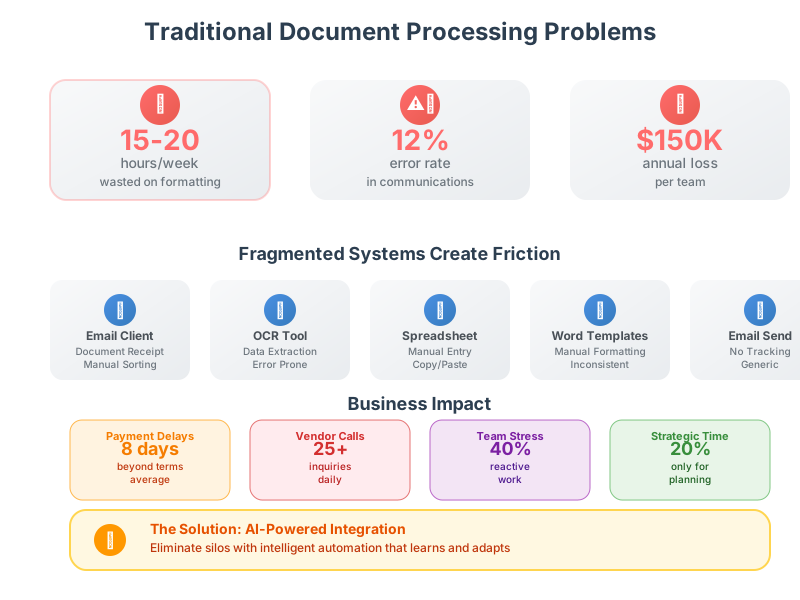
Traditional automation tools have attempted to address these challenges, but most focus on individual pieces of the workflow rather than the complete process. A mail merge tool might automate document creation but can't intelligently extract data from complex source files. An email automation platform might handle delivery but lacks the sophistication to personalize content based on recipient behavior and preferences. OCR software might digitize documents but can't understand context or validate extracted information against business rules.
What's needed isn't another point solution that solves one piece of the puzzle. The solution requires a fundamental shift in how we think about document processing. Instead of treating it as a series of disconnected manual steps, we need to view it as an integrated, intelligent system where AI agents handle different aspects of the workflow while sharing context and learning from each interaction.
This is where generative AI becomes transformative. Rather than simply filling in predetermined templates with static data, generative AI can create documents that are perfectly tailored to their purpose, audience, and context. It can adapt formatting based on recipient preferences, include relevant compliance information automatically, and even adjust tone and messaging based on relationship history.
Artificio's breakthrough lies in recognizing that different aspects of document processing require different types of artificial intelligence. Rather than building one AI system that handles everything adequately, Artificio created three specialized AI agents that excel in their specific domains while working together seamlessly. This multi-agent approach mirrors how high-performing human teams operate, with specialists collaborating in their areas of expertise.
The Document Intelligence Agent serves as the foundation of the system, handling all data extraction and validation tasks. Built on advanced natural language processing and machine learning pattern recognition, this agent can analyze virtually any document format, from handwritten forms and scanned PDFs to complex spreadsheets and structured databases. But what makes it truly intelligent is its ability to understand context and relationships within documents.
When processing a vendor invoice, the Document Intelligence Agent doesn't simply extract text using basic OCR technology. Instead, it understands that certain numbers represent monetary amounts, dates have specific business significance, and vendor information needs to be cross-referenced with existing databases. It can identify anomalies like unusually large amounts or duplicate invoice numbers, flag potential errors based on historical patterns, and even suggest corrections when data appears inconsistent.
The agent continuously learns from each document it processes, building sophisticated knowledge bases about vendor patterns, document formats, and business rules. It recognizes that Vendor A always includes project codes in the memo field, while Vendor B embeds them in the invoice number. It learns that certain suppliers have seasonal billing cycles, while others follow project-based invoicing patterns. This contextual understanding allows it to handle exceptions gracefully and improve accuracy over time.
The Generative Design Agent represents the creative and formatting intelligence of the system. This agent doesn't just fill in blanks on static templates. Instead, it dynamically creates documents that are perfectly formatted, professionally designed, and optimized for their specific purpose and audience. Using advanced generative AI algorithms and dynamic layout capabilities, it can produce everything from simple payment notifications to complex multi-page proposals.
What sets the Generative Design Agent apart is its understanding of design principles, brand consistency, and document purpose. It knows that an invoice should prioritize clarity and payment information, using clean layouts and prominent due dates. A marketing proposal might emphasize visual appeal and persuasive messaging, incorporating charts, images, and compelling call-to-action elements. A legal contract requires precise formatting, consistent numbering, and careful attention to clause structure.
The agent's drag-and-drop interface makes it incredibly easy for non-technical users to create and modify templates. Business users can simply drag data fields, images, text blocks, and design elements into position. The agent handles all the complex formatting logic, ensuring proper alignment, consistent spacing, and professional appearance across different document types and sizes.
But the real power emerges when the Generative Design Agent creates personalized documents based on recipient preferences and interaction history. If historical data shows that a particular vendor responds faster to invoices with payment terms highlighted in red text, the agent automatically applies that formatting. If a client prefers detailed project breakdowns, the agent expands relevant sections while condensing others. This level of personalization goes far beyond simple mail merge capabilities.
The Communication Assistant Agent manages the critical final step of document delivery, but it's far more sophisticated than traditional email automation. This agent uses adaptive learning algorithms and channel optimization to ensure that each communication reaches its intended recipient through the most effective method at the optimal time.
The Communication Assistant Agent maintains detailed profiles of every recipient, learning from past interactions to optimize future communications. It tracks which communication channels each vendor prefers (email, text message, phone call, portal notification), what times of day they're most responsive, and what types of messages generate the fastest responses. It analyzes response patterns to determine optimal send times, subject line preferences, and message tone.
This personalization extends to understanding business contexts and relationships. The agent recognizes that urgent payment notifications for critical suppliers might warrant immediate phone calls, while routine reminders for established vendors can be handled through preferred email channels. It can escalate communication methods automatically when initial attempts don't receive responses within expected timeframes.
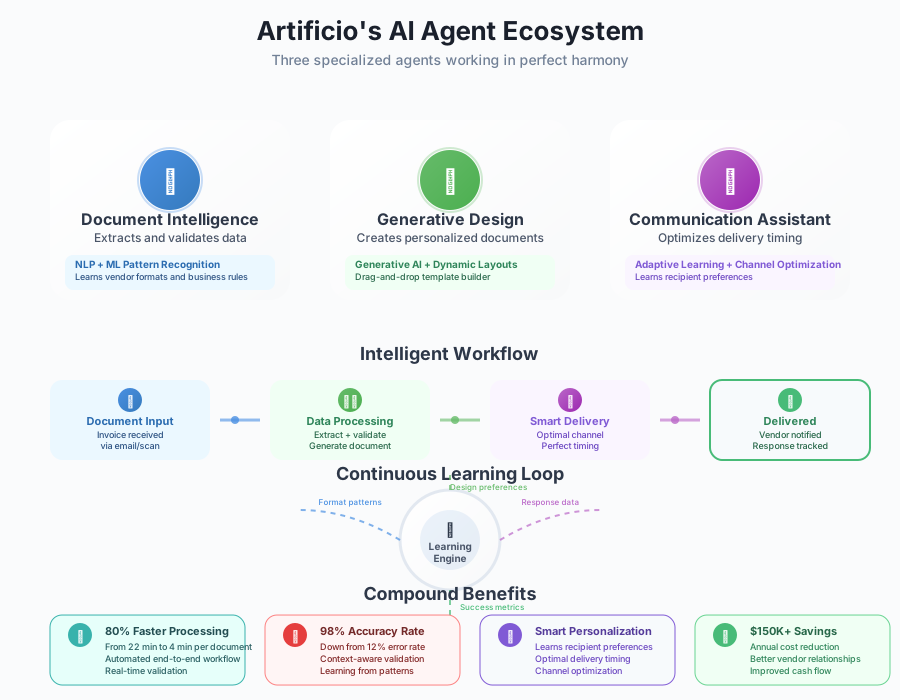
Here's how these three agents work together in a typical workflow:
The Document Intelligence Agent receives a vendor invoice through email, scans, or direct upload. It immediately extracts all relevant data (vendor name, amount, due date, project codes, contact information) while cross-referencing this information against existing vendor databases and purchase order records. The agent validates data accuracy, flags any anomalies, and enriches the extracted information with additional context from business systems.
This validated data flows seamlessly to the Generative Design Agent, which creates a payment notification document tailored specifically for that vendor. The agent accesses the vendor's profile to determine preferred document formats, required compliance information, and communication preferences. It generates a professionally formatted payment notification that includes all necessary details, compliance statements, and personalized messaging based on the vendor relationship history.
The completed document then moves to the Communication Assistant Agent, which determines the optimal delivery strategy. Based on the vendor's communication preferences, response patterns, and the urgency of the payment, it selects appropriate delivery channels and timing. The agent might send an immediate email with the payment notification, schedule a text message reminder three days before the due date, and set up automated follow-up communications if responses aren't received within expected timeframes.
Throughout this entire process, all three agents are learning and adapting. The Document Intelligence Agent refines its understanding of vendor invoice formats. The Generative Design Agent optimizes document layouts based on recipient engagement. The Communication Assistant Agent adjusts delivery strategies based on response rates and vendor feedback.
This integrated approach eliminates the friction points that plague traditional document processing. There are no manual handoffs between systems, no data re-entry between platforms, and no guesswork about delivery preferences. The entire workflow flows smoothly from initial document receipt to delivery confirmation, with each agent contributing specialized expertise while maintaining seamless coordination.
The learning capabilities of each agent also compound over time. As the Document Intelligence Agent becomes more accurate at extracting vendor-specific information, the Generative Design Agent can create more targeted and relevant documents. As the Communication Assistant Agent develops deeper insights into vendor preferences, it can provide feedback to the other agents about which document formats and content types generate the best responses.
To understand the transformative impact of Artificio's three-agent system, let's examine a detailed implementation at Midwest Construction Solutions, a regional contractor that was drowning in invoice processing complexity before adopting AI-powered automation.
Midwest Construction Solutions operates across three states, managing residential developments, commercial buildings, and infrastructure projects simultaneously. With over 300 active subcontractors and suppliers, the company processes more than 500 invoices monthly across dozens of concurrent projects. Each invoice requires careful verification against purchase orders, proper allocation to specific project codes, and timely payment to maintain the vendor relationships that are critical to project success.
Before implementing Artificio's solution, Midwest's accounts payable process was a complex web of manual steps and disconnected systems. Vendor invoices arrived through multiple channels: some via email attachments, others through postal mail, and a few through an outdated vendor portal that most suppliers avoided using. The three-person accounting team would manually sort these invoices, verify details against project records stored in their ERP system, create payment authorizations, and send payment notifications back to vendors using a combination of email templates and phone calls.
This manual process consumed enormous amounts of time and created constant stress for the accounting team. Each invoice required an average of 22 minutes of manual processing time, from initial receipt through final payment notification. Simple mathematical calculations reveal the scope of the problem: 500 invoices per month multiplied by 22 minutes each equals 183 hours of manual work monthly, or more than four full-time workweeks dedicated solely to invoice processing.
The time consumption was just the beginning of the challenges. Payment delays were common, averaging 12 days beyond contracted terms. Vendors frequently called to inquire about payment status, consuming additional administrative time and creating tension in important business relationships. The accounting team spent roughly 40% of their time on reactive problem-solving rather than strategic financial planning or analysis.
Errors were inevitable in such a manual system. Project codes were occasionally assigned incorrectly, leading to inaccurate job costing and project profitability analysis. Vendor contact information became outdated, resulting in failed payment notifications. Due date calculations sometimes included weekends or holidays, causing unnecessary payment delays. These mistakes required time-consuming corrections and often damaged vendor relationships.
The implementation of Artificio's three-agent system transformed this chaotic process into a streamlined, intelligent workflow. The transformation began with the Document Intelligence Agent, which was trained on Midwest's historical invoice data to understand the company's specific vendor formats, project coding systems, and business rules.
When vendor invoices now arrive through any channel, the Document Intelligence Agent immediately processes them with remarkable accuracy. It extracts all relevant data including vendor information, invoice amounts, due dates, project references, and line-item details. But more importantly, it validates this information against Midwest's existing systems. The agent cross-references vendor details against the approved supplier database, verifies purchase order numbers against open commitments, and confirms that project codes align with active job numbers.
The agent's learning capabilities have proven invaluable for handling Midwest's diverse vendor ecosystem. It recognizes that Concrete Supply Co. always includes project addresses in their invoice descriptions, while Steel Fabricators Inc. embeds project codes in their invoice numbers. It understands that certain electrical subcontractors bill on completion milestones rather than delivery dates, requiring different validation logic. This contextual understanding allows the agent to process invoices accurately even when formats vary significantly between vendors.
Once data extraction and validation are complete, the Generative Design Agent creates payment-ready documents tailored specifically for each vendor. For established suppliers with straightforward payment terms, it generates clean, professional payment notifications that include all necessary details: invoice number, amount, due date, project allocation, and contact information for questions. For vendors requiring compliance documentation, it automatically incorporates relevant certificates, lien waivers, or insurance confirmations.
The Generative Design Agent has learned that different vendors have different communication preferences and information needs. Regional suppliers prefer concise payment notifications with prominent due dates and project codes. National suppliers often require detailed remittance information including purchase order numbers and line-item breakdowns. Government contractors need specific compliance language and audit trail documentation. The agent adapts document formats automatically based on vendor profiles and historical preferences.
The Communication Assistant Agent completes the workflow by delivering payment notifications through each vendor's preferred communication channel at optimal times. Through continuous learning from response patterns, it has developed sophisticated profiles of vendor communication preferences. Morning emails work best for office-based suppliers, while afternoon text messages get faster responses from field-based subcontractors. Friday notifications often get delayed responses, while Tuesday and Wednesday communications receive prompt acknowledgments.
The agent also handles escalation scenarios automatically. If a payment notification doesn't receive acknowledgment within expected timeframes, it can send follow-up reminders through alternative channels. For critical suppliers or large payment amounts, it might escalate to phone calls or priority email flags. This proactive approach prevents payment disputes and maintains positive vendor relationships.
The results of this AI-powered transformation have been dramatic. Invoice processing time has decreased by 80%, from an average of 22 minutes per invoice to just 4 minutes of human oversight time. Payment delays have been reduced by 60%, with most vendors now receiving payment notifications within 24 hours of invoice receipt. Error rates have dropped to less than 2%, compared to the previous 12% rate when processing was entirely manual.
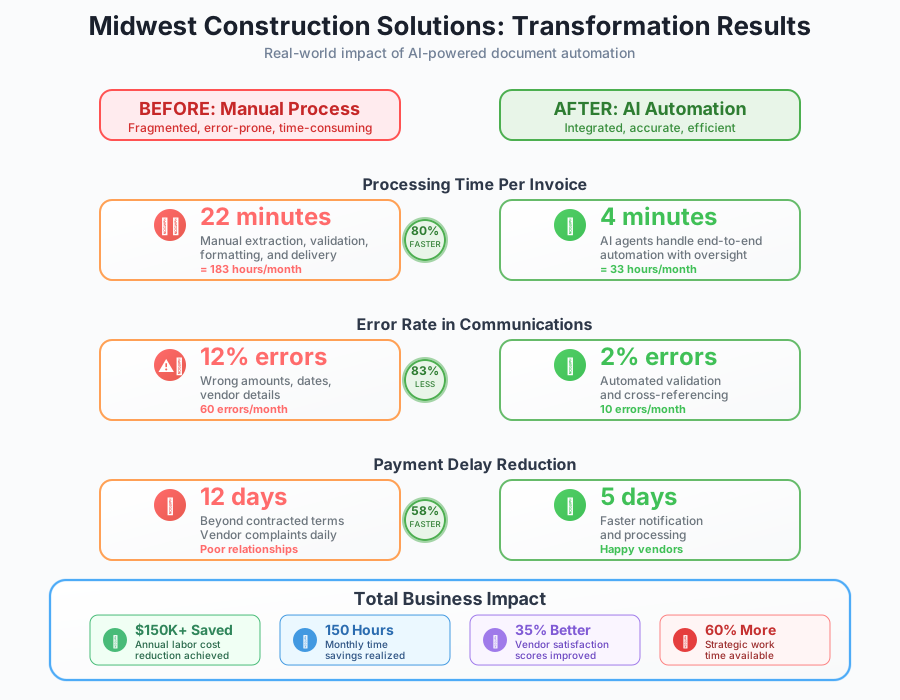
The financial impact extends beyond simple time savings. Faster payment processing has improved vendor relationships, resulting in better pricing on future contracts and priority service during busy construction seasons. Reduced errors mean fewer phone calls and correction processes, freeing the accounting team to focus on cash flow analysis, budget planning, and strategic financial initiatives. The company estimates that the AI automation has saved over $150,000 annually in labor costs while improving vendor satisfaction scores by 35%.
But perhaps most importantly, the system continues to improve over time. Each processed invoice teaches the AI agents more about vendor patterns, optimal communication strategies, and business process refinements. The Document Intelligence Agent becomes more accurate at recognizing vendor-specific formats. The Generative Design Agent develops better templates based on vendor engagement data. The Communication Assistant Agent optimizes delivery timing and methods based on response analytics.
This continuous improvement means that the benefits of AI automation compound over time. What starts as significant time savings evolves into strategic competitive advantages through better vendor relationships, improved cash flow management, and enhanced operational efficiency.
Artificio's technical architecture delivers capabilities that go far beyond traditional document automation solutions. While most competitors focus on single-point solutions like OCR data extraction or template-based document generation, Artificio's integrated three-agent system creates compound advantages that become more valuable over time.
The foundation of Artificio's technical edge lies in its adaptive personalization capabilities. Traditional document automation treats all recipients as identical, using the same templates, delivery methods, and timing for everyone. Artificio's AI agents learn from every interaction, building sophisticated profiles that enable truly personalized communications.
The Communication Assistant Agent tracks dozens of variables for each recipient: response times to different message types, preferred communication channels, optimal send times, subject line preferences, document format preferences, and even seasonal communication patterns. For example, it might learn that a particular vendor responds 40% faster to text message notifications than emails, prefers morning communications over afternoon sends, and typically takes longer to respond during their busy season in Q4.
This personalization extends beyond simple delivery preferences. The Generative Design Agent learns which document layouts, information hierarchies, and visual elements generate the best responses from different recipient types. It might discover that construction subcontractors respond better to invoices with project photos included, while professional service vendors prefer clean, minimalist layouts with detailed line items. These insights automatically influence future document generation without any manual template adjustments.
The adaptive learning goes deeper than individual preferences. The AI agents identify patterns across similar recipient types, industries, and business relationships. Knowledge gained from optimizing communications with one construction supplier can improve interactions with similar vendors. Insights about effective compliance documentation from one industry vertical can benefit related business sectors.
Compliance guardrails represent another significant technical advantage. Many businesses struggle to ensure that generated documents include all necessary legal disclaimers, regulatory information, and compliance statements. Manual processes often miss required elements or include outdated language. Artificio's Compliance Guardian Agent automatically embeds appropriate legal and regulatory content based on document type, recipient industry, and applicable regulations.
For healthcare-related communications, the agent ensures HIPAA compliance language is included. For financial documents, it incorporates necessary SEC disclaimers or banking regulations. For international vendors, it adds appropriate cross-border payment information and tax documentation. The agent stays updated with changing regulations and automatically adjusts compliance content as requirements evolve.
This automated compliance capability is particularly valuable for businesses operating in heavily regulated industries or dealing with complex multi-jurisdictional requirements. Rather than relying on human memory or manual checklists, the compliance requirements are built into the AI system and applied consistently to every relevant document.
Exception handling capabilities distinguish Artificio from simpler automation solutions. Most document automation systems break down when they encounter unexpected situations: unusual document formats, delivery failures, or missing information. When these exceptions occur, the entire process typically falls back to manual intervention.
Artificio's Exception Resolution Agent is specifically designed to handle these challenging scenarios. When document extraction encounters an unusual format, the agent can adapt its recognition patterns or route the document for minimal human review with specific guidance about the problematic elements. When delivery attempts fail, the agent automatically tries alternative communication channels or contact methods based on the recipient's profile.
The Exception Resolution Agent also handles more complex business logic exceptions. If a vendor invoice references a purchase order that doesn't exist in the ERP system, the agent can search for similar PO numbers, check for recent amendments, or flag the discrepancy for human review with specific context about the likely issue. If payment terms seem unusual compared to historical patterns, the agent can verify against contract terms or highlight the variance for approval.
These exception handling capabilities ensure that AI automation doesn't break down when facing real-world business complexity. Instead of requiring perfect data and ideal conditions, Artificio's system gracefully handles the messy, inconsistent, and constantly changing nature of business documents and communications.
The technical architecture also enables sophisticated workflow orchestration. Unlike simple linear automation that follows predetermined steps, Artificio's agents can adapt their workflows based on document content, recipient characteristics, and business context. An urgent payment notification might bypass normal approval processes, while a large invoice might trigger additional validation steps automatically.
The agents communicate with each other throughout the workflow, sharing context and insights that inform decision-making. When the Document Intelligence Agent identifies an invoice from a new vendor, it alerts the Generative Design Agent to use a more detailed template that includes additional contact information and payment instructions. When the Communication Assistant Agent notices that a vendor hasn't responded to recent communications, it can inform the Generative Design Agent to include more prominent contact information in future documents.
This inter-agent communication creates emergent intelligence where the system as a whole becomes smarter than the sum of its individual components. Each agent's specialized expertise informs and enhances the capabilities of the others, creating compound advantages that grow over time.
Integration capabilities provide another technical advantage. Rather than requiring businesses to replace existing systems, Artificio's platform integrates seamlessly with popular ERP, CRM, and accounting platforms. The Document Intelligence Agent can pull validation data from SAP, QuickBooks, or Salesforce. The Generative Design Agent can incorporate branding assets from marketing platforms. The Communication Assistant Agent can sync with Outlook, Gmail, or specialized communication tools.
These integrations aren't simple data dumps. The AI agents understand the context and structure of different business systems, enabling sophisticated cross-platform workflows. An invoice processed through Artificio can automatically update payment status in the ERP system, trigger workflow approvals in the accounting platform, and schedule follow-up communications in the CRM system.
Implementing Artificio's AI-powered document automation doesn't require massive system overhauls or months of complex integration work. The platform is designed for rapid deployment with immediate value, while providing sophisticated capabilities that grow with your business needs. The implementation follows a strategic three-step approach that minimizes disruption while maximizing early wins.
The first step involves uploading your existing documents to train the Document Intelligence Agent. This isn't simply scanning old files into a database. Instead, you're teaching the AI agent to understand your specific business patterns, vendor relationships, and document workflows.
Start by gathering representative samples of your most common document types. For invoice processing, collect 200-300 recent vendor invoices that showcase the variety of formats, vendors, and business scenarios your organization handles regularly. Include invoices from your largest suppliers, your most frequent vendors, and a sampling of occasional or one-time suppliers. Don't limit yourself to perfect examples. Include problematic invoices that typically require manual intervention: handwritten additions, unusual formats, or documents with poor scan quality.
The Document Intelligence Agent analyzes these sample documents to understand your vendor ecosystem and business rules. It learns that your company uses specific project coding formats, recognizes your approved vendor list, and understands your purchase order numbering systems. It identifies patterns in how different vendors structure their invoices and learns to extract relevant information even when formats vary significantly.
During this training phase, provide context about your business processes. If certain vendors require special handling (net 15 terms instead of standard net 30, mandatory project codes, or specific approval workflows), document these requirements. The AI agent incorporates this business logic into its processing rules, ensuring that automated workflows respect your established procedures.
The training process typically takes 2-3 business days for the AI agent to process and learn from your document samples. During this time, the agent builds knowledge bases specific to your business: vendor recognition patterns, document format templates, validation rules, and exception handling procedures. The more comprehensive your training data, the more accurate and effective the agent becomes at processing new documents.
Once the Document Intelligence Agent understands your documents and business rules, the next step involves creating output templates using the Generative Design Agent's intuitive drag-and-drop interface. This step transforms the extracted data into professional, personalized communications that reflect your brand and meet your business requirements.
The template creation process is designed for business users, not technical developers. You don't need coding skills, graphic design expertise, or complex software training. The drag-and-drop interface provides pre-built components that you can arrange visually: data fields, text blocks, images, tables, signature areas, and formatting elements.
Start with your most common document type, typically payment notifications or invoice acknowledgments. The interface displays a blank canvas where you can drag data fields extracted by the Document Intelligence Agent: vendor name, invoice amount, due date, project codes, and contact information. These fields automatically populate with actual data during document generation, ensuring accuracy and consistency.
Add your company branding elements: logos, color schemes, fonts, and standard footer information. The Generative Design Agent maintains brand consistency across all generated documents while allowing customization for different document types or recipient categories. You might use formal letterhead for external vendor communications while adopting more casual formatting for internal notifications.
Create multiple template variations for different scenarios. Design a standard payment notification template for routine transactions, a detailed template for complex invoices requiring itemized breakdowns, and an urgent template for time-sensitive payments. The AI system automatically selects the appropriate template based on document characteristics and business rules.
The template creation process includes conditional logic capabilities. You can specify that certain information should only appear under specific conditions: compliance disclaimers for regulated vendors, detailed project breakdowns for construction suppliers, or special payment instructions for international transactions. The Generative Design Agent applies this logic automatically during document generation.
Test your templates with real data from your training documents. The system allows you to preview how generated documents will look with actual vendor information, ensuring that layouts accommodate varying data lengths and formats. Adjust spacing, font sizes, and field positions based on these previews to create professional, readable documents under all conditions.
The final implementation step involves configuring the Communication Assistant Agent to deliver your generated documents through appropriate channels with optimal timing. This step transforms your document automation from simple generation to intelligent communication that adapts to recipient preferences and business requirements.
Begin by defining your standard delivery rules. Specify default communication channels for different document types: email for routine payment notifications, text messages for urgent reminders, and phone calls for high-value or problematic transactions. Establish timing rules such as "Send invoice reminders 3 days before due date" or "Deliver payment confirmations within 4 hours of processing."
The Communication Assistant Agent learns from every delivery attempt and recipient response. Initially, it follows your configured rules, but over time it adapts based on actual performance data. If text message reminders consistently generate faster responses than emails for construction subcontractors, the agent gradually shifts toward text messaging for that recipient category.
Configure escalation procedures for non-responsive communications. Define what happens when initial notifications don't receive acknowledgment within expected timeframes. The agent might send follow-up messages through alternative channels, escalate to supervisory personnel, or flag accounts for manual intervention. These escalation rules ensure that important communications don't fall through cracks.
Set up vendor preference learning. The Communication Assistant Agent tracks which vendors prefer morning versus afternoon communications, email versus text messages, and detailed versus summary information. It incorporates these preferences into future communications automatically, personalizing the experience for each business relationship.
Configure integration touchpoints with your existing business systems. Define how document delivery status updates should flow back into your ERP or accounting platforms. Specify when successful deliveries should trigger workflow approvals, update payment schedules, or generate follow-up tasks for team members.
Establish compliance and audit requirements. Specify retention periods for generated documents and delivery confirmations. Define what information should be logged for audit purposes and how delivery failures should be documented. The system maintains comprehensive records of all document generation and delivery activities for business and regulatory requirements.
The implementation process typically requires 2-3 weeks from initial document upload to full production deployment. The first week involves training the Document Intelligence Agent and creating initial templates. The second week focuses on testing and refining templates with real data. The third week involves configuring delivery rules and conducting pilot testing with a small subset of vendors or documents.
Throughout implementation, Artificio provides support and guidance to ensure successful deployment. The platform includes analytics dashboards that track processing accuracy, delivery success rates, and system performance. These metrics help identify optimization opportunities and measure the business impact of AI automation.
Once deployed, the system requires minimal ongoing maintenance. The AI agents continuously learn and improve from each processed document and delivery attempt. Template updates can be made easily through the drag-and-drop interface. Delivery rules can be adjusted based on changing business requirements or vendor feedback.
The result is a fully automated document processing workflow that handles the vast majority of routine transactions while gracefully escalating exceptions for human intervention. Business teams can focus on strategic activities while the AI system manages the time-consuming administrative tasks that previously consumed significant resources.
Regular performance reviews help optimize system performance and identify additional automation opportunities. Monthly analytics reports show processing volumes, accuracy rates, delivery success percentages, and time savings achieved. These metrics demonstrate ROI and help identify areas where additional AI capabilities might provide value.
The implementation approach ensures that businesses achieve immediate value while building towards more sophisticated automation capabilities. The system grows more valuable over time as the AI agents learn from increasing volumes of processed documents and delivery interactions. What starts as significant time savings evolves into strategic competitive advantages through improved vendor relationships, enhanced cash flow management, and superior operational efficiency.
The transformation from manual document processing to AI-powered automation represents more than just operational efficiency. It's a fundamental shift in how businesses communicate with vendors, customers, and partners. When documents are generated intelligently, personalized automatically, and delivered optimally, they become strategic tools for relationship building rather than administrative necessities.
Artificio's three-agent architecture demonstrates that the future of business automation lies not in replacing human judgment but in amplifying human capabilities. The Document Intelligence Agent handles the tedious work of data extraction and validation. The Generative Design Agent creates professional, personalized communications at scale. The Communication Assistant Agent optimizes delivery timing and methods based on recipient preferences.
Together, these AI agents create compound advantages that grow stronger over time. Every processed document teaches the system more about vendor patterns, optimal communication strategies, and business process improvements. What begins as significant time savings evolves into strategic competitive advantages through better relationships, improved cash flow, and enhanced operational excellence.
The businesses that adopt AI-powered document automation today aren't just solving current inefficiencies. They're building capabilities that will define competitive advantage in an increasingly digital business environment. As AI technology continues advancing, the gap between early adopters and laggards will only widen.
The question isn't whether AI will transform document processing. The question is whether your business will lead or follow that transformation.

Head IT Operations - Co Founder of Artificio
See it in your SAP environment
Bring us a document, a process, or a bottleneck. We'll show how Artificio captures, validates, and posts into SAP — then scale from there.
Security & compliance
ISO 27001:2013 certified, SOC 2 Type 2 compliant, GDPR and HIPAA ready. Every agent action is logged, auditable, and runs in isolated environments.