

Blog
AI Agents for Accounts Receivable Management
Discover how AI agents are revolutionizing accounts receivable. Automate tasks, predict payments, and optimize cash flow.

Blog
Discover how AI agents are revolutionizing accounts receivable. Automate tasks, predict payments, and optimize cash flow.
In today's rapidly evolving business landscape, financial operations are undergoing a profound transformation driven by artificial intelligence (AI). Among these operations, accounts receivable (AR) management a critical function that directly impacts organizational cash flow and financial health stands to benefit significantly from AI-powered automation. This comprehensive analysis examines how AI agents are fundamentally reshaping AR processes, delivering unprecedented levels of efficiency, accuracy, and strategic insight to finance departments across industries.
The traditional accounts receivable function has long been characterized by manual, repetitive tasks that consume valuable human resources while introducing the potential for error and inefficiency. Finance professionals regularly spend hours tracking outstanding invoices, sending payment reminders, reconciling payments with invoices, and resolving disputes. These labor-intensive processes not only reduce operational efficiency but also limit the strategic potential of finance teams to contribute more meaningfully to organizational objectives.
The emergence of sophisticated AI agents represents a paradigm shift in how businesses approach accounts receivable management. These intelligent systems leverage advanced algorithms, machine learning capabilities, and natural language processing to automate routine tasks, enhance decision-making processes, and provide actionable insights that optimize cash flow. As shown in Figure 1, the implementation of AI in accounts receivable creates a virtuous cycle of improved efficiency, reduced costs, and enhanced financial performance.
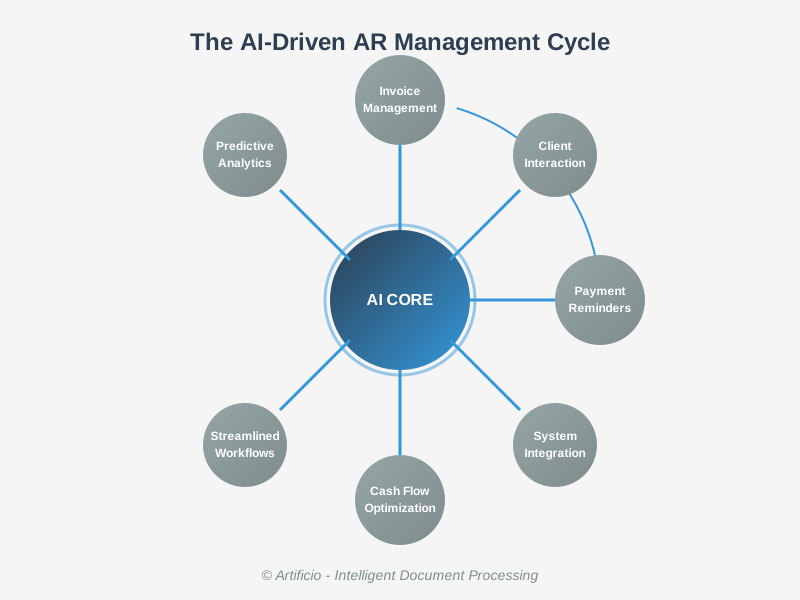
The accounts receivable function has evolved significantly over the decades. Initially characterized by entirely manual processes involving paper invoices and physical filing systems, AR management gradually transitioned to basic digital systems that offered limited automation capabilities. Early digitization efforts focused primarily on digitizing invoices and maintaining electronic records rather than fundamentally transforming the underlying processes.
The next evolutionary stage saw the introduction of Enterprise Resource Planning (ERP) systems and specialized AR modules that provided more comprehensive digital management capabilities. These systems offered basic automation features such as scheduled reminder emails and payment tracking, representing an improvement over purely manual approaches but still requiring significant human oversight and intervention.
The current AI revolution marks the third major evolutionary phase in accounts receivable management. Unlike previous iterations that merely digitized existing processes, AI fundamentally reimagines the entire AR function. Machine learning algorithms can now analyze vast quantities of data to identify patterns, predict customer payment behaviors, and continuously improve their performance through adaptive learning mechanisms. Natural language processing capabilities enable AI agents to interact with customers, understand context-dependent communications, and respond appropriately to inquiries or disputes.
This evolution has not occurred in isolation but rather reflects broader technological trends across business operations. The convergence of big data analytics, cloud computing, artificial intelligence, and automation technologies has created a fertile environment for transformative innovation in financial operations. Organizations that embrace these technologies gain significant competitive advantages through improved operational efficiency, enhanced cash flow management, and more strategic deployment of human capital.
At the core of AI-driven accounts receivable transformation is the automation of invoice tracking and management processes. Traditional approaches to invoice management involve manual creation, distribution, and tracking of invoices a time-consuming process prone to human error and inefficiencies. AI agents fundamentally alter this paradigm by introducing intelligent automation throughout the invoice lifecycle.
Modern AI systems can automatically generate invoices based on predefined templates and business rules, ensuring consistency and accuracy across all customer communications. These systems can extract relevant information from various sources, such as contracts, purchase orders, and delivery confirmations, to populate invoices with the correct line items, quantities, prices, and payment terms. This automated approach significantly reduces the potential for human error while accelerating the invoice creation process.
Once invoices are generated, AI agents continuously monitor their status throughout the payment cycle. These systems maintain real-time visibility of all outstanding invoices, categorizing them by age, amount, customer, and other relevant parameters. This comprehensive tracking enables finance teams to maintain a clear overview of the organization's receivables position at any given moment, facilitating more effective cash flow management and financial planning.
The true power of AI in invoice management becomes apparent when considering its predictive capabilities. By analyzing historical payment data, customer behavior patterns, and external factors such as seasonal trends or economic indicators, AI systems can predict which invoices are likely to be paid on time and which may require additional follow-up. This predictive intelligence allows finance teams to prioritize their collection efforts more effectively, focusing resources on high-risk accounts while maintaining appropriate relationships with reliable customers.
Furthermore, AI agents can automatically update invoice records when payments are received, eliminating the need for manual reconciliation processes. These systems can analyze incoming payments, match them to the corresponding invoices, and update the AR ledger accordingly. This automated reconciliation process significantly reduces the administrative burden on finance teams while minimizing the potential for errors or discrepancies in financial records.
The process of managing payment reminders and collections represents another critical area where AI agents are delivering transformative improvements. Traditional approaches to payment reminders often involve standardized, time-based processes that fail to account for individual customer characteristics or contextual factors. Such approaches can be ineffective and may potentially damage customer relationships through inappropriate or poorly timed communications.
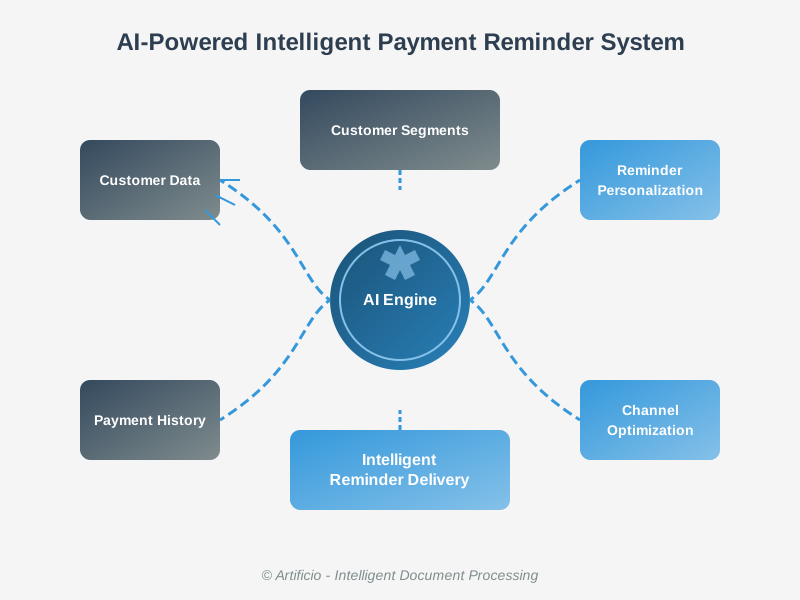
AI-powered systems introduce a level of intelligence and personalization to payment reminders that was previously impossible to achieve at scale. These sophisticated systems analyze extensive customer data, including historical payment patterns, communication preferences, and responsiveness to previous reminders, to determine the optimal timing, frequency, and communication channel for each reminder. This tailored approach significantly improves the effectiveness of payment reminders while maintaining positive customer relationships.
The intelligence of these systems extends beyond simple timing optimizations. AI agents can dynamically adjust the content and tone of payment reminders based on various factors, including the customer's payment history, the age of the receivable, and the strategic importance of the customer relationship. For instance, a first-time customer with a slightly overdue invoice might receive a gentle, informative reminder, while a long-standing customer with a significantly overdue payment might receive a more direct communication that references their established relationship and payment history.
Figure 2 illustrates the intelligent payment reminder system, showcasing how AI agents analyze multiple data points to create personalized collection strategies for each customer.
The collections process similarly benefits from AI-driven intelligence. Traditional collections approaches often rely on standardized escalation procedures that may not account for the nuances of individual customer situations. AI systems can identify which accounts require more aggressive collection efforts and which might benefit from more flexible arrangements. This nuanced approach maximizes recovery rates while minimizing the negative impact on valuable customer relationships.
Furthermore, AI agents can automatically implement dunning procedures the systematic process of communicating with customers to collect overdue payments. These systems can manage the entire dunning workflow, from initial reminders to final notices, adjusting the approach based on customer responses and payment behaviors. This automated yet intelligent approach ensures consistent and effective collections processes while reducing the administrative burden on finance teams.
The impact of AI-driven payment reminders and collections extends beyond immediate operational efficiencies. By optimizing these processes, organizations can significantly reduce their days sales outstanding (DSO) a critical metric that measures the average number of days it takes to collect payment after a sale. Reduced DSO directly improves cash flow, enhances working capital efficiency, and contributes to overall financial stability and growth potential.
The extraction and matching of payment data represent one of the most labor-intensive aspects of traditional accounts receivable management. Finance teams often spend hours manually reviewing remittance advice, bank statements, and payment notifications to extract relevant information and match payments to corresponding invoices. This process is not only time-consuming but also prone to human error, potentially leading to reconciliation discrepancies and delayed payment processing.
AI agents are transforming this aspect of accounts receivable management through advanced data extraction and matching capabilities. These intelligent systems can automatically scan and analyze various payment-related documents, including remittance emails, PDF attachments, bank statements, and electronic payment notifications. Using techniques such as optical character recognition (OCR), natural language processing (NLP), and machine learning, AI systems can extract critical information from these documents with remarkable accuracy.
The extracted data typically includes payment details such as amounts, dates, reference numbers, and invoice identifiers. AI systems can recognize and interpret this information regardless of format variability, document structure, or language nuances. This capability is particularly valuable when dealing with international customers who may provide remittance information in different formats or languages.
Once the payment data is extracted, AI agents can automatically match payments to the corresponding invoices based on various parameters, including invoice numbers, amounts, dates, and customer identifiers. This matching process is significantly more sophisticated than simple one-to-one matching, as it can handle complex scenarios such as partial payments, payments covering multiple invoices, or payments with discrepancies in amounts or references.
The intelligence of these systems extends beyond basic matching capabilities. AI agents can learn from historical matching patterns and continuously improve their accuracy over time. They can also identify and flag unusual or potentially problematic matches for human review, ensuring that exceptions are appropriately handled while routine matching proceeds automatically.
The impact of automated data extraction and matching on accounts receivable operations is substantial. Finance teams can reallocate their time from manual data processing to more strategic activities, such as customer relationship management, financial analysis, and strategic planning. Additionally, the improved accuracy and speed of payment processing enhance cash flow management and financial reporting accuracy.
While the operational improvements delivered by AI in accounts receivable management are significant, the strategic impact on organizational cash flow represents perhaps the most compelling business case for adoption. Cash flow optimization is a critical strategic imperative for organizations of all sizes, directly affecting their ability to invest, grow, and weather economic uncertainties. AI agents contribute to this strategic objective through multiple mechanisms that collectively transform the cash flow management paradigm.
At the most fundamental level, AI-driven automation accelerates the entire cash conversion cycle. By streamlining invoice generation, distribution, and collection processes, organizations can significantly reduce the time between service delivery and payment receipt. This acceleration directly improves cash flow dynamics, enhancing working capital efficiency and reducing the need for external financing to support operations.
The predictive capabilities of AI systems further enhance cash flow optimization by enabling more accurate forecasting. Traditional cash flow forecasting often relies on historical averages and simplistic projections that fail to account for complex variables such as customer-specific payment patterns, seasonal fluctuations, or economic indicators. AI systems can analyze vast datasets encompassing these variables to generate more sophisticated and accurate cash flow forecasts. These enhanced forecasts enable finance teams to make more informed decisions regarding investments, expenditures, and financing needs.
AI agents also contribute to cash flow optimization through more effective management of credit risks. By analyzing customer payment histories, financial information, and external credit data, these systems can generate more accurate credit risk assessments for both existing and potential customers. This improved risk assessment enables organizations to make more informed decisions regarding credit limits, payment terms, and collection strategies, ultimately reducing bad debt expenses and improving overall cash flow.
The automation of discount management represents another avenue through which AI enhances cash flow optimization. Many organizations offer early payment discounts to incentivize customers to pay promptly, but the manual administration of these programs can be complex and error-prone. AI systems can automatically calculate appropriate discount amounts based on payment timing, apply them correctly to customer accounts, and analyze the effectiveness of different discount structures in accelerating payments. This intelligent approach to discount management improves cash flow while ensuring that discount programs deliver positive financial returns.
Perhaps most significantly, AI enables a shift from reactive to proactive cash flow management. Traditional approaches to accounts receivable often focus on managing delinquent accounts after they become problematic. AI systems enable a more proactive approach by identifying potential payment issues before they occur and implementing preventive measures. For instance, if an AI system detects that a customer's payment pattern is gradually deteriorating, it can trigger proactive outreach to address potential issues before they impact cash flow.
The cumulative effect of these AI-driven improvements is a more robust, predictable, and optimized cash flow position. Organizations that leverage AI in their accounts receivable function can achieve reduced days sales outstanding (DSO), improved working capital efficiency, and enhanced overall financial performance. These improvements directly contribute to organizational resilience, growth capacity, and competitive advantage in increasingly dynamic business environments.
The application of predictive analytics represents one of the most powerful ways in which AI is transforming accounts receivable management. While traditional AR processes focus primarily on historical data and current status, AI-driven predictive analytics enables organizations to anticipate future payment behaviors, identify potential issues before they materialize, and proactively manage their receivables portfolio.
The foundation of predictive analytics in accounts receivable lies in the AI system's ability to analyze vast quantities of historical payment data and identify meaningful patterns and correlations. These systems can process information from multiple sources, including internal transaction data, customer interaction records, economic indicators, and industry-specific factors. By analyzing these diverse data points, AI algorithms can identify complex patterns that would be virtually impossible for human analysts to discern.
One of the most valuable applications of predictive analytics in accounts receivable is the identification of high-risk accounts. By analyzing historical payment patterns, customer financial data, and external risk indicators, AI systems can predict which customers are most likely to delay payments or default on their obligations. This predictive capability enables finance teams to implement targeted strategies for these high-risk accounts, such as adjusted payment terms, enhanced monitoring, or proactive outreach.
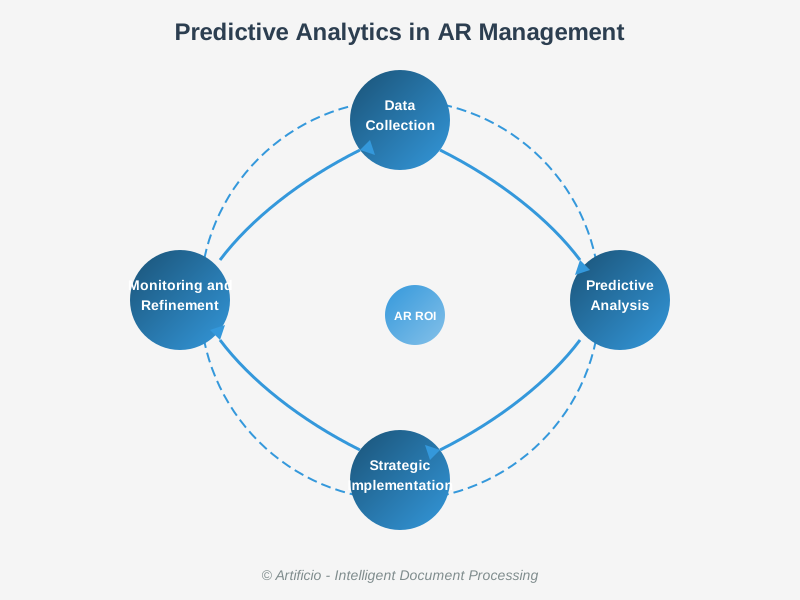
Figure 3 demonstrates how predictive analytics in accounts receivable management creates a continuous improvement cycle, allowing organizations to refine their strategies based on AI-generated insights.
The power of predictive analytics extends beyond risk management to opportunity identification. AI systems can analyze customer payment behaviors to identify opportunities for optimizing payment terms, discount structures, or collection strategies. For instance, if the system detects that certain customers consistently pay earlier than required, it might suggest adjusting their payment terms to optimize cash flow or offering incentives for continued prompt payment.
These predictive capabilities also enhance financial forecasting and planning. By generating more accurate predictions of future cash inflows, AI systems enable finance teams to develop more reliable financial projections, budget more effectively, and make more informed decisions regarding investments, financing, and resource allocation. This improved forecasting capability is particularly valuable in industries with complex receivables portfolios or significant seasonal fluctuations.
The implementation of predictive analytics in accounts receivable also facilitates continuous process improvement. By analyzing the effectiveness of different collection strategies, communication approaches, and payment terms, AI systems can identify which tactics yield the best results for different customer segments or situations. This ongoing analysis enables organizations to refine their accounts receivable processes continuously, maximizing efficiency and effectiveness over time.
Furthermore, predictive analytics can identify potential systemic issues in the broader order-to-cash process. By analyzing patterns in disputes, delays, or customer inquiries, AI systems can highlight recurring problems that might indicate issues in pricing, contract management, delivery, or other operational areas. This cross-functional insight helps organizations address root causes rather than merely treating symptoms, leading to more sustainable improvements in accounts receivable performance.
The integration of predictive analytics into accounts receivable management represents a fundamental shift from reactive to proactive financial management. Organizations that leverage these capabilities gain significant advantages in terms of reduced risk, improved cash flow, enhanced decision-making, and strategic resource allocation. As these AI systems continue to evolve and improve, their predictive capabilities will become increasingly sophisticated, further enhancing their value in accounts receivable management.
The transformation of accounts receivable through AI extends beyond internal processes to significantly impact client interactions and relationships. Traditional accounts receivable functions often focus primarily on operational efficiency and financial outcomes, with customer experience considerations taking a secondary role. AI-driven approaches enable organizations to simultaneously improve operational performance and enhance the customer experience, creating a win-win scenario that contributes to both financial performance and customer satisfaction.
At the most basic level, AI agents enhance customer interactions by providing more responsive and consistent communication. These systems can automatically respond to routine customer inquiries regarding invoice status, payment confirmation, or account balances without requiring human intervention. This immediate responsiveness improves customer satisfaction while reducing the administrative burden on finance teams.
The intelligence of these systems extends beyond simple automated responses to more sophisticated interactions. Advanced AI agents can engage with customers through multiple channels, including email, chat, and voice, providing a seamless omnichannel experience. These systems can understand context, recognize customer intent, and respond appropriately, creating interactions that feel natural and personalized rather than automated and generic.
Personalization represents another key dimension of AI-enhanced customer interactions. By analyzing customer data and interaction history, AI systems can tailor their communications to individual preferences and behaviors. This personalization might involve adjusting the tone, format, or frequency of communications based on customer preferences, or customizing payment options and terms to align with customer needs and behaviors.
The proactive nature of AI-driven customer interactions further enhances the customer experience. Rather than waiting for customers to initiate contact regarding payment issues or inquiries, AI systems can proactively reach out with relevant information, such as upcoming payment reminders, confirmations of received payments, or notifications of potential discrepancies. This proactive approach demonstrates attentiveness and professionalism while preventing potential issues before they arise.
AI systems also enhance dispute resolution from a customer experience perspective. When disputes arise, these systems can ensure that they are addressed promptly, consistently, and fairly, maintaining positive customer relationships even in potentially contentious situations. The ability to resolve disputes quickly and effectively contributes significantly to customer satisfaction and loyalty.
Perhaps most importantly, AI-driven accounts receivable processes demonstrate respect for customers' time and preferences. By streamlining payment processes, providing multiple payment options, and reducing the need for customer effort in managing their accounts, these systems create a more positive and frictionless experience. This improved experience can strengthen customer relationships, potentially leading to increased customer retention and expanded business opportunities.
The transformation of customer interactions through AI ultimately contributes to both financial performance and relationship value. Organizations that leverage AI in their accounts receivable function can simultaneously improve operational efficiency, enhance cash flow, and strengthen customer relationships a powerful combination that supports sustainable business growth and competitive advantage.
The effective implementation of AI in accounts receivable management requires seamless integration with existing financial systems and broader business infrastructure. Standalone AI solutions, while potentially valuable, cannot deliver their full potential without integration into the organization's ecosystem of financial, operational, and customer management systems. This integration challenge represents both a significant consideration for implementation and a crucial enabler of comprehensive transformation.
At the most fundamental level, AI systems must integrate effectively with core financial systems, including accounting software, ERP platforms, and banking systems. These integrations ensure that the AI has access to accurate and up-to-date financial data, such as invoice details, customer account information, and payment records. Equally important, these integrations enable the AI to update financial records automatically as it processes payments, resolves disputes, or implements other actions.
Beyond core financial systems, integration with customer relationship management (CRM) platforms is essential for comprehensive accounts receivable intelligence. CRM systems contain valuable data regarding customer relationships, communication histories, and strategic account priorities. By integrating with these systems, AI agents can incorporate relationship context into their decision-making processes, ensuring that accounts receivable activities align with broader customer relationship strategies.
Contract management systems represent another critical integration point for AI-driven accounts receivable. These systems contain essential information regarding payment terms, service level agreements, and contractual obligations. Integration with contract management platforms enables AI systems to ensure that accounts receivable processes align with contractual requirements and to identify potential discrepancies between invoicing practices and contractual terms.
Digital communication platforms, including email systems, customer portals, and messaging platforms, must also be integrated to enable seamless customer interactions. These integrations allow AI agents to communicate with customers through their preferred channels, access communication histories, and maintain consistent messaging across all touchpoints. This omnichannel integration enhances the customer experience while ensuring comprehensive visibility of all customer interactions.
Data analytics platforms represent a final critical integration point for AI-driven accounts receivable. These systems provide the analytical capabilities and visualization tools needed to translate AI insights into actionable business intelligence. By integrating with these platforms, AI systems can contribute their receivables data and insights to broader financial analytics, enabling more comprehensive financial planning and performance management.
The implementation of these integrations presents both technical and organizational challenges. From a technical perspective, organizations must address issues such as data format compatibility, API availability, authentication mechanisms, and performance optimization. From an organizational perspective, the implementation requires collaboration across finance, IT, customer service, and other functional areas, necessitating effective change management and cross-functional governance.
Despite these challenges, the value of comprehensive integration is substantial. Fully integrated AI systems can deliver a unified view of accounts receivable across the organization, enabling more informed decision-making and more effective process management. This integration also facilitates the flow of information between departments, enhancing cross-functional collaboration and breaking down traditional silos between finance, sales, customer service, and other areas.
Furthermore, comprehensive integration enables what might be termed "intelligent automation" automation that is not merely mechanical but adaptive and context-aware. By accessing data from multiple systems, AI agents can make more informed decisions regarding payment processing, customer communications, and exception handling, delivering more effective outcomes than would be possible with isolated automation capabilities.
The cumulative impact of AI on accounts receivable extends beyond specific functional improvements to a fundamental redefinition of financial workflows and operational models. Traditional accounts receivable workflows are typically linear, sequential, and heavily dependent on human processing at multiple stages. AI-driven approaches enable more dynamic, parallel, and intelligent workflows that fundamentally transform how finance teams operate and contribute to organizational success.
One of the most significant workflow transformations involves the shift from batch processing to continuous processing. Traditional accounts receivable operations often revolve around periodic batch processes, such as weekly invoice generations, monthly statement distributions, or scheduled payment applications. AI systems enable a more continuous approach, processing transactions, updates, and communications in real-time as they occur. This continuous processing accelerates the entire cash conversion cycle while providing more timely visibility into receivables status.
The transformation of exception handling represents another fundamental workflow change. In traditional models, exceptions such as payment discrepancies, disputed invoices, or unusual customer requests typically require manual intervention, often involving multiple team members and sequential approvals. AI systems can handle many exceptions automatically, applying business rules and learning from historical patterns to resolve routine issues without human intervention. More complex exceptions can be routed directly to the appropriate specialists, along with relevant context and suggested resolutions, streamlining the entire exception management process.
The redefinition of roles and responsibilities within finance teams represents perhaps the most profound workflow transformation. As AI systems assume responsibility for routine transaction processing, data entry, and basic customer interactions, finance professionals can focus on higher-value activities such as strategic analysis, relationship management, and process optimization. This shift not only improves operational efficiency but also enhances job satisfaction and career development opportunities for finance team members.
The transformation of information flows further contributes to workflow optimization. Traditional accounts receivable processes often suffer from information silos and delayed reporting, with key stakeholders receiving updates on receivables status only through periodic reports or inquiries. AI systems enable more democratic access to receivables information, with real-time dashboards, automated alerts, and self-service analytics providing stakeholders with immediate visibility into receivables performance. This enhanced information flow improves decision-making across the organization, from front-line collection specialists to senior financial executives.
Performance management approaches similarly evolve in AI-driven environments. Traditional performance metrics for accounts receivable often focus primarily on outcomes such as days sales outstanding (DSO) or collection effectiveness, with limited visibility into the specific activities and decisions that drive these outcomes. AI systems enable more granular and comprehensive performance measurement, tracking not only outcomes but also process efficiency, decision quality, and customer experience measures. This enhanced performance visibility supports more effective management and continuous improvement.
The redefinition of accounts receivable workflows ultimately contributes to a more strategic role for the finance function. By automating routine operations, enhancing decision intelligence, and improving information access, AI enables finance teams to shift their focus from transaction processing to strategic financial management. This elevated role enhances the finance function's contribution to organizational success while creating more fulfilling and impactful roles for finance professionals.
The transformation of accounts receivable through artificial intelligence represents not merely an incremental improvement in financial operations but a fundamental reimagining of how organizations manage their receivables portfolios and customer relationships. The capabilities discussed throughout this analysis from automated invoice management to predictive analytics, from intelligent dispute resolution to seamless system integration collectively create a new paradigm for accounts receivable management that delivers unprecedented levels of efficiency, intelligence, and strategic value.
As organizations consider the implementation of AI in their accounts receivable functions, several key considerations emerge. First, the transformation is fundamentally strategic rather than merely technological. While the technical capabilities of AI systems are impressive, their true value emerges from their alignment with broader financial strategies and organizational objectives. Organizations must approach AI implementation not as an isolated technological initiative but as a strategic transformation of their financial operations.
Second, the human dimension remains critical even in highly automated environments. The most successful implementations of AI in accounts receivable involve not the replacement of human capabilities but their augmentation and redirection. Human expertise, judgment, and relationship skills remain essential, particularly for complex situations, strategic decisions, and high-value customer interactions. The optimal approach involves a thoughtful division of responsibilities between AI systems and human professionals, leveraging the strengths of each.
Third, the transformation journey is continuous rather than discrete. Organizations should approach AI implementation as an ongoing evolution rather than a one-time project. Initial implementations might focus on basic automation capabilities, with more advanced features such as predictive analytics and intelligent customer interactions implemented as the organization's capabilities and requirements mature. This incremental approach reduces implementation risks while enabling the organization to realize value at each stage of the journey.
Looking to the future, several emerging trends will likely shape the continued evolution of AI in accounts receivable. Advanced conversational AI capabilities will further enhance customer interactions, creating even more natural and effective communication experiences. Enhanced integration between accounts receivable systems and broader financial ecosystems will enable more comprehensive financial intelligence and optimization. Increasingly sophisticated predictive capabilities will further improve risk management and strategic decision-making.
The organizations that most successfully navigate this transformation will be those that approach it with both technological sophistication and strategic clarity. They will implement AI not merely to automate existing processes but to reimagine their entire approach to receivables management. They will balance technological capabilities with human expertise, creating hybrid models that leverage the strengths of both. And they will continually evolve their capabilities as technologies advance and market requirements change.
In this rapidly evolving landscape, Artificio stands ready to support organizations in their AI-driven accounts receivable transformation journeys. With comprehensive data extraction capabilities, advanced machine learning algorithms, and deep expertise in financial process optimization, Artificio provides the technological foundation and strategic guidance needed to realize the full potential of AI in accounts receivable management. Through this partnership, organizations can achieve not merely incremental improvements but transformative outcomes that enhance financial performance, strengthen customer relationships, and create sustainable competitive advantage.
The AI revolution in accounts receivable management has only begun. As technologies continue to evolve and organizations continue to innovate, the possibilities for further transformation remain vast. The organizations that embrace this revolution approaching it with strategic clarity, implementation discipline, and continuous innovation will position themselves for financial excellence and competitive advantage in an increasingly digital and dynamic business environment.

Head IT Operations - Co Founder of Artificio
See it in your SAP environment
Bring us a document, a process, or a bottleneck. We'll show how Artificio captures, validates, and posts into SAP — then scale from there.
Security & compliance
ISO 27001:2013 certified, SOC 2 Type 2 compliant, GDPR and HIPAA ready. Every agent action is logged, auditable, and runs in isolated environments.