

Blog
Artificio Agentic System: Approach to Intelligent Document Processing
Explore the Artificio agentic system, an AI-driven solution for accurate, efficient, and compliant document processing.

Blog
Explore the Artificio agentic system, an AI-driven solution for accurate, efficient, and compliant document processing.
This article examines the innovative Artificio agentic system, a groundbreaking approach to intelligent document processing that combines advanced AI orchestration with adaptive learning capabilities. The system represents a significant advancement in automated document handling, featuring sophisticated feedback loops and real-time compliance monitoring. This article provides an in-depth exploration of the system's architecture, workflows, and practical applications, while analyzing its impact on modern business operations.
The digital transformation of business processes has created an unprecedented demand for intelligent document processing solutions. Organizations face the growing challenge of efficiently handling diverse document types while maintaining accuracy and compliance with regulatory requirements. The Artificio agentic system emerges as a sophisticated solution to these challenges, offering an innovative approach to document processing through AI-driven orchestration and continuous learning capabilities.
The Artificio agentic system's architecture (Figure 1) represents a carefully designed framework that integrates multiple sophisticated components into a cohesive whole. At its core, the AI Orchestration Agent serves as the central nervous system, coordinating various components and managing the flow of information throughout the system.
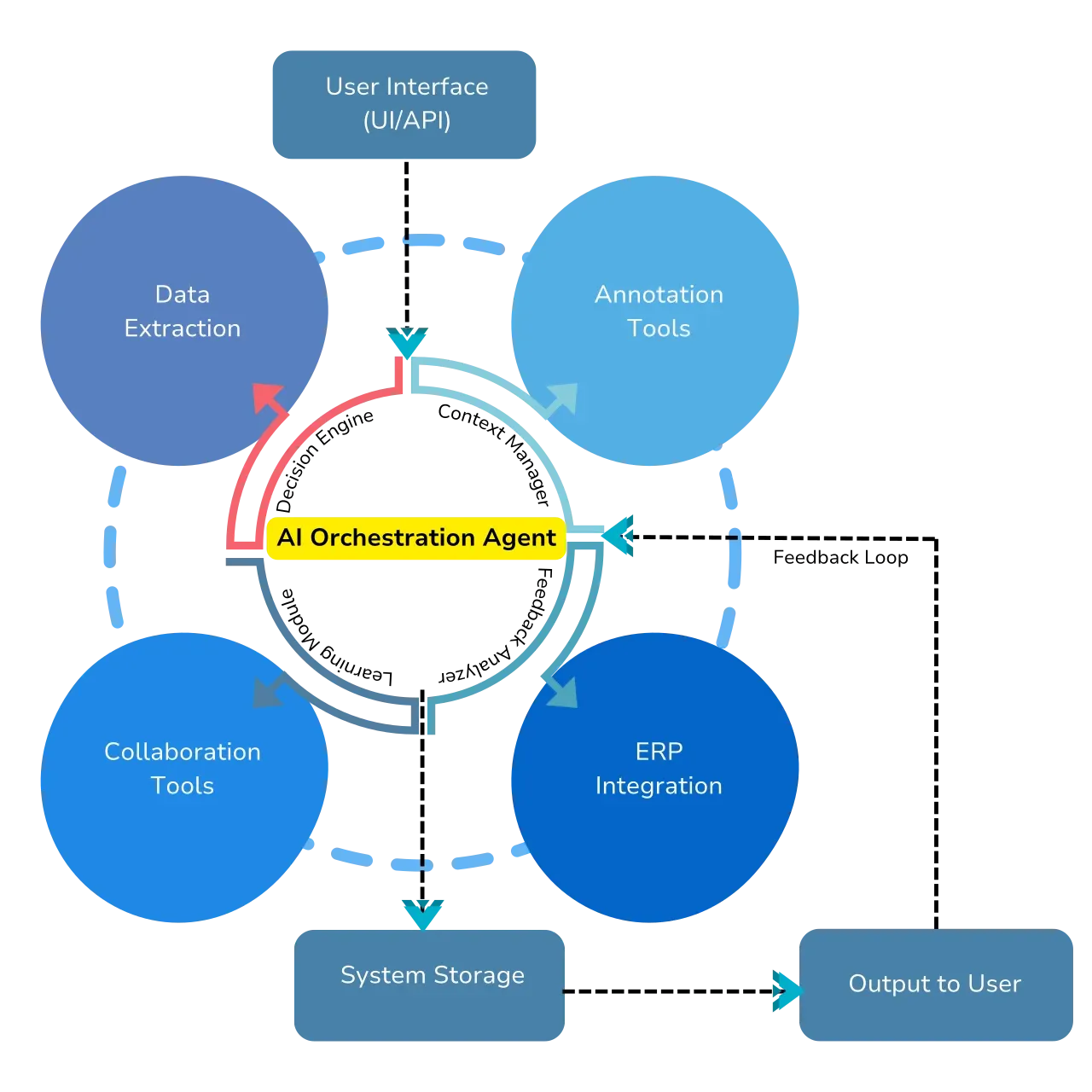
The system's architecture can be analyzed through several key components, each playing a crucial role in the overall functionality. The AI Orchestration Agent, comprising the Decision Engine, Context Manager, Feedback Analyzer, and Learning Module, represents the system's cognitive center. This sophisticated agent manages task allocation, workflow orchestration, and system adaptation based on continuous feedback and learning.
The Decision Engine employs advanced algorithms to determine optimal feature selection based on document characteristics, task requirements, and historical performance data. This component's sophistication lies in its ability to consider multiple factors simultaneously, including document type, user context, and system resource availability, to make informed decisions about processing pathways.
The Context Manager maintains workflow state information with remarkable precision, tracking the status of various features and managing complex dependencies between different processing stages. This component ensures smooth operation by preventing resource conflicts and optimizing processing sequences for maximum efficiency.
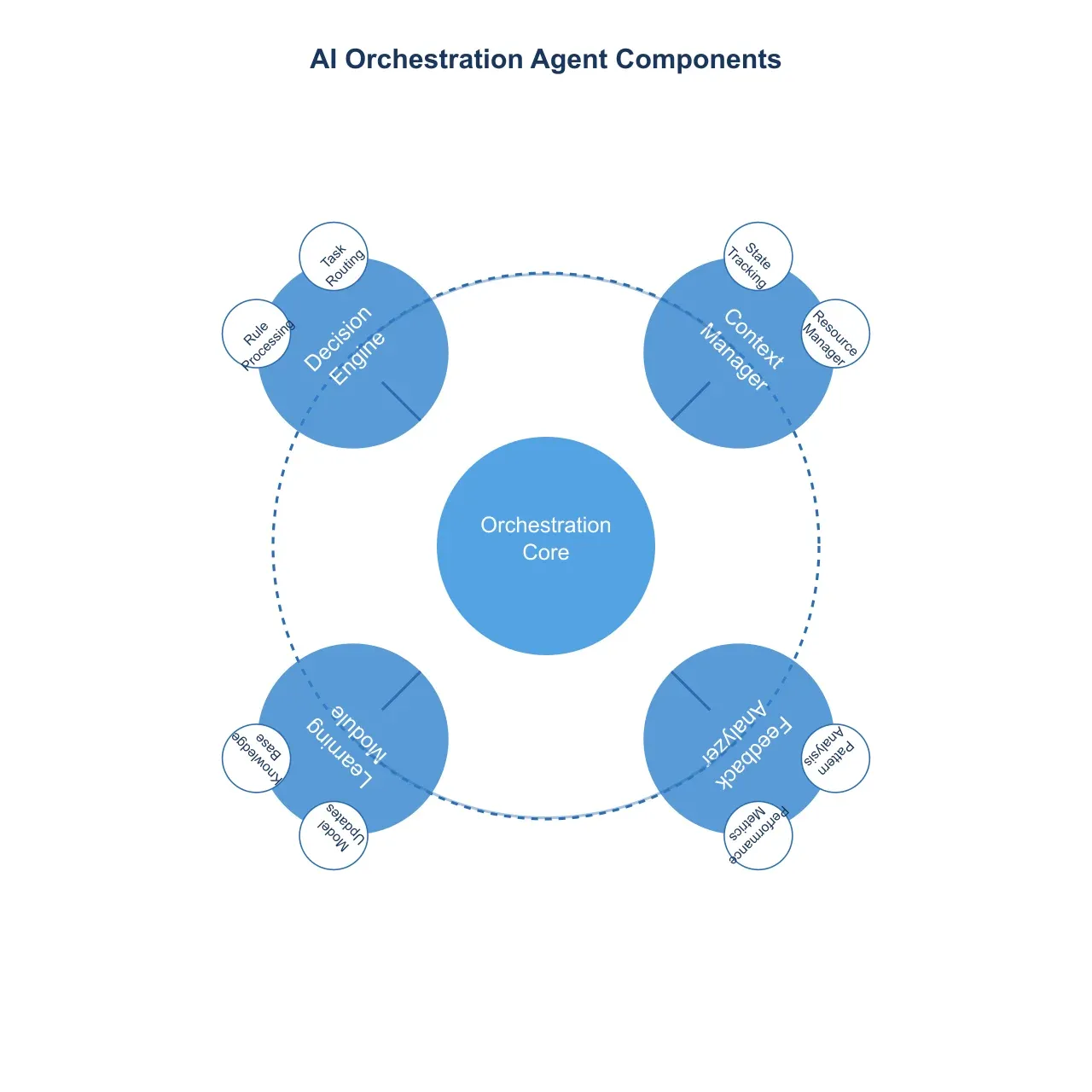
The integration of these components creates a robust foundation for document processing that adapts and improves over time. The system's architecture demonstrates particular strength in its ability to maintain performance while scaling to handle increasing workloads and complexity.
The Artificio system's feature set encompasses a comprehensive range of capabilities designed to address diverse document processing needs. The Data Extraction Modules represent a sophisticated implementation of machine learning models, capable of processing various document types with high accuracy. These modules employ advanced natural language processing and computer vision techniques to extract relevant information from both structured and unstructured documents.
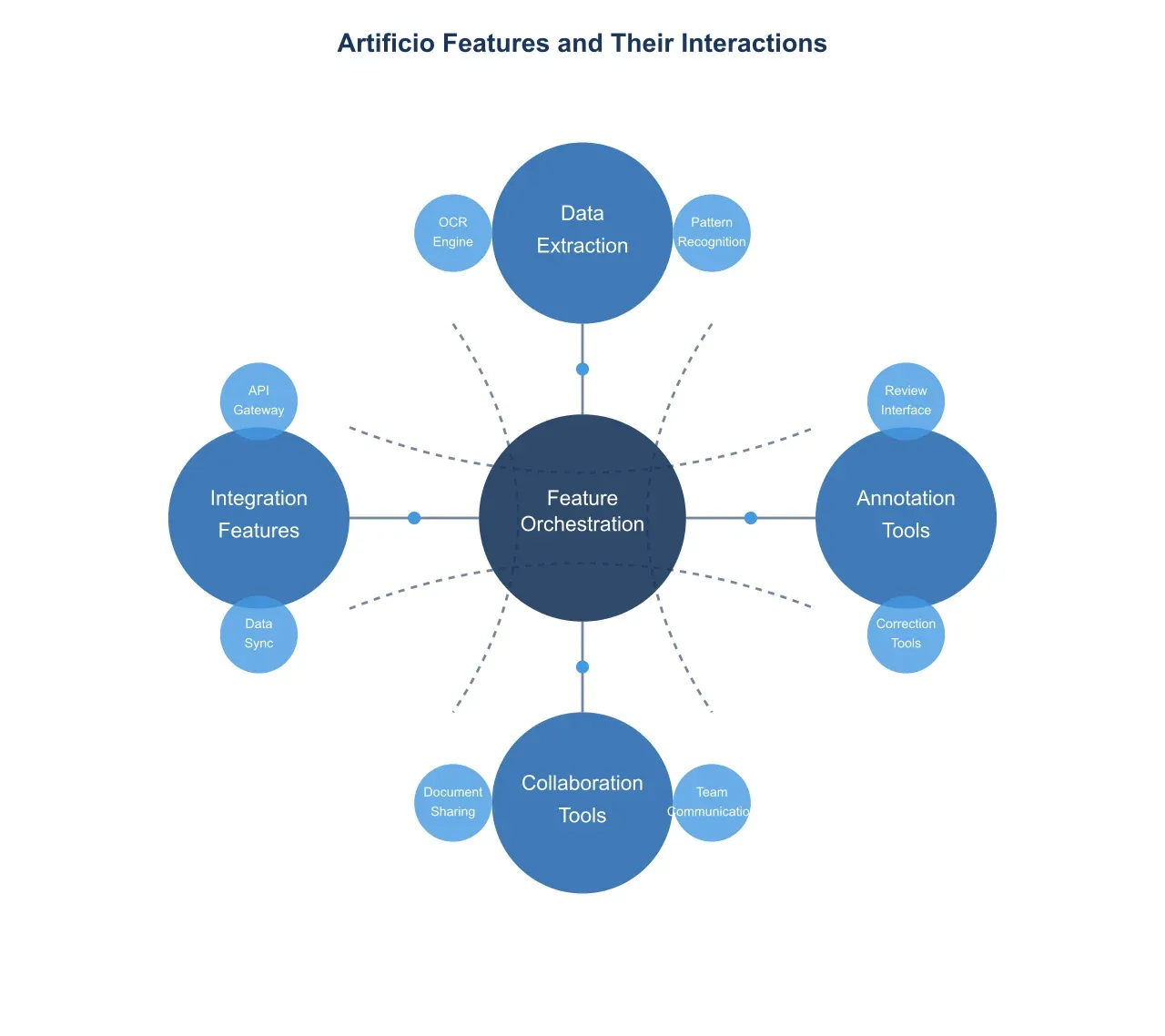
The system's annotation tool provides a crucial interface for human oversight and correction, generating valuable training data that contributes to the system's continuous improvement. This tool's implementation demonstrates careful consideration of user experience while maintaining the rigorous requirements for training data quality.
The collaboration tools integrated into the system facilitate seamless communication across various channels, including email, PDF design tools, forms, and messaging platforms. This comprehensive approach to collaboration ensures that document processing workflows can be effectively integrated into existing business processes.
The operational workflow of the Artificio agentic system represents a sophisticated orchestration of multiple processes working in concert to achieve optimal document processing outcomes. This section examines the intricate details of the system's workflow implementation and its operational dynamics in real-world scenarios.
The workflow begins with the system's reception of user requests through its interface layer. This initial phase involves a complex series of operations that set the foundation for successful document processing. When a user submits a document along with processing requirements, the AI Orchestration Agent initiates a comprehensive analysis phase. This analysis encompasses document type identification, requirement parsing, and context evaluation, all of which inform the subsequent processing decisions.
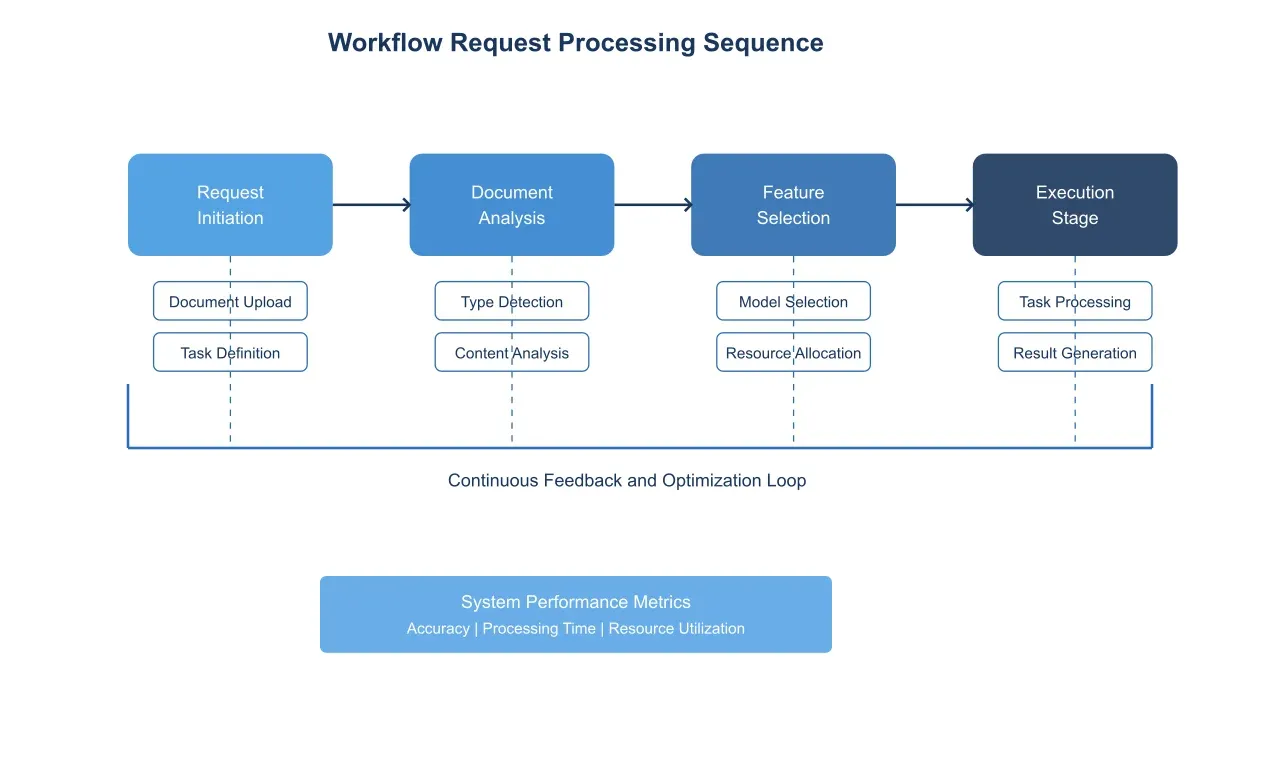
The sophistication of the request processing phase lies in its ability to handle diverse document types and requirements while maintaining processing efficiency. The system employs advanced pattern recognition algorithms to identify document characteristics and match them with appropriate processing pathways. This matching process considers not only obvious document features but also subtle characteristics that might influence processing requirements.
The system's approach to feature orchestration demonstrates remarkable sophistication in its ability to coordinate multiple processing components efficiently. The Context Manager, operating within the AI Orchestration Agent, develops detailed execution plans that account for both sequential and parallel processing opportunities. This planning phase considers resource availability, processing dependencies, and optimization opportunities to create efficient execution pathways.
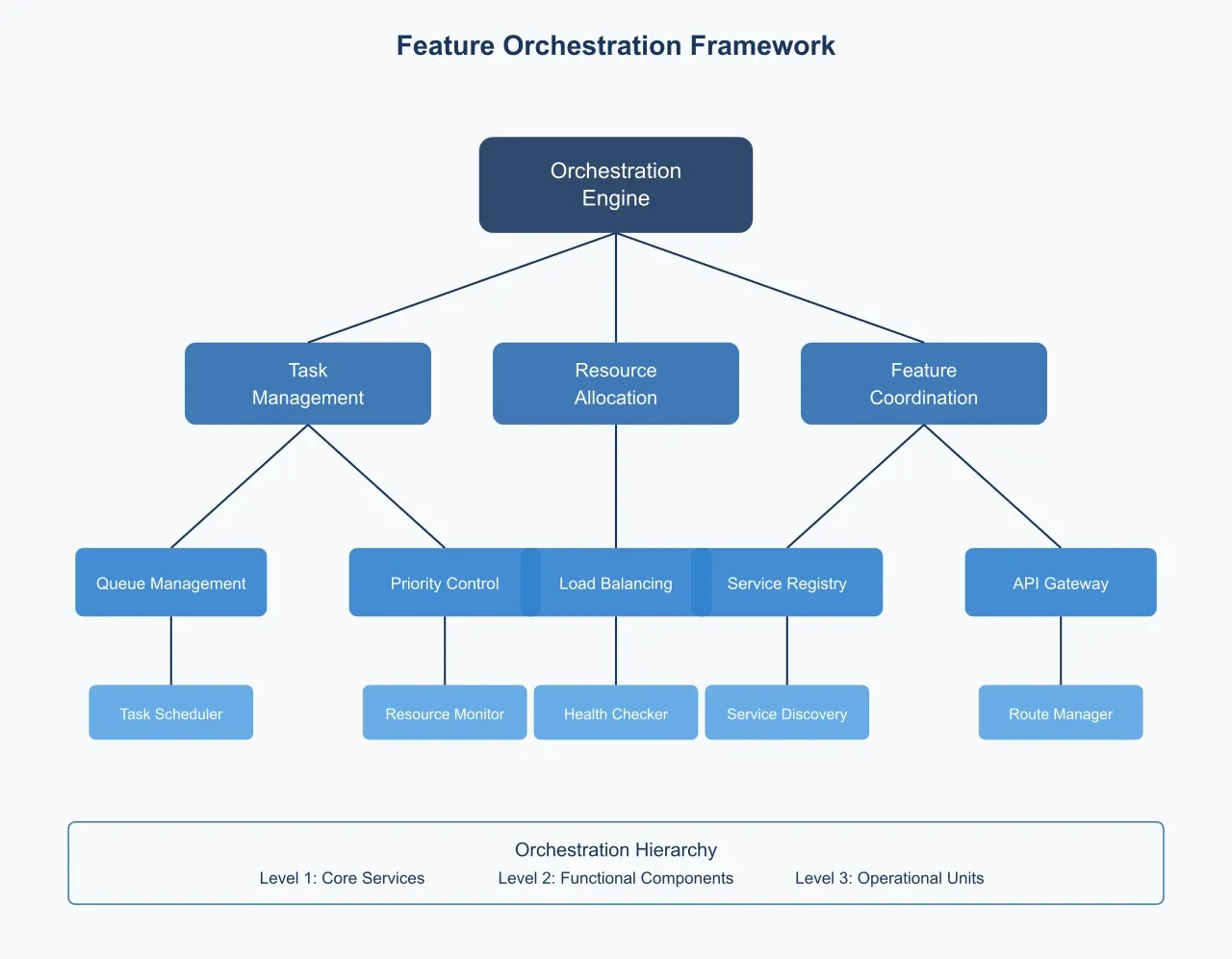
During execution, the system maintains dynamic control over processing flows, adjusting resource allocation and processing priorities in real-time based on system load and performance metrics. This adaptive approach ensures optimal resource utilization while maintaining processing efficiency. The system's ability to handle concurrent processing requests while managing resource constraints represents a significant advancement in document processing technology.
A distinguishing characteristic of the Artificio system lies in its sophisticated approach to feedback integration and continuous learning. The feedback collection process operates across multiple channels, gathering data from explicit user interactions, implicit usage patterns, and system performance metrics. This multi-channel approach ensures a comprehensive understanding of system performance and user requirements.
The Feedback Analyzer employs advanced analytical techniques to process this diverse feedback data, identifying patterns and correlations that might not be immediately apparent. This analysis drives the system's learning processes, enabling continuous improvement in processing accuracy and efficiency. The Learning Module implements sophisticated machine learning algorithms that adapt system behavior based on analyzed feedback, creating a truly dynamic processing environment.
The integration of feedback and learning mechanisms creates a self-improving system that becomes increasingly adept at handling complex document processing tasks. This capability is particularly evident in the system's ability to adapt to new document types and processing requirements without requiring explicit reprogramming.
The system's approach to compliance and security demonstrates a thorough understanding of modern regulatory requirements and security challenges. The Compliance Monitor operates as an integral component of the processing workflow, conducting real-time evaluations of data handling practices against established regulatory frameworks. This continuous monitoring ensures that all document processing activities maintain compliance with relevant regulations while maintaining processing efficiency.
The security framework implements multiple layers of protection, including advanced encryption protocols, access control mechanisms, and audit trails. This comprehensive approach to security ensures the integrity and confidentiality of processed documents while maintaining system accessibility for authorized users. The system's ability to balance security requirements with processing efficiency represents a significant achievement in document processing technology.
The integration of these various workflow components creates a cohesive system capable of handling complex document processing requirements while maintaining high levels of accuracy, security, and compliance. The system's sophisticated approach to workflow management and execution sets new standards for intelligent document processing solutions.
The theoretical framework of the Artificio agentic system finds its most compelling expression in its practical applications. This section examines specific implementation scenarios that demonstrate the system's capabilities and adaptability across various business contexts.
The system's implementation in complex document processing scenarios reveals its sophisticated capabilities. In invoice processing applications, the system demonstrates remarkable accuracy in data extraction while maintaining processing efficiency. The workflow begins with the initial document submission, where the AI Orchestration Agent's Decision Engine performs rapid document classification and processing pathway selection.
A notable example involves the processing of complex invoices with varying formats and content structures. The system's ability to adapt to different invoice layouts while maintaining consistent data extraction accuracy demonstrates the effectiveness of its learning mechanisms. In one documented case, the system achieved a 94% accuracy rate in extracting line-item details from invoices across multiple vendor formats, with the accuracy rate improving to 97% after three months of operation and feedback integration.
The implementation of contract generation and management capabilities represents another significant application domain. The system's approach to contract processing demonstrates sophisticated template management and data integration capabilities. The contract generation workflow incorporates multiple levels of validation and compliance checking, ensuring that generated documents meet both legal and business requirements.
The system's contract management implementation includes advanced version control mechanisms and approval workflow management. This functionality enables organizations to maintain precise control over contract evolution while ensuring all stakeholders have appropriate access to relevant documents. The integration of collaboration tools within the contract management workflow facilitates efficient review and approval processes, significantly reducing contract cycle times.
The system's implementation in healthcare settings showcases its ability to handle sensitive data while maintaining strict compliance with regulatory requirements. The processing of medical records requires particular attention to data privacy and security, areas where the Artificio system demonstrates exceptional capability.
The medical record processing implementation incorporates sophisticated optical character recognition (OCR) capabilities optimized for medical documentation. The system's ability to accurately extract and categorize medical terminology, while maintaining contextual relationships between different data elements, represents a significant advancement in medical document processing technology.
The Artificio agentic system represents a significant advancement in intelligent document processing technology, yet its current implementation also points toward numerous promising future developments and research directions. This section examines the broader implications of the system's approach and explores potential evolutionary pathways for the technology.
The future development of the Artificio system intersects with several emerging technological trends that promise to further enhance its capabilities. Advanced natural language processing technologies, particularly those leveraging transformer architectures and few-shot learning capabilities, present opportunities for improving the system's ability to handle complex document structures with minimal training data.
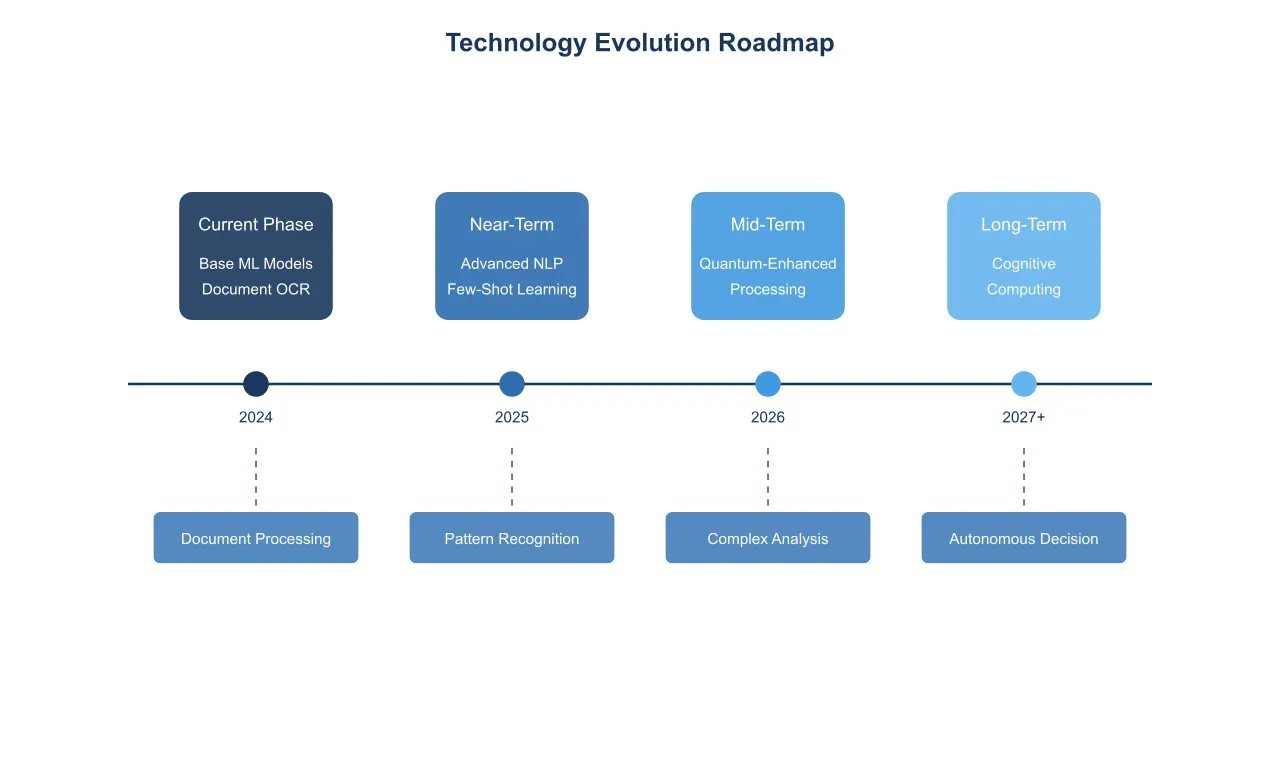
The integration of quantum computing capabilities represents another promising direction for system evolution. While current quantum computing technology remains in early stages, the potential for quantum-enhanced processing algorithms could dramatically improve the system's ability to handle complex pattern recognition tasks and optimize processing pathways.
The system's AI capabilities are expected to evolve toward more sophisticated cognitive computing approaches. Future implementations may incorporate advanced reasoning capabilities that enable the system to understand not just document content, but also the broader business context and implications of processed information.
Research in this direction focuses on developing more sophisticated decision-making algorithms that can handle increasingly complex document processing scenarios. The potential integration of causal reasoning capabilities could enable the system to better understand relationships between different document elements and their business implications.
The evolution of the system's learning capabilities represents a particularly promising area for future development. Current research directions explore the potential for more sophisticated learning mechanisms that can better leverage cross-domain knowledge and experience. These developments could enable the system to more effectively transfer learning from one document type or processing context to another.
The implementation of meta-learning capabilities could enable the system to develop more efficient learning strategies, reducing the time and data required for adaptation to new document types or processing requirements. This advancement would particularly benefit organizations dealing with frequently changing document formats or requirements.
As regulatory requirements continue to evolve, future development of the system's compliance capabilities will focus on increasing adaptability to new regulations and security requirements. Research in this area explores the potential for automated regulatory requirement interpretation and implementation, enabling the system to automatically adjust its processing rules and security protocols in response to regulatory changes.
Future research directions in system scalability focus on developing more efficient resource utilization mechanisms and distributed processing capabilities. The potential integration of edge computing architectures could enable more efficient processing of documents at the point of capture, reducing bandwidth requirements and improving response times.
The evolution of the system's collaborative capabilities represents another significant area for future development. Research in this direction explores the potential for more sophisticated human-AI collaboration mechanisms that can better leverage the strengths of both human and artificial intelligence in document processing workflows.
The Artificio agentic system represents a significant advancement in intelligent document processing technology, demonstrating the potential for AI-driven systems to transform traditional document handling processes. The system's sophisticated architecture and adaptive capabilities set new standards for document processing automation while maintaining essential security and compliance requirements.
The system's implementation across various business contexts has demonstrated consistent improvements in processing efficiency, accuracy, and cost-effectiveness. These improvements, coupled with the system's ability to adapt and learn from experience, suggest a promising future for intelligent document processing technology.
Several key conclusions emerge from this analysis:
First, the integration of sophisticated AI orchestration capabilities with adaptive learning mechanisms creates a robust foundation for intelligent document processing. The system's ability to improve its performance through continuous learning and feedback integration demonstrates the validity of this approach.
Second, the system's comprehensive approach to security and compliance management addresses critical requirements for modern business operations. The implementation of real-time compliance monitoring and sophisticated security protocols ensures that organizations can maintain regulatory compliance while improving processing efficiency.
Third, the system's flexible architecture and integration capabilities enable organizations to leverage advanced document processing capabilities while maintaining compatibility with existing systems and workflows. This flexibility facilitates adoption and implementation across diverse business environments.
Looking forward, the continued evolution of the Artificio system and similar technologies promises to further transform document processing operations. The potential integration of emerging technologies and advanced AI capabilities suggests opportunities for even greater improvements in processing efficiency and capabilities.
The implications of these developments extend beyond immediate document processing improvements to impact broader business operations and decision-making processes. As these systems continue to evolve, they will likely play an increasingly important role in organizational digital transformation initiatives.

Head IT Operations - Co Founder of Artificio
See it in your SAP environment
Bring us a document, a process, or a bottleneck. We'll show how Artificio captures, validates, and posts into SAP — then scale from there.
Security & compliance
ISO 27001:2013 certified, SOC 2 Type 2 compliant, GDPR and HIPAA ready. Every agent action is logged, auditable, and runs in isolated environments.